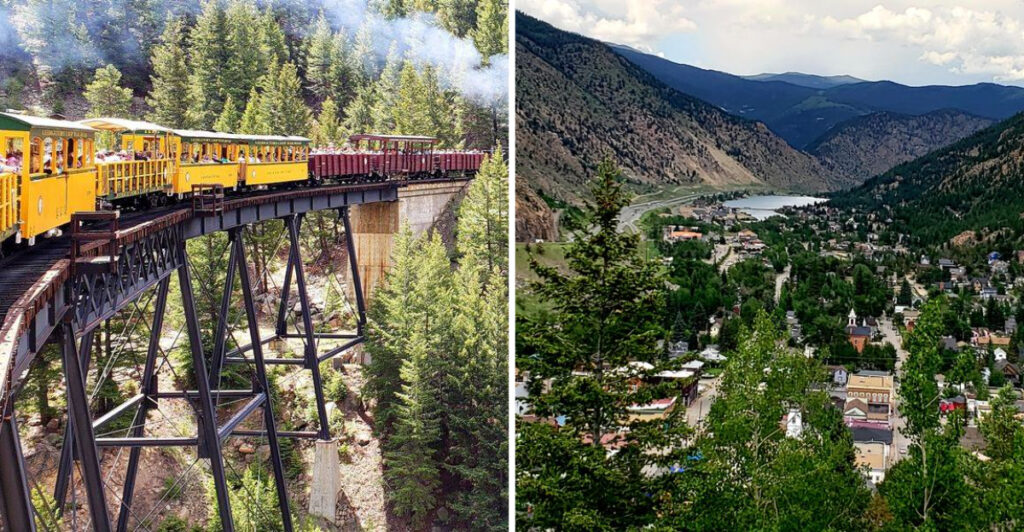
At 8,530 feet, even your to-do list may need a breather.
One Colorado mountain town makes a strong case for forgetting the schedule altogether. The streets invite wandering. Old buildings keep pulling your eyes upward.
Then a creek, a mountain view, or the whistle of a historic train changes your direction again.
Its mining past still shapes the town, but history never turns the afternoon into homework. You can follow a quiet street, or let the next interesting doorway make the decision for you.
Nothing here demands a race from one attraction to another. That would miss the point.
Colorado brings the altitude. This little town brings the plot twist: the slower you move, the more the day gives back.
Leave the stopwatch in the car and see where one unplanned turn takes you.
The Mountains Put The Town In A Picture Frame
Georgetown does not ease you into the scenery. The mountains appear immediately, rising around the compact town like they arrived early to claim the best seats.
The community began after prospectors found gold in the Clear Creek region in 1859, then grew into an important silver center.
Wealth from mining helped finance substantial homes, commercial buildings, churches, and civic structures rather than a temporary collection of rough cabins.
That permanence is one reason the town remains so visually compelling. Georgetown and nearby Silver Plume, along with the historic railroad corridor between them, became a National Historic Landmark District in 1966.
The designation protects a landscape shaped by mining, transportation, architecture, and mountain geography.
You can see that story without a guidebook as rooflines climb the hillsides and Clear Creek cuts through the valley.
The town is small enough to understand on foot, yet layered enough to resist a rushed visit. Every turn adds another piece of the same story, and none of them need a neon arrow. Georgetown lets the mountains handle the advertising.
Sixth Street Can Turn One Block Into An Hour
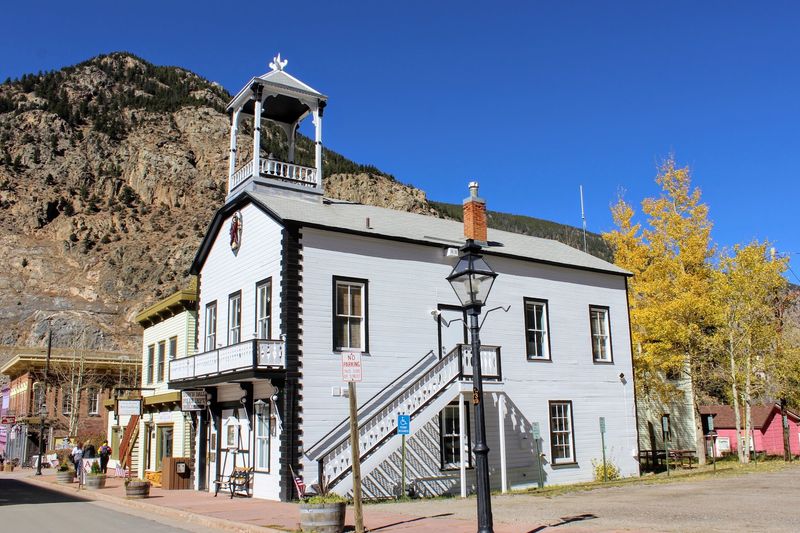
Your walking pace may begin confidently, but Sixth Street has other plans. Historic storefronts, local shops, galleries, museums, and architectural details keep placing tiny speed bumps in front of your schedule.
This is the commercial heart of Georgetown, and the buildings carry the proportions and ornament of another era.
Look above the display windows and you may notice decorative cornices, tall upper-story windows, brick patterns, recessed entrances, and facades that do not repeat themselves like a modern shopping plaza.
The Town of Georgetown offices are at 404 Sixth Street, Georgetown, CO 80444, placing the municipal address directly within the historic downtown you are exploring.
You do not need to shop at every stop. Browse a window, read a plaque, and look up when another facade catches your eye. Self-guided walking information is available locally, but following your curiosity also works surprisingly well.
Comfortable shoes are useful because historic streets and sidewalks can be less predictable than a mall floor. That small inconvenience comes with a reward: the street has texture, age, and enough personality to make polished sameness look terribly overrated.
Sixth Street does not steal an hour. It convinces you that the hour had nowhere better to be.
Victorian Buildings Keep Winning The Staring Contest
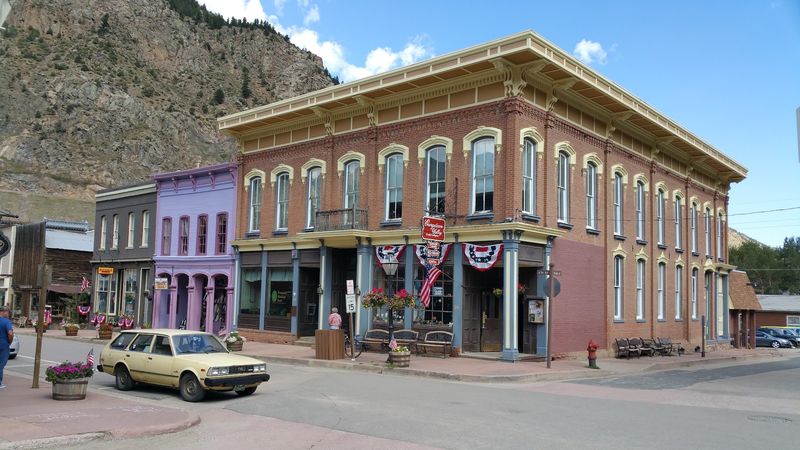
Here is your reminder to look up. Georgetown’s downtown becomes far more interesting once you stop treating the storefront windows as the whole show.
The historic district contains a rich collection of Late Victorian buildings, many constructed when local residents expected the mining economy to keep growing.
These were not flimsy stage fronts designed only to impress passersby. Commercial blocks, churches, and homes were built with real ambition.
That variety gives a walk visual rhythm. Brick ornament, wood trim, tall windows, transoms, and cornices create a streetscape that changes every few steps.
Modern businesses now occupy many of these historic spaces, yet the older structures still set the tone. Shops and galleries adapt to the buildings instead of erasing them, allowing you to browse in the present while the architecture keeps one foot firmly in the 1800s.
You do not need formal training to enjoy any of it. Pick a detail and start comparing. Which doorway looks grandest?
Which facade has aged most gracefully? Which window would make the best reading nook?
The buildings never answer, of course. They are too busy winning the argument without saying a word.
Hamill House Gives Silver-Boom Wealth A Front Door
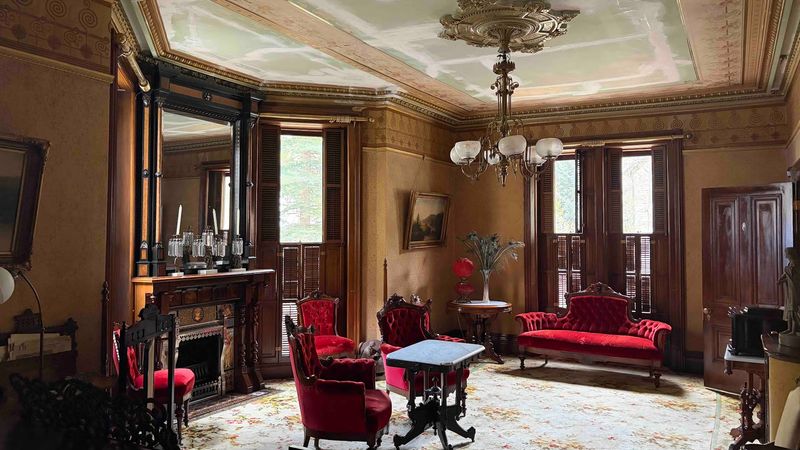
Mining history often arrives covered in dust. Hamill House presents the other side of the ledger, complete with polished woodwork, ambitious design, and the comforts money could buy in a remote mountain town.
The residence began in 1867 as a more modest Country Gothic home. Silver investor William Arthur Hamill later expanded it into an elaborate estate, adding features associated with wealth and modernity during the period.
The property eventually included the main house, carriage house, office, summer kitchen, landscaped grounds, and other domestic structures.
Inside, the museum interprets 19th-century residential life through architecture, furnishings, household spaces, gardens, and the social world of Georgetown’s prosperous years.
The rooms show how a successful mining family lived beyond the world of ore carts and pickaxes.
The address is 305 Argentine Street, a short walk from downtown. Tour arrangements and public hours can vary, so confirm current access before building your afternoon around an interior visit.
Even when you only explore the surrounding residential streets, the neighborhood adds depth to the story. Modest cottages and more elaborate homes reveal that Georgetown never belonged to one economic class or one architectural style.
The silver may have left the mountain long ago. Hamill House still shows where some of it went.
A French Inn Brings A Plot Twist To Sixth Street
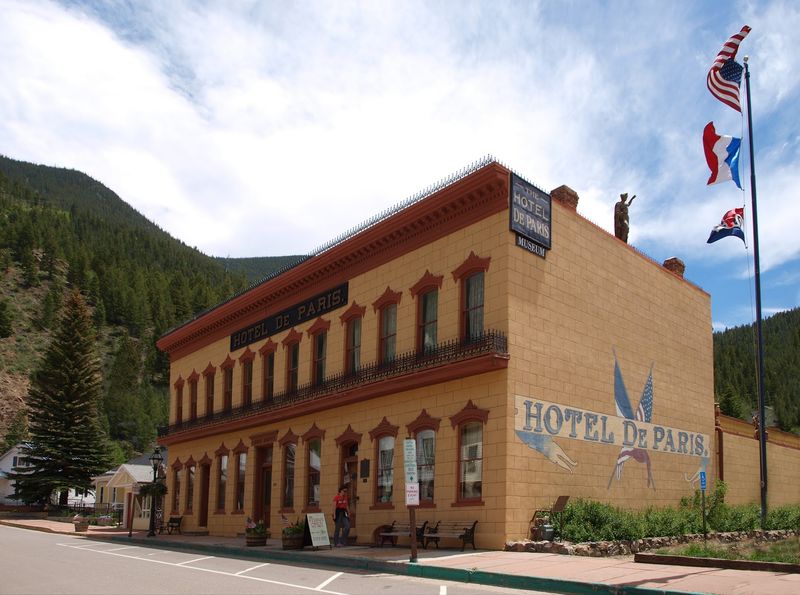
Just when the mining-town story seems settled, a French inn changes the accent. Hotel de Paris Museum adds one of Georgetown’s most unusual chapters without leaving Sixth Street.
French immigrant Louis Dupuy established the hotel in 1875. During Georgetown’s boom years, it developed a reputation for sophisticated lodging and dining that contrasted sharply with the rougher image commonly associated with Western mining camps.
The preserved property includes original furnishings and spaces connected to its years as a hotel and restaurant. Rather than rebuilding an imagined version of the past, the museum interprets an authentic historic site and the people who operated, worked in, and visited it.
The building’s interior is English in style despite the French identity of its founder and name, a detail that makes the story more interesting than a simple imported-European theme. Its story also reflects the varied cultural influences in a booming Western town.
You will find the museum at 409 Sixth Street. Visiting arrangements and seasonal access can change, so check the current schedule before expecting a walk-in tour.
Outside, Georgetown looks like a preserved Colorado mining community. Inside this former inn, the story expands into fine meals, international influences, traveling guests, and carefully furnished rooms. The Old West just pulled a white tablecloth out of its sleeve.
The Railroad Lets The Canyon Do The Talking
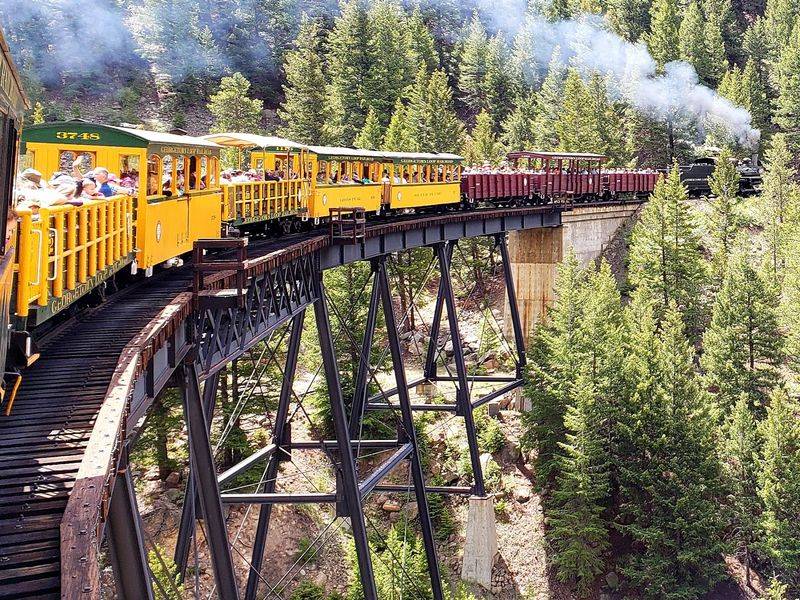
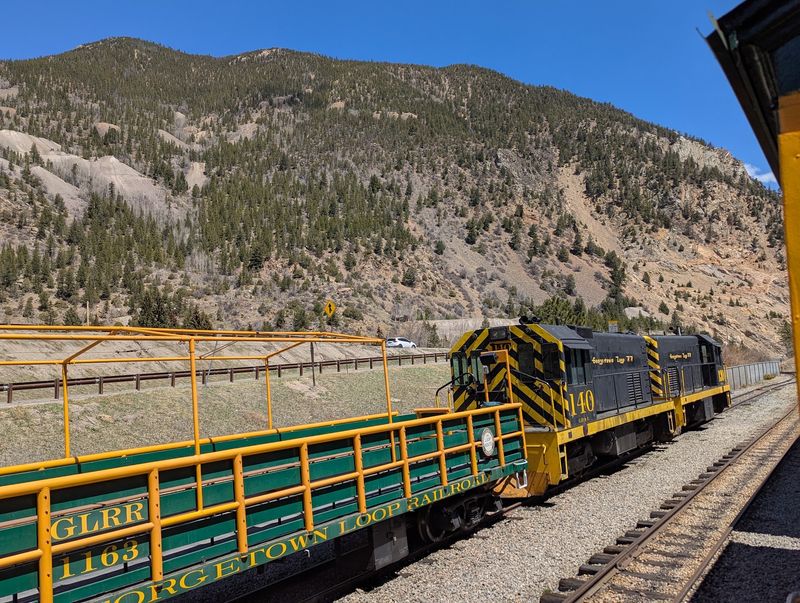
Walking shoes get a break when the whistle takes over. The Georgetown Loop Railroad carries the area’s mining and transportation story into the narrow canyon between Georgetown and Silver Plume.
The original Colorado Central route reached Georgetown in the 1870s and was later extended toward Silver Plume.
Engineers had to gain elevation over a short distance, leading to a looping narrow-gauge alignment with curves, grades, bridges, and the famous high crossing above Clear Creek.
Today’s excursion railroad operates on the historic corridor, passing mountain slopes, creek views, and remnants of the mining landscape.
The ride gives you a physical sense of the terrain that shaped local industry. Moving ore and passengers through this canyon required the mountain to cooperate.
The train operates seasonally with themed rides and schedules that vary throughout the year. Tickets and departure details can change, so current information matters.
This is the livelier part of a Georgetown afternoon. Steam, motion, trestles, and canyon views replace the quiet rhythm of downtown, yet the experience still belongs to the same historical landscape.
The town tells you to slow down. The railroad agrees, then adds a whistle for emphasis.
A Full Afternoon Somehow Leaves Room For Another
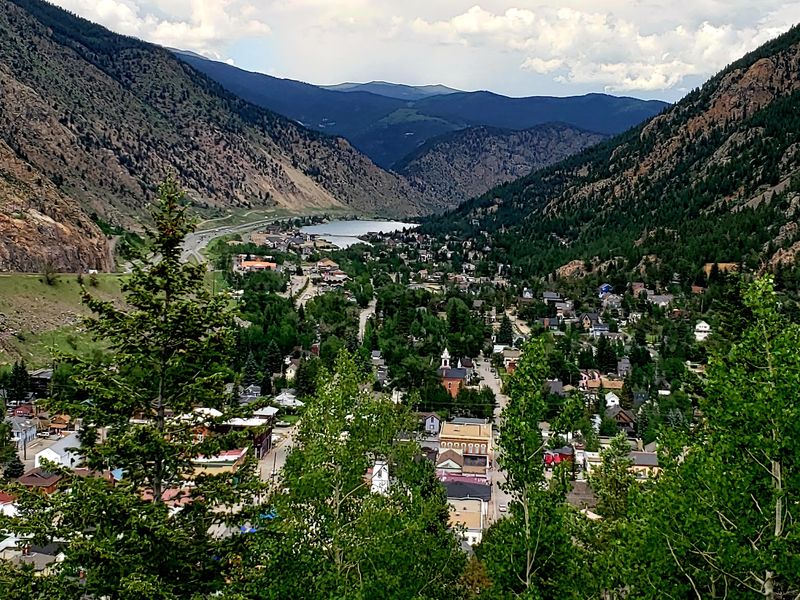
Georgetown makes planning look almost suspiciously easy. Park once, start walking, and let the afternoon assemble itself around whatever catches your eye.
You might begin on Sixth Street, move into the residential blocks, and pause at a museum before circling back toward downtown.
Another route could start with the railroad, continue with a creekside stroll, and finish beneath the Victorian facades as the light changes across the valley.
The elevation keeps conditions cooler than Denver, but mountain weather can shift quickly. Layers, water, sun protection, and comfortable footwear earn their place even on a relaxed outing.
Museum and railroad schedules deserve advance checks, especially outside peak summer periods.
What you do not need is a minute-by-minute itinerary. Georgetown’s compact layout supports spontaneous decisions. A doorway becomes a museum visit, and a side street becomes an architecture walk.
Clear Creek, the surrounding peaks, and the historic buildings keep the day visually connected. Even when you change activities, you never lose the sense that you are exploring one complete mountain community rather than a collection of unrelated attractions.
By late afternoon, you may reach the car with tired feet and an unfinished list. That is not poor planning. Georgetown simply knows how to turn a slow day into a reason to return.