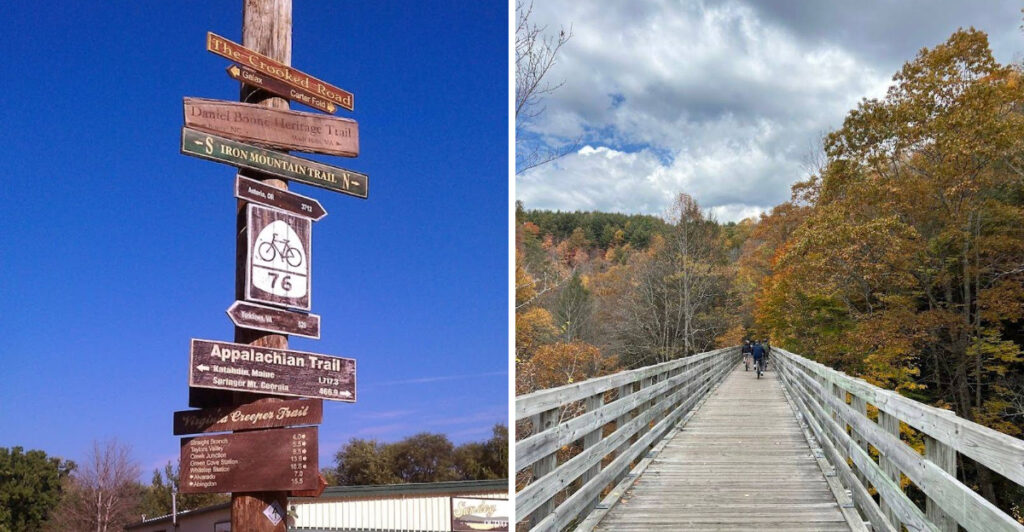
Picture yourself coasting through the Appalachian highlands on an old railroad bed, nothing but mountain air, wooden trestles, and forested ridgelines in every direction.
That is exactly the kind of ride that stops people in their tracks and keeps them talking for years. Virginia is full of outdoor surprises, but this bike trail winding through four small towns might be the most charming one of all.
Rail trails have a magic that paved roads never quite replicate. The history lives in the path itself, and every bridge crossing is a moment worth savoring.
Virginia keeps delivering gems like this one, tucked into its southwestern corner where the mountains get serious and the scenery turns genuinely unforgettable. Ready to see what the fuss is about?
A Railroad Reborn As A Recreation Trail
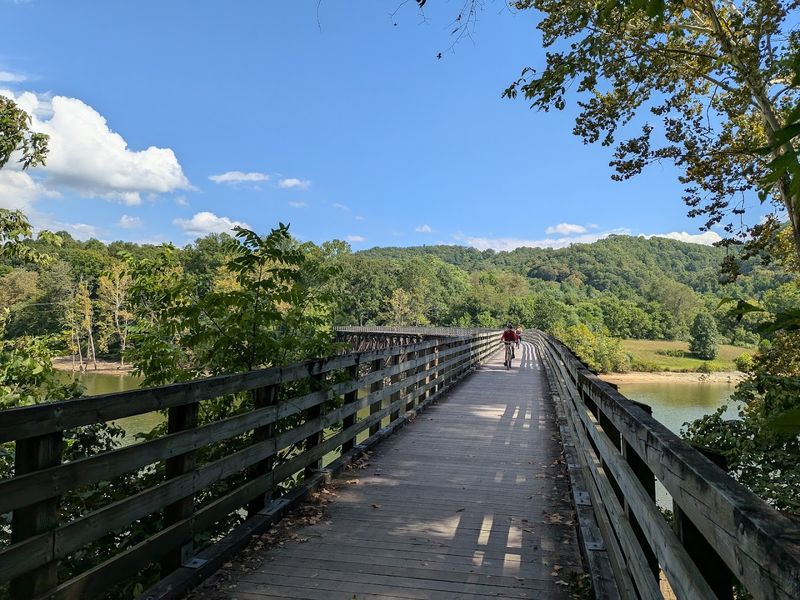
Old railroads do not always fade quietly into history. The Virginia Creeper Trail tells a different story, one where the past gets a second life under the wheels of cyclists and the boots of hikers.
The trail follows the bed of what was once the Abingdon Coal and Iron Railroad, a line that dates back to the 1880s. It later became part of the Virginia-Carolina Railway before being absorbed into the Norfolk and Western’s Abingdon Branch.
The locomotives that ran this route earned the nickname ‘Virginia Creeper,’ partly because they moved so slowly up the steep mountain grades and partly because of the native Virginia Creeper vine that grew wild along the route.
The railroad was officially abandoned in 1977. After that, the U.S.
Forest Service partnered with the towns of Abingdon and Damascus to secure the right-of-way for public use. By 1987, the trail opened to the public, giving Virginia one of its most treasured outdoor destinations.
The Towns That Anchor The Trail
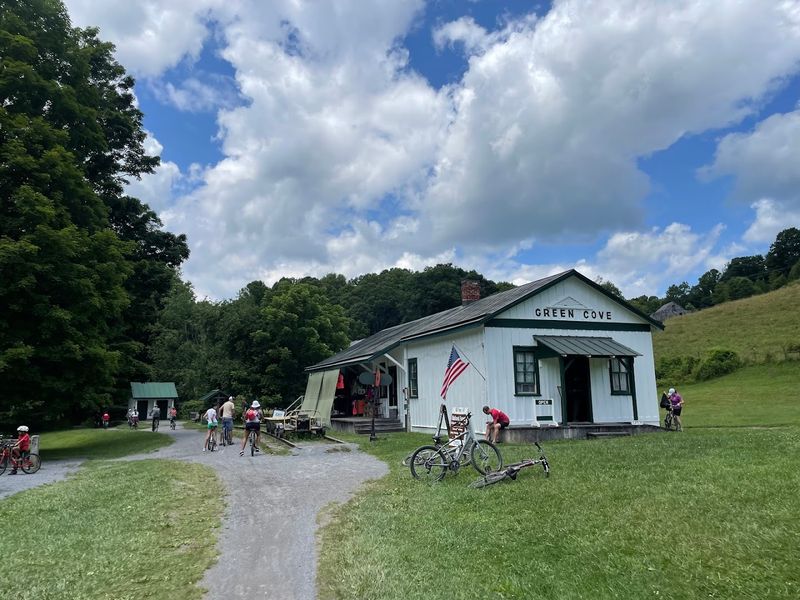
Four small towns give the Virginia Creeper Trail its beating heart. Abingdon serves as the western starting point, a historic Virginia town with a lively arts scene and a welcoming downtown that greets trail users at the finish line.
Moving east, the trail passes through Watauga and Alvarado before reaching Damascus, arguably the most trail-famous of them all. Damascus proudly carries the nickname “Trail Town, USA,” and it earns that title honestly.
The Appalachian Trail, the Virginia Creeper Trail, and several other long-distance routes all intersect right inside town, making it a hub of outdoor culture unlike anywhere else in Virginia.
Whitetop sits at the eastern end, close to the North Carolina state line, and marks the highest elevation on the trail.
The cluster of these communities along the route gives the trail a sense of journey, not just exercise, as riders move through living, breathing places rather than empty wilderness alone.
Why The Downhill Ride Is So Popular
Gravity is a wonderful thing when it works in your favor. The stretch from Whitetop down to Damascus covers roughly 17 miles and drops about 1,500 feet in elevation, making it one of the most celebrated downhill bike rides on the East Coast.
The grade is gentle enough that beginners can handle it comfortably, yet the scenery moves past quickly enough to feel genuinely thrilling.
Families with young kids, older adults, and complete beginners regularly complete this section without breaking much of a sweat. Shuttle services in the area transport riders and their bikes up to the Whitetop end so the whole trip can be enjoyed going downhill.
It is worth noting that “all downhill” is a slight simplification. There are flat stretches and a few gentle climbs mixed in, so riders still get a workout.
But the overall experience leans heavily in favor of the casual cyclist, which is a big part of why this trail draws visitors from across the country.
Trestles And Bridges That Steal The Show
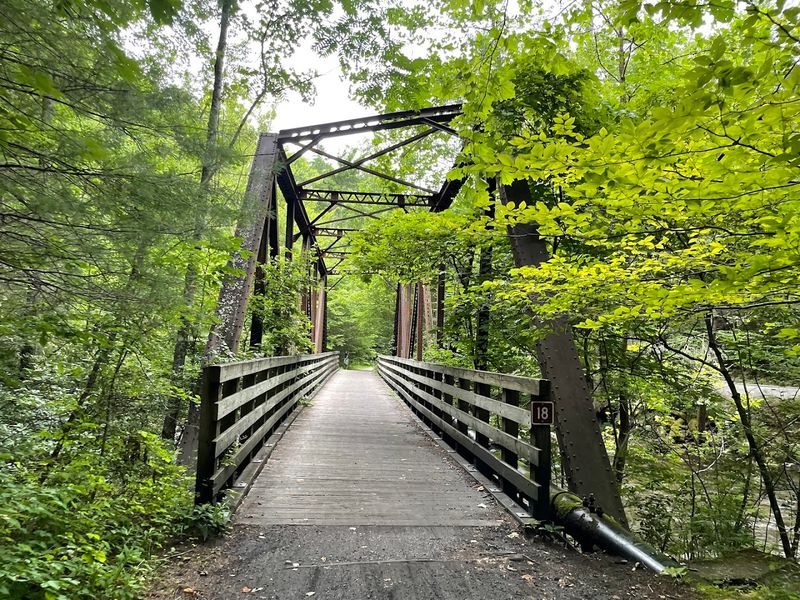
Bridges can be functional, or they can be unforgettable. On the Virginia Creeper Trail, they manage to be both at the same time.
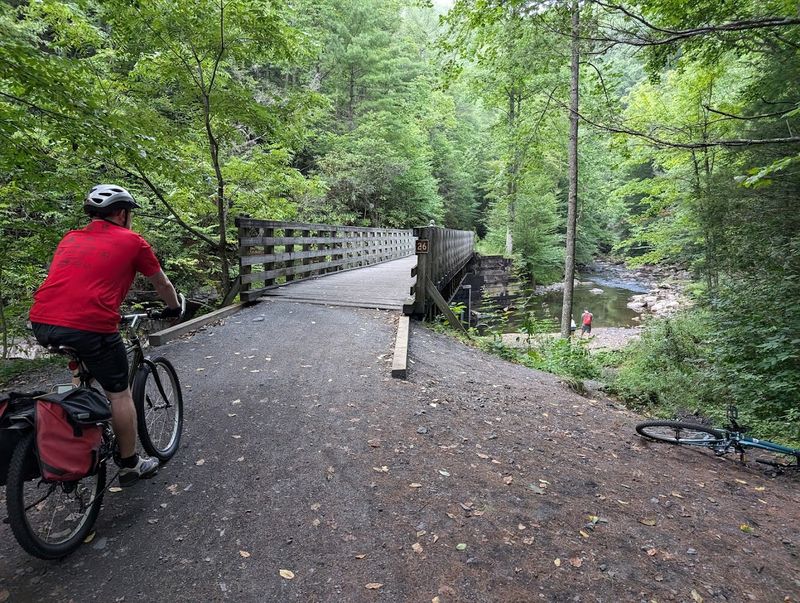
The trail features dozens of restored trestles and bridges, many of them original railroad structures that have been carefully preserved for recreational use.
Crossing one of these elevated wooden spans over a rushing stream below is one of those trail moments that stops people mid-ride just to look around and take it all in.
The craftsmanship of these old railroad bridges, combined with the natural beauty surrounding them, creates a visual payoff that photos rarely do justice.
Sadly, Hurricane Helene struck in September 2024 and destroyed eighteen of these trestles while washing away seventeen miles of trail. Repairs are actively underway, and the section from Abingdon to Trestle 16 near Damascus remains open.
The remaining section from Damascus to Whitetop is expected to reopen in fall 2026, with federal funding supporting the restoration effort.
Mount Rogers National Recreation Area Along The Route
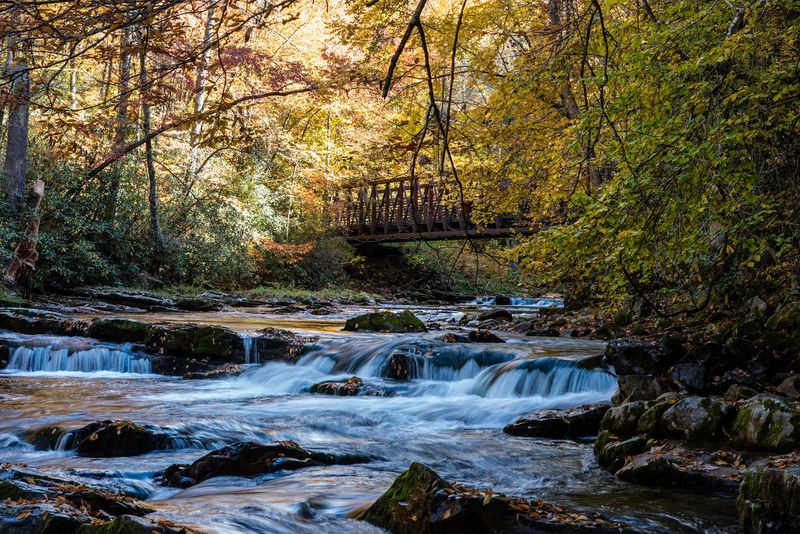
The trail does not just pass through ordinary countryside. A significant portion of the Virginia Creeper Trail winds through the Mount Rogers National Recreation Area, which is home to some of the highest peaks in the entire state of Virginia.
This federally protected landscape adds a layer of drama to the ride that flat rail trails simply cannot match. Dense forests, mountain streams, and rolling meadows frame the path as it moves through the recreation area, giving cyclists a genuine sense of being deep in the Appalachian highlands.
Wildlife sightings are common, and the native Virginia Creeper vine, which gave the old railroad its nickname, grows wild along much of this section.
The combination of a well-maintained trail surface and a protected natural setting is rare. Most cyclists who ride through this stretch find themselves slowing down not because of terrain, but because the surroundings keep pulling their attention away from the path ahead.
Damascus, The Trail Town Worth Exploring
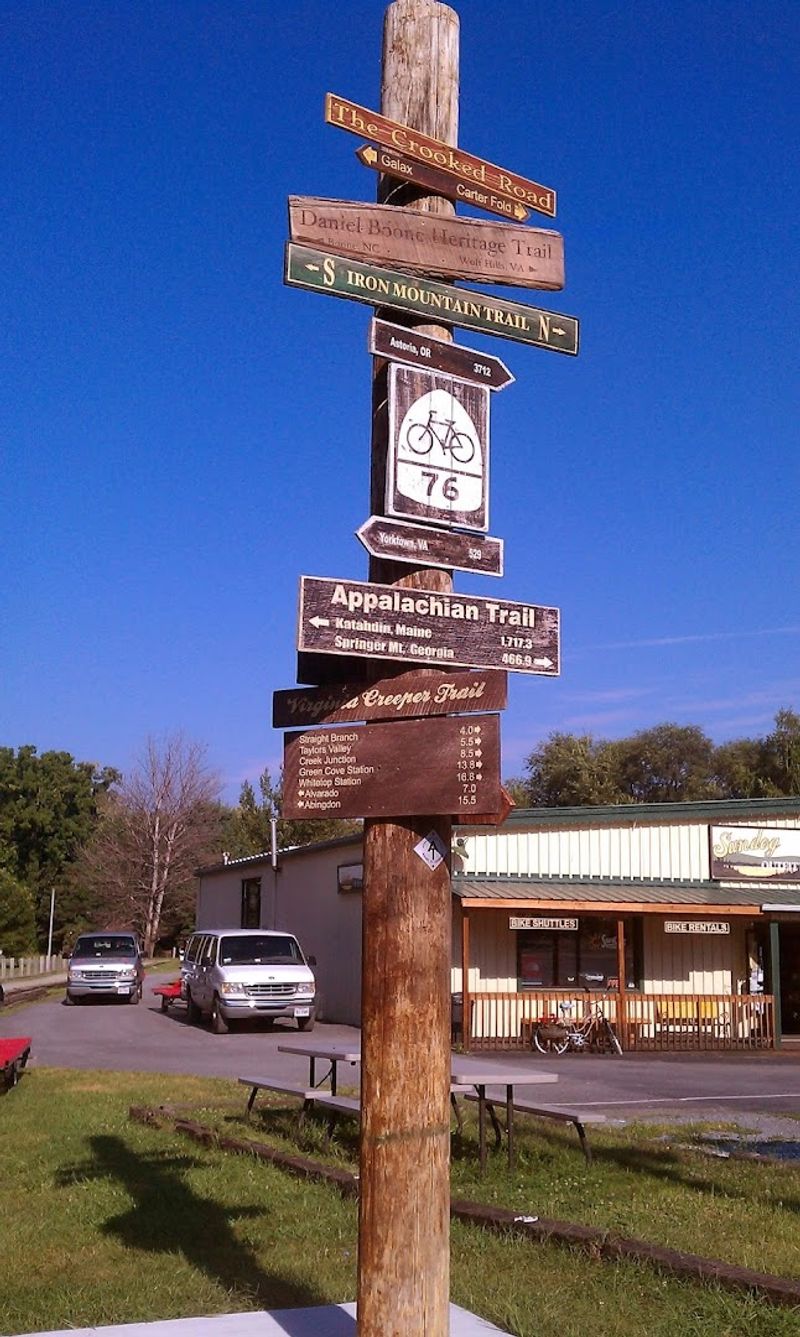
Some towns exist alongside trails. Damascus, Virginia, exists because of them.
This small community in Washington County has built its entire identity around outdoor recreation, and the result is a place that feels purpose-built for trail travelers.
The Virginia Creeper Trail passes right through town at 333 Douglas Dr, Damascus, VA 24236, making it easy to stop, rest, and explore without any extra effort. Local bike rental shops line the streets, so visitors who arrive without equipment have no trouble getting geared up quickly.
Cafes and small restaurants offer a well-earned meal after a long ride, and the general atmosphere is relaxed, friendly, and welcoming to strangers rolling in on two wheels.
Damascus also sits at the crossroads of the Appalachian Trail, which adds a different kind of energy to the town. Long-distance hikers and cyclists share the same streets, creating a community vibe that feels genuinely outdoorsy rather than just tourist-facing.
It is a town that walks its talk.
What The Trail Surface Feels Like To Ride
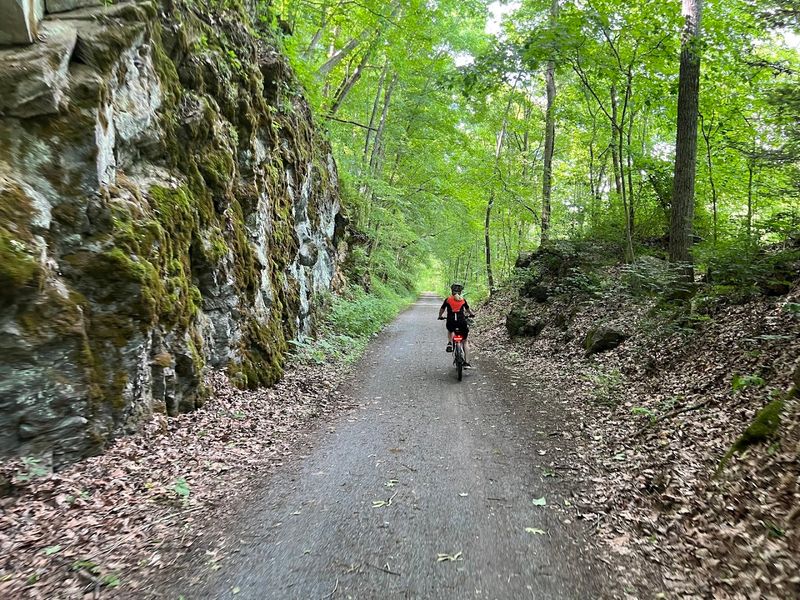
Trail surface matters more than most people realize before their first long ride. The Virginia Creeper Trail is a crushed gravel path, which means it is firm enough for smooth riding but soft enough to be forgiving on joints and backsides.
Standard hybrid bikes and mountain bikes handle the surface well. Road bikes with narrow tires can manage, but wider tires make the experience more comfortable overall.
The trail is not paved, so riders should expect a natural feel underfoot rather than the smoothness of a city bike path. That said, the trail is generally well-maintained and clearly marked throughout the open sections.
For those renting bikes locally, shops in Damascus and Abingdon typically offer equipment well-suited to the trail conditions. A gel seat cover, as more than a few riders have suggested, can make a meaningful difference on longer stretches.
The surface also drains reasonably well after rain, though muddy patches can appear after heavy storms in any season.
A National Recreation Trail With A Big Reputation
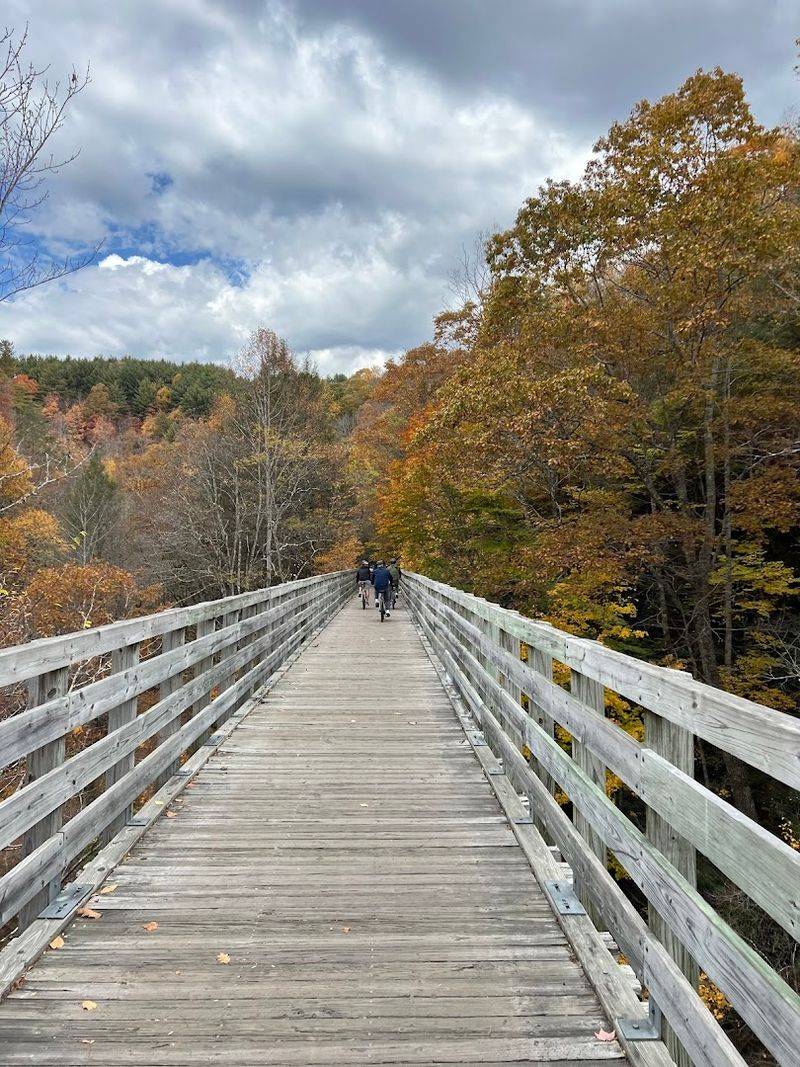
Not every trail earns national recognition, but the Virginia Creeper Trail has. It holds the designation of a National Recreation Trail, a status awarded to trails that demonstrate outstanding quality and public value across the United States.
This designation is not just a title on a sign. It reflects the trail’s consistent quality, its accessibility to a wide range of users, and its role as a significant piece of outdoor infrastructure in southwestern Virginia.
The trail regularly appears on lists of the best bike trails in the country, and that reputation continues to draw visitors from well outside the region.
The trail welcomes hikers, cyclists, and equestrians, making it one of the more versatile rail trails in the eastern half of the country. Dogs are welcome too, provided they stay on a leash.
Restrooms are available at certain points along the route, and small cafes pop up along the way to keep energy levels up during longer rides.
Hurricane Helene And The Trail’s Recovery
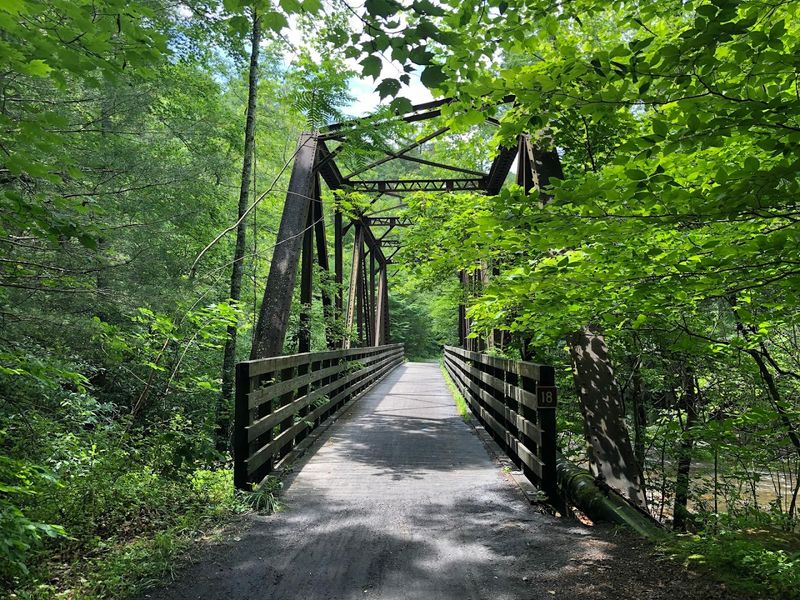
September 2024 brought a storm that changed the trail significantly. Hurricane Helene caused catastrophic flooding throughout southwestern Virginia, and the Virginia Creeper Trail took a direct hit.
Eighteen trestles were destroyed, and seventeen miles of trail were washed away entirely.
The damage was severe enough that large sections of the trail remain closed as of 2025.
The portion running from Abingdon to Trestle 16 near Damascus is open and rideable, but the stretch from Damascus to Whitetop is not.
Crews are actively working on repairs, and the federal government has committed substantial funding to restore the trail to full operation, with a projected reopening of the closed section in fall 2026.
Even in its current reduced state, the open section of the trail offers a rewarding experience.
Visitors who have ridden it recently report that the scenery remains stunning and the ride is still very much worth making the trip.
The community spirit around the recovery effort has been visible and genuine throughout the process.
Best Time Of Year To Visit
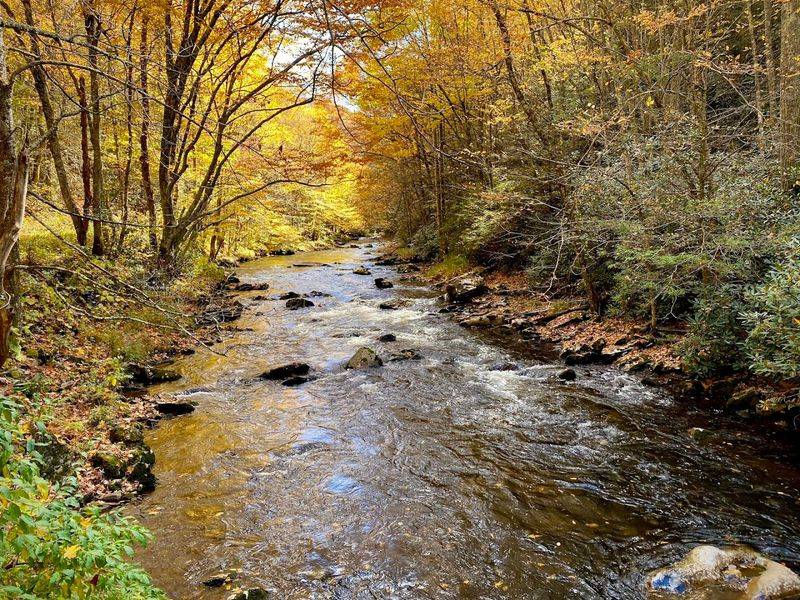
Timing a trail visit well can turn a good trip into a great one. The Virginia Creeper Trail is open year-round, but the experience changes dramatically depending on the season.
Fall is widely considered the peak season, and for good reason. The Appalachian highlands surrounding the trail put on a spectacular color show from mid-October onward, with the forested corridor turning shades of orange, red, and gold.
Crowds do pick up during peak fall weekends, so arriving early in the day helps avoid congestion on narrower sections of the path.
Spring and early summer bring lush green canopies and flowing streams that make the riverside sections especially scenic. Summer heat is moderated by the tree cover along most of the trail, making midday rides more bearable than on exposed paths.
Winter visits are quieter and peaceful, though some services and rental shops may have limited availability. Checking current trail conditions before any visit is always a smart move.
Renting Bikes And Using Shuttle Services
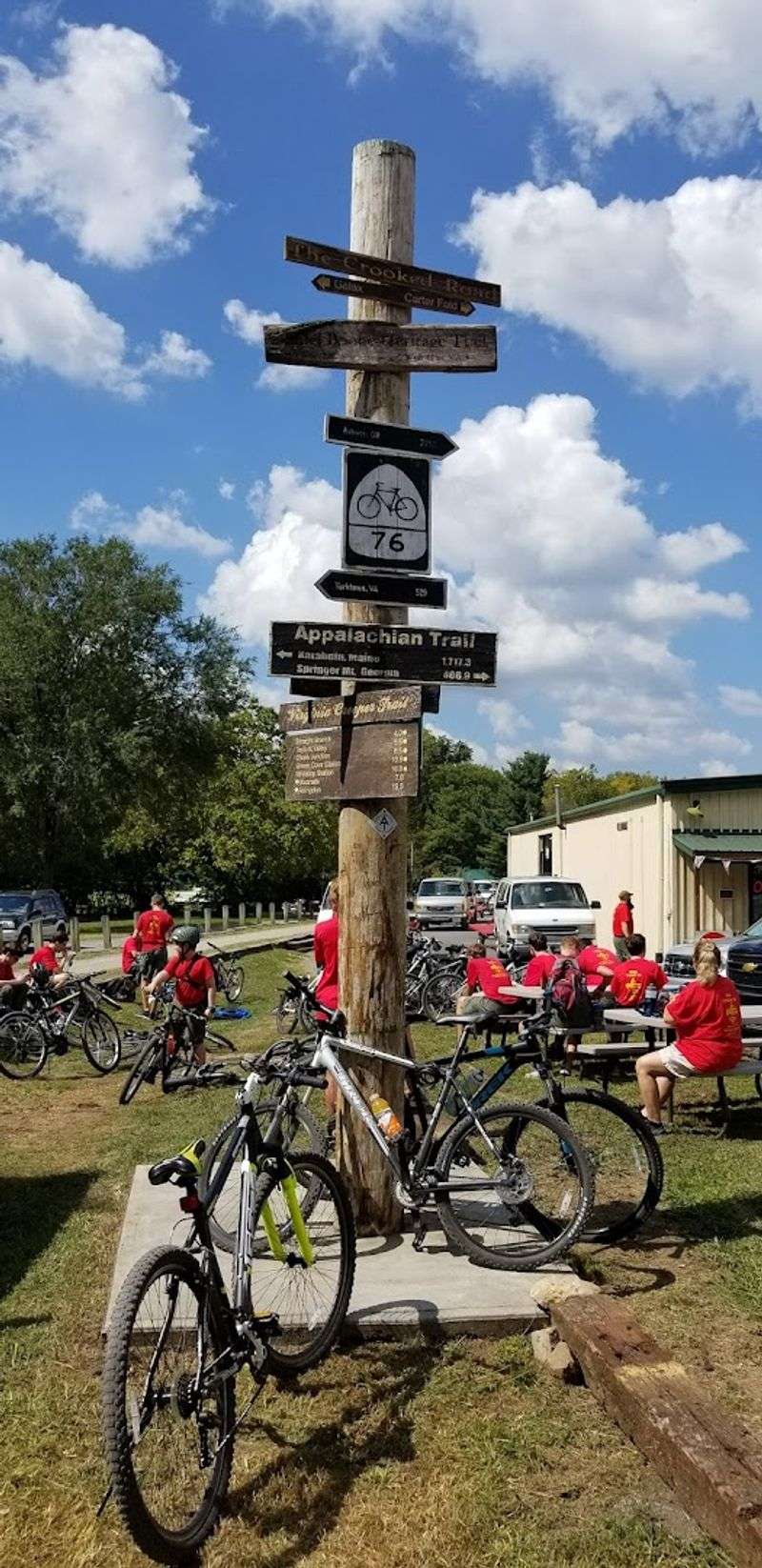
Arriving without a bike is not a problem on this trail. Damascus and Abingdon both have bike rental shops that cater specifically to Virginia Creeper Trail visitors, offering a range of bike styles suited to the gravel surface.
The shuttle system is what makes the downhill ride so accessible to casual cyclists. Riders load their bikes onto a shuttle van, get transported to the Whitetop end of the trail, and then coast their way back down toward Damascus or Abingdon.
The whole system is designed to make the experience as easy as possible, even for first-timers who have never done anything like it before.
Rental shops typically handle bike fitting, helmet rentals, and basic safety briefings before sending riders on their way. Reservations can be a smart idea during busy seasons, as demand picks up significantly on weekends and holidays.
The local businesses that run these services are deeply invested in the trail and tend to be genuinely helpful and knowledgeable about current conditions.
Practical Tips For First-Time Riders
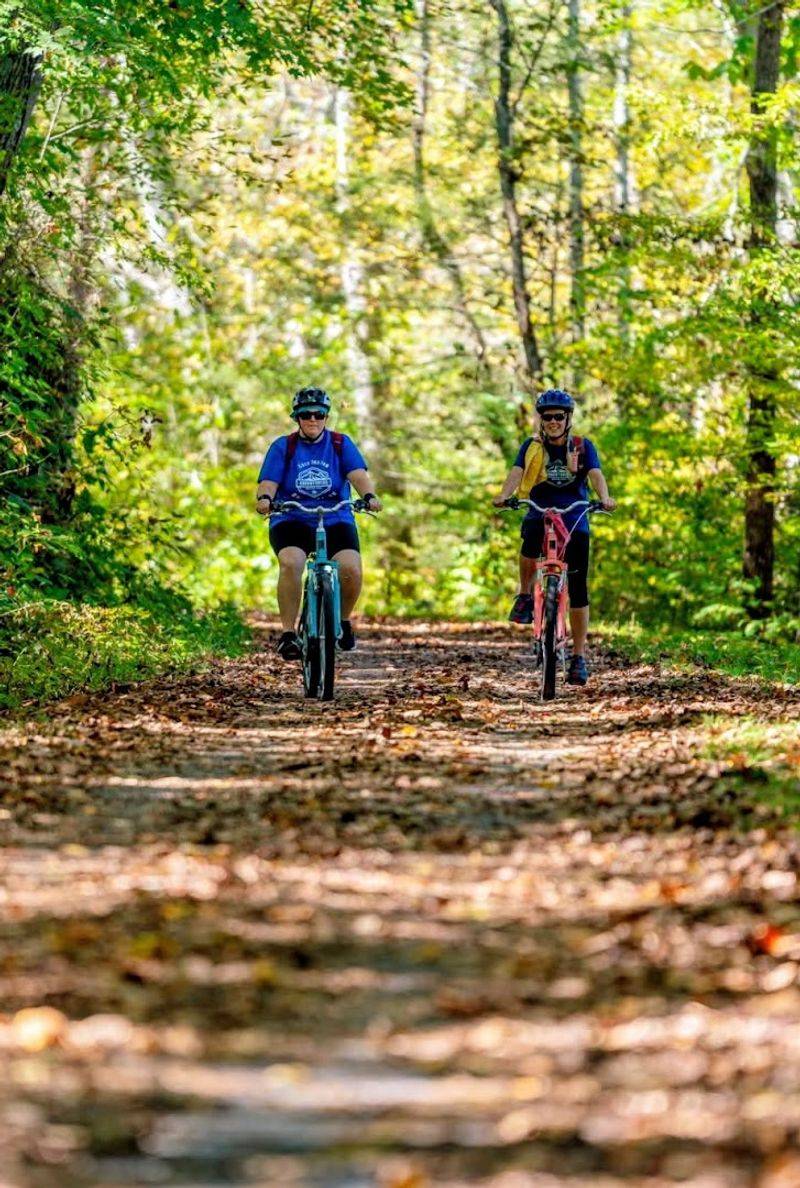
A little preparation goes a long way on any trail ride. For first-timers on the Virginia Creeper Trail, a few simple steps can make the difference between a smooth day and an avoidable headache.
Cell service is limited or nonexistent through much of the trail, so downloading an offline map before leaving is a practical move.
Splitting up from a group without a clear meeting plan can lead to long waits at unmarked spots. Bringing enough water and snacks matters too, even though small cafes appear at certain points along the route.
Calling out “on your left” when passing other trail users is standard etiquette and keeps everyone safe on narrower sections.
The trail is dog-friendly, but pets must stay leashed at all times. Restrooms are available at trailheads and a few points along the way.
Finally, checking current trail conditions before visiting is especially important right now, given that sections between Damascus and Whitetop remain closed during the ongoing recovery from storm damage.