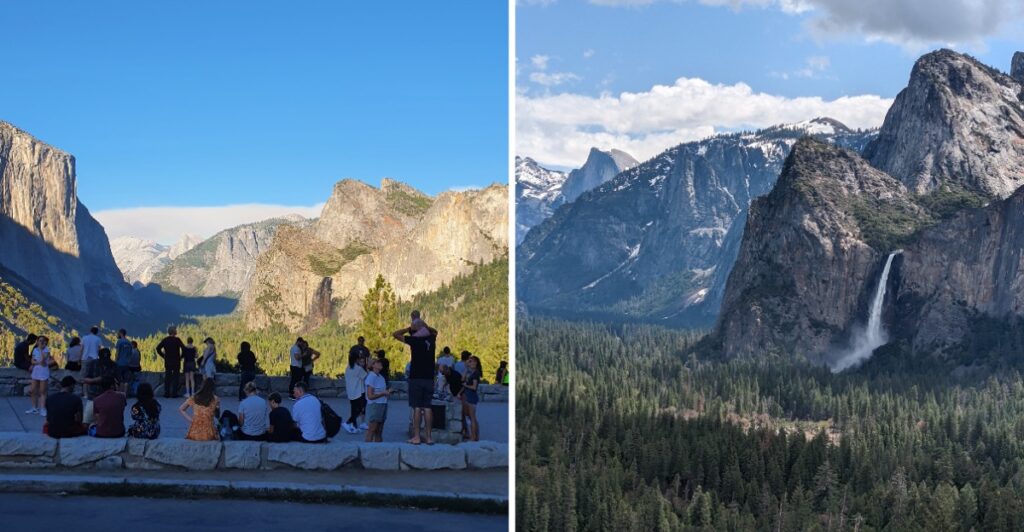
You drive through 4,233 feet of solid granite, and then the mountain simply lets go. One second it’s tunnel lights. The next, a whole valley spreads out in front of your windshield.
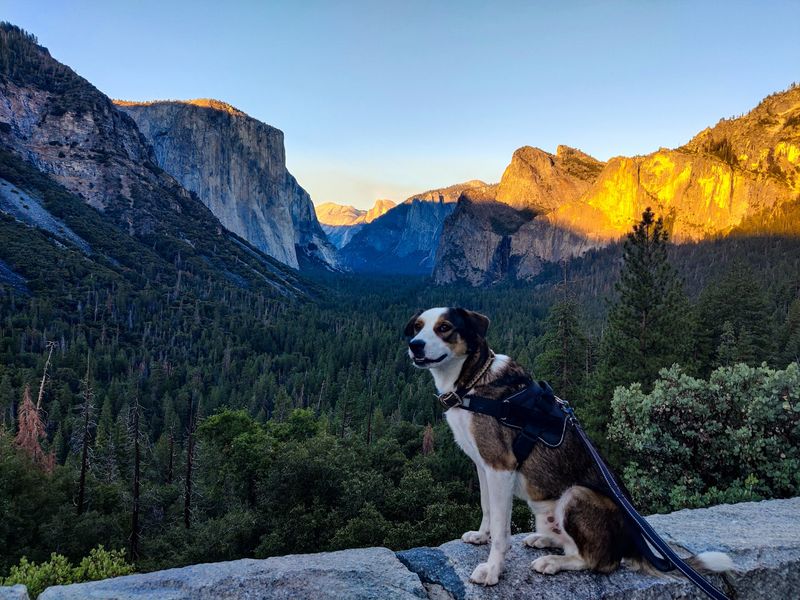
A giant cliff stands on the left. A famous dome sits dead center. A waterfall drops on the right, like someone arranged the scenery for a photo.
I like how no hiking is required for this one. You park, walk a few steps, and the view does all the heavy lifting. I can’t imagine a more dramatic way to say hello to the mountains of California.
And here’s what gets me. The engineers who built that tunnel in the early 1930s planned this moment on purpose. Talk about a grand entrance.
The Mountain Opens Up Right When You Leave The Tunnel
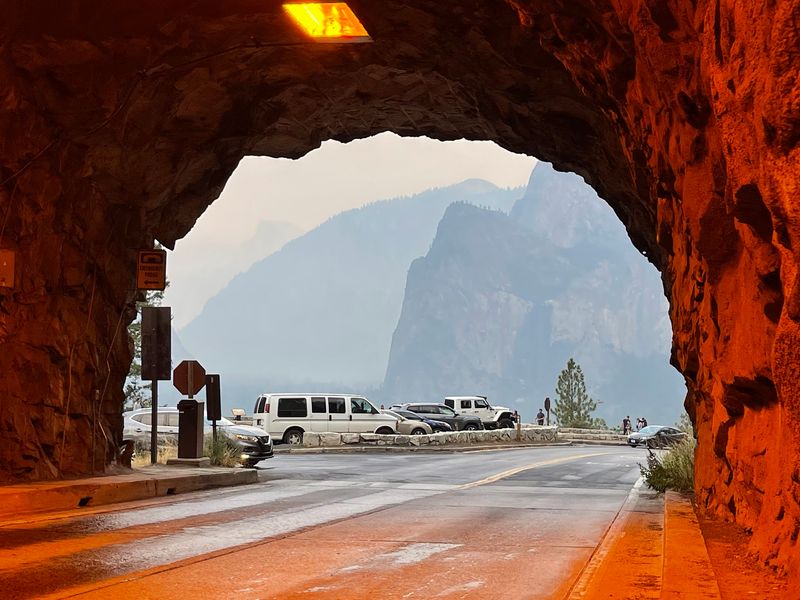
Darkness first, then the big reveal. Tunnel View sits at the eastern mouth of the Wawona Tunnel in Yosemite National Park, and that placement is no accident.
Drivers coming north from the south entrance spend a long stretch inside the mountain. When the tunnel ends, Yosemite Valley appears all at once, like a curtain lifting on a stage.
That surprise is a big reason the overlook ranks among the park’s most famous viewpoints. You don’t creep toward the scenery slowly. It arrives in one full sweep.
Here’s a friendly tip for the driver. Keep your eyes on the road as you exit, because the parking areas come up fast.
There are two lots right outside the tunnel along the road. One sits on the north side and is larger, while a smaller one sits on the south side.
Pull in, turn off the engine, and then let yourself stare. Your passengers will probably beat you out the door, and honestly, who could blame them?
The whole stop takes only a few minutes if you’re rushed. Most people find that a few minutes feels way too short once they see it.
Three Superstars Share One Frame Here
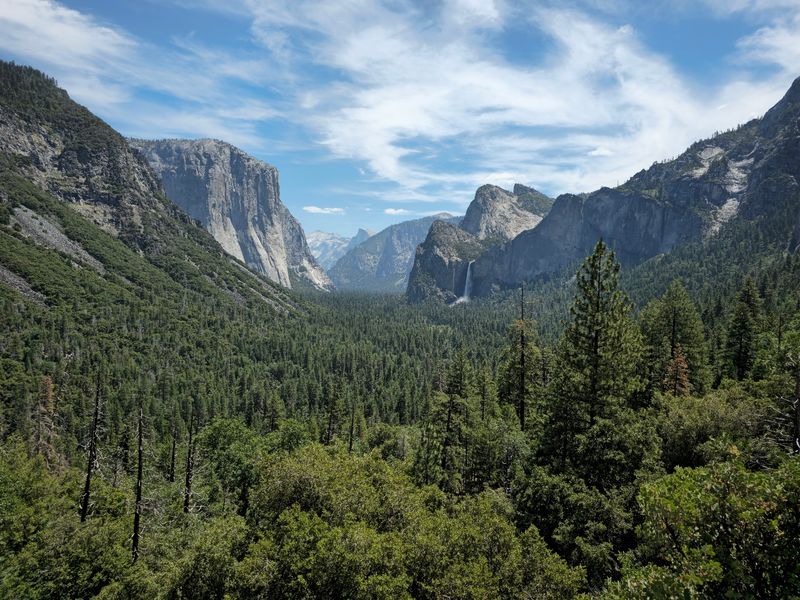
El Capitan gets the left side of the stage. This sheer granite wall rises more than 3,000 feet above the valley floor, and it looks impossibly smooth from here.
Half Dome takes the center spot, far off in the distance. Its rounded top and flat face make it one of the easiest shapes to recognize in America.
Bridalveil Fall finishes the trio on the right. The water pours over a cliff beside Cathedral Rocks, often sending up a soft mist.
That’s the magic of Tunnel View in one sentence. A famous dome, a giant cliff, and a waterfall all fit inside a single photo.
Keep looking, though, because the supporting cast is good too. Sentinel Rock and Clouds Rest also show up in the scene if you know where to look.
A fun game for kids is naming each landmark before reading any signs. Point at the big wall, the round dome, and the falling water.
You’ll find interpretive signs nearby to check your answers. Few roadside stops pack this many headline features into one easy glance.
A 1933 Engineering Feat Built This Grand Entrance
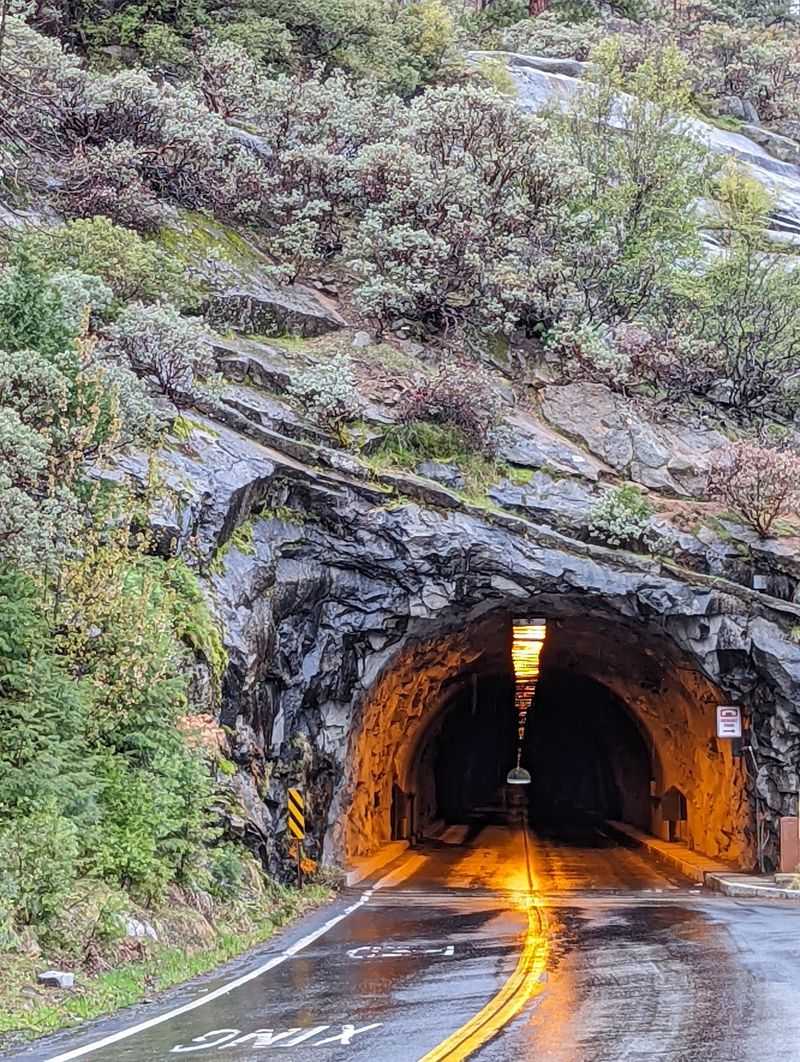
Workers spent nearly two years boring through solid granite to make this view possible. The Wawona Tunnel was completed in April 1933.
It was officially dedicated on June 10 of that same year. At 4,233 feet long, it holds the title of the longest highway tunnel in California.
Not bad for a project from the early 1930s, right? Back then, nobody had the modern machines that crews use today.
The tunnel and the overlook were designed in the National Park Service rustic style. That style aimed to blend roads and structures with the natural setting.
Their design was strong enough to earn eligibility for the National Register of Historic Places in 1986. So this pull-off is a piece of history, not just a parking lot.
Since opening, the view has greeted tens of millions of visitors. That’s a lot of jaws hitting the pavement over the decades.
Next time you drive through, think about the crews who carved that path. Every great photo taken here owes them a small thank-you.
Ansel Adams Helped Make This Scene World Famous
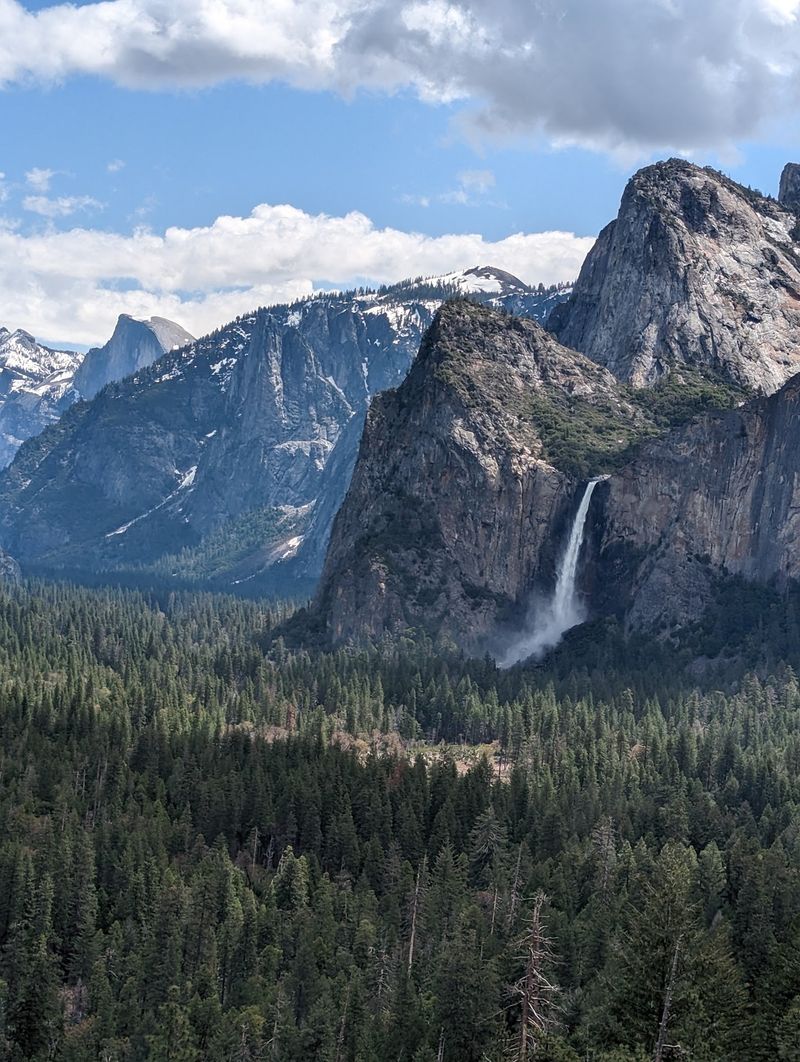
Some views get famous slowly, and some get help from a legend.
Ansel Adams photographed Yosemite Valley from this area and helped spread its fame around the world.
His black-and-white images showed the cliffs and clouds with huge drama. They made people far from California want to see these rocks in person.
Today, the same angle shows up in countless photos and paintings. You’ve probably seen it on a poster or a screen saver without knowing its name.
That’s what makes standing here a little funny. The real thing can feel familiar, even on your very first visit.
Want to try your own tribute shot? Set your phone to black-and-white mode and wait for clouds to drift past the cliffs.
Moody weather can add a lot of character to the picture. Fog and storms make the granite look even bigger and bolder.
You won’t match a master on day one, and that’s fine. Making your own version of a famous image is half the fun.
Golden Hour Turns The Granite Into A Light Show
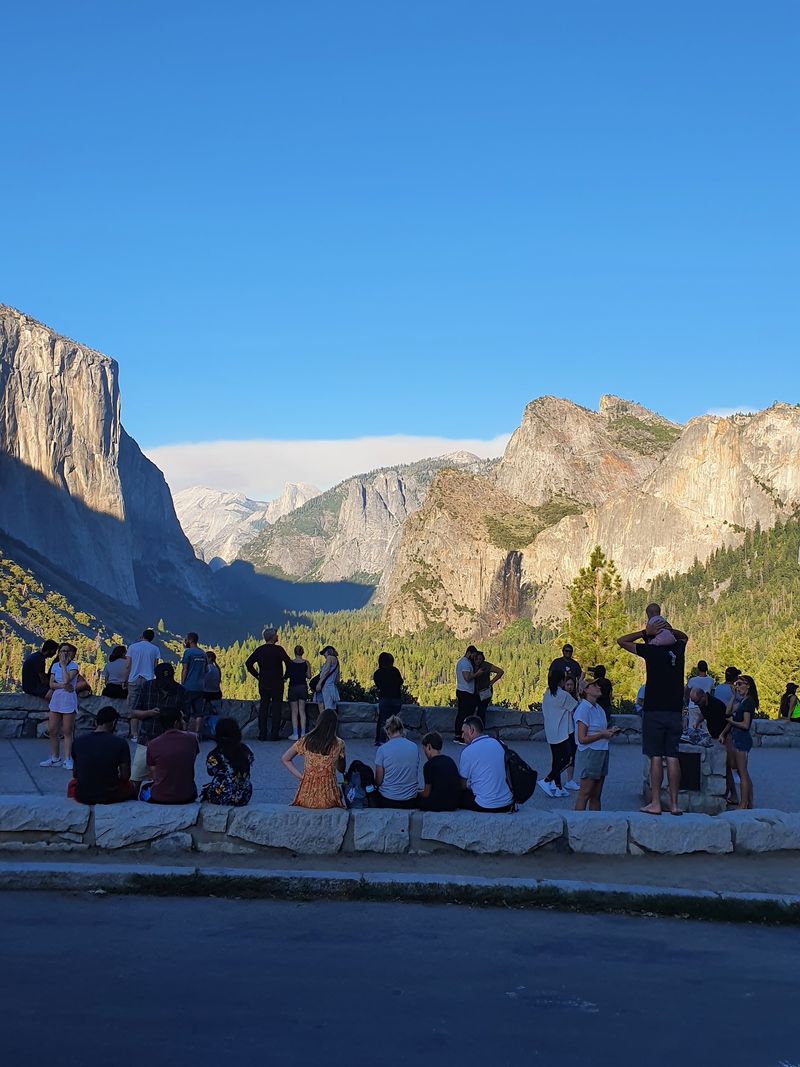
Timing matters more than your camera here. Photographers often point to sunrise and sunset as the best moments at Tunnel View.
At dawn, the sun can warm the face of Half Dome with golden tones. Low light also shows off the cracks and textures in the rock.
Sunset brings its own color show. Western light can paint El Capitan and Bridalveil Fall in rich, glowing shades.
Midday isn’t a waste, either. The sun sits higher and the valley looks bright, green, and crisp.
Got a free afternoon? Try visiting at two different times and compare your photos side by side.
The change can feel like seeing two separate places. Same rocks, totally different mood.
On clear nights, the overlook also works for looking up at the stars. Bring a warm layer, since mountain evenings can cool off quickly.
A small tripod can help with low-light shots. Even a phone propped on a jacket can do the trick in a pinch.
Spring Snowmelt Gives The Waterfall Its Loudest Moment
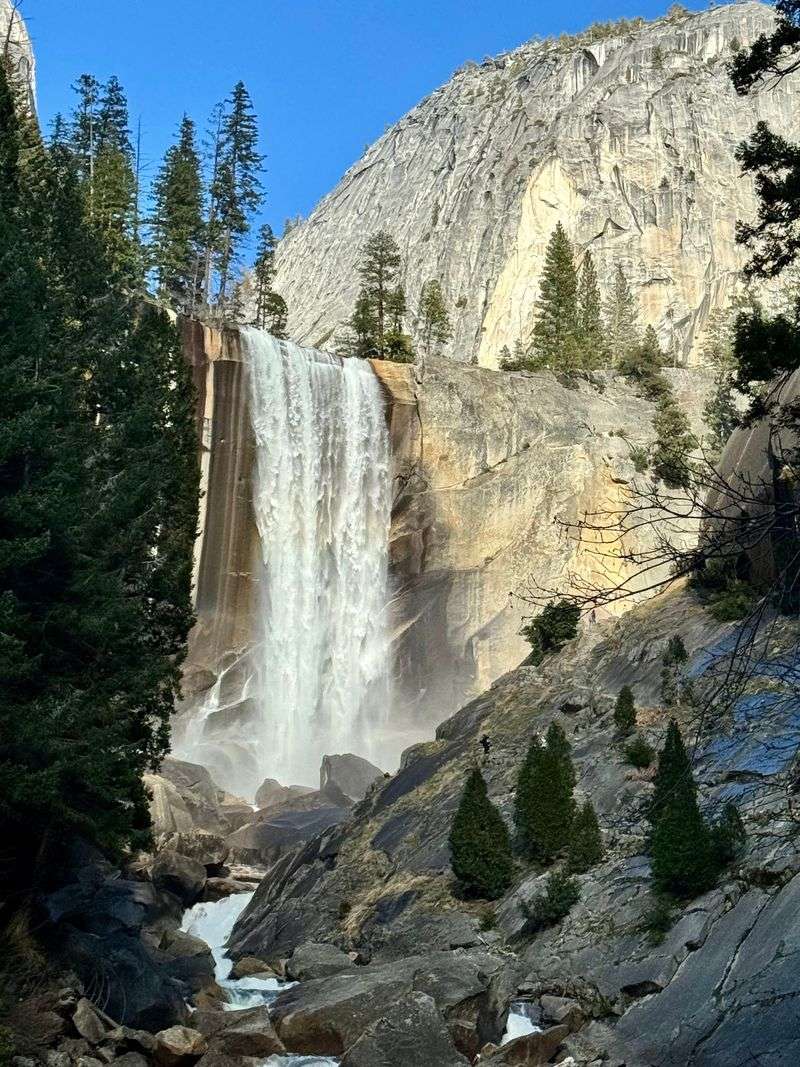
Bridalveil Fall doesn’t look the same all year. Spring snowmelt usually gives the waterfall its biggest flow.
That’s when the water looks strong and full from the overlook. The valley below also turns lush and green during this season.
Winter tells a quieter story. Snow can cover the cliffs and trees, and mist may drift through the valley.
Sometimes clouds hide part of the scene completely. That can feel disappointing, but a sea of fog has its own strange beauty.
Tunnel View is open all year, so every season gets a turn. Each one gives the same landmarks a brand-new outfit.
Winter visits need extra planning, though. Wawona Road, also called Highway 41, can get icy or snowy.
Tire chains may be required during storms. Always check park road conditions before heading out in colder months.
A little preparation keeps the trip fun instead of stressful. And a snowy Half Dome is well worth the extra effort.
Pack Snacks Because This Stop Keeps Things Simple
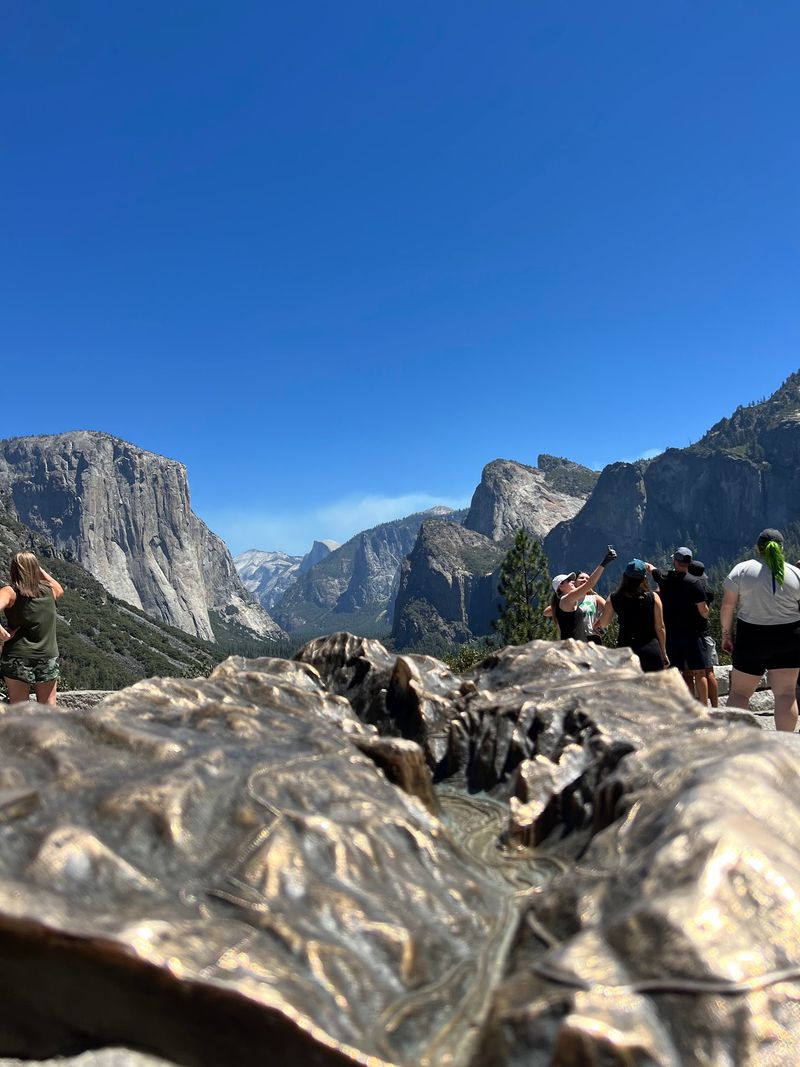
Views here are endless, but services are not. Tunnel View has no restrooms, no food vendors, and no drinking water.
So plan your snacks and bathroom breaks before you arrive. Bridalveil Fall’s area nearby is a common next stop for restrooms.
The overlook does offer some helpful extras. You’ll find trash and recycling bins plus interpretive signs about the landscape.
The coolest feature might be the bronze tactile model of Yosemite Valley. You can touch the shapes of the cliffs and then compare them to the real thing.
Kids usually love that kind of hands-on map. It’s also a thoughtful way for visitors with low vision to explore the view.
The viewpoint is wheelchair accessible, and no hiking is needed. Strollers and folks who move slowly can enjoy it easily.
The overlook sits at Wawona Rd, California 95389, United States. It’s a roadside stop inside Yosemite National Park, so park entry rules still apply.
Keep things tidy and pack out what you bring. Everyone after you deserves the same clean view.
Climb Higher For A Quieter Look At The Valley
Long before the tunnel existed, an older road climbed above this spot. Part of that route now serves as the trail to Inspiration Point.
The trailhead starts in a corner of the Tunnel View parking area. The round trip runs about 2.6 miles and climbs roughly 990 feet.
Along the way, you’ll find several open viewpoints higher up. The valley spreads out even wider from these perches.
Want something shorter? Artist Point is another option from the same area.
It offers a calmer angle on the same famous scenery. Fewer people means more room to breathe and look around.
Bring water, since the overlook doesn’t sell any. Good shoes help too, because the trail can be rocky and steep.
These hikes turn a quick photo stop into a real adventure. You’ll earn your view instead of just parking for it.
And when you return to the main overlook, the scene feels different somehow. Maybe that’s what happens when a famous picture finally becomes your own story.