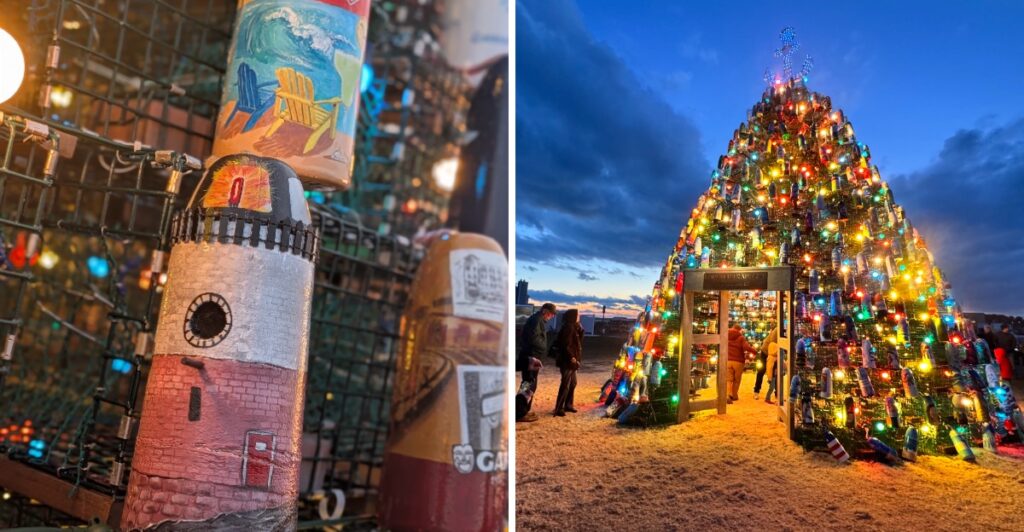
A Christmas tree made from 460 lobster traps? Someone in Connecticut looked at a pile of fishing gear and saw holiday decorations. That idea grew 40 feet tall.
Building it takes thousands of zip ties and an actual structural engineer. Yes, someone has to make sure 460 lobster traps stay stacked when the coastal wind picks up.
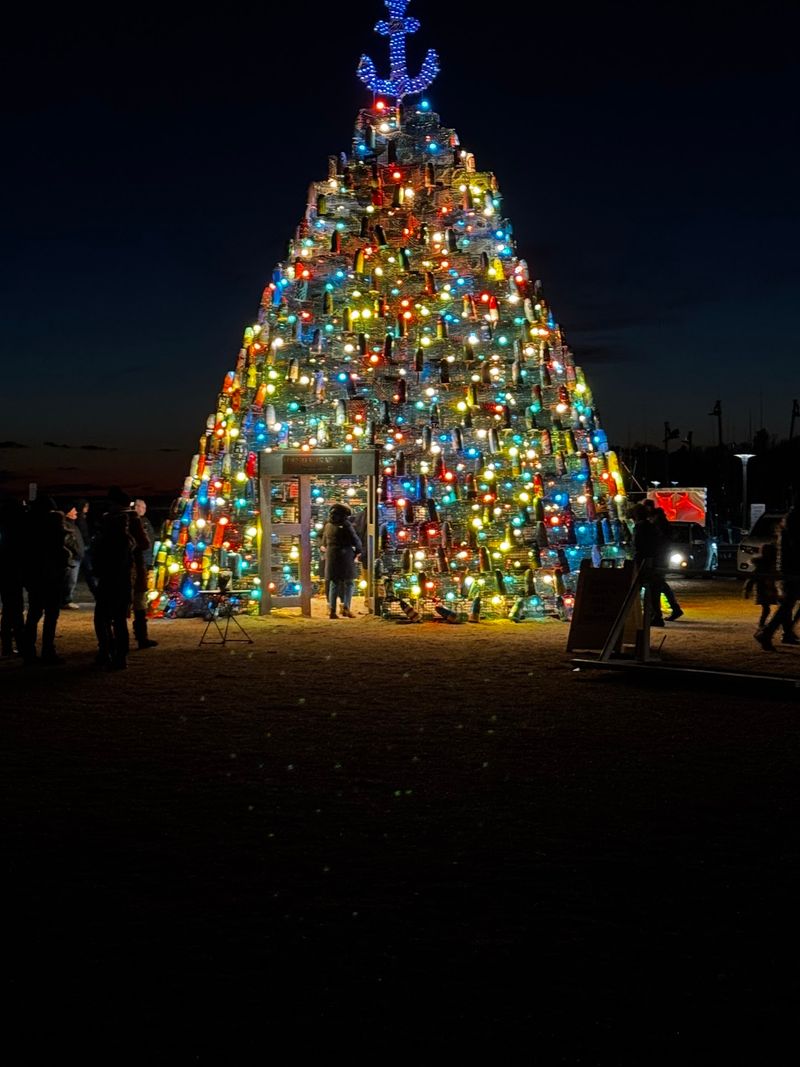
A five-foot illuminated anchor tops the tree, changing colors throughout the night. And you can walk right inside and look up through 40 feet of lobster traps. How often does a Christmas tree let you do that?
The BBC once included it among the world’s 18 most amazing Christmas trees. Quite an achievement for a fishing town.
And the best part? Those lobster traps spend the holidays catching compliments instead of lobsters.
Four Hundred Sixty Traps Walk Into A Harbor And Become A Landmark

Lobster traps usually spend their lives on the ocean floor. Every winter, the Stonington Lobster Trap Tree gives 460 of them a much better view.
The traps get stacked into a cone that climbs roughly 40 feet into the coastal sky. Thousands of zip ties lock the whole thing together, which is a lot of tiny plastic heroes doing serious work.
Nobody just eyeballs a project like this. A structural engineer takes part in the build and inspects the finished tree before the public gets close.
That matters on a Connecticut waterfront where winter wind doesn’t exactly play nice. The result looks playful, but the planning behind it is completely serious.
Up close, you can see the wire mesh and frames that make each trap a working piece of fishing gear. Stack enough of them together, and suddenly the gear reads as branches.
It’s a clever trick of scale. From a distance, your brain says Christmas tree first and lobster equipment second.
Take a slow lap around the base before you do anything else. The layered traps look different from every side, especially as daylight shifts over the docks.
Bring a jacket, too. Waterfront air in December tends to remind you exactly where you are.
Hundreds Of Painted Buoys Turn The Branches Into A Gallery
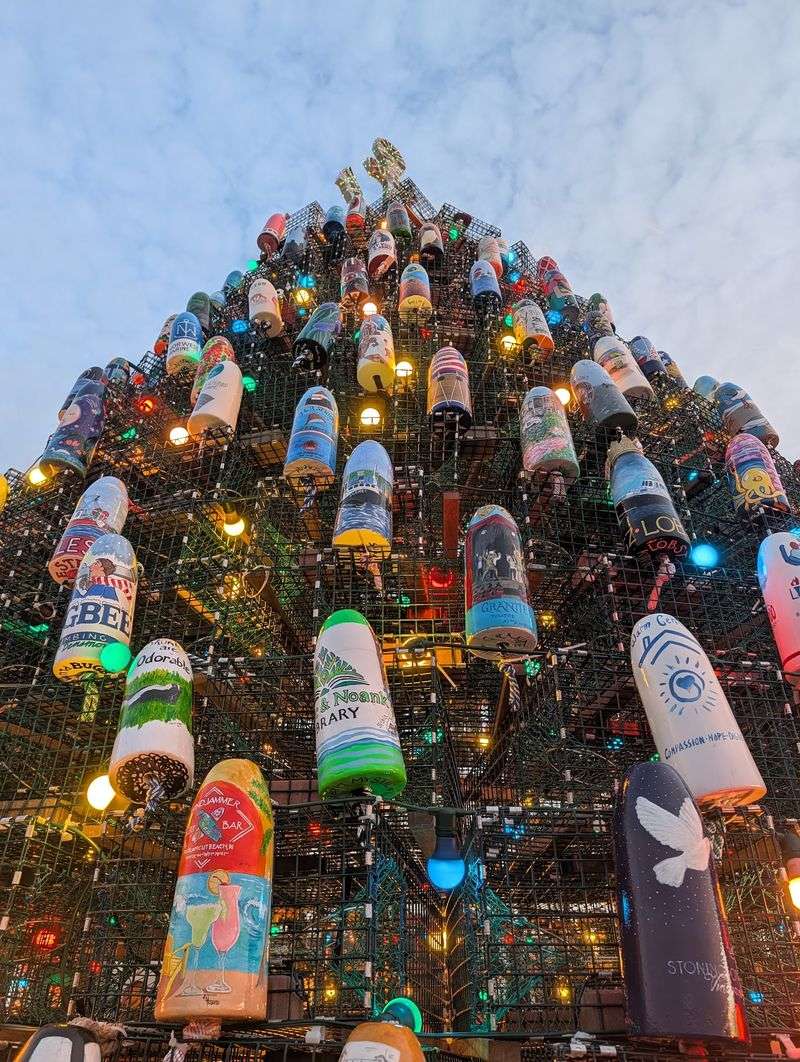
Forget glass ornaments. The decorations here are 500 hand-painted buoys, and each one is a small work of art.
Professional artists paint many of them, and local children add their own creations. Community members and sponsors round out the collection with buoys of their own.
The numbers for 2026 tell a fun story. There are 216 sponsor buoys, 183 artist buoys, and 39 painted by Stonington children.
Another 22 honor commercial fishermen, while 30 come from community members. Seven memorial buoys and three wedding buoys complete the mix.
Here’s a rule worth remembering before you lean in. Organizers ask visitors not to touch the buoys, since they count as fine art.
That’s easy to forget when a cheerful design sits right at eye level. Keep your hands in your pockets, which the December breeze will encourage anyway.
Give yourself time to read the tree like a book. Some designs feel whimsical, while others clearly carry deep meaning for local families.
Spotting the fishermen buoys is especially rewarding. Those 22 pieces connect the decorations straight back to the working harbor right beside you.
Every lap reveals something you missed before. Bring patience along with your camera.
Look Up, Because That Glowing Anchor Means Something
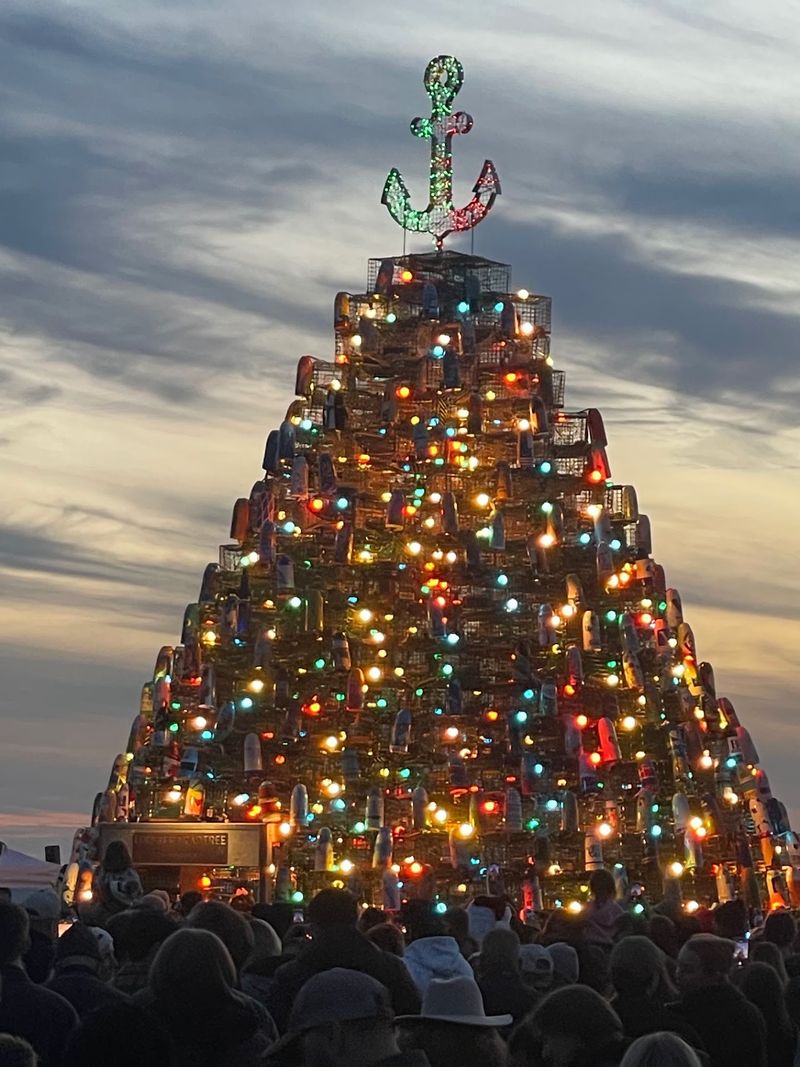
Most trees wear a star. This one wears a five-foot illuminated anchor that changes colors after dark.
The choice isn’t random decoration. The anchor honors the borough’s long fishing heritage and stands as a symbol of hope.
That symbol shows up in more than one place around town. It matches the town’s official logo and the logo of the Ocean Community Chamber of Commerce.
So the topper ties the whole display to local identity. It quietly tells you where you are and what this community values.
The current anchor is fairly new to the job. A fresh aluminum version was commissioned in 2023 to crown the tree.
Watching it shift colors at night is one of the simple joys of a visit. Each change gives the whole tree a slightly different mood.
Photographers, here’s a small tip. Step back far enough to frame the anchor with the full tree below it.
Getting both in one shot takes a little walking, but the result is worth it. Too close, and you’ll mostly capture traps and sky.
Honestly, an anchor might be the most fitting topper any harbor town could choose. A star just wouldn’t feel the same here.
Yes, You Can Actually Stand Inside This Tree

Here’s a tree that invites you in. Visitors can step inside the Stonington Lobster Trap Tree and see the structure from the middle.
That’s a rare treat for any holiday display. Most trees keep you at arm’s length, but this one opens its doors.
The best move once you’re inside is simple. Tilt your head back and look straight up toward the top.
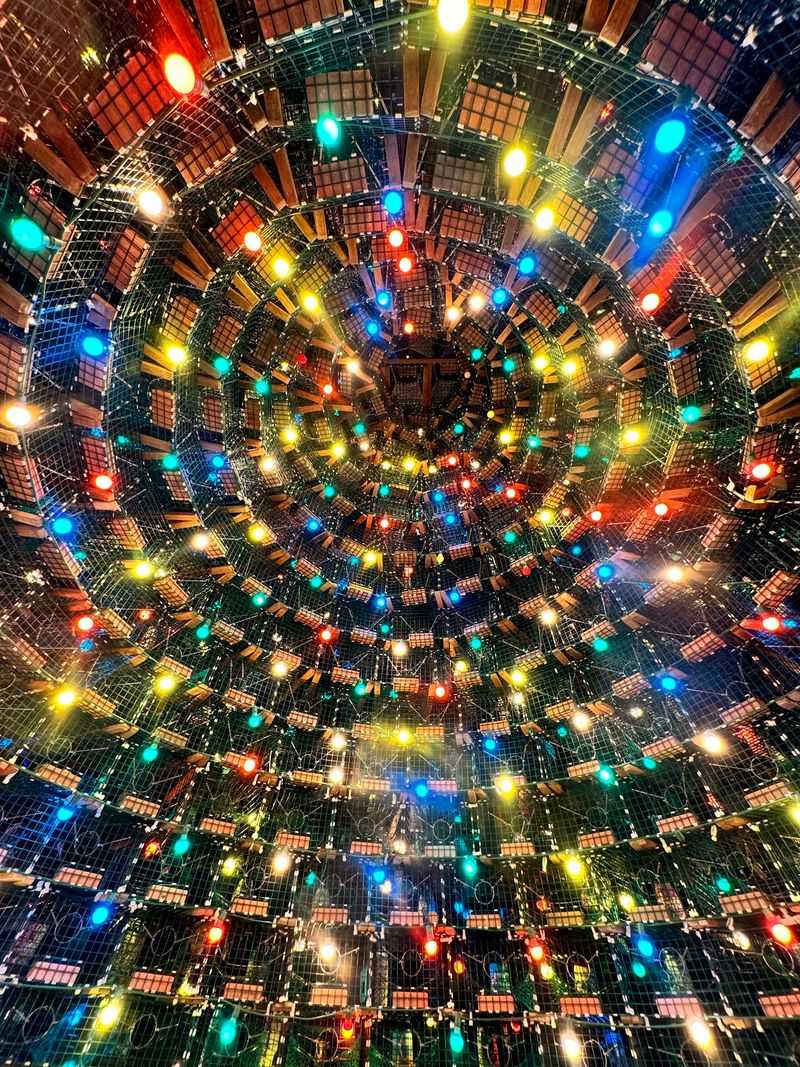
Layers of traps stack above you, framing the lights and sky like a tunnel. It’s a view you won’t get from the dock.
Photos from inside tend to come out wonderfully strange. The repeating wire shapes make an eye-catching pattern that feels almost dizzy in the best way.
Bring a phone with a wide-angle setting if you have one. It helps capture more of the climbing walls in a single frame.
Families love this part for an obvious reason. Kids get to be inside a giant Christmas tree, which beats most holiday photo props easily.
Just remember the hands-off rule for the buoys still applies inside. Admire the art with your eyes and your camera.
Then step back out and look at the tree again. It somehow seems bigger afterward.
A Massachusetts Road Trip Sparked The Whole Idea
Plenty of great ideas start with a little envy. In January 2020, Lisa Fabian, then known as Lisa Konicki, spotted a lobster trap tree in Gloucester, Massachusetts.
Fabian serves as president of the Ocean Community Chamber of Commerce. That group now leads the effort to produce the tree each year.
Her plan didn’t launch right away, though. The COVID-19 pandemic pushed the project back until 2021.
When it finally arrived, the timing felt right. A free outdoor display gave people a reason to gather safely by the water.
The tradition has grown fast since that first season. The 2026 edition marks the sixth annual Stonington Lobster Trap Tree.
Here’s a quirky fact for your next trivia night. The tree is copyrighted every year, which says a lot about how seriously organizers treat the design.
Fishing gear turning into public art fits this place perfectly. Stonington has strong ties to commercial fishing, and the tree celebrates that story.
Six years in, it already feels like it has always been here. That’s the mark of a tradition that found the right home.
Gloucester may have planted the seed. Connecticut gave it room to grow.
When To Visit The Lobster Trap Tree

The holiday display opened on Saturday, November 21, 2026. The official lighting ceremony was scheduled for 4:30 PM at the town dock.
That kicked off the season for the Stonington Lobster Trap Tree. The display stays up through January 3, 2027.
Parking near the water can get tight in a small borough. Parking is available at the Stonington Town Fisherman Docks and in designated Water Street areas.
Permitted street parking in the borough also works. Just read signs carefully before you leave your car.
Plan to arrive in the late afternoon. Seeing the buoys in fading daylight and illuminated after dark gives you two views in one trip.
Dress for a chilly harbor evening, since late November and December by the water rarely feel warm. Gloves and a hat make the visit far more pleasant.
Then watch the traps glow against the evening sky. It’s a fine way to enjoy the holiday season.
Some Of That Art Can Go Home With You
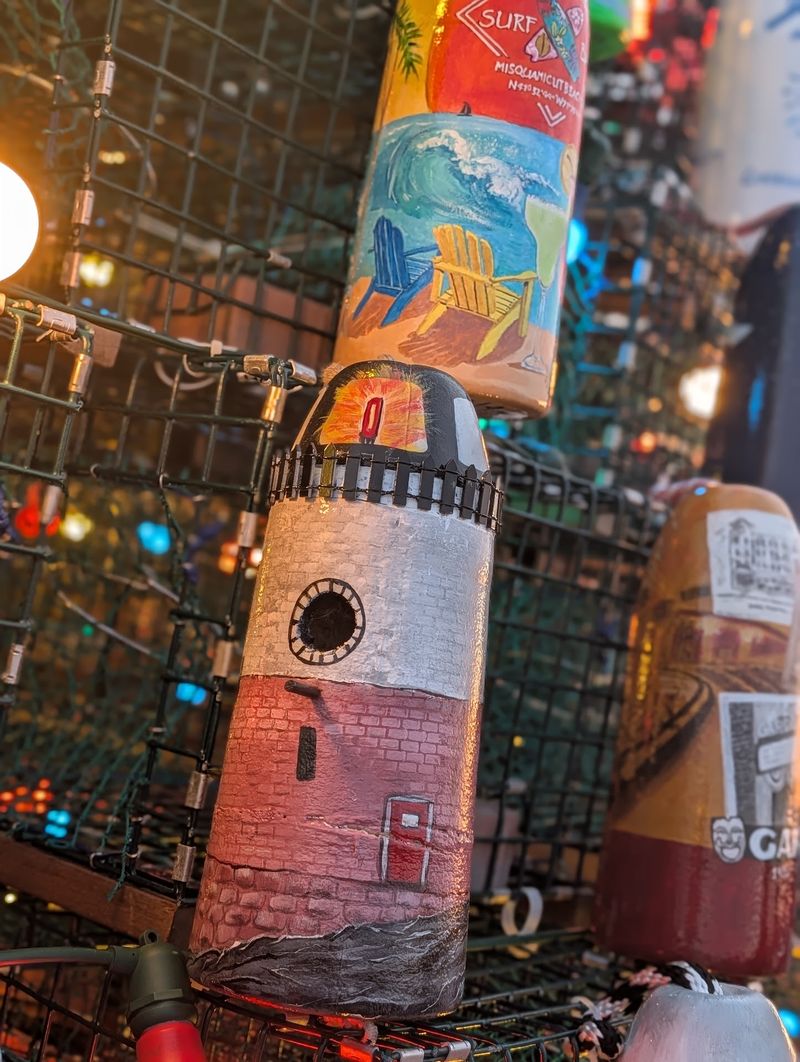
Falling for a buoy is easy. The good news is that the 183 artist buoys are available through an auction.
Bidding runs from November 21 to January 16, 2027. The auction takes place at The Hounds in Stonington Borough, and online bidding is also available.
Organizers call the tree an architectural and artistic masterpiece. They also describe it as probably the largest outdoor art exhibit in the state of Connecticut.
That’s a bold claim, but the numbers back up the ambition. Hundreds of painted pieces hang in one spot for weeks.
The project supports working artists, too. Professional artists get paid to paint the sponsor and fisherman buoys.
Talent comes from both Connecticut and Rhode Island. The tree showcases those artists while drawing visitors to the area.
Before you bid, study the buoys on the tree first. Seeing a design outdoors under lights helps you decide what truly catches your eye.
A painted buoy makes a memorable keepsake from a holiday trip. It’s art with a story attached, which beats a fridge magnet.
Winning one means a piece of this tradition keeps living at your house. Not bad for a former floating marker.
The Borough Around It Dresses Up For December
Once you’ve seen the tree, the fun keeps going in the borough itself. Storefronts and houses get decorated for the holidays, giving the small village plenty of seasonal charm.
The tree sits at the Stonington Town Dock, 1 High Street, Stonington Borough, CT 06378. From there, the village streets make an easy follow-up stroll.
Kids might enjoy the Find the Buoy Holiday Scavenger Hunt. It turns a casual walk into a mission, which helps young legs keep moving.
Stonington also holds a traditional tree lighting in Wadawanuck Square. That event is separate from the lobster trap display, so you could catch both.
A Holiday Stroll follows that lighting. Merchants keep their shops open late, which makes gift shopping feel far more festive.
This pairing is a smart way to plan a full outing in Connecticut. See the traps first, then wander toward the decorated village.
Check event dates before you go, since each one has its own schedule. That way you won’t miss the extras.
Few holiday traditions in Connecticut feel this rooted in place. Pick a day, grab a coat, and go see the traps shine.