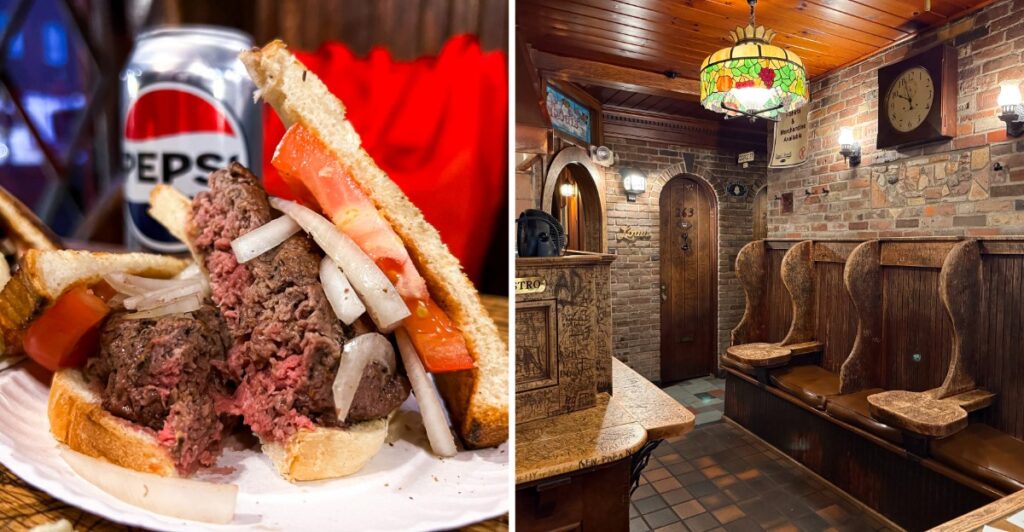
Who invented the hamburger?
Careful. That question can start an argument.
One Connecticut lunch counter has been making its case since 1900, when a quick meal of ground beef served between bread supposedly changed lunch forever. Other origin stories exist, so the crown is still very much up for debate.
The burger itself, though, has barely bothered with modern trends.
It still cooks on antique cast-iron equipment. It still arrives on white toast. And the topping situation remains refreshingly short.
No towering stack. No elaborate sauce strategy. Just a burger prepared much the way generations before you would have ordered it.
That may be the most interesting part.
You are not eating a recreation of an old recipe. You are ordering from a kitchen that never really stopped making it.
As for who invented the hamburger? Maybe lunch is more enjoyable when that argument stays unresolved.
The Spot That Claims To Be The Birthplace Of America’s Hamburger Sandwich
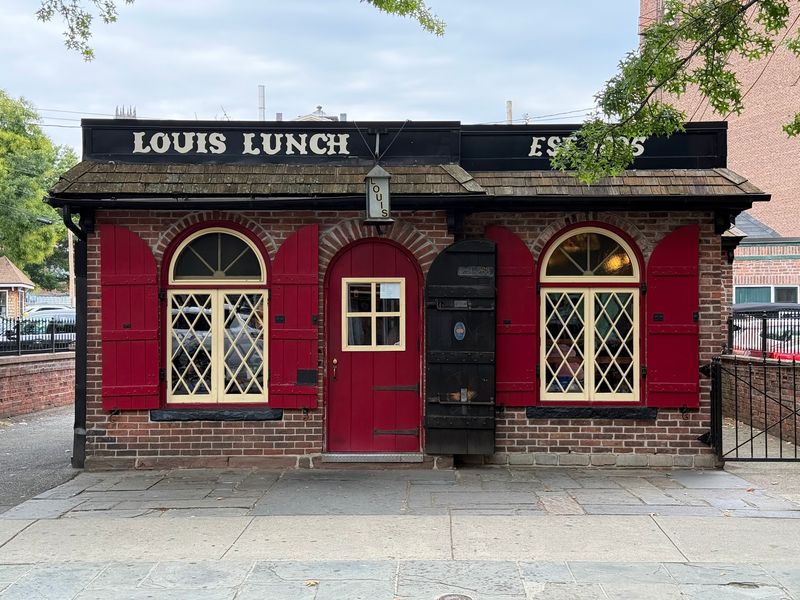
Bold claims deserve a setting with some history, and this small brick building has plenty. Louis’ Lunch began in 1895, when Louis Lassen operated a horse-drawn lunch wagon in New Haven.
Five years later, the restaurant’s best-known origin story took shape. The Lassen family credits Louis with creating the hamburger sandwich in 1900, although other American communities have competing accounts.
Other places also claim a role in the hamburger’s beginnings, and its precise origins remain disputed.
Today, the restaurant continues under the fourth generation of the Lassen family. Louis’ great-grandson Jeff Lassen carries on the business, with the hamburger remaining its central menu item.
Behind the counter, cast-iron broilers from 1898 cook burgers served on white toast with a short choice of toppings.
No elaborate topping combinations are necessary when ordering. Start with the original hamburger, decide whether to add cheese, tomato, or onion, and consider a side if you want a larger lunch.
The restaurant’s compact setting is another part of the visit. Rather than navigating a lengthy menu, you can concentrate on the burger and the historic cooking equipment.
Take a look at the broilers while your order is prepared, and leave room to explore downtown New Haven afterward.
A Hurried Customer Inspired The Famous Burger Creation In 1900
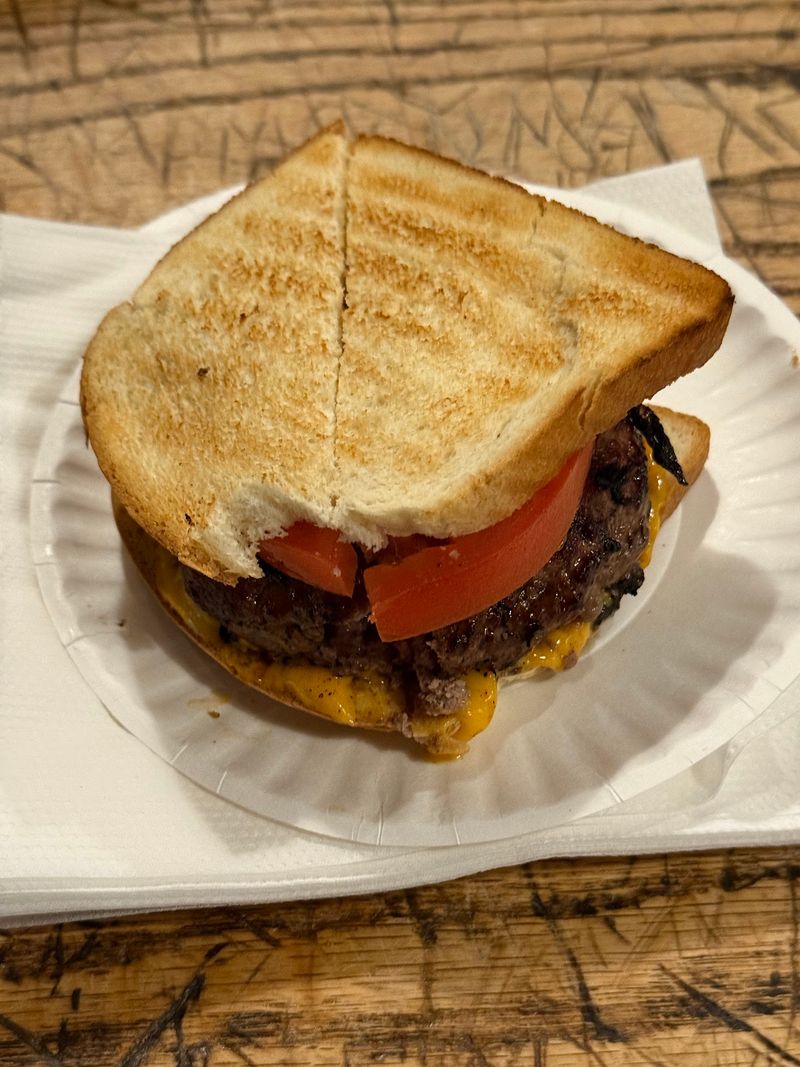
Picture a customer arriving at a lunch wagon, short on time and looking for something portable. The Lassen family’s account places that moment in 1900, with Louis Lassen responding to a request for food that could be eaten on the move.
Louis reportedly placed ground steak trimmings between two slices of toasted bread. The resulting sandwich could be carried without requiring a plate, fork, or knife.
The account has become part of New Haven’s food history, although it doesn’t establish that Louis invented the hamburger before anyone else. Other communities, including places in Texas and Wisconsin, have their own accounts of the sandwich’s beginnings.
For a visit today, the present sandwich closely resembles the one in the family story. The beef remains the centerpiece, and toast takes the place of a conventional hamburger bun.
Take a moment to examine the finished burger before picking it up. Its square slices of bread and straightforward arrangement look different from the rounded buns and elaborate toppings common at many burger restaurants.
The original lunch wagon is no longer the setting for your meal, but the toasted-bread format remains. Order a plain hamburger to see the simplest version, or add one of the traditional toppings.
Either way, the sandwich arrives without the oversized bun or elaborate sauces associated with many contemporary burgers.
Original 1898 Cast-Iron Broilers Still Cook The Restaurant’s Burgers
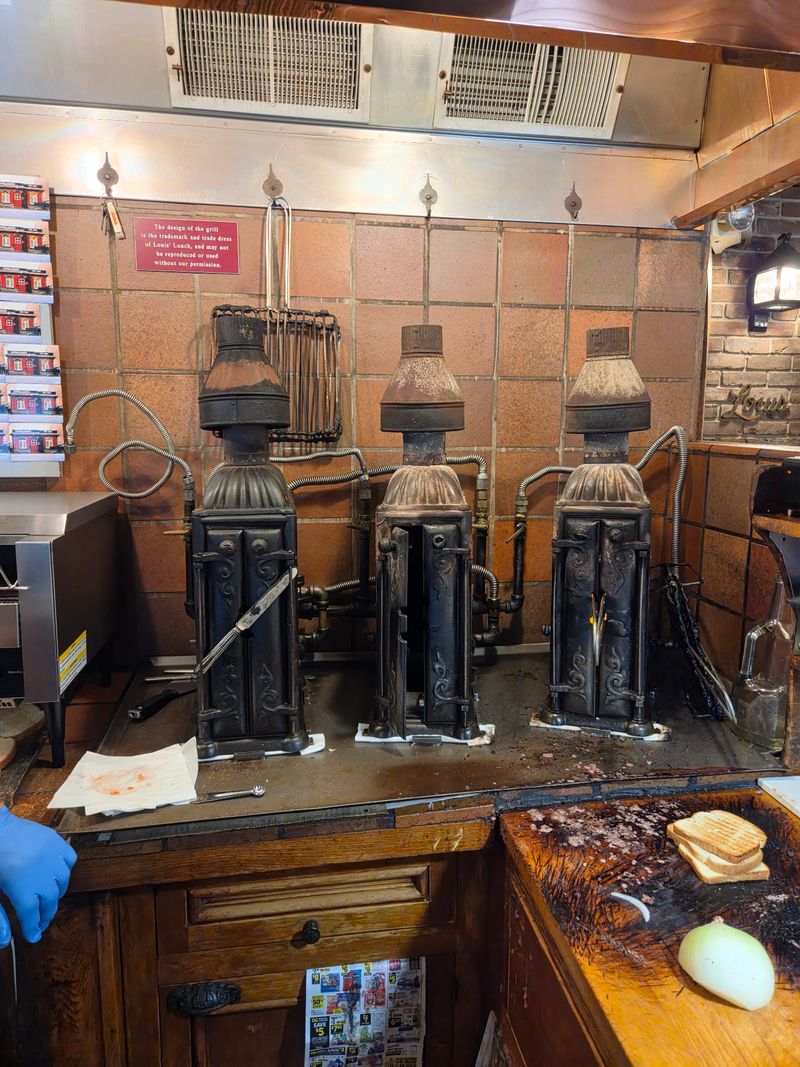
Behind the counter, vertical cast-iron broilers dating to 1898 continue handling the cooking. These aren’t decorative antiques. They’re working equipment used to prepare the restaurant’s hamburgers.
The broilers hold the beef upright in wire racks rather than placing patties flat on a conventional griddle. Heat reaches the meat inside the enclosed cooking chamber, and the finished burger is assembled on toast.
Watching the equipment in use offers a close look at a method that predates modern restaurant grills. The cast-iron chambers and upright racks distinguish the preparation from the usual flat-top cooking approach.
Burgers are made to order, with medium preparation recommended. Prefer a different level of doneness? Mention it when placing your order rather than waiting until the sandwich arrives.
Choose a position where you can see the counter without blocking other customers, and watch how the patties move from the broilers to their slices of toast.
The vertical arrangement is particularly interesting from the counter. Instead of watching someone flip patties across a flat cooking surface, you can see the upright racks used in the preparation.
White Toast Replaces Traditional Hamburger Buns At This Historic Counter
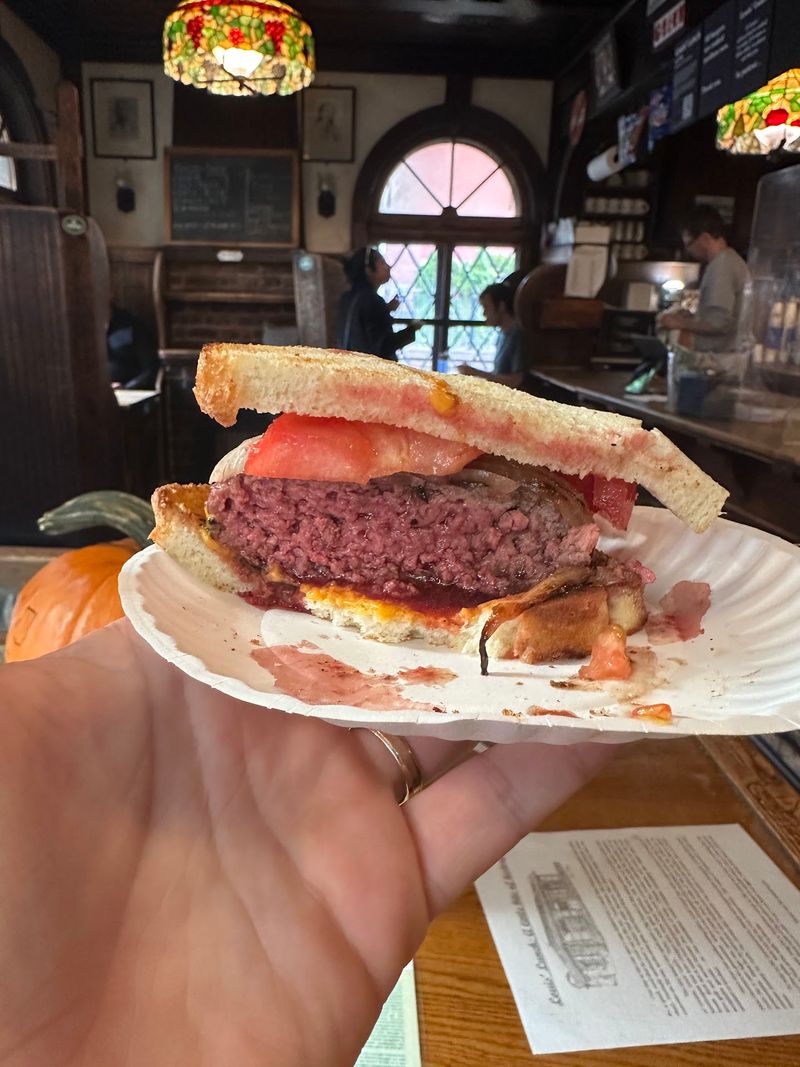
Expecting a soft sesame bun? At Louis’ Lunch, your burger arrives between two slices of white toast instead.
That choice is part of the restaurant’s longstanding preparation style. The Lassen family’s hamburger story centers on ground beef placed between toasted bread, and the modern version keeps that format.
The toast provides a lightly crisp exterior around the beef. Its flat, square shape also makes the sandwich noticeably different from a conventional burger served on a round bun.
There’s no need to choose from several bread varieties. White toast is the standard presentation, whether you order the burger plain or include the available toppings.
If you’re planning a larger meal, the menu also includes potato salad and potato chips. Both are separate choices rather than automatic accompaniments to every hamburger.
Homemade pie provides a dessert option. The available selection can vary, so leave the specific flavor decision until you reach the counter.
For a first visit, consider ordering the hamburger with one or two toppings and keeping the rest of the meal simple. That leaves room to notice the beef, toast, and optional additions without introducing ingredients that aren’t part of the restaurant’s regular menu.
The toast also makes the sandwich convenient to hold. Pick it up as you would any other sandwich, or set it down between bites if you’ve ordered sides.
A Secret Five-Cut Beef Blend Gives The Burgers Their Signature Flavor
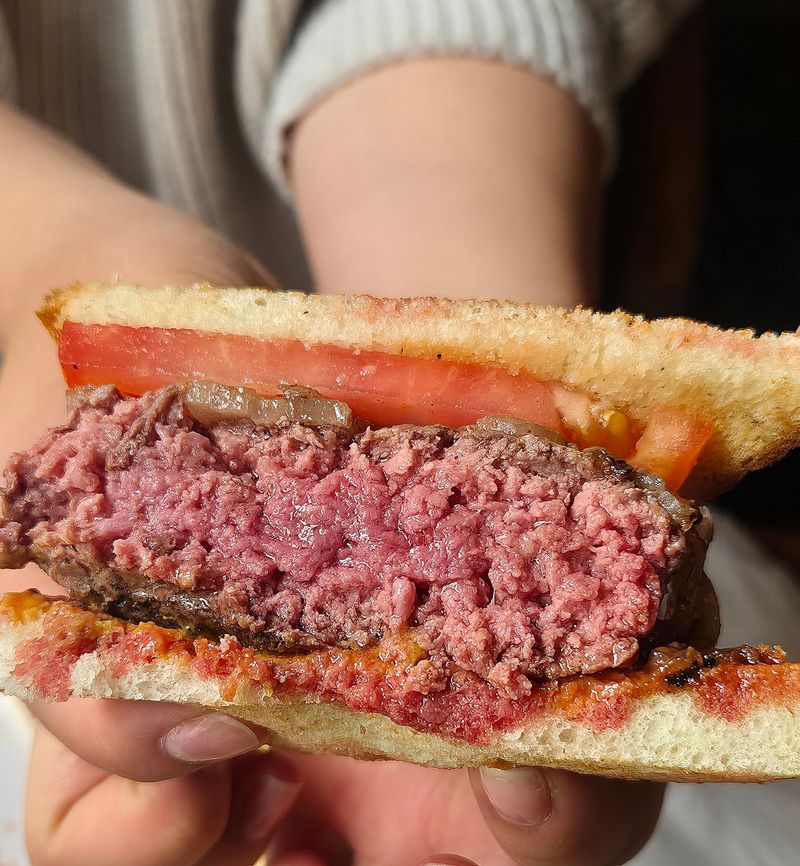
Every hamburger at Louis’ Lunch begins with a proprietary blend of five different cuts of beef. The meat is ground fresh daily and shaped into patties before cooking.
The exact combination of cuts isn’t publicly disclosed. Rather than choosing a specific variety of beef from the menu, you order the restaurant’s established blend.
Fresh grinding and preparation remain important parts of the process. The patties are hand-shaped and cooked individually in the cast-iron broilers.
With only a short list of toppings available, the beef remains the main ingredient in every version.
Want to concentrate on the meat? Order the original hamburger without extras. The combination of beef and white toast gives you the simplest version of the sandwich.
A bigger appetite might call for potato salad or chips alongside it, but there’s no requirement to build a complicated meal.
If you’re visiting with someone who prefers additional ingredients, you can order different topping combinations and compare the sandwiches directly.
Rather than selecting among numerous sauces, cheeses, and bread varieties, decide how you’d like your burger cooked and which of the traditional additions you’d prefer.
For anyone curious about the beef itself, the plain sandwich is a sensible starting point. Cheese, tomato, and onion can change the combination on another visit. The same five-cut blend remains at the center of the order.
No Ketchup Allowed Keeps The Original Hamburger Tradition Alive
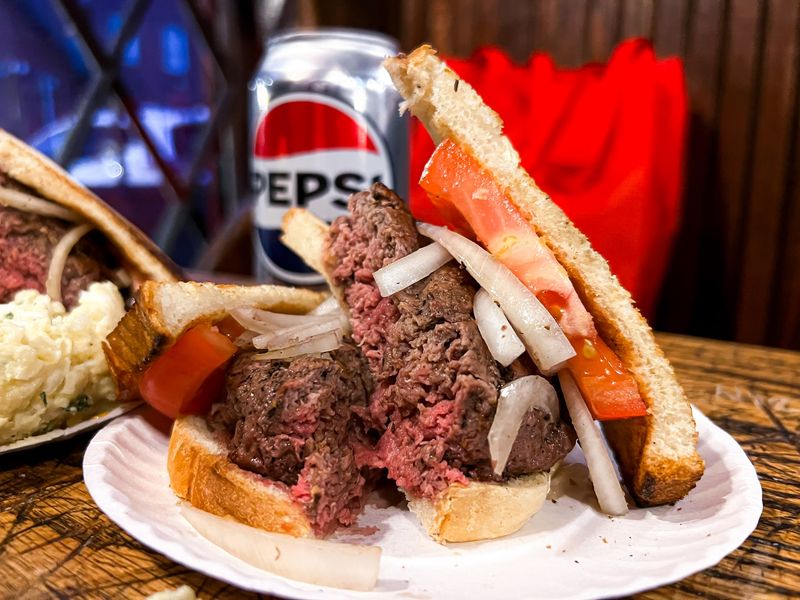
Here’s a rule that might surprise ketchup lovers: Louis’ Lunch doesn’t offer ketchup or mustard with its hamburgers.
The available additions are cheese, tomato, and onion. Those are the only standard burger garnishes, and the restaurant has maintained that limited selection as part of its traditional preparation.
Cheese adds a creamy layer, while tomato and onion provide fresh additions to the beef and toast.
Start with the original burger if you prefer a straightforward sandwich. For something slightly different, add cheese or choose the combination of cheese, tomato, and onion.
Ask for “cheese works” and you’ll get cheese, tomato, and onion on a burger prepared medium-rare and served on toast.
The restaurant’s no-condiment approach doesn’t require any special preparation from customers. Simply choose from the ingredients available at the counter.
A plain burger, one with cheese, and one with all three additions provide several variations.
If tomato or onion isn’t your preference, leave it off. The ordering decision remains yours within the restaurant’s established selection.
For a first visit, decide on your toppings before reaching the counter. That leaves one last question: will you keep the burger plain or order it with cheese?
A Historic New Haven Building Preserves More Than A Century Of Burger History
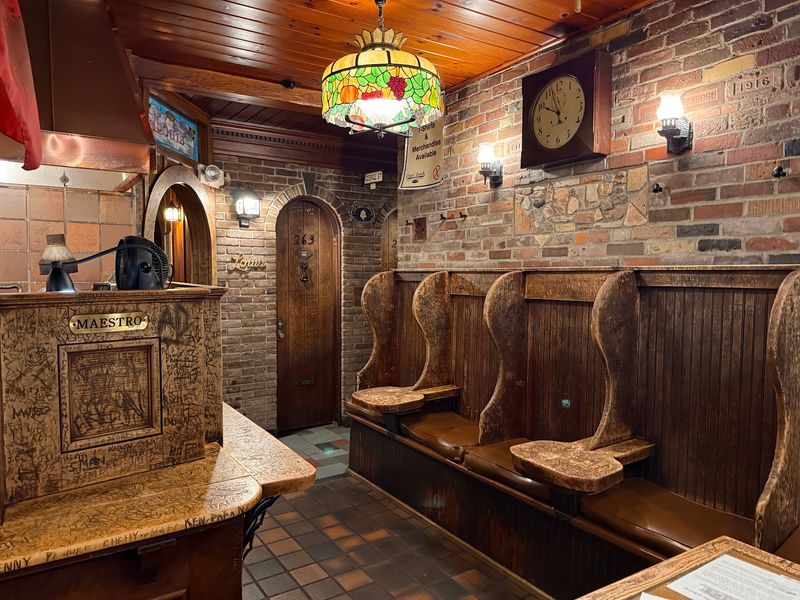
Wooden booths, a compact dining room, and old-fashioned counter equipment give Louis’ Lunch a setting closely tied to its long history.
The building has its own unusual story. During redevelopment plans in the early 1970s, the restaurant faced demolition. Preservation efforts led to the structure being moved to its present Crown Street location in 1975.
The building was transported through New Haven rather than replaced with an entirely new restaurant. Bricks sent by supporters helped with its reconstruction, preserving a physical connection to the earlier structure.
Inside, the limited seating calls for a little flexibility. The restaurant doesn’t accept reservations, and tables are available on a first-come, first-served basis.
Its regular schedule begins at noon Tuesday through Saturday. Closing time is 8 p.m. on Tuesday and Wednesday, 11:30 p.m. on Thursday, and midnight on Friday and Saturday. Sunday and Monday are closed.
The restaurant also takes an annual break during August and closes for the week after New Year’s, so check the calendar before planning a special trip.
Street parking is limited, with paid parking available nearby. Takeout is another option when you’d rather eat elsewhere.
Ready to see the historic broilers and try the hamburger on white toast? You’ll find Louis’ Lunch at 261 Crown Street, New Haven, CT 06511.