The sky does not just get dark here, it turns into the whole show. Here, darkness is the main attraction.
Once the last daylight slips away, the desert opens into a ceiling packed with stars, with the Milky Way stretching wide across the black. This free campground in New Mexico is made for people who want fewer distractions and more sky.
The setup is simple. That is the charm.
Bring your own water, keep lights low, and settle in for a slow night under serious darkness. You do not need fancy camera gear to enjoy it, though photographers will have plenty to chase.
A chair and a warm layer are enough. The best moment comes after your eyes adjust and the sky starts revealing more than you expected.
Suddenly, the quiet feels huge, and leaving too early sounds like a very bad idea.
A 360-Degree Sky Full Of Stars
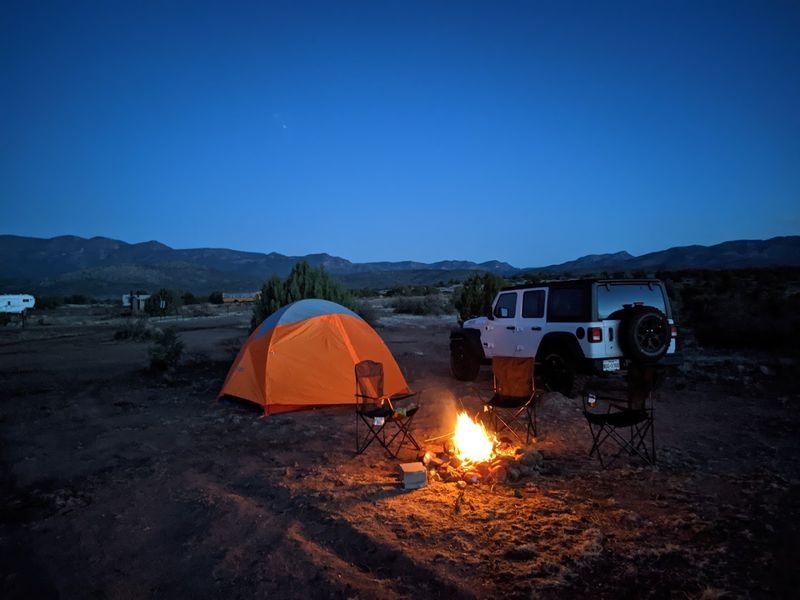
At the center of this campground on a clear night, the view can feel like a living planetarium, with stars pressing in from every direction and no horizon dark enough to hide them.
The surrounding mountain views give the sky a broad, dome-like feel, creating one of the most visually striking parts of the experience without needing any extra spectacle.
Those ridgelines can make the night feel almost impossible to believe until you are actually standing underneath it, watching the stars sharpen as your eyes adjust.
Because the terrain slopes gently and there are no tall trees blocking the sightlines, your eyes can sweep a full 360 degrees without obstruction, taking in constellations, planets, and satellite passes all at once.
New Mexico’s high desert elevation and low humidity work together to keep the atmosphere unusually transparent, which means stars appear sharper and more numerous than they would at lower altitudes.
Within the Gila National Forest, Cosmic Campground at Glenwood, NM 88039 holds the distinction of being the first International Dark Sky Sanctuary on National Forest System lands in all of North America. It is a rare public-land stargazing destination for quiet, patient campers.
Desert Silence Beneath The Milky Way
A rare kind of quiet settles over the high desert after midnight. In that stillness, every small sound feels sharper, from your own breathing to the distant call of a night bird somewhere beyond the mesquite.
At this campground, that silence is part of the experience, and the combination of minimal noise and minimal light creates a sensory reset unlike anything available closer to a city.
On calm nights, the view can feel almost meditative, with stars and planets appearing in a sky that stays impressively dark once your eyes have adjusted.
The campground sits far enough from any major population center that even faint light low on the horizon only adds to the drama rather than taking over the scene.
New Mexico’s wide open spaces and sparse development make this corner of the Gila National Forest one of the Southwest’s most memorable places to legally park a tent beneath a serious night sky.
A mid-week arrival can improve your chances of having long stretches of that precious desert silence almost entirely to yourself.
Concrete Pads Made For Stargazing
Most campgrounds are designed with picnic tables and fire rings in mind. This one goes a step further with dedicated concrete pads built for astronomers who need a stable, level surface for telescopes and tracking mounts.
There are four of these pads on site, and they make a noticeable difference for anyone hauling serious optical equipment, since even a slight tilt in the ground can throw off a long-exposure photograph or make polar alignment frustrating.
For astrophotography setups, these pads are a thoughtful touch that separates this location from ordinary dispersed camping spots where you are left hunting for flat ground with a flashlight.
The pads are positioned to maximize open sky exposure, so your telescope can sweep across the full arc of the night without a tripod leg sinking into loose gravel at a critical moment.
Set up before sunset when possible, since driving or walking around the campground after dark with white lights is poor etiquette and can disrupt the night vision of everyone around you.
For dedicated observers, these concrete platforms represent a small but meaningful investment that signals just how seriously this New Mexico sanctuary takes the art of watching the sky.
Camping Under Pristine Skies
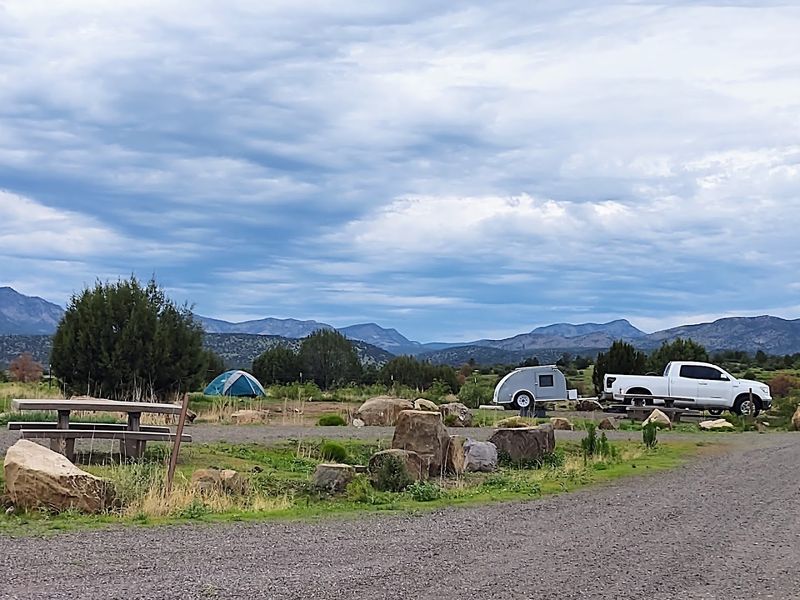
A self-sufficient trip to a campground with no water, no electricity, and no trash service may sound daunting at first, but those stripped-back conditions are exactly what make the experience feel so rewarding.
The campground offers a small number of designated sites, all operating on a first-come, first-serve basis with no reservation system to stress over in advance.
Each designated site keeps the setup simple, and the vault toilets on site add a practical amenity without changing the quiet, low-impact feel of the place.
Beyond the main loop, dispersed camping is available along the access road, giving overflow visitors room to spread out and still enjoy the same extraordinary sky.
Water is not available on site, so bringing your own supply is non-negotiable, and packing out every piece of trash is equally essential to keeping this free resource open for future visitors.
The raw, self-sufficient nature of camping here under New Mexico’s unpolluted skies gives the whole experience a satisfying edge that a resort with hookups simply cannot replicate.
Sunset Views Across Open Desert
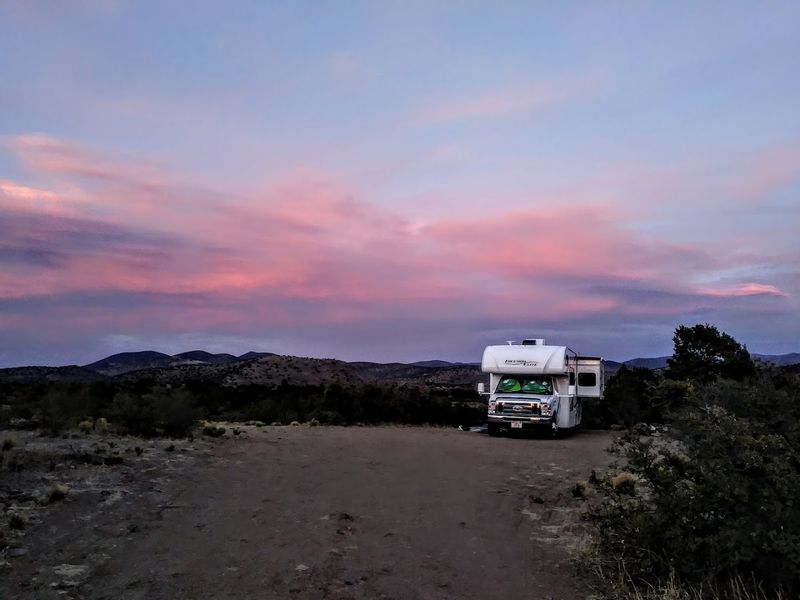
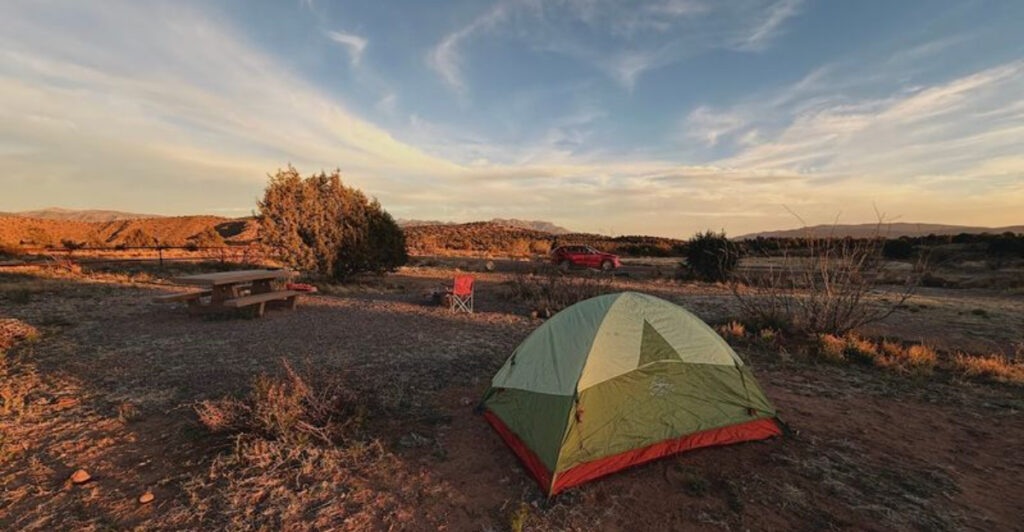
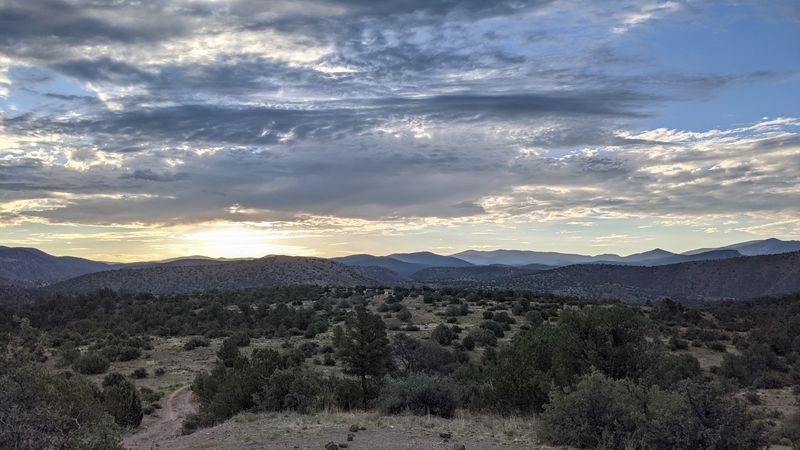
The hours before the stars appear are not wasted time at this campground, because the sunsets here deserve their own standing ovation, painting the surrounding mountain ridges in shades of copper, rose, and deep amber that shift every few minutes until the sky finally goes dark.
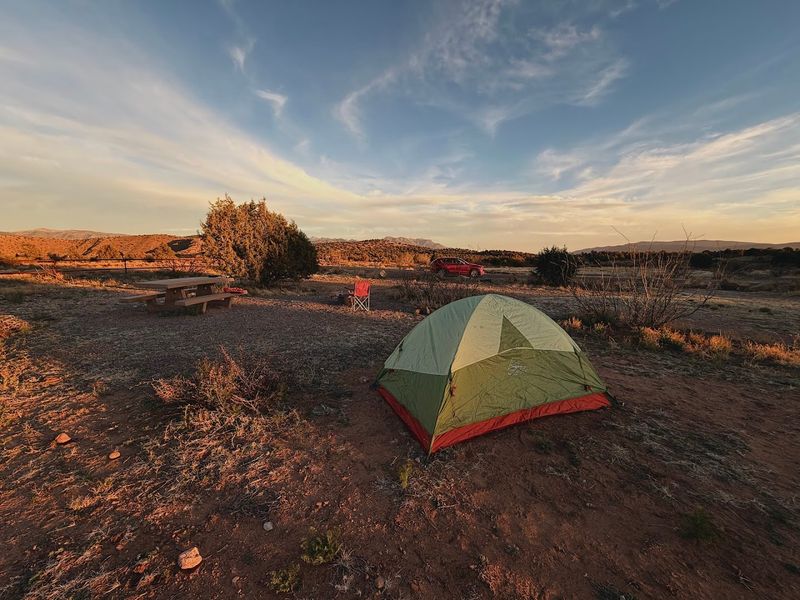
A picnic table can become the best seat in the place while the light changes across the open desert floor, one of those simple pleasures that reminds you why you made the drive out here in the first place.
The landscape around the campground is sparse in the best possible way, with low desert scrub and distant peaks giving the fading light plenty of interesting shapes to work with as the sun drops toward the western horizon.
The 360-degree views are not limited to nighttime, and the drive in can feel scenic well before you ever set up your tent.
The lack of shade is a practical consideration during the afternoon, so bringing a canopy or planning your arrival for late afternoon is a smart move that also sets you up perfectly to watch the full sunset unfold.
By the time the last color fades from the sky over this corner of New Mexico, the first stars are already appearing, and the real show is just beginning.
A Remote Escape From City Lights
The trip here requires a little commitment, and that commitment is exactly what keeps the sky as dark as it is, because the same distance that filters out casual visitors also filters out the light pollution that ruins stargazing everywhere else.
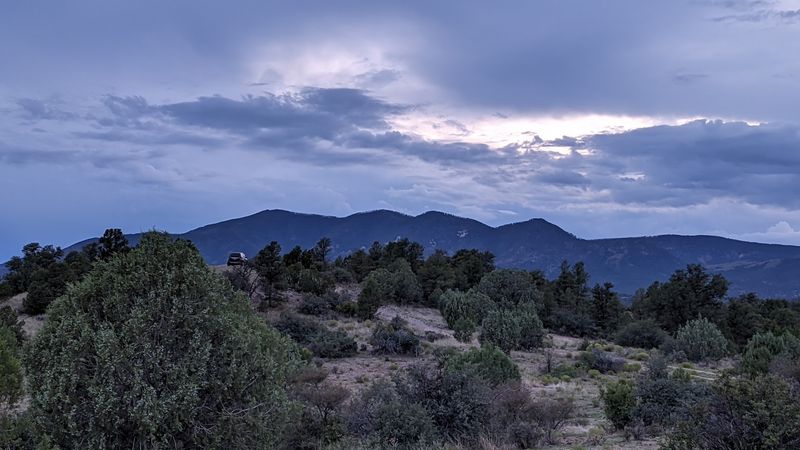
The campground sits on the western edge of the Gila National Forest in a part of New Mexico where the nearest significant artificial light source is far enough away that its glow barely registers on the horizon after midnight.
On some nights, faint distant light domes may be visible low on the horizon, but they do not erase the site’s overall darkness or the sense of being far from the usual glow of towns and roads.
The gravel access road is well-maintained enough for most vehicles, though the road past the main campground loop gets rougher and rewards patience and a slower pace.
Cell service can vary by carrier and weather conditions, so it is useful to download maps and key details before arriving, even if a signal appears once you get there.
This level of darkness requires real effort, but for anyone serious about seeing the sky the way it looked before electric lights existed, this New Mexico sanctuary delivers completely.
Red-Light Nights And Quiet Horizons
Red light etiquette is not a suggestion at this campground, it is the unspoken social contract that holds the whole experience together, and most visitors understand the culture quickly once the sun goes down.
White flashlights, car headlights, and bright phone screens can destroy the dark-adapted vision that takes up to thirty minutes to fully develop, so using a red-filtered headlamp is the single most considerate thing you can bring in your gear bag.
The shared commitment to low light gives the campground a calm, community-minded feel, with red glows replacing harsh beams and everyone moving a little more carefully after dark.
If you forget a red headlamp, dimming your phone as low as possible and using a red filter or red screen is a better emergency option than turning on a bright white flashlight.
Official guidance discourages driving through the campground after dark, so planning your arrival well before sunset makes the whole night run more smoothly for everyone.
These quiet, red-lit nights under New Mexico’s wide-open horizons are the kind of evenings that make you reluctant to pack up and leave in the morning.
Unobstructed Views Into Deep Space
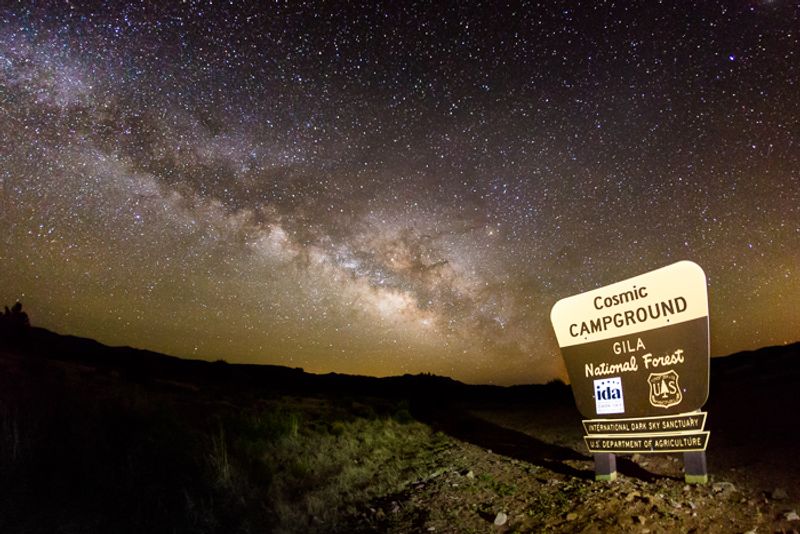
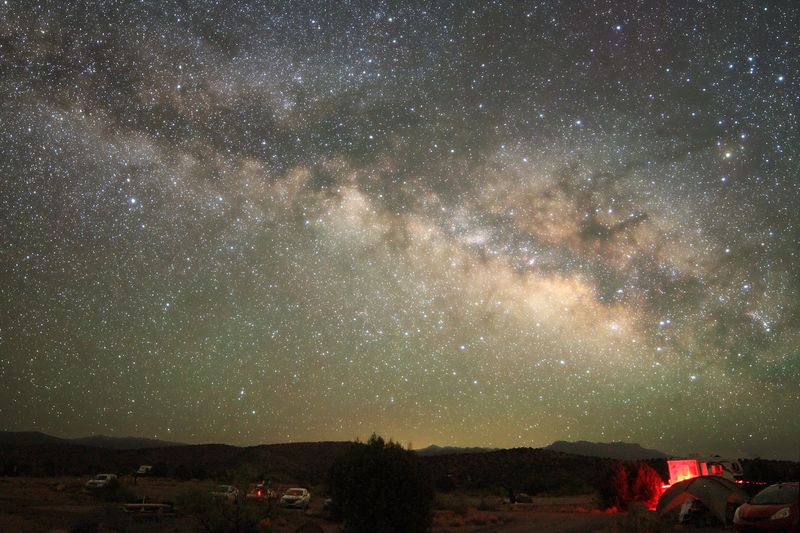
On the clearest nights, the sky above this campground does not just show you stars, it shows you structure, the kind of deep-sky detail that can make amateur astronomers pause when they first look through an eyepiece and realize how much the atmosphere has cooperated.
The campground is officially recognized for exceptionally dark skies, and that designation can translate into memorable views of nebulae, star clusters, and galactic structure when the weather, moon phase, season, and equipment all line up.
Clear, moonless nights give even casual visitors a stronger chance of seeing far more than they would from a suburban backyard, especially after their eyes have time to adjust.
The Milky Way core is visible to the naked eye during peak season, and the sky can feel transformed between late-night and early-morning hours when darkness reaches its deepest point.
Wind can pick up in the afternoons and carry into the evening during certain seasons, so checking forecasts before your trip and choosing calmer weather windows gives you the best shot at truly pristine seeing conditions.
New Mexico’s combination of high altitude, low humidity, and minimal development makes this one of those rare places where deep space feels close.