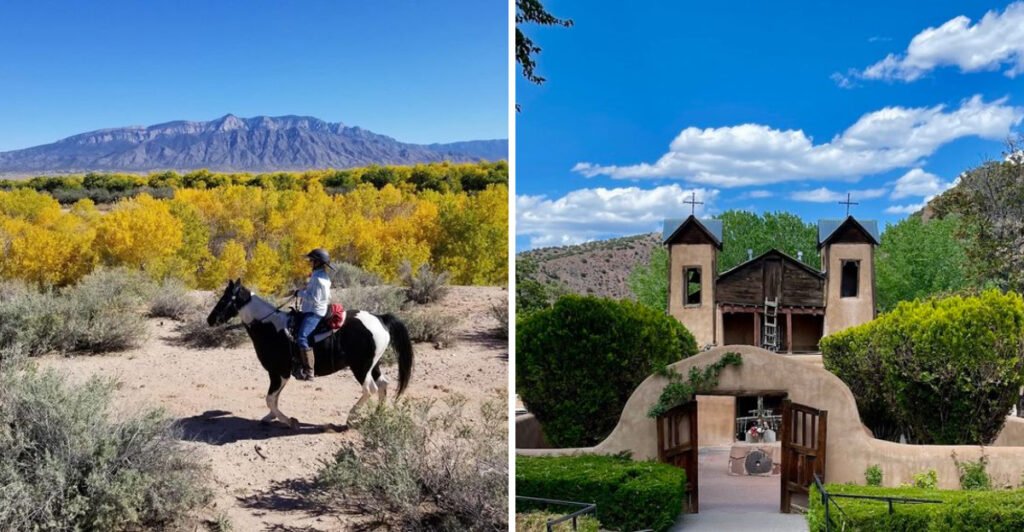
New Mexico road trips have a funny way of stealing your schedule. You plan to stop for a few minutes, then the light hits an adobe wall, a mountain road starts calling, and suddenly you are walking slower on purpose.
That is the whole charm of this route. It connects small towns with real personality, the kind of places that make you curious before you even know the backstory.
You will find old mining streets, art-filled storefronts, quiet churches, and views that make the car go silent for a second. Some stops feel playful.
Some feel peaceful. Some feel like they have been waiting for you to notice them.
Bring snacks, charge your phone, and leave a little room in the day for surprises. The best part of this drive is not reaching the end.
It is realizing you are having more fun between stops.
1. Sandia Park
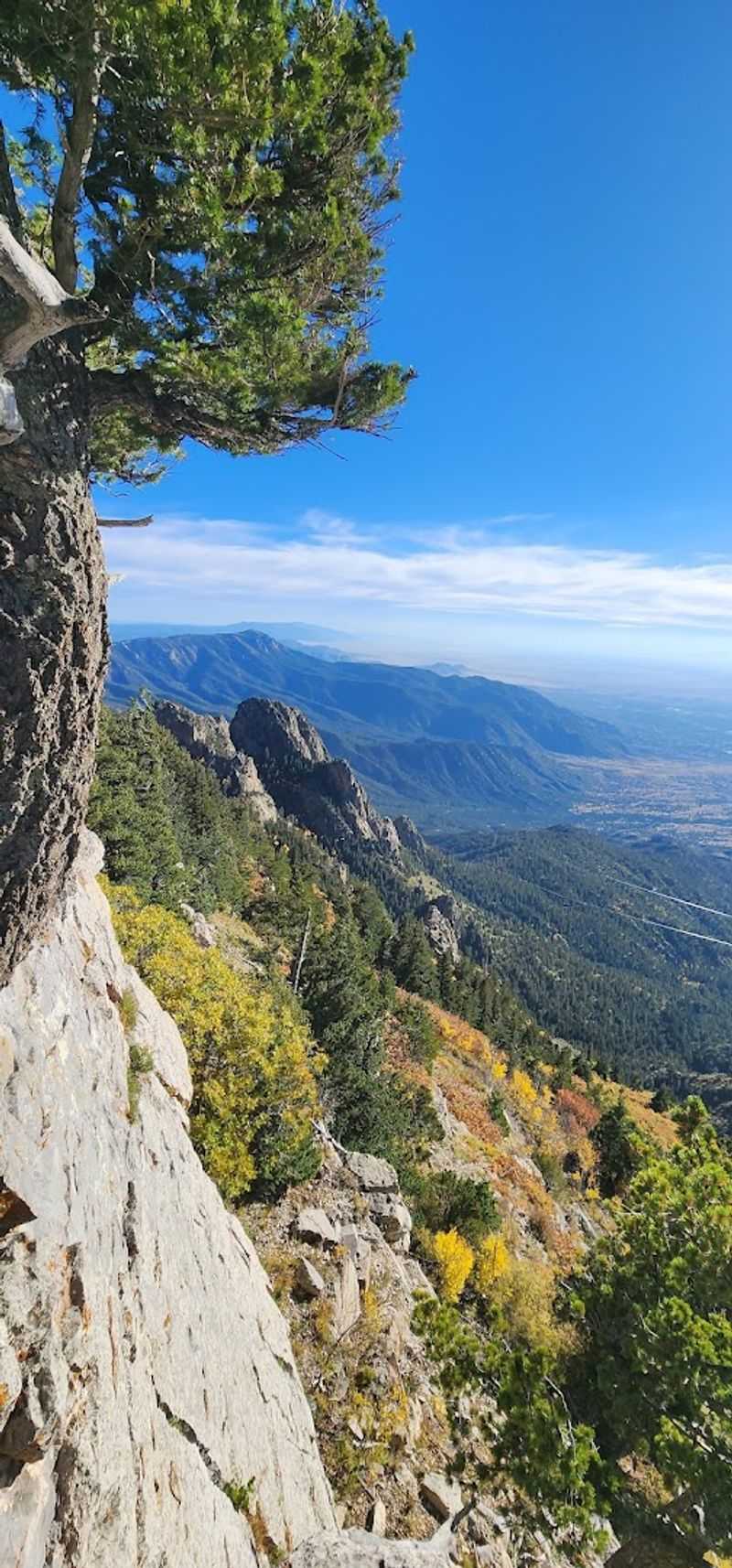
The Sandia Mountains rise dramatically behind Sandia Park, and the moment you arrive, that view grabs you before you even step out of the car.
Located along the Turquoise Trail National Scenic Byway near Albuquerque, Sandia Park, NM 87047 sits at the eastern edge of the Sandia Mountains, making it a natural starting point for this road trip.
The Tinkertown Museum is one of the quirkiest and most lovable roadside attractions you will ever encounter, packed with hand-carved miniature figures and folk art that took one man decades to build.
Hikers can access several trailheads that wind through pine and juniper forests, offering sweeping views of the Rio Grande Valley below.
The Sandia Peak Tramway, just a short drive away, is one of the longest aerial tramways in the world and delivers a jaw-dropping ride above rocky cliffs.
On cooler mornings, the mountain air has a crispness that makes every breath feel like a small reward.
Local shops and studios along the Turquoise Trail offer handmade jewelry, pottery, and artwork that reflect the creative spirit running through this entire region.
Fall is a particularly magical time to visit, when the aspens on the upper slopes turn gold and the whole mountain seems to glow.
Sandia Park may be small, but it punches well above its weight when it comes to scenery, creativity, and that perfect first-stop energy that sets the right mood for the miles ahead.
2. Madrid
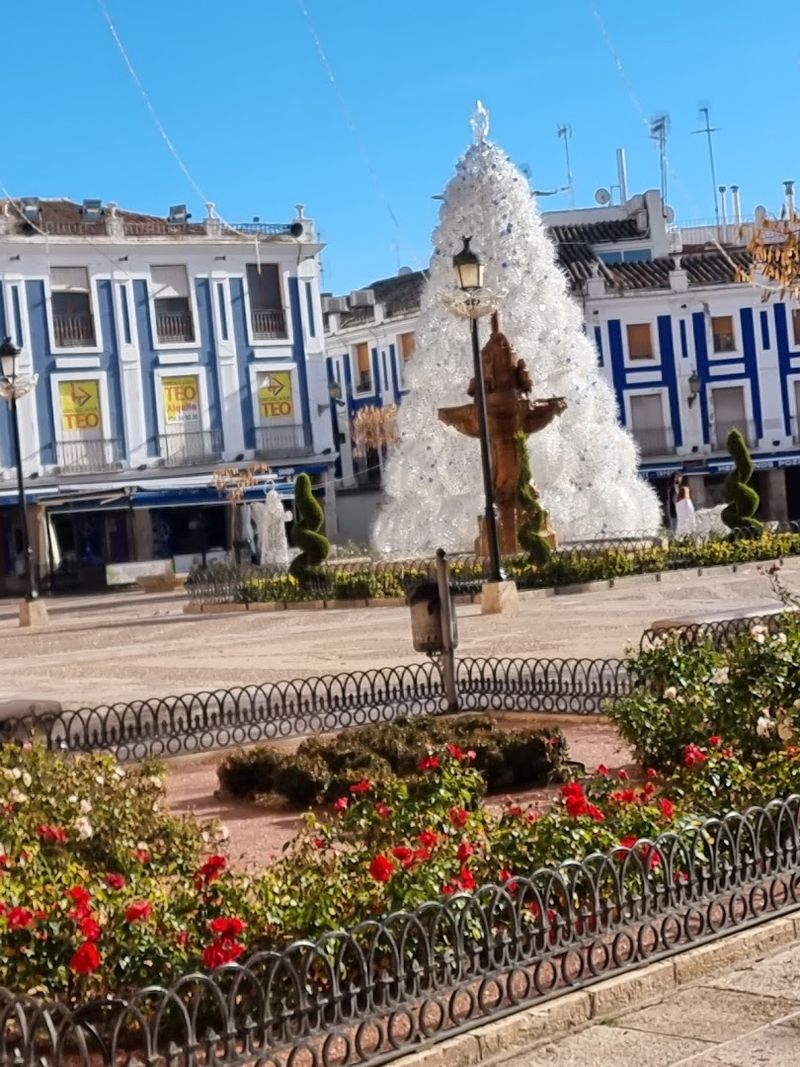
Once a quiet ghost town, Madrid roared back to life when artists and free spirits decided it was too good to leave empty.
Sitting along the Turquoise Trail between Albuquerque and Santa Fe, Madrid, NM 87010 is the kind of place where every building tells a story and every storefront doubles as a gallery.
The main drag is lined with colorful shops selling hand-dyed textiles, original paintings, handmade boots, and sculptures that spill right out onto the sidewalk.
Madrid’s galleries, museum stops, live performance spaces, and roadside shops give the village a lively, community-driven spirit that feels nothing like a tourist trap.
Old mining equipment scattered around town serves as a reminder that this place once hummed with industrial energy before the artists moved in and gave it a completely different kind of buzz.
Street art and murals appear around nearly every corner, making a slow walk through town feel like a gallery tour with fresh air included.
Holiday seasons bring special events and light displays that draw visitors from across the state, turning the already-photogenic main street into something truly spectacular.
The surrounding landscape of rolling hills and scrub desert adds a dramatic backdrop that photographers chase at golden hour.
Madrid rewards the curious traveler who slows down, wanders without a plan, and lets the town reveal its layers one painted door at a time.
3. Cerrillos
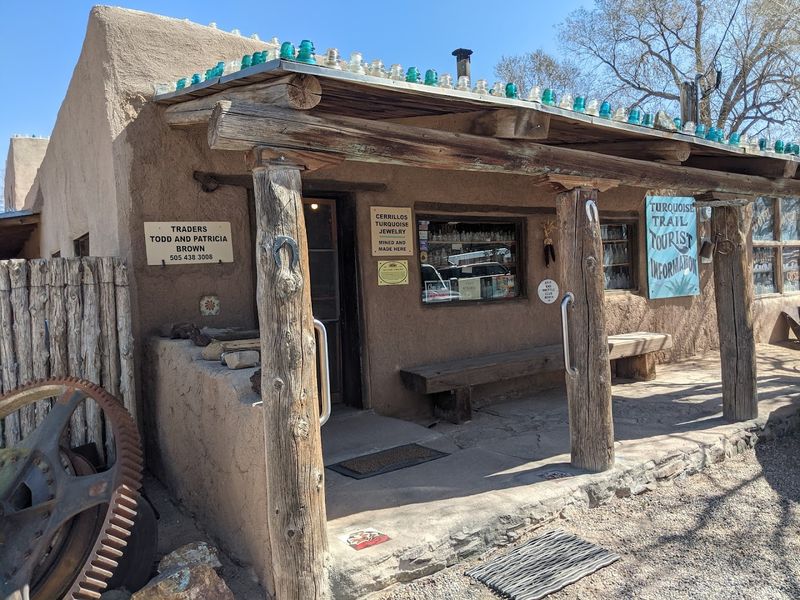
Just a few miles down the road from Madrid, Cerrillos feels like the set of a Western film that nobody bothered to clean up after, and that is exactly the appeal.
Located in Santa Fe County along the Turquoise Trail, Cerrillos, NM 87010 is one of the oldest mining towns in the American Southwest, with a history tied deeply to turquoise and silver.
The Cerrillos Hills State Park offers hiking trails through volcanic terrain where ancient peoples once mined turquoise thousands of years before European settlers arrived.
Casa Grande Trading Post and Turquoise Mining Museum is a wonderfully eccentric stop, part museum, part petting zoo, part gift shop, and entirely worth a browse.
The town itself is barely more than a handful of buildings, but the scale is part of the charm since you can take it all in at a comfortable, unhurried pace.
Old wooden storefronts and dusty lanes give Cerrillos a raw, unpolished character that feels increasingly rare as more towns get smoothed over for tourism.
Photographers love the early morning light here, when long shadows stretch across the dirt roads and the adobe walls glow a warm amber.
The landscape surrounding the village is wide, open, and quietly dramatic, with low hills and endless sky that remind you how much space still exists out here.
Cerrillos asks nothing of you except to slow down, look closely, and appreciate the stubborn beauty of a place that refuses to be forgotten.
4. Chimayo
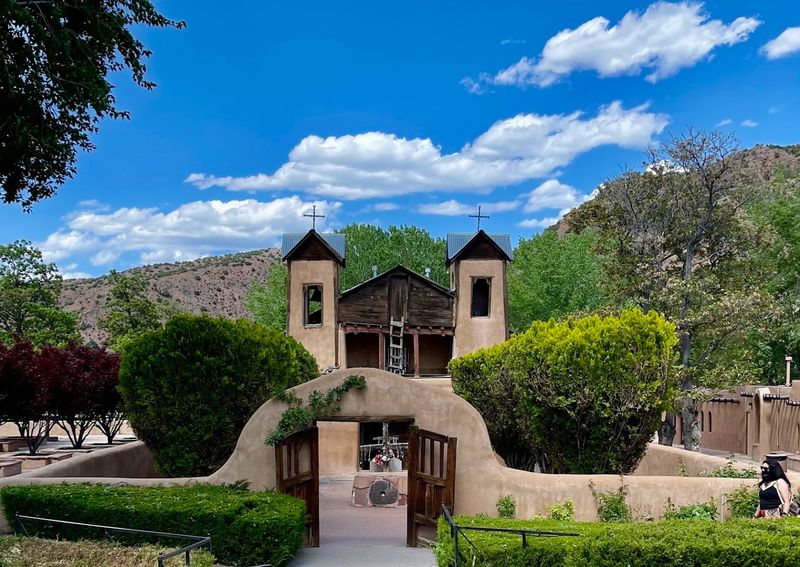
Few places carry as much quiet power as Chimayo, a village where faith, tradition, and craft have been woven together for centuries.
Nestled in the foothills of the Sangre de Cristo Mountains along the High Road to Taos, Chimayo, NM 87522 is home to El Santuario de Chimayo, a National Historic Landmark church that draws pilgrims and curious visitors from around the world.
The church, built in 1813, is famous for its small side room filled with what locals call holy dirt, believed by many to carry healing properties, and the walls around it are lined with crutches and testimonials left by grateful visitors.
Beyond the church, Chimayo is a living showcase of northern New Mexican craft traditions, particularly its hand-woven textiles produced by families who have practiced the art for generations.
Ortega’s Weaving Shop and Centinela Traditional Arts are both must-stops for anyone who appreciates the patience and skill that goes into creating these vibrant, intricate pieces.
The village is also celebrated for its locally grown Chimayo chile, a variety with a distinct smoky sweetness that local cooks use with real pride.
Driving the High Road to Taos in the fall surrounds you with golden cottonwoods and apple orchards heavy with fruit, making the journey itself as memorable as the destination.
Chimayo has a way of slowing your pulse and sharpening your attention, and most visitors leave feeling like they received something they did not know they needed.
5. Penasco
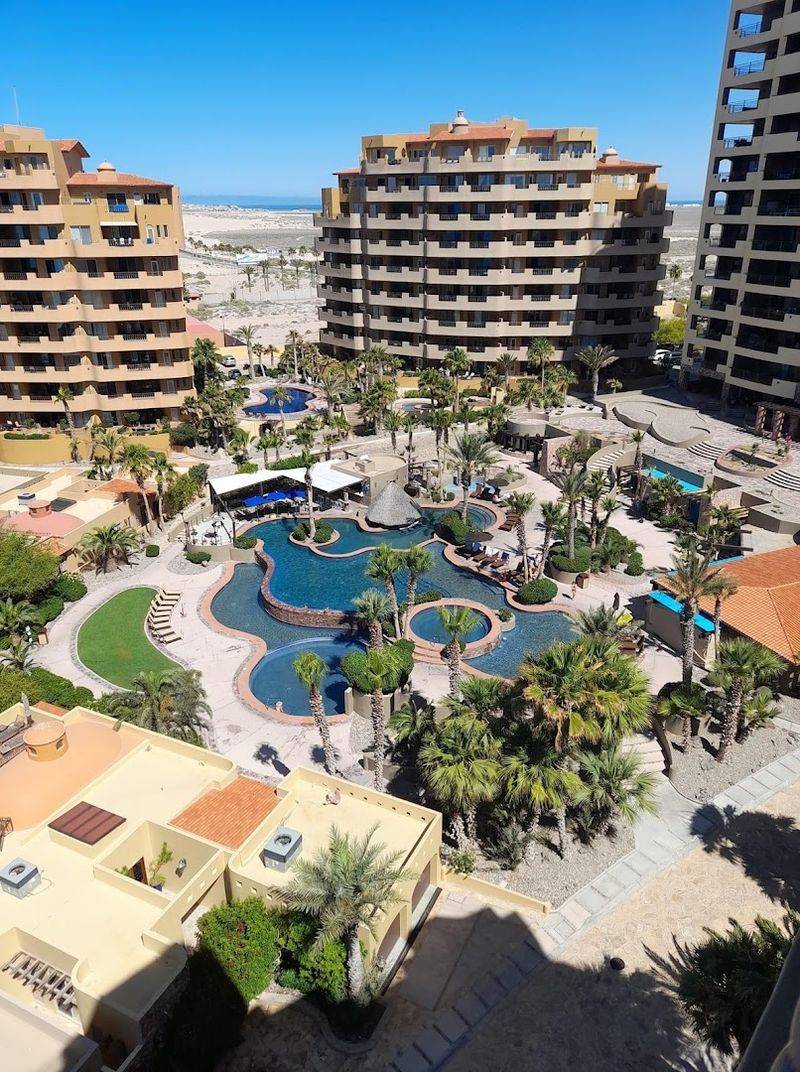
Located high into the Sangre de Cristo Mountains along the High Road to Taos, Penasco, NM 87553 is the kind of village that rewards travelers who resist the urge to rush.
The surrounding landscape shifts dramatically as you climb, with dense pine forests replacing the lower desert scrub and the air turning noticeably cooler and cleaner.
Sugar Nymphs Bistro has built a loyal following among road-trippers and locals alike, serving creative, seasonally inspired dishes in a setting that feels as warm as a neighbor’s kitchen.
The village sits in a narrow mountain valley fed by the Rio Santa Barbara, a clear, cold stream that winds through meadows and cottonwood groves before disappearing into the hills.
Rio Santa Barbara Campground nearby offers some of the most peaceful overnight spots in northern New Mexico, with trails leading into the Pecos Wilderness for those who want to stretch their legs on something more ambitious.
Penasco is also home to a strong tradition of community arts, with the Penasco Theater offering performances, workshops, and regional programming for local audiences.
The slower pace here is not a sign of the town being behind the times but rather a deliberate and deeply rooted way of life that has survived generations.
Wildflowers carpet the meadows in summer, and the aspens ignite in autumn gold, making almost any season a good reason to point your car toward these mountains.
Penasco quietly earns its place on this road trip as the stop that feels most like a genuine discovery.
6. Buena Vista
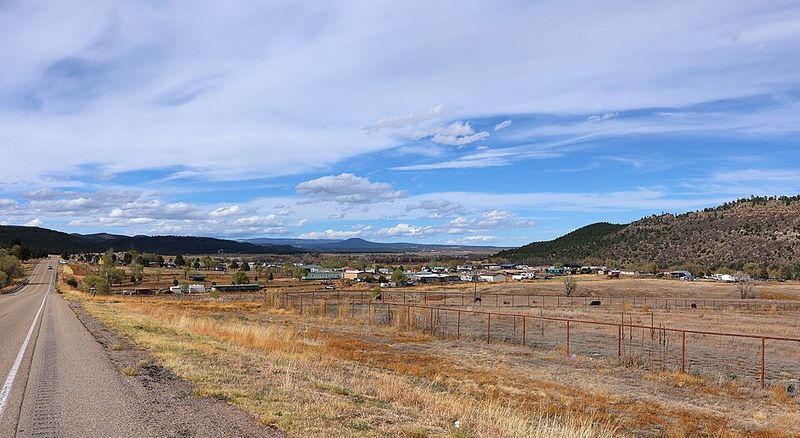
The name translates to good view, and Buena Vista, located in Mora County in the northeastern highlands of New Mexico, absolutely delivers on that promise.
This small, quiet community sits in a region where the high plains begin to give way to forested mountain terrain, creating a landscape that shifts and surprises as you move through it.
The area around Buena Vista is ideal for travelers who want to feel genuinely off the beaten path, with very little commercial development and a strong sense of rural authenticity.
Cattle ranching has long shaped the culture and economy here, and the wide, fenced pastures along the roadsides tell that story without needing a single sign.
The Mora Valley, which stretches nearby, is dotted with historic villages, old churches, and farmsteads that speak to the deep Spanish colonial roots of this entire region.
Birdwatchers find this stretch of country particularly rewarding, as the mix of grassland, riparian corridors, and elevation draws a wide variety of species throughout the year.
Sunsets over the open rangeland here have a cinematic quality, with colors that shift from deep orange to purple as the light fades behind the distant ridges.
There are no crowds, no parking headaches, and no lines, just open road, big sky, and the particular satisfaction of finding a place that most people drive past without stopping.
Buena Vista is the kind of stop that sneaks up on you and stays in your memory long after the road trip ends.
7. Pecos
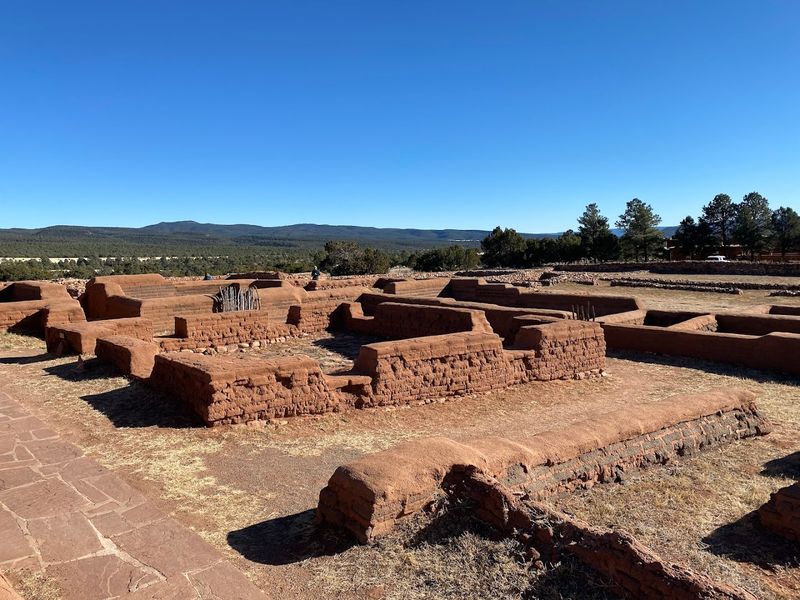
History has a physical presence in Pecos that you can actually walk through, touch, and stand inside.
Located along the Pecos River at the foot of the Sangre de Cristo Mountains, Pecos, NM 87552 is anchored by Pecos National Historical Park, one of the most significant archaeological and historical sites in the entire Southwest.
The park preserves the ruins of a massive ancestral pueblo and two Spanish colonial missions, offering a layered look at the complex cultural history of this region across many centuries.
Hiking trails wind through the site and connect to the surrounding national forest, where the Pecos River runs cold and clear through meadows that feel far removed from modern life.
Fly fishing on the Pecos River is a genuine draw for anglers, who come for the solitude and the chance to cast a line in some of the most scenic water in the state.
The village itself is small and unhurried, with a few local spots to grab a meal before heading back out into the surrounding wilderness.
Glorieta Pass, just a short drive away, is a historically significant location from the Civil War era, adding another layer of depth to an already story-rich area.
The forests around Pecos are spectacular in autumn, when the aspens turn and hikers pack the trails to catch the color before winter sets in.
Pecos earns its place on this road trip as the stop where the land itself feels like it is actively remembering its past.
8. Corrales
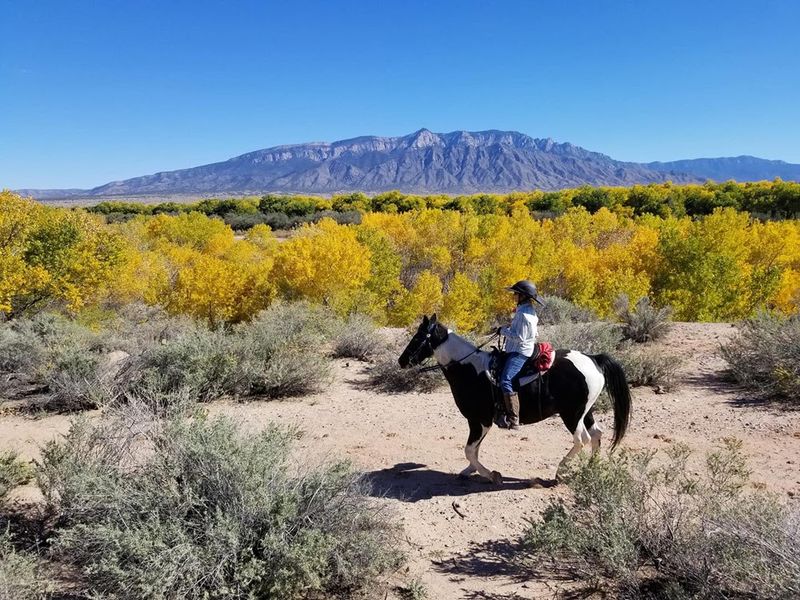
A horse ambling along a dirt lane, cottonwood trees arching overhead, and the Rio Grande just a short walk away: Corrales manages to feel like a countryside retreat while sitting right next to Albuquerque.
Located in Sandoval County along the west bank of the Rio Grande, Corrales, NM 87048 has preserved a rural, agricultural character that feels almost miraculous given its proximity to a major city.
The old irrigation ditches, called acequias, still run through the village and support the orchards and gardens that give Corrales its green, lush look during warmer months.
Casa Vieja is a beloved local gathering place set inside a historic adobe property, where the setting and regular live music help create a stop that is hard to forget today.
The Corrales Bosque Preserve offers walking and biking trails through a cottonwood forest along the river, a habitat that supports sandhill cranes, roadrunners, and dozens of other bird species.
Local farms and small markets sell seasonal produce, homemade jams, and fresh-cut flowers that make stopping here feel like a genuine farm-stand experience.
Historic Old Church Road is the heart of the village, lined with adobe walls draped in wisteria and studded with small art studios open to visitors on weekend afternoons.
The pace in Corrales is deliberately slow, and that slowness is the point, inviting you to stop, look around, and appreciate a way of life that has quietly persisted for generations.
Corrales is the road trip stop that makes you wonder, just for a moment, what it would feel like to stay a little longer.
9. Placitas
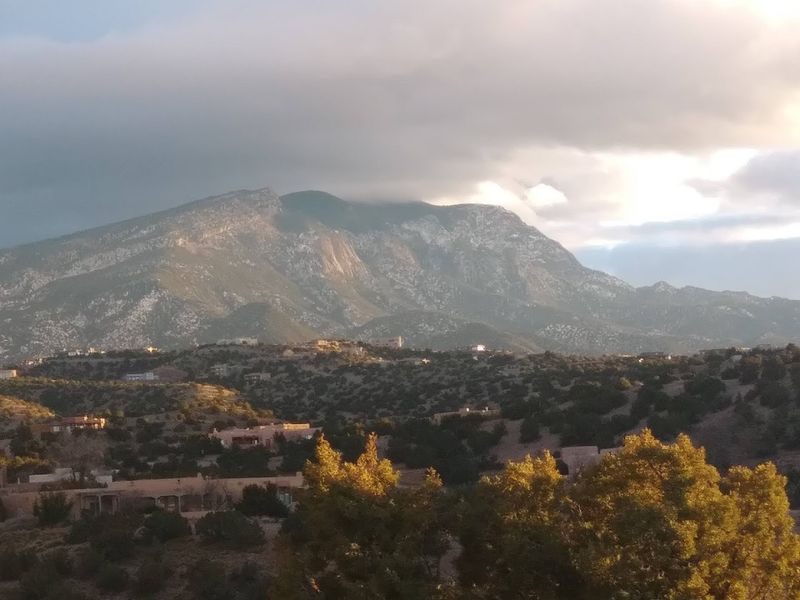
Perched on the high desert slopes north of Albuquerque, Placitas, NM 87043 is the kind of place that artists and hikers discovered quietly and then never left.
The village sits at the base of the southern Sandia Mountains, surrounded by pinon and juniper woodland, rocky arroyos, and views that stretch across the Rio Grande Valley in every direction.
Placitas has developed a small but impressive arts community, with resident painters, sculptors, and ceramicists who open their studios during the annual Placitas Artists Studio Tour, a highlight of the local calendar.
The hiking in and around the village is excellent, with trails threading through desert canyons and climbing toward the rocky ridgelines of the Sandias where the landscape opens up into something genuinely breathtaking.
The Placitas area sits within the ancestral territory of the Tiwa-speaking peoples, and the landscape carries that long human history in its ruins, petroglyphs, and place names.
Spring brings a flush of wildflowers to the arroyos and hillsides, particularly after a wet winter, and the color against the red rock is a sight worth planning around.
The village has no traffic lights, no chain stores, and no crowds, just winding dirt roads, friendly neighbors, and a sky that seems wider here than almost anywhere else.
Placitas also serves as a natural bookend to this road trip, circling back toward Albuquerque while still feeling completely removed from city life.
Ending the journey here, with that big desert view and the Sandias glowing pink at sunset, is about as satisfying as a road trip finale gets.