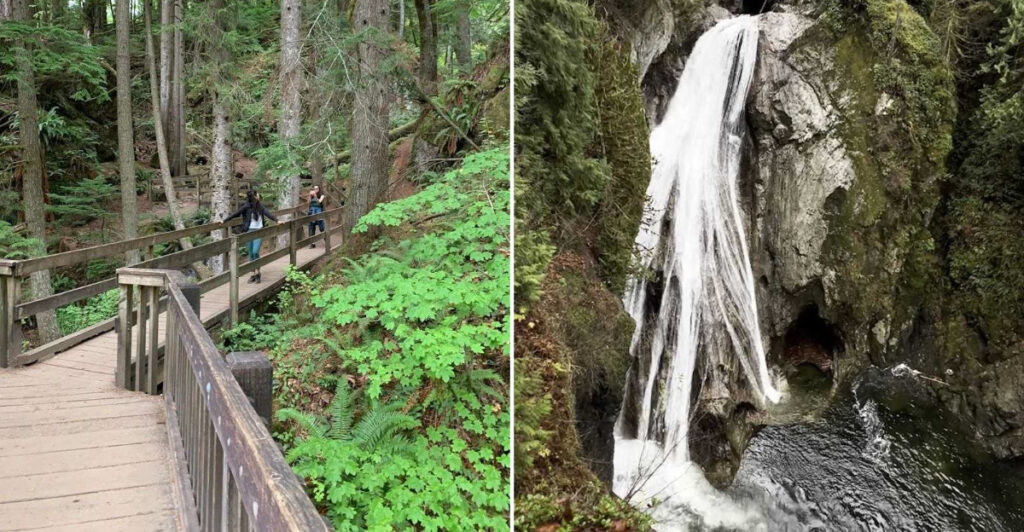
Not every great hike has to leave you sore, sweaty, and questioning your life choices. There is a trail in Washington that gives you big scenery without turning the day into a full-blown endurance test. These short out-and-back packs are the kind of payoff hikers usually expect from something much longer.
With rushing waterfalls, towering trees, and a forest setting this place is straight out of a postcard. The path is approachable enough for beginners, fun for families, and scenic enough to keep experienced hikers coming back for another round.
You get fresh air, beautiful views, and that satisfying feeling of finding a place that delivers far more than it asks of you. If you have been craving an outdoor adventure that feels exciting without being overwhelming, this is exactly the kind of Washington trail that makes it easy to say yes.
The Trail That Starts It All
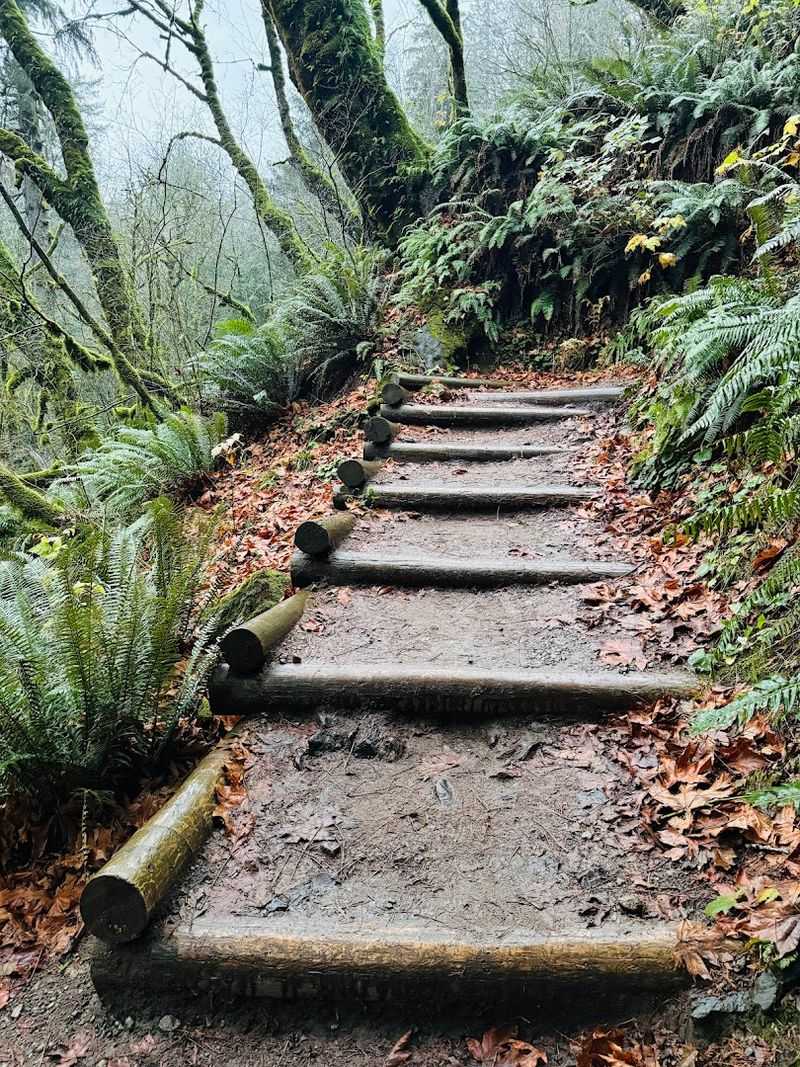
This trail keeps the fun and the views coming. You park, you walk toward the trees, and almost immediately the noise of everyday life disappears behind a curtain of Douglas fir and western red cedar.
The path begins with a gentle downhill slope that eases you into the forest without any drama.
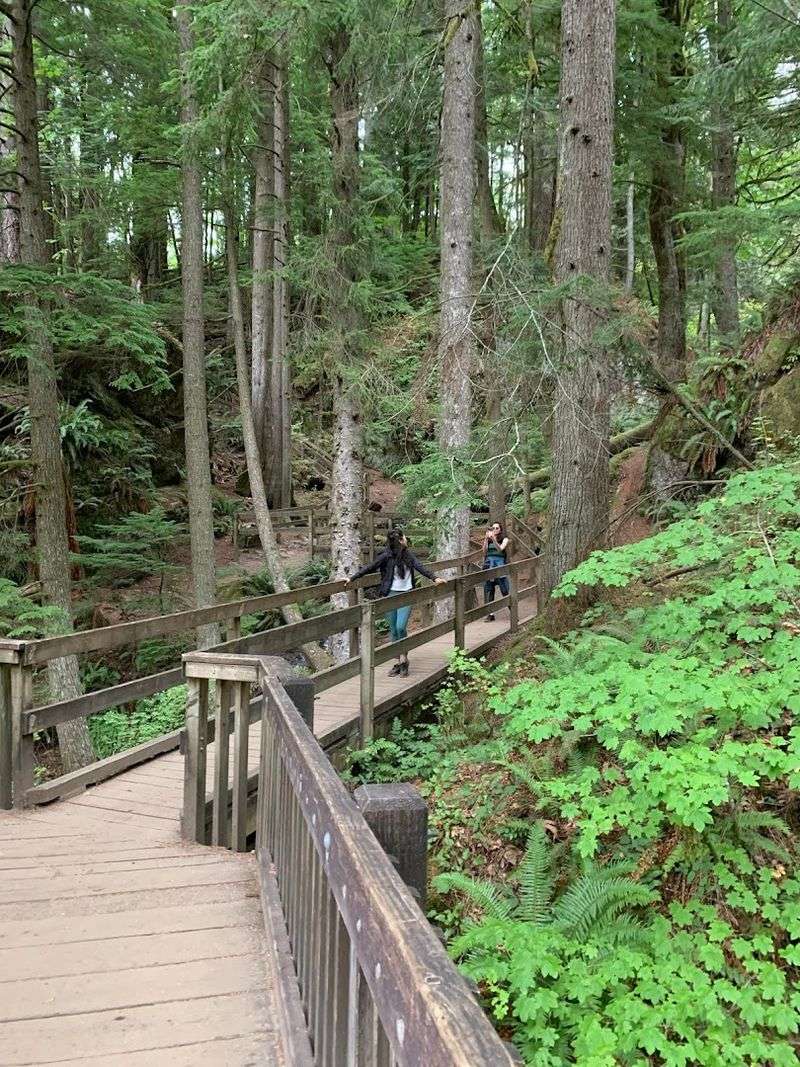
It is wide enough to walk side by side with a friend, well-maintained, and clearly marked throughout. First-timers often comment that the trail feels welcoming rather than intimidating, which is exactly the point.
The Snoqualmie River runs nearby, and you can hear it before you see it.
That soft rushing sound builds as you move deeper into the forest, turning into something louder and more thrilling the closer you get to the falls. Have you ever had a trail that seemed to build suspense like a good story?
This one does exactly that. Twin Falls Trailhead has a small parking area with a fee station, so bring a Discover Pass or be ready to pay the day-use fee. Arriving early on weekends makes parking much easier and gives you the trail at its most peaceful.
The forest light in the morning hours is especially soft and golden, making the whole walk feel almost cinematic before you even reach the main attraction.
Old-Growth Forest All Around You
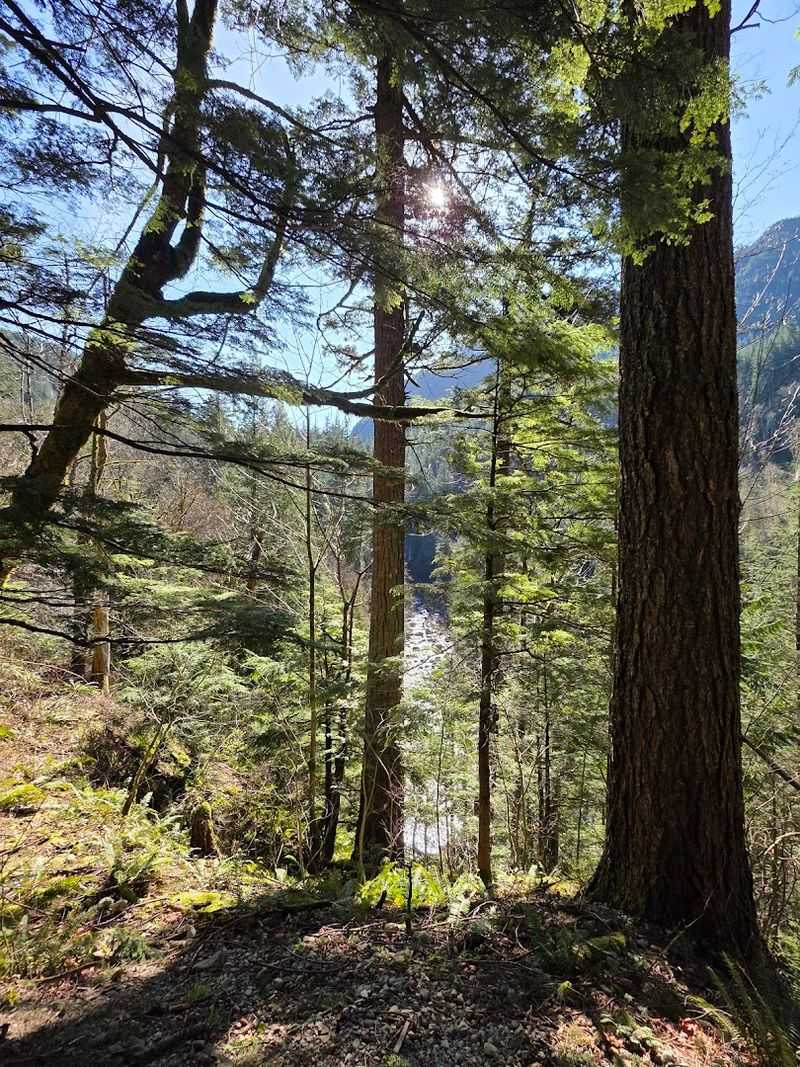
Walking through this forest feels like stepping into a place that has been quietly doing its thing for hundreds of years. The trees here are enormous.
Some Douglas firs along the trail are over 200 years old, and their trunks are so wide that two people holding hands cannot reach around them. Moss covers nearly every surface.
It drapes over fallen logs, climbs up boulders, and softens the edges of the trail in a way that makes the whole scene look almost too perfect to be real.
The forest floor is thick with sword ferns, oxalis, and trillium in spring, creating a rich green carpet that stretches in every direction.
Birdsong fills the canopy overhead. You might spot a varied thrush, hear a Steller’s jay calling from somewhere up high, or catch a flash of movement from a red-tailed hawk riding the air above the treetops.
The biodiversity here is quietly impressive for such a short trail. Fallen nurse logs play an important role in this ecosystem.
When a massive tree comes down, it slowly becomes a cratered seedbed for the next generation of trees, ferns, and fungi. You will notice young hemlocks growing in perfectly straight rows along these logs, a natural process called a colonnade.
How often do you get to see something like that on a 2.6-mile walk? The old-growth experience here is genuinely rare and worth slowing down for.
The Swinging Bridge Moment
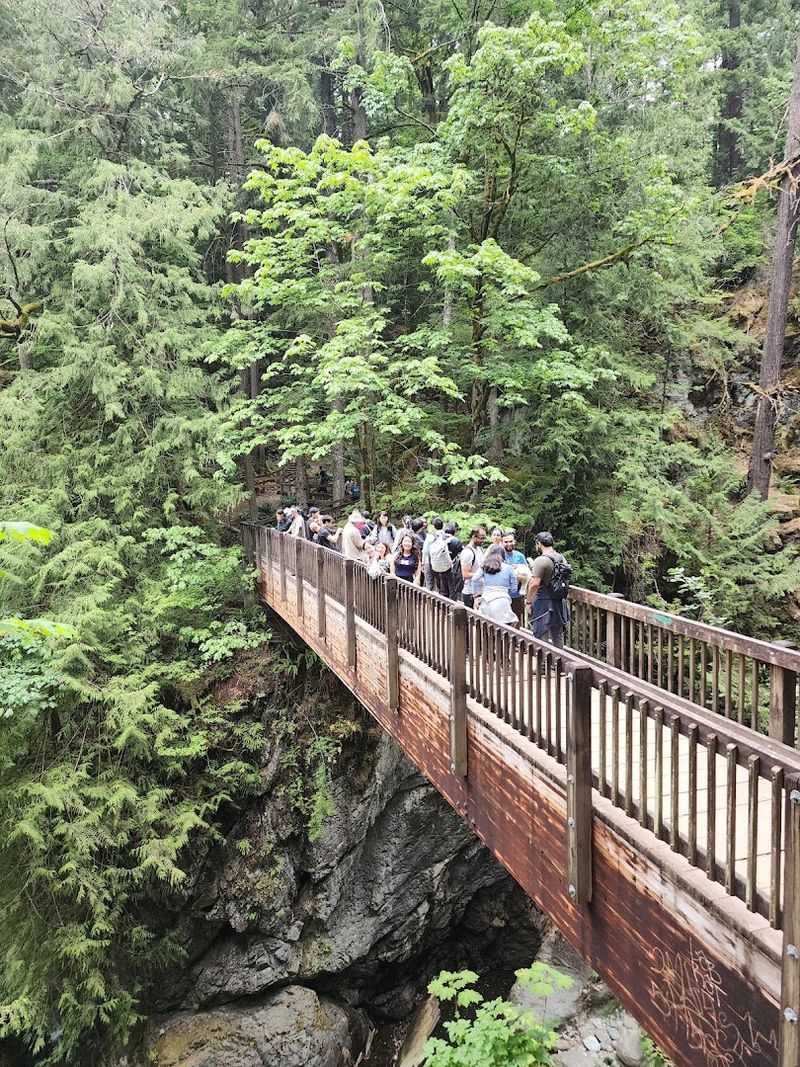
About halfway through the trail, you reach a suspension bridge that crosses the South Fork Snoqualmie River, and it is the kind of moment that makes people stop mid-step and just stare.
The bridge sways gently when you walk across it, and the gorge drops away beneath your feet in a way that is thrilling without being scary.
From the center of the bridge, you get one of the best views on the entire trail. The river churns through the rocky canyon below, framed on both sides by steep, forested walls draped in green.
It is the kind of view that makes you reach for your phone immediately, then put it down because you realize no photo will ever quite capture it. The bridge is sturdy and well-maintained, so there is no reason to hesitate.
Kids love it. Adults love it.
Even people who are not huge fans of heights tend to cross it without much fuss because the scenery pulls you forward naturally.
Standing still on the bridge for a few minutes is worth the time. Watch the water move below, listen to the sound of the current bouncing off the canyon walls, and notice how the mist from the falls drifts up toward you on windy days.
Is there a better mid-hike reward than a swinging bridge over a river gorge in the middle of a Washington rainforest? It is hard to argue there is one.
Twin Falls Up Close
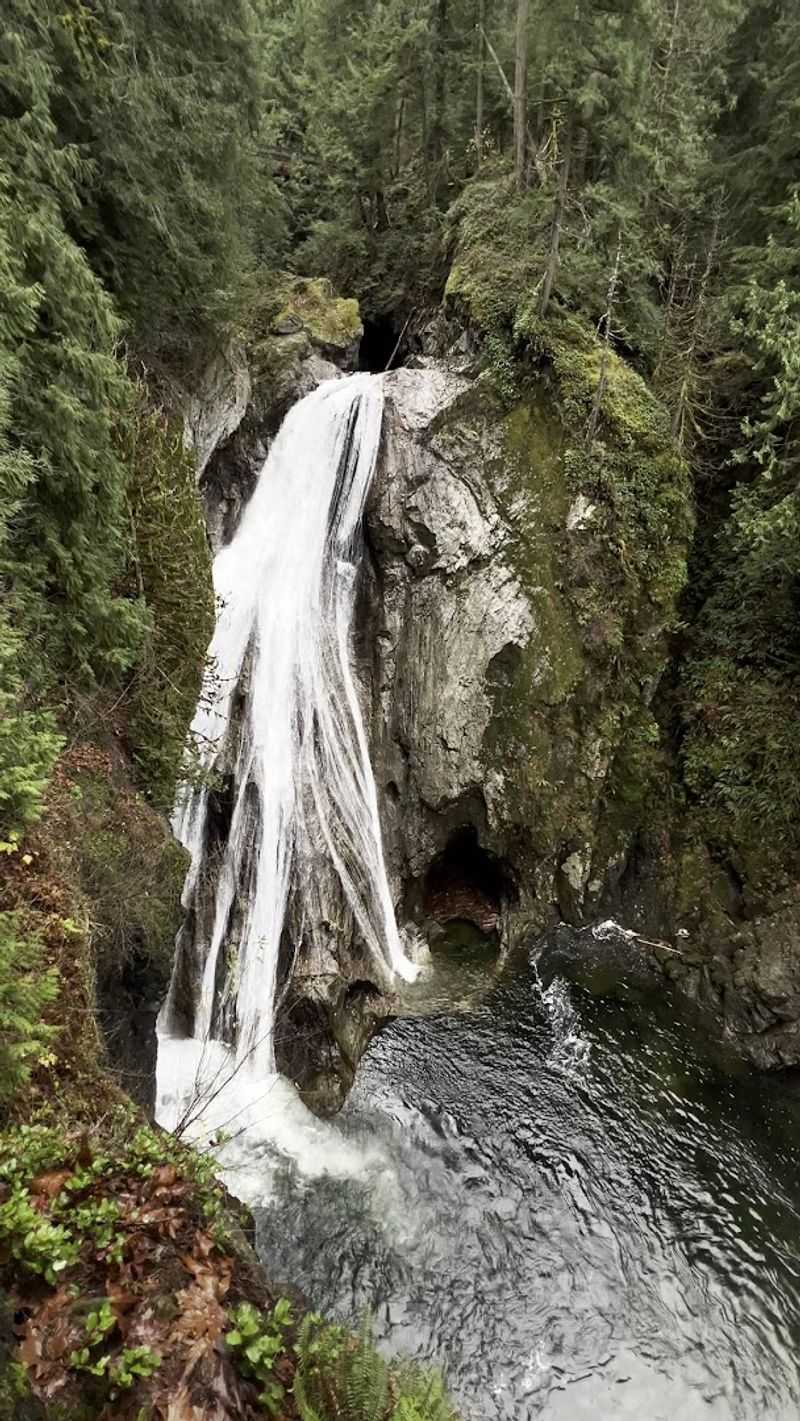
The twin waterfalls are the headline act of this trail, and they deliver every single time. The lower fall drops about 70 feet over a broad basalt ledge, sending a wide curtain of water crashing into a pool that roars loud enough to feel it in your chest.
The upper fall is taller and narrower, threading between two rocky walls with serious force. Seeing both falls together from the upper viewpoint is the moment most hikers remember longest.
You stand on a platform overlooking the entire scene, with the forested canyon stretching out behind the falls and the river continuing its journey below. The scale of it is genuinely surprising for a trail this short and easy.
Water volume changes with the seasons, and each version of the falls has its own personality. Spring snowmelt turns both cascades into thundering walls of white water that you can hear from a significant distance on the trail.
Summer brings a slightly calmer flow, which lets you appreciate the geology of the basalt cliffs more clearly. The viewpoint platform is accessible and well-positioned for photography.
Morning light catches the mist in a way that creates natural rainbow effects on clear days. Visiting in autumn adds another layer of color, with vine maple and big-leaf maple turning gold and orange around the edges of the canyon.
Wildlife You Might Actually See
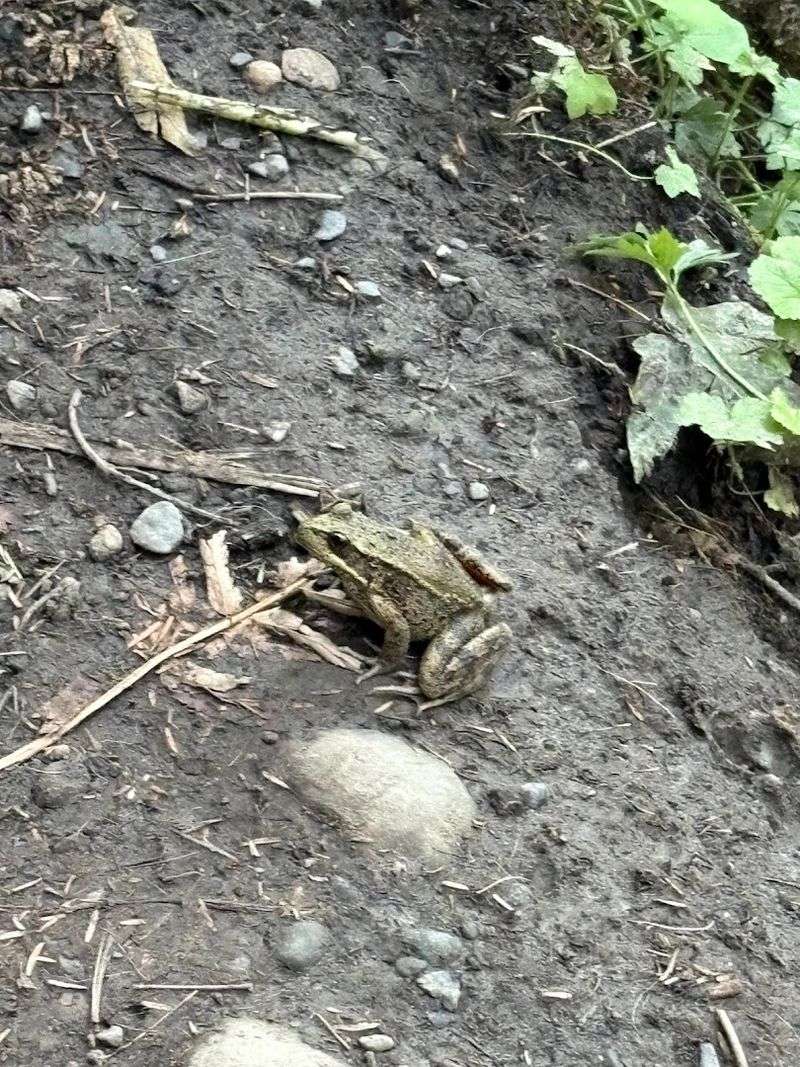
The trail corridor along SE 159th St is a natural wildlife highway, and patient hikers are often rewarded with genuine sightings rather than just tracks and traces. Black-tailed deer are the most commonly spotted large mammals, often grazing in the forest clearings near the river in the early morning hours.
River otters have been spotted in the South Fork Snoqualmie below the bridge, though they are shy and quick. Keeping your eyes on the water as you cross can pay off if you move quietly.
American dippers, small round birds that bob up and down on river rocks, are a frequent and charming sight near the water’s edge.
The forest canopy shelters a surprising variety of birds year-round. Banana slugs are a trail staple in wet conditions, inching along the path in their slow, bright yellow way.
They are harmless and fascinating up close, especially for younger hikers who find them endlessly entertaining.
Keeping your noise level low and your pace relaxed dramatically increases your chances of wildlife encounters on any forest trail.
Best Times To Visit And What To Expect
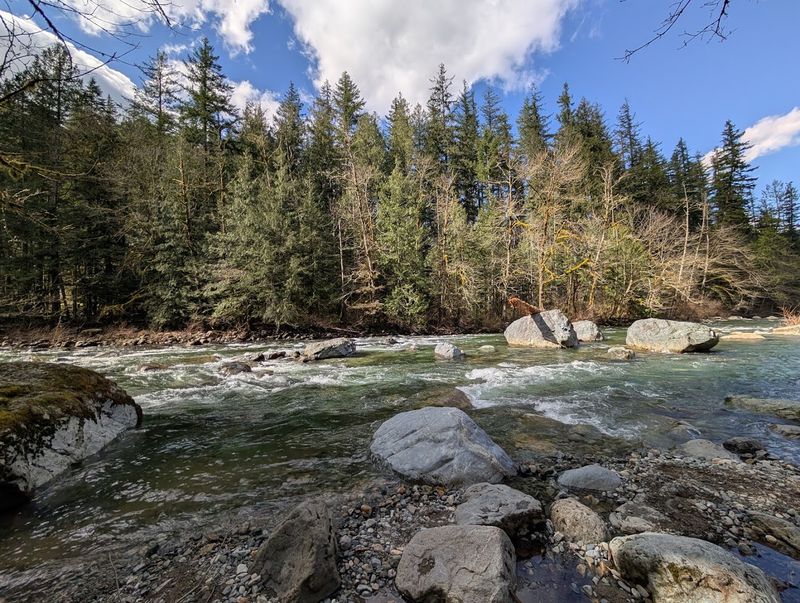
The trail is open year-round, and each season brings something genuinely different to the experience. Spring is peak waterfall season, when snowmelt from the surrounding Cascade Mountains pushes the falls to their most powerful and dramatic state.
The forest is also at its most vivid green from March through May, with wildflowers appearing along the path.
Summer is the busiest season by far. Weekends from June through August can bring significant crowds to the trailhead parking area, so arriving before 9 a.m. is strongly recommended if you want a quieter experience.
Weekdays are noticeably calmer and allow for a more relaxed pace on the trail itself. Autumn is a local favorite for good reason.
The big-leaf maples along the trail turn a warm amber and gold from mid-October through early November, and the crowds thin considerably compared to summer. The light during this time of year is soft and warm, making photography particularly rewarding.
Winter hiking here is entirely possible and often magical. Snow occasionally dusts the upper trail, and the forest takes on a hushed, atmospheric quality that feels completely different from any other season.
The falls run strong in winter due to consistent rainfall in the Cascades. Waterproof footwear and traction devices for icy sections are smart additions to your pack from November through February.
Gear And Prep That Actually Matters
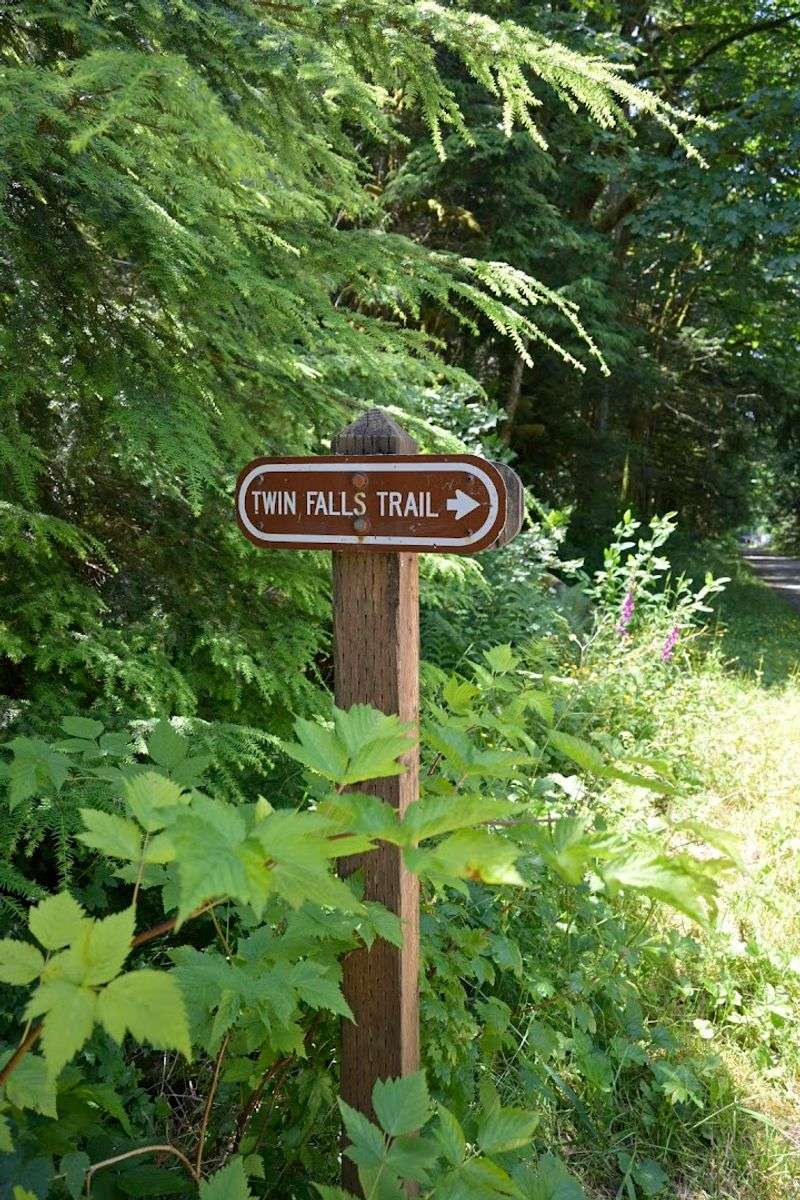
The trail is rated easy, but that does not mean you should show up in flip-flops. The path can be genuinely muddy and slippery, especially after rain, which is a fairly regular occurrence in the Cascades.
Waterproof trail shoes or light hiking boots make a significant difference in comfort and grip on wet sections near the falls. Layers are your friend on this trail regardless of the season.
Washington weather shifts quickly, and the canyon near the falls creates its own microclimate that feels noticeably cooler and wetter than the trailhead. A lightweight rain jacket takes up almost no space and solves a lot of problems.
Trekking poles are optional but genuinely helpful on the descent back from the upper viewpoint, especially for hikers with sensitive knees.
The trail includes a few root-crossed and uneven sections that benefit from the extra stability, particularly on the return leg when legs may be a bit tired. Bring more water than you think you need.
The sound of the river running alongside the trail can trick your brain into forgetting that you are exercising, and mild dehydration sneaks up quietly on easy hikes just as much as hard ones.
A small snack for the viewpoint is a nice touch too. Is there anything better than eating a sandwich next to a thundering waterfall in the middle of a Pacific Northwest forest? Pack one and find out for yourself.
How To Get There And Plan Your Visit
Getting to the Twin Falls trailhead is straightforward from the Seattle area. Take I-90 East to Exit 34, then follow SE North Bend Way and turn onto SE 159th St in North Bend, WA 98045.
The road leads directly to the Olallie State Park parking area where the trail begins. The drive from Seattle takes roughly 35 to 45 minutes depending on traffic.
Annual passes are a smart investment if you plan to visit multiple state parks throughout the year, and Washington has no shortage of trails worth visiting.
Cell service is limited near the trailhead and disappears entirely once you are in the forest. Download the trail map ahead of time through AllTrails or the Washington Trails Association website so you have it available offline.
The trail is well-marked, but having a map adds confidence, especially for first-time visitors. Dogs are welcome on the trail as long as they are kept on a leash at all times.
The trail sees a lot of foot traffic, so leash rules help keep encounters between dogs and wildlife, and between dogs and other hikers, calm and pleasant for everyone. Plan to spend between one and two hours on the trail depending on your pace and how long you linger at the viewpoints.