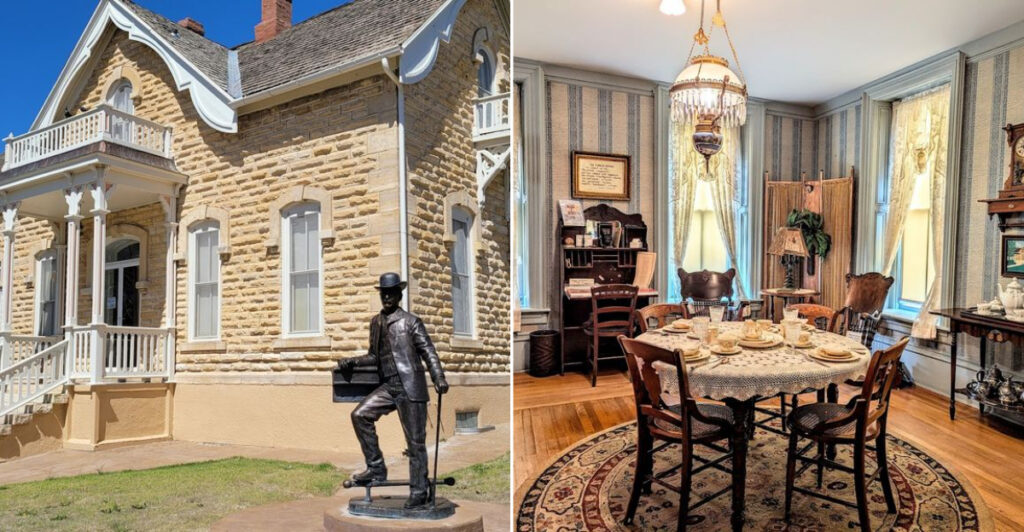
Not every piece of Wild West history comes with swinging doors and dusty shootout stories. Some of it stands quietly, built from stone, holding its ground while the world changes around it.
This elegant Kansas house has that rare staying power, offering a calmer look at a place better known for louder legends. Its appeal comes from the contrast: a refined home with deep roots in a town famous for grit, cattle drives, and frontier drama.
That makes the visit feel less like a typical history stop and more like discovering the steady heartbeat behind the spectacle. Old buildings can say a lot without raising their voice.
I always pay attention to places that survive the wild chapters, because they often reveal the parts of history that feel most human.
Built From Native Kansas Limestone In 1881
Long before concrete and steel defined American architecture, clever builders across the Great Plains used what the land gave them.
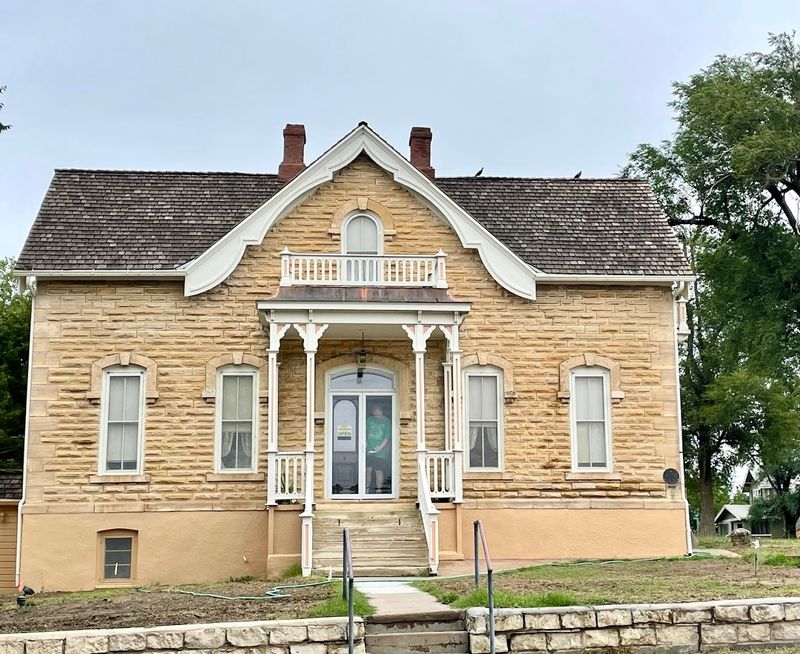
In 1881, the Mueller-Schmidt House was constructed entirely from native Kansas limestone, a material so durable it has outlasted nearly every other structure in Dodge City.
That choice of stone was not just practical. It was a statement.
While most homes of that era were built from timber and have since collapsed or burned away, this house stood firm through blizzards, prairie winds, and more than 140 years of Kansas weather.
The thick limestone walls kept the interior cool in summer and insulated in winter, making the house both beautiful and functional.
Walking up to it today, you can still see the rough-cut stone blocks fitted tightly together, a reminder that some building decisions made in the 1880s were simply ahead of their time.
Founded By A German Immigrant Bootmaker
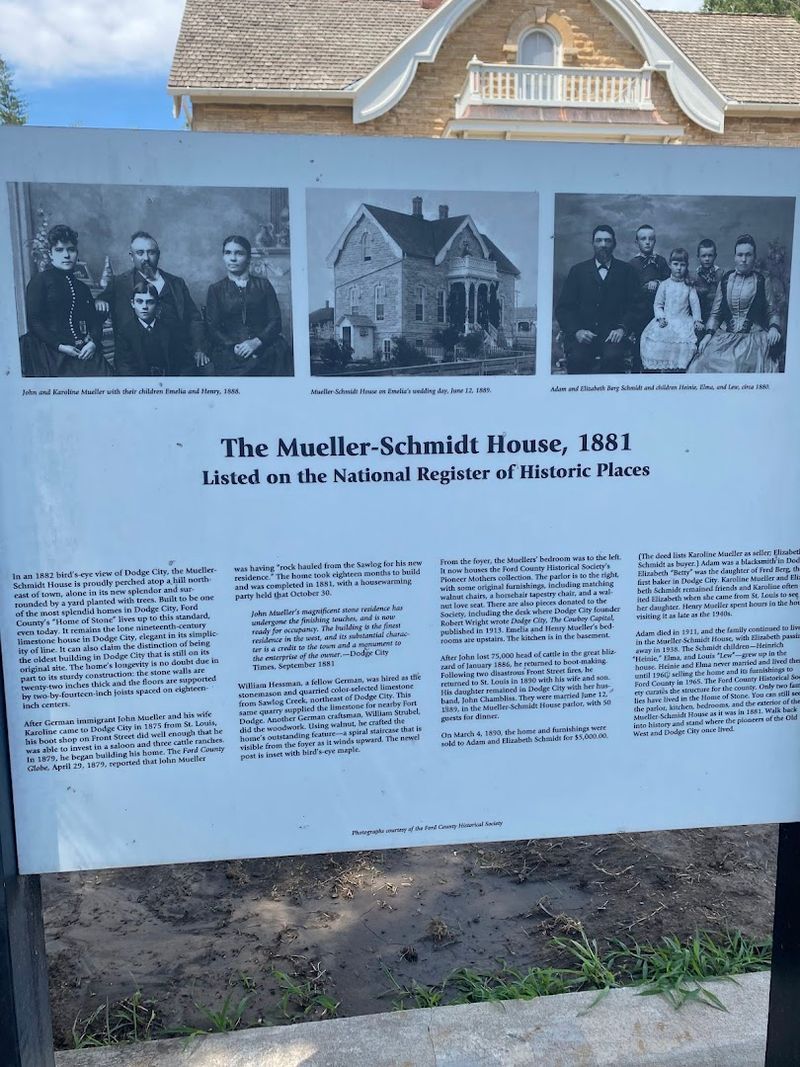
The man behind this remarkable house was John Mueller, a German immigrant who came to Dodge City from St. Louis with his wife Karoline and their children.
He was a bootmaker by trade, and his craft served him well during the cattle drive boom years when cowboys needed sturdy footwear for long trail rides.
Mueller built his limestone home as a symbol of permanence and prosperity. His Front Street boot shop did well enough that he invested in a saloon and cattle ranches.
That kind of determination is baked right into the walls of this house.
William Hessman, another German craftsman, served as stonemason, while William Strubel created the woodwork.
Together, their work makes the house a quiet tribute to immigrant skill in the American West, a story that deserves far more attention than it typically receives.
The Oldest Building In Dodge City Still On Its Original Site
Most people picture Dodge City as a place of wooden saloons and dusty streets, and they are not entirely wrong.
The vast majority of original structures from that era are long gone, replaced by modern buildings or simply lost to time and fire.
That makes the Mueller-Schmidt House genuinely one of a kind.
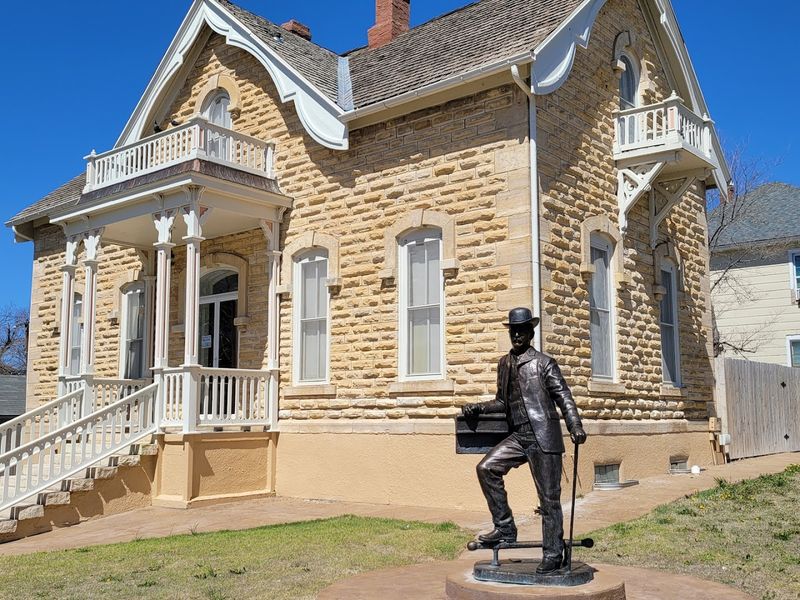
It is widely recognized as the oldest building in Dodge City still standing on its original site, which gives it a cultural weight that goes far beyond its modest footprint.
Few surviving buildings in the city can claim such a direct physical connection to the Wild West period.
You are standing in front of the real thing, unchanged and unapologetic.
A Cattle Ranch Destroyed By A Devastating Blizzard
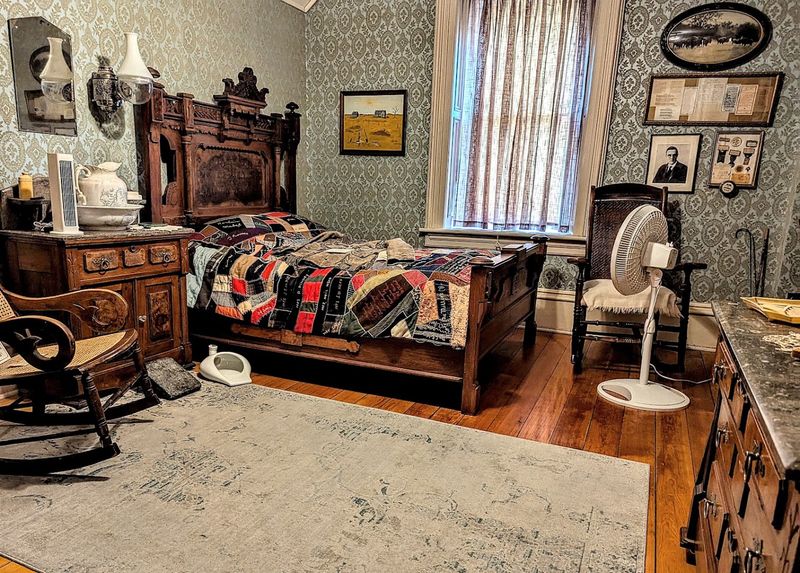
John Mueller did not stop at bootmaking. After establishing himself in Dodge City, he expanded into cattle ranching, riding the wave of the great cattle boom that defined the Kansas economy in the 1870s and 1880s.
For a time, things looked very promising. Then a brutal blizzard swept across the plains and wiped out his cattle herd almost entirely.
This kind of catastrophic weather event was not uncommon on the frontier, and it financially ruined many ranchers who had invested everything in their herds. Mueller was among those hit hardest.
The loss changed the course of his family’s story in Dodge City. Despite building such a solid, lasting home, the economic blow proved too much to recover from fully.
His experience mirrors the stories of countless frontier settlers who built something real only to watch nature remind them who was actually in charge of the plains.
The Schmidt Family Kept The Home Alive For Decades
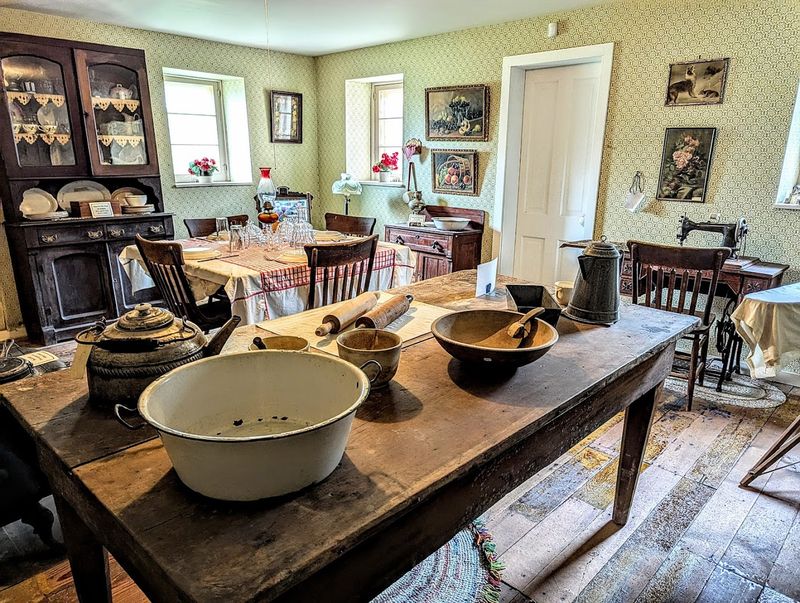
After John Mueller’s financial difficulties, Karoline Mueller sold the home and furnishings to Elizabeth Schmidt, whose family became its long-term stewards.
The Schmidt children lived in the house until 1960, giving the building a continuous residential history that spans nearly a century.
Because the Schmidt family held onto so much of the original furniture and household items, the home today feels remarkably intact.
Visitors can walk through rooms filled with authentic period antiques, many of which were part of daily life in that very house. That level of preservation is genuinely rare.
Their decades of occupation kept the house from becoming just another footnote. Instead, it became a living record of what frontier domestic life actually looked like.
Nearly All Of The Furnishings Are Original To The House
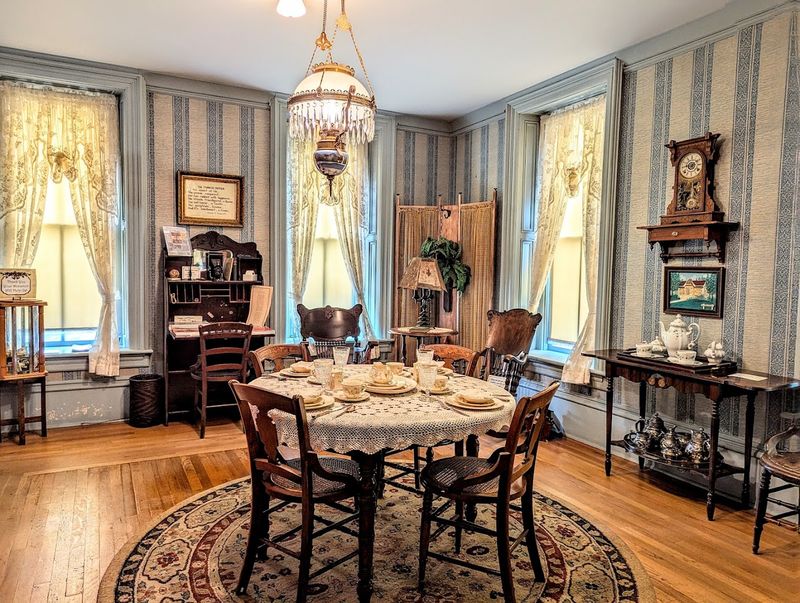
One of the most jaw-dropping aspects of the Mueller-Schmidt House is that almost everything inside it is original.
Most house museums display period-appropriate furniture sourced from various locations, but here the pieces actually belong to the home and the families who lived in it.
From wooden chairs and bedroom sets to kitchen tools and decorative items, the interiors offer an almost unfiltered window into 1880s domestic life on the Kansas frontier.
You are not looking at staged props. You are looking at real objects that real people used every single day.
Historic preservation advocates across the country, from Ohio to California, often struggle to maintain this level of authenticity.
The fact that so much survived intact here is a minor miracle of circumstance and care.
Each room tells a slightly different chapter of the Mueller and Schmidt family stories, layered together in a space that feels genuinely alive with the past.
The Home Operates As A Museum Open To The Public
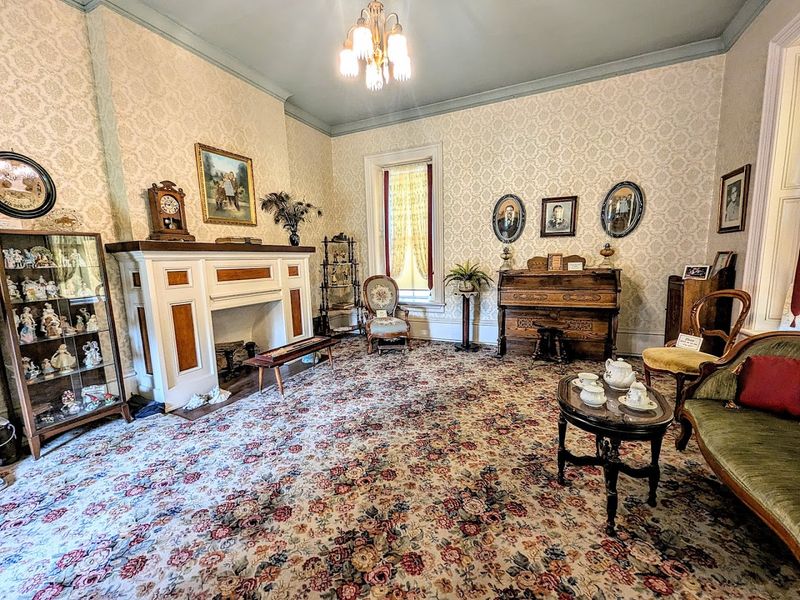
Today the Mueller-Schmidt House operates as a public museum managed by the Ford County Historical Society.
It sits at 112 E Vine St in Dodge City, Kansas, and is open Tuesday through Saturday from 9 AM to 5 PM, giving travelers a generous window to plan their stop.
What makes this museum especially appealing is its pricing model.
Entry is based on a free-will donation, meaning there is no hard ticket price standing between curious visitors and a genuinely fascinating slice of American history.
That kind of open-door approach is refreshing in a world where attraction costs keep climbing.
Guided Tours Bring Each Room’s Story To Life
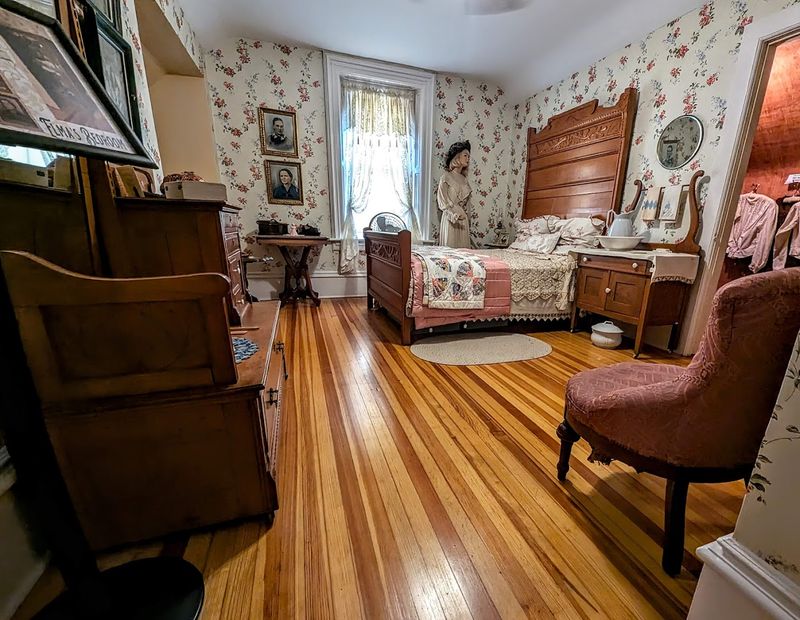
Stepping inside the Mueller-Schmidt House without a guide would still be interesting, but the guided tours here elevate the whole experience to something genuinely memorable.
The staff are known for being enthusiastic, deeply knowledgeable, and skilled at connecting the details of each room to the broader history of Dodge City.
Guides walk visitors through the layers of both families who called this house home, pointing out specific objects and explaining their significance. A kitchen tool becomes a story about daily survival.
A bedroom set becomes a window into family life during one of the most turbulent eras in American history.
Tours typically run about an hour, though curious visitors who linger over the details could easily spend longer.
A Bronze Statue Of Bat Masterson Stands On The Lawn
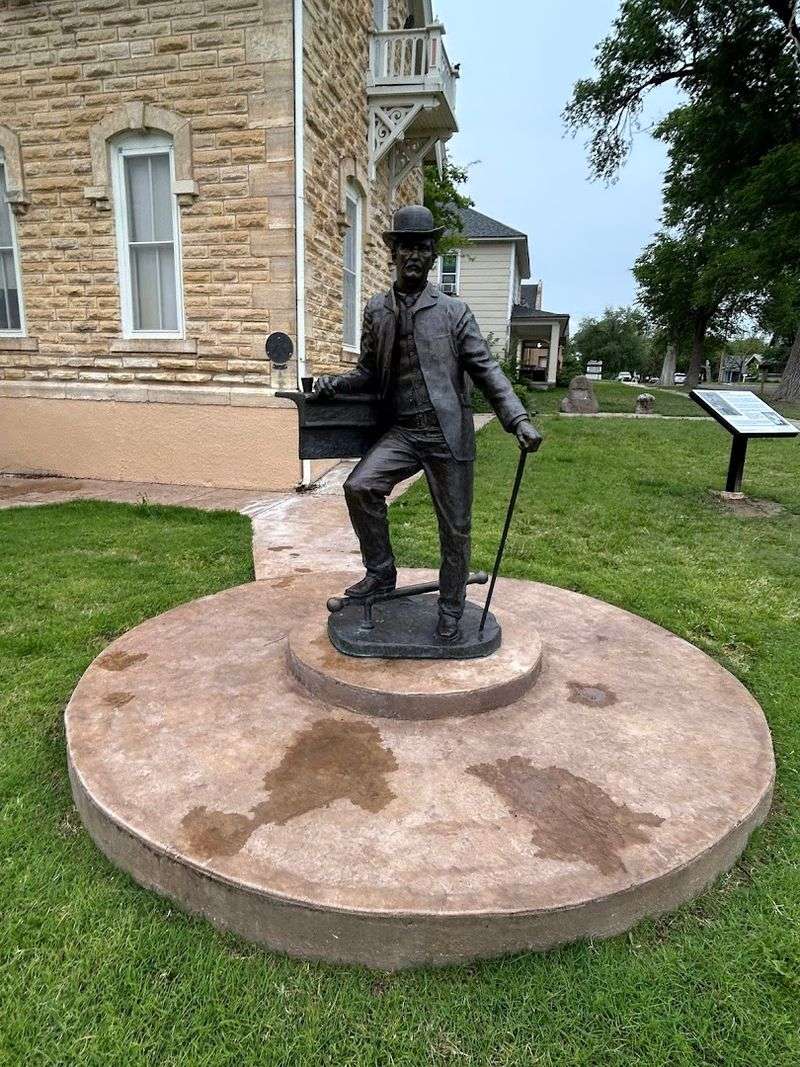
On the front lawn of the Home of Stone, there is a striking bronze statue of Bat Masterson, one of the most famous figures associated with Dodge City.
Masterson served as a lawman in Dodge City during the height of the cattle drive era and became a legend of the American West.
The statue was dedicated in 2022 during Dodge City’s 150th anniversary celebration, which makes it a newer landmark connected to an old story.
Created by Carson Norton and his father, Charlie Norton, the sculpture captures the man’s confident frontier presence with impressive detail.
The connection between Masterson and the Mueller-Schmidt House itself is not a direct historical one, but placing his statue here ties together two major threads of Dodge City’s story.
A Rare Surviving Link To The Wild West Era Of Kansas
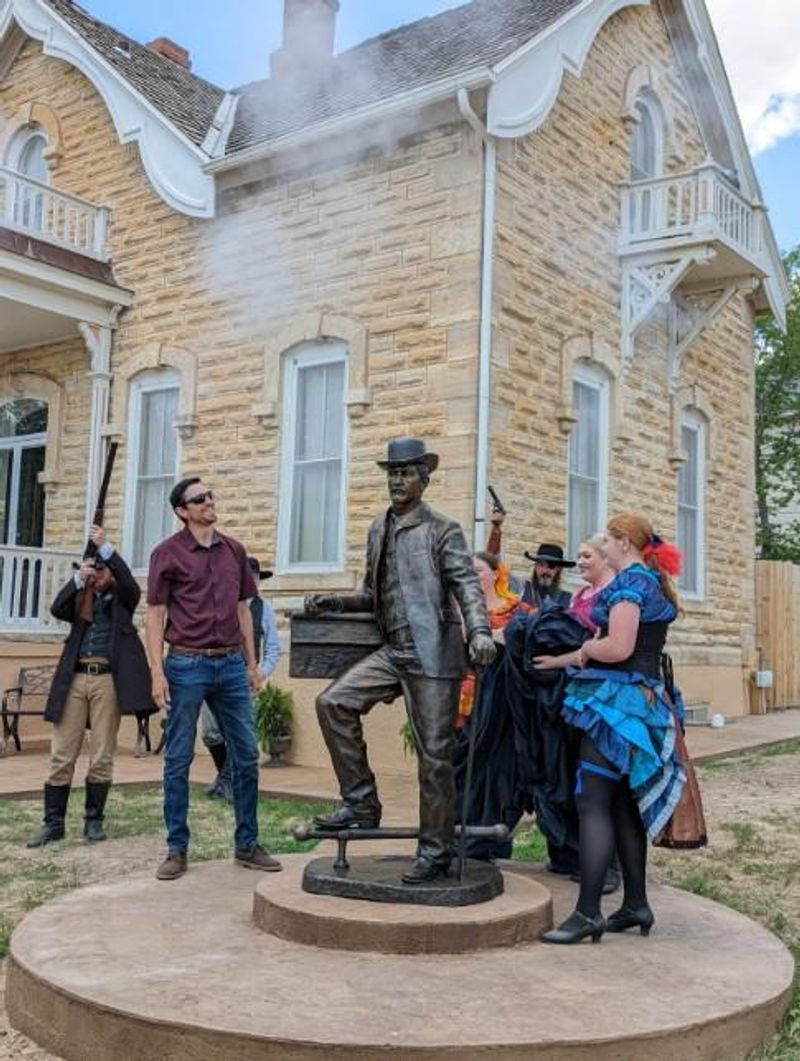
Dodge City’s reputation as the wildest town in the American West was earned honestly.
Cattle drives, gunfights, legendary lawmen, and a constant flow of frontier characters made it one of the most talked-about places in the country during the 1870s and 1880s.
Almost nothing physical from that era remains. The Mueller-Schmidt House is the rare exception.
It was standing when the cowboys arrived, when the gunfights happened, and when the cattle drives finally wound down.
It watched Dodge City transform from a frontier outpost into a modern Kansas city, all without budging an inch.
The Home of Stone does not just represent the Wild West. It literally survived it, and that is something no amount of reconstruction could ever replicate.