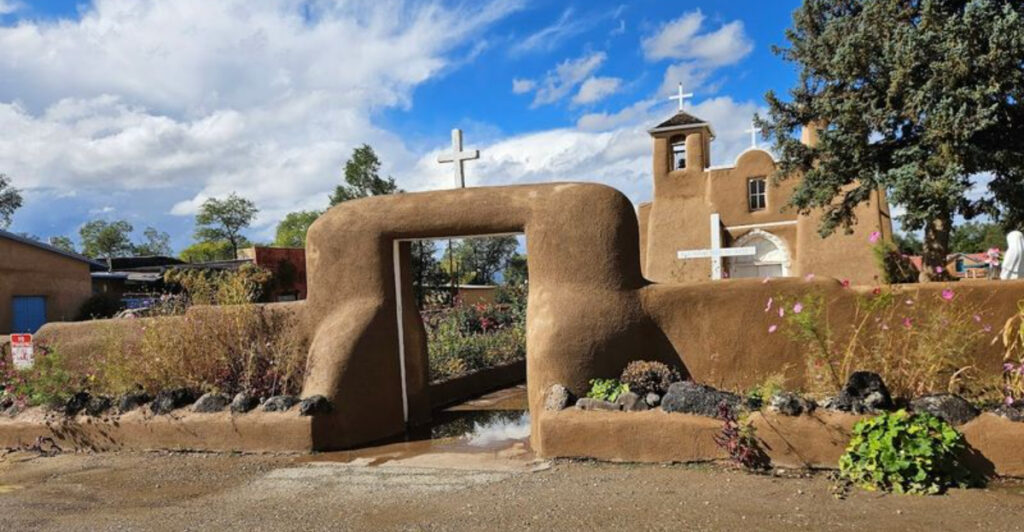
This small New Mexico village is not the kind of place you race through and understand. It works slowly.
First, the adobe walls catch your eye. Then the old church pulls you toward the plaza.
After that, the mountains, the desert light, and the quiet lanes start doing their work. This place has a way of making history feel close instead of distant.
You see it in the buildings, but you also feel it in the pace of daily life. People come for the famous church, and that alone is worth the stop.
Still, the best moments might happen while wandering with no plan at all. A courtyard, a weathered doorway, or a sudden stretch of sky can stop you longer than expected.
That is the charm here. Simple at first glance, unforgettable once you slow down.
It stays with you because the place never has to raise its voice.
Adobe Walls Beneath Wide Desert Light
The moment that stopped me here had nothing to do with a landmark or a sign.
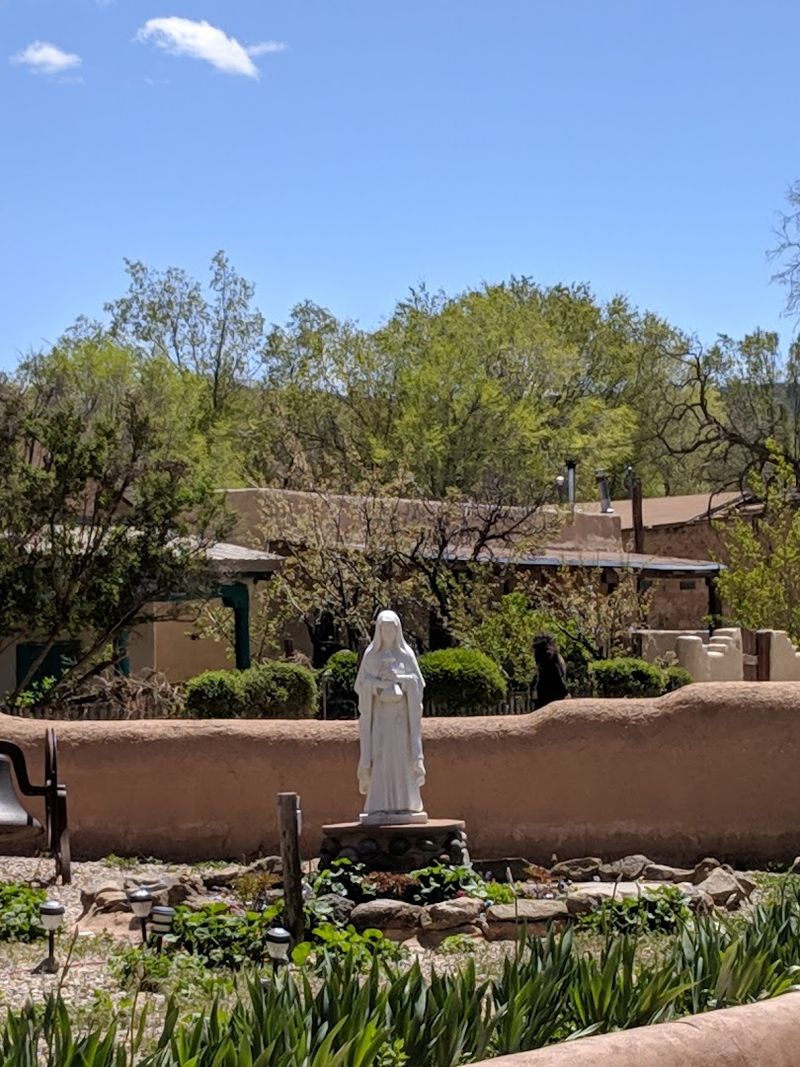
It was a simple wall, hand-plastered and glowing amber in the late afternoon sun, that made me pause and look twice.
Adobe construction is everywhere in this village, and not as a decorative nod to the past but as a living, practical tradition that has shaped daily life for centuries.
The thick earthen walls absorb heat during the day and release it slowly at night, a natural temperature control that no modern HVAC system can fully replicate.
Watching the light shift across these surfaces from morning to dusk is genuinely one of the more meditative experiences I have had while traveling.
The textures change, the shadows deepen, and what looks like a plain wall at noon becomes something almost sculptural by the time the sun drops low.
Photographers and painters have chased this quality of light for generations, and standing here, I understood exactly why.
Every adobe surface feels like a canvas that the desert itself has been quietly painting for hundreds of years, and that is what makes Ranchos de Taos, New Mexico, so stunning.
A Historic Church With Timeless Presence
Few buildings I have ever visited carry the kind of quiet authority that this one does the moment you round the corner and see it.
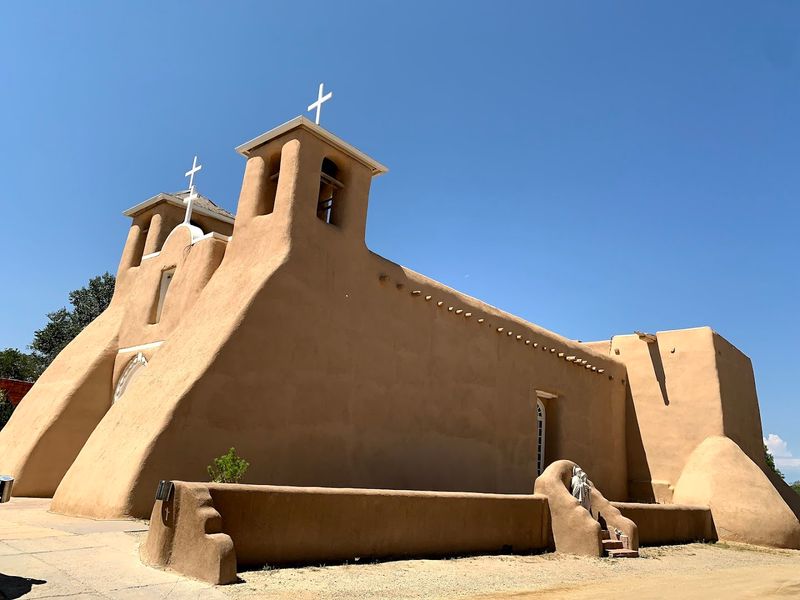
The San Francisco de Asis Mission Church, at 60 St Francis Plaza in Ranchos de Taos, NM 87557, was built from 1772 to 1816 under Franciscan supervision, making it one of the oldest continuously active churches in New Mexico, still serving local worshippers today.
Its massive adobe buttresses curve outward like arms bracing against the centuries, and the effect is both powerful and deeply calming.
Georgia O’Keeffe and Ansel Adams were both famously captivated by this structure, returning repeatedly to capture its shifting forms and spiritual gravity.
What genuinely moved me was learning that the community still gathers each year for the traditional enjarre, a collective re-mudding of the exterior walls that keeps the building standing strong.
That kind of living commitment to a shared landmark is rare anywhere in the world.
The church holds National Historic Landmark status, earned in 1970, and remains an active Roman Catholic parish serving the local community today.
Standing before those curved walls at golden hour, I felt the full weight of history pressing gently but unmistakably against the present.
Mountain Views Beyond The Village Roads
Step past the last row of adobe homes on the edge of the village and the landscape opens up in a way that genuinely takes your breath away.
The Sangre de Cristo Mountains rise sharply to the east, their snow-dusted peaks catching the morning light while the valley below still rests in cool shadow.
I spent one early morning parked on a dirt pull-off just outside the village, watching those peaks shift from pale grey to deep rose as the sun climbed higher, and I did not want to move.
The Rio Grande Gorge adds another dramatic layer to the scenery, cutting a jagged line through the desert floor just a short drive from the village.
This combination of towering mountains, deep canyon, and wide desert floor creates a visual range that few destinations anywhere in the American Southwest can match.
Hiking trails and scenic drives in the surrounding area give you multiple angles on these views, each one slightly different and equally rewarding.
The mountains also serve as a weather indicator for locals, who read the cloud patterns along the peaks to predict afternoon storms with remarkable accuracy.
Those peaks have a way of making every drive out of the village feel like a proper send-off.
Earthy Architecture Around Every Corner
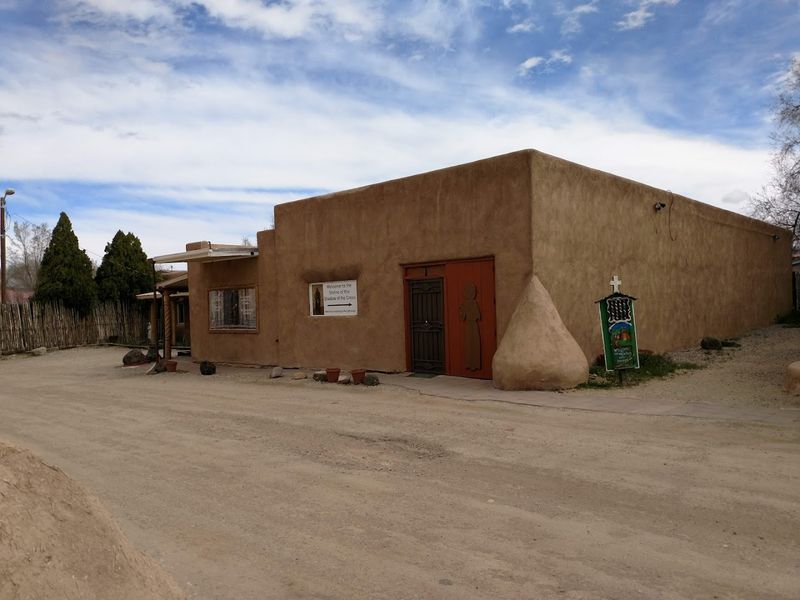
There is a coherence to this village that I rarely encounter in places that have been inhabited for centuries, a visual harmony that comes from everyone building with the same honest materials.
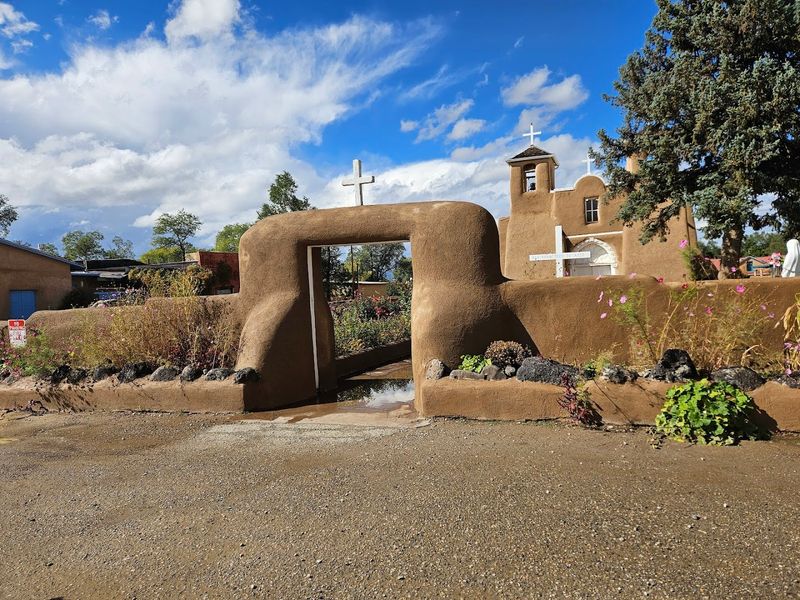
Adobe homes, low walls, and flat-roofed buildings line every street, their warm tan and ochre tones blending so naturally with the surrounding desert that the whole village seems to grow from the ground up.
Hand-hewn vigas, the thick wooden beams that poke through exterior walls, are everywhere here, and each one tells you something about the tree that was harvested and the hands that shaped it.
Kiva fireplaces, saltillo tile floors, and carved wooden doors appear again and again throughout the village, each variation on the theme slightly different from the last.
This architectural style draws directly from Spanish Colonial traditions and from the building knowledge of Taos Pueblo, creating a hybrid form that belongs entirely to this region.
What surprised me most was how unpretentious it all feels, nothing is staged for visitors or polished for effect.
These are working buildings, lived-in and loved, with the scuffs and repairs that come from real use over real time.
The architecture here does not perform for you; it simply exists, and that honesty is more compelling than any curated streetscape I have visited.
Quiet Streets With An Artistic Feel
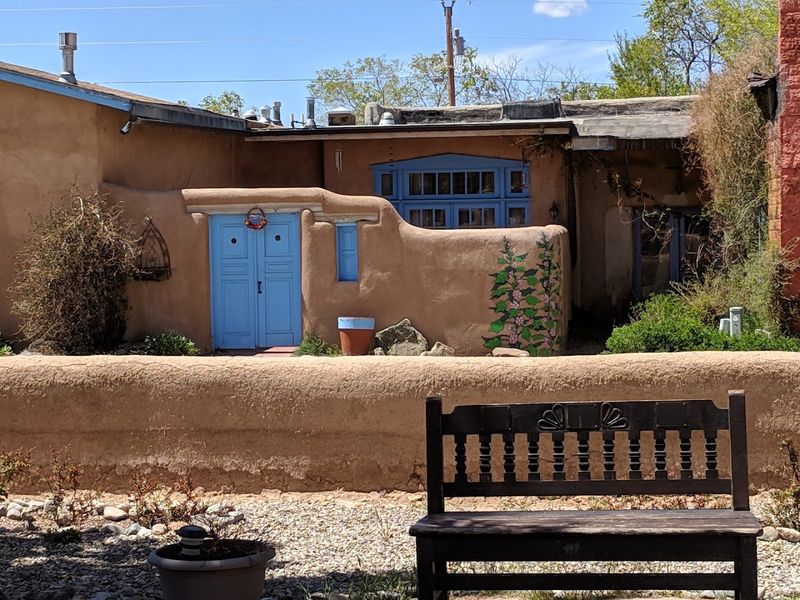
Ranchos de Taos predates the town of Taos itself as an American settlement, and that deeper timeline gives its streets a particular quality of stillness that newer places simply cannot manufacture.
Walking here on a weekday morning, I heard wind moving through cottonwood trees, a distant rooster, and my own footsteps on packed earth, and nothing else.
Yet beneath that quiet surface runs a strong artistic current, fed by generations of painters, sculptors, and craftspeople who were drawn here by the light and the landscape.
Small galleries tucked behind adobe walls display Native American pottery, Navajo weavings, and contemporary paintings that reflect both the ancient and the evolving character of the region.
The creative energy here does not announce itself loudly, but you feel it in the care taken with a hand-lettered sign, a painted gate, or a carefully arranged window display.
Artists have been coming to this corner of New Mexico since the early twentieth century, and the community has absorbed that influence without losing its original identity.
Local artisans still practice traditional crafts passed down through families, and watching a potter at work or a weaver at the loom is a genuinely grounding experience.
The streets here feel like a quiet conversation between past and present that never quite resolves, and that tension keeps things interesting.
Sun-Baked Spaces Made For Slow Wandering
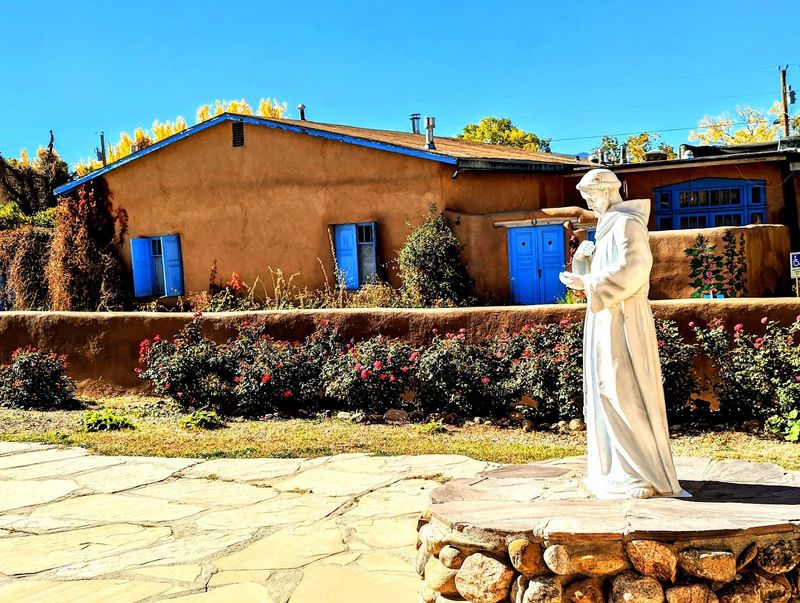
My favorite kind of travel day is one with no fixed itinerary, just a direction, comfortable shoes, and a willingness to stop whenever something catches my eye.
Ranchos de Taos was built for exactly that kind of day.
The historic plaza, anchored by the mission church, draws you in and then sends you wandering outward through a network of quiet lanes and sun-warmed courtyards that reward slow exploration.
Even on warmer afternoons, the thick adobe walls of the historic buildings keep interiors noticeably cool, so ducking into a gallery or a small museum offers genuine physical relief alongside cultural discovery.
I found a shaded courtyard behind one of the older buildings where a single wooden bench sat facing a flowering cactus, and I sat there for longer than I expected, thinking about nothing in particular.
That kind of unplanned pause is what slow travel is actually about, and this village creates the conditions for it naturally.
The pace of life here is not lazy; it is deliberate, shaped by generations of people who understood that the land and the light deserve full attention.
Every unhurried hour I spent here felt like a small act of recovery from the speed of ordinary life.
Desert Edges Framed By Big Skies
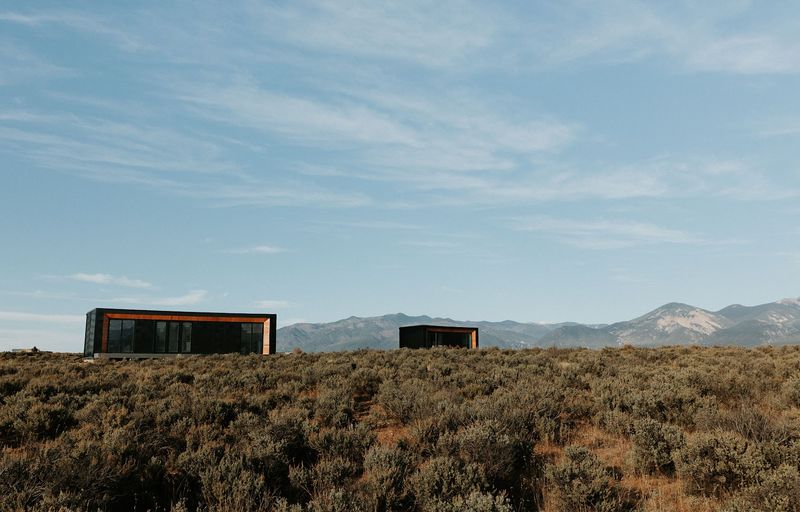
At the edges of this village, the built environment gives way to raw high desert, and the transition is immediate and striking.
Sagebrush stretches out across flat plains toward distant mesas, and the sky above is so wide and so present that it becomes the dominant feature of the entire landscape.
I pulled over one evening just past the village boundary to watch the sunset, and the sky delivered a performance that made me genuinely laugh at how good it was, deep orange bleeding into violet, with a thin line of gold marking the horizon.
Stargazing here is exceptional once full dark settles in, with minimal light pollution and a clarity of air that makes the Milky Way look almost three-dimensional.
The desert edge also serves as habitat for a surprising variety of wildlife, including hawks circling the thermals above the mesas and roadrunners darting through the scrub brush.
That intersection of ancient sky, open land, and small historic village is what makes this corner of New Mexico feel so distinct from anywhere else I have traveled.
You do not need to hike far or drive long to reach these open spaces; they begin almost immediately where the last adobe wall ends.
Big skies have a way of resetting your sense of proportion, and this one does the job better than most.
A Peaceful Place With Old New Mexico Character
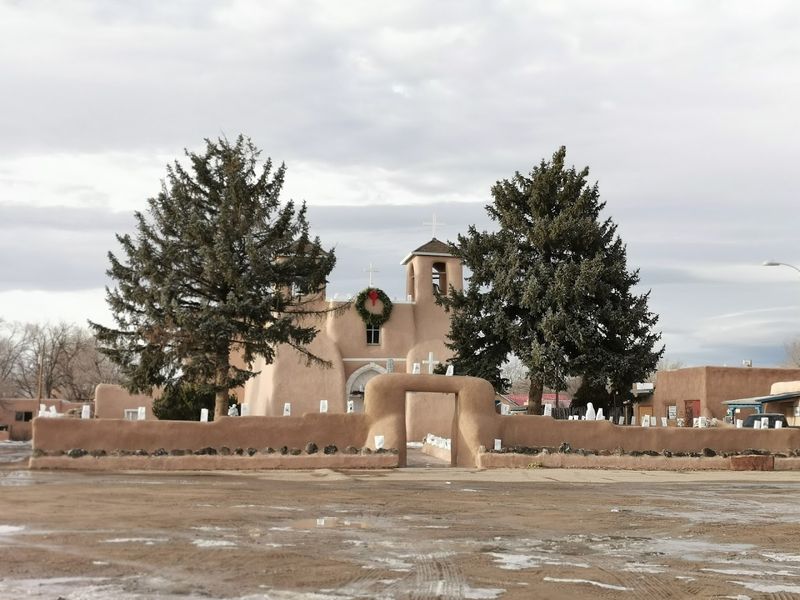
Some places feel like they have been preserved in amber, not frozen exactly, but held gently in a way that keeps their essential character intact across generations.
Ranchos de Taos carries that quality more fully than almost anywhere I have visited in the American Southwest.
The community here is predominantly Hispanic, with roots in Spanish Colonial land grants that stretch back centuries, and that heritage shapes everything from the architecture to the rhythms of daily life.
Life in this village still revolves around the local parish, around family, and around a quiet commitment to maintaining traditions that have been passed down through many generations.
Locals I spoke with described their village with a matter-of-fact pride, not boastful but deeply rooted, the kind of confidence that comes from knowing exactly who you are and where you come from.
People who love authentic travel often call this place the last real holdout of old New Mexico character, and after spending time here, I understood why that phrase carries such weight.
Nothing here feels staged or performed for visitors; the authenticity is structural, built into the walls and the streets and the way neighbors greet each other across a low adobe fence.
Leaving Ranchos de Taos felt less like ending a trip and more like stepping away from a conversation I was not quite ready to finish.