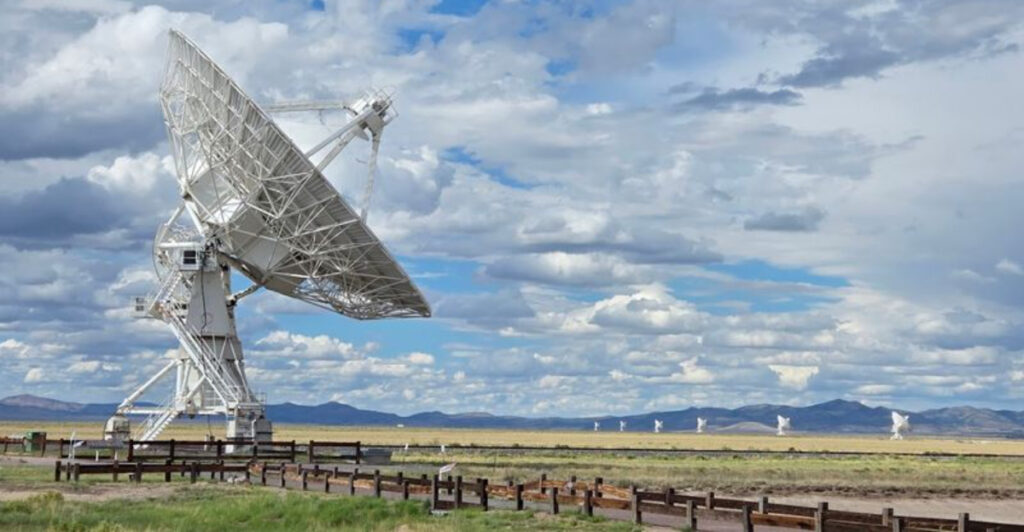
Nobody warned me that this desert stop would feel this cinematic.
I was out in New Mexico, surrounded by 27 huge white dishes pointed straight at the sky, and I kept laughing because it felt too unreal to be an ordinary travel day. Like, how do you just drive up to something this massive and act normal?
These dishes are not props. They are working radio antennas, built to catch signals from space.
From stars. From galaxies we cannot see.
From distances that make your daily problems feel very small.
The whole area is quiet, which makes it even better. No flashy signs needed.
No theme park energy. Just open land and these giant structures doing one of the most fascinating jobs on Earth.
I stood there longer than planned, mostly staring. Some views ask for a photo.
This one asks you to think bigger than yourself.
Where Giant Dishes Meet Desert Silence
Something shifts inside you the moment you step out of your car and realize the scale of what you are looking at.
The first time I approached the array, I expected to feel like a visitor at a science museum, but the feeling was closer to standing at the edge of something vast and humbling.
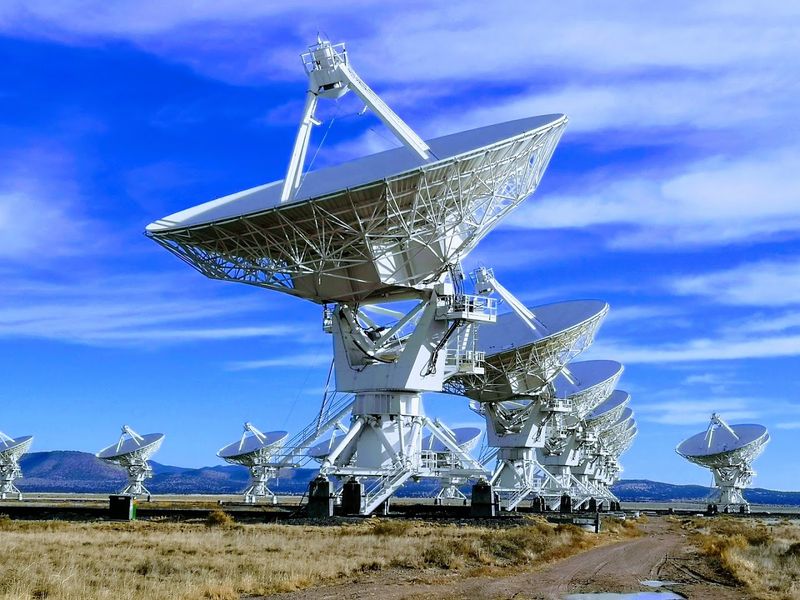
Twenty-seven dish antennas, each measuring 25 meters across and weighing about 230 tons, or roughly 209 metric tons, are spread across the Plains of San Agustin in a configuration that stretches for miles in every direction.
The desert silence around them is almost surreal, broken only by the occasional mechanical hum as one of the dishes adjusts its position.
The dry, high-desert climate here is not just a backdrop; it is actually essential for the science, since arid conditions reduce interference and help the instruments receive cleaner radio signals from deep space.
I watched one of the antennas rotate slowly and felt a quiet kind of awe that I did not expect from a facility built for data collection.
You will find all of this waiting for you at the NRAO Very Large Array Visitor Center, Old Highway 60, Magdalena, NM 87825.
Wide Open Skies Above Futuristic Views
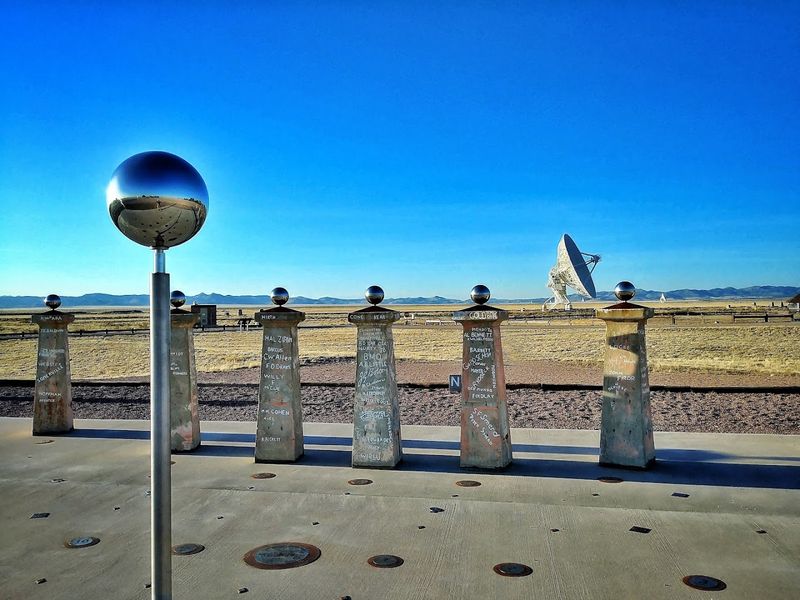
The sky above the Plains of San Agustin feels enormous in a way that is hard to describe until you have actually stood under it.
At about 7,000 feet, or roughly 2,100 meters, the horizon stretches in every direction without interruption, and the blue overhead seems deeper and wider than almost anywhere else I have visited.
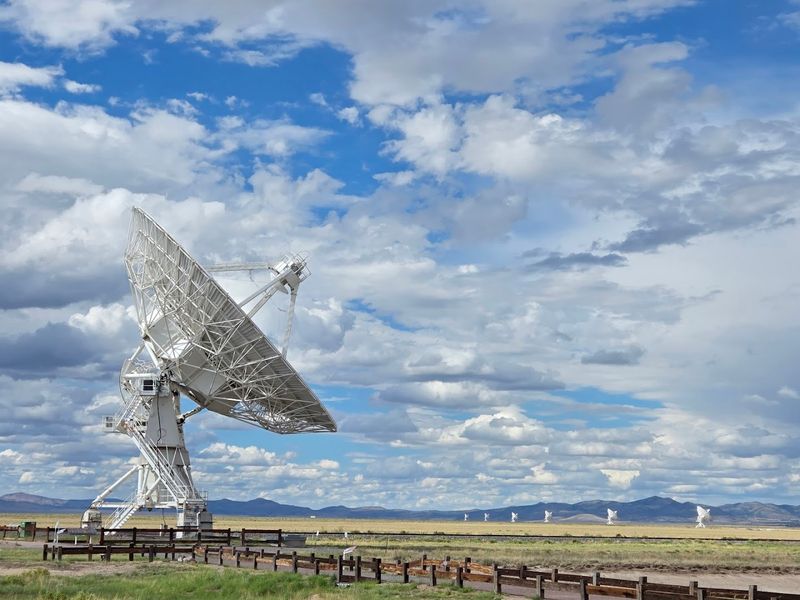
From beneath one of the 82-foot dishes, tilting your head back gives you a perspective that no photograph fully captures.
The engineering precision of each antenna is visible even from the ground, with surface panels fitted together so tightly that the dish looks almost polished.
Visitors on the self-guided walking tour get close enough to appreciate the mechanical detail, including the steel supports and the feed horn at the center of each dish that collects incoming radio waves.
On the afternoon I visited, large clouds were rolling across the plains and casting long shadows over the array, which made the whole scene feel almost cinematic in real time.
The combination of open sky, flat land, and futuristic structures creates a visual experience that sticks with you long after you have driven back toward the highway.
A Desert Landscape Built For Wonder
Central New Mexico has a particular kind of beauty that rewards patience and attention.
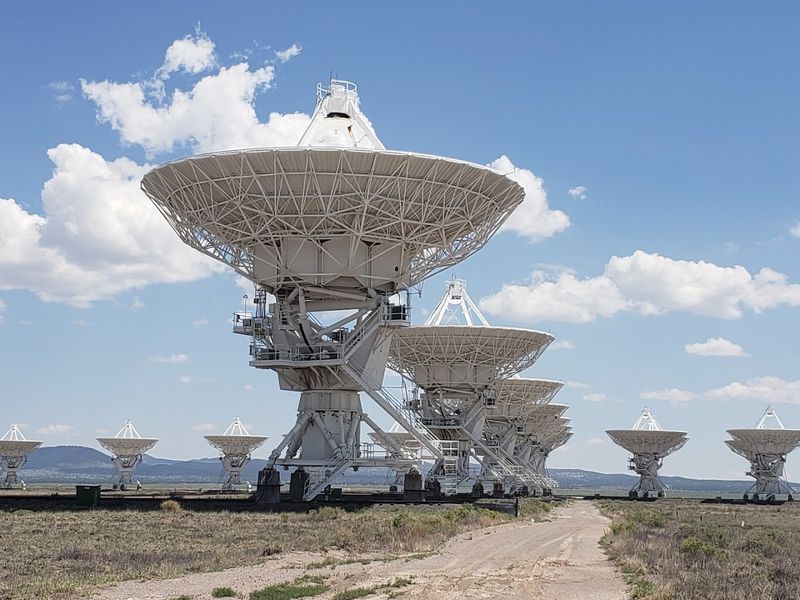
The Plains of San Agustin, where the array sits, are a broad flat basin surrounded by distant mountain ranges, and the landscape itself feels like it was designed to make large objects look even larger.
When I drove out on Old Hwy 60 toward the facility, the dishes appeared on the horizon long before I reached the entrance, rising out of the scrubby desert floor like something planted there by a civilization with very big ambitions.
The remote location is not accidental; scientists chose this site specifically because it sits far from urban radio interference, which is critical for detecting faint signals from billions of light-years away.
Wildlife occasionally wanders through the area, and one visitor I spoke with mentioned spotting a herd of pronghorn antelope near the array during her visit.
The surrounding landscape changes with the light, shifting from pale tan in midday to warm amber in the late afternoon, and the contrast against the white dishes creates a color palette that photographers tend to find irresistible.
The desert here does not feel empty; it feels like a stage set for something genuinely important.
Towering Antennas Across Empty Plains
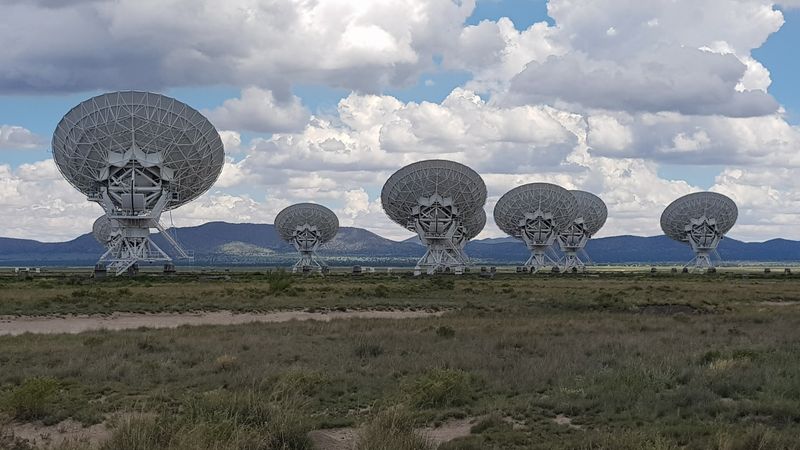
One fact that surprised me more than almost any other detail about this place is that every single one of those 27 massive antennas can move.
Each dish is mounted on double parallel railroad tracks, which allows the entire array to be physically reconfigured approximately every four months.
This mobility is not just a cool engineering trick; it directly affects the science, because different configurations give the array different levels of angular resolution, essentially changing how sharp or wide the telescope’s view of the sky becomes.
When all 27 dishes work together, they function as a single telescope with an effective diameter of 36 kilometers, or about 22 miles, which is a genuinely mind-bending idea to hold in your head while standing on the ground.
A specialized vehicle called a transporter, which is large enough to lift and carry an entire 230-ton antenna, handles the repositioning work.
The visitor center has exhibits and a short film that explain how this process works, and if you time your visit right, you might even catch one of the antennas moving during a scheduled reconfiguration.
It feels unforgettable to see something that heavy glide along its tracks, and it is one of those moments that makes you genuinely glad you made the trip.
The Otherworldly Beauty Of Scientific Design
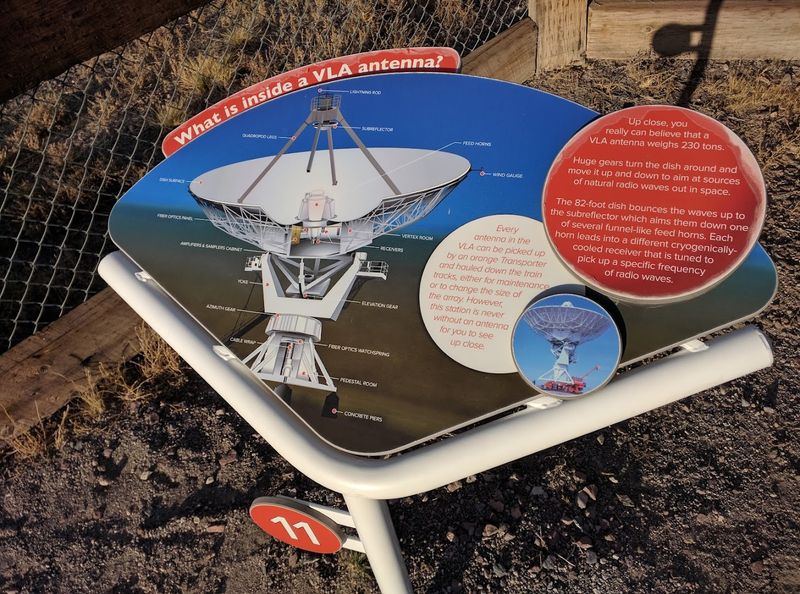
Functional objects can have their own strange beauty, and the VLA dishes are a perfect example of that idea made physical.
Each antenna is a masterpiece of practical engineering, with a parabolic surface made up of precisely shaped aluminum panels that focus incoming radio waves onto a central receiver.
The geometry is strict and mathematical, but when you stand next to one of these structures, the visual effect feels closer to sculpture than machinery.
I spent a good twenty minutes just walking around the base of the closest antenna on the self-guided tour, looking at the way the support structure fans out from the central hub and how the surface panels catch the light differently depending on the angle.
The array is best known on screen from Contact and has also been associated with other sci-fi and disaster films, including 2010: The Year We Make Contact, Independence Day, Armageddon, and Terminator Salvation.
No production designer could have dreamed up something this visually striking from scratch.
The fact that it also happens to be one of the most scientifically productive radio observatories on Earth only adds to the sense that you are standing somewhere special.
Metal Giants Along A Lonely Road
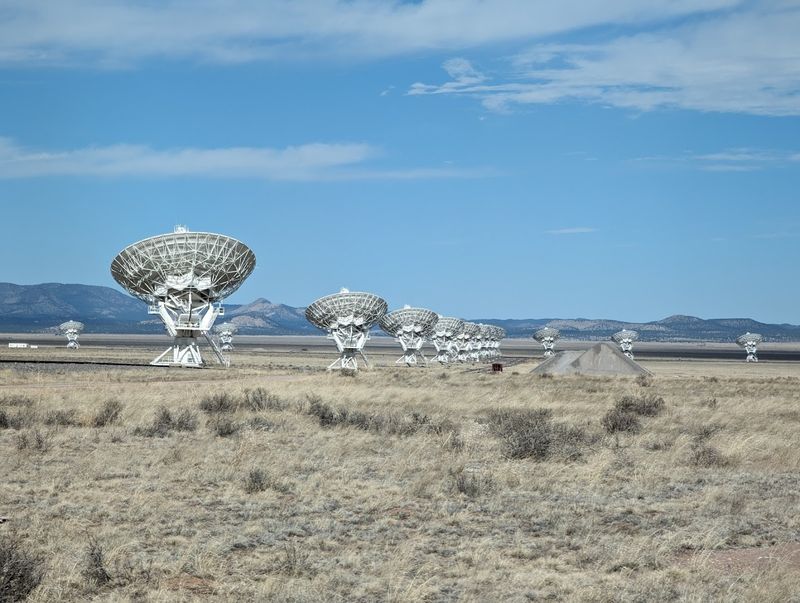
The drive along Old Hwy 60 toward the facility gives very little warning about what is coming.
For miles, you pass through classic high desert, with sparse grassland, distant mesas, and a road that seems to go on forever in a perfectly straight line.
Then the dishes appear, and the scale of them against that flat, open backdrop creates a contrast that genuinely stops your train of thought mid-sentence.
The access road into the facility is paved and easy to navigate, and the visitor center sits near the base of the array, where you can begin the self-guided walking tour after checking current visitor information.
Regular visiting hours run from 9 AM to 4 PM Monday through Sunday, and adult admission is ten dollars per person, with advance purchase encouraged because connection service at the site can be limited.
Saturday public guided tours are typically offered at 10 AM, noon, and 2 PM, while special open house events are usually held in April and October with timed-entry admission.
The road that brought you here might feel lonely, but what waits at the end of it is anything but ordinary.
A Quiet Place With Cinematic Scale
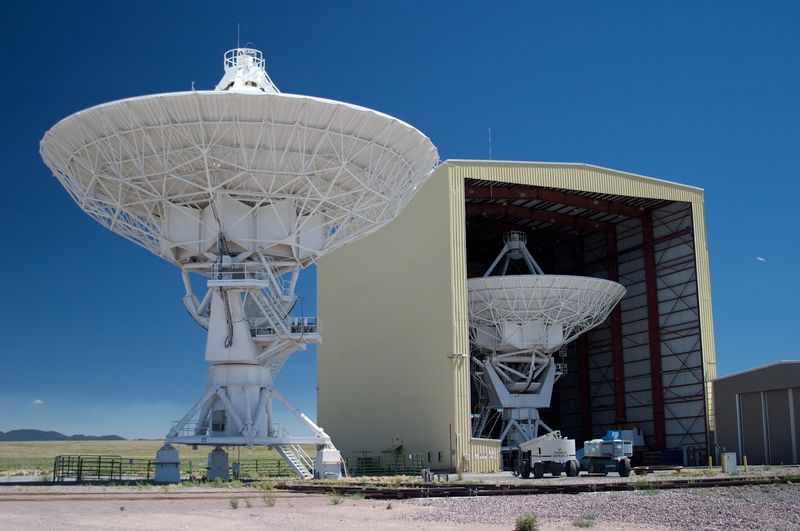
The VLA consistently feels like one of those rare places that exceeds expectations rather than falling short of them.
The visitor center includes interactive exhibits, a gift shop with items ranging from shirts and mugs to magnets and penny press designs, and a theater that screens a 23-minute documentary narrated by Jodie Foster, who starred in the 1997 film Contact, which was partly filmed here.
The self-guided walking tour uses a printed brochure to lead visitors through the facility, including a stop near one of the antennas where you can appreciate the full 82-foot diameter up close.
Guided tours are available on Saturdays and during open house events, giving visitors a deeper look at how the array works and why this remote site matters so much.
Leashed pets are welcome only in outdoor public areas, but pets are not allowed inside the Visitor Center or Gift Shop; service dogs are handled separately.
For families, the hands-on outdoor displays are a particular highlight, giving kids a tangible way to engage with concepts that might otherwise feel abstract.
The quiet scale of this place is something that stays with you.
Desert Horizons Framed By Massive Telescopes
Every travel experience has a moment that turns into a lasting memory.
For me at the VLA, it came near the end of my visit, when the afternoon light shifted and turned the white dishes a warm shade of gold.
The horizon in every direction was framed by antennas, and the mountains in the distance completed a scene that felt composed rather than accidental.
The array is currently in active scientific use, and NRAO is also developing the Next Generation Very Large Array, a future radio observatory project that builds on the VLA’s scientific legacy.
Researchers use the VLA to study everything from the structure of distant galaxies to the behavior of pulsars, black holes, and the faint signals that travel billions of light-years before reaching those 25-meter dishes.
As I stood in the desert, watching the sun move across a sky that the antennas are also watching in a completely different spectrum, the experience felt layered in a way that was both intellectual and sensory.
The drive back toward Albuquerque takes about two hours and passes through some genuinely scenic Southwestern countryside.
Few destinations I have visited leave me feeling both small and inspired in equal measure, and this one absolutely does.