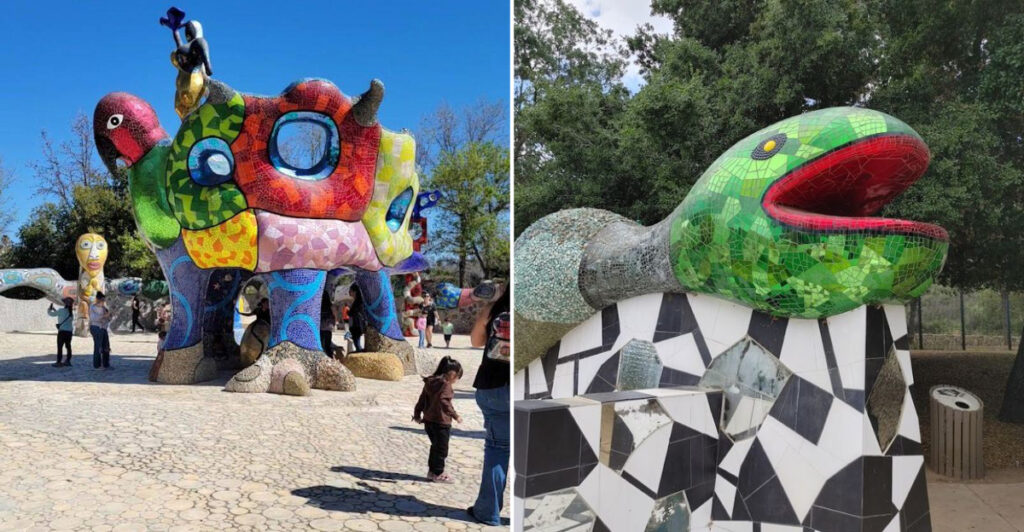
Are your kids tired of ordinary playgrounds? And did you know that in California, there is a completely unusual park filled with whimsical sculptures that feels more like a storybook than a public space?
Instead of swings and slides, visitors find giant imaginative figures, winding paths that twist between art pieces, and hidden corners that spark curiosity at every turn.
Children don’t just play here. They explore, climb, and interact with art in ways that feel like entering another world.
Every sculpture seems to tell its own story, inviting imagination to take over. It’s the place where time slows down, and families rediscover the joy of wandering without a plan.
Around every corner, there are new surprises waiting to be discovered together. A place where imagination leads the way naturally.
A Garden Built From Metal, Gears, And Pure Imagination
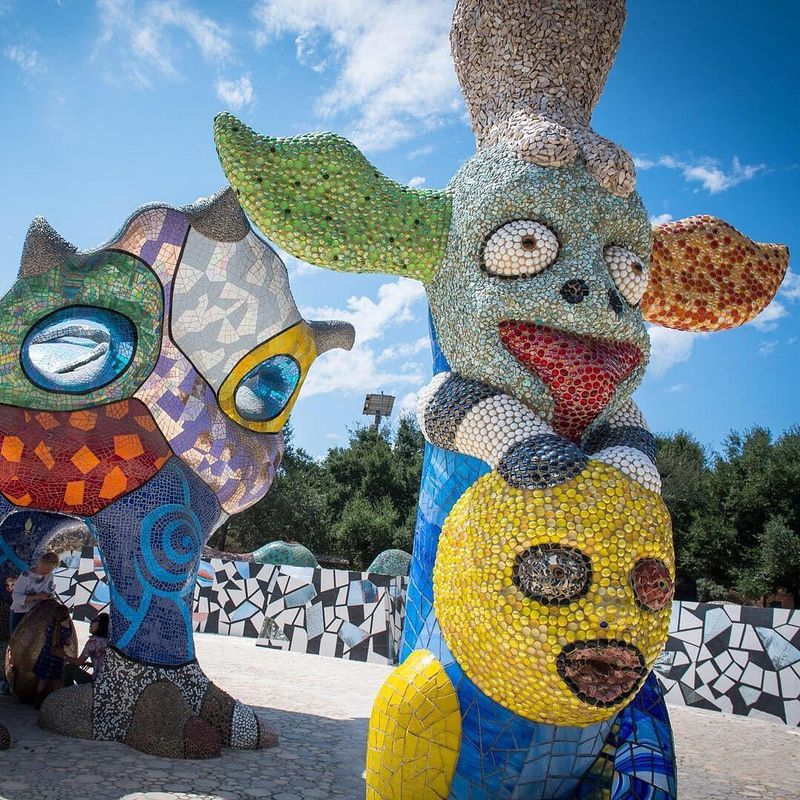
Nobody warns you how loud this place is, not with sound, but with color. Queen Califia’s Magical Circle Sculpture Garden sits inside Kit Carson Park’s Iris Sankey Arboretum.
This place is unlike anything you have ever walked into before.
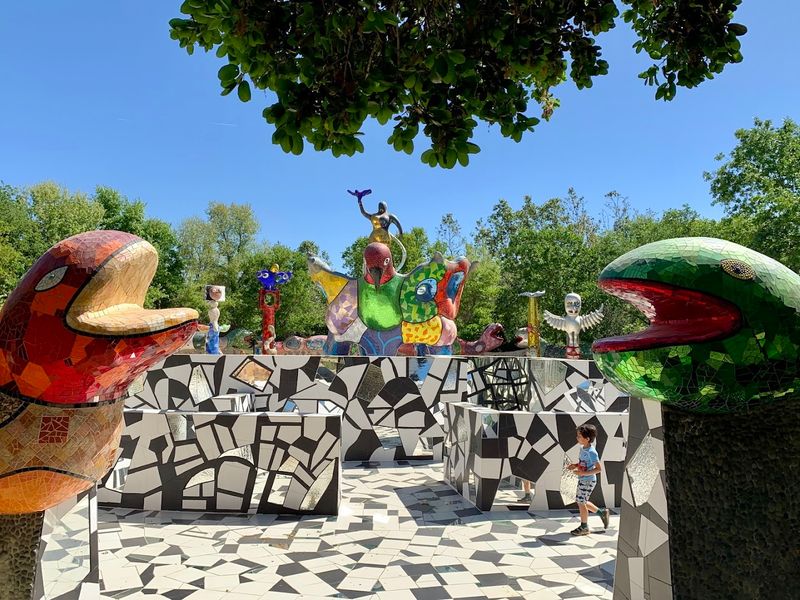
The entire space is wrapped in a 400-foot snake wall that curves and rises between four and nine feet tall. Mosaic serpents crawl along its top, gleaming in the California sun.
Every inch of the structure feels intentional, like someone sat down with a thousand puzzle pieces. They refused to stop until the whole thing made visual sense.
Created by French-American artist Niki de Saint Phalle, this garden was her only American sculpture garden. She finished it just before her passing in 2002, making it one of her final major works.
Walking through the entrance maze, with its black, white, and mirrored mosaic tiles covering every surface, you instantly understand the appeal. People drive from across the state just to stand here.
It is not built from gears in the traditional sense, but the mechanical, layered artistry makes it feel engineered from imagination itself. Find it at 3333 Bear Valley Pkwy, Escondido, CA 92025.
The Mix Of Victorian-Inspired Design And Industrial Scrap Art
Victorian design loves ornamentation, and industrial scrap art loves raw material. This garden somehow pulls both of those worlds together without breaking a sweat.
The result is a space that feels refined and chaotic at the same time, which is a hard thing to pull off.
Niki de Saint Phalle drew from Native American, pre-Columbian, and Mexican artistic traditions when designing the sculptures. Those cultural layers sit underneath a visual style that echoes the elaborate decorative sensibility of the Victorian era.
You get grandeur without stuffiness, complexity without confusion.
The mosaic technique itself acts like the industrial element here. Broken tiles, mirrored glass, and colorful ceramic pieces are pressed together to form massive figures.
It is recycled, repurposed material transformed into high art. That tension between the refined and the rough-edged is exactly what gives the garden its steampunk fairy tale energy.
You keep expecting to see a gear or a clockwork mechanism tucked behind one of the sculptures. Honestly, the way everything fits together so precisely, it would not feel out of place at all.
The craftsmanship is obsessive in the best way.
How The Sculptures Turn Walkways Into A Fantasy Setting
The moment you move from the entrance maze into the central courtyard, the whole atmosphere shifts. You go from narrow, mirrored walls to an open space filled with ten major sculptures.
Your brain needs a second to catch up with your eyes.
The central figure is an 11-foot mosaic sculpture of Queen Califia herself, standing on top of a 13-foot eagle. She wears gold glass armor and looks out over the garden like she owns every inch of it.
Which, honestly, she does. Around her, other sculptures rise from the ground at different heights, creating a skyline that feels theatrical.
Walking the pathways between these figures is like moving through a set that was designed specifically to make you feel small in a good way. Every turn offers a new angle, a new combination of shapes and colors.
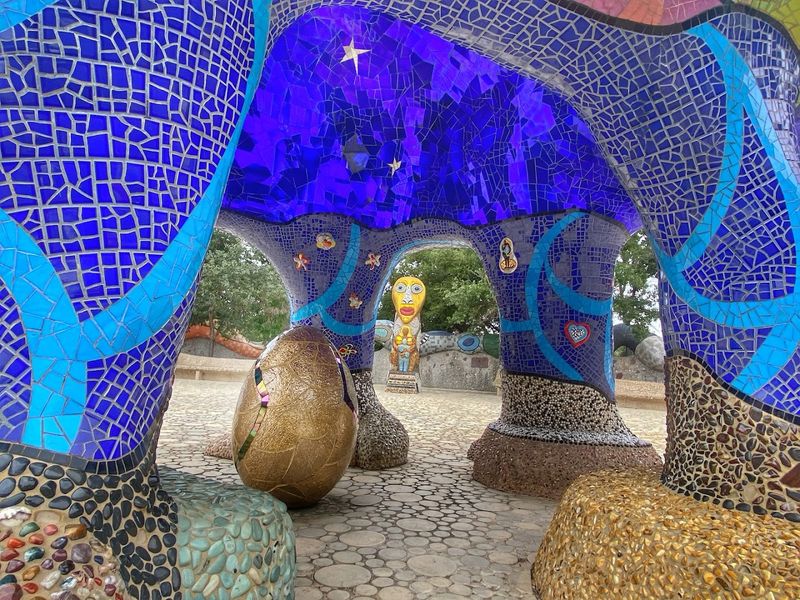
The golden egg-shaped fountain near the center adds sound to the experience. Water moves through the space and softens the visual intensity just enough to keep everything from feeling overwhelming.
The walkways do not just connect points, they build a story with every step you take through them.
Hidden Details That Reward A Slower Look Around
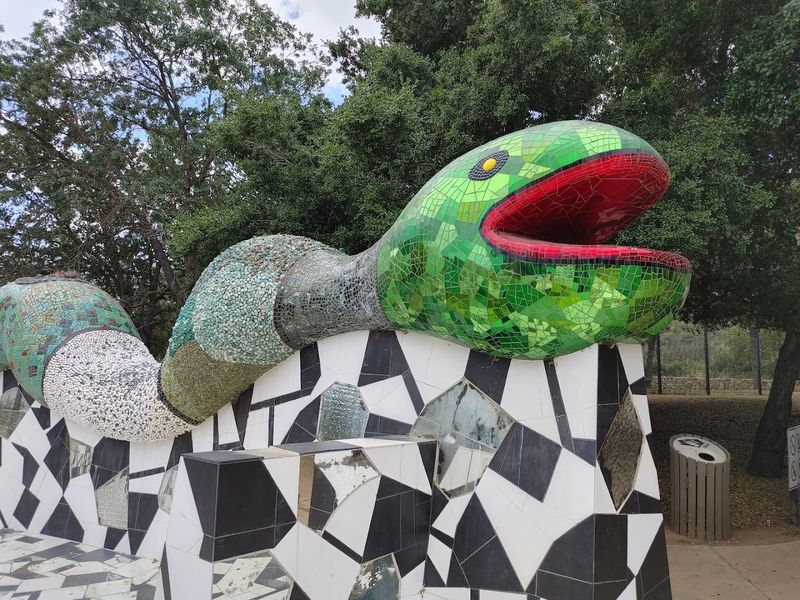
Most people do a full lap of the garden in about twenty minutes. Then they start walking more slowly.
Then they stop completely because they spot something they missed the first time. Suddenly, twenty minutes turns into an hour and a half.
The hidden details here are everywhere. Small animal figures are embedded into the snake wall at eye level.
Faces appear in unexpected places across the mosaic surfaces. Mirrored tiles catch the light and throw tiny reflections across nearby sculptures.
They create accidental patterns that change depending on where you stand.
One of the most rewarding things you can do here is crouch down and look at the base of the sculptures. The mosaic work continues all the way to the ground.
Some of the most intricate tile arrangements are right at ankle height, where most people never look. Kids tend to find these details first because they are naturally closer to the ground.
Adults, once they start paying attention, become just as obsessed. This garden genuinely rewards patience.
The slower you move, the more you see, and the more you see, the more you realize how much thought went into every single surface.
Artists Who Blend Engineering With Storytelling
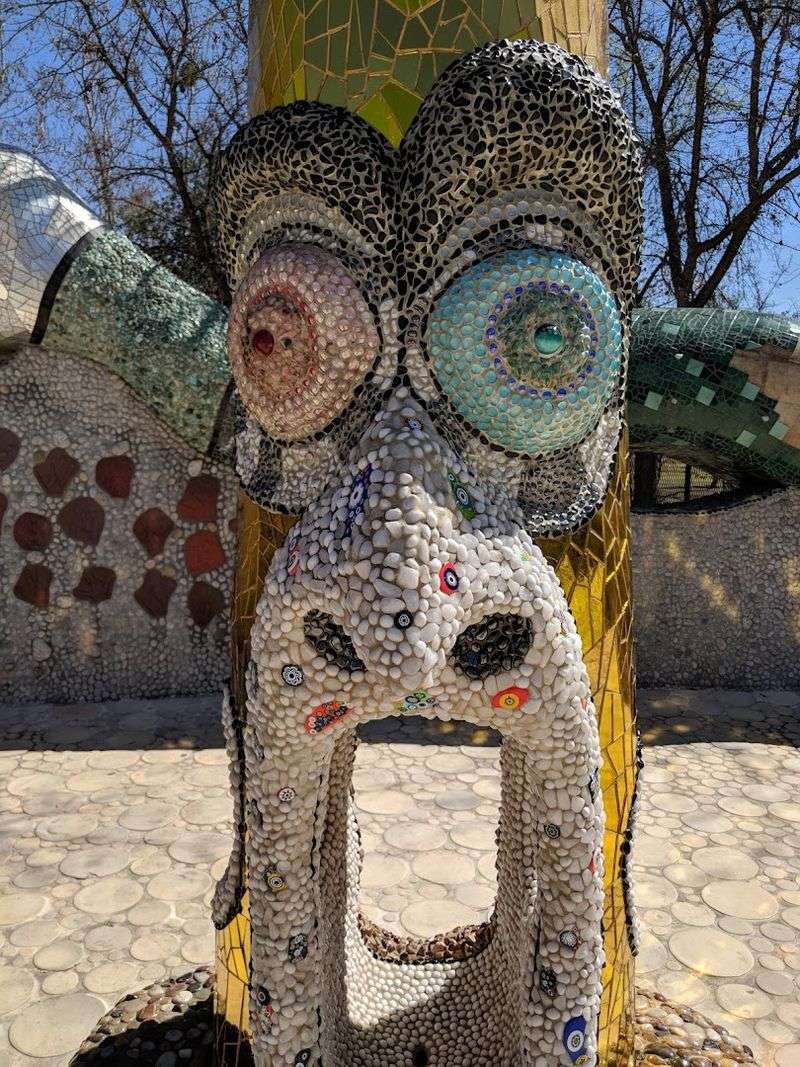
Niki de Saint Phalle was not just an artist. She was a builder, a mythologist, and a structural thinker who happened to express herself through color and form.
Creating a garden like this one requires more than artistic vision. It requires an understanding of how weight, weather, and material behavior work together over time.
She collaborated with engineers and craftspeople to bring the Queen Califia project to life. The snake wall alone required careful structural planning to ensure it could stand safely while still looking like it was alive and moving.
Every sculpture had to be anchored, weather-sealed, and designed to hold its mosaic surface through years of California sun and occasional rain.
What makes her work feel like storytelling is the way each sculpture carries a narrative. Queen Califia herself comes from a 16th-century Spanish novel about a mythical Black warrior queen who ruled an island paradise.
Saint Phalle took that legend and turned it into a three-dimensional world you can walk through. That mix of engineering precision and mythological imagination is what sets this garden apart from a simple outdoor installation.
It is a story you experience with your whole body, not just your eyes.
Light, Shadows, And The Changing Mood Of The Space
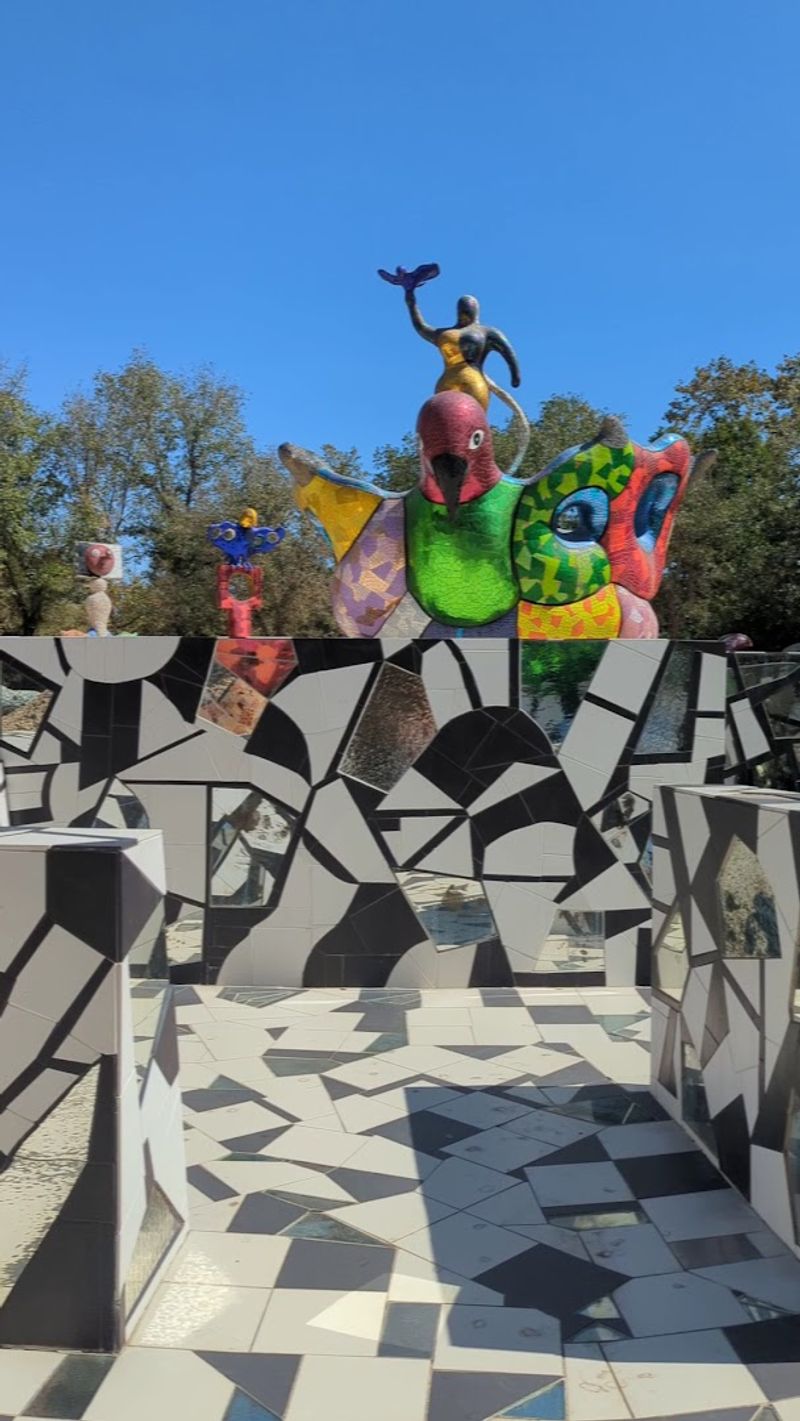
Morning visits and afternoon visits to this garden are two different experiences. The California light does not stay still, and neither does the mood of the sculptures as the sun moves across the sky.
Early morning, when the garden opens at 9 a.m., the light is soft and the mirrored mosaic tiles catch it at low angles. Everything glows a little.
The golden armor on Queen Califia’s figure picks up the warmth of early sunlight and holds it in a way that makes the sculpture look almost alive. Shadows from the snake wall stretch long across the ground.
They create geometric patterns that were not part of the original design but feel completely intentional.
By late morning, the light becomes more direct, and the colors intensify. Blues get brighter, reds get bolder, and the mirrored fragments start throwing small bursts of reflected light across the space.
The mood shifts from contemplative to electric. If you have a camera, you will run out of storage before you run out of interesting shots.
The garden changes with every hour. That is one of the reasons so many visitors come back multiple times, just to see it under different conditions.
Why Visitors Say It Feels Like Walking Through A Film Set
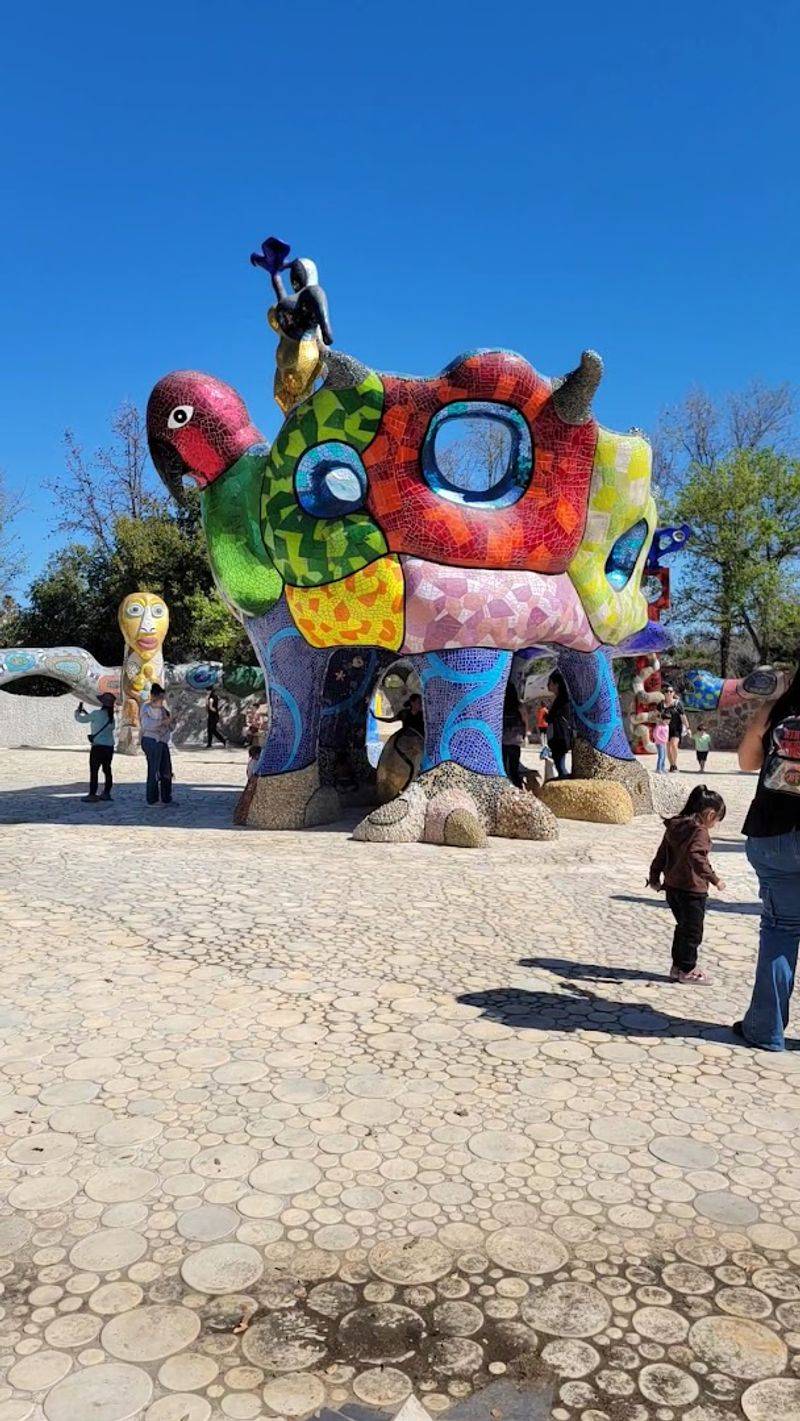
Every few minutes at this garden, someone stops walking, looks around slowly, and says something like, wait, is this real? It happens constantly.
The scale of the sculptures, combined with the density of visual detail, creates an environment the brain first processes as fictional. It only registers as real a moment later.
The central courtyard, with its Queen Califia figure, eagle, and mosaic characters, looks like it was built for a fantasy film. A production designer could have spent months on it.
The colors are saturated beyond what you expect from an outdoor public space. Everything feels composed, as someone thought carefully about where your eye would travel when you stood in each spot.
Film crews have actually used spaces like this as inspiration for fantasy set design, which should surprise nobody who has spent time here. The garden hits that specific visual frequency where reality and imagination overlap.
You half-expect the sculptures to move, or for a character to step out from behind the snake wall and start a scene. That feeling of being inside a story rather than looking at art from the outside is what makes this place so hard to describe.
You really have to experience it to understand it.
The Memory This Mechanical Fantasy Leaves Behind
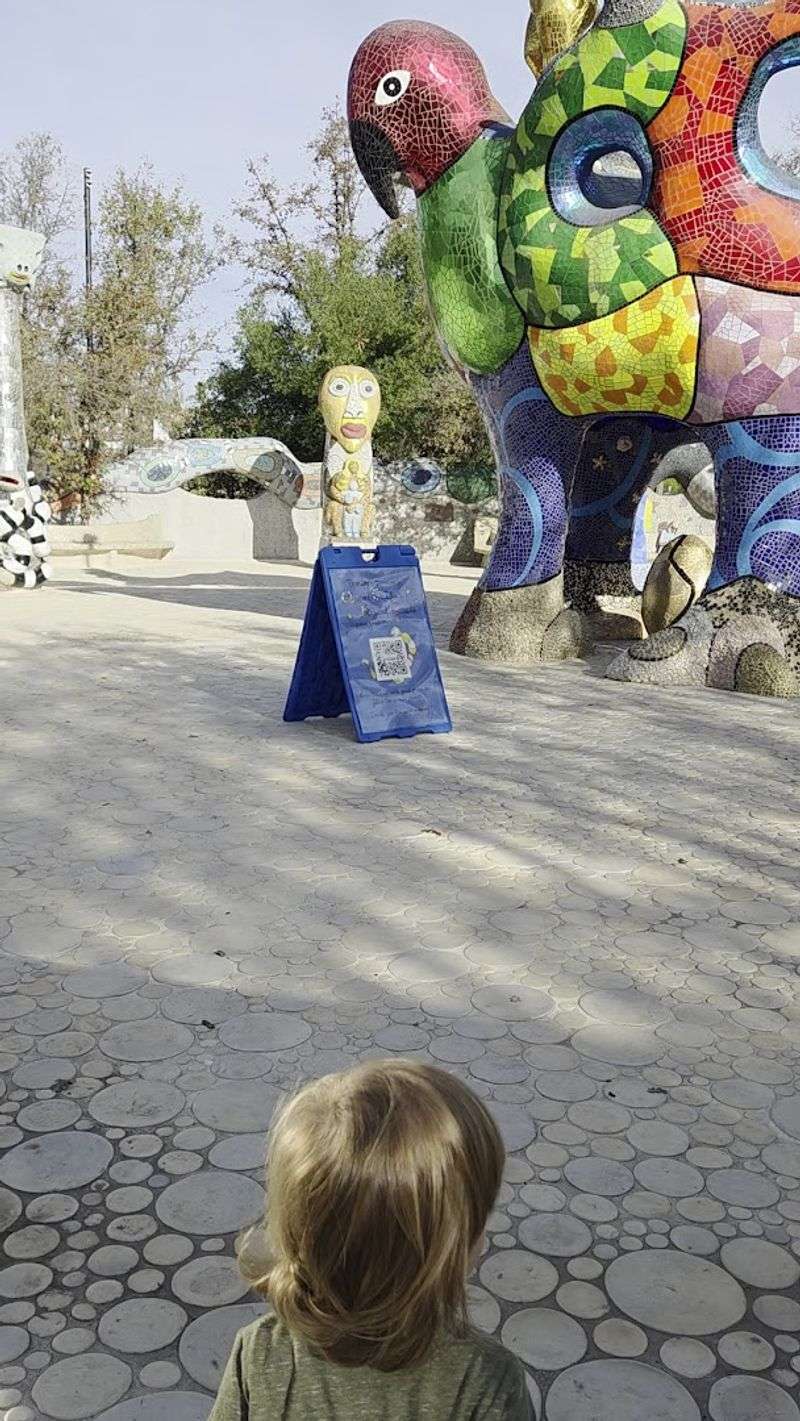
You leave this garden and then spend the next three days telling people about it. The images stay with you in a way most art experiences do not.
That is probably because the garden engages your whole body, not just your visual sense. The garden is open on Tuesdays and Thursdays from 9 a.m. to noon, and on the second and fourth Saturdays of each month from 9 a.m. to 2 p.m.
It is closed on Thanksgiving and Christmas. Because the hours are limited and the space is popular, checking the official Escondido city website before you go is a smart move.
Showing up to a closed gate is a genuinely sad experience that is easy to avoid. What lingers most after a visit is not one specific sculpture or one specific moment.
It is the overall feeling of having been somewhere that operated by its own rules. Queen Califia’s garden does not apologize for being excessive, mythological, or visually overwhelming.
It commits fully to its own world, and that commitment is what makes the impression last. You walk out knowing you saw something that could not exist anywhere else, built by someone who refused to think small.