A dermatologist once filled a Florida plantation site with concrete dinosaurs, and some of them are still standing. Yes, a skin doctor.
His name was Dr. Perry A. Sperber, and he really loved prehistoric creatures.
He hired local artist Manuel “Manny” Lawrence to shape the prehistoric creatures from chicken wire and concrete. Local reporting puts Bongoland’s run at roughly 1948 to 1952.
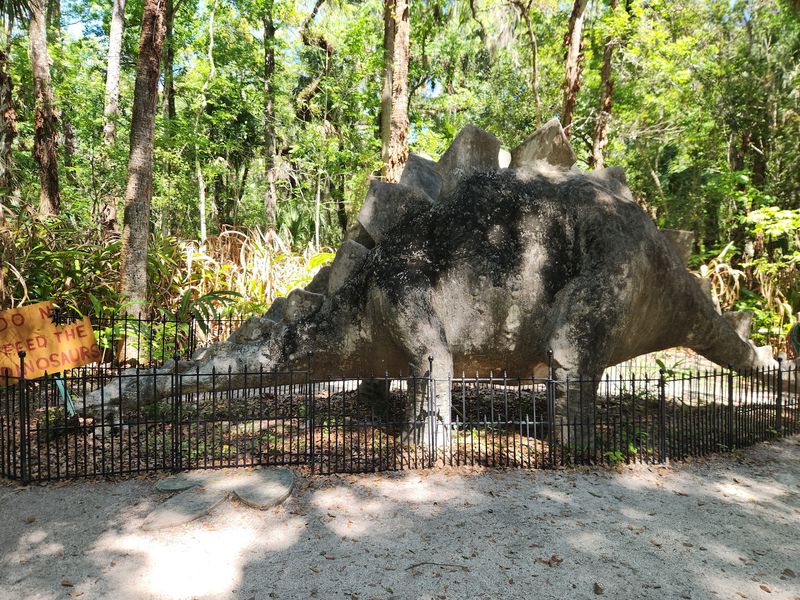
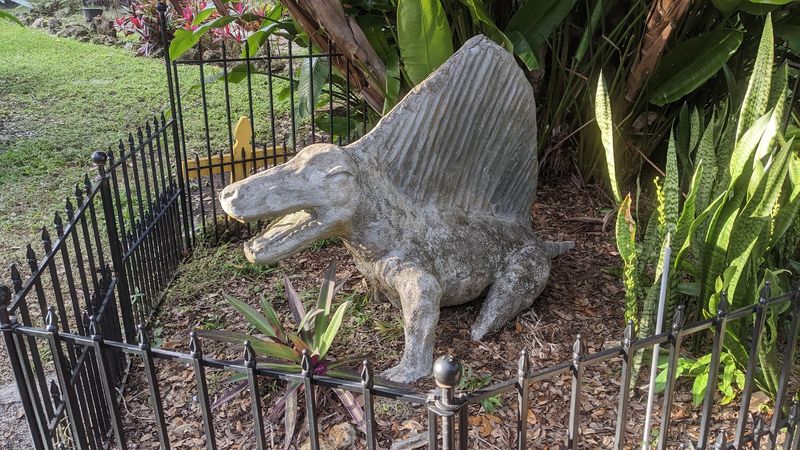
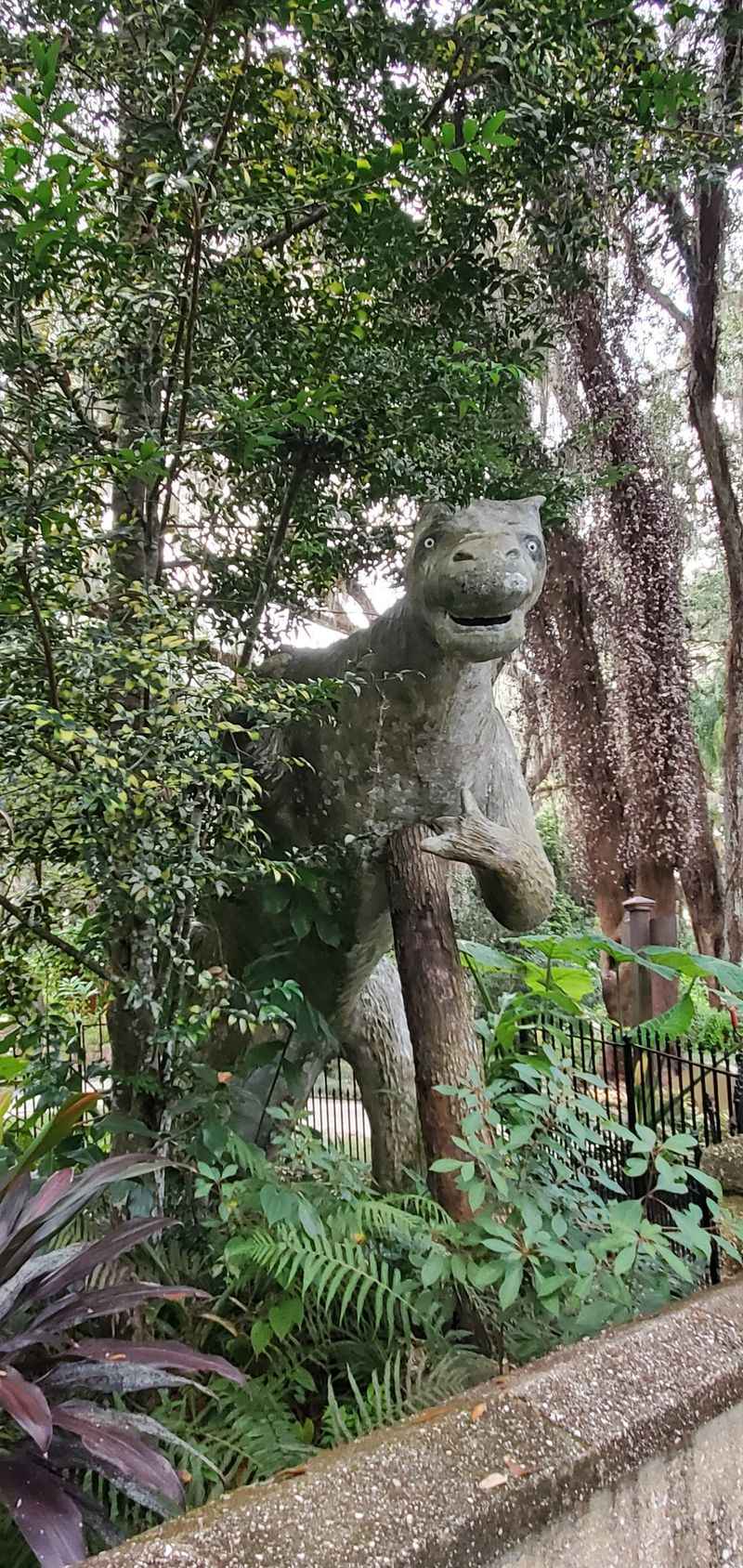
Today, a triceratops, a stegosaurus, a Dimetrodon, and a giant ground sloth still stand among the oaks and ferns. A T. rex stood with them until the sculpture fell in 2019.
I can’t imagine a stranger mix of history, gardening, and roadside weirdness in one spot. So what exactly were these beasts guarding all these years?
Concrete Monsters Are Still Waiting For You In The Trees
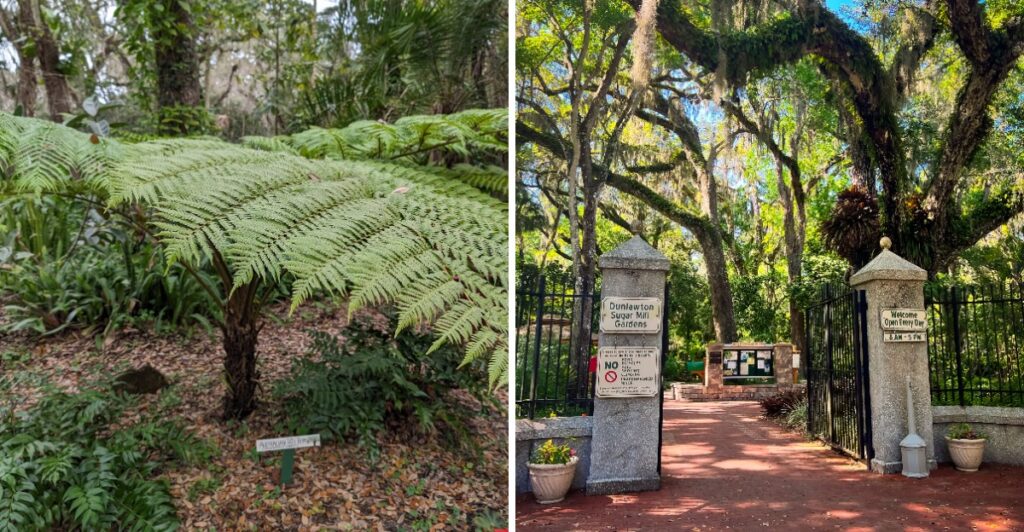
Concrete dinosaurs in a botanical garden sound like a prank, but they are very real. The Bongoland Ruins at Dunlawton Sugar Mill Gardens are the last traces of a forgotten Florida amusement park.
Four prehistoric figures still stand along the paths. The triceratops and stegosaurus are dinosaurs.
Dimetrodon was an early relative of mammals, and the giant ground sloth was a mammal.
Each one was built from chicken wire and concrete. That simple recipe explains their lumpy, handmade look, which feels more cartoon than museum.
Honestly, that’s the fun part. These aren’t sleek modern replicas with roaring speakers.
They look like something a determined dreamer built for a crowd that never quite showed up.
Shade from tall oaks and thick greenery surrounds them. The setting gives the whole scene a slightly spooky, lost-world feeling that photos love.
Kids usually spot them first, so let them lead the hunt. Just remember the gardens ask visitors not to climb or pose on the dinosaurs.
They’ve survived decades of storms and humidity already. A little respect helps them stick around for the next group of curious explorers.
A Skin Doctor Dreamed Up The Whole Wild Idea
Dr. Perry A. Sperber spent his workdays as a dermatologist in the Daytona area.
His free time, though, belonged to dinosaurs.
That passion grew into a bold plan. He leased part of the old plantation property and set out to build a roadside attraction full of prehistoric giants.
For the creatures themselves, he turned to local artist Manuel D. Lawrence.
Most people simply called him Manny.
Manny shaped each beast by hand. He bent chicken wire into a frame, then covered it in concrete until a monster appeared.
Think about how much patience that took. There were no computer models or factory molds, just wire, cement, and a good imagination.
I believe that personal touch is why the sculptures still feel so charming today. They carry the fingerprints of two people who really cared about a quirky dream.
Science has learned a lot about dinosaurs since then. So don’t expect perfect accuracy here.
Expect personality instead. These figures reflect what one Florida doctor and one hardworking artist believed dinosaurs looked like in the middle of the last century.
Bongo The Primate Got His Own Theme Park Name
Every great park needs a mascot, and Bongoland had a furry one. The name came from Bongo, a primate on the property.
Sources disagree on whether Bongo was a chimpanzee or a baboon. Either way, he earned top billing, which is more than most of us can say.
The park offered far more than dinosaurs back then. A small zoo housed a variety of animals for families to see.
Visitors could also take tractor tours around the grounds. A miniature train added another way to roll past the attractions.
There was even a replica Seminole village on site. It was meant to give guests a look at the region’s earlier history.
Picture a family day out with all of that packed into one wooded property. It sounds like a lot of fun for a postwar road trip.
Sadly, none of those rides or animal exhibits remain today. The concrete creatures are the only real leftovers.
That makes each dinosaur a little time capsule. When you stand near one, you’re looking at the last survivor of a whole forgotten park.
Bongoland’s Short Run Ended In The Early 1950s
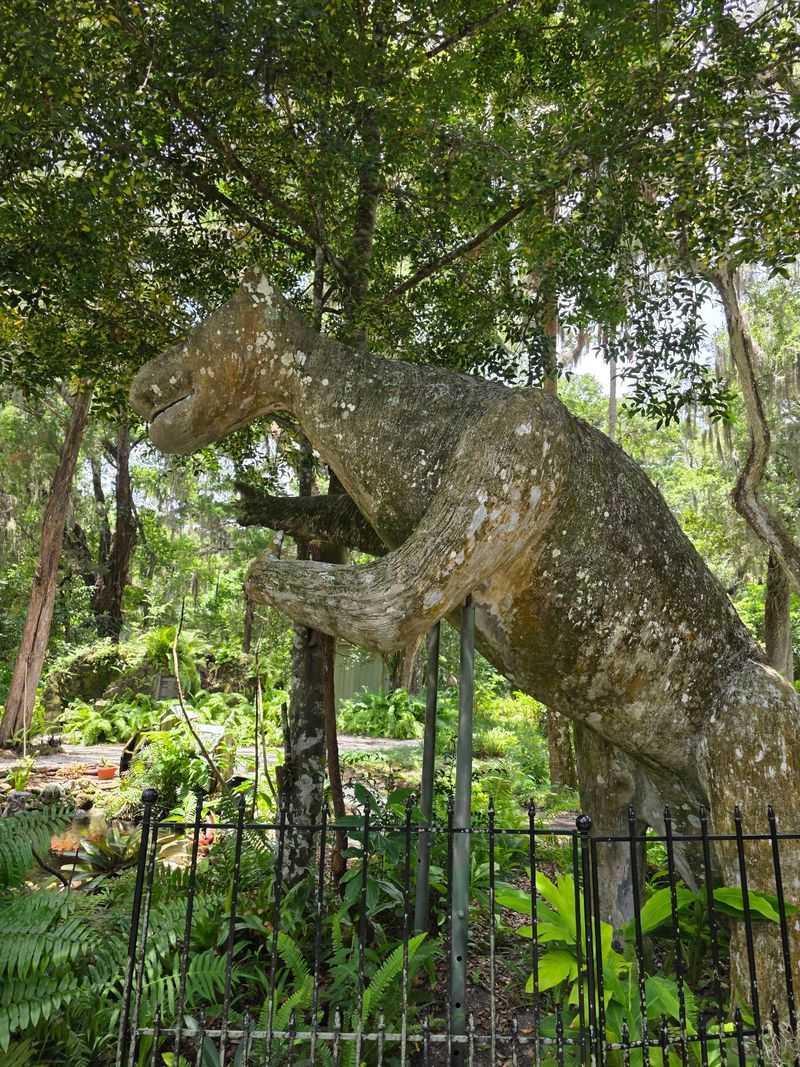
Bongoland had only a few years to draw families to its corner of Florida. Local reporting dates its run to roughly 1948 through 1952, when the attraction closed its gates.
The concrete figures outlasted the park itself.
The reason was simple. Not enough people showed interest to keep it running.
That feels a bit unfair, right? Today these same dinosaurs are among the most talked-about features on the property.
Dr. Sperber had leased the land from J. Saxton Lloyd.
After Bongoland closed, the grounds grew quiet and plants began to reclaim the site.
In 1963, Lloyd donated the property to Volusia County. The land passed into county ownership with the old sculptures still on the grounds.
So the park technically failed, but its stars got a happy second act. They traded a ticket booth for a peaceful garden full of flowers and shade.
The Biggest Star Didn’t Make It Past 2019
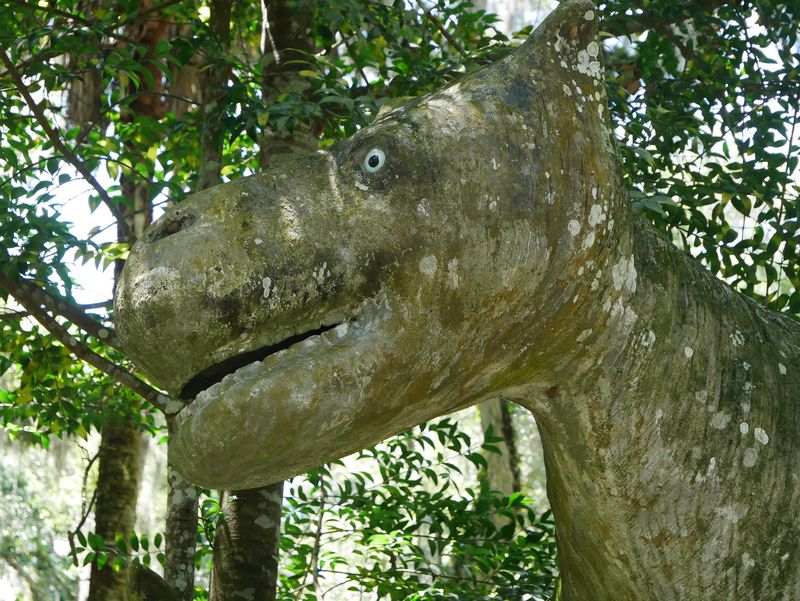
Every lineup has a headliner, and Bongoland’s was the T-Rex. For decades it towered over the garden paths.
The T. rex sculpture fell in 2019. The gardens’ vice president said the cause was unknown and noted that it had rained heavily that day.
For fans of the old park, the collapse meant losing one of Bongoland’s most recognizable figures. It had stood along the garden paths for decades.
The remaining sculptures still spend every season outdoors. Heat, rain, and humidity can wear down their concrete surfaces over time.
That’s exactly why the no-posing rule matters so much. Extra weight or rough handling could speed up damage that can’t be undone.
Here’s a helpful way to look at it. Visiting now means seeing these creatures while they still stand, and that’s worth something.
Bring a camera and take your time with each one. You never know which sculpture will become the next chapter in this slowly fading tale.
Older Ruins Hide Right Next Door
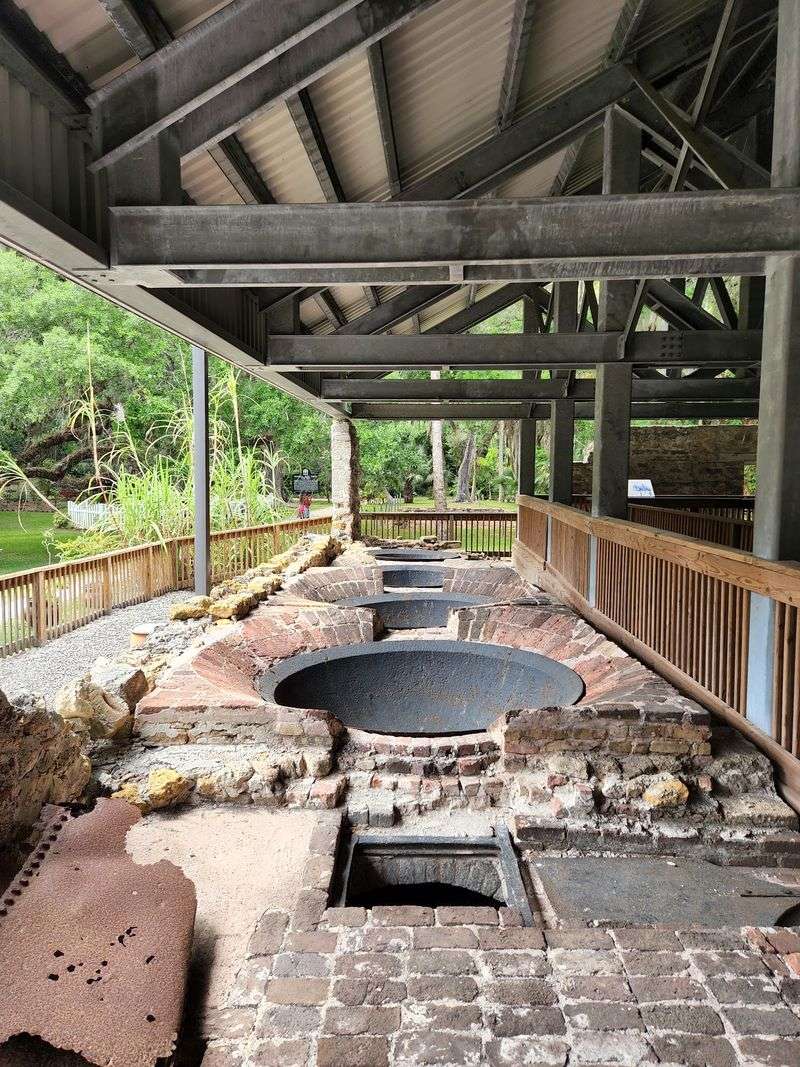
Long before any dinosaurs arrived, this land had a much more serious past. The Dunlawton sugar mill ruins sit just a short walk from the Bongoland creatures.
The property began as part of a 995-acre Spanish land grant given to Patrick Dean in 1804. His plantation grew cotton, rice, and sugar cane using enslaved African labor.
In 1832, Sarah Petty Anderson, née Dunn, and her sons bought the property from the Lawton brothers. The name Dunlawton combines the Dunn and Lawton surnames.
The mill was burned during the Second Seminole conflict, which began in late 1835. It was rebuilt in the 1840s, then destroyed again in 1856.
Today you can still see the cane crusher, boilers, and kettles. A wooden walkway lets you look down at the machinery from above.
Signs along the way help explain what happened here. Reading them adds real weight to the visit.
The site is listed on the National Register of Historic Places. Pair it with the dinosaurs, and you get two very different eras sharing one shady patch of Florida.
You Could Spend Hours Lost In The Gardens
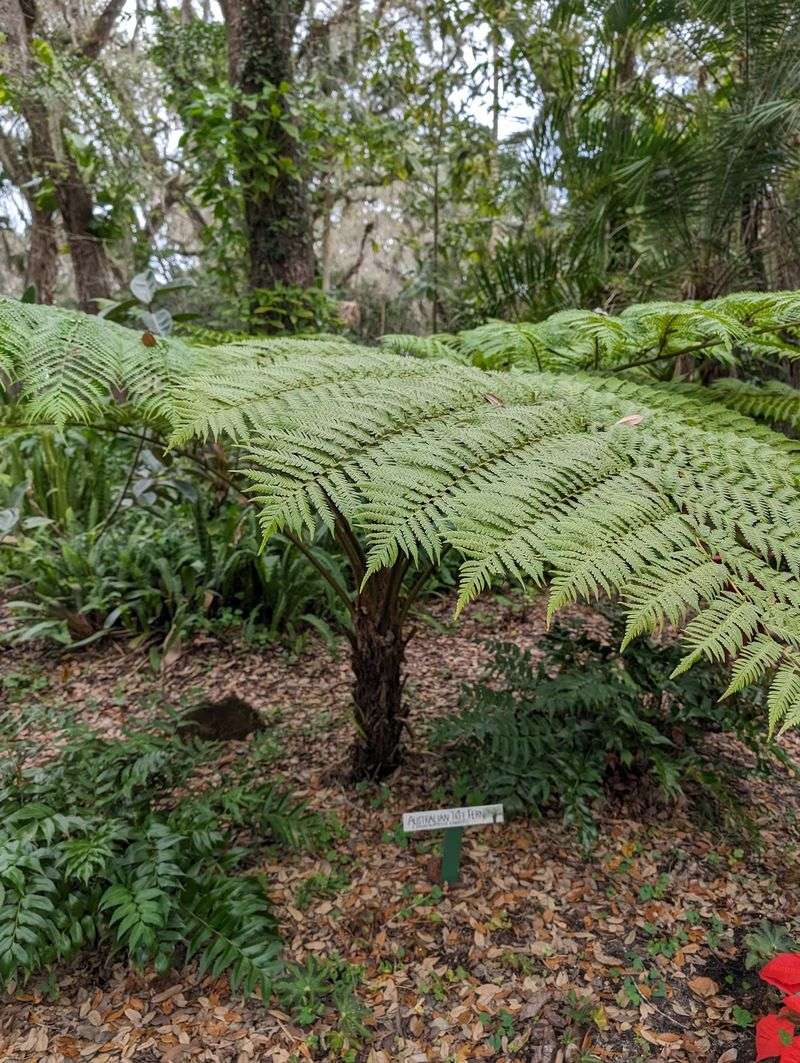
Ten acres of plants wrap around the ruins, and they deserve your attention too. Volunteers have shaped this land into a true botanical garden.
The collections are impressive. Azaleas, camellias, magnolias, palms, succulents, ferns, and native plants all have their own spaces.
One spot is extra clever. A Florida garden is planted in the shape of the state itself.
Nearby, a fern grotto offers a small pond, a water wheel, and a stone bridge. It feels like a storybook corner.
The Asian garden adds statuary and a fountain. There’s also a butterfly garden, an herb garden, a children’s garden, and a demonstration area.
Crushed shell and concrete paths connect everything. Follow them, and you’ll reach a massive live oak that has stood here for centuries.
Nature lovers can stroll the Audubon Trail and Florida Hammock Trail. Florida Hikes describes a walking route of roughly 0.6 miles through the gardens.
Don’t skip the human sundial, either. Stand in the right spot, and your own shadow tells the time, which beats checking your phone any day.
Know The House Rules Before You Roam
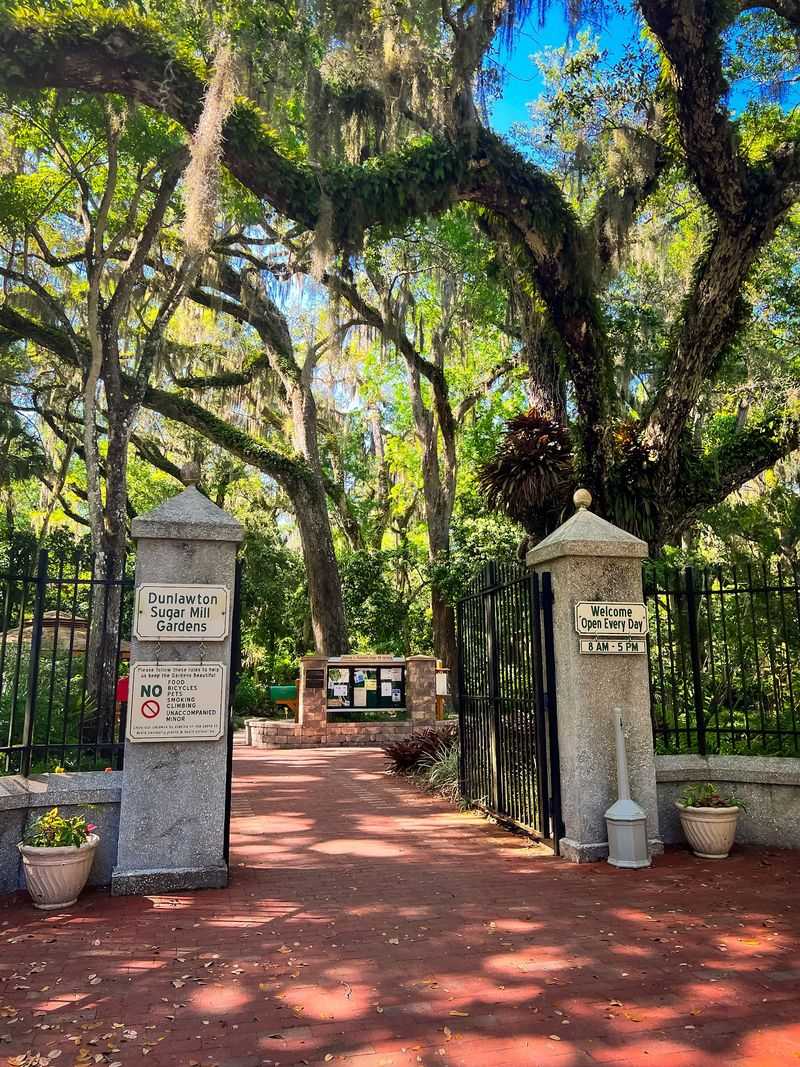
Good manners go a long way in a place run entirely by volunteers. The gardens keep a short list of rules that help protect everything.
First, skip the picnic basket. Picnicking isn’t allowed on the grounds.
Leave your pup at home unless it’s a service dog. Those are the only dogs permitted inside.
The dinosaurs, wooden bridges, and tree limbs are not for posing on. It sounds strict, but those old sculptures are fragile after so many years.
Now for the fun stuff. Free maps are usually tucked inside a green mailbox near the bulletin board at the entrance.
Grab one, because the paths twist in many directions. A map helps you track down every dinosaur without circling the same fern bed three times.
Keep your eyes on the ground, too. Artists sometimes hide painted rocks around the park for visitors to discover.
That little scavenger hunt adds a playful twist for kids and grown-ups alike. Several small free libraries and the Gardener’s Library also wait around the grounds for anyone who loves a good read.
Plan Your Dinosaur Hunt The Smart Way
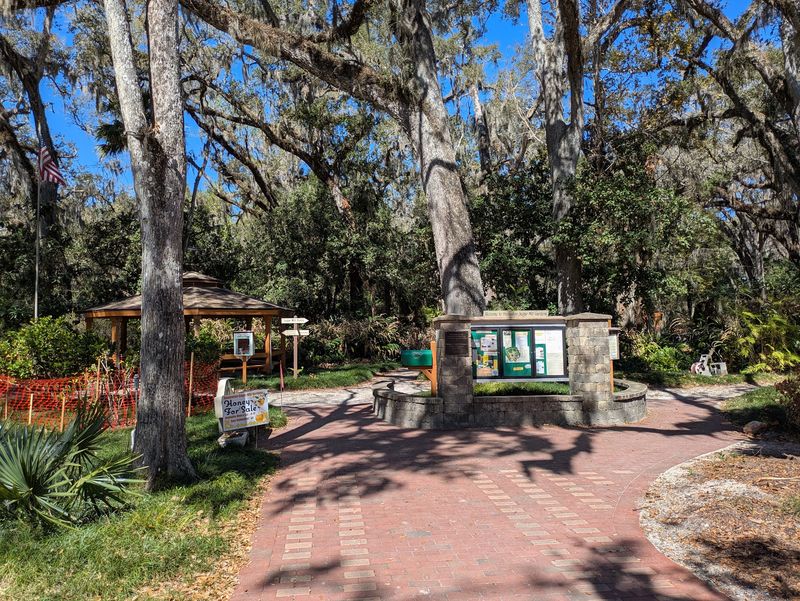
Getting here is easy, and the price of entry is even easier. Admission to Dunlawton Sugar Mill Gardens is free, though donations keep the place thriving.
You’ll find it at 950 Old Sugar Mill Road, Port Orange, FL 32129. Parking is limited, so arriving earlier makes life simpler.
The gardens open daily at 8 a.m. Closing time shifts with the seasons, so check the schedule before you head out.
Plan around holidays as well. The grounds close on Christmas Day and New Year’s Day.
Want to meet the people behind the magic? Volunteers are usually on site Wednesday and Saturday mornings from 9 a.m. to noon.
They can answer plant questions and help with event reservations. They also sell locally sourced honey and garden decals.
Gardeners with tricky problems should circle the second Wednesday of each month. Master Gardeners are available from 9 to 11 a.m. for advice.
Restrooms and a plant sale area are on site, too. Before leaving, stroll the memorial walkway at the entrance and give the old dinosaurs one last wave goodbye.