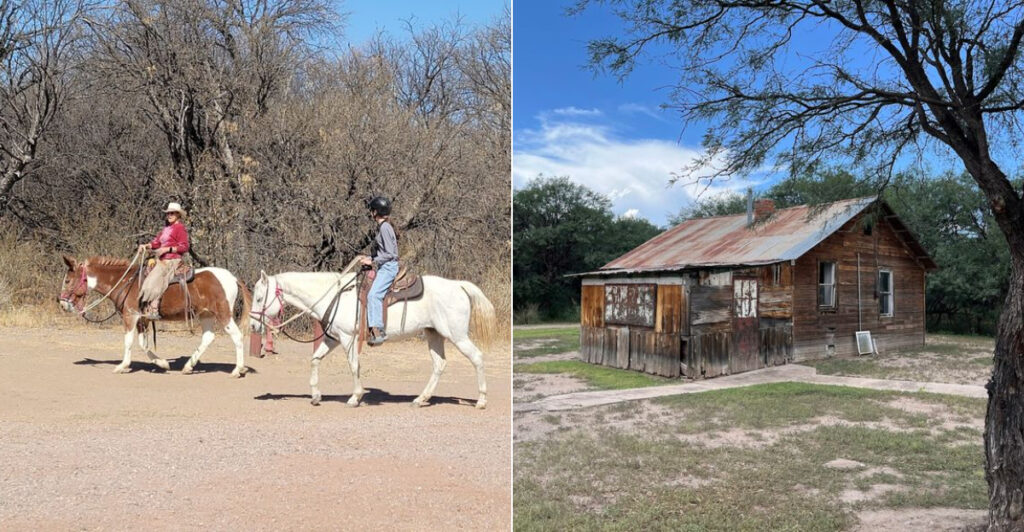
Dusty roads can lead to the most interesting adventures. This Arizona destination proves it with every weathered building, quiet trail, and piece of history still standing under the desert sun.
The moment the car stops, curiosity takes over. Every path seems to lead to another story waiting to be discovered.
A visit here is not about rushing from one attraction to the next. It is about wandering, exploring, and enjoying the thrill of finding a place that feels wonderfully different from the usual tourist stops.
Old structures still watch over the landscape. Desert views stretch in every direction.
The past feels close enough to spark the imagination. Arizona is full of famous landmarks.
Treat yourself to a day of adventure and see where the trail leads. You never know what fascinating discoveries await around the next bend.
A Town Born From Silver
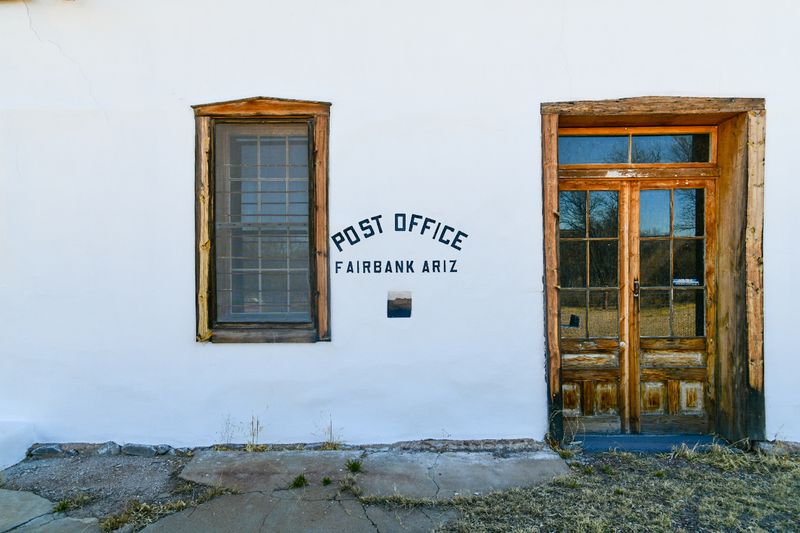
Back in 1881, silver was everything in southern Arizona. Mines around Tombstone were booming, and someone needed to move all that ore.
That someone turned out to be a small railroad stop called Junction City, later renamed Fairbank in May 1883 after financier Nathaniel K. Fairbank.
Fairbank became the beating heart of the region’s mining economy almost overnight. The town had a post office, a school, a general store, and several hundred residents at its peak.
Trains rolled in and out constantly, carrying silver ore to mills and supplies back to the mines.
What is fascinating is how quickly a town can rise when there is money in the ground. Fairbank did not just survive the 1880s, it thrived through them, even shaking off the 1887 earthquake and an 1894 flood without disappearing.
Have you ever wondered what life felt like when a whole town depended on a single industry? Walking through Fairbank today answers that question in the most vivid way possible. The Bureau of Land Management acquired the site in 1986, and it became part of the San Pedro Riparian National Conservation Area in 1998, making sure this story stays told for generations to come.
Buildings That Refused To Fall
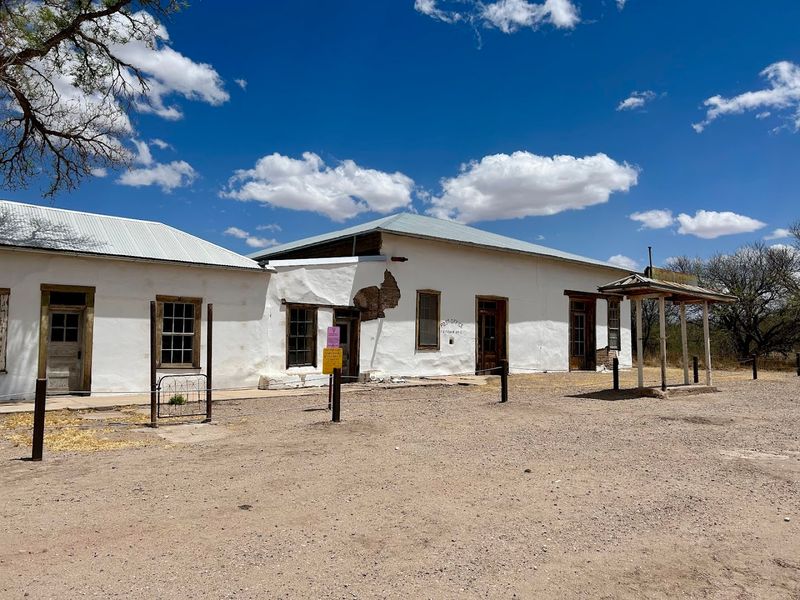
Most ghost towns leave behind a few crumbling walls and a lot of imagination. Fairbank is different.
Several original structures are still standing, and they look like they mean business.
The old railroad depot still holds its shape. The mercantile building stands quietly nearby, its walls thick with decades of desert sun and wind.
Visitors say the buildings feel surprisingly solid for structures that have been sitting in the Arizona heat since the 1800s.
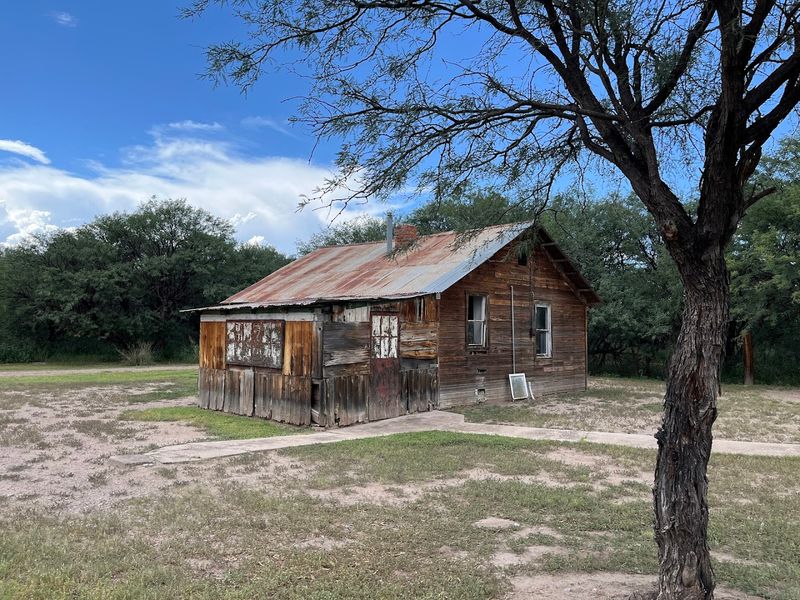
The historic schoolhouse is the crown of the whole site. It has been carefully restored and now works as a visitor center and museum, open Friday through Sunday from 9:30 AM to 4:30 PM.
Inside, you will find exhibits, maps, and even a reproduction of an actual teacher’s contract from the era.
That detail alone is worth the stop. Could you imagine signing a contract that told you exactly how to behave both inside and outside the classroom?
The schoolhouse makes that reality feel close enough to touch.
Each building at Fairbank tells a different chapter of the same story, and together they paint a picture of a community that was very much alive, very much real, and very much worth remembering today.
The Train Robbery Story
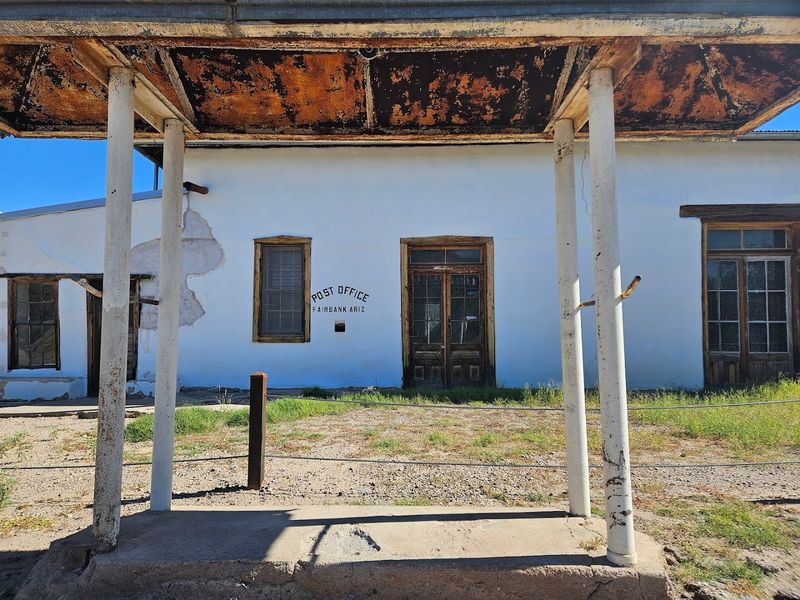
Not every town can say it was the scene of a famous train robbery. Fairbank can.
In February 1900, a group of outlaws attempted to rob a Wells Fargo express car right at the Fairbank station.
The plan did not go smoothly for the robbers.
Express messenger Jeff Milton happened to be on that train. He fought back, took a bullet in the arm, and still managed to hold off the gang long enough for them to flee empty-handed.
The story became legendary across Arizona almost immediately.
Standing at the old depot today, it is easy to picture the chaos of that night. The same ground where passengers once waited for trains was the scene of one of the Old West’s most dramatic standoffs.
History has a funny way of making ordinary places feel electric. Did you know that the robbers in that 1900 heist were connected to some of the most notorious outlaw gangs of the era?
The interpretive trail signs at the townsite explain the full story, and they are genuinely hard to walk past without stopping to read every word.
Hiking The Interpretive Trail
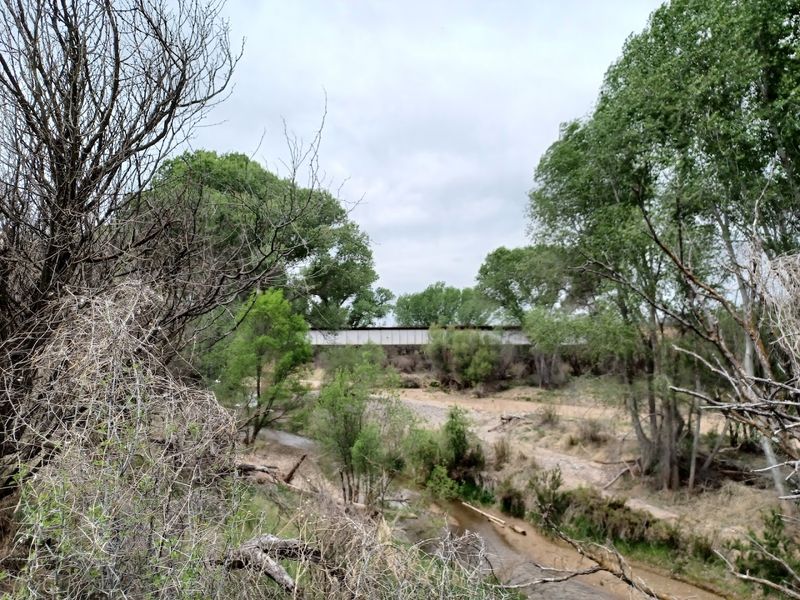
The trail system at Fairbank is one of the most rewarding easy hikes in southern Arizona. The main loop runs approximately 3.6 to 4 miles round-trip, depending on which path you take.
It is flat, well-marked, and suitable for most fitness levels.
Walk the trail counterclockwise and you will move through riparian forest, open desert scrub, sandy river wash, and past the historic town buildings. Visitors have spotted deer bounding across the path, lizards darting through the brush, and butterflies drifting over wildflowers in season.
The trail even passes remnants of old railroad tracks.
One couple who hiked the full loop in mid-February described river access where they could splash their feet in the flowing water. Another visitor counted five rest benches along the second half of the route.
The trail is pet-friendly, so four-legged companions are welcome on the adventure. Are you the kind of person who likes to stop and photograph everything along the way?
This trail was practically designed for that.
Budget at least two hours for a comfortable pace, more if you plan to explore the mill ruins and cemetery. Water is essential, and sun protection is non-negotiable out here.
The reward at the end is a full picture of how this remarkable place fits together.
The Cemetery On The Hill
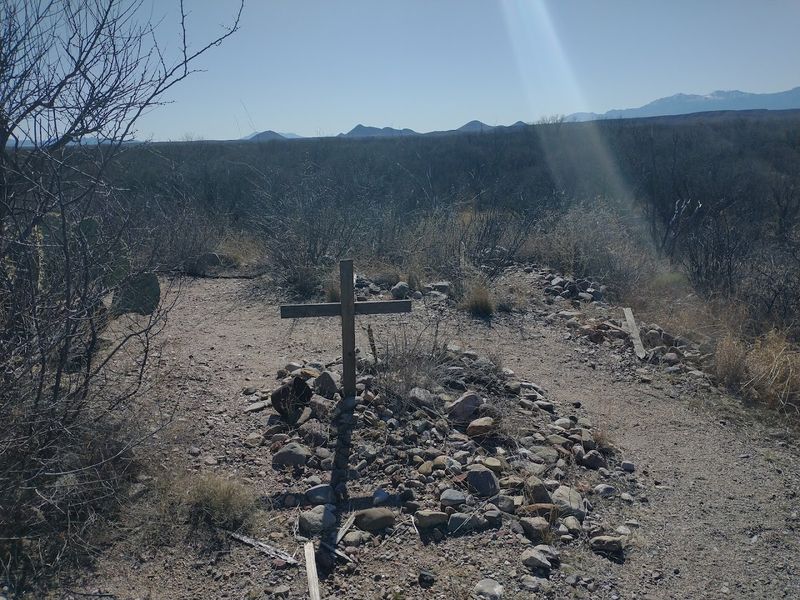
A half-mile hike from the main townsite takes you to the Fairbank Cemetery, and the walk alone is worth every step. The path climbs gently before opening up to panoramic views of the San Pedro River valley that stretch out in every direction.
The cemetery itself is quiet and genuinely moving. Rock pile graves are still visible, along with aged wooden crosses that lean slightly in the desert wind.
Someone has placed white artificial flowers on several of the graves, a small gesture that says people still care about the people buried here.
The rocky terrain around the cemetery is the one section of the trail that requires a little extra attention underfoot. The rest of the route is packed dirt and loose sand, but up here the ground is all stone.
It is also the most exposed section of the hike, so a hat and sunscreen are your best friends. Who were the people resting in these graves?
Many were miners, railroad workers, and families who built their lives around the silver trade. The interpretive plaques nearby give names and context to some of the graves, turning what could feel like a somber stop into a genuine connection with the past.
Grand Central Mill Ruins
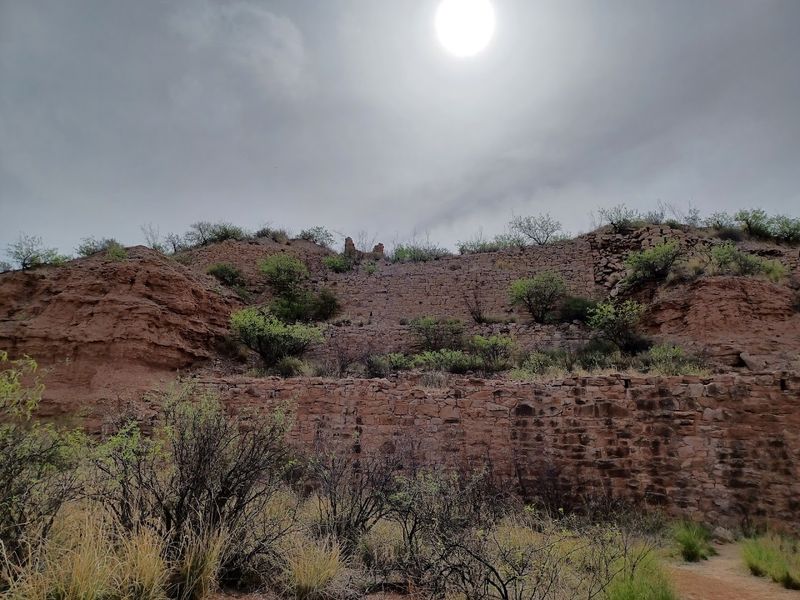
About a mile past the cemetery, the Grand Central Mill ruins appear on the horizon like something out of an adventure story. The remaining walls loom large against the Arizona sky, and getting up close to them is a genuinely thrilling moment.
The mill was a critical piece of the 19th-century silver operation in this part of the state. Ore from the Tombstone mines was brought here to be processed, and at its peak the mill was one of the most important industrial sites in the entire region.
Today, only the thick stone walls remain, but they are impressive enough to make your jaw drop.
Visitors have described finding an old railroad spike and a metal trough near the ruins, small relics that somehow survived more than a century of weather. A few rusted metal barrels are also scattered along the trail leading to the mill.
Every single one of them feels like a clue in a very old puzzle.
Have you ever stood next to a wall that was built over 130 years ago and tried to imagine the noise and heat of the machinery that once filled it? The Grand Central Mill gives you that exact opportunity.
It is the kind of sight that makes the whole trail feel like a proper expedition rather than just a casual walk.
Birds, Wildlife, And The River
The San Pedro River does not just add scenery to the Fairbank experience. It transforms it.
The riparian corridor along the river is one of the most biologically rich areas in all of Arizona, and it shows at every turn along the trail.
Birdwatchers have a field day here. The cottonwood and willow trees that line the riverbank attract an enormous variety of species throughout the year.
Depending on the season, you might spot herons, hawks, warblers, and dozens of other birds without even trying very hard.
The wildlife does not stop at birds. Deer are a common sight, especially in the early morning and late afternoon.
Lizards are practically everywhere, darting between rocks and disappearing under brush in the blink of an eye.
The San Pedro River itself can surprise visitors.
In February, one hiker described actual flowing water that was cool enough to splash around in. In drier months the riverbed is sandy and still, with deer tracks pressed into the surface.
Are you someone who always forgets to look up when walking through nature? The San Pedro riparian zone will fix that habit fast.
The whole corridor feels alive in a way that makes the ghost town experience feel even more layered and complete.
Plan Your Visit Right
Visiting Fairbank Historic Townsite is completely free. There is no entry fee, and parking is available right at the trailhead on N Old Fairbank Rd, Huachuca City, AZ 85616.
Clean restrooms are located near the parking area, which is a genuine luxury for a site this remote.
The schoolhouse visitor center and museum is open Friday, Saturday, and Sunday from 9:30 AM to 4:30 PM. Monday through Thursday the site is accessible but the buildings are closed.
The best time to visit is between late autumn and early spring, when temperatures are comfortable for hiking. Summer heat in southern Arizona is no joke, and the site sits at around 4,000 feet elevation.
Visitors are asked not to remove any historic artifacts from the site. That old railroad spike or fragment of pottery belongs to the story of Fairbank, not to anyone’s backpack.
The dirt access road off State Route 82 is generally well-maintained and accessible to most vehicles.
Handicap parking and a drop-off area are available near the historic buildings.