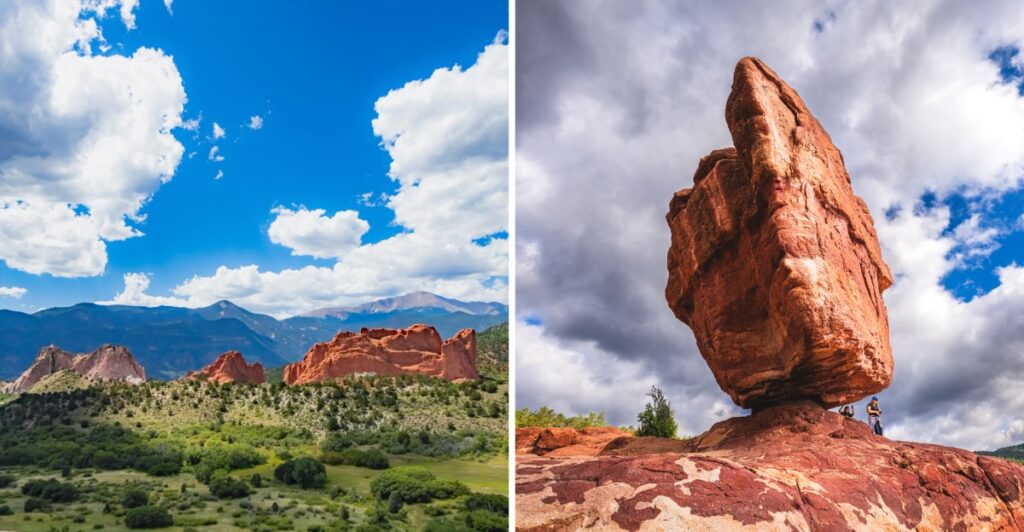
This is a city park, though your eyes may disagree.
Huge red sandstone formations rise straight from the foothills, with a mountain backdrop that makes the whole scene feel far more remote than it actually is.
And somehow, admission is free.
In Colorado, that makes for a pretty easy road-trip decision.
You can keep things simple with a paved walk or take the car around for a wider look. If one viewpoint grabs you, stay there awhile.
The rocks change character as the light shifts, and another turn can completely rearrange the view.
No heroic hike required.
No complicated plan, either.
Just bring water and shoes you actually like walking in.
So if a free city park can look like this, what exactly counts as showing off?
Giant Red Sandstone Towers Rise Above Colorado Springs
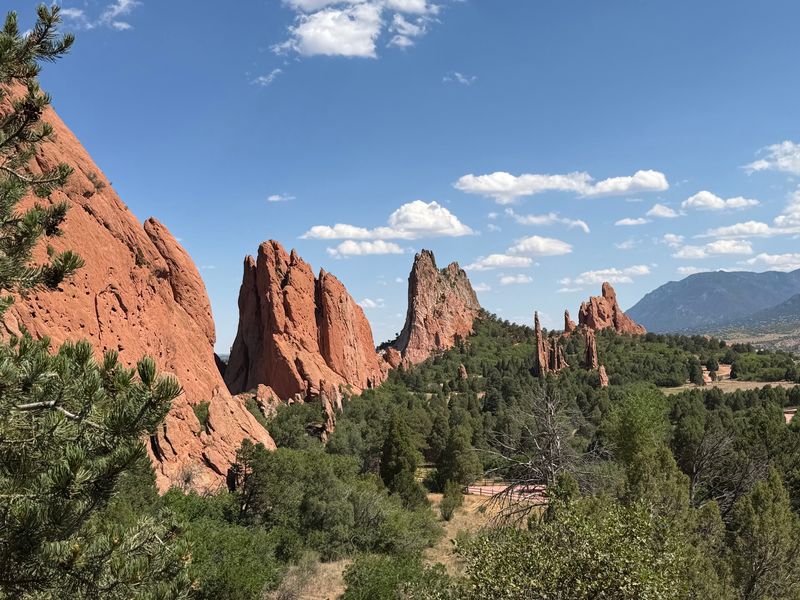
The first thing you notice is the contrast. Rust-colored stone stands upright against pale grass, dark evergreens, and a mountain skyline that seems to stretch forever.
Some formations rise hundreds of feet, with narrow fins, blunt towers, and tilted walls sharing the same landscape. Their color shifts through the day. Morning light brings out warm orange tones, while cloud shadows make neighboring rocks look almost brown.
Garden of the Gods is a city-owned park covering more than 1,300 acres. The tallest features occupy only part of that space, leaving open slopes, winding roads, and trails that connect the viewpoints.
At this elevation, bright sun and dry air can catch you by surprise, particularly on an exposed path.
Carry water and use sun protection even when the weather feels mild. Early morning gives you softer light and often a calmer start; an afternoon visit may offer changing clouds above the rocks.
Either way, leave space in the schedule for a second look.
The Generous 1909 Gift That Keeps This Park Free Forever
There is a reason you can wander into this landscape without paying an entrance fee. Charles Elliott Perkins, a railroad executive, acquired land around the formations during the nineteenth century and wanted it preserved for the public.
After his passing, his children gave the central property to Colorado Springs in 1909, carrying out his wish that it remain open and free.
That gift became the foundation of today’s much larger park. Later additions extended the protected landscape beyond the dramatic central rocks.
You can make a quick stop here or spend most of a day without worrying about an admission clock.
Free entry does not mean every activity costs nothing: some guided experiences and other services have separate charges. Start with the trails and overlooks, then decide whether you want anything extra.
On busy weekends, an early arrival also helps with parking. A free place this striking naturally draws company, especially when the weather cooperates.
Balanced Rock, Kissing Camels, And Other Famous Formations
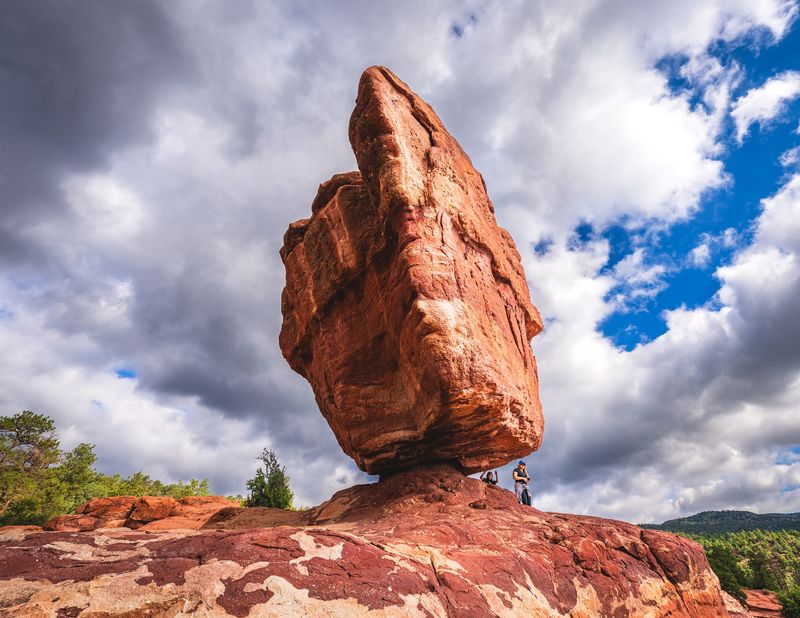
Balanced Rock is the sort of formation that makes you stop mid-sentence. A massive chunk of sandstone rests on a much narrower base, creating a shape that looks almost too unlikely to be real.
There is a nearby parking area, so you can enjoy this landmark without committing to a long hike.
Take a moment to walk around it rather than settling for the first angle. Stay clear of traffic and remain in the designated visitor areas while you find your photograph.
Then turn your attention toward Kissing Camels, a distinctive pair of rock shapes high along a ridge. Once you spot the two profiles meeting, the name is hard to forget.
Not every memorable formation has a playful name. Some appear as parallel slabs pushed out of the earth, and others form narrow windows or ragged edges against the sky. Try looking for shapes without reaching for a map first.
These are fragile natural features, despite their size. Keeping to official paths and viewing spaces protects the rock and surrounding ground.
Millions Of Years Of Earth Forces Shaped These Unusual Rocks
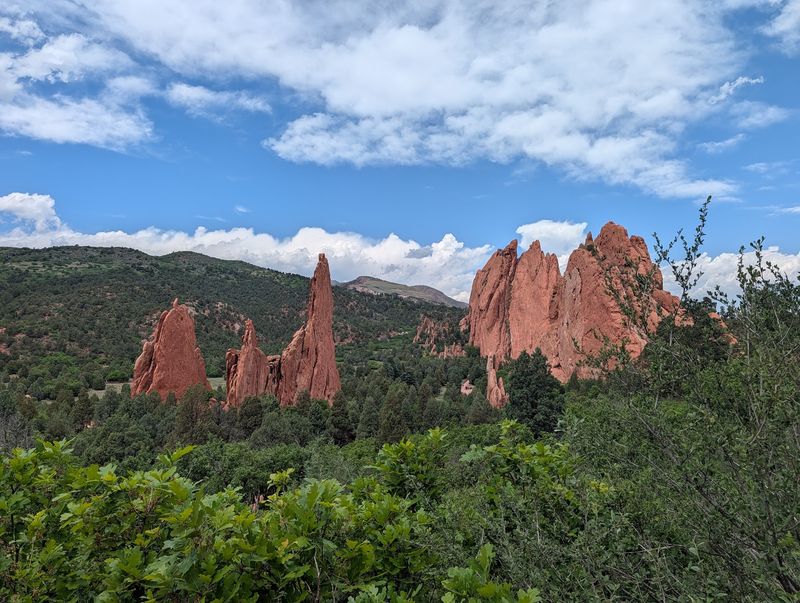
Those steep sandstone walls began as sediment laid down long before Colorado Springs existed.
Over immense spans of time, layers of sand and other material hardened into rock. Mountain-building forces later tilted the layers sharply upward, helping create the fins and ridges visible today.
Erosion finished much of the sculpture. Rain, wind, and repeated freezing and thawing wore away weaker areas while harder sections remained standing. The result is a landscape with a surprising range of shapes, all made from material that once lay in much flatter layers.
Look closely from a trail, and you can sometimes pick out stripes, cracks, and changes in texture across a single wall. Resist the temptation to touch or scramble across exposed rock outside permitted areas.
The formations are part of a protected National Natural Landmark, and even small disturbances add up where so many people visit.
For a closer introduction to the geology, stop at the Visitor and Nature Center. Exhibits help connect the striking scenery with the slow processes that produced it, and you can return outside with a few new details to look for.
The landscape rewards an unhurried pace. One moment you’re admiring a giant red slab; the next you’re examining a much smaller pattern in the rock beside the trail.
Paved Paths Wind Between Massive Rocks In Central Garden
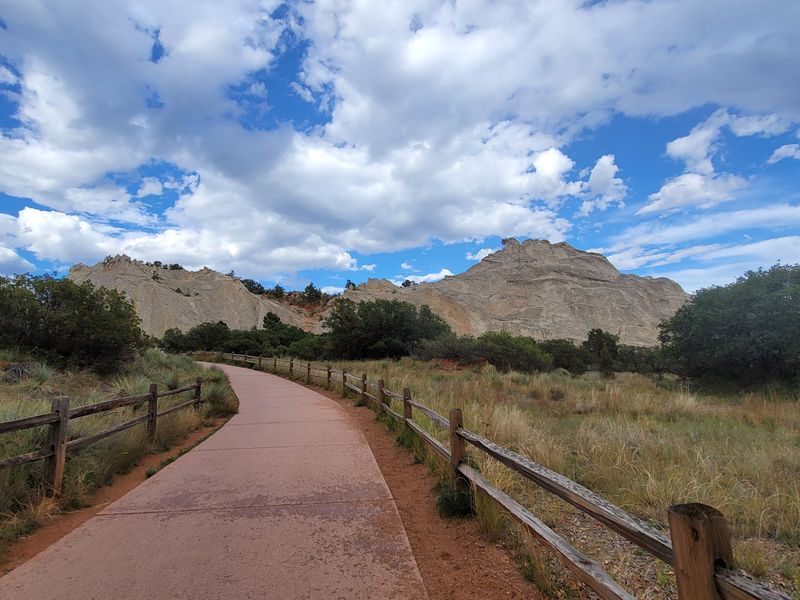
If you want to get close to the central formations without tackling a steep mountain trail, start with the Perkins Central Garden Trail. The paved route covers about 1.5 miles round trip and passes beneath some of the park’s tallest rocks, with relatively little elevation change.
The path makes the landscape feel different from a roadside viewpoint. Pause where the trail bends, then turn around.
This is a practical choice for visitors who prefer a smoother walking surface, although conditions and individual mobility needs vary.
Check the current accessibility information if you’re planning around a wheelchair, stroller, or other mobility aid. Benches and rest stops can help turn a brisk walk into a comfortable outing.
For a different perspective, the Siamese Twins Trail offers a view of Pikes Peak through a natural opening in the rocks.
Other unpaved routes lead across rolling terrain, sometimes with loose stones and uneven footing. Choose a path that matches your time, footwear, and energy rather than trying to cover everything.
Stick to marked trails throughout the park. The soils are vulnerable to erosion, and a shortcut can do lasting damage. Bring water even for a short loop, especially when the sun is high and shade is hard to find.
Snowy Pikes Peak Frames The Sandstone Cliffs
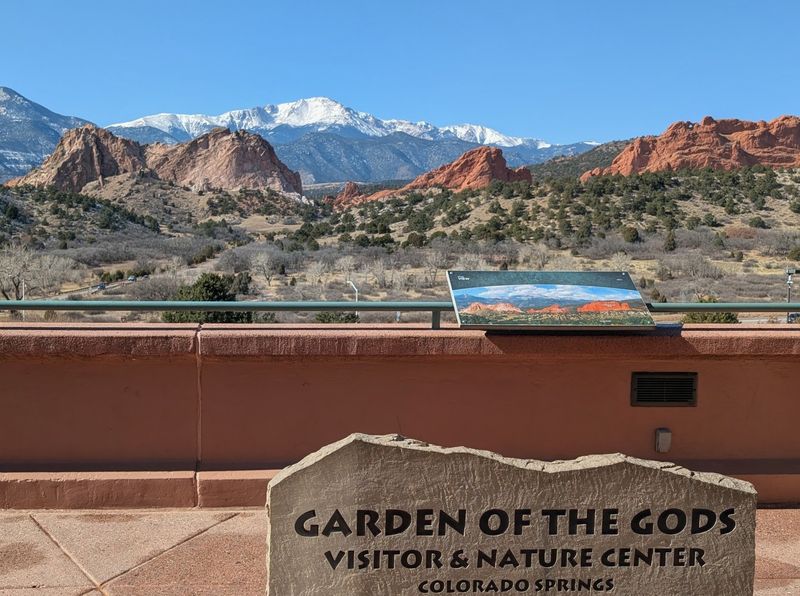
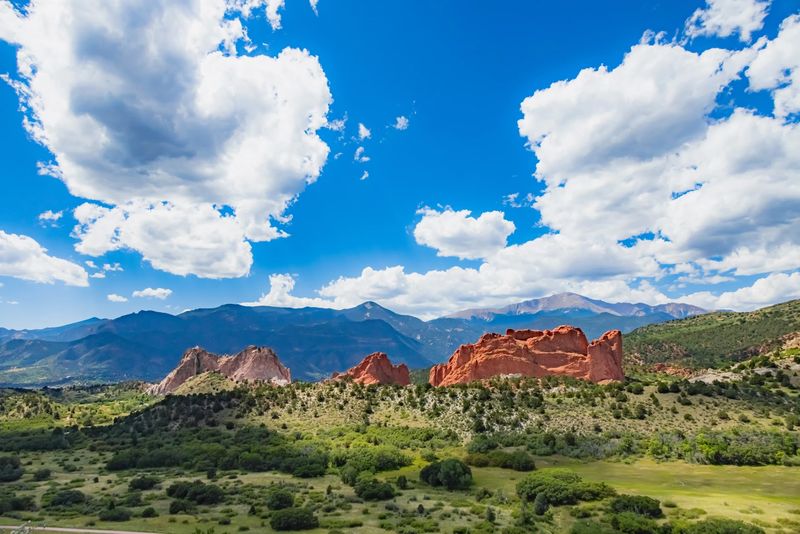
Garden of the Gods has a remarkable backdrop. To the west, Pikes Peak rises above 14,000 feet, its summit appearing beyond the park’s red formations when the weather is clear.
You won’t always see snow on the peak. A white cap is more likely during colder parts of the year, while summer weather may leave the summit largely bare. Clouds can hide it entirely, so give yourself a little flexibility rather than treating a particular photograph as guaranteed.
The Visitor and Nature Center is a useful first stop for getting your bearings and taking in broad views. From there, you can decide whether to explore the central garden or drive toward other overlooks.
A few minutes looking at the skyline can also help you recognize the mountain from different parts of the park.
Watch the light as the day progresses. The sandstone may appear bright orange while the distant mountain sits in cool shadow, or clouds may cast wide patches of shade across both.
Even on a warm afternoon, mountain weather can change quickly. Carry a light layer if you plan to linger into the evening, and watch for thunderstorms. With exposed rocks and open viewpoints, heading back to shelter when thunder approaches is the sensible move.
Scenic Drives, Rock Climbing, And Free Fun Throughout The Park
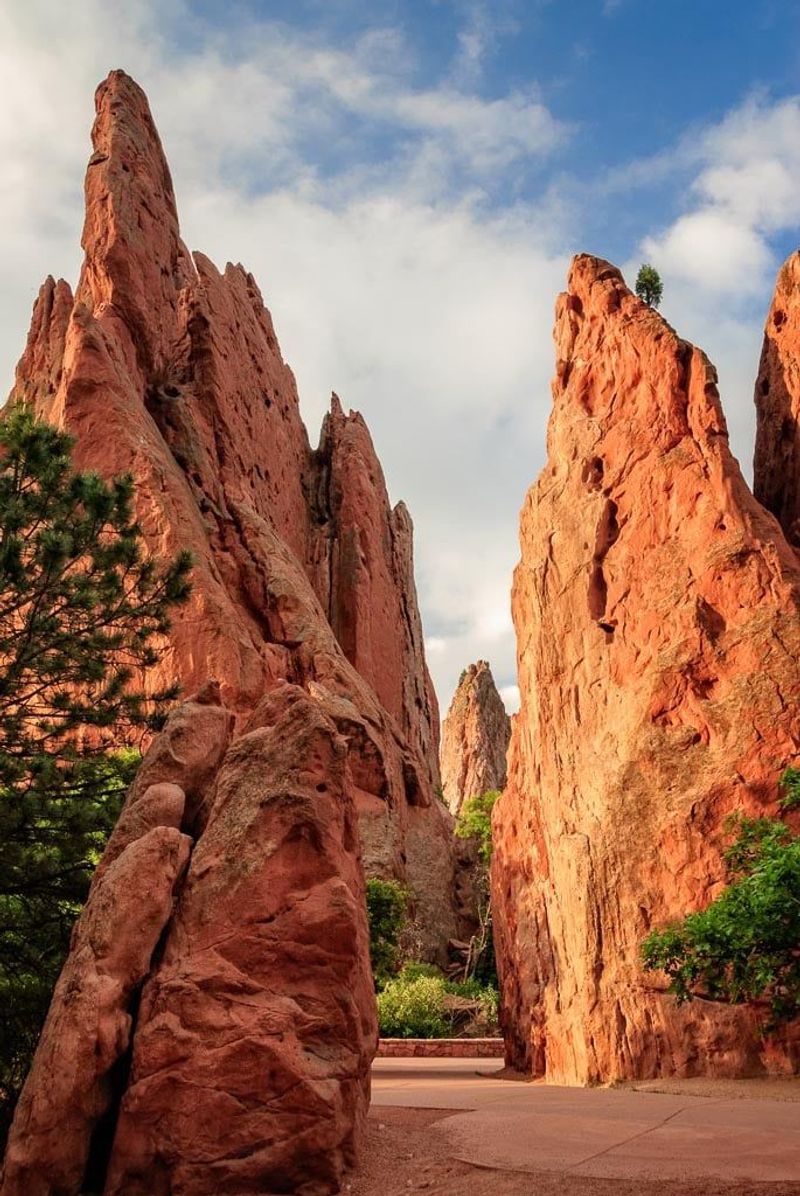
You can experience plenty of Garden of the Gods without spending the whole day on foot. Park roads pass several of the major formations, with pullouts and parking areas that make it easy to combine a scenic drive with short walks.
Cyclists use these roads too, so take corners slowly and watch for people crossing near popular stops.
Rock climbing offers a more technical way to experience the sandstone, but it comes with specific rules. Climbing and bouldering require a park permit, and climbers need appropriate equipment and experience.
The park also has designated routes for other outdoor activities, including horseback riding. Guided rides and some tours may carry fees even though entrance to the park remains free.
At the Visitor and Nature Center, you can explore exhibits, ask about current conditions, and stop for refreshments or souvenirs.
Set your navigation for the Garden of the Gods Visitor and Nature Center at 1805 N 30th Street, Colorado Springs, CO 80904. From May through October, the park normally opens at 5 a.m. and closes at 10 p.m.
November through April hours end at 9 p.m. Special events can alter vehicle access, so check before setting out.
For a relaxed visit, choose two or three highlights instead of racing between every viewpoint.
A paved walk, a favorite formation, and a quiet view of Pikes Peak make a satisfying day, with plenty left for another trip.