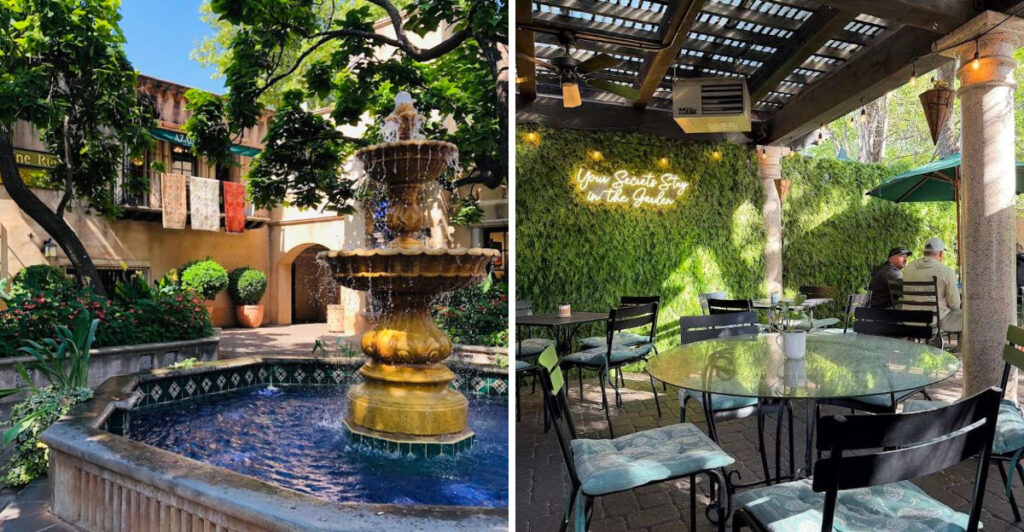
A funky Arizona art village can turn a simple day trip into a dream before you even realize what happened.
Sunlight hits painted tiles, fountains murmur in shaded courtyards, and twisty trees seem to grow right into the buildings. Every corner feels layered with color, texture, and creative energy.
Arizona has plenty of beautiful places, but this one brings a different kind of magic. It feels handcrafted, slightly surreal, and full of tiny details that make you slow down without trying.
The shops, galleries, music, and courtyards all pull you deeper into its dreamy little world.
The Story Behind The Village
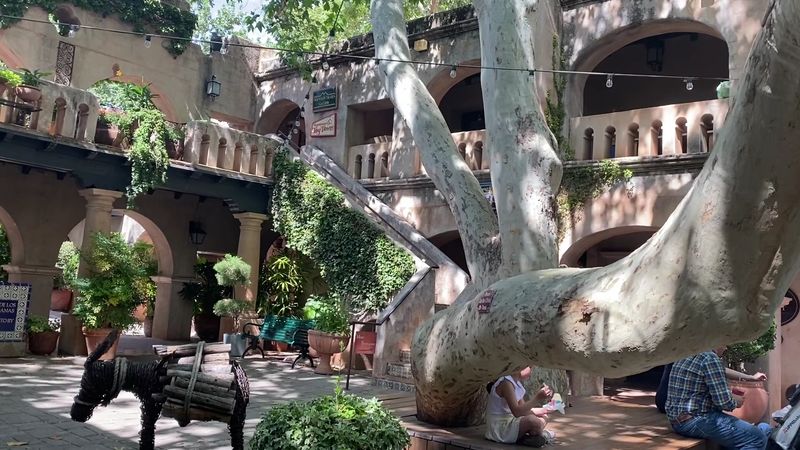
Few places carry a founding story as interesting as this one. Tlaquepaque Arts and Shopping Village was established in 1973 by Abe Miller, who envisioned it as an artists’ commune inspired by the artisan districts of Jalisco, Mexico.
The idea was bold: create a space in Arizona where working artists could live, create, and sell their work within a single, beautifully unified environment. That vision took root quickly, and the village grew into something far more lasting than anyone might have predicted.
One of the most remarkable details about the construction is how the buildings were designed to accommodate the existing sycamore trees.
Rather than removing them, builders cut openings into the structures so the trees could grow right through the walls and roofs.
That choice speaks to a philosophy that still defines the place today. Nature and architecture do not compete here.
They cooperate, and the result is a space that feels genuinely unlike anything else in Arizona.
Architecture That Stops You Mid-Step
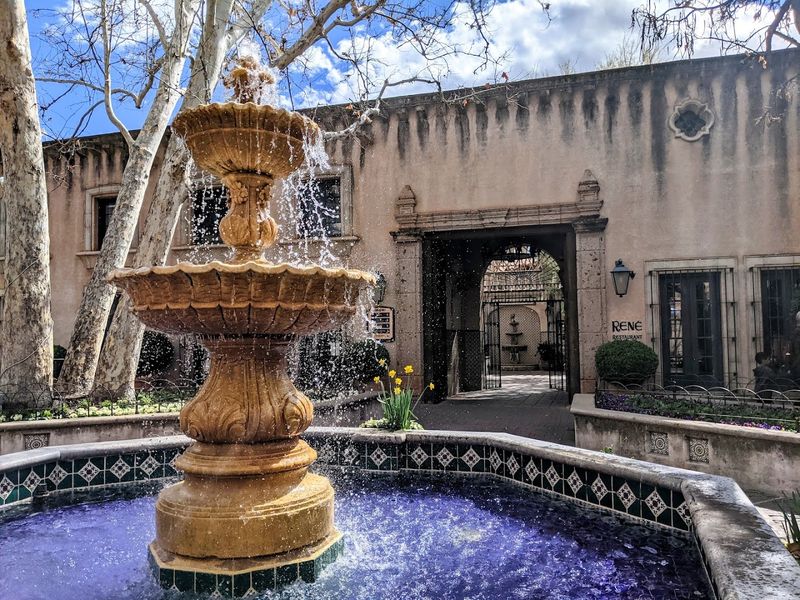
The buildings here are not just backdrops. They are part of the experience in a way that most shopping destinations never manage to achieve.
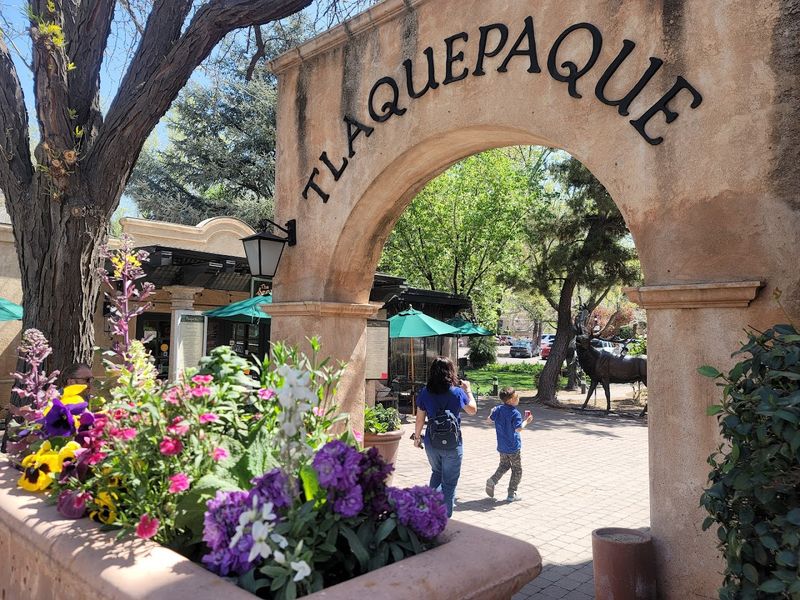
Adobe-style facades, terracotta tones, hand-painted tiles, and carved wooden details create a layered visual landscape that rewards close attention. Every archway leads somewhere worth discovering, and every courtyard has its own character.
The arched doorways are particularly striking. They frame views of fountains and garden spaces in a way that feels almost cinematic, as if someone carefully composed each sightline.
Sycamore trees grow directly through portions of the buildings, their thick trunks and spreading canopies becoming structural features rather than obstacles. It is an unusual and deeply appealing design choice that visitors consistently find memorable.
Located at 336 AZ-179 in Sedona, Arizona, the village sits in one of the most visually dramatic landscapes in the American Southwest. The red rock formations visible beyond the rooftops only add to the surreal, almost dreamlike quality of the place.
An Art Lover’s Playground
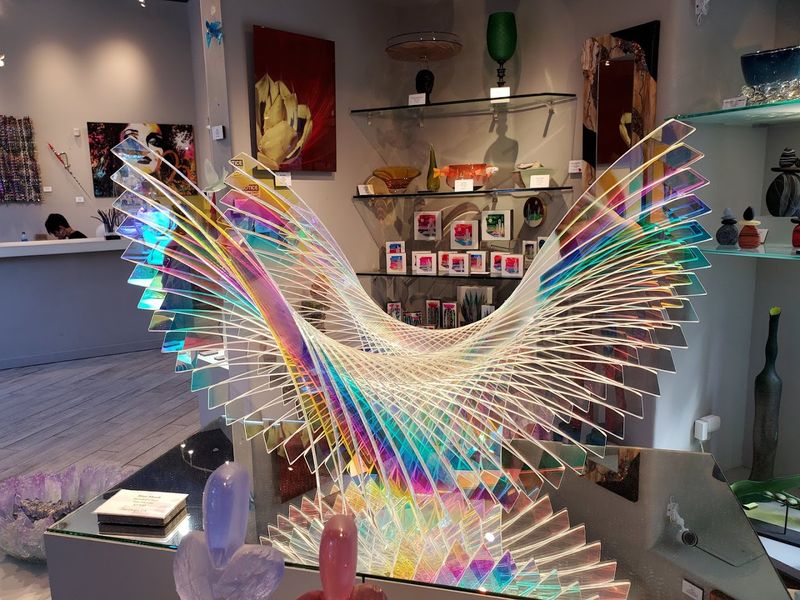
Art is not an afterthought here. It is the entire point.
Tlaquepaque hosts around 18 galleries within its grounds, each one with its own curatorial focus and aesthetic personality.
Visitors can find contemporary Southwestern paintings alongside intricate blown glass sculptures, handmade pottery inspired by Native American traditions, and fine art jewelry that blurs the line between wearable and collectible.
What makes the gallery experience here feel different from a typical museum visit is the access to the artists themselves. Many creators maintain working studios within the village, meaning a visitor can watch a glassblower at work or speak directly with a painter about their process.
That kind of direct connection between maker and audience is increasingly rare. At Tlaquepaque, it feels entirely natural, built into the rhythm of the place rather than staged for effect.
For anyone who has ever wanted to understand where art comes from and how it is made, an afternoon here offers genuine insight without any of the formality that can make galleries feel intimidating.
Shopping That Actually Feels Special
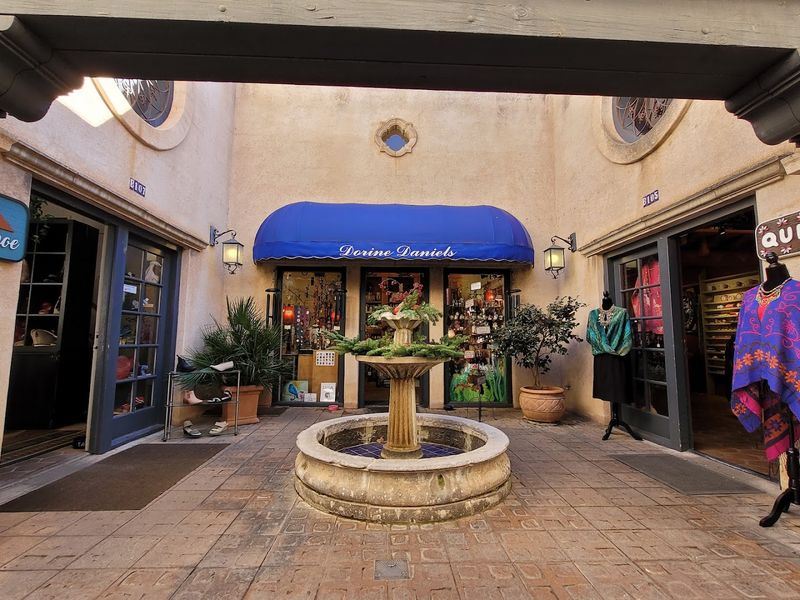
Beyond the galleries, Tlaquepaque is home to roughly 45 shops offering everything from handcrafted jewelry and hand-woven textiles to Native American-inspired home decor and one-of-a-kind gifts.
This is not a place where every store sells the same mass-produced souvenirs. The shops here tend to carry pieces that feel carefully chosen, and many items are made by artisans with direct connections to the village or the broader Sedona community.
Browsing here is genuinely enjoyable rather than overwhelming. The scale of the village is human-sized, meaning visitors can cover a lot of ground without exhaustion.
Even those who arrive with no intention of buying anything tend to leave with something tucked under their arm. The combination of quality, variety, and atmosphere makes it hard to resist.
Prices reflect the caliber of the work, so this is not a spot for bargain hunters. But for those seeking something meaningful and lasting, the shops at Tlaquepaque offer the kind of finds that are still talked about years later.
Courtyards, Fountains, And Pure Atmosphere
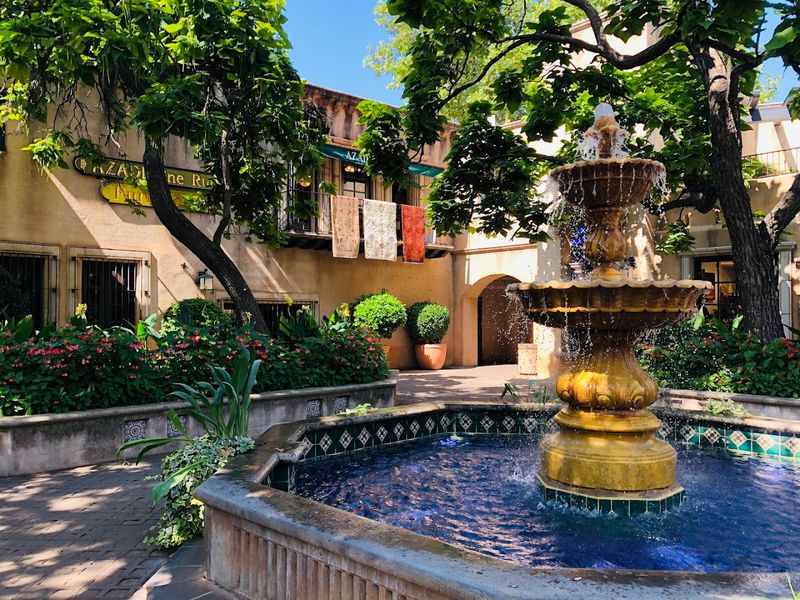
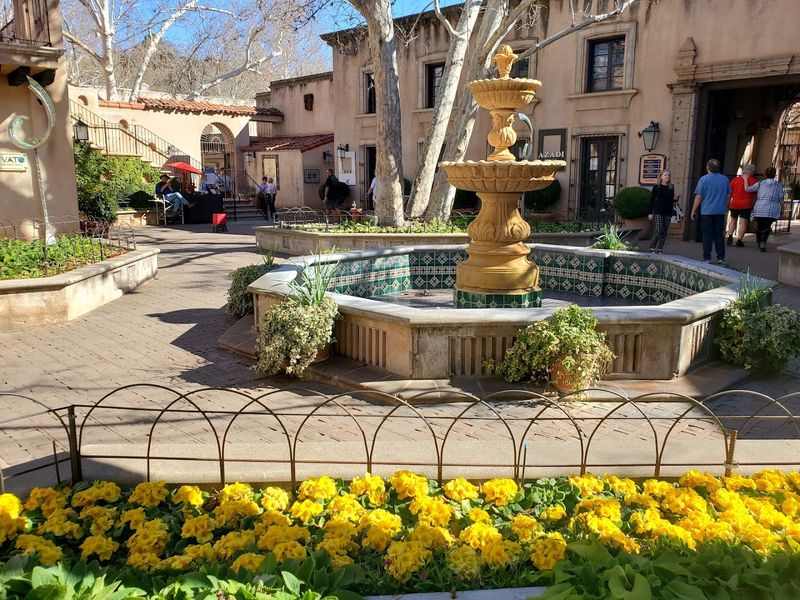
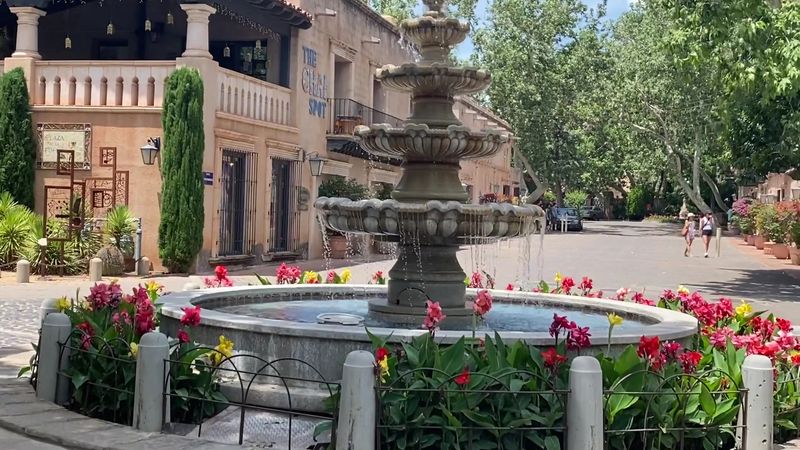
The courtyards at Tlaquepaque are where the magic really concentrates. Shaded by mature sycamore trees and anchored by ornate fountains, these open-air spaces invite visitors to slow down and simply exist for a moment.
The sound of trickling water is a constant companion throughout the village. It creates a calm, almost meditative atmosphere that feels genuinely restorative, particularly after a morning of hiking through the rugged Arizona landscape surrounding Sedona.
Flowering plants and decorative tile work add color to every corner. The attention to detail in these shared spaces is remarkable, right down to the way planters are arranged and the choice of materials underfoot.
Cobblestone paths wind between the courtyards, connecting different sections of the village in a way that encourages wandering rather than rushing. Getting a little lost here is not a problem.
It is practically the recommended approach.
Visitors frequently mention that the atmosphere alone justifies the trip, even before a single shop has been entered or a single meal has been ordered.
Live Music And Cultural Celebrations
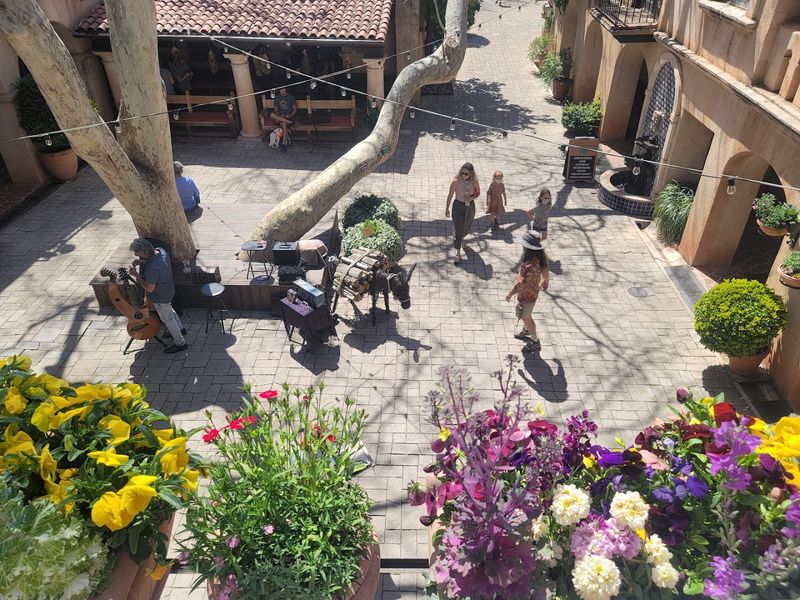
During much of the warmer season, live flamenco guitar music often brings extra energy to the courtyards.
It is one of those unexpected touches that elevates a shopping trip into something closer to an event.
The music is not background noise. It is a deliberate cultural statement, connecting the village to the Mexican artistic traditions that inspired its creation in the first place.
Beyond the regular music programming, Tlaquepaque hosts a calendar of seasonal events and cultural celebrations throughout the year. Dia de los Muertos is observed with authentic decorations and festivities that honor Mexican heritage with genuine care and creativity.
The Christmas season transforms the village into something particularly special. Lights, decorations, and a festive atmosphere make it a popular destination for families and couples during the cooler Arizona months.
These events are not add-ons. They are expressions of the village’s ongoing commitment to the cultural identity that has defined it since its earliest days, making each visit feel tied to something larger and more meaningful.
Dining Options Worth Planning Around
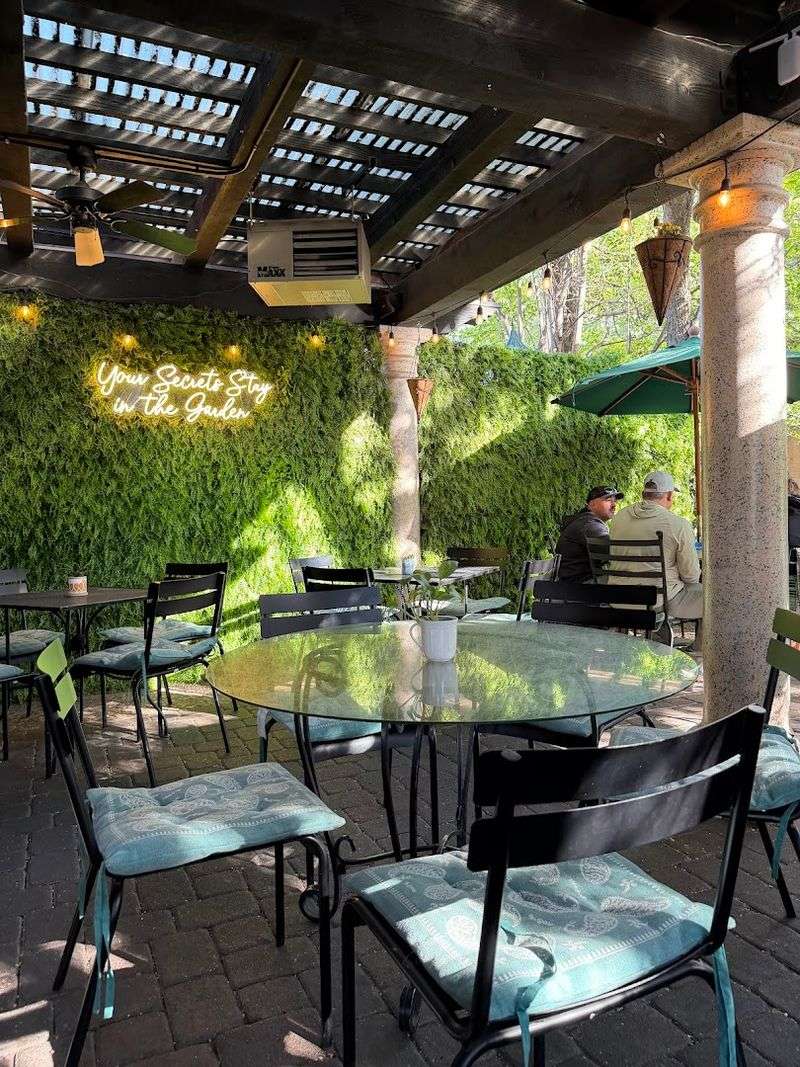
Hunger is not a problem at Tlaquepaque. The village offers several distinct dining options, each with its own personality and menu focus.
El Rincon is one of the village’s longtime dining spots, serving Arizona-style Mexican cuisine in a setting that matches the village’s overall aesthetic beautifully.
The flavors are bold and the portions are generous, making it a strong choice for a proper sit-down meal mid-visit.
The Chai Spot offers a completely different experience. It is a cozy tea lounge with a second-floor patio, perfect for a quiet break with a warm drink and a view of the courtyards below.
For another casual meal, visitors can choose one of the village’s relaxed dining spots with an American-style menu.
Secret Garden Cafe provides yet another atmosphere, tucked into one of the village’s quieter corners with a menu that accommodates various dietary preferences.
Making reservations for a meal is a genuinely good idea, particularly during peak season. Groups that plan ahead tend to have a much smoother experience than those who arrive hoping for the best.
Best Times To Visit And What To Expect
Timing matters at Tlaquepaque, and locals will tell you that the experience varies noticeably depending on when you arrive. Fall is widely considered one of the finest seasons to visit.
The sycamore trees shift to warm autumn colors, the Arizona temperatures drop to a comfortable range, and the crowds, while still present, feel more manageable than during peak summer months.
Arriving later in the afternoon has its advantages. The light softens, the adobe architecture glows in a particularly flattering way, and the energy of the place shifts toward something more relaxed and intimate.
Mornings and midday on weekends tend to be the busiest periods. Parking, which is free but limited, fills up quickly during those windows.
An overflow lot is available nearby, but a short walk is sometimes required.
The Christmas season is another peak period worth planning around. The village transforms with lights and decorations, drawing visitors from across Arizona and beyond who come specifically for the holiday atmosphere.
Practical Tips For First-Time Visitors
First-timers at Tlaquepaque tend to underestimate how much time the village requires. Budgeting at least three to four hours is a reasonable baseline, and many visitors find themselves wishing they had allowed even more.
Comfortable walking shoes are genuinely useful. The cobblestone paths are beautiful but uneven, and extended browsing on them in inappropriate footwear becomes uncomfortable relatively quickly.
The village is dog-friendly, which is a meaningful detail for travelers who bring their pets along on road trips through Arizona. Water bowls and shaded rest spots make the environment welcoming for four-legged visitors as well.
Parking is free but competitive, particularly on weekends and during special events. Arriving early or later in the afternoon tends to result in a much smoother arrival experience.
A newly completed underpass connects the north and south sections of the village, which makes navigation easier and more enjoyable than it once was. Visitors who explore both sections consistently report a more complete and satisfying experience of everything Tlaquepaque has to offer.
Why This Place Lingers In The Memory
Some destinations are pleasant to visit and easy to forget. Tlaquepaque is not one of them.
The combination of thoughtful design, genuine artistic culture, and sensory richness creates an impression that tends to stick.
Part of what makes it so memorable is the coherence of the experience. Every element, from the architecture to the music to the food, feels like it belongs to the same creative vision rather than a collection of unrelated businesses sharing a parking lot.
The trees growing through the buildings remain the detail that visitors mention most often when describing the place to others. It is a small thing, but it communicates something important about the values that shaped Tlaquepaque from the beginning.
Arizona has no shortage of beautiful places to spend a day. But Tlaquepaque occupies a category of its own, a place where commerce and culture and natural beauty overlap in a way that feels genuinely rare.
For anyone passing through Sedona, skipping it would be a decision worth reconsidering at length.