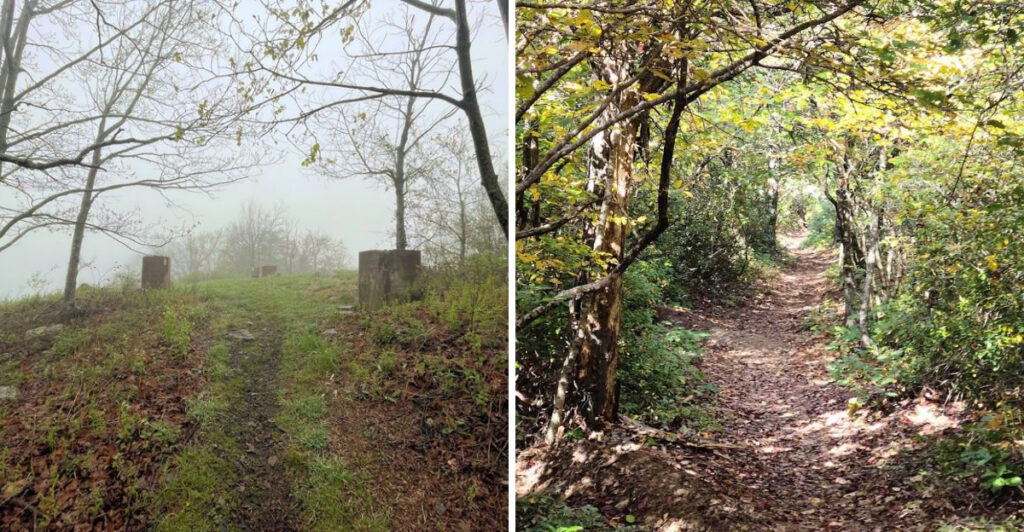
Looking for a hike that offers more than just a workout? This Virginia trail starts with a warning sign and quickly turns into something much bigger.
As you venture deeper, the towering trees create an eerie atmosphere, with shadows stretching long and strange shapes hiding in the underbrush.
The climb to the summit isn’t just physical; it’s a test of your nerves. With every step, the forest grows quieter and more intense, but the payoff is a breathtaking view from the top.
Virginia’s wilderness is as raw as it gets, and this trail captures its wild beauty in a way few others do. Ready for a hike that stays with you long after you’ve left the woods?
This one’s waiting.
The Trail That Starts With A Warning Sign
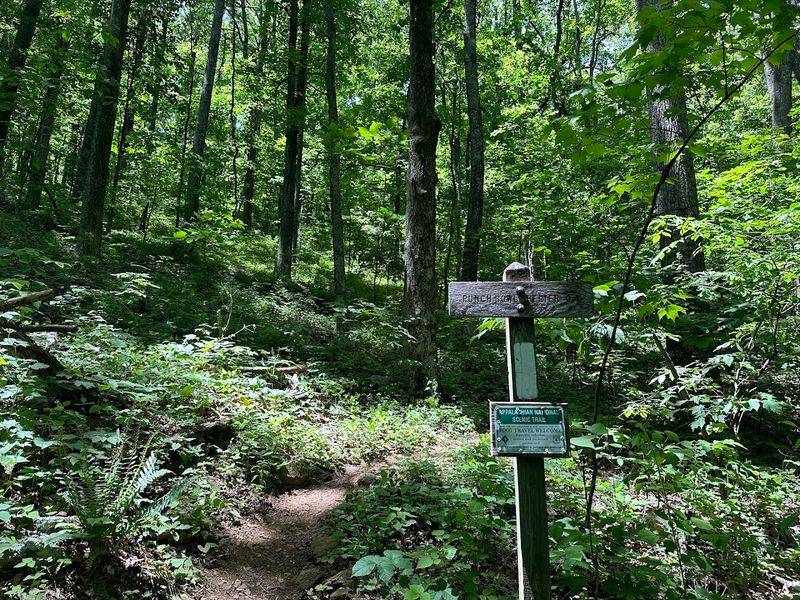
Right from the start, this trail sets the tone.
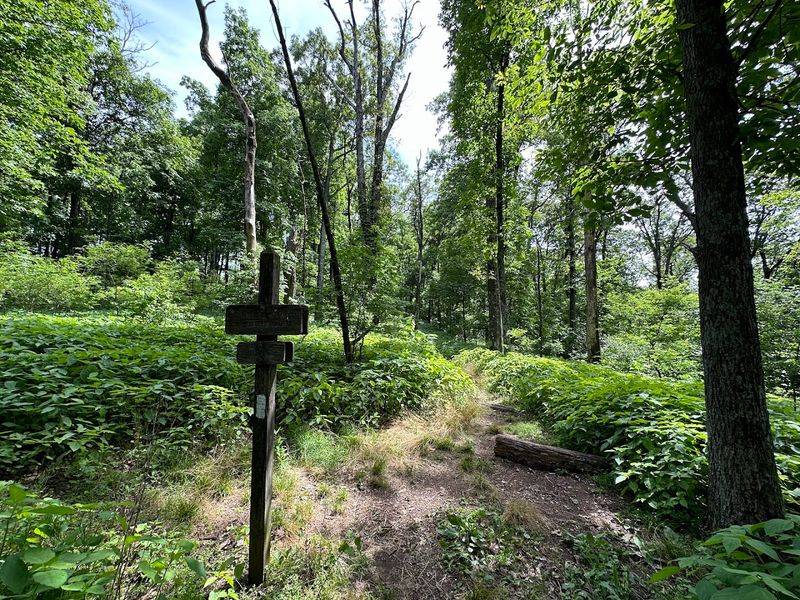
The forest closes in almost immediately. Tall trees line both sides of the path, and the canopy overhead filters the sunlight into something dim and greenish, especially on overcast days.
For hikers who arrive in the early morning, the mood is unmistakably eerie.
The trail itself is part of the larger Appalachian National Scenic Trail system, which adds a sense of history and weight to every step. Knowing that long-distance hikers have passed through this exact stretch adds a quiet kind of gravity to the experience.
The path is well-marked but narrow, and the surrounding woodland feels genuinely untouched.
The trailhead sits at the Punchbowl Mountain Overlook along the Blue Ridge Parkway, where a simple Appalachian Trail sign marks the beginning of something that feels far bigger than its modest appearance suggests.
Virginia wilderness does not get much more raw than this opening stretch of Bluff Mountain Trail.
Ancient Trees And The Shadows They Cast
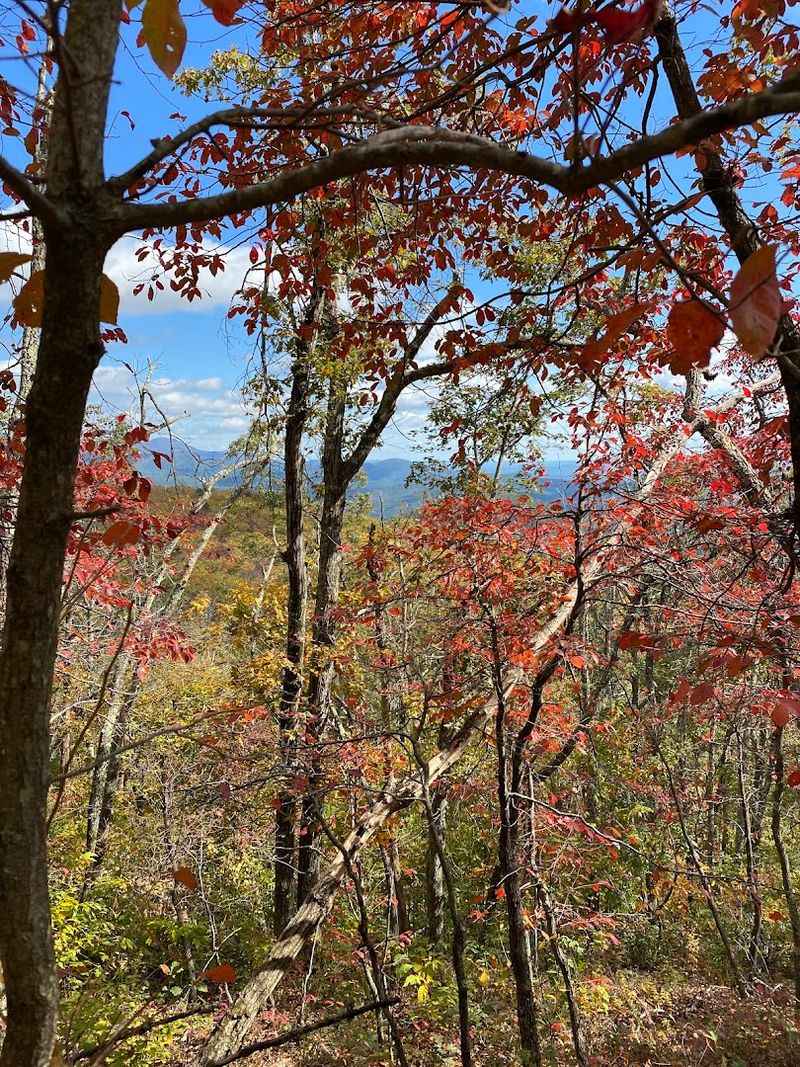
The trees along this trail are not young. Many of the oaks and maples lining the path have been growing for generations, and their size gives the forest a cathedral-like quality that shifts quickly into something more ominous as the light fades.
In autumn, the canopy turns brilliant shades of red and orange, but the beauty comes with a catch. Fallen leaves cover the trail surface, hiding rocks and roots that can catch an unsuspecting boot.
The colors are stunning, but the footing demands full attention at every step.
On overcast days or in late afternoon, the shadows between these old trees stretch long and dark. Shapes in the undergrowth take on unfamiliar forms, and the forest floor becomes a patchwork of light and dark that plays tricks on tired eyes.
Hikers who have walked this section of the trail in Virginia’s Blue Ridge region describe a persistent feeling of being watched, even when the woods appear completely empty around them.
The Steep Climb That Tests Your Nerves
Flat ground is a distant memory once the real ascent begins. The trail ramps up sharply, and hikers quickly find themselves scrambling over exposed rocks, gripping roots, and leaning into the hillside just to keep moving forward.
It is roughly two miles to the summit, but those miles earn their reputation.
The steepest sections demand hands-on effort. Rocks jut out at odd angles, and the trail surface shifts between packed dirt, loose gravel, and bare stone.
First-timers are often surprised by how physical the climb becomes, even though the overall distance is relatively short.
What makes this section particularly unsettling is the quiet. The higher you climb, the fewer sounds reach you from the valley below.
Wind moves through the treetops, branches creak, and the forest takes on a personality that feels almost watchful. Virginia forests have a way of doing that, especially in the George Washington National Forest, where the trees are old and the ridgelines feel genuinely remote.
Why The Trail Feels Haunted After Dark
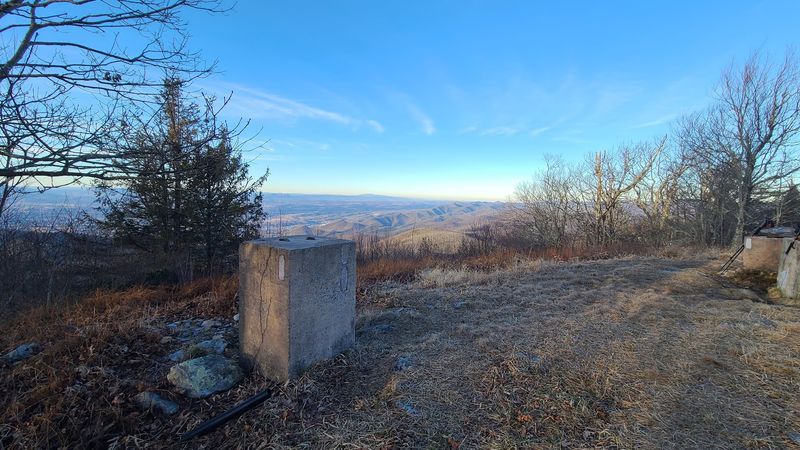
Ask anyone who has stayed on this trail past sunset, and the story changes completely. What feels manageable in daylight becomes something altogether different once the light drops below the ridgeline.
The forest does not just get dark, it gets loud in a different way.
Owls call from directions that are hard to pinpoint. Small animals move through the leaf litter in ways that sound much larger than they are.
The trees creak and shift in the evening wind, and the shadows between them stop being shadows and start feeling like something else entirely.
While the trail is open at all hours, hiking after dark is dangerous due to the steep rocky terrain and should be avoided unless you’re properly equipped and experienced.
The rocky sections that were challenging in daylight become genuinely hazardous without strong lighting. Still, the atmosphere that builds as dusk approaches is part of what makes this Virginia trail feel so memorable.
The mountain does not need special effects or haunted house props to deliver a genuine scare. It manages that entirely on its own.
Fog, Mist, And The Mountain’s Moody Weather
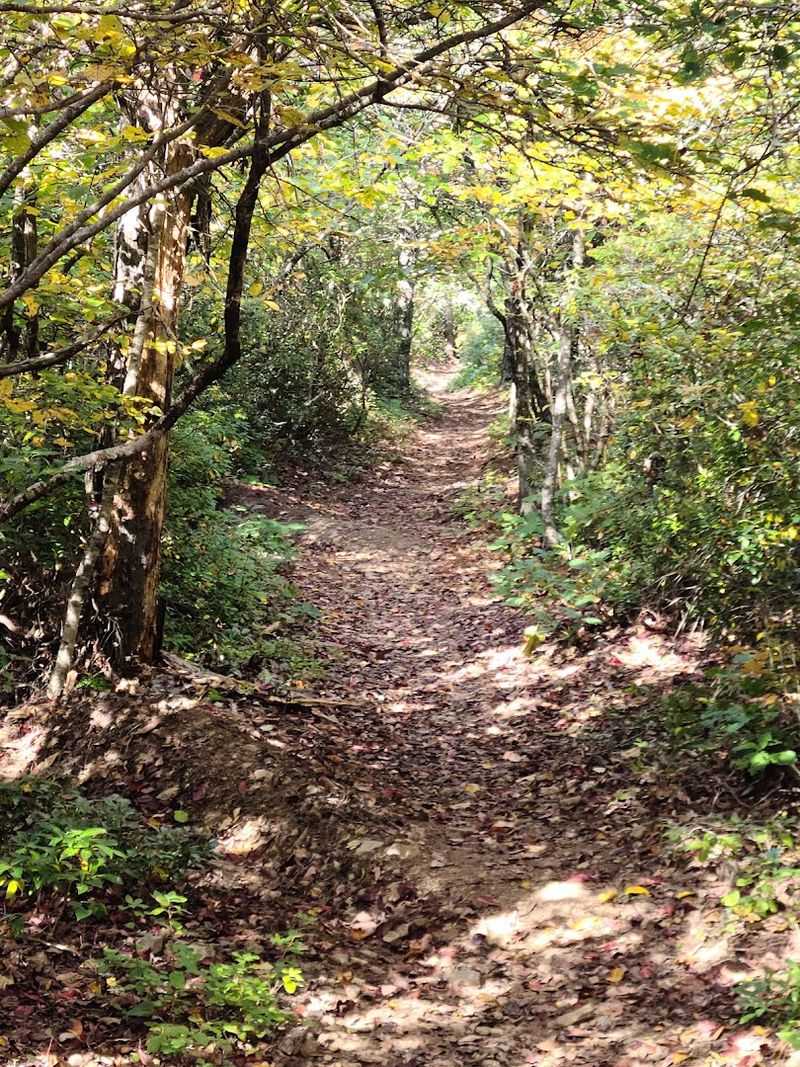
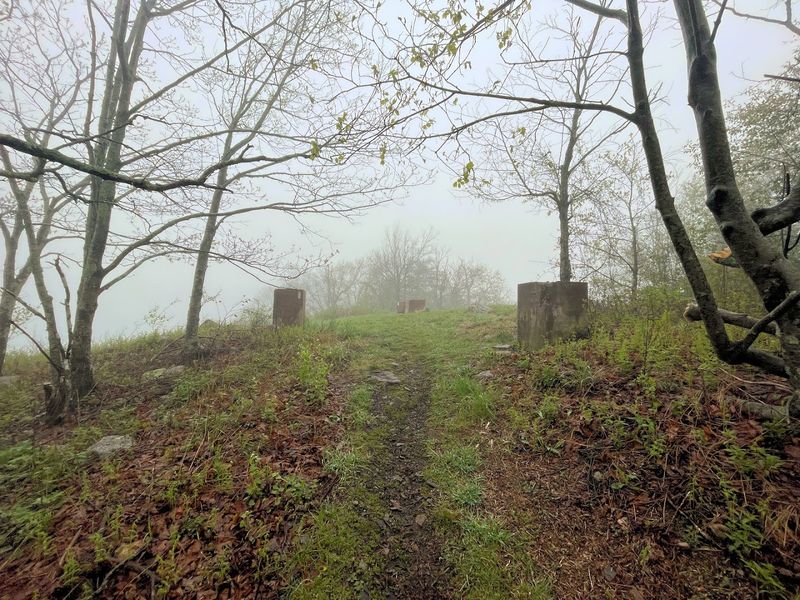
Bluff Mountain has its own weather system, or at least it feels that way. Fog rolls in from the valleys with little warning, and within minutes a clear trail can become a corridor of white mist where visibility drops to just a few feet ahead.
This is not a rare occurrence.
The mountain sits at an elevation that puts it directly in the path of moisture moving up from the lower valleys, and the result is frequent cloud cover and sudden temperature drops.
Fog can roll in suddenly, obscuring familiar landmarks, so be prepared for unexpected weather, especially during the summer months when storms are common.
Familiar landmarks disappear. The trail ahead fades into grey.
Sounds become muffled and directional cues vanish. It is objectively beautiful and objectively unsettling at the same time.
Virginia mountain weather can change fast, and Bluff Mountain is one of those places where being caught unprepared feels genuinely consequential rather than just inconvenient.
Wildlife Encounters You Did Not Plan For
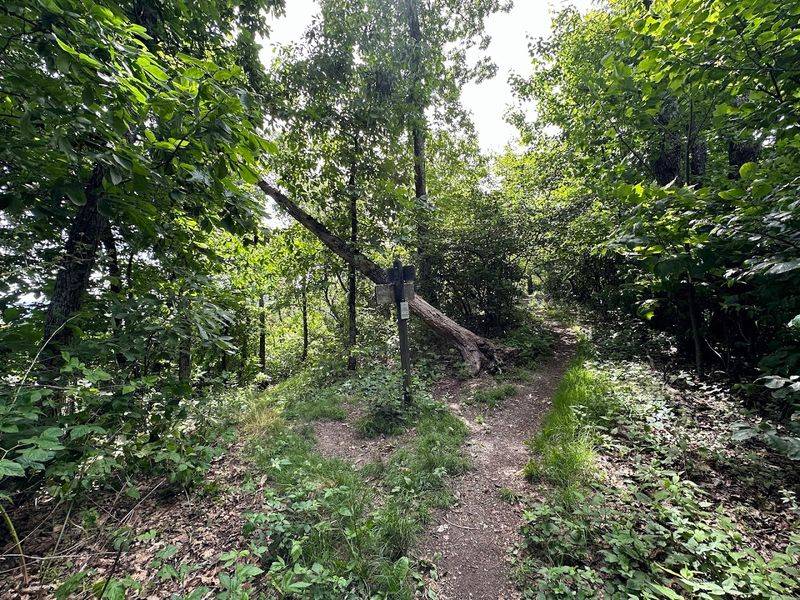
The George Washington National Forest is home to a wide variety of wildlife, and Bluff Mountain Trail passes through prime habitat for animals that are not always happy to share the path.
Black bears are present in this region of Virginia, and signs of their activity, including scratched bark and overturned logs, are not uncommon along the trail.
White-tailed deer, wild turkeys, and various raptors are regular sightings for hikers who move quietly and pay attention.
Snakes also use the rocky outcrops along the upper trail as basking spots, particularly in warmer months, so watching where you place your hands during the rocky sections is genuinely important.
The wildlife here is not aggressive by nature, but encountering a large animal unexpectedly on a narrow, steep trail produces a very specific kind of adrenaline rush.
Hikers should carry bear spray, make noise while moving through dense sections, and stay aware of their surroundings. The forest is alive in ways that a short trail description rarely prepares you for.
The Summit View That Feels Like A Reward
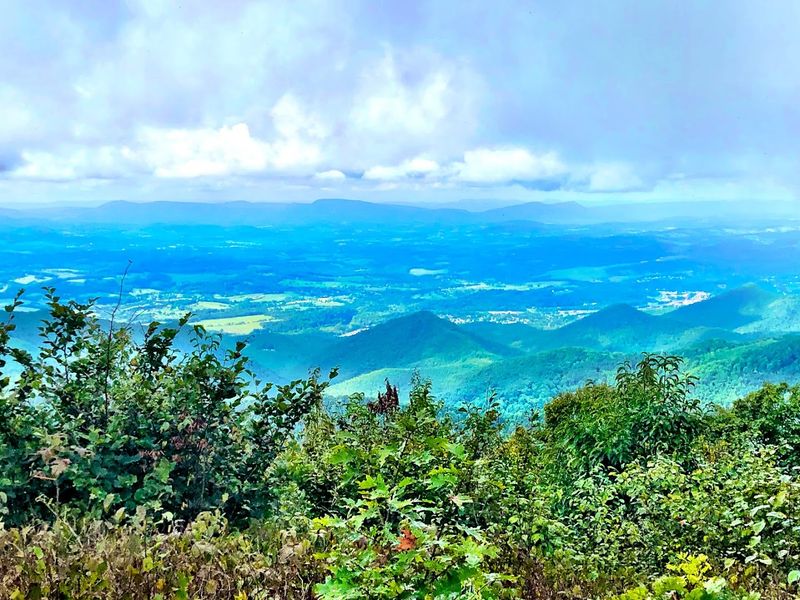
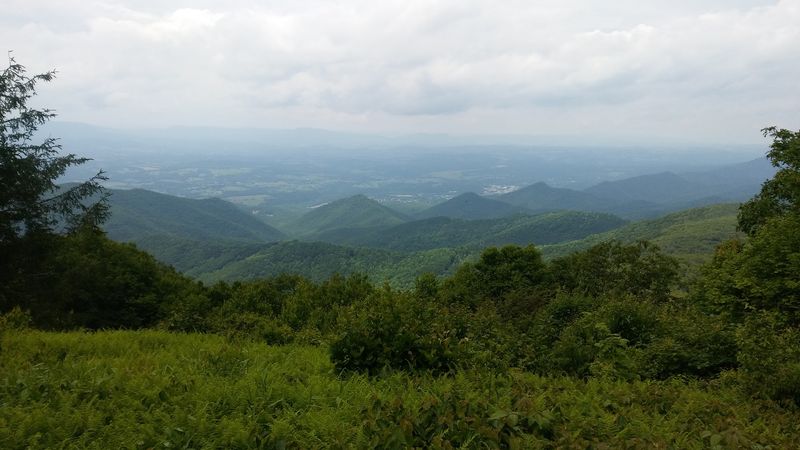
After the climb, the summit delivers. From the top of Bluff Mountain, hikers can look northwest toward the valley below, where the towns of Buena Vista and Lexington are visible on clear days.
The view is not a full 360 degrees, as trees and tall grass limit some sight lines, but what is visible is genuinely impressive.
The open rocky area at the summit feels exposed in the best possible way. Wind moves freely across the peak, the sky feels larger than it did in the forest below, and the effort of the climb suddenly makes complete sense.
It is the kind of view that makes a person stop talking mid-sentence.
Worth noting is that the summit can feel deceptively calm after the unsettling atmosphere of the forested trail below. The contrast is striking.
What was shadowy and close becomes wide and open. Virginia’s Blue Ridge landscape spreads out in every direction, and for a moment, the mountain feels less haunted and more like a reward for everyone who made it to the top.
The Appalachian Trail Connection And Its History
Bluff Mountain Trail is part of the Appalachian National Scenic Trail, one of the most famous long-distance hiking routes in the United States.
This connection gives the trail a deeper layer of history and meaning that goes well beyond a single afternoon hike.
The Appalachian Trail passes through Virginia for a significant stretch, and Bluff Mountain sits along one of its more rugged sections.
Long-distance thru-hikers have been passing this summit for decades, and the white blaze markers painted on trees serve as quiet reminders of that ongoing tradition.
For day hikers, knowing that this trail connects to something so much larger adds a particular weight to the experience.
Every step on this path has been walked by thousands before, many of them carrying everything they own on their backs and pushing through conditions far more demanding than a single afternoon hike.
That history is present in the worn rock surfaces, the smooth tree roots, and the familiar groove of the trail itself.
Practical Tips For Tackling Bluff Mountain

Getting to the trailhead requires a bit of navigation. The starting point is at the Punchbowl Mountain Overlook along the Blue Ridge Parkway, and if GPS is giving trouble finding Bluff Mountain directly, searching for the Punchbowl Mountain Overlook leads to the same location.
The trail begins across the road from the parking area at the Appalachian Trail sign.
Sturdy footwear is not optional here. The rocky, steep sections of the trail demand boots with solid ankle support and good grip.
Trekking poles are a practical addition, particularly for the descent, which can be harder on knees than the climb up.
Water, snacks, and a rain layer are worth carrying regardless of the forecast. The trail is not long, but the effort level is moderate to strenuous, and weather in this part of Virginia can shift without much notice.
Starting early in the day helps avoid afternoon thunderstorms that are common during warmer months, and it gives hikers the best chance of clear views from the summit.
Why This Trail Stays With You Long After You Leave
Most hikes fade from memory after a few weeks. Bluff Mountain Trail is not one of those hikes.
The combination of physical challenge, atmospheric forest, and summit payoff creates an experience that lingers in a way that is hard to explain to someone who has not been there.
Part of it is the scale. The trail is short enough to complete in a half day, but it packs in more variety, steep climbs, ancient forest, wildlife potential, fog, and panoramic views, than many longer routes manage across a full day.
Part of it is also the feeling the forest creates. Virginia has no shortage of beautiful hiking, but the George Washington National Forest around Bluff Mountain has a particular personality.
It feels wild in a way that is increasingly rare. The trail does not hold your hand, the mountain does not apologize for being steep, and the forest makes no effort to be comfortable.
That combination is exactly what makes this place so genuinely unforgettable for anyone willing to make the climb.