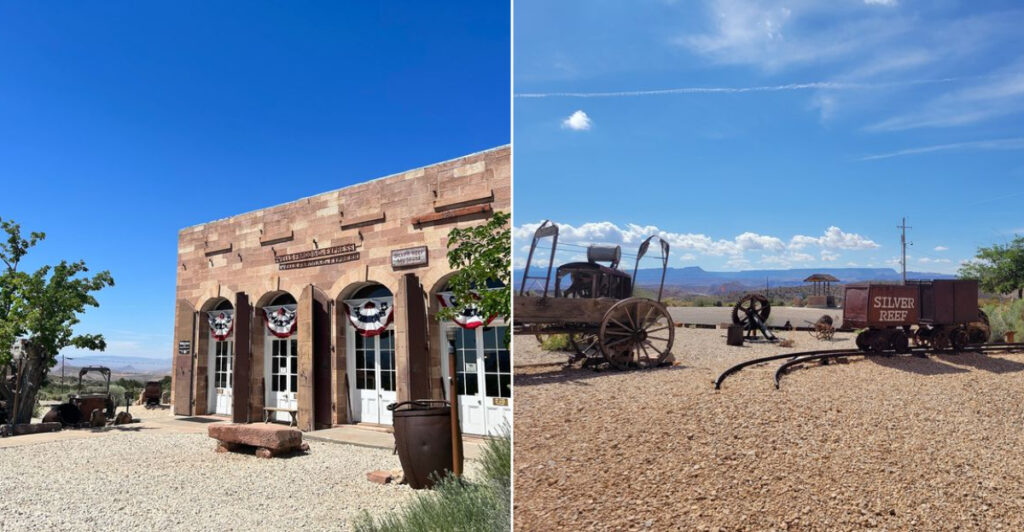
A ghost town becomes far more interesting when the ground beneath it refuses to follow the rules. In the red-rock country of southern Utah, an abandoned mining settlement preserves the remains of a silver boom that once drew prospectors, merchants, and expectations into the desert.
What set this place apart was not just the rush for riches, but the geology: silver was discovered inside sandstone, a phenomenon considered unique on Earth and still fascinating to experts. Today, weathered buildings, foundations, and quiet paths make the story feel close enough to touch.
History fans can trace the town’s rise and fall, while curious travelers get an eerie, cinematic glimpse of frontier life. Bring sturdy shoes, read the displays, and let the silence do some of the storytelling.
Few historic stops in Utah combine mystery, science, and atmosphere so naturally, making every visit feel like uncovering a secret the desert almost kept.
The Geological Oddity That Started It All
This spot breaks every rule geology textbooks ever wrote. Silver simply is not supposed to exist in sandstone, and yet here it is, sitting stubbornly in the red rock of southern Utah as if daring anyone to argue otherwise.
When miners first discovered the deposit in the 1870s, professional geologists flat-out refused to believe the reports.
The discovery triggered a genuine rush of prospectors, entrepreneurs, and adventurers who flooded into what had been empty desert. At its peak, the town supported thousands of residents, which is an astonishing number for such a remote location.
That kind of explosive growth, built on a geological impossibility, gives it a story unlike any other mining town in American history.
Why It Matters: Understanding this quirk of geology is the foundation for appreciating everything else about Silver Reef. It explains why the town existed, why it boomed so dramatically, and ultimately why it collapsed when the silver ran out.
No other place in the United States can claim this particular distinction, making every visit feel like a small scientific pilgrimage wrapped inside a Wild West adventure.
Ruins That Whisper Old Stories
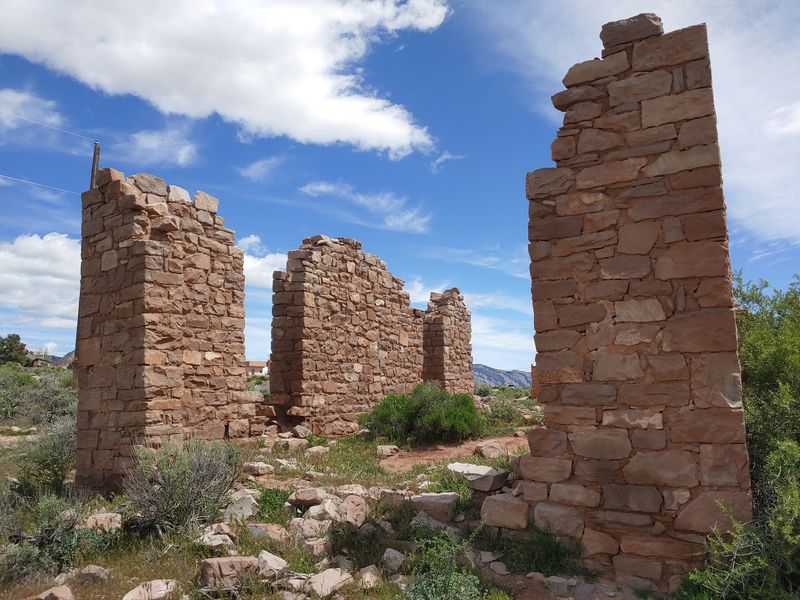
Walking among the ruins at Silver Reef feels less like a tourist activity and more like an accidental time slip. Walls of original rock and adobe still stand after more than a century of desert wind and blazing Utah summers, which is honestly more stubborn than most things built today.
The original jail is one of the most visited structures on the property, and it earns every bit of that attention. Standing inside it, you get a very immediate sense of what law and order looked like in a town built almost entirely on ambition and very little planning.
The restored Wells Fargo bank wagon parked nearby adds another vivid layer to the scene.
Insider Tip: Pick up the free walking guide available at the museum before you head out onto the trail. Each numbered marker on the path corresponds to a specific building or landmark from the town’s active years, turning what might feel like a casual stroll into a genuinely structured historical experience.
Visitors who skip the guide tend to miss the richer context that makes the ruins feel personal rather than simply old.
The Museum Hidden Inside a Historic Bank Building
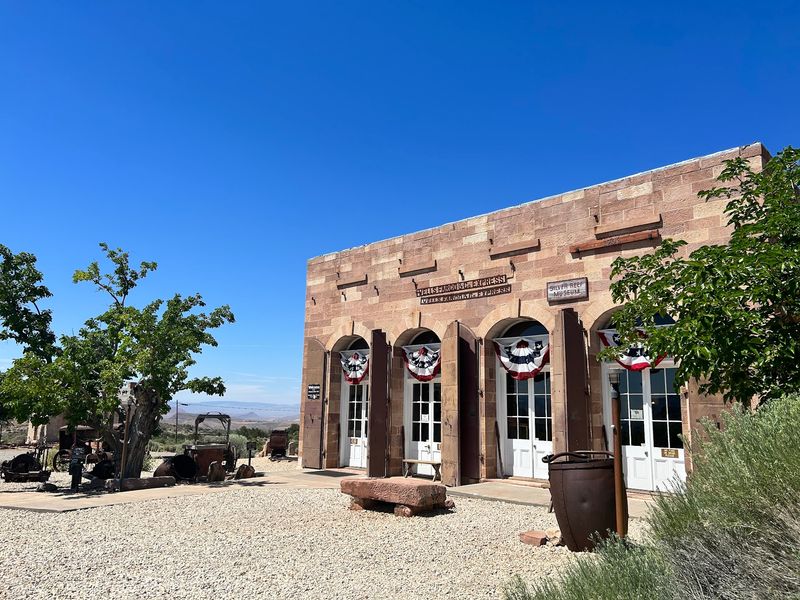
The Silver Reef Museum is housed inside the original Wells Fargo building, which immediately sets the right tone before you even glance at a single exhibit. The building itself is part of the story, and the curators clearly understand that.
Every artifact on display feels deliberately placed rather than randomly collected.
Inside, visitors find an impressive collection of mining equipment, personal belongings left behind by former residents, and detailed historical records that paint a surprisingly intimate portrait of daily life in a booming silver town. There is even an ongoing effort to compile complete biographies of every known resident, which is the kind of obsessive archival ambition that historians dream about.
Best For: Families with curious kids, history enthusiasts, and anyone who wants more than a surface-level ghost town experience. The museum charges a small admission fee, but visitors consistently report that it feels well worth the cost.
Children who complete the visual scavenger hunt inside the museum receive a small rock prize, which has an old-fashioned charm that no app or digital reward can quite replicate. Plan to spend at least an hour inside if the doors are open.
The Pioneer Cemetery and Its Quiet Secrets
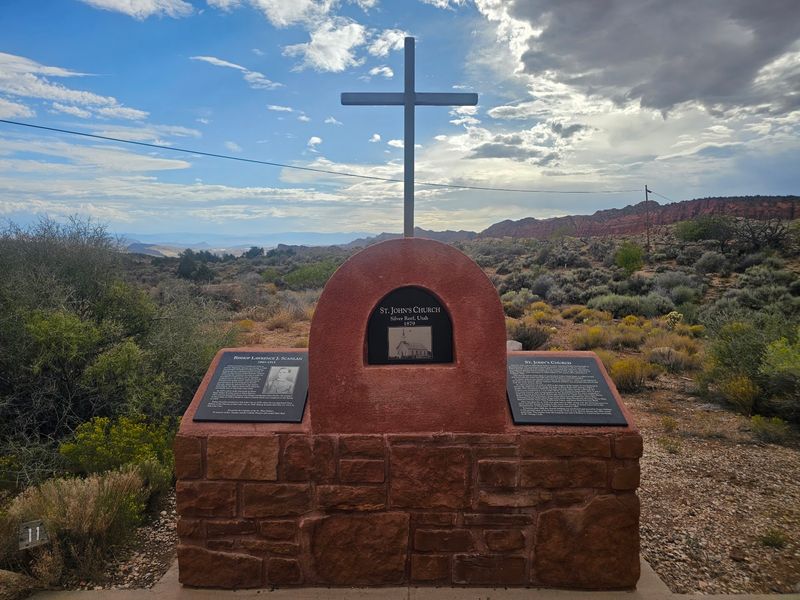
Cemeteries at ghost towns tend to be afterthoughts, tucked off to one side and barely signposted. The pioneer cemetery at Silver Reef is worth seeking out deliberately, even though finding it requires a bit of determination.
Visitors who make the effort consistently say it adds a genuinely moving dimension to the overall experience.
Many of the graves are marked simply with handmade crosses bearing the word “unknown,” which says more about the transient, unpredictable nature of frontier life than any exhibit panel ever could. People arrived here chasing silver, and not all of them made it back out.
The cemetery holds that truth plainly and without drama.
Planning Advice: Ask the museum staff for directions to the cemetery before heading out, because signage can be easy to miss on your first visit. Going in the late afternoon, when the light drops low across the desert and the shadows stretch long between the markers, turns a historical stop into something that stays with you for days.
Bring water, wear comfortable shoes, and allow yourself a few quiet minutes to simply stand and look. Some places reward stillness more than movement.
Eerie Legends and Ghost Town Atmosphere
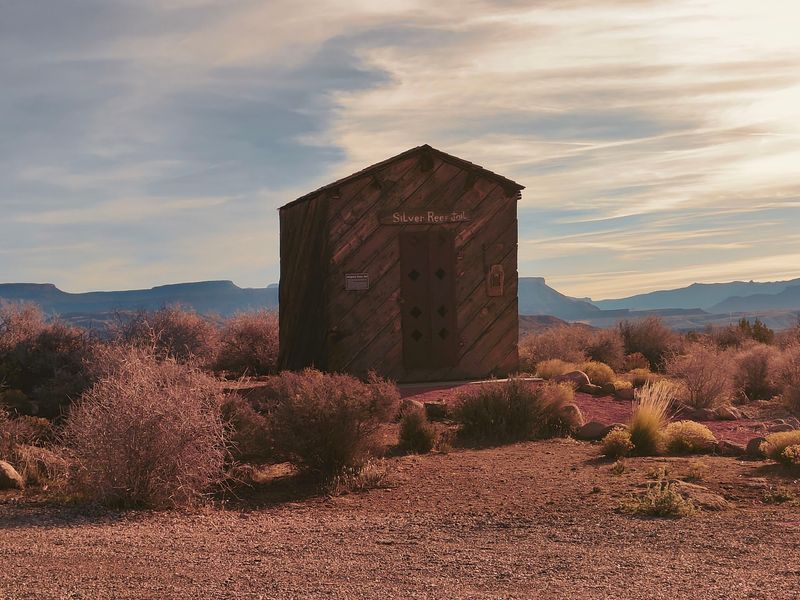
Ghost towns earn their names in different ways. Some are just abandoned buildings.
Silver Reef earns the title through atmosphere, the kind that settles over you slowly as you walk the trail and realize how completely a thriving community can simply vanish from a landscape.
Local legends have accumulated around the site over the decades, as they tend to do in places where fortune was won and lost dramatically. Stories of unexplained sounds near the old mill, shadows near the ruins at dusk, and the general feeling of being watched have made Silver Reef a favorite stop for those who enjoy their history with a slight chill attached.
Whether you believe any of it or not, the setting does its part convincingly.
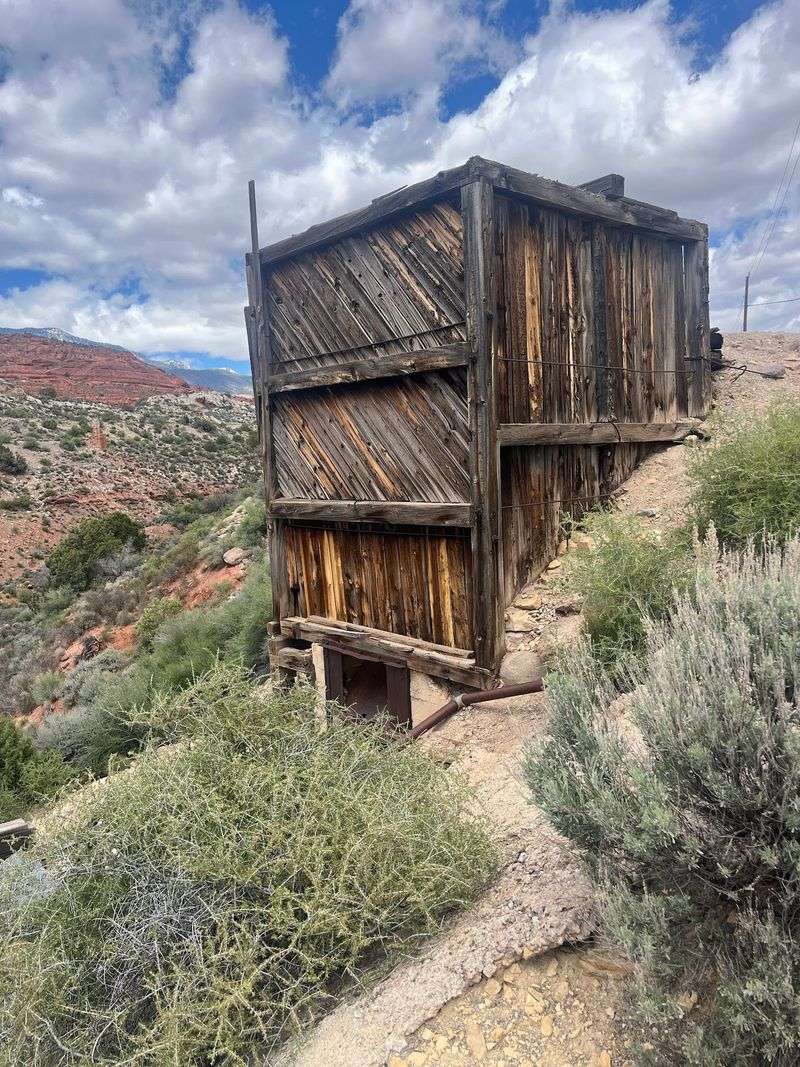
Quick Tip: Visit on a weekday morning when foot traffic is light. The combination of desert silence, crumbling walls, and the distant view into the gorge where the old mill ruins sit creates an atmosphere that a crowded weekend visit simply cannot replicate.
The gorge view alone, with broken machinery visible below, is the kind of sight that makes you stop mid-sentence and just stare. That is the moment Silver Reef stops feeling like a history lesson and starts feeling genuinely haunted.
A Self-Guided Trail Worth Every Step
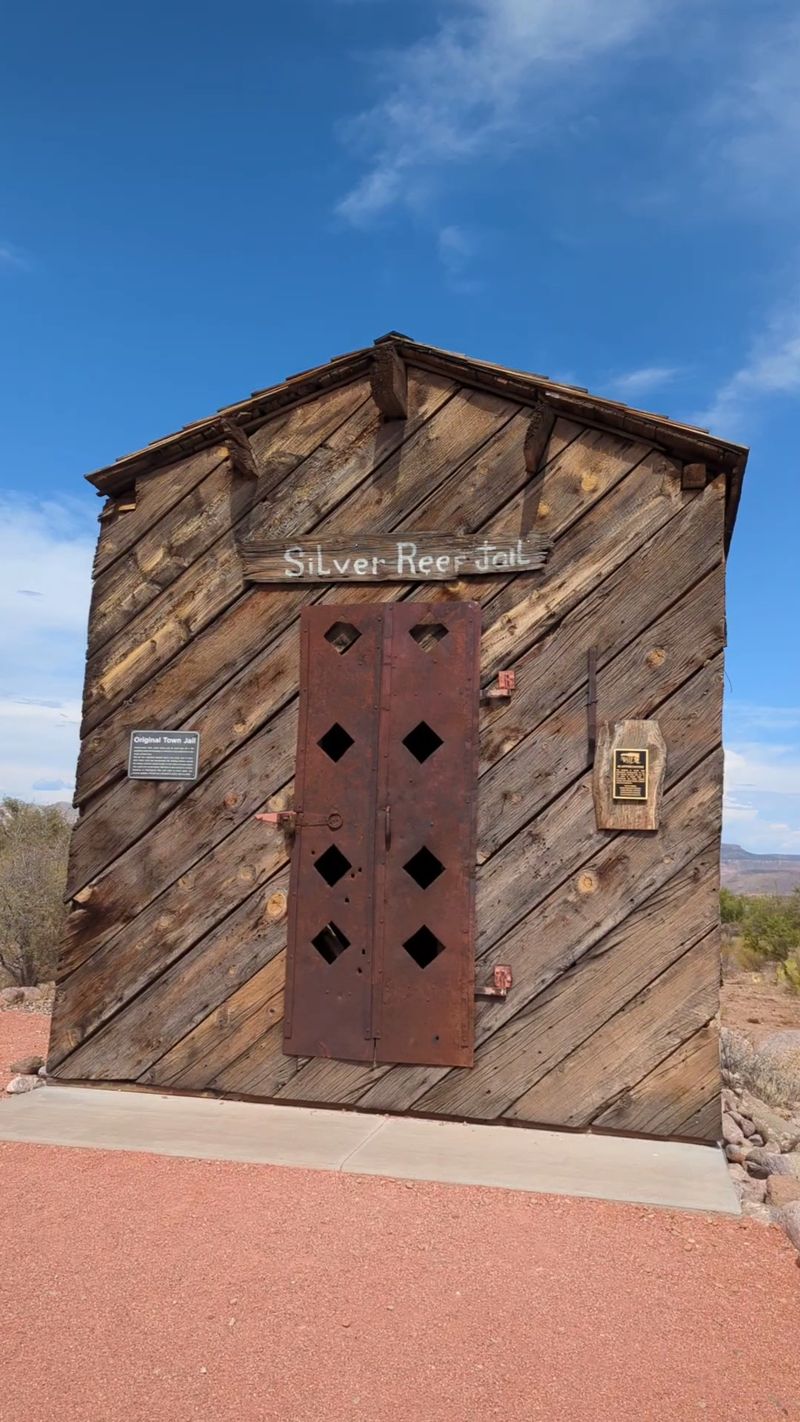
The self-guided walking trail at Silver Reef is one of those rare outdoor experiences that manages to feel both relaxed and genuinely informative at the same time. The path is mostly gravel, well-maintained, and clearly marked with numbered posts that correspond to the free guide available at the museum entrance.
The trail covers the key landmarks of the old town, including the jail, the remnants of residential structures, and viewpoints overlooking the gorge where the old mill once operated. It is not a strenuous hike by any measure, but it rewards slow walkers who stop to read the markers and look closely at the remaining walls rather than rushing through.
Common Mistakes to Avoid: Do not skip the free walking guide, and do stay on the marked path. Signage throughout the property clearly indicates no-trespassing zones, and those boundaries exist to protect both visitors and the fragile historic structures.
Visitors who wander off-trail tend to miss the most interesting markers anyway, so staying on the path is genuinely the better strategy, not just the polite one. Allow at least 45 minutes for the full trail loop, more if you plan to stop and read everything carefully.
Why Silver Reef Deserves a Spot on Your Utah Itinerary
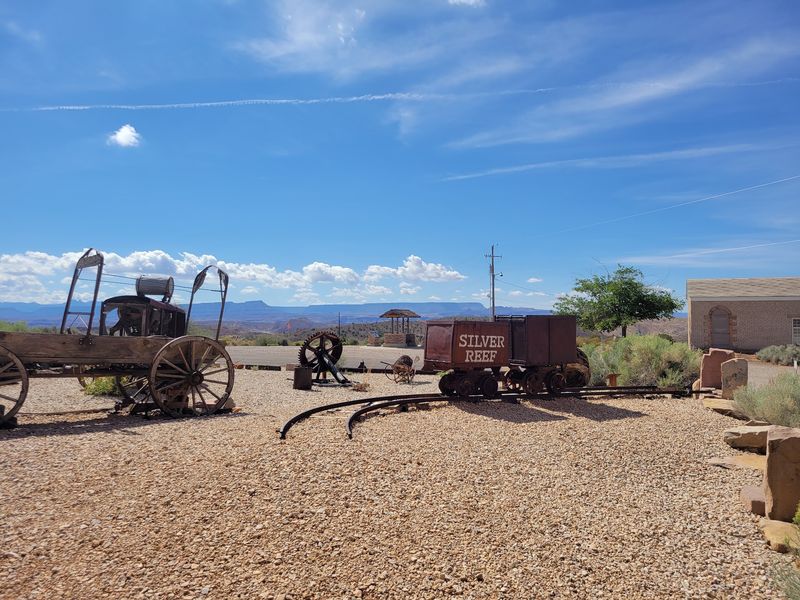
Southern Utah is not exactly short on remarkable places to visit. Zion National Park sits close enough that Silver Reef often gets treated as a quick detour rather than a destination in its own right.
That habit undersells it considerably.
Silver Reef offers something the national parks around it cannot: the specific, intimate story of ordinary people who built an entire world in the desert and then watched it disappear when the silver ran out. The museum, the ruins, the cemetery, and the trail together create a layered experience that works for families, couples, solo road-trippers, and anyone who appreciates history told through objects and landscapes rather than just textbooks.
Quick Verdict: If you are driving through the St. George area or stopping near Zion, Silver Reef at 1903 Wells Fargo Rd in Leeds is the kind of side trip that ends up being the thing people talk about most when they get home. Open Friday, Monday, and Thursday from 10 AM to 3 PM, with outdoor areas accessible beyond those hours.
Low cost, high reward, and genuinely one of a kind. That combination is rarer than silver in sandstone, and almost as surprising when you find it.