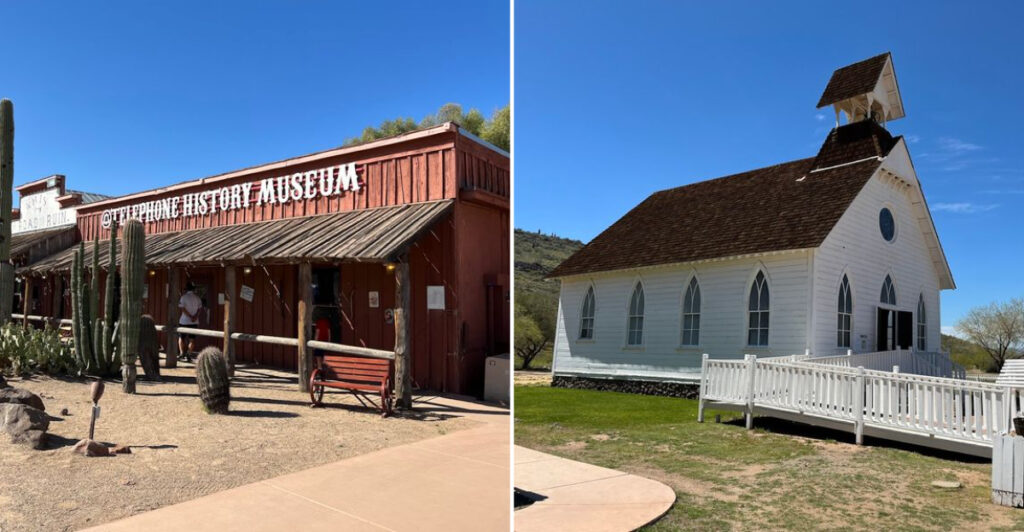
Arizona is the perfect place for a family trip. If you want to feel the spirit of the past, this is a place you should definitely visit.
This museum doesn’t just show history, it lets you walk right into it.
From the moment you arrive, it feels like you’ve stepped into another time entirely. Every corner tells a story, every detail pulls you deeper into a world that once was.
It’s the place where kids and adults alike slow down, not because they have to, but because they want to take it all in.
What makes it special is how real everything feels. Nothing is distant or behind glass in a way that feels cold.
Instead, history is right there in front of you, waiting to be experienced together as a family.
Step Back In Time Among Authentic Western Buildings
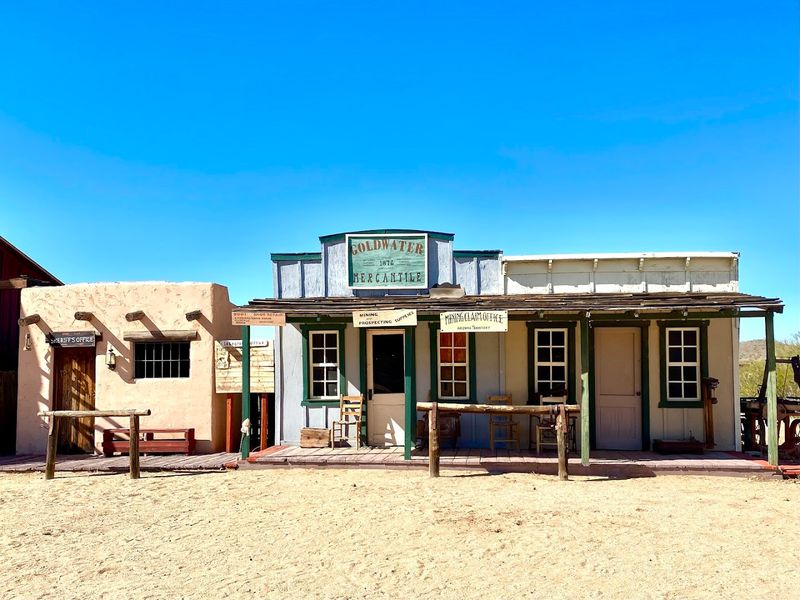
Entering the Pioneer Living History Museum feels less like visiting a museum. It feels more like accidentally wandering onto a movie set, except everything here is real.
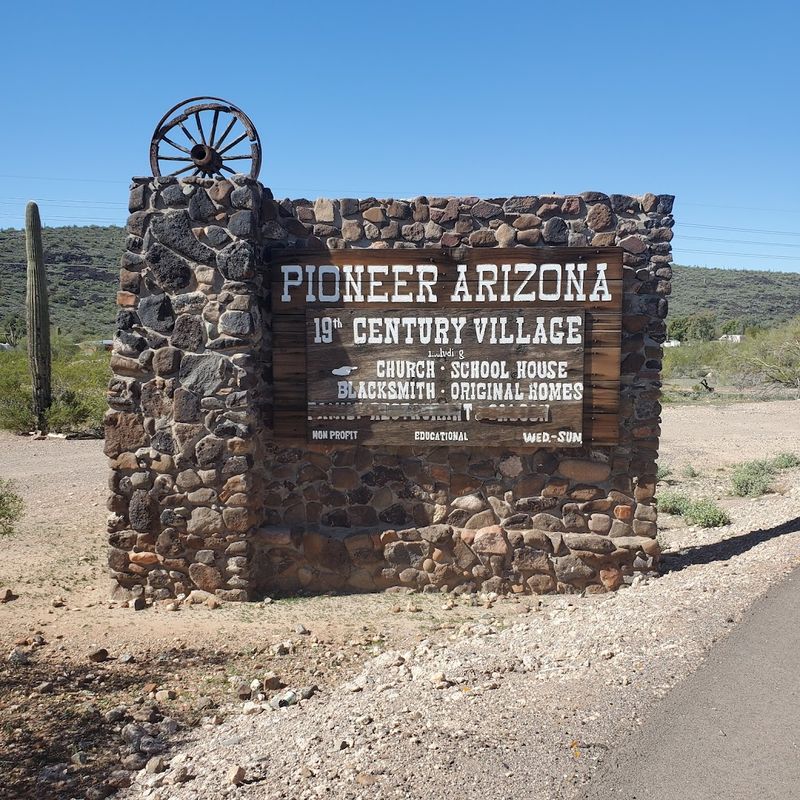
The museum sits on 90 acres at 3901 W Pioneer Rd, Phoenix, AZ 85086. It is surrounded by the rugged black rock foothills of Northern Phoenix.
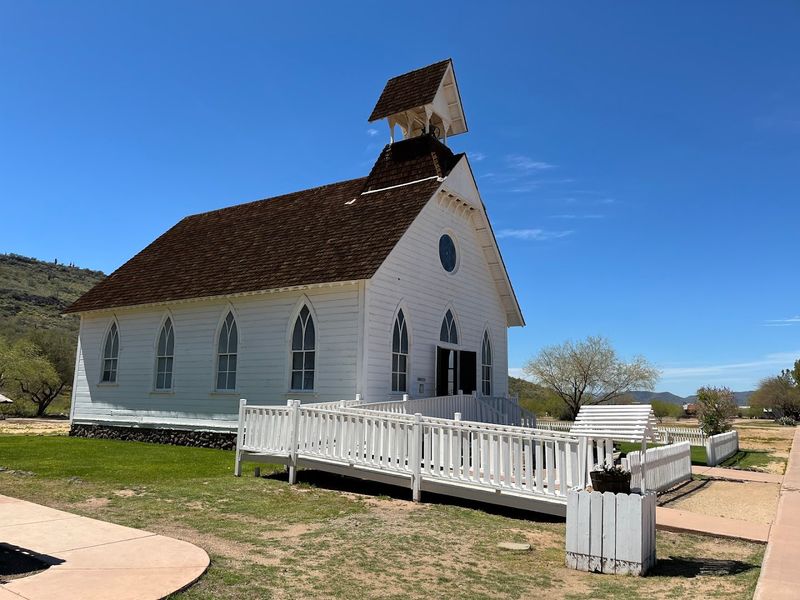
Over 20 historic 19th-century buildings are spread across the grounds. Each one has a story worth stopping for.
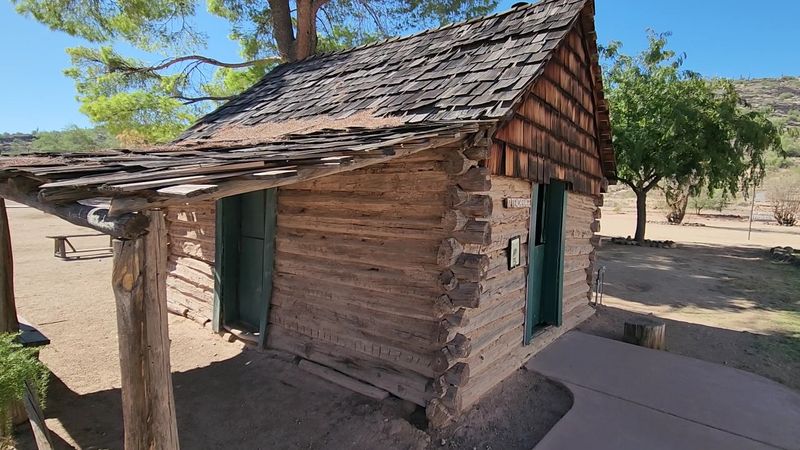
One of the most jaw-dropping spots is the log cabin where Arizona’s first senator actually grew up. You can walk right up to it.
There is also the “Flying V” home of John Tewksbury. He became a central figure in the violent and legendary Pleasant Valley War.
The buildings are not reproductions thrown together for atmosphere. Many are original structures that were relocated and carefully preserved.
The layout makes you feel like you are moving through an actual frontier town. Dirt paths connect the buildings.
The desert air smells like warm earth. The surrounding hills remind you where you are.
It is a completely different world from modern Phoenix. Yet it is just a short drive away.
The Stories Behind Cowboys, Outlaws, And Settlers
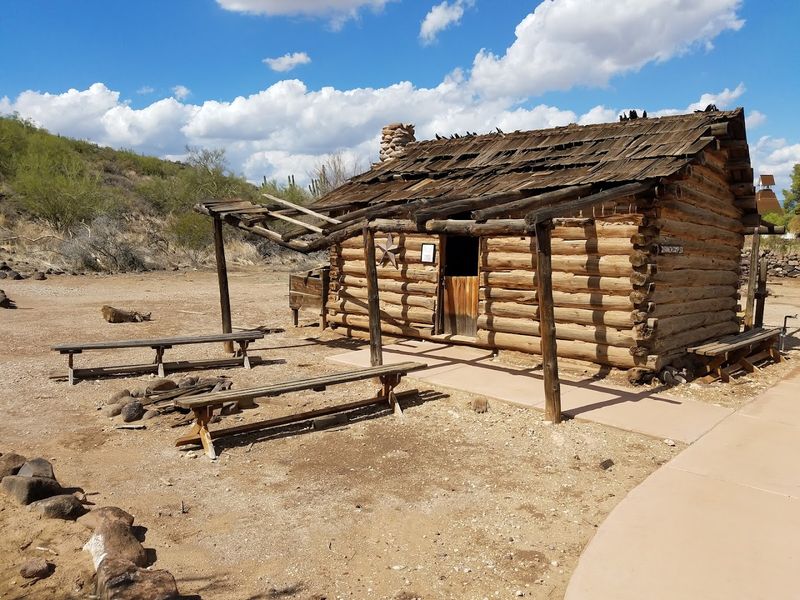
History books make the Wild West sound distant. The Pioneer Living History Museum makes it feel uncomfortably close.
The stories connected to the buildings here involve real people who made hard choices in even harder circumstances. John Tewksbury did not survive the Pleasant Valley War, one of Arizona’s bloodiest range conflicts.
His home still stands on these grounds. The museum covers Territorial Arizona from 1863 to 1912.
This was a period packed with political drama, land disputes, and frontier survival. Costumed interpreters bring these characters to life without turning them into caricatures.
They talk about settlers who built lives from nothing. They also tell stories of outlaws who became legends for the wrong reasons.
It was genuinely fascinating. These were not romantic adventures.
They were calculated decisions made by people trying to stay alive. The museum respects that reality.
It does not sugarcoat the hardships. It does not glamorize the violence.
What you get instead is an honest, grounded look at who actually built this part of Arizona and what it cost them.
Interactive Exhibits That Bring History To Life
Forget standing behind a velvet rope and reading a small placard. At the Pioneer Living History Museum, you are encouraged to get involved.
The interactive exhibits here are designed so that you actually engage with the history. You do not just observe it from a polite distance.
That makes a huge difference, especially if you are someone who zones out in traditional museum settings. The craft shops are a highlight.
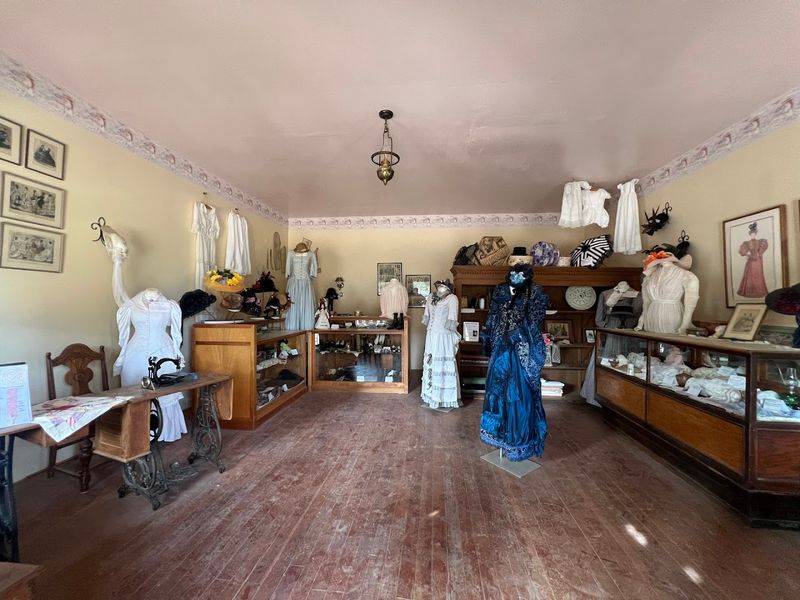
Reproduction Blacksmith, Carpenter, and Dress Shops let you watch period-accurate demonstrations. Depending on the day, you can try your hand at some of the techniques yourself.
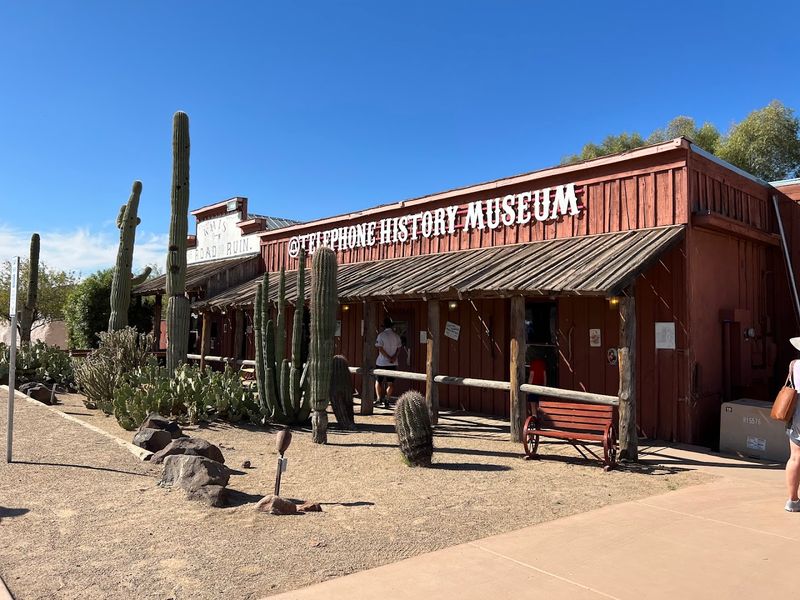
Seeing a blacksmith shape hot metal is one of those experiences that sticks with you. The Telephone History Museum, which is included with your admission, is a surprisingly entertaining detour.
It traces the evolution of telephone technology in a way that makes you realize how recently most of what we take for granted was actually invented. Kids find it hilarious that people once shared a party line with their neighbors.
Adults find it a little too relatable. The whole museum is built around the idea that history should be felt.
It should not just be memorized. The museum pulls that off remarkably well.
Daily Demonstrations That Show Frontier Skills
Every single day at the Pioneer Living History Museum, someone is out there doing something. Most people have never seen it outside of a YouTube video.
The daily demonstrations cover the skills that kept frontier families alive. Watching them in person is completely different from reading about them.
There is a physicality to frontier life that you cannot fully appreciate until you see it up close. Blacksmithing is one of the most popular demonstrations, and for good reason.
The heat, the noise, and the precision required to shape metal with a hammer and an anvil all add up to a performance that holds your attention. Other demonstrations include open-fire cooking, candle making, and pioneer carpentry techniques.
What I appreciate most is that the demonstrators do not just go through the motions. They explain the why behind each skill.
They connect it to the daily realities of Territorial Arizona life. One demonstrator explained that a blacksmith in a frontier town was essentially the most important person in the community.
Everything from farm tools to wagon parts depended on them. That context turns a demonstration into a lesson you actually remember long after you leave the grounds.
Unique Artifacts Preserved From The Old West
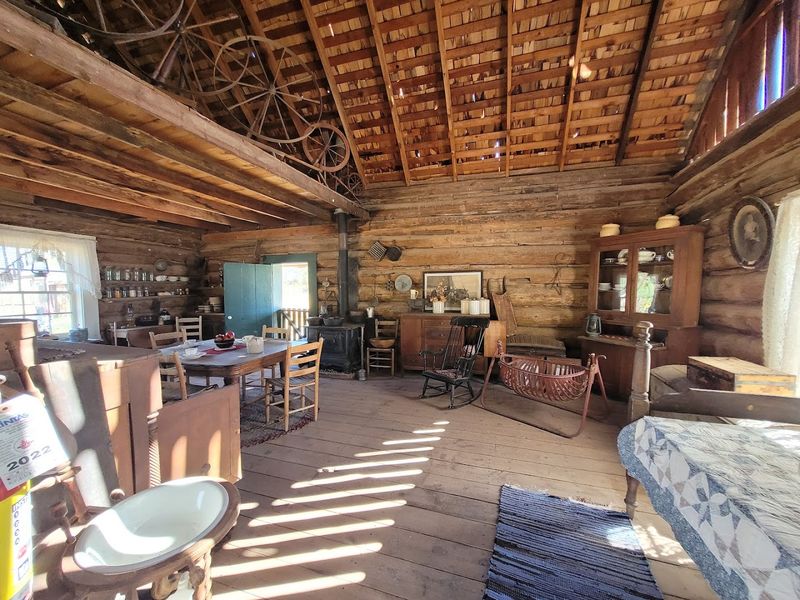
One of the quieter pleasures of visiting the Pioneer Living History Museum is spending time with the artifacts. These are not mass-produced replicas.
Many items on display are original pieces from Territorial Arizona. They are preserved and presented in context so you understand exactly what you are looking at and why it mattered.
Walking through the craft shops, you encounter antiques ranging from hand-forged tools to period clothing. You also see household items that settlers used every single day.
Seeing a worn wooden spoon or a hand-stitched quilt in the context of the home it came from changes how you see it. It gives you a completely different appreciation for frontier life.
No textbook could offer the same perspective. The collection also includes items tied to specific historical events and figures connected to the region.
That personal connection to real people makes the artifacts feel less like objects and more like evidence. I spent probably twenty minutes staring at a collection of early farming equipment.
I imagined what it would take to work that land in the Arizona heat without any modern machinery. The answer, obviously, is an enormous amount of determination.
The museum honors that determination by keeping these objects visible, accessible, and properly explained. Every visitor who walks through gets to understand their meaning and history.
Family-Friendly Activities That Entertain And Educate
Bringing kids to a history museum can sometimes feel like a gamble. The Pioneer Living History Museum is genuinely built for families.
The open-air layout means kids are not trapped indoors trying to be quiet. They can move around, explore different buildings, and follow their curiosity without anyone shushing them.
That alone makes a big difference. Admission is affordable by any standard.
Adults pay twelve dollars. Children between five and sixteen pay ten dollars.
Kids under five get in free. Seniors and veterans also pay eight dollars.
For a family spending a morning together, that is a solid deal considering how much ground there is to cover. The interactive nature of the exhibits means children are not passive observers.
They ask questions, touch things where allowed, and engage directly with the interpreters. The museum manages to make education feel like an adventure rather than an obligation.
That is not easy to pull off. Most families I saw were still exploring well past the time they planned to leave.
Special Events That Capture The Spirit Of The Era
The regular museum experience is already impressive. When the Pioneer Living History Museum hosts a special event, the energy shifts to something else entirely.
These events are designed to pull you even deeper into the Territorial Arizona era. They use music, performance, and community participation to recreate moments from the past in a way that feels surprisingly vivid.
Past events have included living history weekends where additional interpreters take over the entire grounds. The museum becomes a fully functioning frontier town for a day.
Period-accurate music fills the air. Characters interact with visitors in character, and the whole atmosphere becomes genuinely immersive.
It is the thing you plan your weekend around. Seasonal events tied to holidays and historical milestones are also part of the calendar.
They give repeat visitors a reason to come back and experience the museum through a different lens. If you are planning a visit, checking the event schedule ahead of time is worth the extra minute.
Showing up on a special event day without knowing it is like finding twenty dollars in an old jacket pocket. You were already having a fine day.
Then suddenly everything got better. The museum keeps its event programming varied and consistently well-executed.
Why Visitors Keep Returning To This Arizona Treasure
People do not keep coming back to places that disappoint them. The Pioneer Living History Museum has built a reputation as one of those rare spots where each visit feels different from the last.
The rotating demonstrations, seasonal events, and evolving exhibits mean there is always something new to notice. This is true even if you have walked the grounds before.
The setting itself plays a big role. Ninety acres of desert foothills with historic buildings scattered across the landscape is genuinely beautiful.
Photographs struggle to capture it. The morning light hitting the old wooden structures while the hills rise behind them is worth the drive on its own.
The museum is open year-round with adjusted hours by season. From June through October, it opens at 7 a.m. and runs until 11 a.m. to beat the Arizona heat.
From October through May, hours extend from 9 a.m. to 4 p.m. That flexibility makes it easy to fit into almost any travel schedule.
Visitors come out of curiosity. They come back because the place earned it.
There is a quiet pride in knowing about a spot like this. Sharing it with someone who has never been feels like giving them a genuinely good gift.