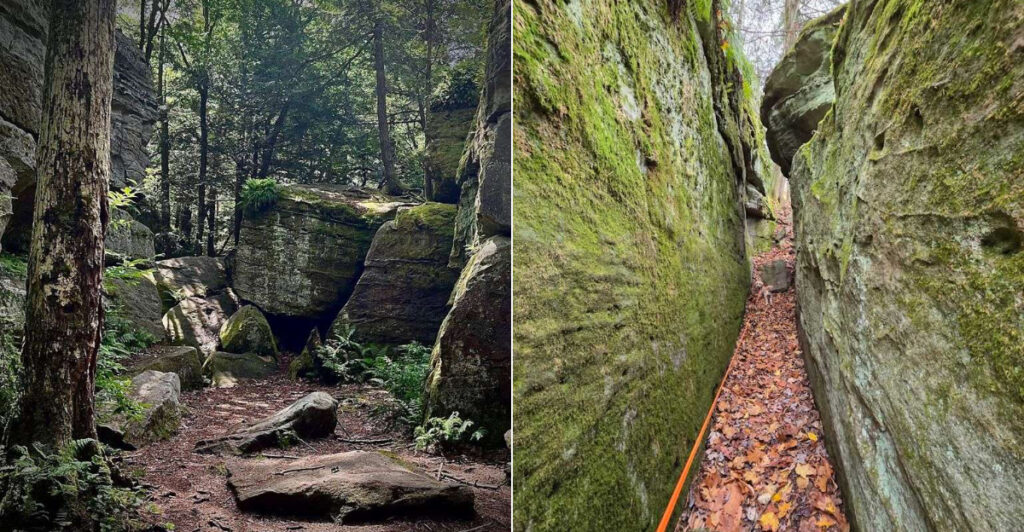
Some outdoor spots make you stop the second you arrive. The scale feels bigger.
And the whole place gives off that rare sense that you have found something truly special. The air feels quieter.
Pennsylvania has one of those adventures waiting among towering rock formations that look almost unreal in person. Massive stone walls rise from the forest floor.
Narrow passageways twist between giant boulders. Small openings, hidden corners, and rugged paths make every step feel a little more exciting.
It is the kind of place that brings out your curiosity right away. This is not a polished stop with everything mapped out for you. That is part of the fun.
It feels wild, dramatic, and far more memorable than a typical day outside. You can wander, look up, squeeze through rocky corridors, and enjoy the feeling of exploring something shaped long before modern life ever arrived.
The Ancient Story Written In Stone
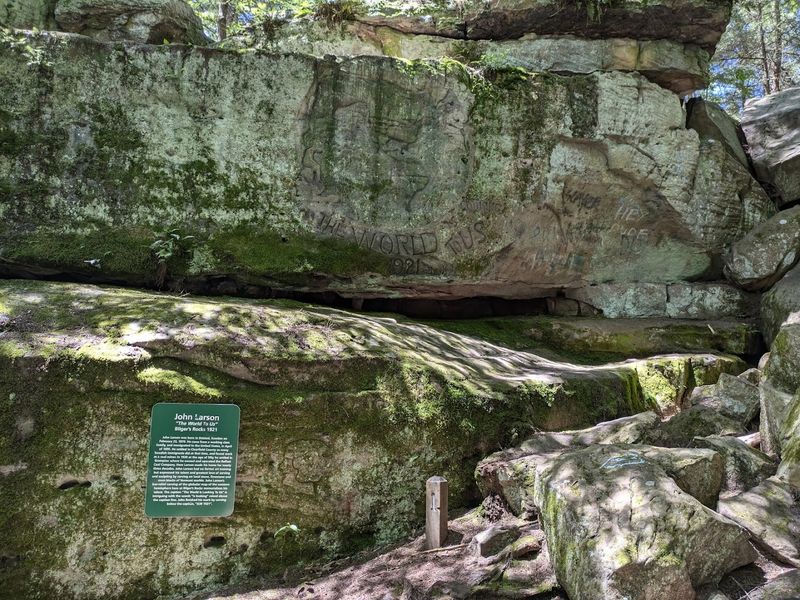
Long before Pennsylvania had roads, towns, or even a name, these rocks were already here.
The sandstone at Bilger’s Rocks formed about 320 million years ago, when shallow seas and river deltas covered this part of the country.
Over millions of years, layers of sediment compressed into rock, and then glacial activity and erosion shaped them into the dramatic formations you see today.
The result is a collection of boulders and outcroppings that feel almost architectural, like nature decided to build its own city.
You can actually see the layered history in the rock faces themselves.
Each horizontal band tells a different chapter of Earth’s story, written in sandstone and quartz.
Geologists love this place, but you do not need a science degree to appreciate it.
Have you ever stood next to something 320 million years old and felt the weight of that number?
Standing at the base of these formations does exactly that. The rocks are not going anywhere, and they have seen more history than any textbook could cover.
That kind of perspective is rare, and it is completely free to experience right here in central Pennsylvania.
A Labyrinth You Actually Walk Through
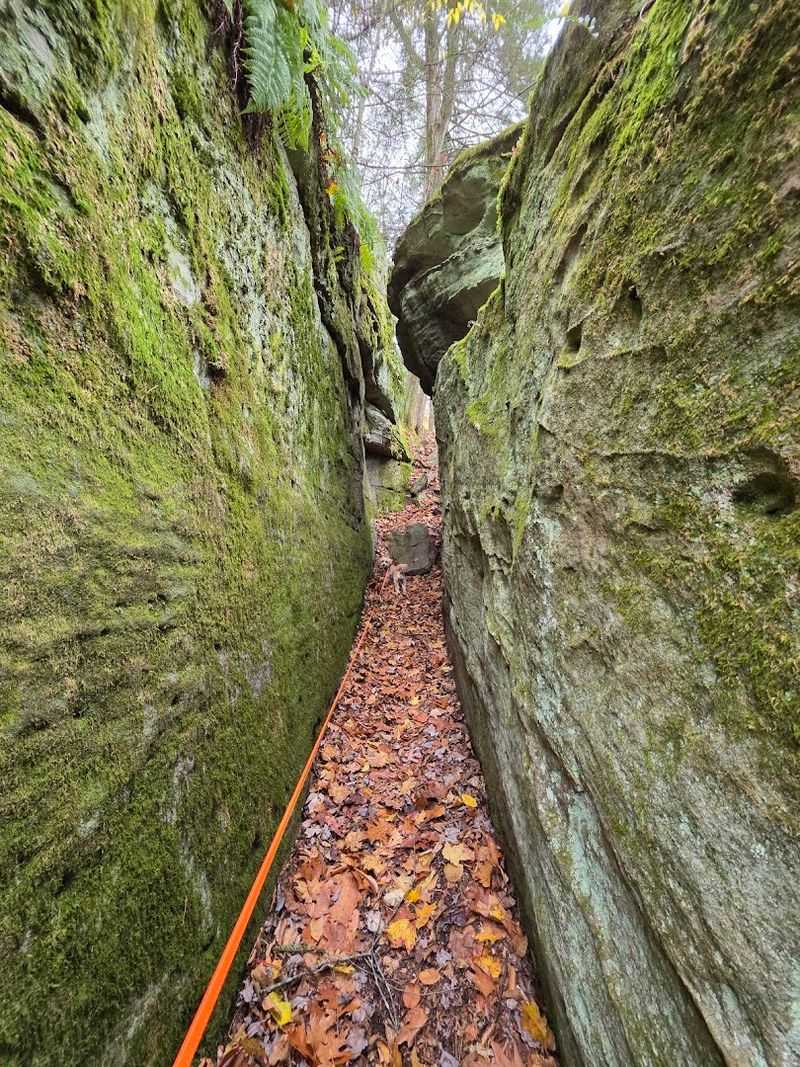
Most labyrinths exist only in stories. This one is real, and you can walk through it.
The boulders at Bilger’s Rocks form real passageways, some wide and some narrow enough to squeeze through sideways.
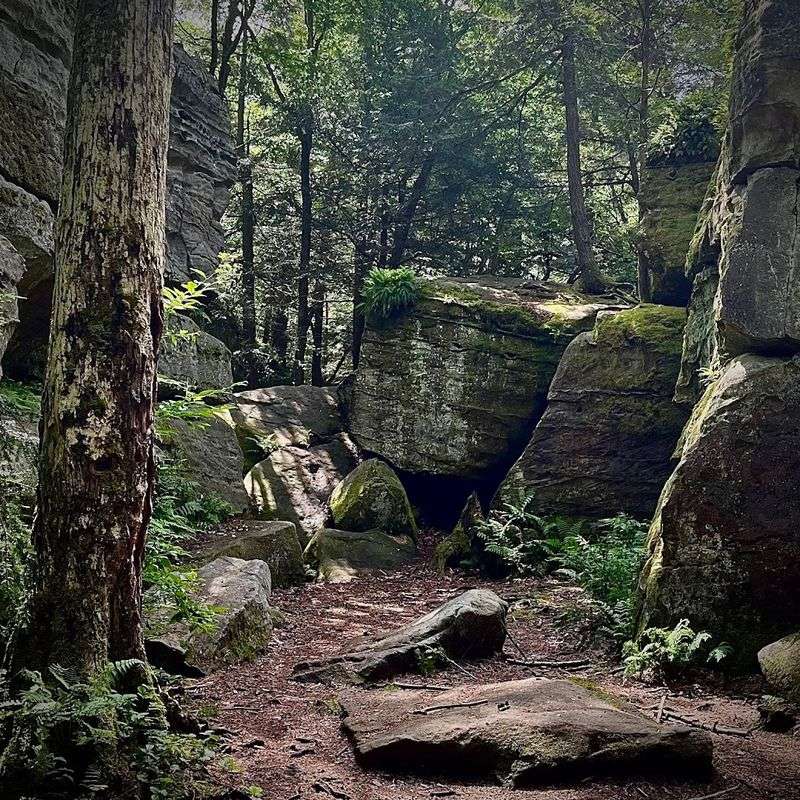
The network of paths leads you into shaded corridors, and occasionally into small cave-like spaces where the light barely reaches.
Every turn reveals something different, and it is surprisingly easy to lose your sense of direction in the best possible way.
Kids absolutely love this. There is something deeply satisfying about navigating a real rocky maze with your own two feet, no map required.
Adults tend to slow down and look more carefully, noticing the patterns in the stone and the way light filters through the cracks above.
Most visitors spend one to two hours wandering through, but you could easily stretch that into a half-day if you like to linger.
The site covers several acres, and there is always a new angle or a passage you missed on the first pass.
Comfortable shoes with good grip are strongly recommended because the rocks can be uneven and slippery when wet.
What The Forest Does To The Atmosphere Here
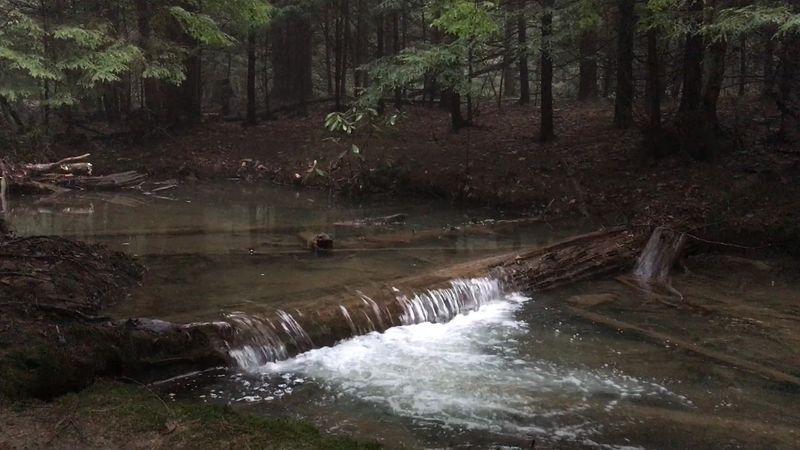
The forest around Bilger’s Rocks is part of the experience in a way that is hard to describe until you are standing inside it.
Tall hardwood trees shade the boulders, and in summer the light moves across the rocks in soft green patterns.
Moss covers much of the lower rock faces, adding deep greens and soft textures to what would otherwise be stark grey stone.
Ferns grow in the cracks between boulders, and in spring, wildflowers push up through the leaf litter on the forest floor.
The whole setting feels genuinely alive. Sound behaves differently here too.
The boulders absorb and redirect noise, so the forest feels quieter than it actually is.
You might hear a woodpecker somewhere above you, or the distant sound of a creek, but the general atmosphere is peaceful in a way that feels earned.
There are no parking lot sounds, no distant road noise, just trees, rocks, and whatever wildlife happens to be passing through on the same day you are.
Rock Climbing And Scrambling For Every Skill Level
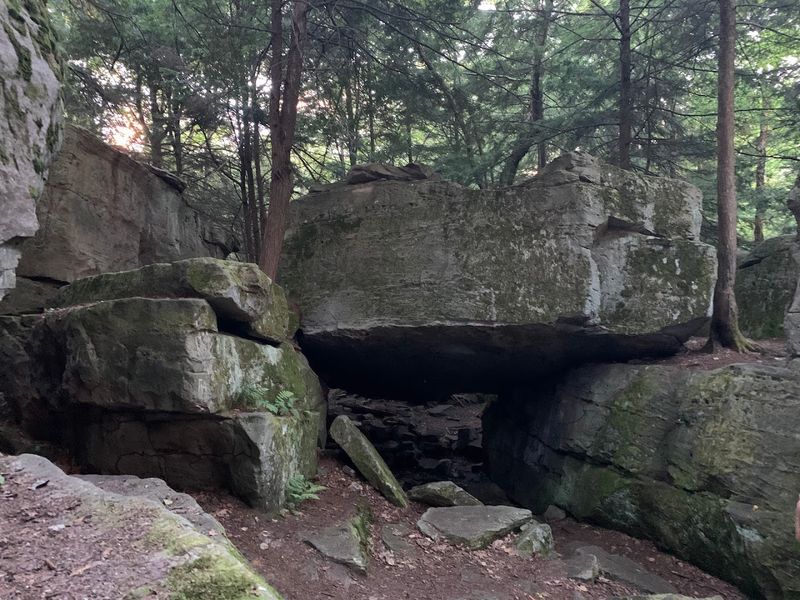
You do not need ropes or a harness to have a serious climbing adventure here.
Bouldering enthusiasts have been coming to this site for years, drawn by the variety of rock faces and the fact that the formations are close together.
You can move from one challenge to the next without much walking in between. The sandstone provides decent grip, though it can become slick after rain, so timing your visit on a dry day makes a real difference.
Younger visitors tend to find their own routes instinctively, scrambling up whatever looks climbable and figuring out the descent as they go.
Parents should stay close during this part, not because the site is managed as a formal climbing area, but because the rocks are tall and the drops are real.
You can explore the entire lower network of passages without climbing anything significant, and the views from ground level are just as impressive.
But if you do feel the pull of a flat-topped boulder with a great view, going up is always worth the effort.
The perspective from the top of the tallest formations is genuinely spectacular.
Photography Opportunities Around Every Corner
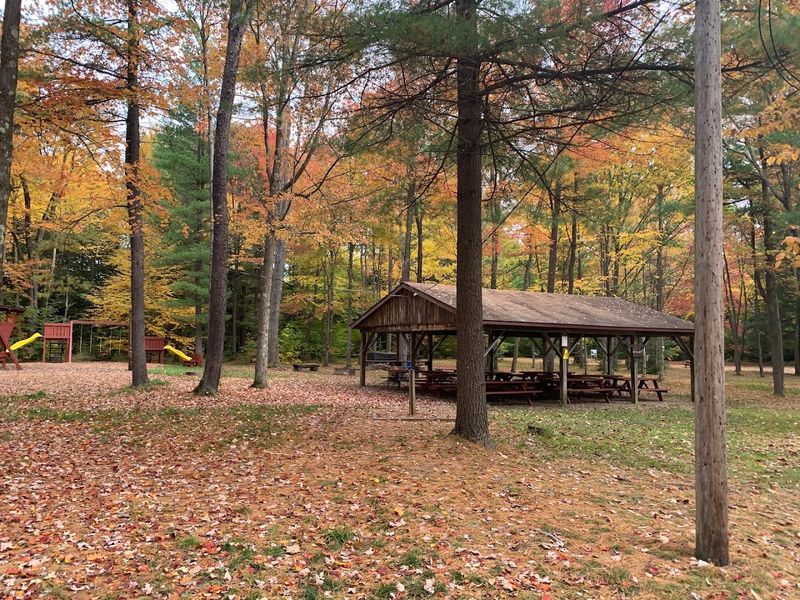
Photographers who visit Bilger’s Rocks tend to come back.
Early morning visits offer soft, directional light that rakes across the rock faces and highlights every crack and contour.
Late afternoon in autumn, when the leaves are turning, produces a color palette that feels almost too vivid to be real.
Overcast days are actually excellent for close-up shots of moss and rock texture, since the soft light eliminates harsh shadows.
The narrow passages create natural frames for portraits.
The height of the tallest boulders gives you a dramatic vertical element that is rare in Pennsylvania landscapes.
Wide-angle lenses work beautifully here, as do macro lenses for detail shots of lichen, quartz crystals, and fern fronds growing from rock crevices.
Some photographers spend entire mornings here and still feel they have not captured everything.
If you are serious about landscape or nature photography in Pennsylvania, this site belongs on your list without question.
The History Behind The Name
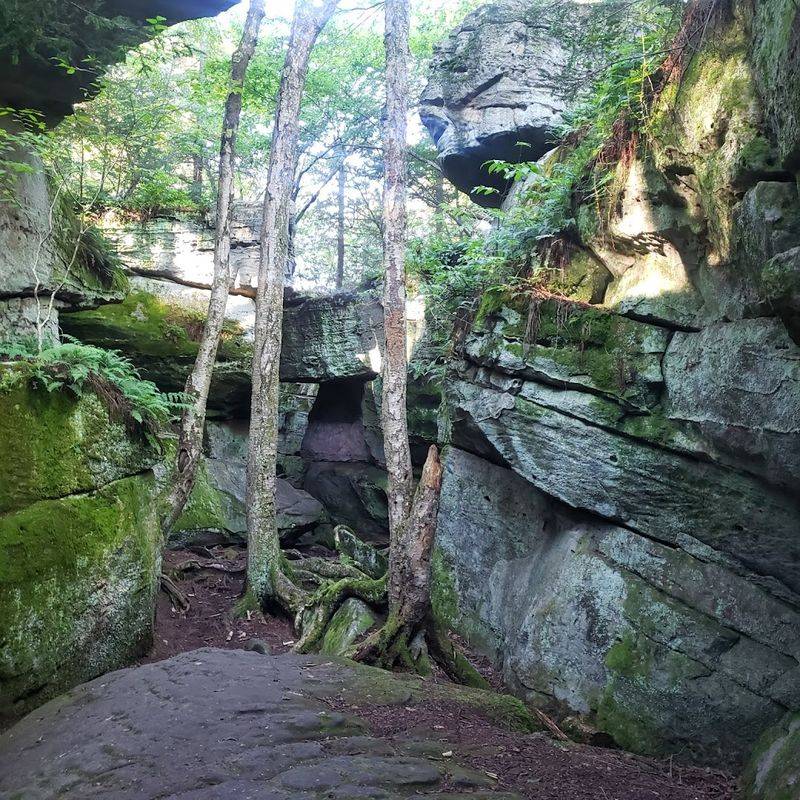
The name Bilger’s Rocks comes from the Bilger family, who owned the land in the 19th century.
The site has been a local landmark in Clearfield County for generations.
Local families have been bringing their children here for picnics and exploration since the late 1800s.
For much of its history, the site was privately maintained and open to the public through community goodwill rather than formal management.
That tradition of open access has continued, and today the site remains freely accessible to visitors, which is part of what makes it feel so genuine and unhurried.
The surrounding area of Grampian and Clearfield County has a rich history tied to the timber industry, which once dominated this part of Pennsylvania.
The forests you walk through today are second and third-growth woods that have reclaimed land cleared by loggers in the 19th century.
Nature has done a thorough job of reclaiming its space.
Did you know that local schools in Clearfield County have used Bilger’s Rocks as an outdoor classroom for decades?
The site has introduced countless Pennsylvania kids to geology, ecology, and the simple joy of exploring wild spaces.
Best Times To Visit
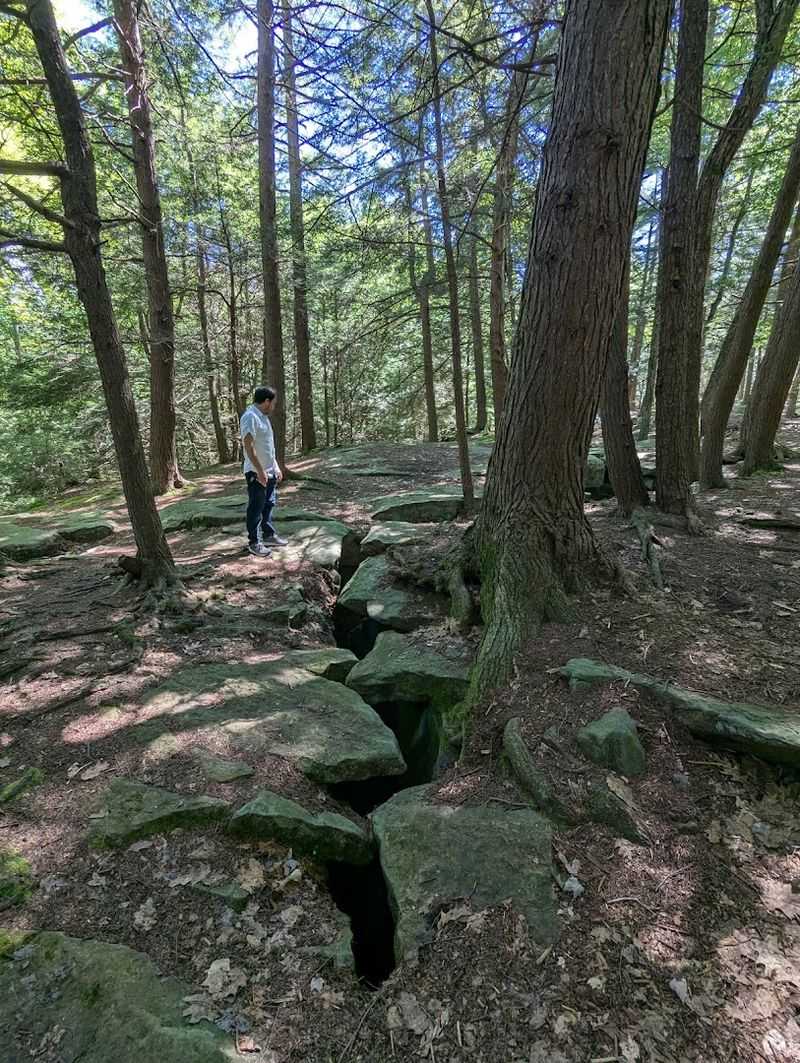
Every season brings a completely different version of Bilger’s Rocks, and each one has something genuinely worth making the trip for.
Spring arrivals are greeted by wildflowers, fresh green growth pushing through last year’s leaves, and waterfalls of light through newly budding trees.
Summer is the most popular time to visit, and for good reason.
The full canopy keeps the boulder field shaded and noticeably cooler than open areas nearby, making it a welcome escape on hot days.
Families with kids tend to come most often in July and August, and the site handles the foot traffic well because the formations naturally spread people out.
Autumn is arguably the most stunning season here.
The hardwood trees surrounding the rocks turn gold, orange, and red, and the contrast against the grey sandstone is striking.
Hiking boots are especially important in fall because wet leaves on uneven rock can be slippery.
Winter visits are possible and surprisingly rewarding for those willing to dress for the cold.
Snow settles into the crevices between boulders and creates a completely different visual texture, and the bare trees open up sightlines that summer obscures entirely.
Practical Tips For Planning Your Visit
Getting to Bilger’s Rocks is straightforward once you know where you are going. The address is 1921 Bilgers Rocks Rd, Grampian, PA 16838, and most GPS apps will get you there reliably.
The parking area is small and unpaved, so arrive early on weekends if you want a spot near the trailhead.
There is no admission fee, which makes this one of the most accessible natural attractions in central Pennsylvania.
The site does not have formal facilities like restrooms or a visitor center, so plan accordingly and bring everything you need with you.
Pack water, snacks, and a small first aid kit.
Footwear matters more here than at most hiking destinations. Trail runners or hiking boots with good ankle support are ideal.
Sandals and flat-soled shoes make the rock scrambling genuinely uncomfortable and increase the chance of a twisted ankle on uneven surfaces.
The rocks can be challenging for some dogs depending on size and agility, so know your animal before encouraging them to follow you up a steep face.