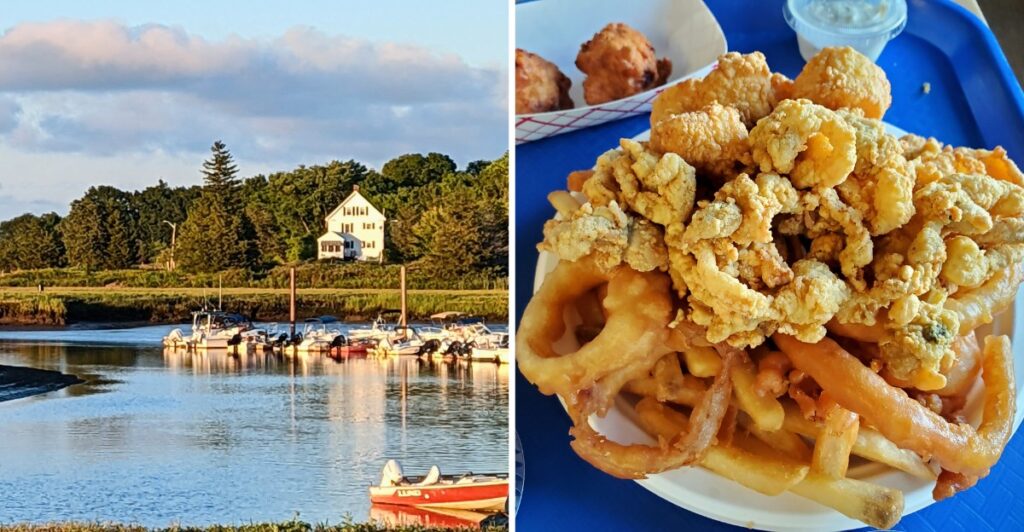
Here is a pretty good argument for experimenting with the fryer.
In 1916, freshly shucked clams went into hot oil at a Massachusetts roadside stand.
People liked what came out.
A lot.
More than a century later, the same family is still serving the dish that turned one kitchen idea into a New England tradition.
The recipe does not need much fuss either. A light coating goes on, the clams hit the fryer, and the crunch handles the rest.
There is plenty of seafood to distract you once you see the menu.
Still, I would give the fried clams their moment first.
They have had 100-plus years to practice making a good first impression.
A Family Seafood Business Began In 1914
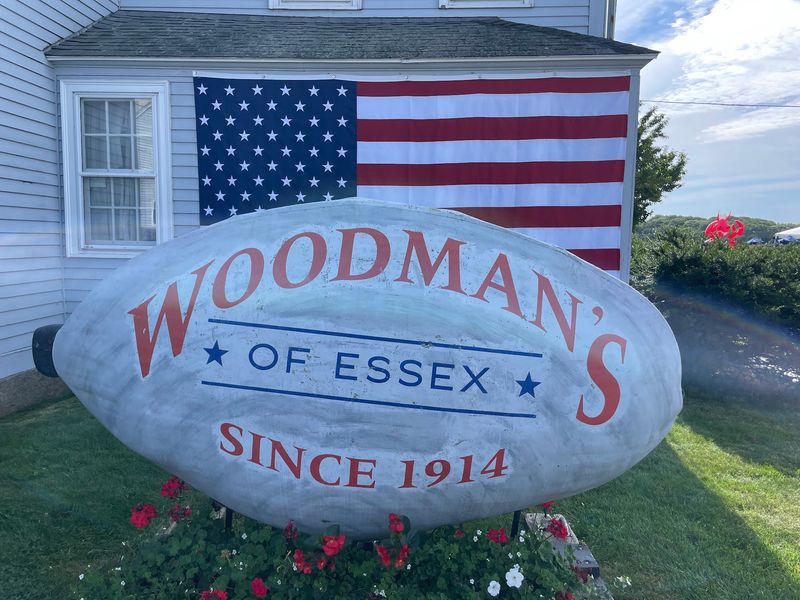
Essex sits along the Massachusetts North Shore, where tidal waterways and salt marshes have long shaped the local landscape. The town’s connection to clamming provides a fitting setting for Woodman’s of Essex.
Lawrence “Chubby” Woodman and his wife, Bessie, opened their roadside stand in 1914. Their early business included fresh clams, homemade potato chips, and small grocery items rather than the extensive seafood menu offered today.
The couple operated along the Essex causeway, where the surrounding tidal waters were closely connected to the local shellfish trade.
Two years after opening, they introduced the fried clam preparation associated with the restaurant’s history.
The business has remained in the Woodman family through successive generations, developing from a small concession stand into a restaurant with seafood dining and catering operations.
Despite those changes, fried clams remain central to the menu.
A visit begins with a simple choice: order the traditional whole-belly clams or explore the other seafood available. Either way, the restaurant’s history is closely tied to the preparation developed by its founders.
The July Day That Changed The Family Menu
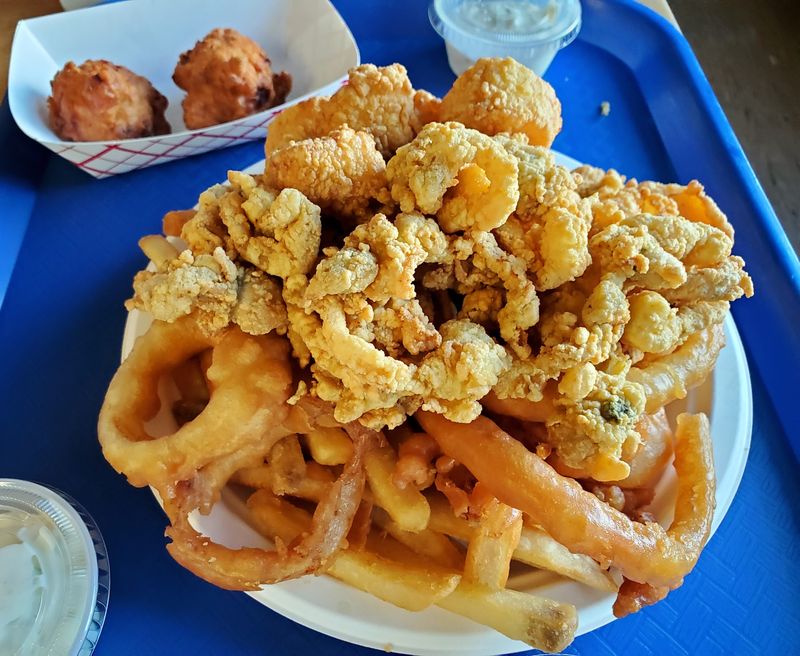
July 3, 1916, holds a particular place in the Woodman family story. That was the day Lawrence and Bessie began experimenting with fried clams at their roadside stand.
Clams were already part of the business, but they were sold fresh rather than prepared as the fried seafood dish that later became associated with Essex.
The couple also made homemade potato chips, giving them experience with frying food in hot fat.
Their first attempts involved removing clams from their shells, coating them, and frying them in a kettle.
The following day coincided with Essex’s Fourth of July celebrations, providing an opportunity to serve the preparation beyond their initial experiment.
The family preserved the July 3 date on the reverse of Lawrence and Bessie’s marriage certificate, alongside records of important family events.
That handwritten notation became part of the restaurant’s history.
Fried clams later became a familiar New England seafood dish, with the Woodman family’s 1916 story remaining part of the tradition.
At Woodman’s, the connection to the 1916 recipe remains visible in the seafood served today.
How A Fisherman’s Suggestion Became A Signature Dish
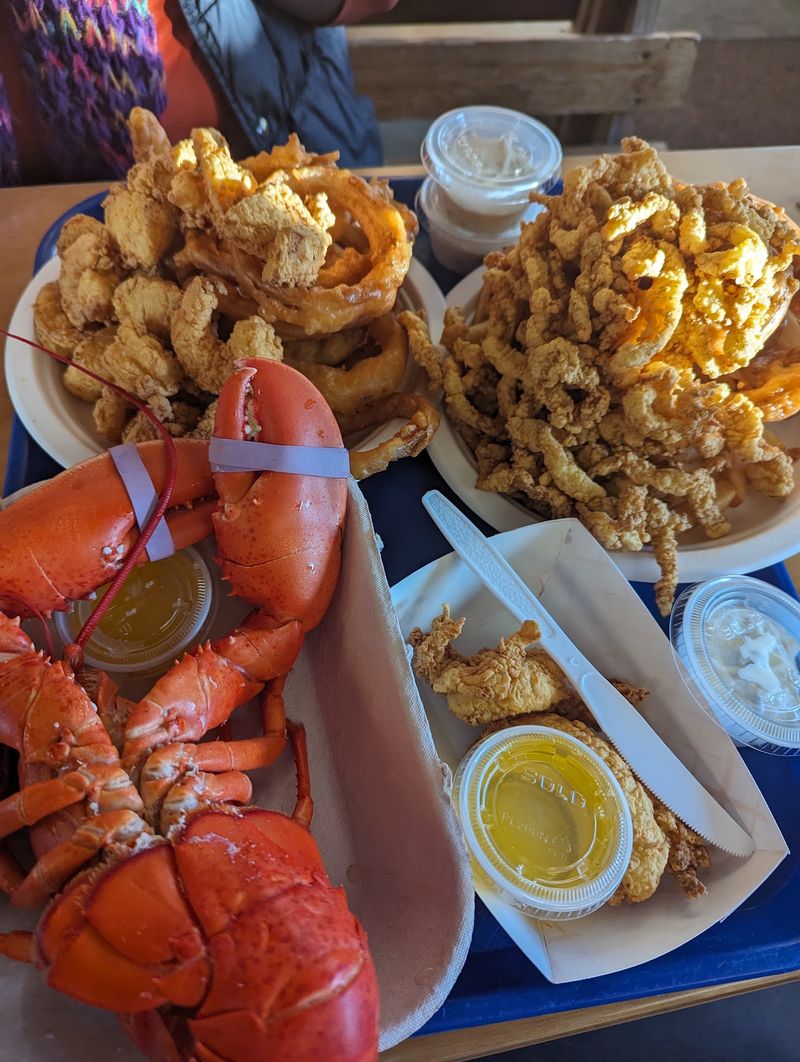
The fried clam story begins with a casual suggestion from a local fisherman named Tarr. While visiting the roadside stand, he noticed fresh clams near the homemade potato chips.
He suggested frying the clams in much the same way as the potatoes.
Lawrence, known as Chubby, and Bessie considered the idea after the conversation. They already had frying equipment and access to fresh shellfish, so experimenting with another preparation required relatively little additional equipment.
The couple shucked clams and tried different coatings before cooking them in hot fat.
Bessie played an important part in that early experiment, helping develop the preparation that became the business’s signature.
The first batches used simple ingredients rather than a complicated recipe.
At the time, lard was used for frying. The clams were coated and cooked in a kettle, producing a different result from steamed or boiled shellfish.
The family continued serving the dish after its introduction during the holiday celebrations.
More than a century later, the restaurant still connects its fried clams to the experiment carried out by Lawrence and Bessie.
That history adds another dimension to a straightforward seafood lunch, particularly when the traditional preparation is your first order.
Corn Flour, Hot Oil, And A Simple Coating
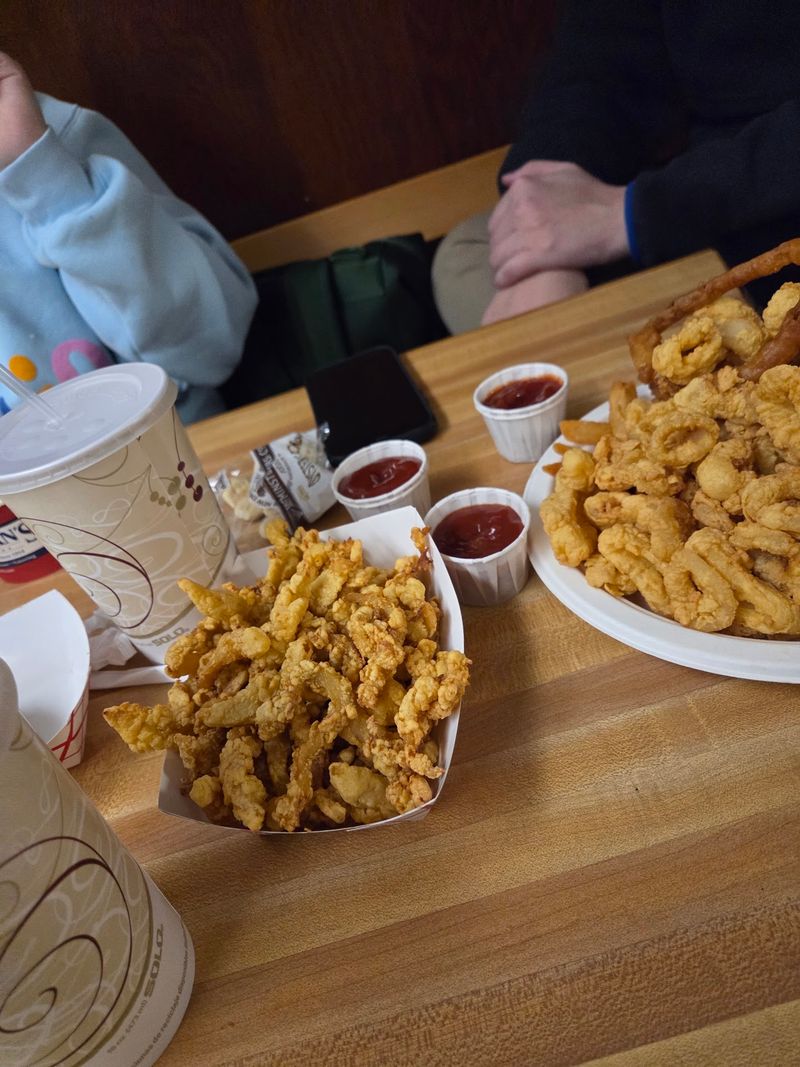
Listen near the pickup counter and you may hear the sound of freshly fried seafood being prepared. At Woodman’s, the traditional clam coating relies on corn flour rather than a heavily seasoned breading mixture.
The clams are shucked, dipped in evaporated milk, coated with corn flour, and fried.
The kitchen still uses lard for frying, with a simple corn-flour coating around the clams.
Whole-belly clams include the soft belly as well as the firmer portions of the clam. That gives them a different texture from strips cut from larger clams.
A whole-belly order combines the fried coating with a more varied seafood texture, while clam strips provide a narrower, chewier piece.
Which should you choose? Start with whole-belly clams if you’re interested in the restaurant’s traditional specialty. Clam strips offer another option for anyone who prefers that format.
Corn flour is naturally free of gluten, and the restaurant prepares a number of dishes using gluten-free ingredients. Individual dietary requirements still call for checking preparation details before ordering.
A little salt or tartar sauce can accompany the clams, but neither needs to take over the plate.
A North Shore Restaurant Still Run By The Woodman Family
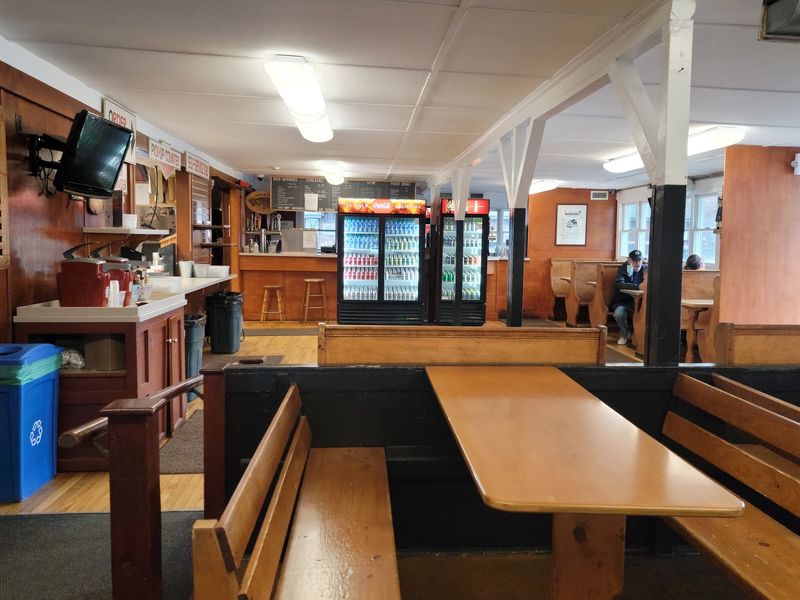
More than a century after the roadside stand opened, the Woodman family remains involved in the business. The operation now includes the Essex restaurant, seafood catering, and events beyond the original counter.
The restaurant’s everyday service remains informal. Customers order at the counter and collect their food rather than following a traditional table-service meal.
Woodman’s also operates catering services that include New England clambakes and other event menus. Its food truck brings selected seafood dishes to events away from Essex.
The original restaurant, however, remains the place associated with the family’s fried clam history.
Inside, the menu and service format focus on seafood rather than elaborate dining-room presentation.
Planning lunch with several people? Decide whether everyone wants an individual plate or whether sharing a combination makes more sense.
A fried clam order can be paired with chowder or another seafood choice without turning the meal into a formal occasion.
The restaurant’s continued family ownership connects its present-day operations with the small stand Lawrence and Bessie established along the causeway.
Whole-Belly Clams, Lobster Rolls, And Seafood Plates
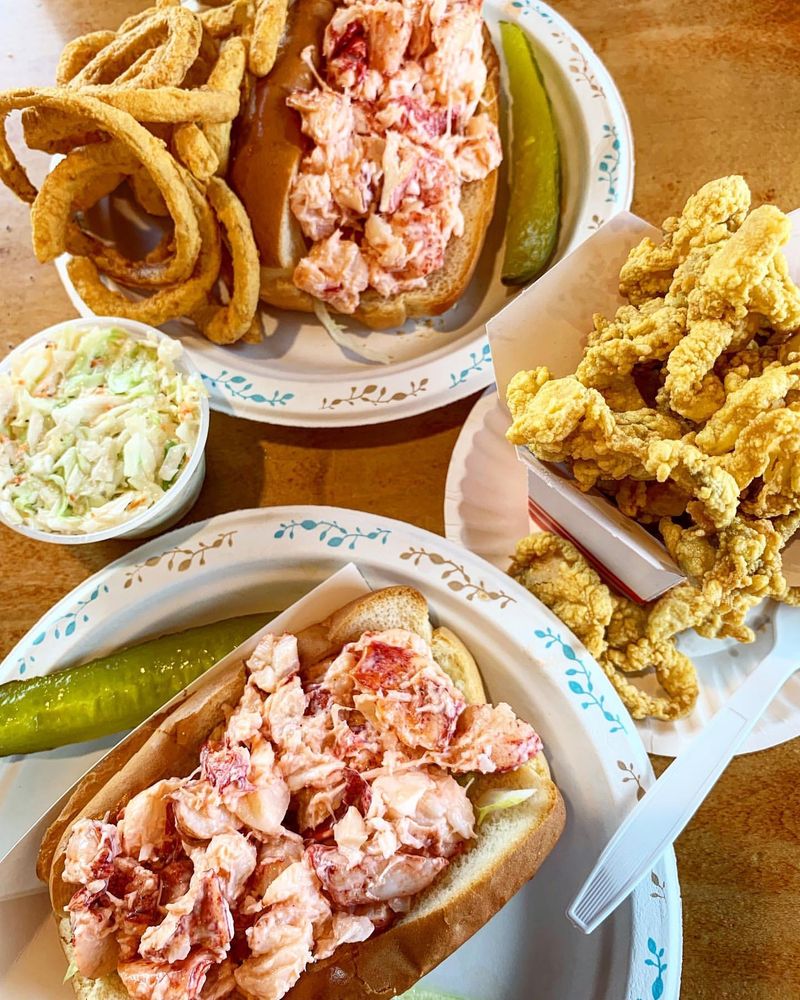
Hungry enough to share? The menu offers several ways to build a meal around the restaurant’s traditional fried seafood.
“Chubby’s Original” Fried Clams remain a signature choice. Whole-belly clams contain the soft belly and firmer portions of the shellfish, providing different textures beneath the coating.
Clam strips offer an alternative for anyone who prefers a more uniform bite.
Beyond clams, the fried seafood selection includes sea scallops, shrimp, calamari, and fish. Combination plates bring different seafood choices together in one meal.
Fried dinner plates are served with French fries and onion rings, while smaller seafood boats come with fries.
That difference matters when deciding how much food to order.
A smaller appetite may call for a clam boat. For a more substantial meal, consider a dinner plate or one of the seafood combinations.
The menu also includes lobster rolls, fish sandwiches, and steamed clams.
New England clam chowder provides another option. The restaurant uses a traditional preparation without flour-based thickeners, giving the chowder a lighter consistency than heavily thickened versions.
“Nana Bessie’s” Clamcakes and “Aunt Alice’s” Coleslaw add further family-named dishes.
Not everyone at the table needs seafood. Chicken tenders, burgers, and other choices provide alternatives.
Leave room for an additional side only if your main order doesn’t already include fries or onion rings.
Marshside Seating And A Few Things To Know Before Visiting
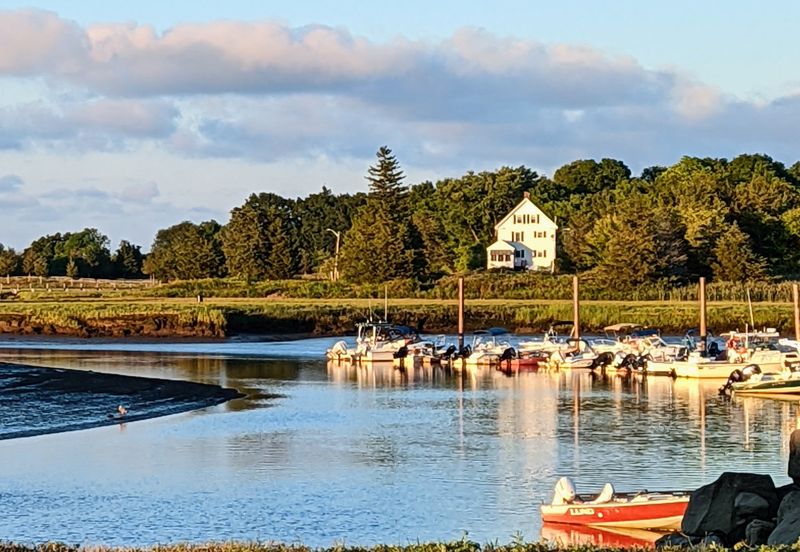
The Essex causeway places Woodman’s near tidal marshland, with coastal grasses and waterways surrounding the area. The restaurant offers an informal setting for a seafood lunch rather than a conventional multi-course dining experience.
Indoor dining areas provide seating throughout the year, while outdoor seating allows diners to enjoy the surroundings when conditions permit.
The restaurant also has an upstairs Top Deck event space overlooking the salt marshes. That area operates seasonally and is used for organized events rather than functioning as guaranteed everyday restaurant seating.
For a regular visit, plan around the main dining areas.
Woodman’s of Essex is located at 119 Main Street, Essex, MA 01929.
Current fall restaurant hours are Sunday through Thursday from 11 a.m. to 8 p.m. and Friday and Saturday from 11 a.m. to 9 p.m.
Orders are placed in person, whether you’re dining at the restaurant or taking food away. Telephone food orders are not accepted.
The seasonal ice cream and gift shop behind the restaurant is currently closed for the season, so don’t make dessert plans around its availability during an autumn visit.
Seafood prices can vary, particularly for market-priced selections. Check the available choices before deciding between a smaller portion, dinner plate, or lobster order.
For a straightforward introduction, begin with the whole-belly fried clams and their crisp corn-flour coating. Add chowder or another seafood dish if your appetite allows, then enjoy lunch with the Essex salt marshes just beyond the restaurant.