
You know how Christmas decorations somehow multiply every year? An Illinois museum started with one tree in 1942. Now it has more than 50, plus a giant in the middle that’s four stories tall.
At some point, putting the decorations away must have become a major operation.
Community volunteers decorate the trees to celebrate holiday traditions from different cultures. So each one has a story beyond who got stuck untangling the lights.
And these aren’t the kind of decorations you can squeeze into a few boxes after New Year’s. A four-story tree probably requires an actual plan.
The display has come a long way from that first tree in 1942.
There’s something funny about a tradition that started so modestly and eventually needed an entire museum rotunda. Imagine suggesting they go back to just one tree next year.
A Four-Story Tree Runs The Show In The Rotunda
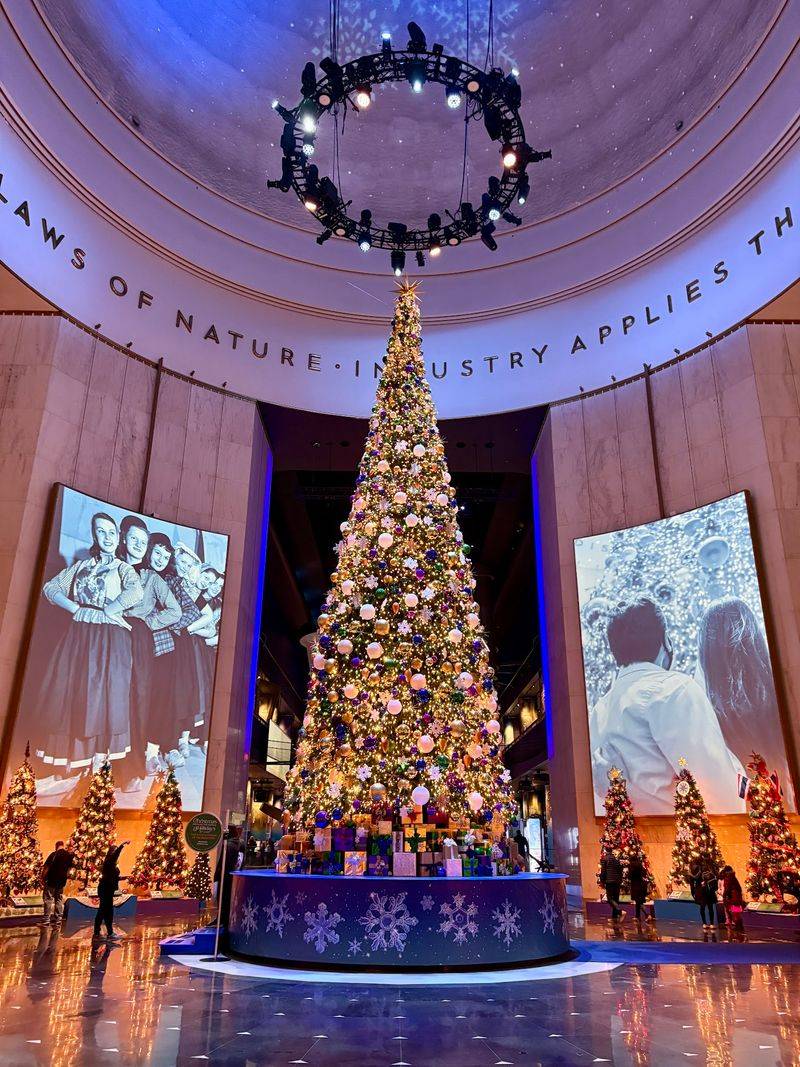
Most living rooms tap out at a seven-foot tree. The Griffin Museum of Science and Industry decided four stories sounded more reasonable.
The Grand Tree takes center stage in the museum’s Rotunda during the holiday exhibit. It anchors the yearly Christmas Around the World and Holidays of Light celebration.
You’ll spot it the moment you reach the Rotunda. Good luck walking past without tilting your head way back.
The giant tree sets the tone for everything around it. It acts like the host of a global party, with dozens of smaller trees as guests.
The current run of the exhibit goes from November 7, 2026, through January 3, 2027. That window gives you a chance to squeeze in a visit after Christmas and before the new year arrives.
Winter break is a smart time to go, since school is out and calendars open up. Just remember the museum is closed on Christmas Day itself.
Bring a phone with plenty of storage. A tree this size makes even the most camera-shy person start snapping photos.
Look up, then look up again. The top really is that far away.
Holidays Of Light Makes Room For Even More Celebrations

Christmas gets plenty of attention, but it doesn’t hog the whole spotlight. The Holidays of Light portion widens the celebration to many more traditions.
Hanukkah, Kwanzaa, and Diwali all appear in the exhibit. Chinese New Year, Ramadan, Visakha Puja Day, and St. Lucia Day are included too.
That mix gives families a chance to learn about neighbors and friends. It also helps kids see how many cultures use light to mark special times.
Here’s a fun way to approach it. Pick one holiday you know little about and read everything about it.
You’ll leave knowing something new to share at dinner. That beats another conversation about the weather.
Families who celebrate these holidays may enjoy seeing them honored in such a big setting. Representation matters, especially for younger visitors.
The theme of light ties everything together nicely. Candles, lanterns, and glowing displays all connect to the cozy mood of winter.
Chicago winters can feel long and dark. A whole exhibit about light feels like a well-timed gift for Illinois residents.
Plan a few extra minutes for this section. It adds real depth to the trees you just admired.
One Tree In 1942 Started A Whole Holiday Habit
Twelve days, one tree, and a new look every single morning. That was the original plan back in 1942.
The tradition began with a single tree during World War II. It was redecorated daily for 12 days, with each theme honoring one of America’s allies.
The goal was simple and kind. Organizers wanted people to feel connected through shared traditions, even across great distances.
Decades later, that one tree has grown into a forest of more than 50. The message of unity has stayed right in place.
Knowing this backstory changes how the exhibit feels. You’re not just seeing pretty decorations.
You’re seeing a tradition that has lasted over 80 years. Few holiday displays can claim roots that deep.
Share this history with kids before your visit. It gives them a reason to care about what they’re seeing.
Grandparents might enjoy it too. The exhibit has been part of many Illinois families’ holidays for generations.
Imagine redecorating your own tree every day for nearly two weeks. Most of us struggle to take ours down by February, so those first decorators deserve a lot of credit.
Fifty-Plus Trees Turn The Halls Into A Trip Around The Globe
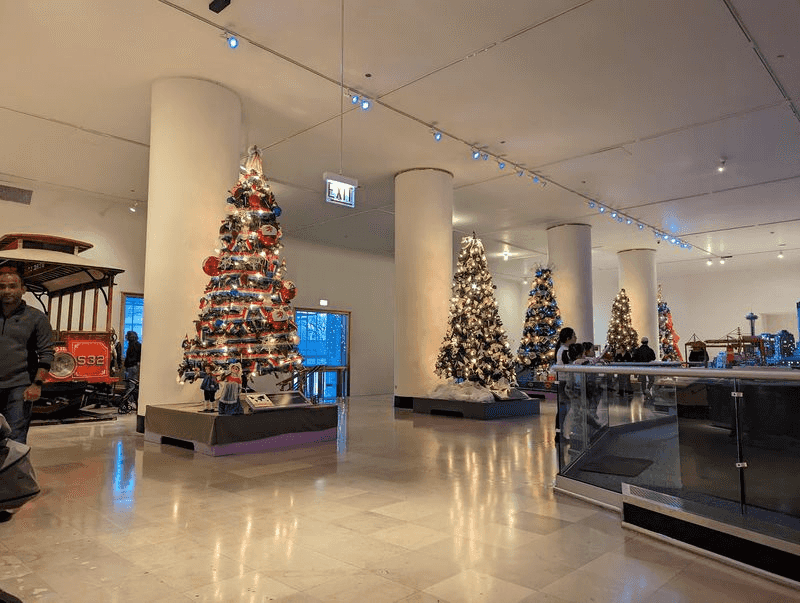
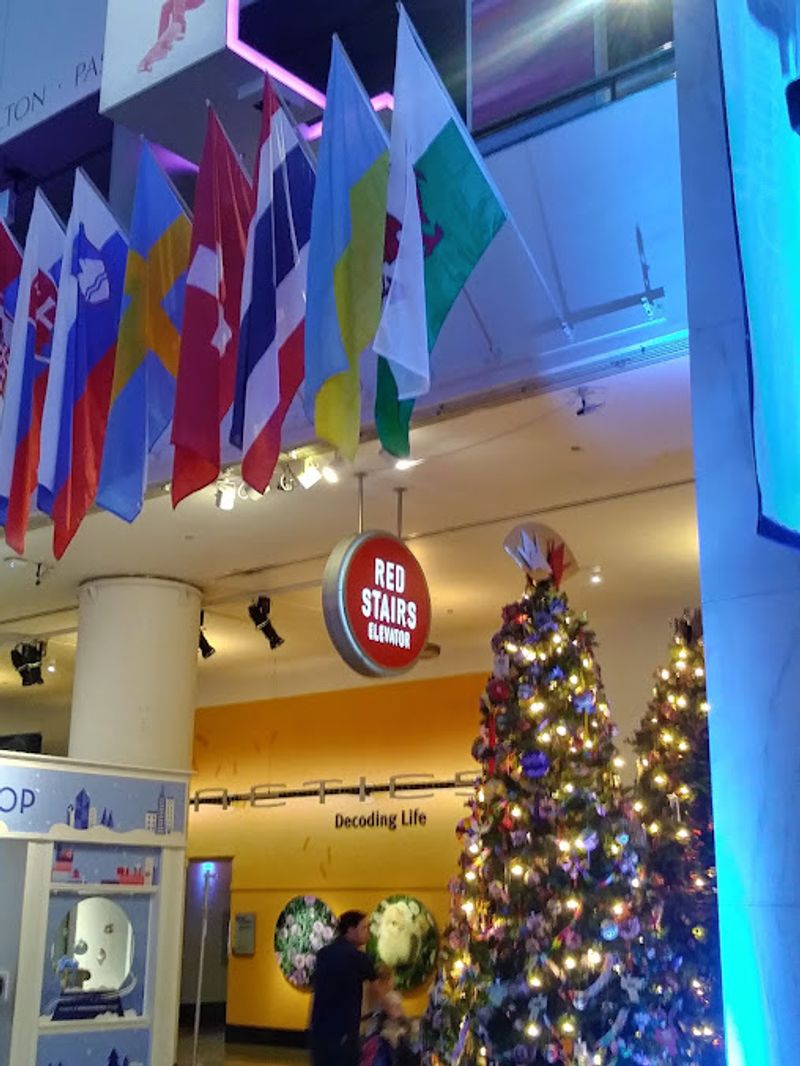
Passports aren’t required here, which is great news for anyone who hates airport lines. More than 50 trees surround the Grand Tree, and each one reflects a different culture.
Chicago community volunteers decorate these trees. Their work shows how families from many backgrounds celebrate the season.
That volunteer touch makes the display feel personal. These aren’t trees ordered from a catalog and dropped into place.
Take your time moving from one tree to the next. Each one tells a little story through its ornaments and decorations.
Kids can turn the walk into a game. Ask them to guess which country a tree represents before reading its sign.
Adults might find a tree connected to their own family roots. That moment of recognition can be surprisingly sweet.
This part of the exhibit rewards curious visitors. The more closely you look, the more details you’ll catch.
A quick lap is fine if you’re short on time. Still, slowing down here pays off more than rushing to the next big attraction.
Consider it the most festive geography lesson you’ll ever get. No pop quiz included, thankfully.
The Building Itself Deserves A Moment Of Your Attention
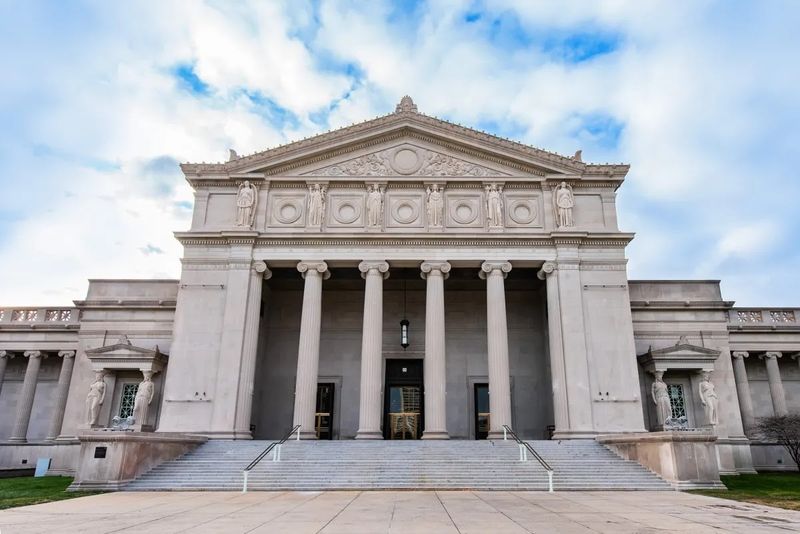
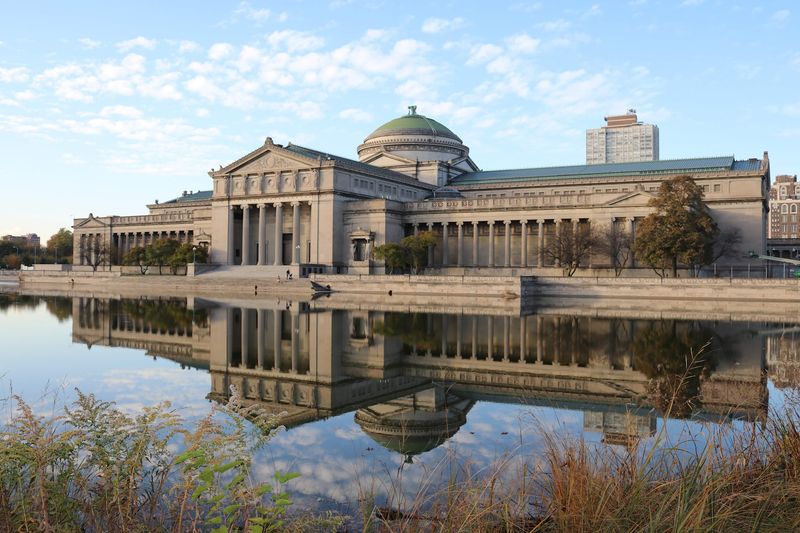
Before you even reach the trees, the building tries to steal the show. It’s the last surviving building from the 1893 World’s Columbian Exposition.
Back then, it served as the Palace of Fine Arts. Today it holds the Griffin Museum of Science and Industry, which opened as a museum in 1933.
You’ll find it at 5700 S DuSable Lake Shore Dr, Chicago, IL 60637. It sits on Chicago’s South Side near the lakefront.
The museum got its current name in 2024. That change followed a historic donation from Kenneth C. Griffin.
Some folks still call it MSI out of habit. Others now say Griffin MSI, and both will get you pointed the right way.
The exterior shows off grand classical columns. It looks more like a palace than a place with a coal mine inside.
Snap a photo outside before heading in. Winter light on those columns can look pretty striking.
Wear comfortable shoes for this visit. The museum is the largest science center in the Western Hemisphere, and your feet will notice.
Holiday cheer inside a piece of world’s fair history? That’s a pretty great combo.
Indoor Weather Brings A Tornado And Lightning Inside
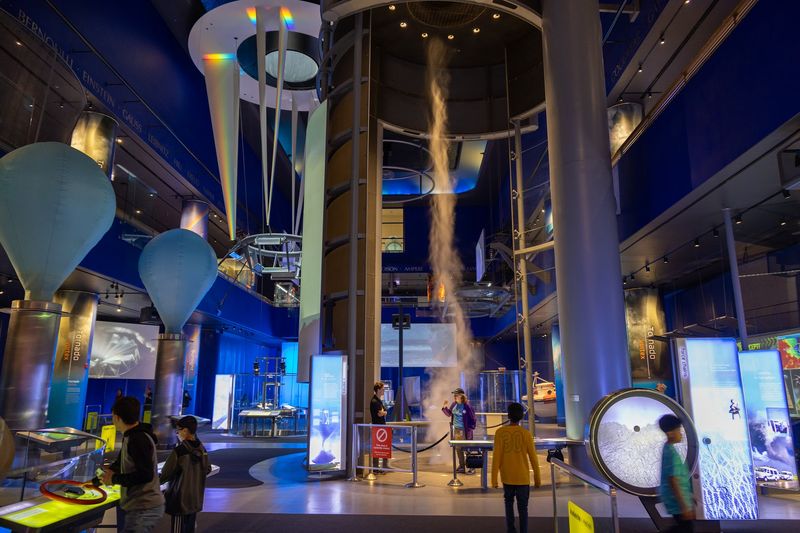
Chicago winter weather can be wild, but this storm stays politely indoors. Science Storms features a 40-foot tornado vortex you can see up close.
A 20-foot Tesla coil creates real bolts of lightning. There’s also an 8-ton disk where visitors can trigger an avalanche.
This exhibit makes nature’s power easy to understand. It’s loud, dramatic, and a lot of fun.
After admiring calm, twinkling trees, this section brings the energy way up. Think of it as the museum’s version of a plot twist.
Kids who need to burn off some steam will love the hands-on parts. Adults tend to enjoy it just as much.
Check demonstration times when you arrive. Live shows add extra excitement to the experience.
The best part is that you stay warm and dry. No umbrella needed for this storm.
Science Storms is included with general admission. That makes it an easy addition to your holiday visit.
It’s also a great place to explain weather to curious kids. Watching a tornado form beats reading about one in a textbook, every single time.
Trains, Space Capsules, And A Fairy Castle Round Out The Day
Model train fans, this one’s for you. The Great Train Story covers 3,500 square feet and follows a route from Chicago to Seattle.
Tiny trains roll past miniature cities and landscapes. It’s a classic holiday-season sight that fits the festive mood perfectly.
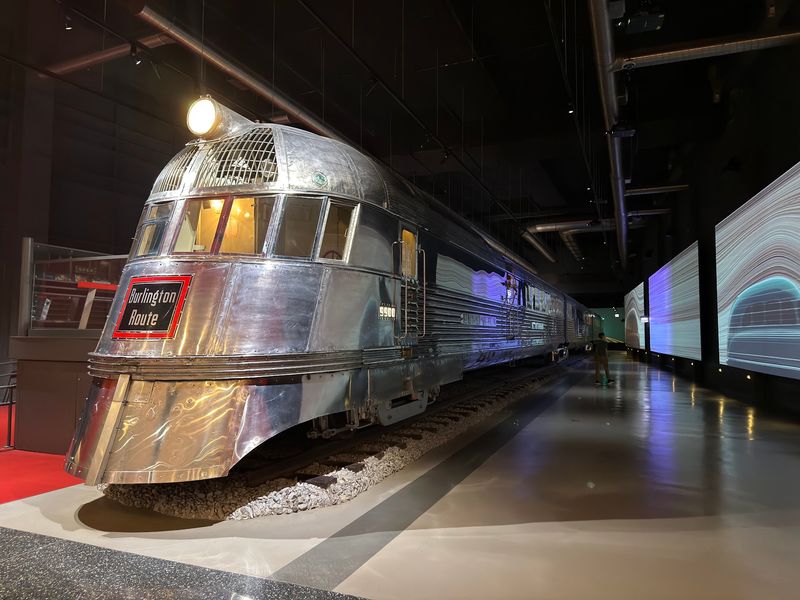
Not far off, the Pioneer Zephyr shows off a sleek 1934 diesel streamliner. It was a huge leap in train travel for its time.
Space lovers can head to the Henry Crown Space Center. The actual Apollo 8 command module is on display there.
That spacecraft carried the first humans to orbit the Moon. Standing near it feels pretty unreal.
Then there’s Colleen Moore’s Fairy Castle. It’s an incredibly detailed dollhouse castle packed with miniature treasures.
These exhibits offer a nice change of pace. Some are calm and dreamy, while others feel big and bold.
Build a route that hits a few favorites. Trying to see everything in one day is a tall order.
Families with mixed interests will find something for everyone. Grandpa gets trains, the kids get space, and everybody gets a castle.
Smart Timing Makes Your Last Festive Outing Easier
A little planning goes a long way at a museum this huge.
The Griffin Museum of Science and Industry generally opens at 9:30 a.m., although holiday hours vary and the museum is closed on Thanksgiving and Christmas Day.
Closing times shift by day, often 4 p.m. or 5:30 p.m. Double-check hours before heading out, especially during the holidays.
Admission to Christmas Around the World and Holidays of Light comes with a regular museum ticket. That’s a nice perk for families.
Booking tickets online ahead of time is a wise move. Winter break can bring busy days.
The museum is closed on Thanksgiving Day and Christmas Day. Plan around those dates so you don’t arrive to locked doors.
On-site restaurants and a gift shop help keep the day running smoothly. You won’t need to leave for lunch.
Special holiday events sometimes pop up too. Past seasons included a Tree Lighting and Cultural Festival plus after-hours events.
Arriving right at opening gives you more time to explore. You’ll want every minute.
The exhibit wraps up on January 3, 2027. Squeeze in this Illinois tradition before then, because those trees won’t wait for your new year’s resolutions.