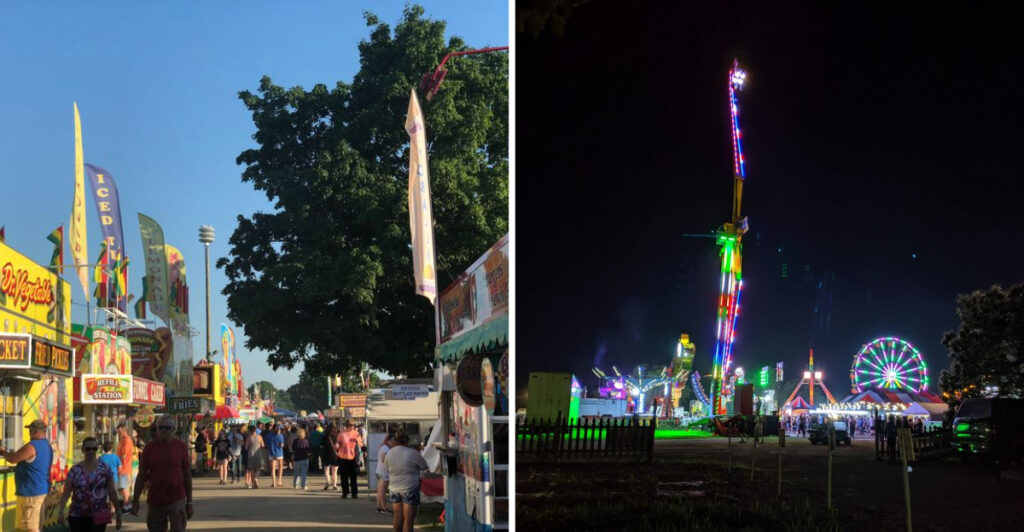
ndiana has been throwing this summer party since before the light bulb showed up.
The LaPorte County Fair dates back to 1845, and somehow it has kept finding new ways to stay interesting.
The agricultural roots are still easy to spot, but the fair has grown far beyond its original purpose. Each summer brings that familiar mix of tradition, noise, food, and plenty of reasons to stay longer than planned.
The 2026 edition marked its 180th year, making it one of those Indiana traditions with serious staying power.
Some parts look back at where the fair began. Others make sure nobody mistakes it for a museum.
So, what would pull you through the gate first?
Indiana’s Oldest County Fair Began With Agriculture In 1845
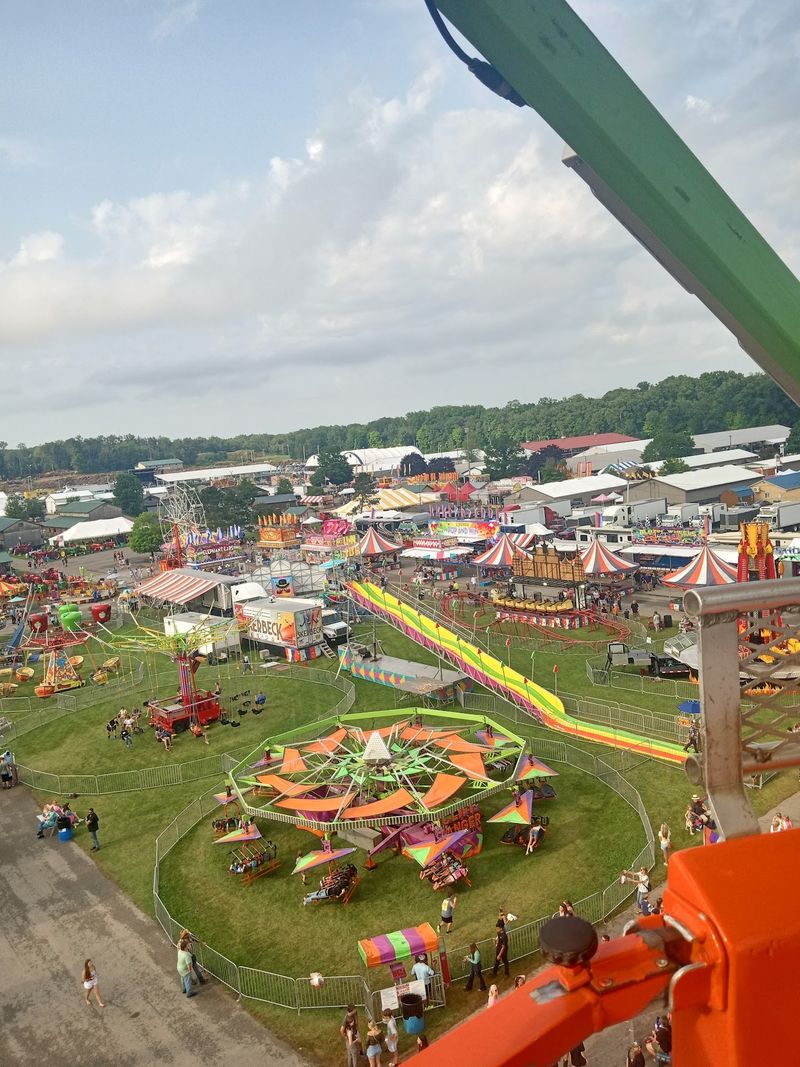
The LaPorte County Fair traces its beginning to 1845, when the LaPorte County Agricultural Association organized the first fair. Early exhibits focused on the county’s agricultural work, including grains, vegetables, dairy products, horses, cattle, sheep, and hogs.
That origin still matters. Agriculture remains one of the central pieces of fair week, even though the event has expanded far beyond the farm exhibits that defined its earliest years.
As the fair developed, competitions grew to include food preparation, canning, sewing, crafts, fine arts, and other skills connected to daily life. Horse racing, stage performances, carnival attractions, and additional entertainment arrived later.
The 2026 celebration marked the 180th LaPorte County Fair, adding another chapter to a tradition that began in 1845.
When you walk the grounds today, you are seeing a fair that has changed repeatedly while keeping agriculture at its core.
The fairgrounds are at 2581 W State Road 2, La Porte, IN 46350. That location now supports the summer fair along with many other events during the rest of the year.
Eight Days Give You Time To See More Than The Midway
The 2026 fair ran for eight days, from Saturday, July 11, through Saturday, July 18.
An eight-day schedule gives the event room for livestock judging, motorsports, concerts, and so much more without trying to squeeze everything into one weekend.
Opening day alone included rabbit judging, horse-and-pony trail classes, a ribbon cutting, a petting zoo, a queen contest, antique tractor parades, and a Walk of 4-H Champions.
The rest of the week continued with changing schedules across the grounds, so you can plan around the part of the fair that interests you most.
If livestock is your priority, check the judging schedule before you go. If you want the midway, music, or a motorsports event, the entertainment calendar becomes more important.
The fair’s eight-day format also gives you a reason to slow down. You do not need to see every barn, attraction, and show in one visit.
A morning can revolve around exhibits and animals, while an evening can shift toward rides or a ticketed event. That change of pace is one of the easiest ways to experience the fair without turning the day into a race from one attraction to the next.
4-H Exhibits And Livestock Keep The Fair Connected To Its Roots
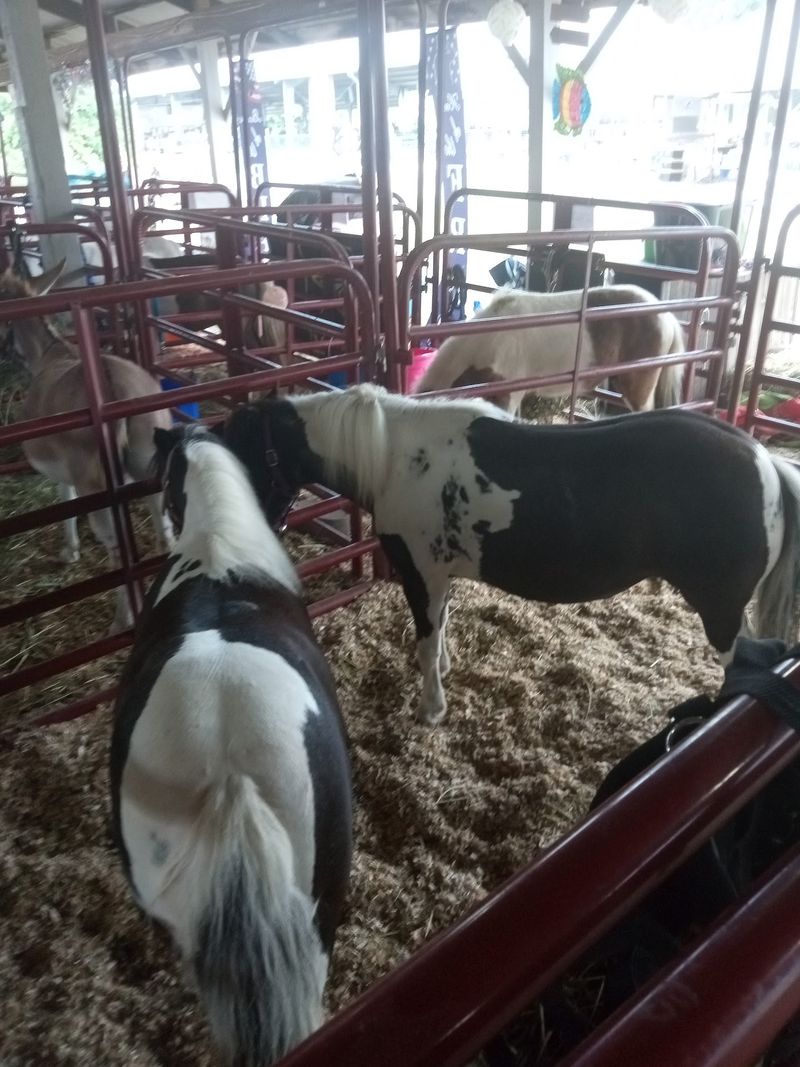
4-H remains a major part of the LaPorte County Fair. The fair showcases youth projects and livestock competitions throughout the week, keeping education and agriculture visible beside the midway and entertainment areas.
The 2026 program included rabbit judging, horse-and-pony classes, livestock competitions, project exhibits, and the LaPorte County 4-H Livestock Auction.
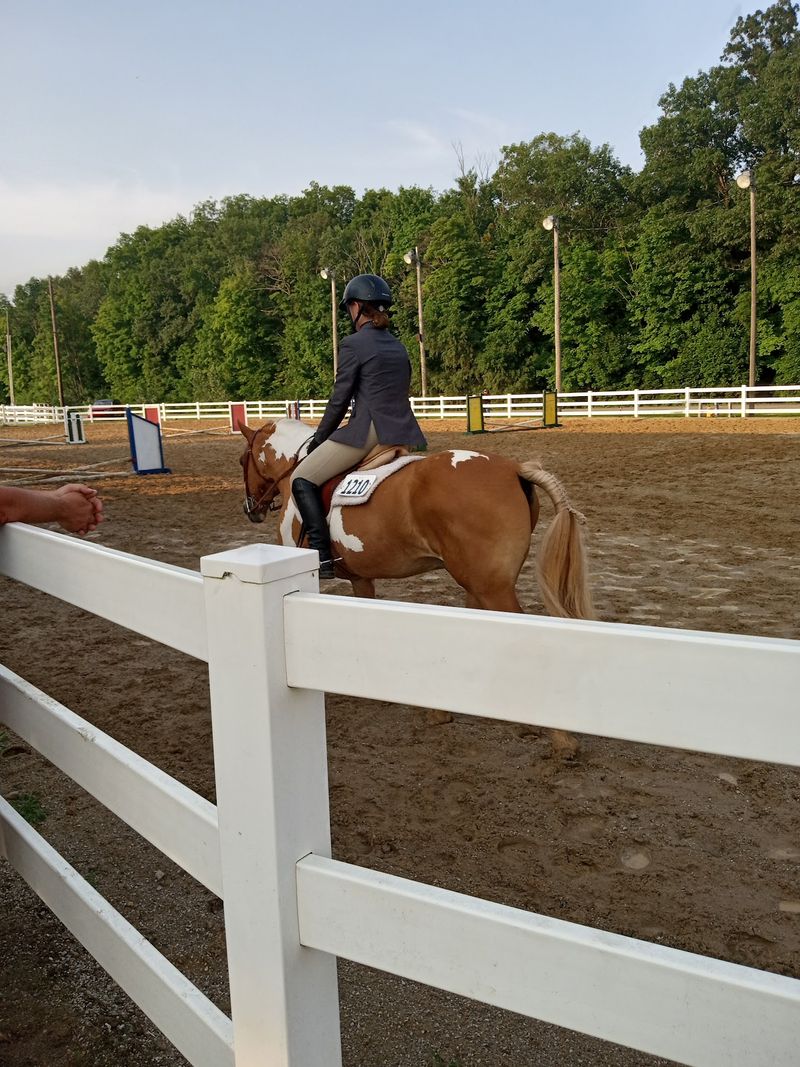
Individual projects, including horse and pony events, will be unning across fair week.
Those programs involve far more preparation than the few minutes you see in a show ring. Exhibitors complete project requirements, animal identification, records, and other work before fair week begins.
If you want to understand why county fairs developed in the first place, the 4-H and livestock areas are a good place to spend time. The barns and show rings keep the agricultural side visible instead of letting the fair become only a collection of rides and concerts.
You can also see how broad the program has become. Horse and pony classes alone cover numerous age groups, riding styles, trail classes, halter classes, and other competitions.
The livestock auction near the end of fair week connects youth projects with buyers and supporters after judging and exhibition.
For a first visit, giving the 4-H buildings and livestock areas their own block of time helps you see the fair beyond the midway.
Carnival Rides And Motorsports Change The Pace After The Barns
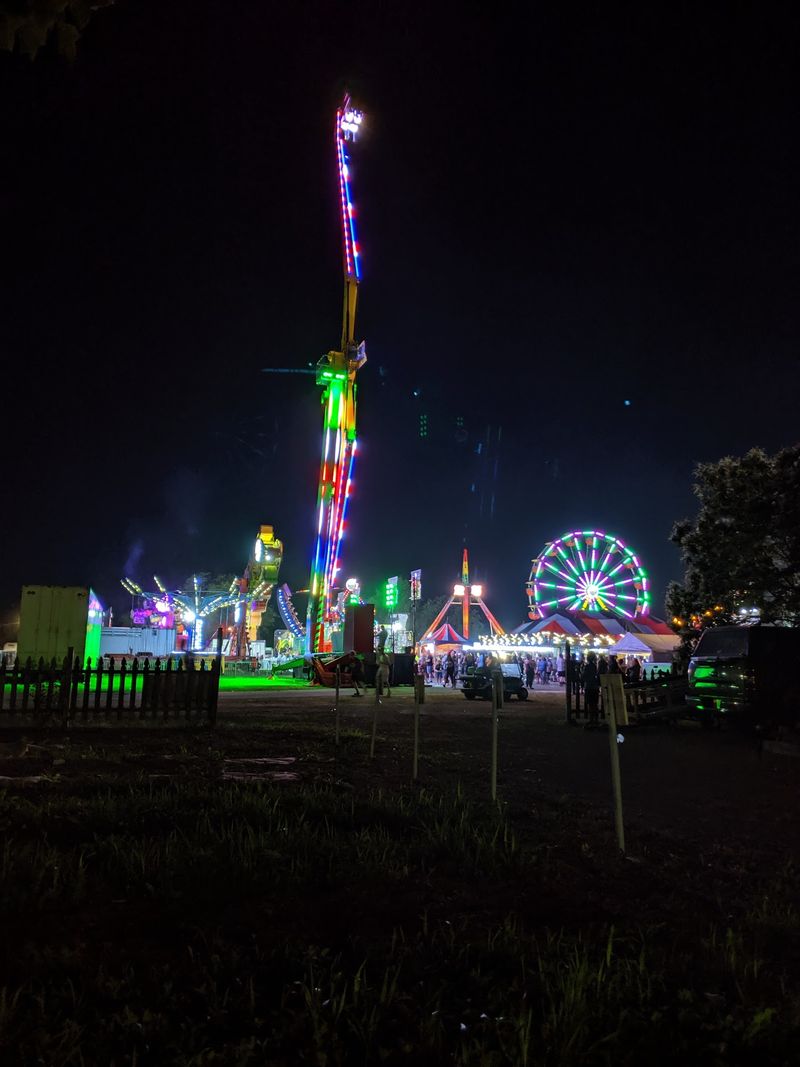
The quieter rhythm of exhibits does not last all day. Carnival rides, games, live entertainment, demolition derbies, a rodeo, and other attractions bring a faster pace to the fairgrounds.
The 2026 schedule included a demolition derby on July 12, a pro rodeo on July 13, and a Full Throttle Monster Trucks event on July 18. Country artist Dylan Scott performed on July 16, giving the week a major concert night as well.
Free entertainment appeared around the grounds too. The Paul Bunyan Lumberjack Show ran during the first part of the fair, while roaming attractions and family shows added activity.
That variety lets you build your visit around the energy level you want. You can watch livestock judging during the day and move toward the Motor Sports Arena later, or make the midway the main event once the rides are running.
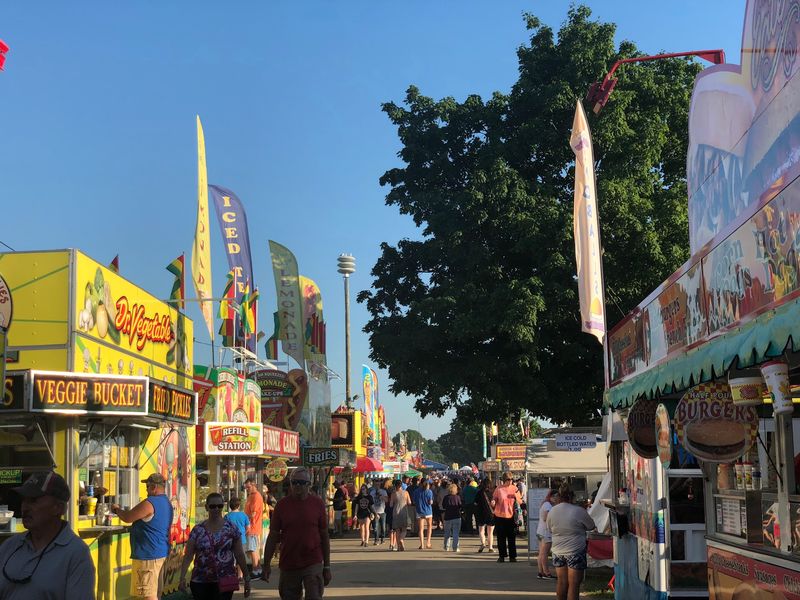
The fair also includes classic food vendors, so you can break up the schedule without leaving the grounds for a meal.
If you are going for a specific concert or motorsports event, checking ticket requirements and start times before arrival is useful. Some attractions are included with fair admission, while major grandstand or arena events may require separate tickets.
The schedule changes from year to year, but rides, live entertainment, motorsports, and fair food remain part of the broader summer format.
Pioneerland Recreates An Earlier Chapter Of Indiana Life
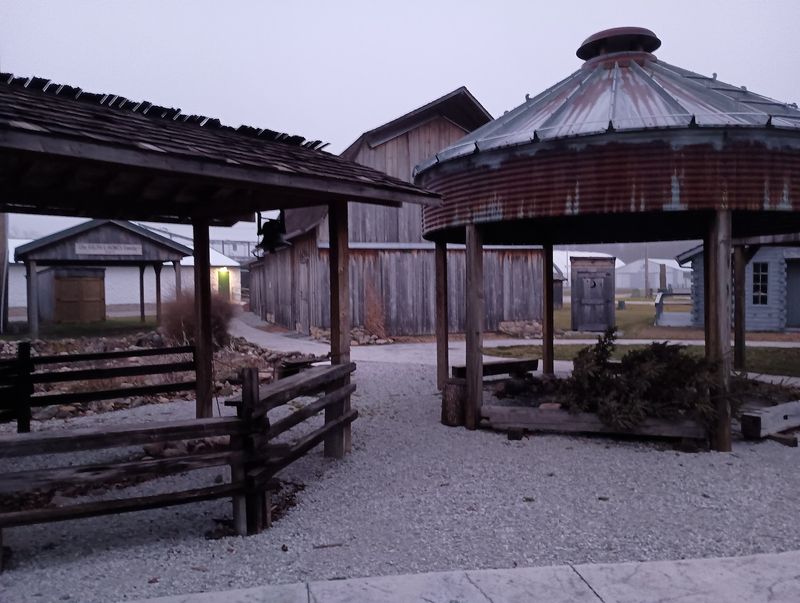
Pioneerland gives you a sharp change of scenery without leaving the fairgrounds. The living-history village began in 1995 as part of the LaPorte County Fair’s 150th anniversary.
It has grown into a collection of structures representing the early nineteenth century.
The village includes a log cabin, blacksmith shop, pioneer heritage garden, outdoor cooking kitchen, quilter’s cabin, wash house, and many more things. t
The setting focuses on the 1800-to-1840 period, placing you in an era that predates the fair itself.
Volunteers fund and operate the village, and the buildings are accessible. During fair week, the area gives you a chance to move away from the midway and look at tools, buildings, skills, and spaces associated with early Indiana life.
You can treat Pioneerland as a short stop or spend more time exploring the buildings. Either way, it adds a historical layer beyond the midway.
Pioneerland was introduced during the fair’s 150th-anniversary celebration in 1995, giving early Indiana history a permanent place on the grounds.
If you enjoy seeing how people worked, learned, cooked, and built before modern conveniences, this is one section worth slowing down for.
Attendance And A Large Fairgrounds Keep The Event Moving
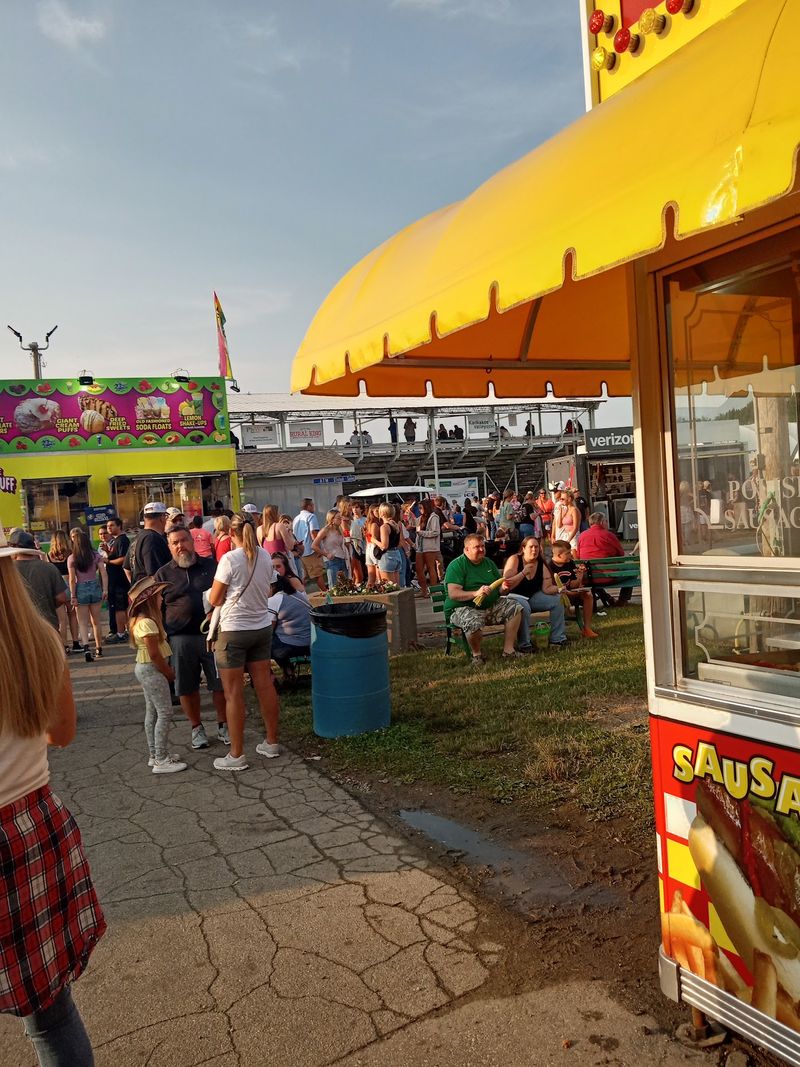
The LaPorte County Fair operates on a large scale for a county event. Attendance regularly tops 90,000, and the fairgrounds organization describes the overall facility as approximately 160 acres.
That space includes livestock barns, exhibit halls, a grandstand, outdoor event areas, and campground accommodations. During fair week, those different zones help separate livestock activity, exhibits, entertainment, camping, and large events across the property.
Crowds shift with the schedule. A major concert or demolition derby can pull people toward one area while judging and exhibits continue elsewhere.
If you prefer a quieter visit, planning around the daily event calendar can help. If a big evening show is your priority, arriving with enough time to park and walk the grounds makes the transition easier.
The campground is another useful piece of the property. The fairgrounds offer campground accommodations as part of the facility, which supports multi-day events and other gatherings beyond the annual fair.
You will also find the property used for more than fair week. The fairgrounds host livestock shows, car shows, swap meets, conferences, weddings, banquets, and community events during the year.
That year-round use helps explain why the grounds contain more than a midway and a few seasonal barns. The site functions as a broader events center for LaPorte County.
This Indiana Fair Still Balances History With A Busy Summer Schedule
The LaPorte County Fair has had plenty of time to change since 1845.
What started as an agricultural exhibition now combines 4-H work, historical interpretation, food vendors, and other summer attractions.
The history is easiest to see when you move between different parts of the grounds. Pioneerland looks toward early Indiana life. The livestock barns and 4-H programs keep the agricultural mission visible.
The midway and evening entertainment show how the fair expanded for modern audiences.
In 2026, the fair marked its 180th edition with eight days of programming from July 11 through 18. The event remains based at 2581 W State Road 2, La Porte, IN 46350.
If you are planning a future visit, the exact entertainment lineup will change, so the daily schedule is worth checking once the next fair approaches.
The parts that define the event are more consistent: agriculture, youth projects, exhibits, rides, food, Pioneerland, and large evening events.
You can arrive for one specific show and still find plenty happening around it. Give yourself time to walk beyond the first attraction you see, especially if the barns and historic village are new to you.
More than a century after the first fair, LaPorte still turns part of summer into an eight-day mix of Indiana agriculture, history, and entertainment.