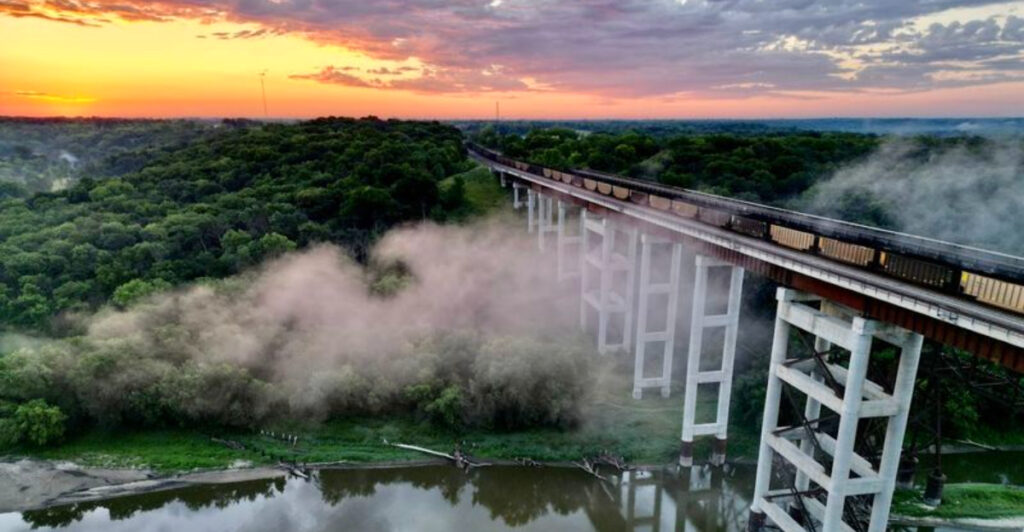
Some bridges just get you across a river. This one comes with a story big enough to stop the car.
Near Boone, Iowa, a towering railroad bridge rises above the Des Moines River with freight trains still rumbling through the valley. It looks impressive on its own, but the name makes it unforgettable.
That name belongs to Kate Shelley, a teenage girl whose stormy-night courage became part of Iowa railroad history. No Marvel cape.
No dramatic soundtrack. Just grit, rain, and one wildly brave decision.
Once you know what happened here, the bridge feels less like steel and stone and more like a monument hiding in plain sight.
The Bridge That Earned Its Name
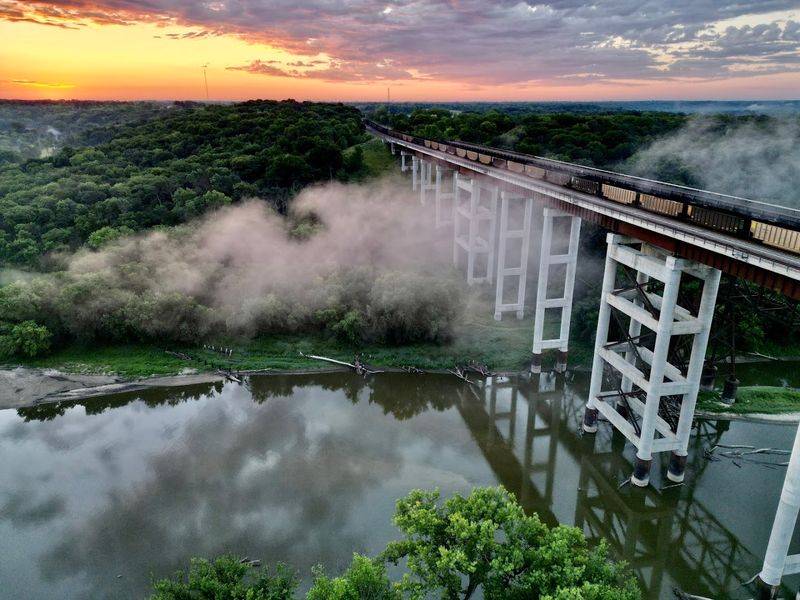
Most bridges get named after rivers, roads, or politicians. This one became tied to a teenage girl from a farmhouse nearby, and that alone tells you the story is worth knowing.
The Kate Shelley High Bridge site sits near Boone, Iowa, spanning the Des Moines River in a way that still commands attention more than a century after the old Boone Viaduct was built.
The map listing places it in Boone, IA 50036, just a few miles off Highway 30 down a gravel road that winds through the trees toward the river valley below.
The historic 1901 Boone Viaduct includes deck Pratt truss construction with deck girder sections, and it was one of the last major structures associated with engineer George S. Morison, who later became known for his role in the Panama Canal route selection.
That engineering pedigree alone would make it worth a stop on any road trip through central Iowa.
But the name connected to the bridge is what really draws people in. Kate Shelley was not an engineer or a railroad executive.
She was a teenage girl who did something extraordinary on a stormy night in 1881, and her name remains attached to this remarkable railroad landmark today.
The Night That Made Kate Shelley Famous
On the night of July 6, 1881, a violent storm hit central Iowa and sent Honey Creek surging well beyond its banks.
A railroad pusher engine and its crew attempted to cross the small Honey Creek bridge, and the structure gave way under the pressure of the floodwaters.
Kate Shelley, a teenager at the time, heard the accident from her family’s farmhouse nearby. She knew a midnight passenger train was scheduled to come through, and that it had no idea the Honey Creek bridge was out.
What she did next is the part that gets retold in classrooms across Iowa. Kate made her way across the older Des Moines River bridge in the dark and the rain, with the floodwaters raging far below, to reach the Moingona depot and warn the railroad crew.
Her warning helped stop the passenger train in time.
She then helped guide rescuers back toward the Honey Creek accident site. The railroad community never forgot what she did, and the bridge associated with her name makes sure the rest of us do not forget either.
What You Actually See When You Arrive
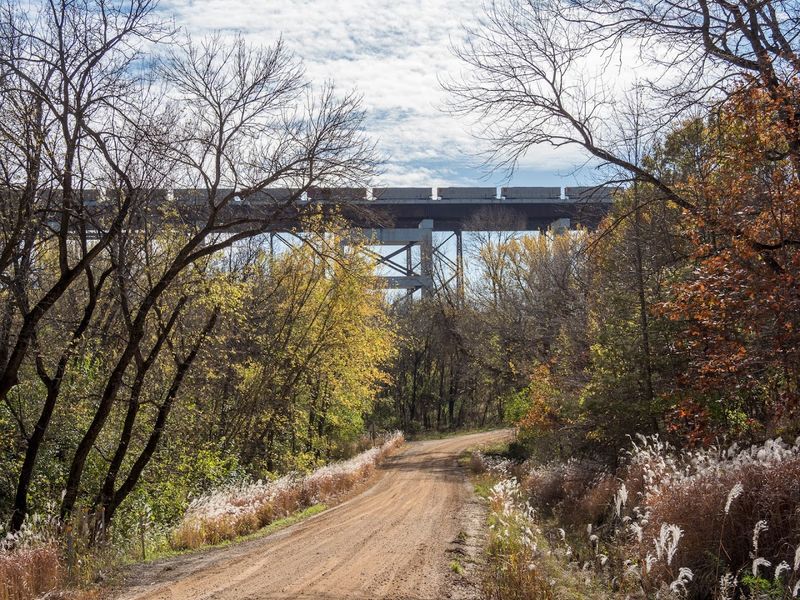
Getting there feels like a small adventure on its own. You turn off the main road onto a gravel path that cuts through a stretch of trees, and then the bridges appear through the canopy, much taller than you expect.
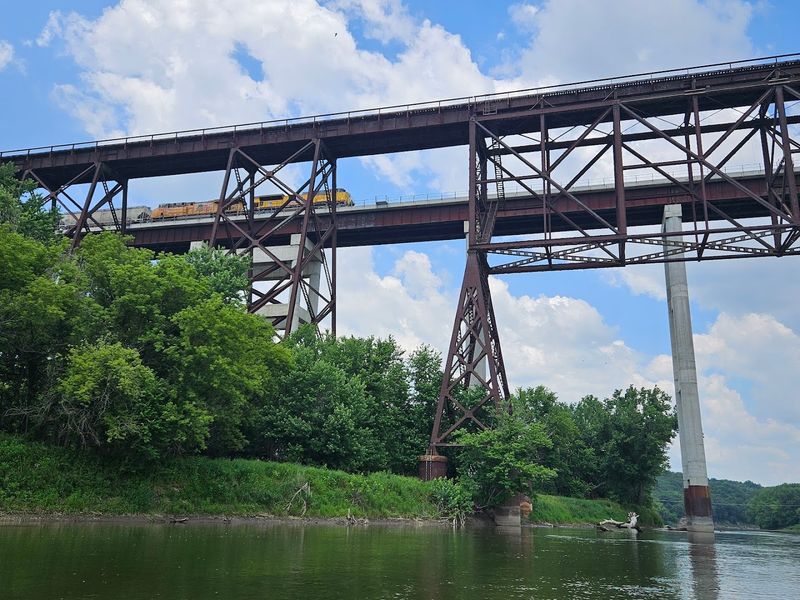
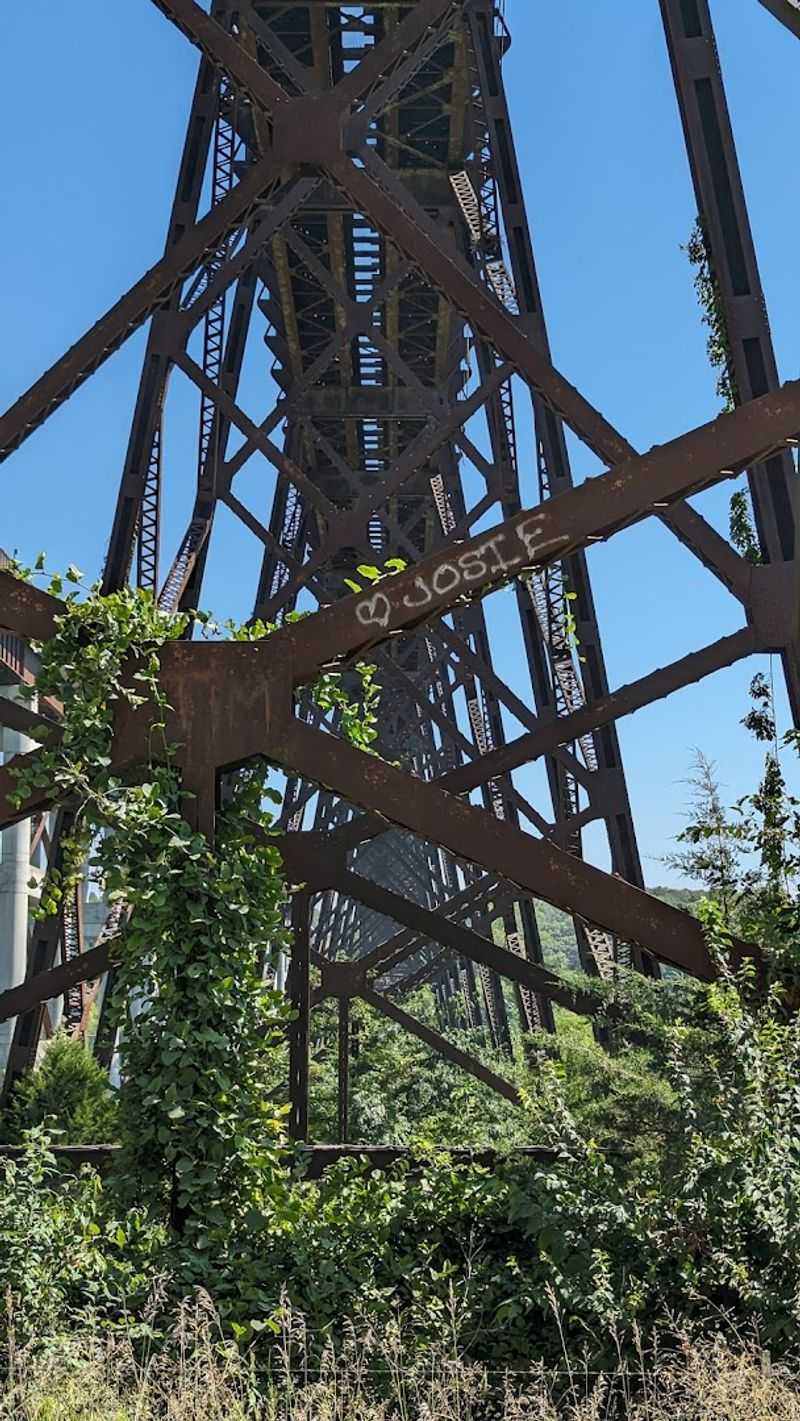
Standing underneath the structures changes your sense of scale entirely. The steel columns of the historic bridge rise steeply above you, while a passing train on the newer active span can sound like distant thunder rolling across the valley.
One visit on a clear afternoon made it easy to understand why people keep saying the height hits differently from below than it does in any photograph.
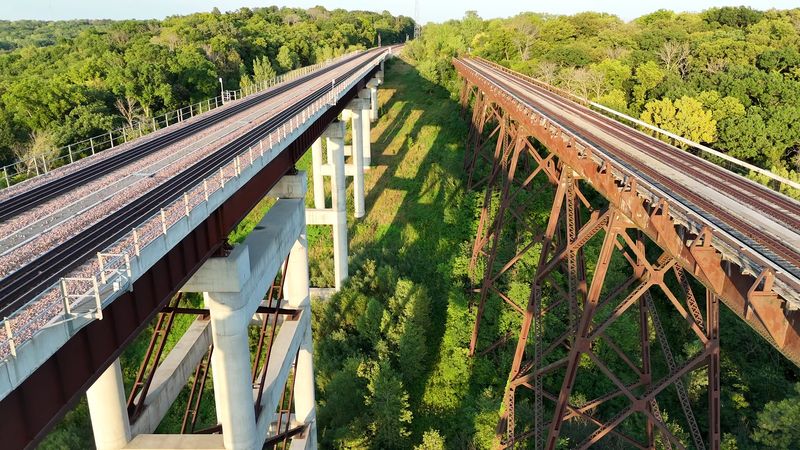
The two bridges side by side add another layer of interest. The original historic structure, now retired from active rail use, stands next to a newer bridge built by Union Pacific.
The contrast between the old riveted steel and the modern concrete and steel structure is a good reminder of how much railroad engineering changed over the decades.
No tickets, no entry fees, and no crowds on most days. You park along the gravel road and walk a short distance through the trees to reach the riverbank and the base of the structure.
The Engineering Behind The Structure
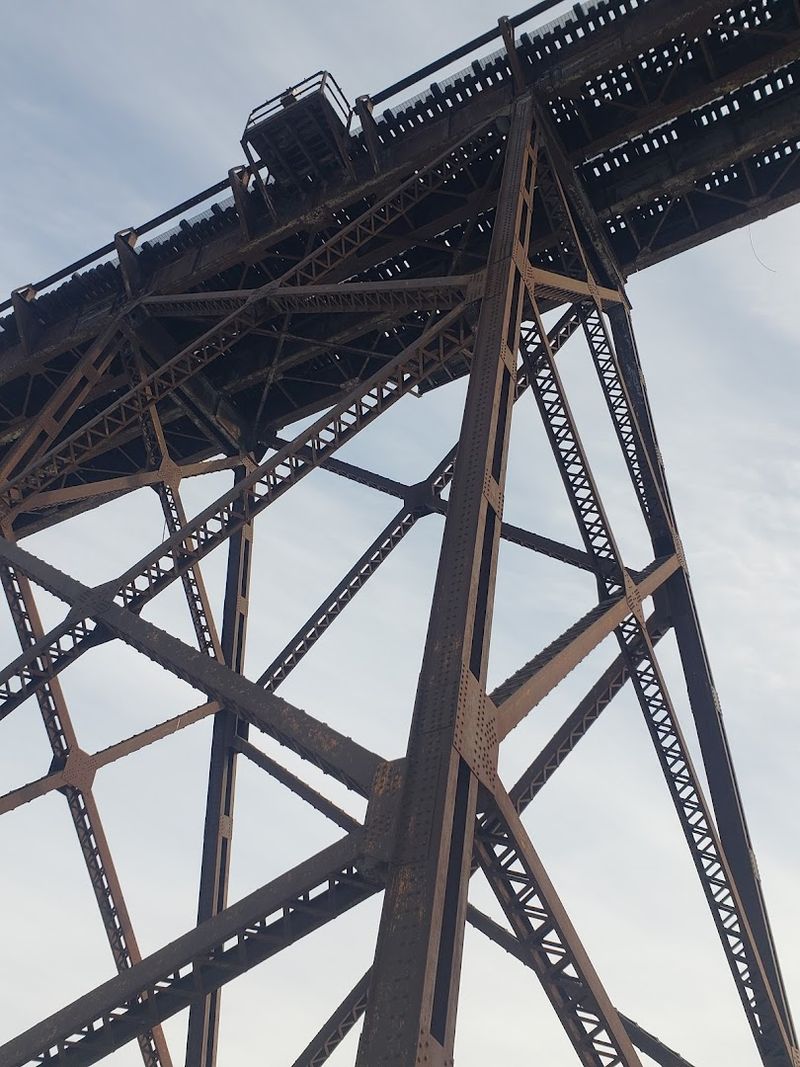
George S. Morison was one of the most respected bridge engineers in the United States during the late nineteenth century.
The Kate Shelley High Bridge was among his final major projects before his focus shifted to the Panama Canal route selection.
The historic bridge includes deck Pratt truss construction and deck girder sections, which helped it handle heavy railroad demands for more than a century. What made this particular bridge stand out was its sheer scale.
At the time of its completion in 1901, it was one of the highest and longest double-track railroad bridges in the United States.
The Historic American Engineering Record, filed under HAER number IA-44, documents the technical details of the structure for anyone who wants to go deeper into the engineering history.
It is a useful resource if you plan to visit and want to know exactly what you are looking at when you stand beneath those steel columns.
Morison’s work on this bridge reflected the ambitious infrastructure thinking of the era, when American railroads were pushing into every corner of the country and engineers were being asked to solve problems that had no textbook answers yet.
How To Get There And What To Expect
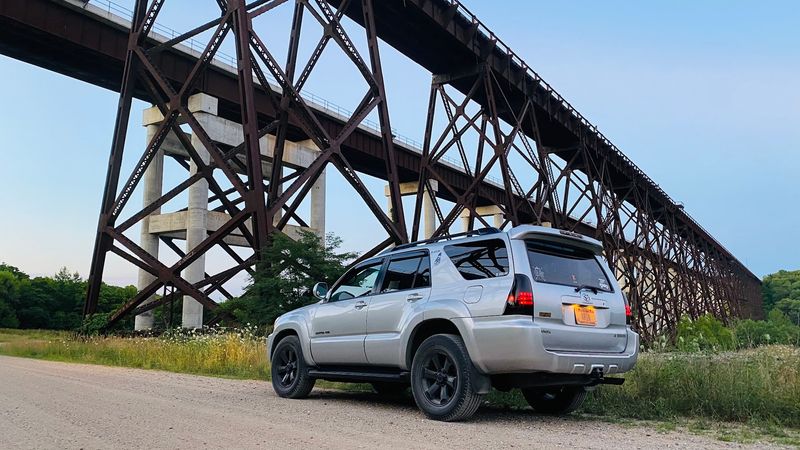
The bridge sits just a few minutes off Old Lincoln Highway, which makes it a natural stop if you are already traveling through central Iowa on Highway 30.
The drive down to the bridge follows a gravel road, and the condition of that road matters more than people might expect.
After heavy rain or snow, the gravel can get slippery and muddy enough to make the trip less pleasant. Dry weather is the right time to go, and a standard passenger car handles the road just fine when conditions are good.
High-clearance vehicles are not required, but they do not hurt.
Parking is informal, along the side of the gravel road near the base of the bridge. No designated lot, no attendants, and no signs explaining the history once you arrive.
That last part is a genuine gap worth knowing about before you visit. There is currently no interpretive plaque or information board at the site, so reading up on the story before you go will make the visit much more rewarding.
Cell service can be spotty in the river valley, so downloading a map or directions ahead of time is a practical move that saves frustration once you are already on the gravel road.
Watching A Freight Train Cross Overhead
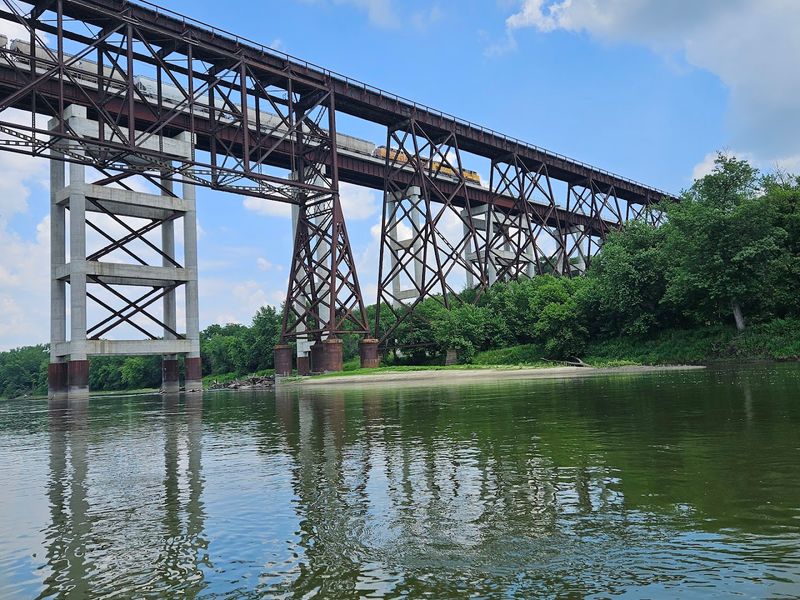
One of the best things that can happen during a visit to this bridge is hearing a train whistle in the distance before you even get out of your car. The timing is pure luck, but when it works out, the payoff is significant.
A freight train rolling across the newer Union Pacific span from below is a sensory event that photographs cannot fully capture.
The sound bounces off the river valley walls, and the sheer length of a modern freight train crossing a bridge this tall gives you a real appreciation for the scale of the railroad corridor here.
The newer Union Pacific bridge carries active rail traffic alongside the historic structure. Freight trains still cross regularly, so patience is your best strategy if you want to catch one in motion.
Some people report waiting only a few minutes before a train came through, while others spend a quiet hour at the riverbank without seeing one.
Either way, the wait is not a hardship. The river, the trees, and the steel overhead are plenty to look at while you give the train schedule time to work in your favor.
The Best Time Of Year To Visit
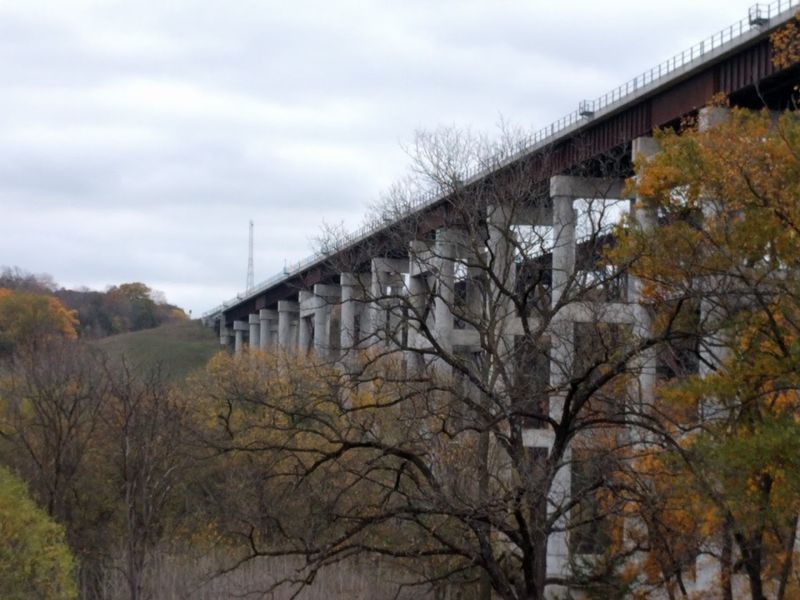
Fall gets the most enthusiastic recommendations from people who have made the trip more than once.
The tree canopy along the gravel road and the riverbank turns orange and gold in October, and the contrast between the warm autumn colors and the cold gray steel of the bridge is genuinely striking.
Summer works well too, especially for families with kids who want to explore the riverbank and get a good look at the structure without worrying about cold weather or slippery roads.
The green canopy in summer frames the bridge nicely and keeps the walk through the trees comfortable.
Winter visits are possible but require more caution. The gravel road can become difficult after ice or snow, and the wind in the river valley cuts sharper than it does on flat Iowa ground.
One visitor mentioned visiting on an overcast January day and finding the atmosphere fitting for a bridge with such a dramatic backstory.
Spring is unpredictable. The Des Moines River can run high after snowmelt, and the gravel road conditions vary widely from week to week.
Late spring, once the road dries out, tends to be a better window than early spring for a comfortable visit.
Who Enjoys This Spot The Most
Railroad enthusiasts are the most obvious audience for this spot, and they tend to be the most prepared visitors.
Many arrive knowing the engineering history, the designer’s name, and the basic outline of Kate Shelley’s story before they even park the car.
History-minded travelers also find a lot to work with here. The bridge sits at the intersection of nineteenth-century American infrastructure ambition and a very human story about courage under pressure.
That combination appeals to people who enjoy places where the past is still physically present and not just described on a placard.
Photographers make regular trips to the bridge, particularly in the fall.
The angles from the riverbank looking up through the steel lattice are genuinely compelling, and the side-by-side comparison of the old Pratt truss and the newer concrete structure gives you two very different compositions to work with.
Families with older kids who have some patience for a short walk through the woods tend to enjoy it more than families with very young children, mostly because the terrain is uneven and there are no formal facilities at the site.
No restrooms, no benches, and no paved paths mean you are essentially on your own once you leave the car.
Why This Bridge Still Matters
A lot of historic structures in the Midwest get preserved because of their engineering significance or their age.
The Kate Shelley High Bridge carries both of those credentials, but the name attached to the site is what gives it a different kind of weight.
Kate Shelley became one of the most celebrated figures in Iowa railroad history during her lifetime. She received public honors, a lifetime railroad pass, and later worked as a station agent at the Moingona depot.
The 1901 Boone Viaduct became widely known as the Kate Shelley High Bridge, while Union Pacific christened the newer 2009 span the Kate Shelley Bridge.
More than a century later, her name still defines the site, and freight trains still roll across the newer bridge regularly.
The old historic structure stands as a preserved landmark beside the active Union Pacific line, which means the site is both a working railroad corridor and a tribute to a specific person’s act of courage.
Central Iowa has plenty of history worth knowing about, but few spots deliver it this directly. You stand underneath a structure connected to a teenage girl from a nearby farmhouse, and the whole story comes through without needing a single sign to explain it.