Some roadside stops wave politely for attention.
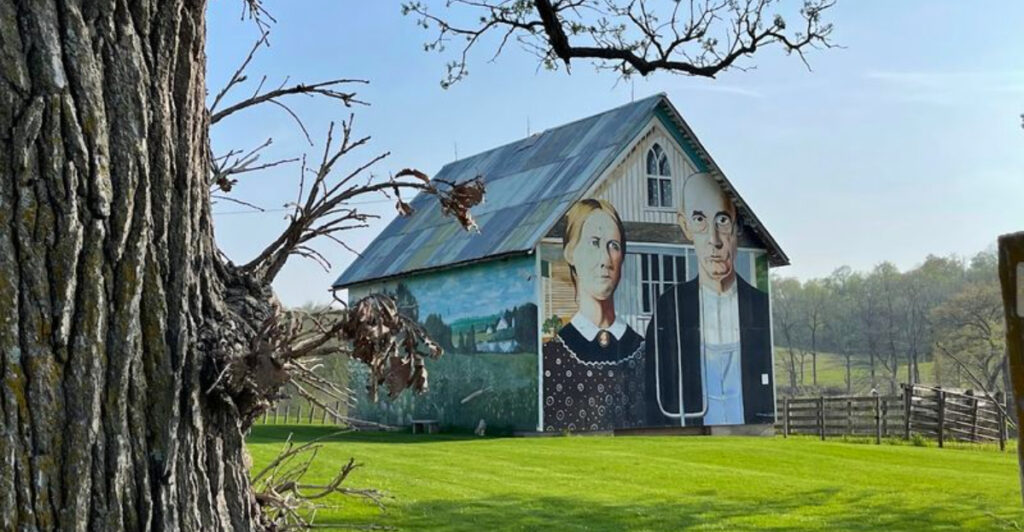
This one stares at you from the side of a barn with the full seriousness of American art history. You are driving along US-30, minding your own business, and suddenly two very stern faces appear like they have been waiting to judge your snack choices.
That is a pretty good reason to pull over.
This Iowa barn turns a familiar painting into something bigger, stranger, and much more fun than expected. It does not ask for much.
A few minutes, a quick photo, maybe one impressed little laugh from the driver’s seat.
For a highway stop, that is more than enough. The best road trips always need one thing you did not plan for.
What the American Gothic Barn Actually Is
Most people drive past barns without a second thought, but this one earns a double take.
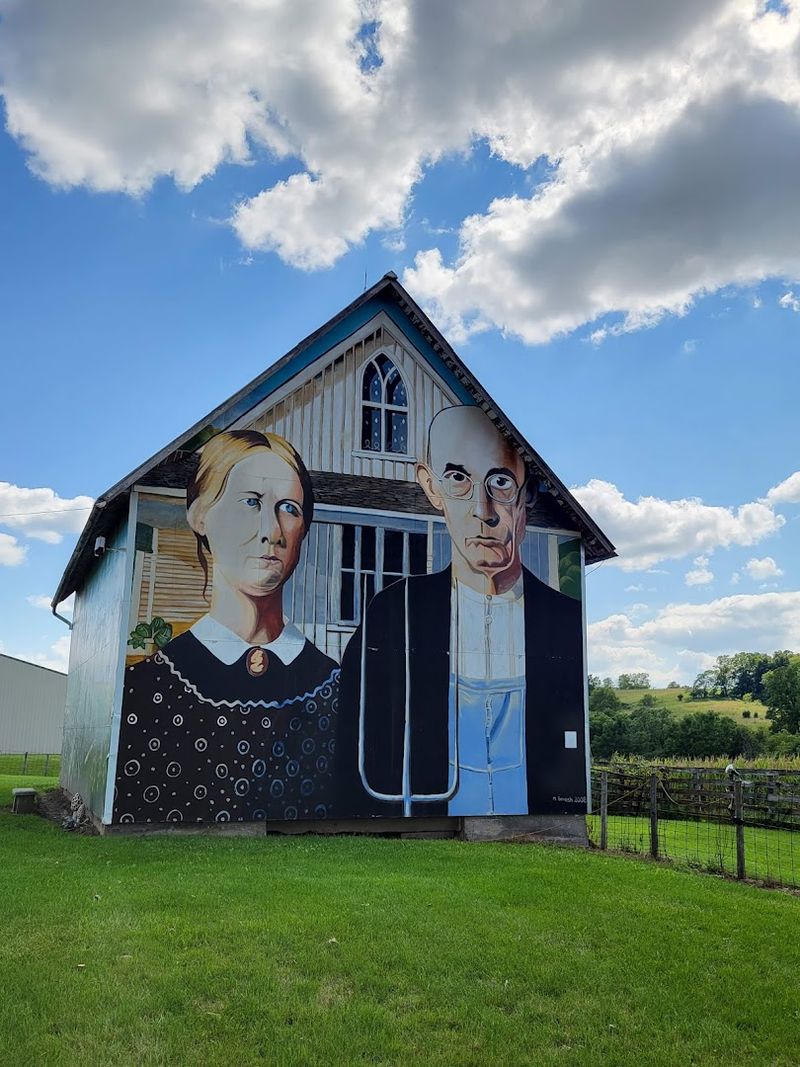
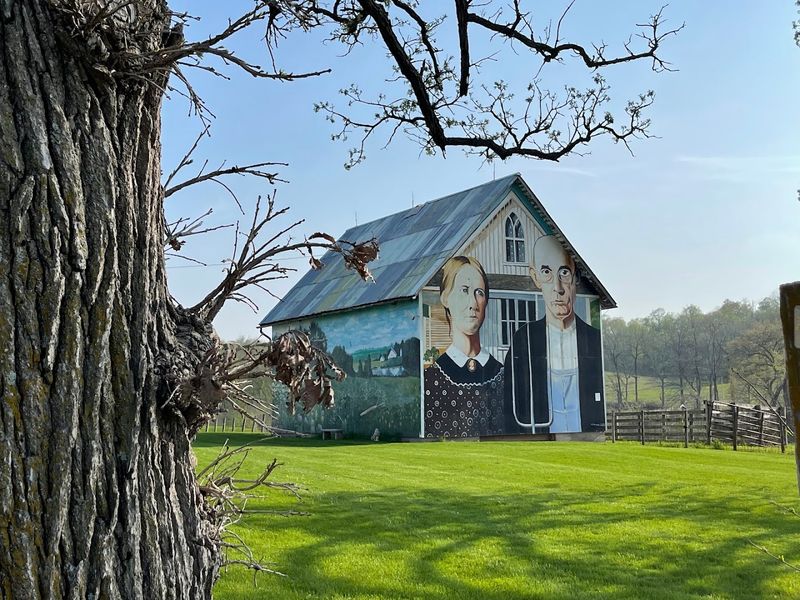
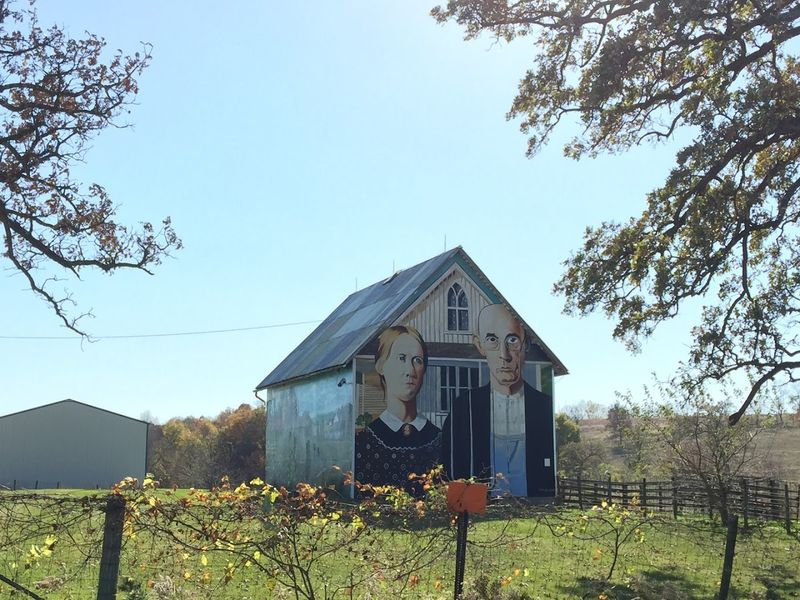
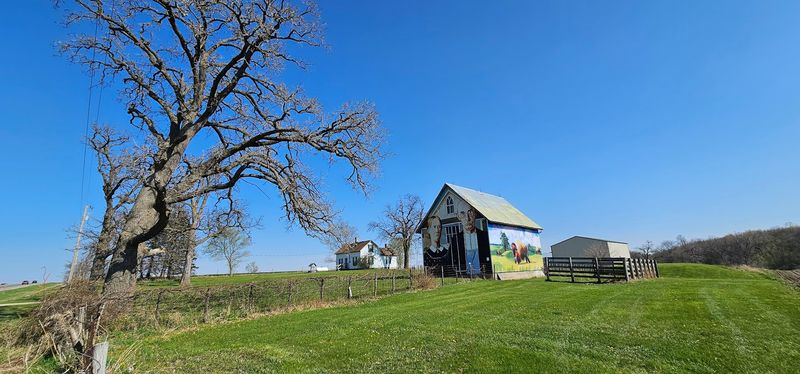
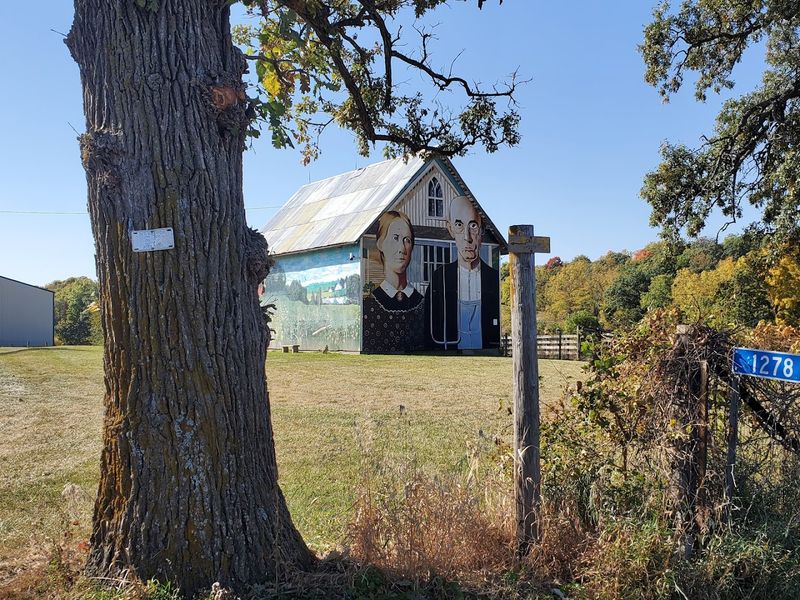
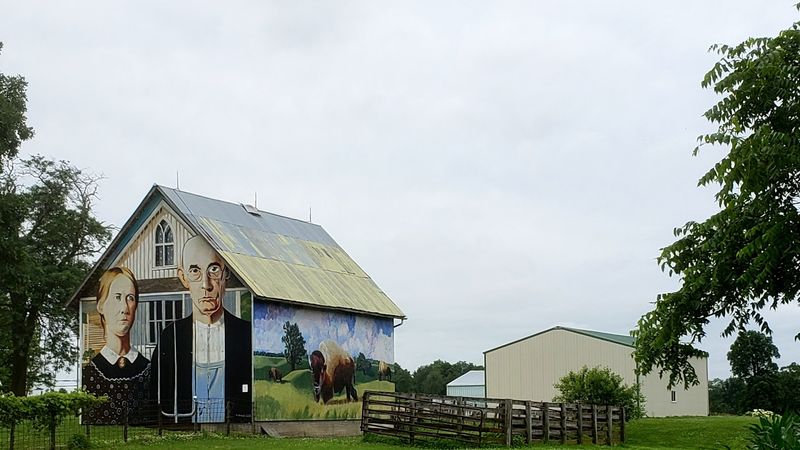
Painted on the side of a real barn along US-30 is a large-format reproduction of Grant Wood’s iconic American Gothic painting, the one with the stern farmer and his daughter standing in front of a white Gothic-style house.
It is bold, detailed, and surprisingly striking when you see it at highway speed.
Grant Wood, the painter behind American Gothic, was born in Iowa and spent much of his career celebrating Midwestern life. This barn near Mt Vernon pays tribute to that legacy in a way that feels both local and larger than life.
The American Gothic Barn sits at 1278 US-30, Mt Vernon, IA 52314, right along a busy four-lane stretch of highway.
It is on private property, but it can be viewed from the road, which makes it a quick and memorable photo stop rather than a formal attraction with public facilities.
The mural is large enough to photograph clearly from the road, which matters more than you might expect given how fast traffic moves past it.
The Story Behind the Painting on the Barn
Grant Wood painted American Gothic in 1930, and it became one of the most recognized images in all of American art.
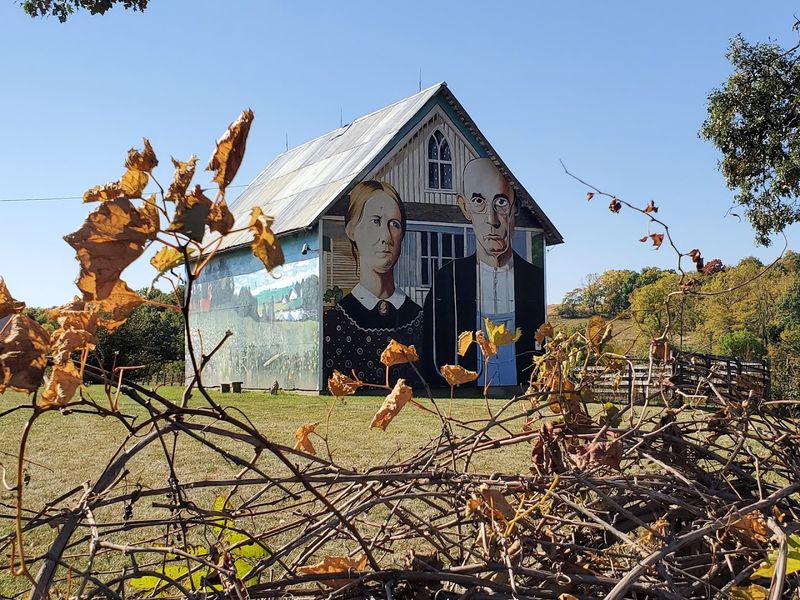
The painting shows a man holding a pitchfork and a younger woman standing beside him in front of a house with a distinctive Gothic-style arched window.
People have debated for decades whether the pair is meant to be a father and daughter or a married couple.
Wood used his dentist and his sister as models for the two figures.
He painted the scene after spotting a small Gothic Revival house in Eldon, Iowa, and decided it deserved a portrait.
The original painting now hangs in the Art Institute of Chicago.
The barn mural along US-30 captures the painting with enough detail to make the reference clear and immediate. You do not need an art history background to recognize it.
The image is so culturally familiar that even kids who have never set foot in a museum tend to do a double take when they spot those two stone-faced figures staring back from a barn wall.
What You Will Actually See When You Pull Over
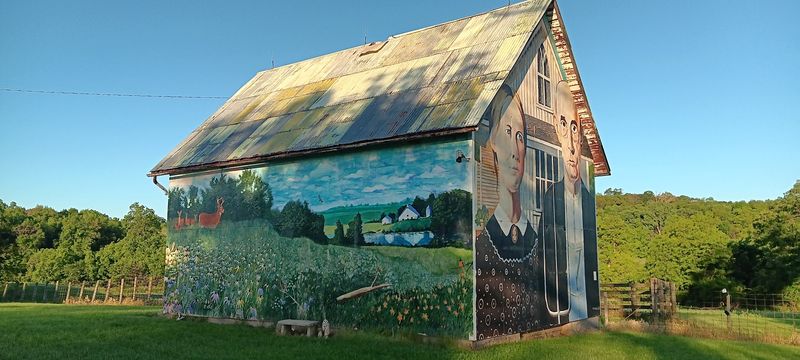
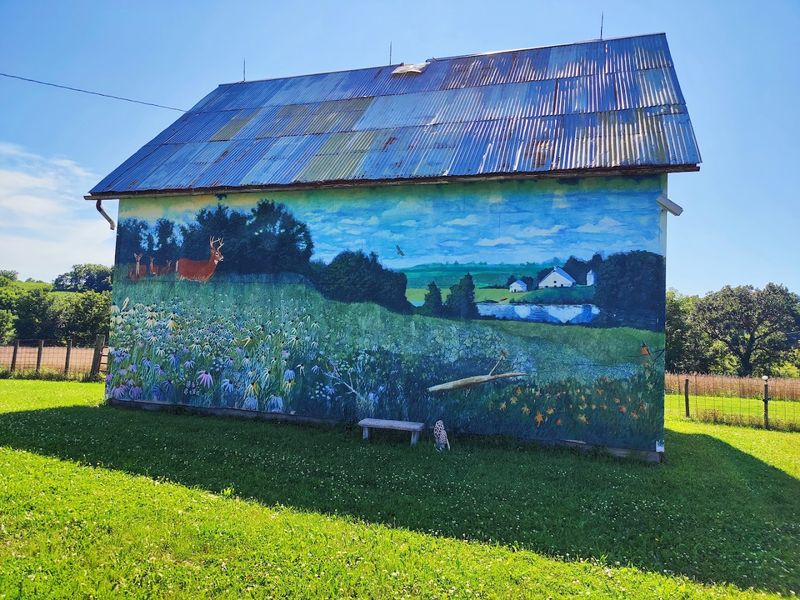
The property includes more than just the barn. There is a white farmhouse nearby, surrounding farm scenery, and a tidy rural setting that gives the whole place a classic Midwestern feel.
The mural itself covers a large section of the barn’s side and is painted with enough care that it holds up well even when viewed from a safe distance.
Most people treat this as a quick roadside photo stop, using the nearby gravel or roadside area when it is safe to do so. Since the barn is privately owned, it is worth being respectful and not wandering around the property.
The combination of the painted barn, the farmhouse, and the open Iowa sky makes for a photo that looks almost too good to be a roadside stop.
Bring your camera rather than just your phone if you want to do the mural justice, because the detail on the painting rewards a closer look.
Grant Wood and His Iowa Roots
Cedar Rapids, Iowa is about 15 miles west of Mt Vernon, and that is where Grant Wood spent a significant part of his life and career.
He taught art at the University of Iowa and became closely associated with a style called Regionalism, which focused on painting everyday American life, particularly in rural areas.
Wood believed that American artists did not need to travel to Europe to find worthy subjects. The farms, the people, and the landscapes of the Midwest were enough.
That philosophy gave his work a grounded, specific quality that set it apart from the abstract trends popular in his era.
American Gothic was not universally loved when it first appeared. Some Iowans felt it made them look humorless and rigid.
Over time, though, the image became a source of pride rather than embarrassment, and Iowa has embraced Wood as one of its most celebrated figures.
The barn near Mt Vernon is a direct expression of that pride, turning a flat stretch of highway into something that connects the road to a broader cultural story.
How Traffic Affects Your Visit and What To Do About It
US-30 near Mt Vernon is a four-lane highway with fast-moving traffic. That is the one detail you need to keep in mind before you stop.
Several people who have visited noted that cars move quickly past the barn, which makes crossing the road on foot a bad idea and makes parking on the shoulder feel a little rushed.
The safest approach is to slow down carefully, use the available gravel or roadside area only when it is safe, and keep the stop brief.
This is private property, so the goal is to get your photo without blocking traffic, entering restricted areas, or lingering longer than necessary.
If you are traveling with kids, keep them close to the car and away from the road edge.
Early morning visits tend to mean lighter traffic, and the softer light at that time of day also makes for better photos of the mural. The barn faces a direction that catches good natural light during the morning hours.
Going on a weekday rather than a Saturday afternoon will also cut down on the number of other cars pulling over at the same time, giving you a quieter moment with the mural.
Photography Tips for Getting the Best Shot
Getting a good photo of the American Gothic Barn takes a little planning, but it is not complicated.
The mural is large, so a wide-angle shot from across the driveway captures the whole image along with the surrounding farm setting.
If you want a tighter shot of the painting itself, zoom in from a safe distance rather than walking right up to the barn wall.
The best light hits the barn in the morning, so an early arrival gives you both better photos and a less crowded stop.
Overcast days also work well because they cut down on harsh shadows across the mural’s surface, which helps the painted details show up clearly in photos.
One fun option is to pose in front of the barn the way the figures in the painting are posed, standing straight, looking stern, and holding something that could pass for a pitchfork. It is a bit of a cliche at this point, but plenty of people do it and the results are always good for a laugh.
The barn is a natural backdrop that does most of the creative work for you.
Is It Worth Stopping If You Are Not an Art Fan
Honestly, yes. You do not need to know anything about Grant Wood or American Gothic to enjoy this stop.
The mural is large, well-painted, and visually striking in a way that works even if your only reaction is “that is a cool barn.”
Road trips thrive on exactly this kind of unexpected, low-effort stop that breaks up the monotony without requiring a two-hour commitment.
The whole visit takes about ten to fifteen minutes if you want to pull over safely and take a few photos. It is free to view from the road and does not require any advance planning, but it is still private property, so the stop should be quick and respectful.
That combination makes it an easy yes for almost any road tripper passing through Iowa on US-30.
Kids tend to get a kick out of the oversized painting on the barn wall, especially once you explain that the two serious-looking people in the image became one of the most parodied paintings in history.
From cereal boxes to Halloween costumes, American Gothic has shown up everywhere, and standing near the painted barn version gives that cultural familiarity a fun, physical context.
The Nearby Area and What Else Is Around
Mt Vernon is a small college town in Linn County, Iowa, home to Cornell College. It has a modest but appealing downtown with coffee shops, local restaurants, and a relaxed small-town atmosphere.
It is worth a short detour off the highway if you want to stretch your legs and grab something to eat after your barn stop.
Cedar Rapids is roughly 15 miles to the west and offers more options for food, lodging, and activities, including the Cedar Rapids Museum of Art, which holds a major collection of Grant Wood’s work.
If the barn sparks your interest in Wood’s paintings, the museum is the logical next stop and a natural extension of the same road trip.
Palisades-Kepler State Park is also nearby, giving travelers a more official place to walk, stretch, and enjoy the outdoors after the quick photo stop at the barn.
The combination of art, nature, and a college town makes this stretch of US-30 more varied than it first appears.
Practical Details Every Visitor Should Know Before Going
A few practical notes will make your visit smoother. The barn is on private property, so treat it with the same respect you would give any working farm or private residence.
Use the nearby gravel or roadside area only when it is safe, keep noise to a minimum, and do not wander into fenced areas or beyond the immediate viewing area.
No admission fee, no ticket booth, no sign-in sheet. Just pull up safely, take your photos, and move on when you are ready.
The barn is viewable from the road at any time, though daytime is obviously better for photos and easier for navigating the roadside safely.
The address is 1278 US-30, Mt Vernon, IA 52314, and it shows up accurately on Google Maps, so navigation is straightforward. Cell service is generally reliable along this stretch of highway.
Restrooms are not available at the barn itself, so plan accordingly before you leave the highway. The nearest gas stations and convenience stores are a short drive in either direction along US-30.
Why This Barn Stuck With Me Long After I Left
I did not plan to stop here. I was driving through Iowa on US-30 and spotted the barn from about a quarter mile away, that unmistakable image on the side wall catching my eye before I even registered what I was looking at.
I pulled into the driveway, parked next to a windmill, and stood there for a few minutes just taking it in.
What surprised me was how well the mural works in its actual setting. A reproduction of a famous painting on a barn wall could easily feel gimmicky, but it does not.
The scale feels right, the painting quality is solid, and the surrounding farm property gives it a context that makes sense. Wood painted Midwestern farm life, and here is that same subject matter, literally surrounding the image.
Iowa has a habit of rewarding people who pay attention to the small stuff along its highways, and this barn is one of the better examples of that.
It costs nothing, takes almost no time, and gives you something worth talking about for the rest of the drive.