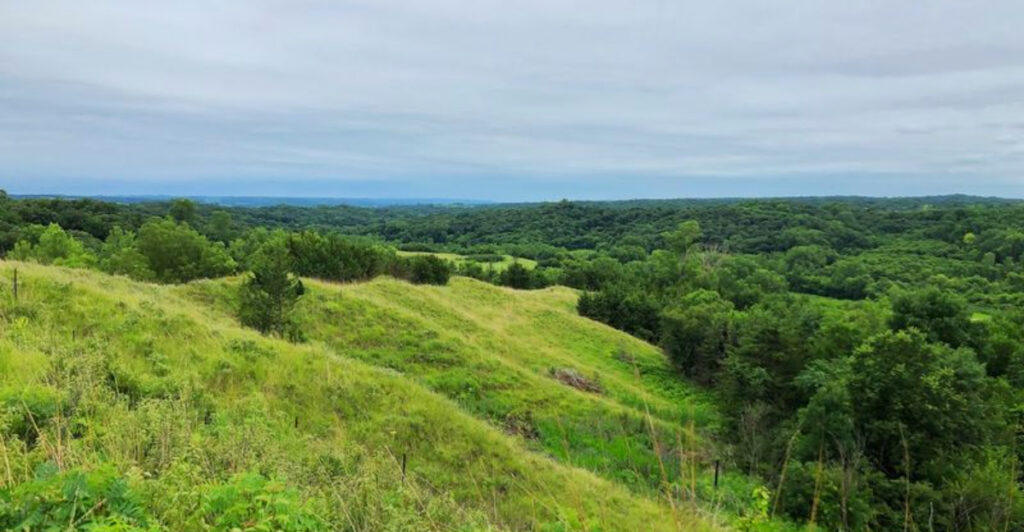
Western Iowa has a way of keeping its most interesting stories behind gravel roads and quiet trailheads. In the Loess Hills, one state park pairs steep ravines, open ridgelines, and peaceful woods with a 1850s settlement story that feels almost hidden beneath the leaves.
The scenery alone would be enough reason to visit. The trails climb, dip, and twist through some of Iowa’s most dramatic terrain, giving you canyon views, quiet creek bottoms, and the satisfying feeling that you had to work a little for the best parts.
Then the history starts to surface, and the whole place changes. What first looks like a rugged hiking escape becomes something deeper, shaped by a vanished community, old ambitions, and a chapter of Iowa history that still lingers in the landscape.
Where the Park Sits and How to Find It
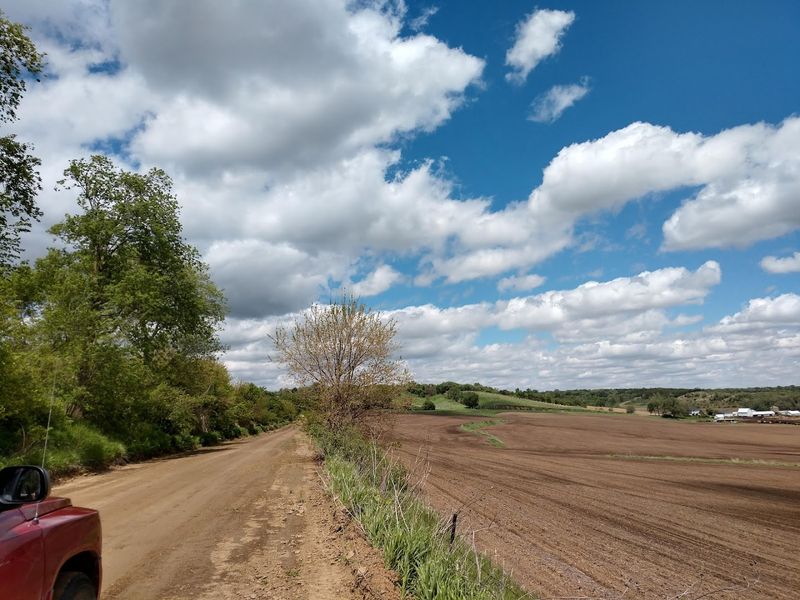
Fair warning before you make the drive: Preparation Canyon State Park likes to make you work a little before handing over the scenery.
The park sits in the dramatic Loess Hills of Monona County in western Iowa, not far from the Missouri River bluffs, and getting there can feel like part navigation test, part back-road adventure.
Google Maps has been known to send visitors down roads that are not exactly helpful, so it is worth paying close attention once the gravel starts. A tip many hikers share is to search for Loess Hills Hideaway camping first, then follow the signs toward the park from there.
Most of the roads leading in are gravel, so a higher-clearance vehicle can make the trip easier, especially after rain. The park is open daily from 4 AM to 10:30 PM, which gives you plenty of flexibility if you want an early hike or a quieter evening visit.
Once you finally arrive, the whole effort starts to feel oddly satisfying, like the park wanted to make sure you really meant it. You can find Preparation Canyon State Park at 340th St, Moorhead, IA 51558.
The Forgotten Settlement That Started It All
The name of this park is not a metaphor or a poetic choice. It refers to an actual 1850s community called Preparation, founded by a man named Charles Thompson, who led a schismatic group that had broken away from the early Latter-day Saints movement.
Thompson believed this land in the Loess Hills was the place where his followers would prepare themselves spiritually and physically for a greater purpose. He established a tight-knit, communal settlement here in the 1850s, and the community farmed, built homes, and lived according to his teachings.
The story did not end quietly. Thompson was eventually accused of fraud and misusing community resources, and the settlement collapsed under the weight of those disputes.
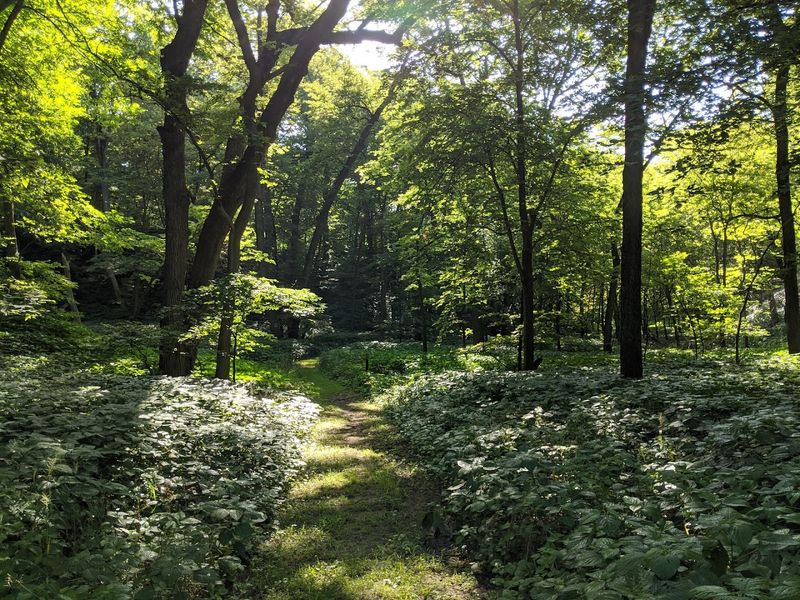
What remained was the land itself, now preserved as a state park. Interpretive signs along the trails share pieces of this story, and reading them while standing in the same ravines where those settlers once walked gives the whole hike a dimension that goes far beyond a simple nature walk.
The Loess Hills Landscape That Shapes Everything
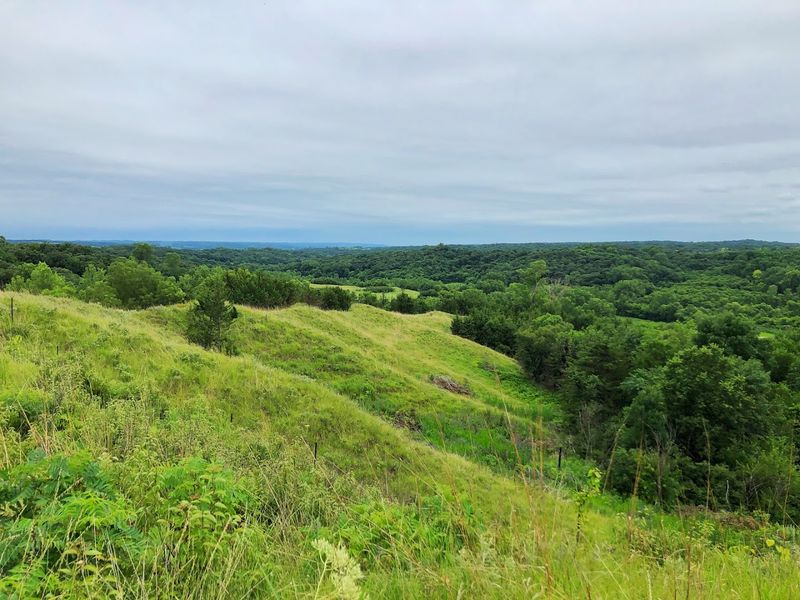
The terrain here is unlike anything I had experienced in other Iowa parks.
Loess Hills are formed from wind-deposited silt that built up over thousands of years after the last ice age, creating some of the steepest and most dramatic topography in the entire Midwest.
The canyon itself drops sharply from the ridgelines, and the trails follow both the rim and the canyon floor, giving you two completely different perspectives of the same landscape. From the top, you look out over layered hills and open sky.
From the bottom, the canyon walls rise around you and the creek runs quietly nearby.
The soil composition makes the trails particularly slippery when wet, especially when fallen leaves cover the loess in autumn. That is not a reason to avoid visiting in fall, which is honestly one of the most beautiful times to come, but it is a reason to wear shoes with actual grip.
The landscape itself is the kind that earns a second visit without needing to offer any extra incentive.
What the Trail System Actually Looks Like
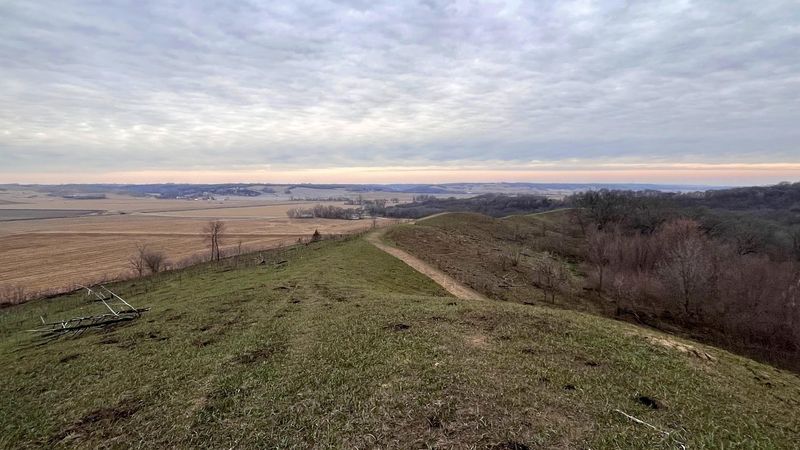
The trail network here covers roughly four miles in a loop format, with several intersecting paths that branch off toward different parts of the canyon and ridgeline.
The main loop is well worth completing in full, but the intersecting trails are where things get interesting and occasionally confusing.
Trail markers exist on wooden posts throughout the park, but they indicate direction rather than destination, which means you need a map to understand where each arrow is actually leading you.
Grabbing a map from the self-registration station near the parking area before you head out is genuinely important here, not just a suggestion.
Elevation changes are significant throughout the park. The trails along the canyon rim are more moderate and offer great views with less physical demand, while the paths descending into the canyon are steep and require careful footing.
I personally found the rim trails to be the most rewarding for scenery, but the canyon floor walk near the creek has its own quiet appeal. Plan for at least two to three hours if you want to cover the majority of the trail system properly.
Hike-In Camping That Feels Like a Real Escape
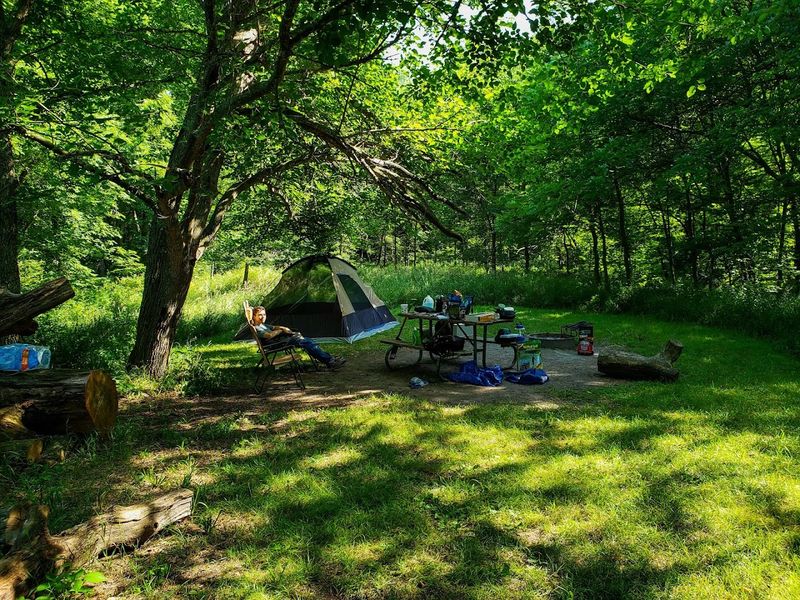
Car camping this is not. Every campsite at Preparation Canyon requires you to carry your gear in on foot, and the nearest site to the parking lot is about a quarter of a mile away, while several others stretch close to a mile in.
That extra effort pays off in a way that roadside campgrounds simply cannot match.
There are ten hike-in campsites total, all first-come, first-served with self-registration in the east parking lot. Each site has a table and fire ring but no bathroom facilities, so plan for a properly primitive overnight stay.
The official park map marks the numbered sites across the trail system, with some clustered closer to the eastern parking area and others farther into the hills.
Bringing a sturdy wagon or a quality backpacking setup makes the carry-in significantly more comfortable, especially for families with gear to haul.
The Ridgeline Views Worth Every Steep Step
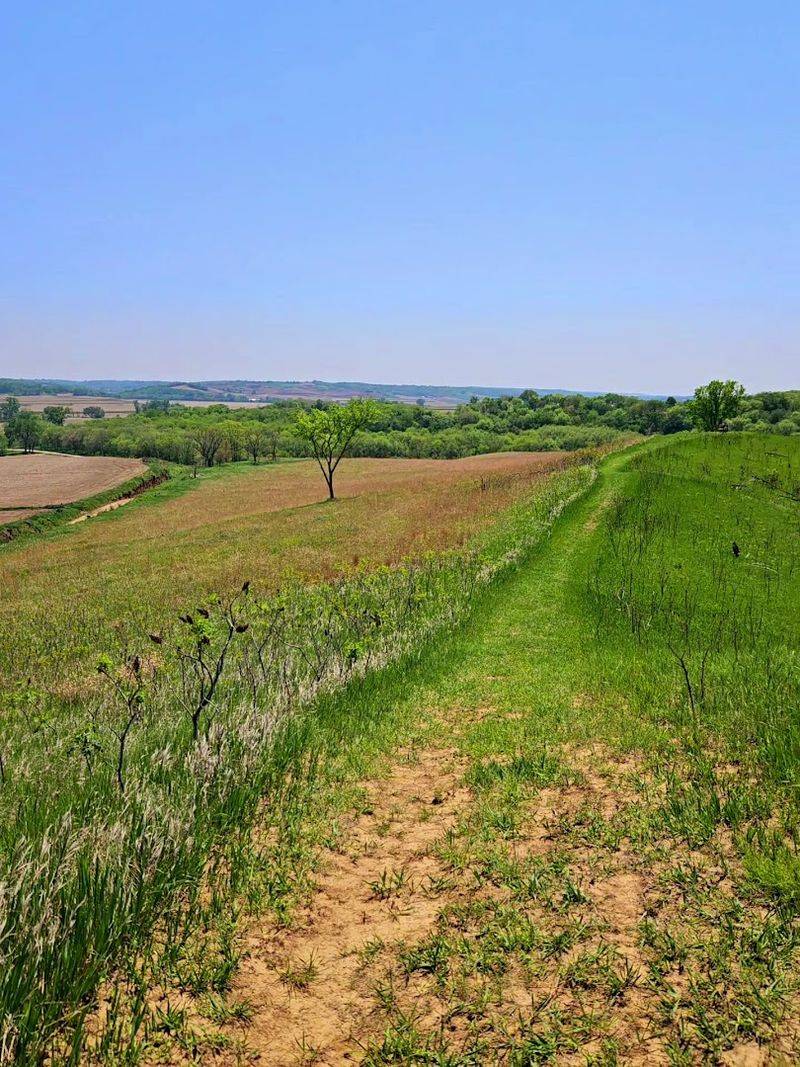
When you enter the park and bear right at the fork, you are heading toward the ridge area, and that choice rewards you with the kind of views that make people stop mid-stride and just stand there for a moment.
The ridge sits high above the canyon and surrounding hills, offering an open panorama that stretches across the layered terrain of the Loess Hills.
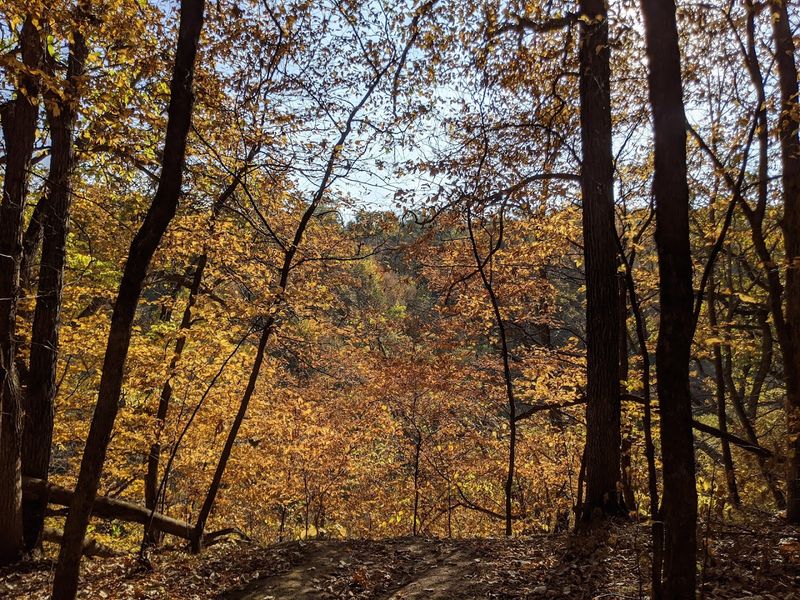
The contrast between the dense forest below and the open sky above the ridge is genuinely striking. On a clear day, the visibility across the hills is impressive, and in autumn the foliage turns the whole landscape into something that looks almost too saturated to be real.
Even on a cloudy November day, as I once visited, the muted tones and quiet stillness of the ridge had their own particular mood.
The climb to reach the ridge is not trivial. Your legs will remind you of the elevation gain on the way up, but the payoff at the top makes the physical effort feel less like a burden and more like the price of admission for something genuinely worth seeing.
The descent back down requires attention and steady footing.
Wildlife, Sounds, and the Unexpected Quiet
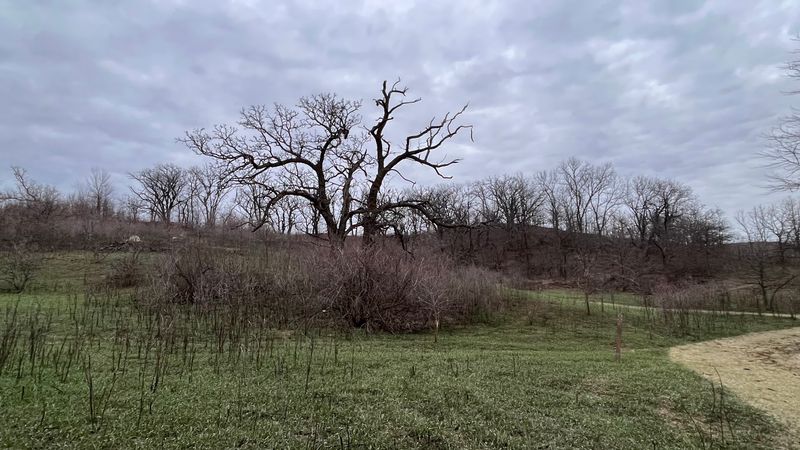
The park has a stillness to it that catches you off guard, especially if you are used to busier outdoor destinations.
On my visit in early November, I encountered fewer than six other people across several hours of hiking, and there were long stretches where the only sounds were wind through the trees and my own footsteps on the trail.
Coyotes are a regular presence here, particularly audible around sunset. Hearing them call from the canyon while you are sitting at a campsite is one of those experiences that reminds you how different this kind of landscape feels from everyday life.
Birds are active throughout the park, and the mix of forest and open pasture along the trails creates a varied habitat that supports a wide range of species.
The creek at the canyon bottom adds a gentle ambient sound to the lower trails, though the pond in that area tends to be stagnant rather than clear.
The wildlife activity is most noticeable during early morning and evening hours, which happen to be the same times when the light on the hills is at its most interesting.
Early risers genuinely get the best version of this park.
Best Seasons and When to Plan Your Trip
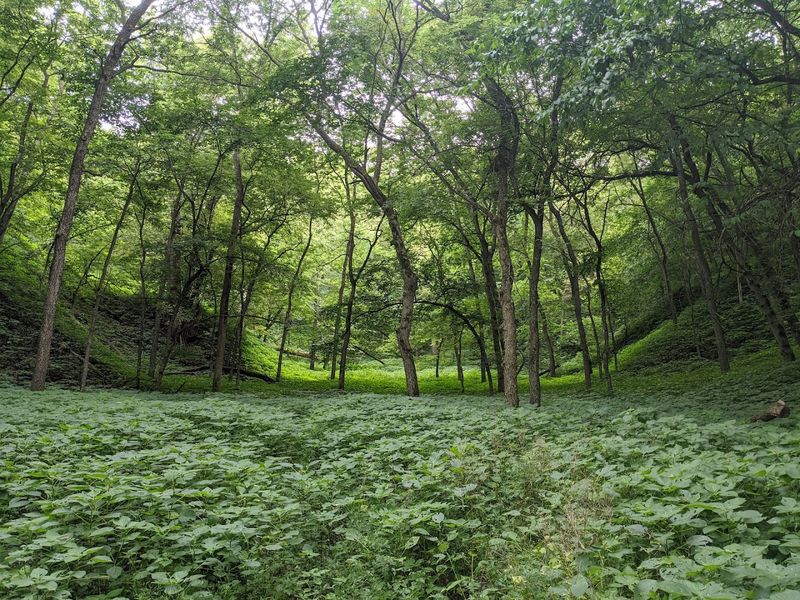
Spring and fall are the two seasons that get the most praise from people who visit regularly, and both have genuinely strong cases.
Spring brings green growth to the hillsides, wildflowers along the canyon floor, and a freshness to the air that makes the steep climbs feel more forgiving.
Fall turns the entire park into a patchwork of warm color that is particularly dramatic from the ridgeline overlooks.
Summer visits are entirely possible, but the heat and humidity of a western Iowa summer can make the steeper sections of trail feel more demanding than they would otherwise. The tree cover helps, but the canyon trails with less airflow can get warm.
Winter visits are less common but the park stays open, and the bare trees actually open up views that the leaf canopy hides during warmer months.
One practical note for any season: avoid hiking here after significant rainfall. The loess soil becomes slick and unstable when wet, and the steep canyon trails especially can become genuinely difficult to navigate safely.
Mud also has a way of making trails that cross one another even harder to distinguish, which adds to the navigation challenge this park already presents.
Practical Tips Before You Head Out
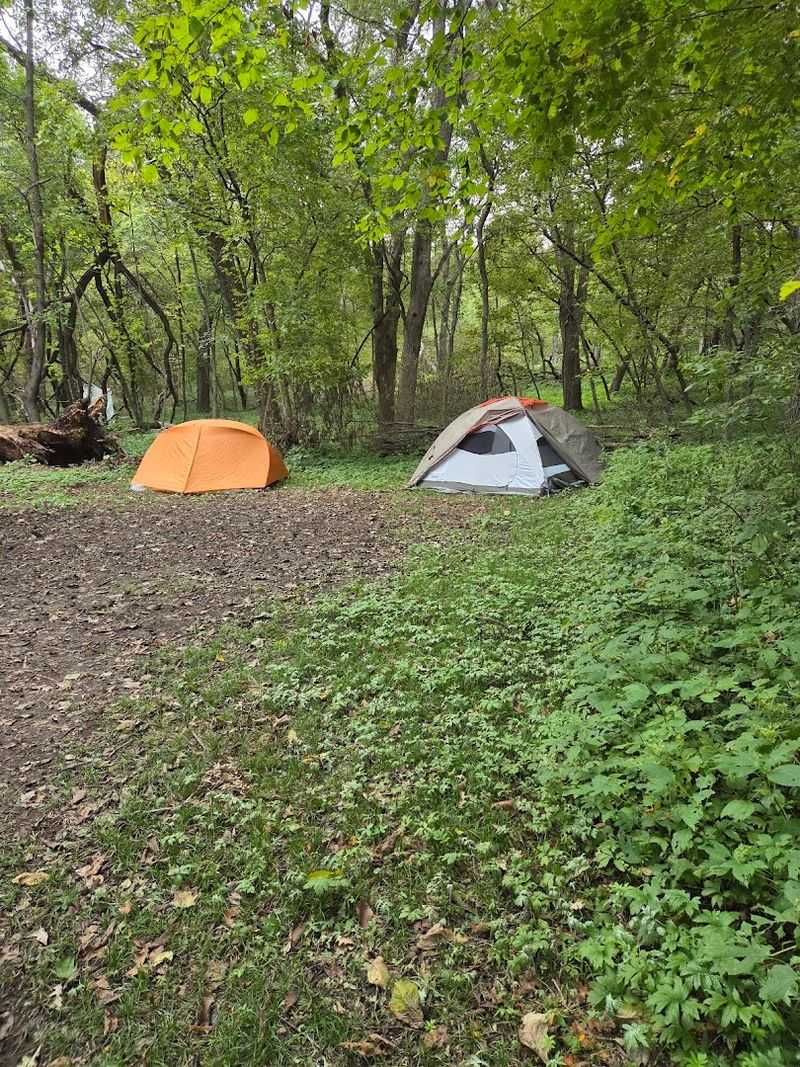
A few things I wish someone had told me before my first visit. Cash is required for the self-registration camping fee, and there is no ATM anywhere near the park, so sorting that out before you leave home is not optional.
The amount is modest, but exact change or small bills are your best approach.
Trail navigation genuinely requires a map. The arrows on posts throughout the park point directions but do not label destinations, and several trails cross each other in ways that can lead you on a longer route than planned if you are not tracking your position.
Pick up the map at the registration station before you set out, and keep it accessible rather than stuffed in a bag.
Cell service in the area is limited, so downloading offline maps before you arrive is a smart move. The park has restroom facilities, though they are described as primitive, and their availability has varied over the years.
Bring your own supplies to be safe. The park phone number is (712) 456-2924 if you want to confirm current conditions before making the drive.
Ear protection is also worth packing for camping, as nearby farm equipment occasionally runs late into the night.
Why This Quiet Corner of Iowa Stays With You
There are plenty of parks in Iowa that offer good hiking and pleasant scenery, but Preparation Canyon offers something harder to quantify.
The combination of genuinely challenging terrain, an almost total absence of crowds, and a historical layer that runs all the way back to the 1850s gives this place a texture that stays in your mind long after you have driven back down the gravel road.
The story of Charles Thompson and his followers adds a kind of weight to the landscape that you do not find at most state parks.
Reading an interpretive sign about a community that built their lives here, argued, fractured, and eventually scattered, while standing in the same canyon they once farmed, is a quietly affecting experience.
I have visited parks with better facilities, easier parking, and more reliable trail signage, but few that left me thinking about them for days afterward.
Preparation Canyon earns its place on any list of underrated Iowa destinations not through spectacle but through the kind of quiet depth that rewards curious visitors who are willing to do a little extra work to get there.
That balance of effort and reward is exactly what makes it memorable.