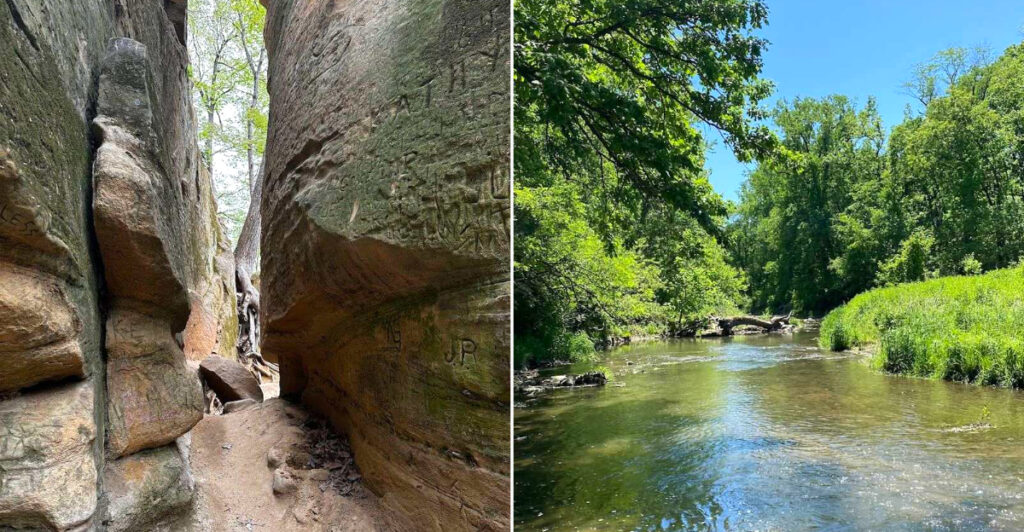
Iowa loves catching people off guard.
You expect open fields and long, flat roads, then a trail suddenly drops you between sandstone cliffs, shaded woods, and a creek that practically dares you to get your shoes wet.
This little Iowa escape feels more adventurous than it has any business feeling.
There are bluffs that make you slow down, creekside spots that make kids instantly forget the word “bored,” and trails that feel cool and tucked away even when summer is doing its usual dramatic routine.
Add in a historic grist mill with real 1800s character, and the whole place turns into the kind of afternoon that starts as a simple walk and ends with everyone acting like they discovered something.
Wildcat Den State Park
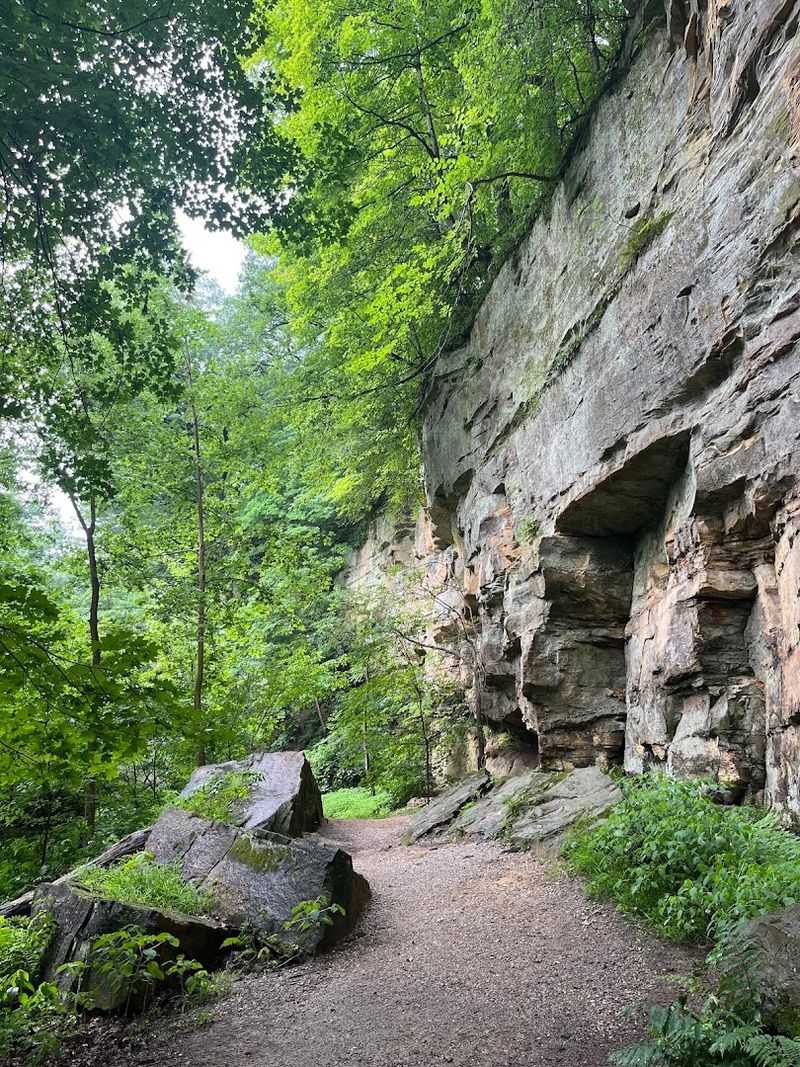
Wildcat Den feels adventurous fast. This Muscatine-area park brings cliffs, creekside trails, and wooded shade together in a way that feels bigger than a simple Iowa walk.
The park sits at 1884 Wildcat Den Road, where forested bluffs and Pine Creek create the kind of scenery that can surprise first-time visitors.
Trails wind past sandstone outcroppings, shaded ravines, and creek views that make the landscape feel cool, textured, and easy to keep exploring.
It is also free to enter, which makes the whole place even easier to add to a spontaneous afternoon plan.
The mix of hiking, water, rock formations, and nearby historic features gives the park more variety than its quiet setting suggests.
It is the kind of Iowa escape where a short walk can quickly turn into a full afternoon of climbing, pausing, looking around, and wondering why this place is not talked about more.
For an Iowa trail escape with sandstone cliffs, Pine Creek scenery, wooded paths, and just enough adventure to make the day feel discovered, this Muscatine favorite is worth seeing up close.
You will find Wildcat Den State Park at 1884 Wildcat Den Rd, Muscatine, IA 52761.
The Sandstone Cliffs That Stop You Mid-Step
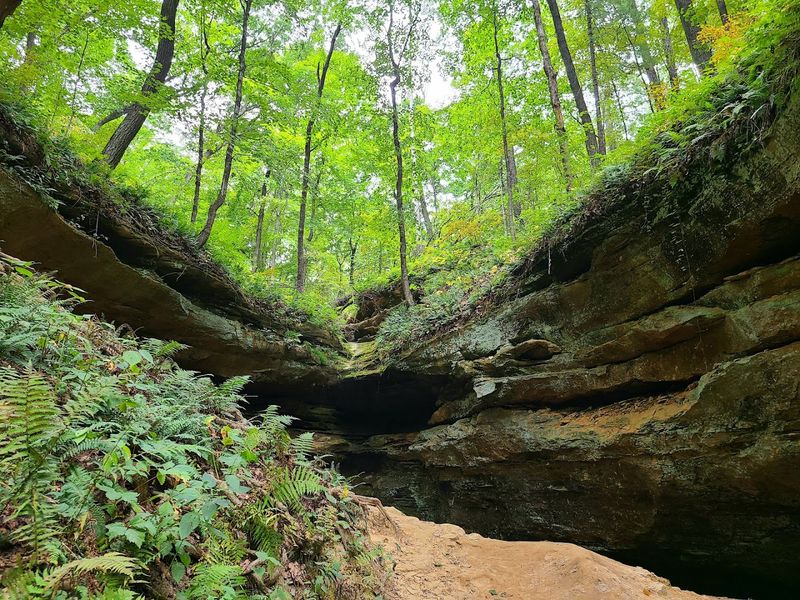
Nobody warned me the rock walls would be that tall. The sandstone outcroppings at Wildcat Den rise dramatically along several trail sections, and the scale of them genuinely catches you off guard when you are used to flat Iowa roads.
These formations are estimated to be over 300 million years old, which means they were here long before anything resembling a Midwestern corn field existed.
The rock surfaces show layers of compressed sediment, and the colors shift from pale tan to deep rust depending on the light and moisture.
The Punch Bowl Trail gives you the best access to the most dramatic cliff sections. The trail dips into a natural bowl-shaped depression surrounded by these bluffs, and the acoustics inside it are oddly satisfying when the creek is running strong.
Some sections of the trail run right along the base of the cliff face, close enough that you can press your hand flat against the stone and feel how cool it stays even on a warm afternoon.
That geological age starts to feel very real at that moment.
Pine Creek And The Joy Of Getting Your Feet Wet
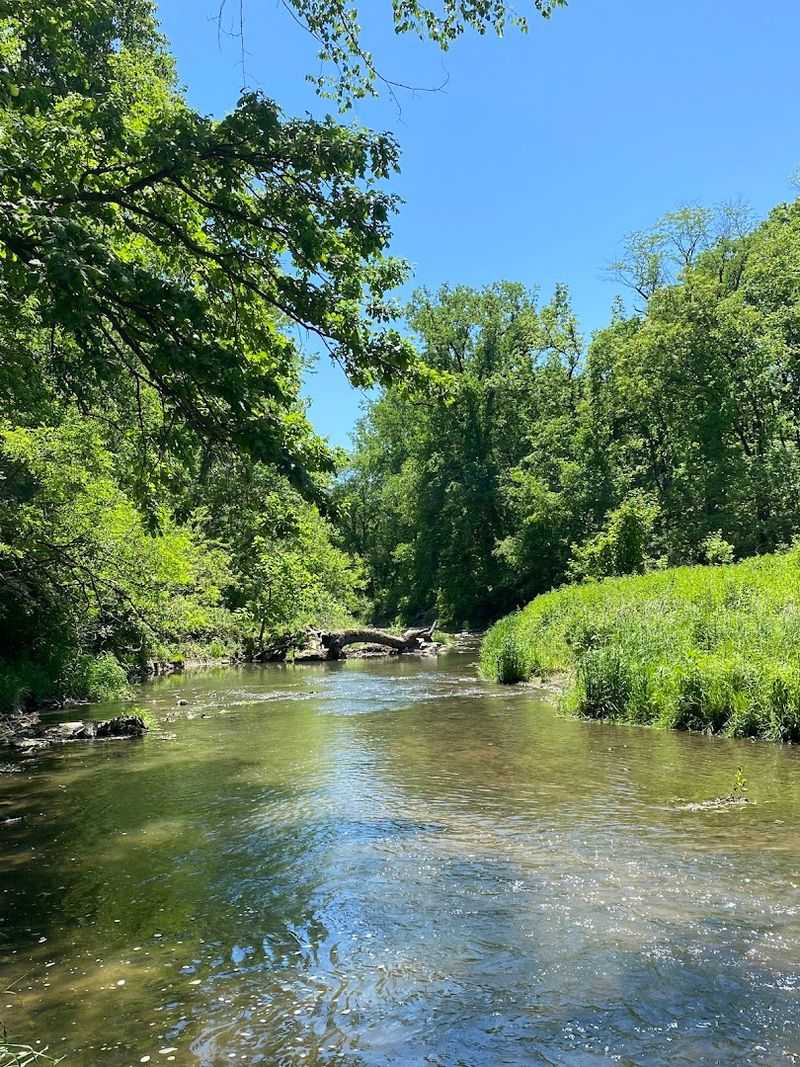
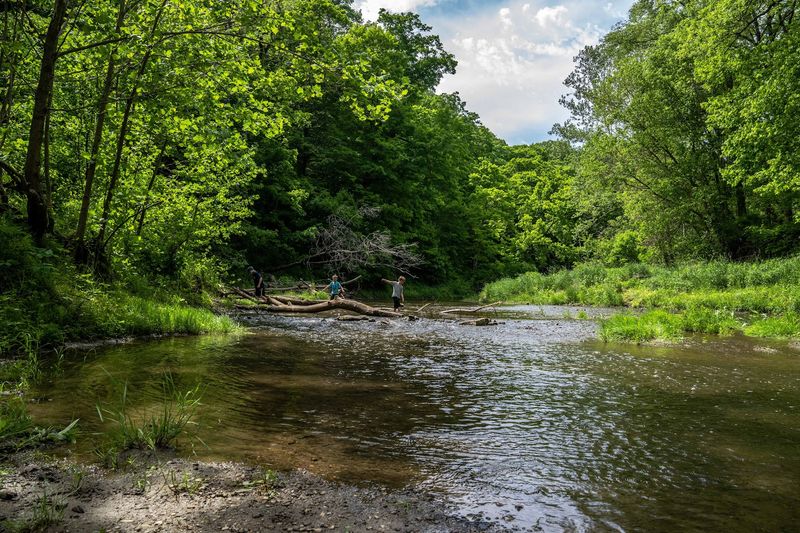
Pine Creek runs through the lower sections of the park, and it is the kind of creek that makes adults forget they are adults.
The water is clear enough to see the bottom, the current is gentle in most spots, and on a warm day, the cold water is practically an invitation.
I watched a family set up camp chairs right at the edge of the bank and spend a solid hour just watching their kids chase crawdads through the shallows. No one was in a hurry.
The creek creates natural pauses in what would otherwise be a straight hiking loop, and those pauses are honestly some of the better parts of the visit.
If you plan to wade, bring water shoes or sandals with grip because the creek bed has smooth rocks that get slippery. The water level varies with rainfall, so the experience changes depending on when you show up.
After a rainy week, the creek runs fuller and faster, which adds its own kind of energy to the lower trail section. It is one of those details that makes a repeat visit feel different from the first one.
The Grist Mill That Has Been Here Since 1848
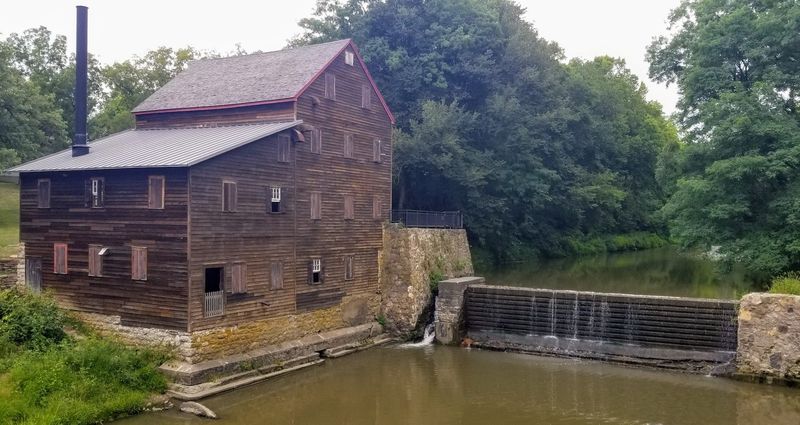
The Pine Creek Grist Mill is the kind of structure that makes you stop scrolling and actually look.
Built in 1848, it is thought to be the oldest working grist mill on its original site between the Mississippi River and the Rockies.
When the mill is open for tours, you can walk through the interior and see how grain was ground into flour using water power and mechanical ingenuity.
The interpretive signs inside explain each part of the process clearly enough that even kids come out with a real understanding of how the whole system worked.
Right next to the mill, Pine Creek and the mill dam create one of the most photographed views in the park. The combination of the old wooden structure and the moving water makes it easy to understand why visitors spend extra time here.
The mill is free to visit, though interior access depends on staffing and season, so it is worth calling ahead or checking the Iowa DNR website if touring inside is a priority for your group.
Trail Options For Every Pace And Fitness Level
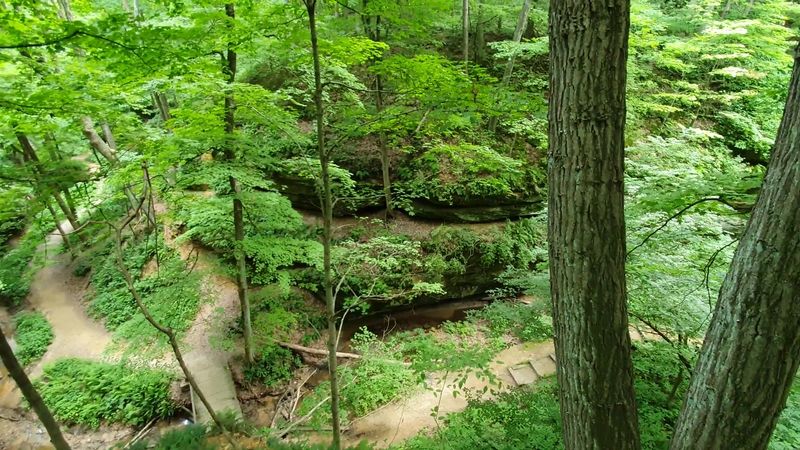
One of the things that keeps Wildcat Den in regular rotation for local families is that the trail system genuinely works for different fitness levels without feeling watered down for anyone.
The park has over five miles of marked trails, and they connect in ways that let you build your own route depending on how much time and energy you brought with you.
The shorter loops near the lower picnic area are flat enough for casual walkers and people who just want a shaded stroll without committing to a full workout.
The longer routes, including the Punch Bowl Trail and the trails leading up to Backbone Ridge, involve steep staircases and some scrambling, which earns the “difficult” rating on the official trail map.
That rating refers to elevation gain and stair sections, not trail length, which is worth knowing before you assume a short trail will be easy.
The trails are entirely shaded by a dense hardwood canopy, which makes summer hiking far more comfortable than it would be in open terrain.
Trail markers are generally clear, though bringing a downloaded map is a smart backup since the physical map containers at the trailhead are sometimes empty.
Devil’s Punch Bowl And Fat Man’s Squeeze
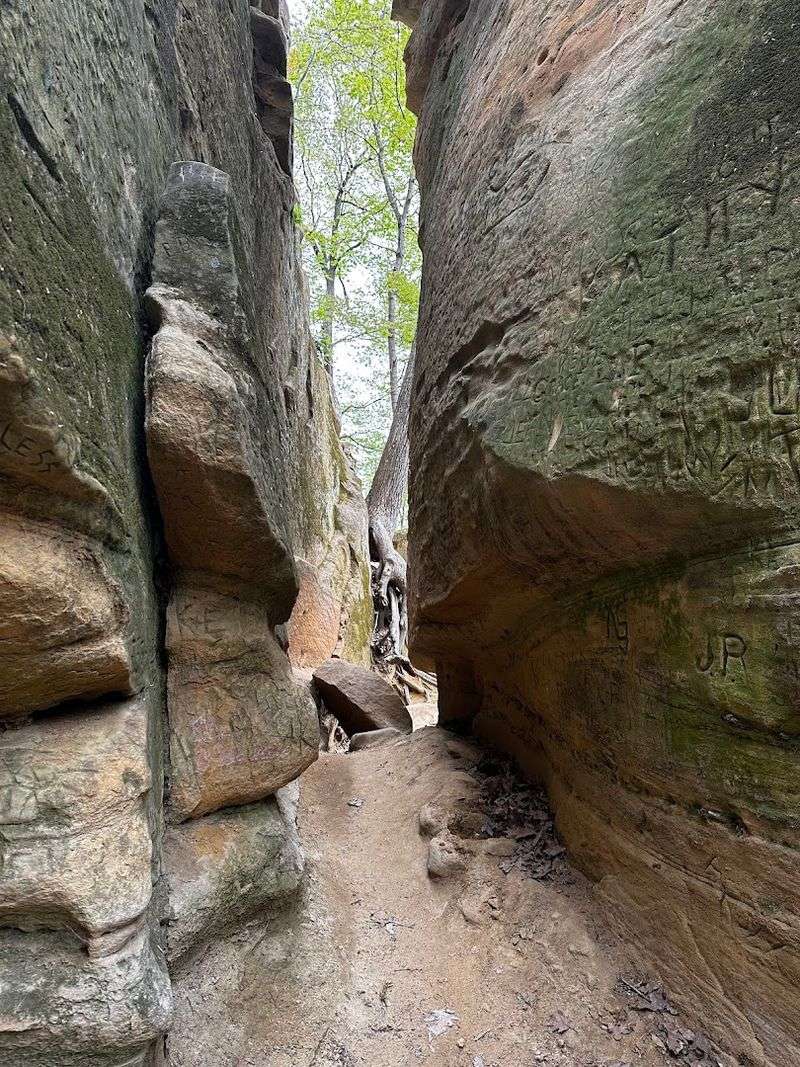
These two trail features have names that sound like they belong in a theme park. However, they are completely natural and completely worth seeking out.
Devil’s Punch Bowl is a dramatic bowl-shaped rock formation where the trail drops into a circular depression ringed by sandstone walls, and the effect is a bit like standing at the bottom of a natural amphitheater.
Fat Man’s Squeeze is exactly what it sounds like: a narrow gap between two rock faces that hikers pass through sideways.
It is tight enough to be memorable but not so technical that it requires any special gear.
Most adults can get through it without too much effort, though anyone carrying a large backpack might want to remove it first.
Both features sit along the Punch Bowl Trail, which is one of the more popular routes in the park for good reason.
The combination of the rock bowl, the squeeze, and the trail sections that run along Devil’s Alley creates a stretch of hiking that feels more like an adventure than a nature walk.
On a busy weekend, expect to share the trail, but the formations themselves are large enough that crowding never really ruins the effect.
Historic Buildings Beyond The Mill
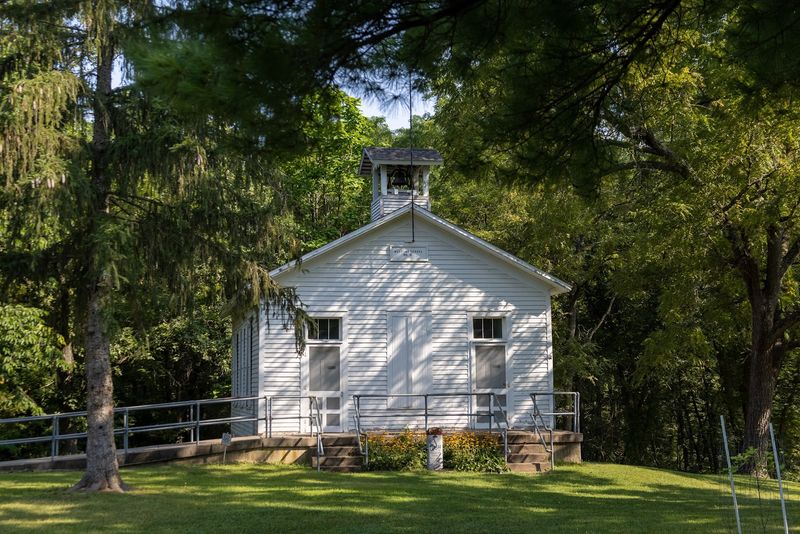
The grist mill gets most of the attention. But, Wildcat Den and its immediate surroundings include a small collection of historic structures that add real historical texture to a visit.
The park is home to the turn-of-the-century Melpine Schoolhouse, and nearby Old Stone Church adds another layer of local history to the area.
The schoolhouse is a compact one-room structure that has been restored with old desks, books, teaching materials, and records that help show what rural education once looked like in Muscatine County.
Old Stone Church sits just outside the park area and dates to 1867, when early settlers of German heritage built it as a Methodist Episcopal church. It is worth a short detour if you are already exploring the park’s historic side.
Access to the interiors can depend on staffing, season, and events, but even from the outside these buildings help give the area a stronger sense of place.
Wildcat Den is one of the few Iowa state parks where the human history feels as layered as the geology.
Wildlife, Wildflowers, And What Grows Along The Trail
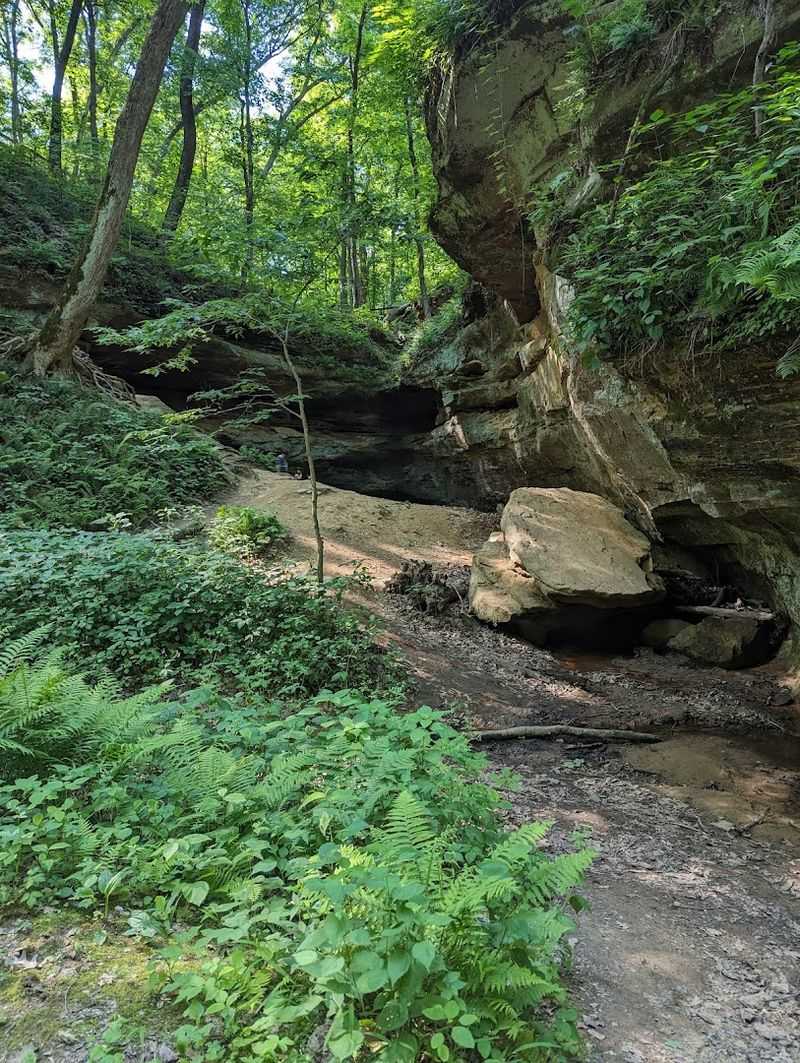
The plant life along Wildcat Den’s trails is dense enough that even people who do not normally pay attention to vegetation start noticing things.
Ferns grow in thick clusters along the lower trail sections near the creek, and mosses cover the rock faces in a way that makes the stone look almost upholstered.
The forest canopy is a mix of hardwoods, and in late spring and early summer, the understory fills in with seasonal greenery and wildflowers that pop up between trail sections. After wet periods, mushrooms can also appear along fallen logs and shaded areas.
Insects are part of the deal too, and that is not a complaint so much as a heads-up. Bring bug spray and apply it before you hit the trail rather than waiting until you are already being bothered.
The park is shaded and moist in many sections, which creates ideal conditions for mosquitoes in summer. That one practical step makes the difference between a great hike and a miserable one.
Camping, Picnicking, And Staying Longer Than A Day
Wildcat Den is easy to visit as a day trip, but the park also has camping options for anyone who wants to extend the stay into something more immersive.
Primitive campsites are available in the park’s non-modern campground, and reservations are required through the Iowa state parks reservation system.
The campground has water and vault toilets, but there is no electrical service and no showers, so visitors should plan for a simple camping setup rather than modern campground amenities.
The campground is seasonal and closes each year from November 1 through March 31.
Picnic shelters are scattered throughout the park and offer a good base for families who want to mix hiking with a longer outdoor meal. Two open shelters can be reserved, and the Mill Shelter is ADA accessible.
On weekends in summer, the shelters and popular picnic areas can fill early, so arriving before midday is a practical strategy if you want a good spot without having to compete for it.
Practical Tips Before You Go
A few things I wish someone had told me before my first visit, starting with the bug spray situation.
The park is shaded, moist, and close to creek habitat in several areas, which can make mosquitoes noticeable from late spring through early fall.
Bring a quality repellent and apply it before you leave the parking lot.
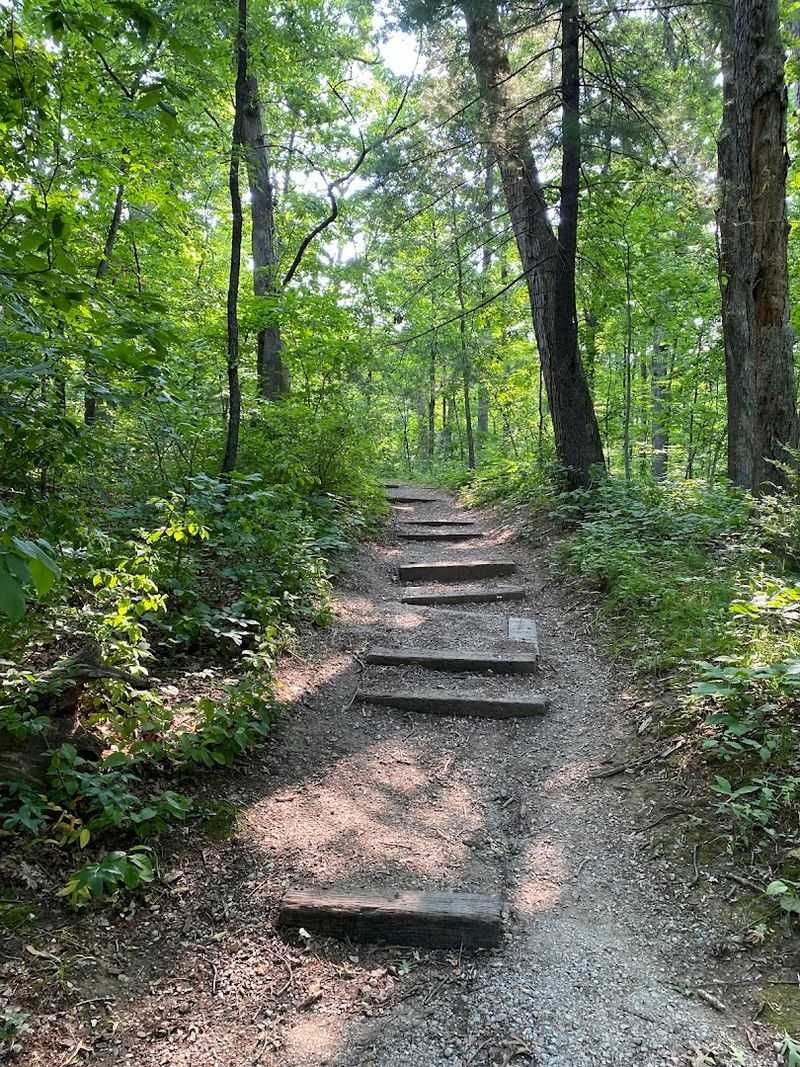
The trails are rated partly on the staircase sections, not just the overall distance, so a short trail can still feel demanding if it involves steep wooden steps cut into the hillside. Wear shoes with actual grip, especially if there has been rain recently.
The dirt sections get muddy and the leaf-covered stairs can be slick in autumn.
Carry your own water, and check current Iowa DNR park alerts before heading out because trail closures, repairs, and water availability can change. The park is open daily from 4 AM to 10:30 PM, which gives you a wide window, but weekdays are noticeably quieter than weekends if you prefer the trails without crowds.
Dogs are welcome on leash, which makes Wildcat Den one of the more dog-friendly options in Iowa for outdoor recreation.
Downloading a trail map as a backup is a smart move before you arrive.