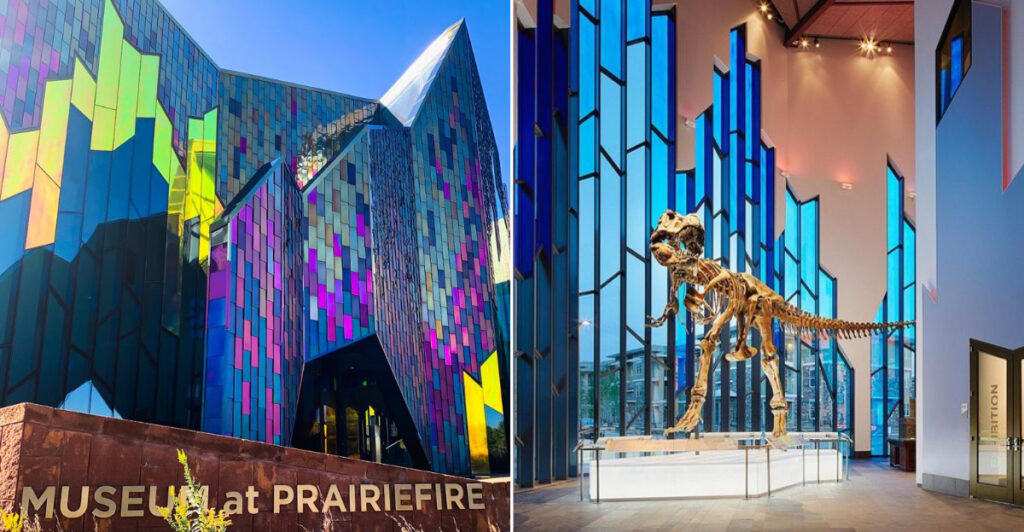
Buildings usually wait for you to step inside before they try to impress you.
This Kansas architectural wonder starts the show from the parking lot. Its rainbow glass catches the light in a way that makes the whole place feel alive, shifting with the sky and changing its mood as the day moves on.
That kind of entrance turns a simple museum visit into something more cinematic before the first exhibit even appears.
It is bold without feeling cold, unusual without feeling forced, and memorable enough to make people slow down just to stare for a minute. Some stops earn attention because of what they hold inside.
This one earns it before the doors open. I would probably take one photo, then immediately take five more because the building would keep looking different every time I glanced back.
The Iridescent Glass Exterior That Steals Every Glance
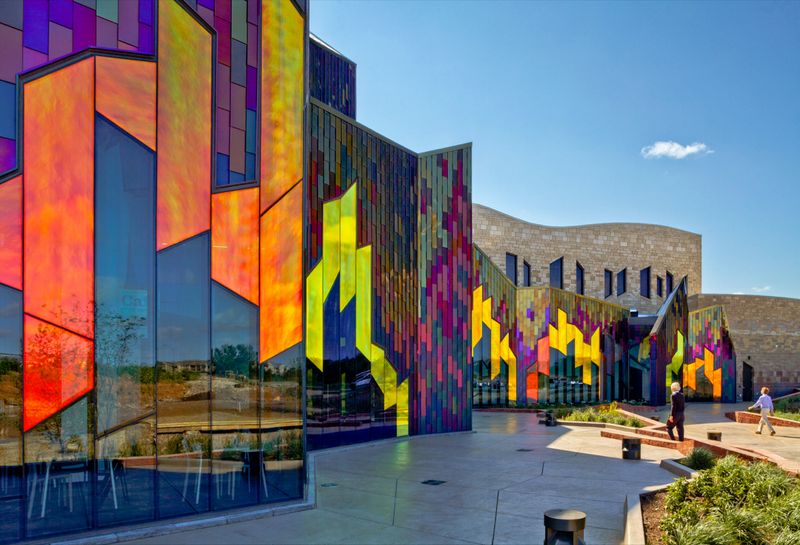
There are buildings you pass and forget, and then there is the Museum at Prairiefire, which you simply cannot ignore.
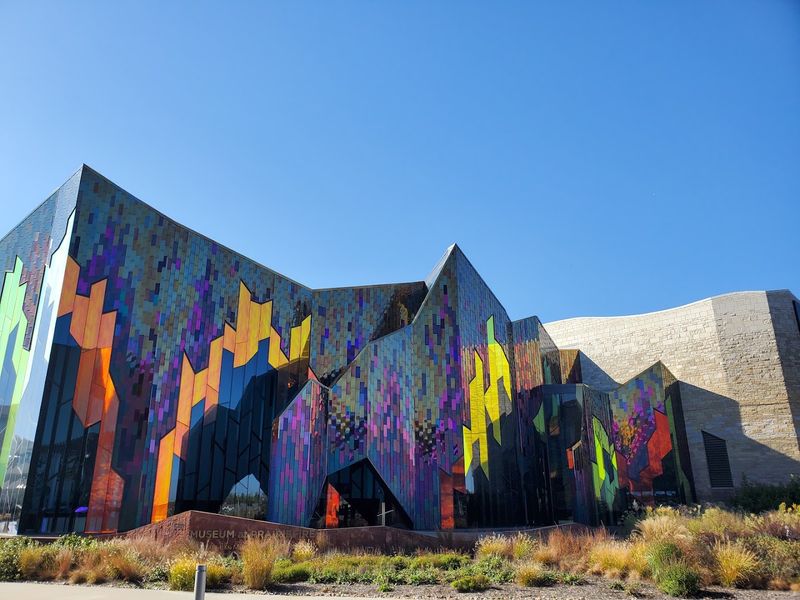
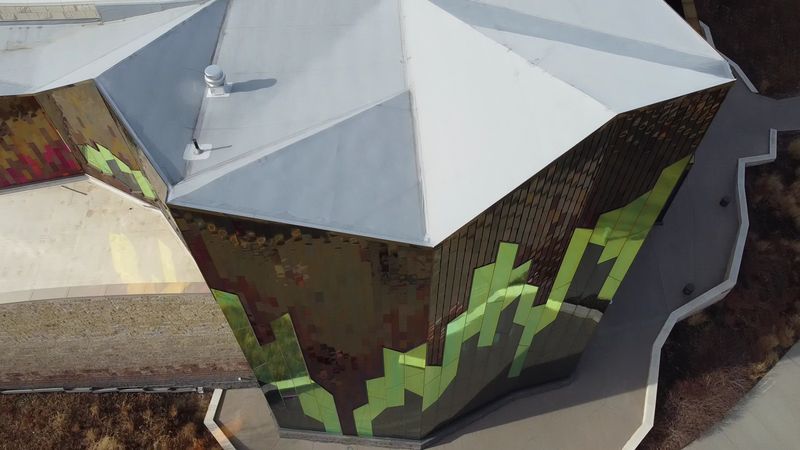
Its outer shell is covered in dichroic glass panels, a special type of glass that contains multiple micro-layers of metallic oxides fused together.
These layers interact with light in a way that produces dramatically different colors depending on your viewing angle and the position of the sun.
In the morning, the facade might glow in cool blues and purples. By midday, it can shift toward fiery oranges and golds.
At sunset, the whole building seems to burn with color, which is a deliberate nod to the prairie fires that once swept across this region of Kansas.
The effect is so vivid and dynamic that photographs rarely capture it fully. You genuinely have to see this Kansas landmark in person to appreciate how alive the architecture feels throughout the day.
How Dichroic Glass Actually Works Its Color Magic
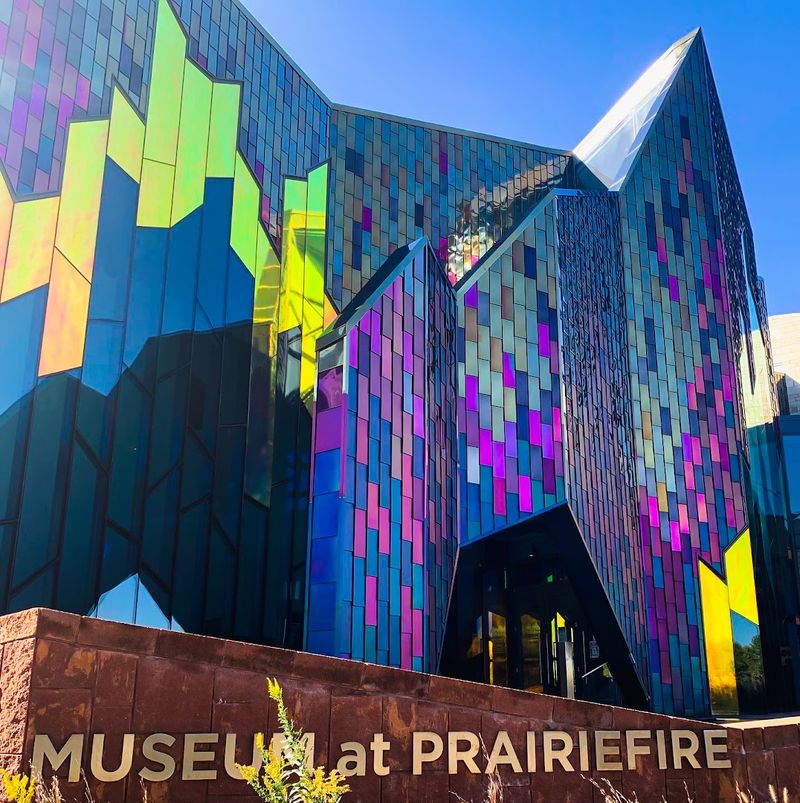
Most people assume the rainbow effect on the museum’s walls comes from paint or colored film, but the science behind it is far more interesting.
Dichroic glass gets its name from the Greek words meaning “two colors,” and it achieves its effect through thin-film physics rather than pigment.
During manufacturing, metallic oxides such as titanium, chromium, and magnesium are vaporized in a vacuum chamber and deposited onto the glass surface in layers just nanometers thick.
Each layer reflects a slightly different wavelength of light, and together they create that signature shifting rainbow effect.
Originally developed by NASA for use in spacecraft visors and satellite components, dichroic glass was later adopted by artists and architects who recognized its extraordinary visual potential.
The fact that a Kansas natural history museum is wrapped in space-age glass technology is, honestly, one of the most unexpectedly cool details about this entire building.
The Prairie Fire Inspiration Behind The Design
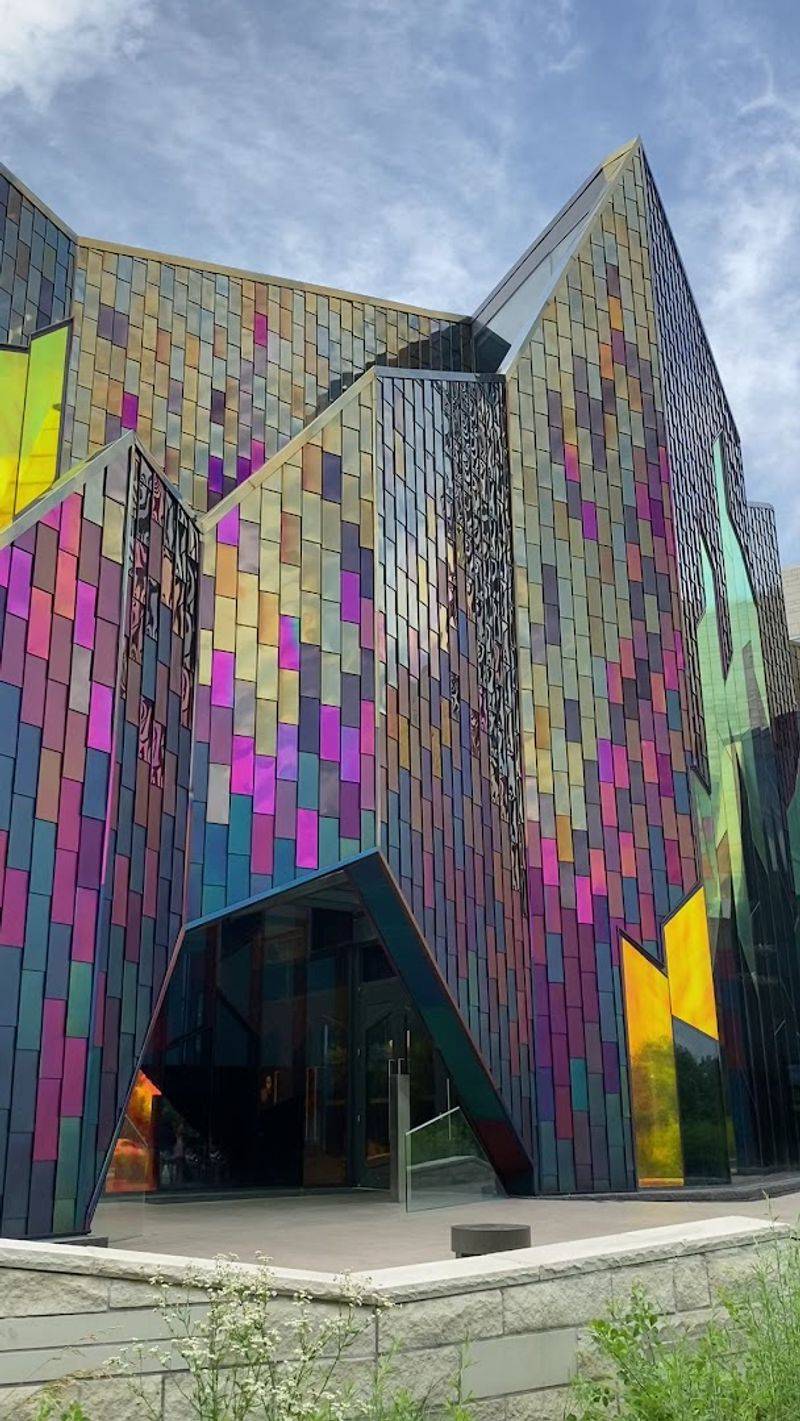
The name Prairiefire is not just a catchy label slapped onto a shopping district. It carries real historical and ecological meaning rooted in the Kansas landscape.
Prairie fires were a natural and essential part of the Great Plains ecosystem, clearing dead vegetation and allowing new growth to flourish across vast stretches of grassland.
The architects who designed the Museum at Prairiefire drew directly from this imagery when choosing the building’s color palette and material.
The shifting reds, oranges, and golds of the dichroic glass panels are meant to evoke the visual drama of flames rolling across an open Kansas plain.
Even the dark metallic framing around the glass panels suggests charred wood and scorched earth left behind after a burn.
The result is a building that does not just sit in its environment but actually tells a story about the land it occupies, which makes the architecture feel genuinely connected to the region’s natural identity.
Dinosaur Fossils and Casts That Dominate the First Floor
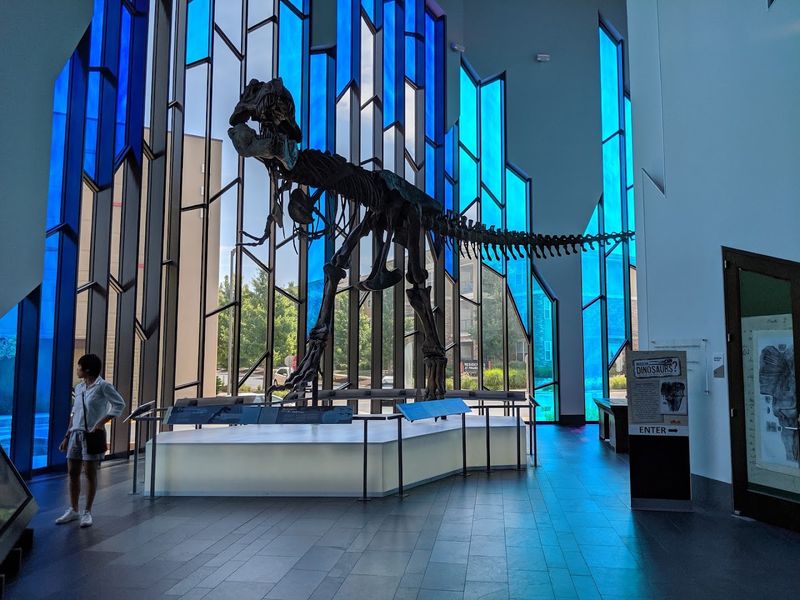
Step inside the Museum at Prairiefire and the first thing that greets you is a prehistoric scene with kid-magnet energy.
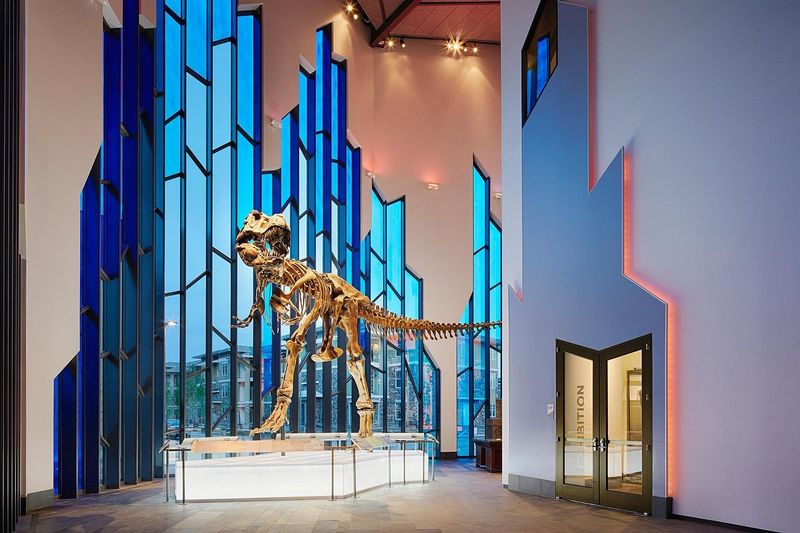
A towering T. rex commands attention near the entrance, with sea creatures and soaring reptiles helping fill the Great Hall with ancient drama.
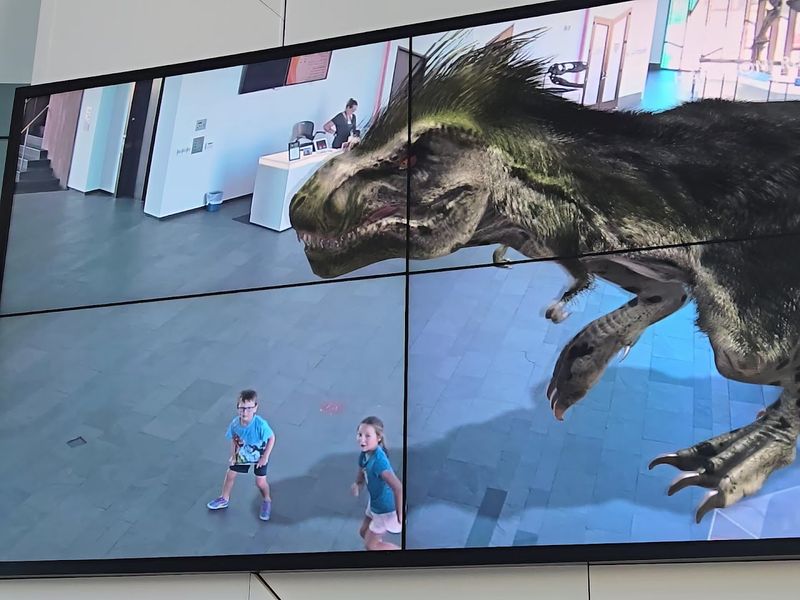
One of the more creative installations is ALIVE!, an augmented reality experience that lets visitors interact with creatures from the past while learning myth-busting facts about T. rex, Velociraptor, and a Kansas Pteranodon.
It is a surprisingly immersive touch that makes even a brief Great Hall stop feel memorable.
The Great Hall is part of the museum’s current all-access ticket, making it an easy add-on for anyone exploring the Prairiefire district in Overland Park.
For a Kansas natural history museum, the scale and presentation of the paleontology displays punch well above what you might expect from a community-focused institution, offering genuine educational value alongside the visual spectacle.
The Discovery Room Upstairs And Its Live Animal Encounters
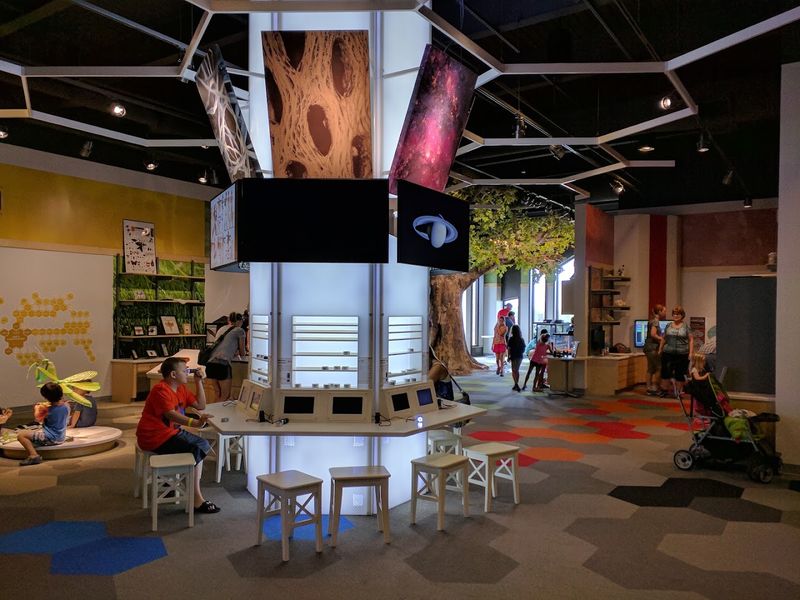
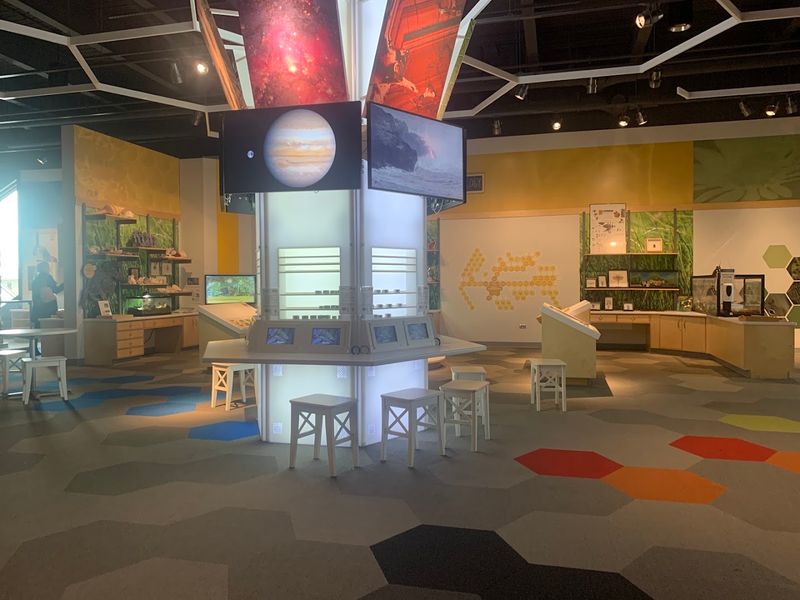
Upstairs at the Museum at Prairiefire, the Discovery Room transforms the visit into something far more tactile and hands-on.
This floor is organized around science stations covering fields like paleontology, zoology, geology, astronomy, and anthropology, each designed to encourage active exploration rather than passive observation.
The live animal section is a genuine crowd-pleaser. Current scheduled encounters include animals such as bearded dragons, a chinchilla, degus, a corn snake, turtles, a tiger salamander, and leopard geckos, though schedules can change for animal health and safety.
Staff members regularly bring animals out for closer interaction, turning a museum visit into something closer to a wildlife encounter.
The Discovery Room also includes hands-on science activities, artifacts, specimens, puzzles, and challenges that keep kids moving through the space.
For a Kansas attraction aimed at sparking curiosity in young people, the Discovery Room delivers an experience that is genuinely difficult to replicate anywhere else in the region.
Virtual Reality Experiences That Add A Modern Dimension
Tucked within the museum is an impressive virtual reality experience that adds another layer to the visit.
Current admission language lists Virtual Reality on weekends as part of the all-access ticket, and the museum promotes immersive experiences that send visitors into settings far beyond what any static display can offer.
The museum has used its Gordon Family VR Theater for rotating programs, so checking the current lineup before you go is the smartest move.
It is a small but thoughtful feature that makes the experience feel more like a modern science attraction than a traditional museum format.
VR technology in a natural history context is a smart pairing because it allows visitors to inhabit environments and subjects that are otherwise completely inaccessible.
For a Kansas museum that already surprises people with its architectural ambition, adding immersive technology to the mix signals that this institution is genuinely committed to staying relevant and exciting for modern audiences.
The Geology And Mineral Cabinet That Glows Under Black Light
One of the more quietly spectacular features in the museum is a large cabinet in the geology section filled with rocks, minerals, and glass specimens that are designed to fluoresce brilliantly under ultraviolet black light.
When the lighting works as intended, the cabinet transforms into a glowing rainbow of neon greens, vivid pinks, deep purples, and electric oranges.
Fluorescent minerals occur naturally when certain elements like manganese, uranium, or tungsten are present in the crystal structure.
Under normal light they can look unremarkable, but under UV exposure they reveal colors that seem almost impossibly vivid. It is one of those moments where natural science genuinely feels like magic.
This display connects thematically to the museum’s broader identity as a building that changes its appearance depending on the light conditions around it.
Both the architecture outside and the mineral cabinet inside share the same fundamental idea: that light itself is the medium through which beauty is revealed.
Free Admission To The First Floor And Affordable Upstairs Pricing
One of the most visitor-friendly aspects of the Museum at Prairiefire is its current pricing structure.
Instead of separate complicated tiers, the museum now lists an all-access ticket covering the Great Hall, exhibitions, Innovation Zone, Discovery Room, and weekend virtual reality.
This makes it a genuinely accessible stop for families, tourists, and curious passersby who happen to be exploring the Prairiefire district in Overland Park.
Current single admission is listed at five dollars for adults, children ages 3 through 12, and seniors, while veterans and active military members receive free admission.
For a Kansas attraction that offers this level of content and variety, that price point is remarkably reasonable and well below what comparable museum experiences charge in larger cities.
The museum’s own admission page lists free entry for veterans and active military members.
Local library discovery passes may also make visits more economical for some nearby families planning return trips or weekday outings with children.
The Building As An Event Venue With Stunning Photographic Potential
Beyond its role as a natural history museum, the Museum at Prairiefire has established itself as one of the most visually distinctive event venues in the Kansas City metro area.
The interior spaces combine soaring ceilings, dramatic lighting, and those signature colored glass walls to create an environment that is genuinely photogenic from every angle, including straight up.
The museum has hosted wedding receptions for as many as 170 guests while still maintaining comfortable space for a live band and a dance floor.
The courtyard behind the building provides an additional outdoor setting that is particularly striking during golden hour, when the surrounding architecture catches the last warm light of the day.
For event photographers and couples looking for something beyond the standard banquet hall aesthetic, this Kansas venue offers a backdrop that requires almost no additional decoration.
The building itself does most of the visual heavy lifting, which is a testament to just how striking the architecture really is.
Location, Parking, And Practical Tips For Your Visit
The Museum at Prairiefire sits at 5801 W. 135th Street in Overland Park, Kansas, right within the larger Prairiefire mixed-use development that includes shops, restaurants, and entertainment.
This makes it easy to combine a museum visit with a full afternoon or evening out in one of the Kansas City area’s most popular suburban destinations.
The museum’s official site currently lists the ZIP code as 66223, while some tourism listings still use 66224, so entering the street address is the safest navigation move.
Current hours are Monday through Saturday from 10 AM to 5 PM, with Sunday hours from noon to 5 PM.
Arriving earlier in the day gives you the best chance to see the exterior glass at its most colorful as morning light hits the building at a low, dramatic angle.
It is also smart to confirm hours before visiting, since programs or rentals can occasionally affect plans.