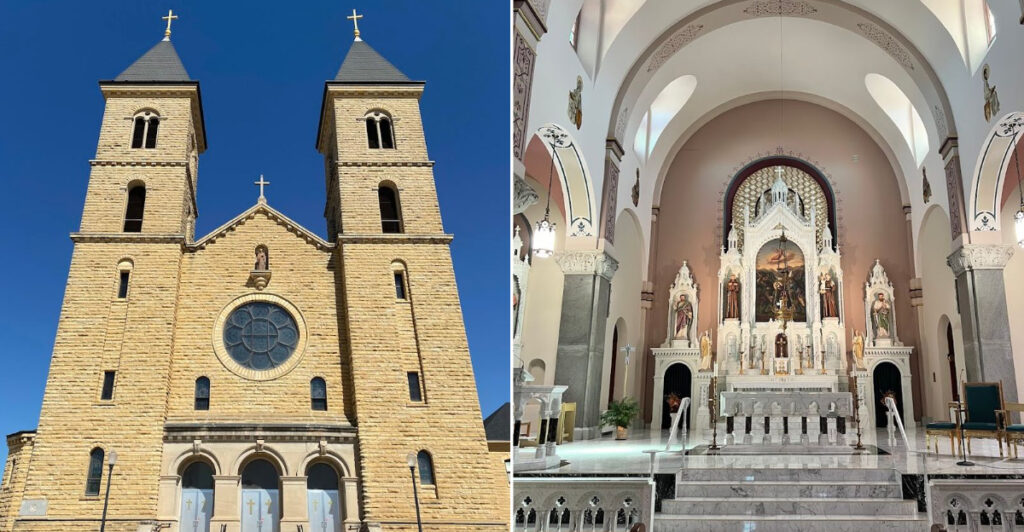
Some landmarks do not need skyscrapers around them to feel monumental. Set against the wide Kansas plains, a grand church with towering spires and old-world beauty can look almost unreal, like a piece of Europe rising from the prairie.
The nickname “Cathedral of the Plains” feels less like a flourish and more like the only phrase big enough to match the view.
This is the kind of place that makes you pause before reaching for your camera.
Stonework, stained glass, soaring arches, and quiet reverence all come together with the open landscape in a way that feels powerful and peaceful at once. It is not just a stop for architecture lovers.
It is a place for anyone who enjoys history, craftsmanship, and the rare feeling of finding something truly majestic where the horizon stretches wide.
I have always loved landmarks that make the surrounding landscape feel even more dramatic, and a Kansas church this striking would absolutely make me slow down, step inside, and look up.
The Origin Story: Built By Volga German Immigrants
Few churches in America carry a founding story as remarkable as this one.
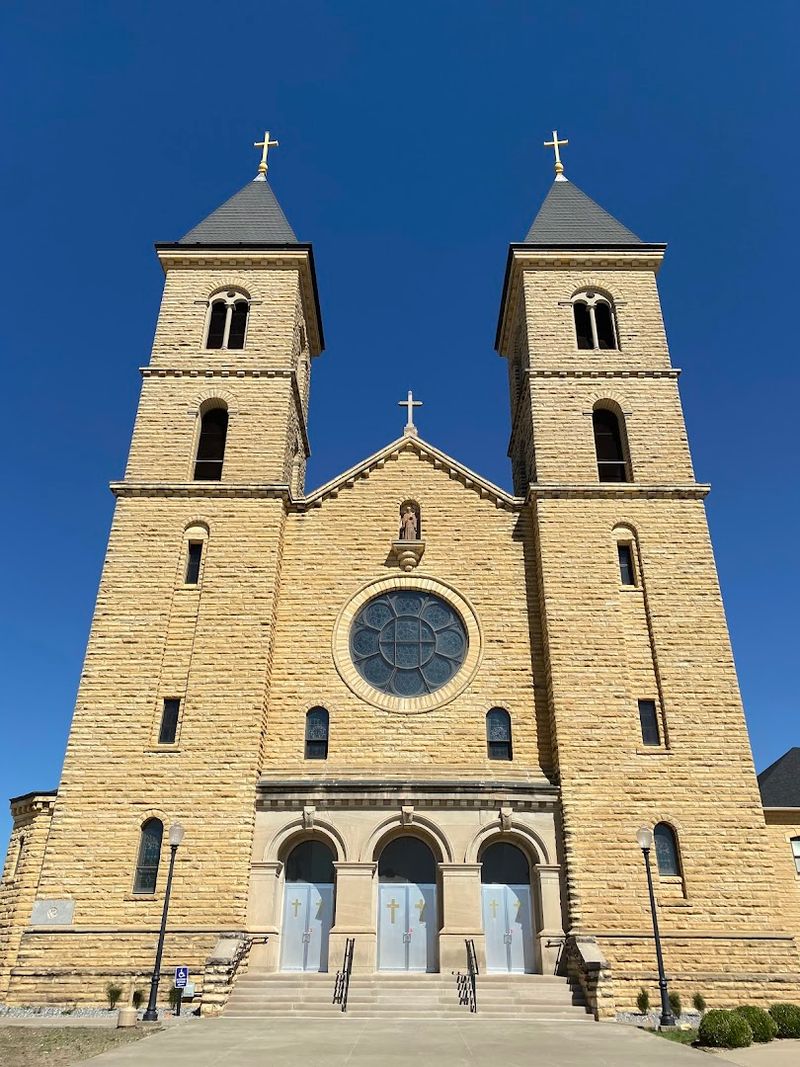
St. Fidelis Basilica was built almost entirely by Volga German immigrants, a community of German Catholics who had originally settled along the Volga River in Russia before emigrating to Kansas in the 1870s.
These were tough, resourceful people who carried their faith across two continents before planting it firmly in the Kansas soil.
When they decided to build a church worthy of their devotion, they did not think small. Each parishioner was required to haul six wagon loads of limestone blocks from a local quarry as their personal contribution to the construction effort.
That kind of community commitment is almost unimaginable today.
The church was completed in 1911, a monument not just to Catholic faith but to the sheer determination of a people who believed a grand church belonged on the open plains just as much as anywhere in Europe.
The Nickname: Why “Cathedral Of The Plains” Stuck
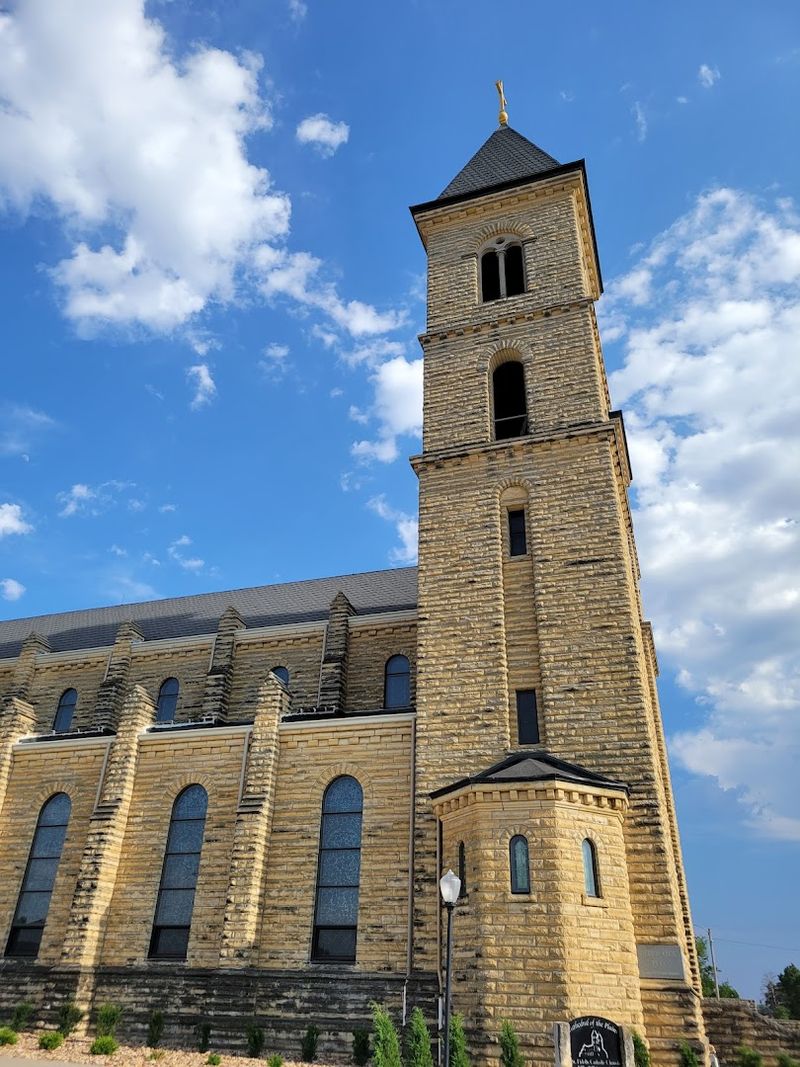
A nickname has to be earned, and “Cathedral of the Plains” is one that fits St. Fidelis Basilica like a perfectly cut stone.
The twin towers of the church rise so high above the surrounding flatlands that they can be spotted from miles away in every direction.
Out here, where the horizon is wide and the land is low, a building of this scale feels almost otherworldly.
Travelers crossing Kansas on I-70 often describe the moment the towers appear on the skyline as genuinely surprising, even startling.
The nickname was not assigned by any official body but grew organically from the experience of seeing the church for the first time.
I have driven through Ohio, crossed the Midwest more times than I can count, and nothing quite prepares you for this view. The prairie setting amplifies the grandeur in a way that no city backdrop ever could.
The Architecture: A European Cathedral On American Soil
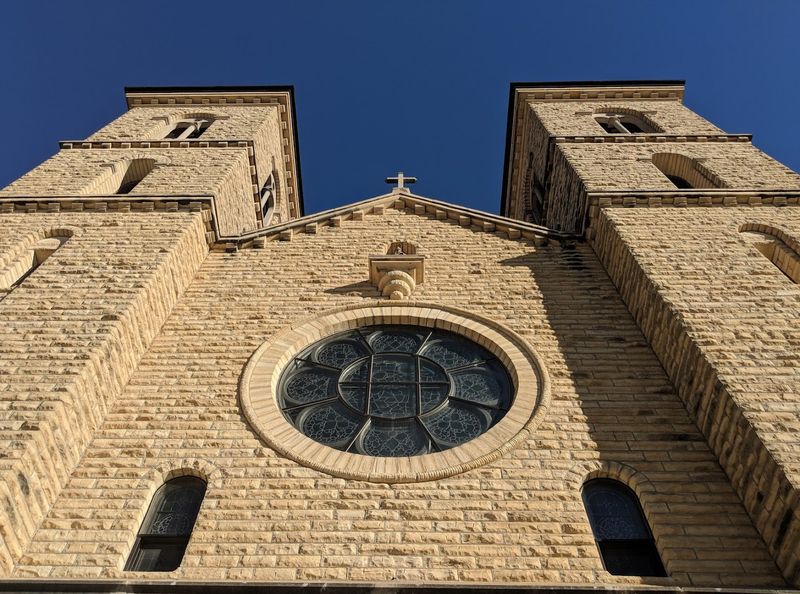
Walking up to St. Fidelis Basilica, the first thought that crosses your mind is that someone quietly transported a European cathedral to the middle of Kansas without telling anyone.
The building was designed in the Romanesque Revival style, featuring thick limestone walls, rounded arches, and twin towers that soar to impressive heights.
The stone used throughout the structure was cut by hand from a local quarry, giving the entire building a texture and warmth that modern construction simply cannot replicate.
Every surface tells a story of skilled labor and careful craftsmanship. The interior is equally commanding, with soaring ceilings that create a sense of vertical space rarely felt in smaller American churches.
Visitors who have toured grand churches in Ohio, New England, and across Europe consistently remark that St. Fidelis Basilica holds its own against any of them.
The proportions feel both monumental and deeply human at the same time.
The Stained Glass Windows: Stories Told In Color And Light
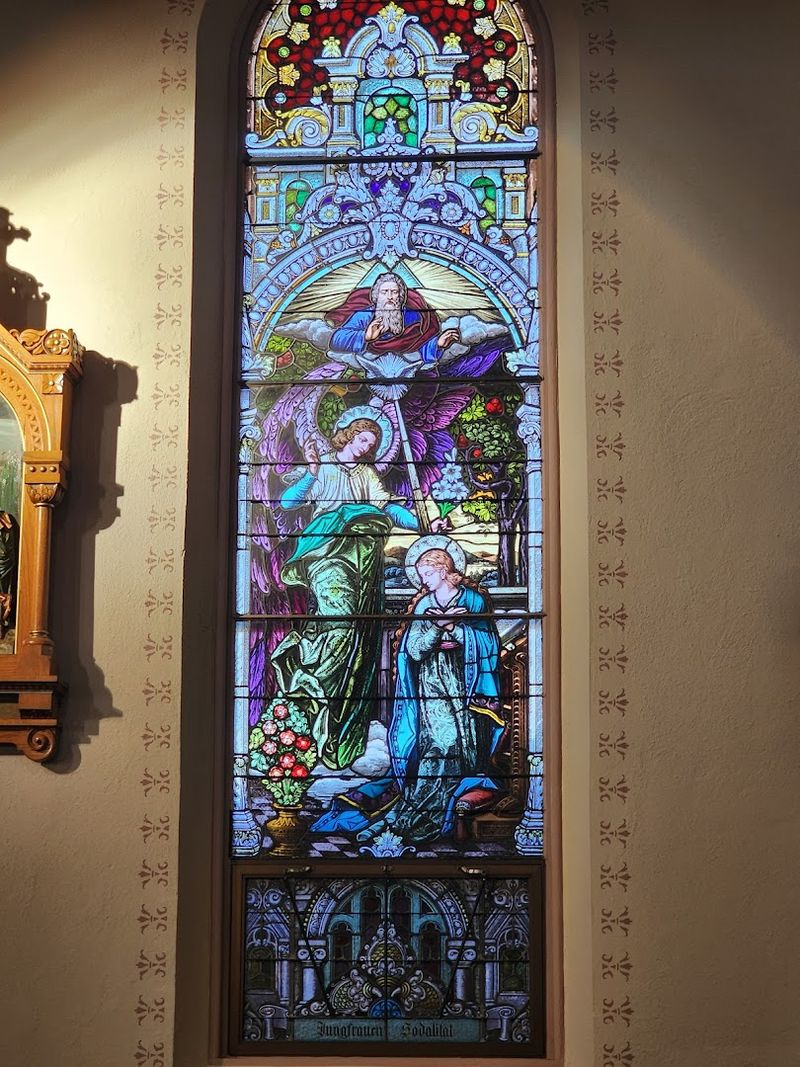
Some churches have stained glass windows. St. Fidelis Basilica has stained glass windows that make you stop walking and simply stare.
The windows line the nave in a continuous sequence, each one depicting scenes from the life of Jesus with rich, saturated color and fine artistic detail.
On a sunny afternoon, the light passing through those windows transforms the interior into something almost theatrical, casting pools of red, blue, and gold across the stone floor and wooden pews.
It is the kind of visual experience that stays with you long after you leave.
I have admired stained glass in churches from Ohio to the Pacific Coast, but there is something about the scale and the setting here that makes the windows feel especially powerful.
The contrast between the modest Kansas prairie outside and the vivid, luminous artwork inside creates a tension that is genuinely moving and hard to describe with words alone.
The Basilica Status: A Papal Recognition In 2014
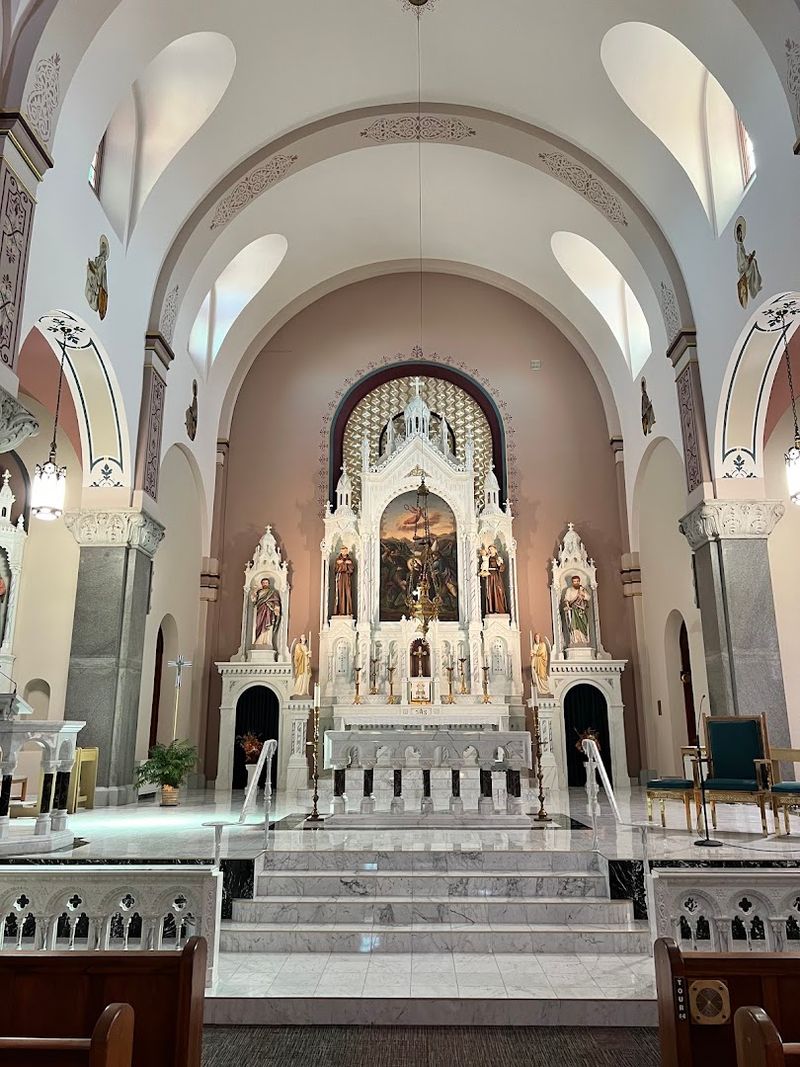
Not every grand church earns the title of basilica, and the distinction matters more than many visitors realize.
In 2014, Pope Francis officially designated St. Fidelis Church as a Minor Basilica, placing it in a select category of Catholic churches recognized for their historical, architectural, and spiritual significance.
The designation is not simply honorary.
A Minor Basilica must meet specific canonical requirements set by the Vatican, including architectural standards and a demonstrated role as a center of pilgrimage and devotion. St. Fidelis Basilica met every one of those criteria.
For the small community of Victoria, Kansas, the recognition was a moment of enormous pride.
The church had already earned its place in the hearts of regional Catholics and curious travelers alike, but the papal designation gave that love an official stamp.
Visitors who arrive today are stepping into a space that carries both local meaning and global Catholic recognition, which is a genuinely rare combination.
One Of The Eight Wonders Of Kansas
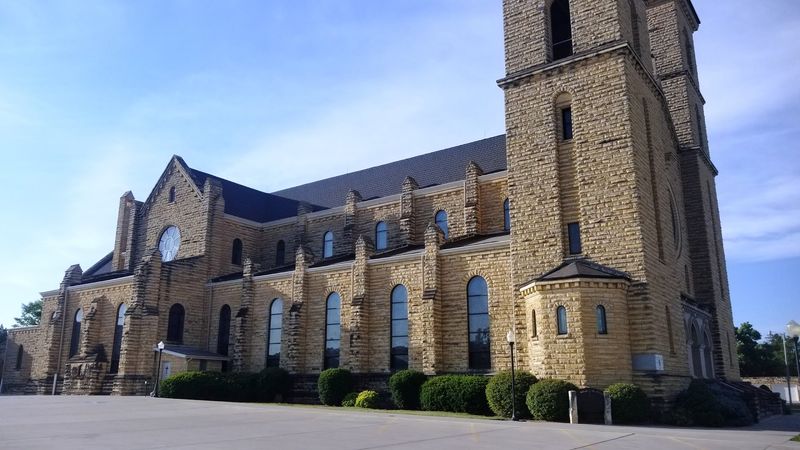
Kansas is not always the first state that comes to mind when people list great American travel destinations, but the Eight Wonders of Kansas program has been quietly changing that narrative for years.
St. Fidelis Basilica earned a spot on that prestigious list, and it is easy to understand why once you stand in front of it.
The program recognizes places across Kansas that are genuinely extraordinary, whether for natural beauty, cultural significance, or sheer human achievement.
This basilica qualifies on all three counts, combining architectural ambition, immigrant history, and spiritual purpose into one unforgettable structure.
Travelers who make the effort to seek out all eight wonders often say that St. Fidelis Basilica is the one that surprises them most.
Having driven through Ohio and across the broader Midwest many times, I can say with confidence that few roadside discoveries anywhere in the country match the impact of seeing those twin towers appear on the Kansas skyline for the first time.
The Altar And Sacred Relics Inside The Church
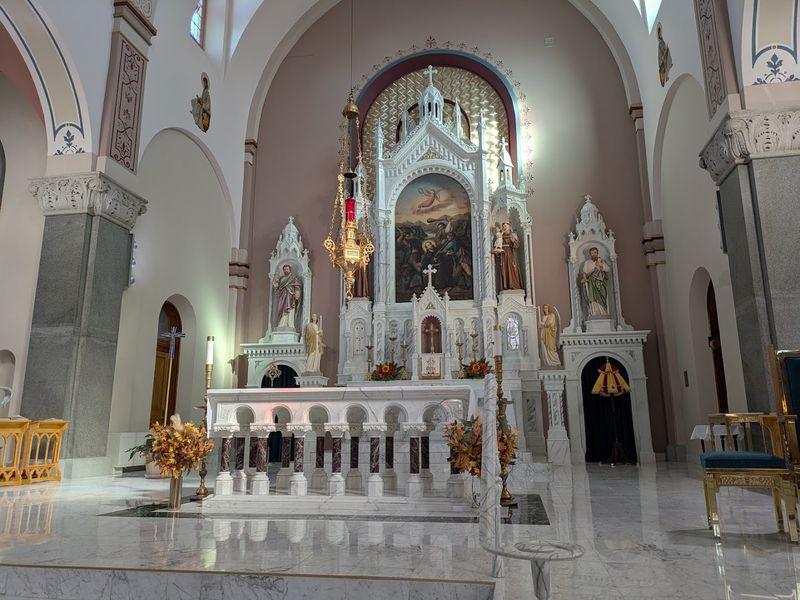
The altar at St. Fidelis Basilica is a work of art in its own right, but it carries something even more significant than beauty.
According to church records, the altar contains relics of St. Francis of Assisi as well as relics of St. Fidelis of Sigmaringen, the patron saint for whom the church is named.
The presence of these relics elevates the altar from an architectural centerpiece to a genuine object of Catholic pilgrimage.
More recently, a relic of St. Padre Pio was also added to the church’s collection, drawing visitors with a particular devotion to that beloved modern saint.
Standing in front of the altar, even a non-religious visitor can sense the layers of meaning embedded in the space.
The craftsmanship is meticulous, the materials are rich, and the historical weight is palpable. It is the kind of focal point that rewards slow, careful attention rather than a quick glance on the way out the door.
The Self-Guided Audio Tour Experience
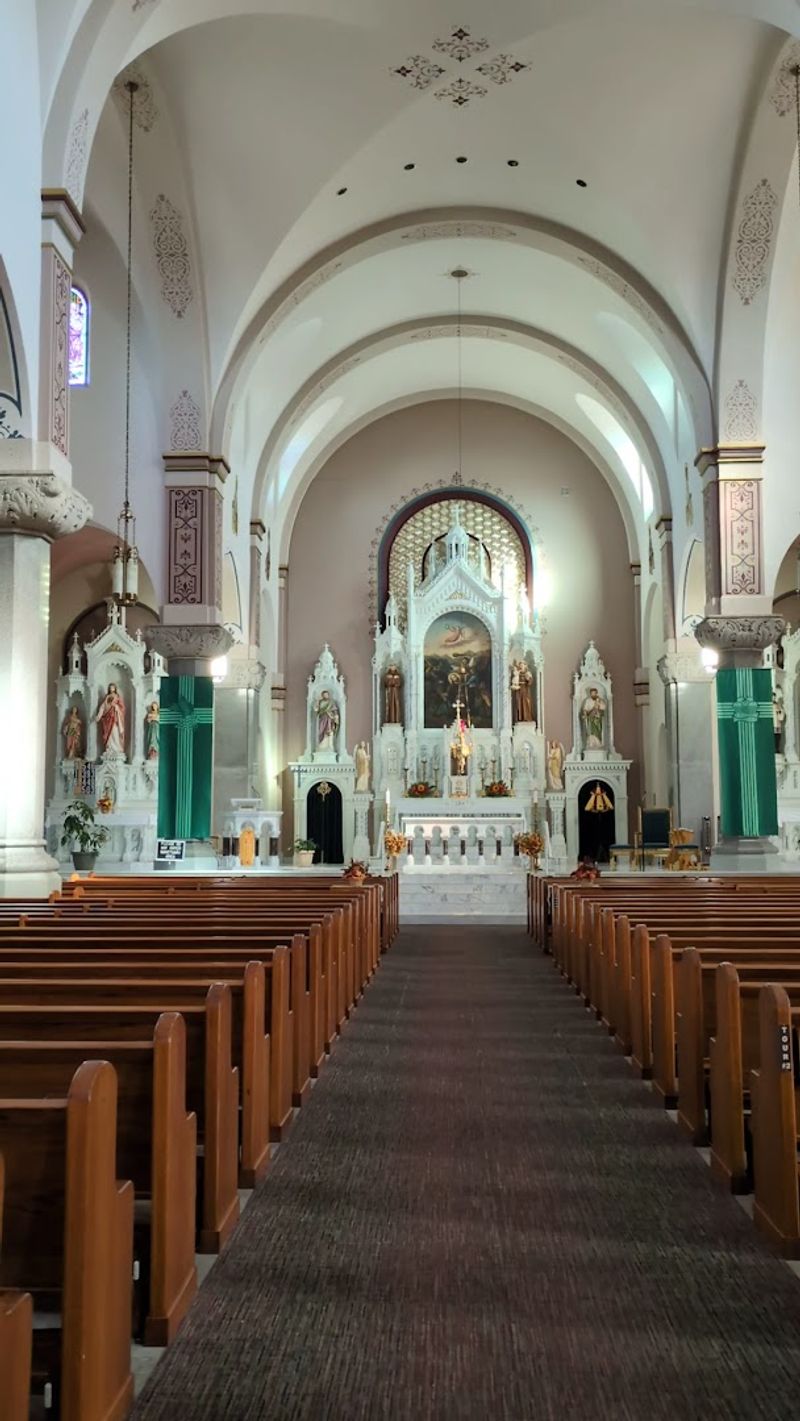
One of the most thoughtful features of visiting St. Fidelis Basilica is the self-guided tour system that has been set up throughout the building.
Audio tour stations are positioned at key points around the basilica, giving visitors the chance to learn about the history, architecture, and spiritual significance of each area at their own pace.
There is also printed information available just inside the main entrance for those who prefer to read rather than listen.
The combination of these resources means that even a solo traveler arriving without any background knowledge can leave with a full and satisfying understanding of what they have seen.
I have used audio tours in museums and historic sites from Ohio to the West Coast, and the one here feels genuinely well-crafted rather than an afterthought.
The tone is informative without being dry, and the details shared about the immigrant community who built this place add real emotional depth to every corner of the church.
The Location: Victoria, Kansas, And The I-70 Connection
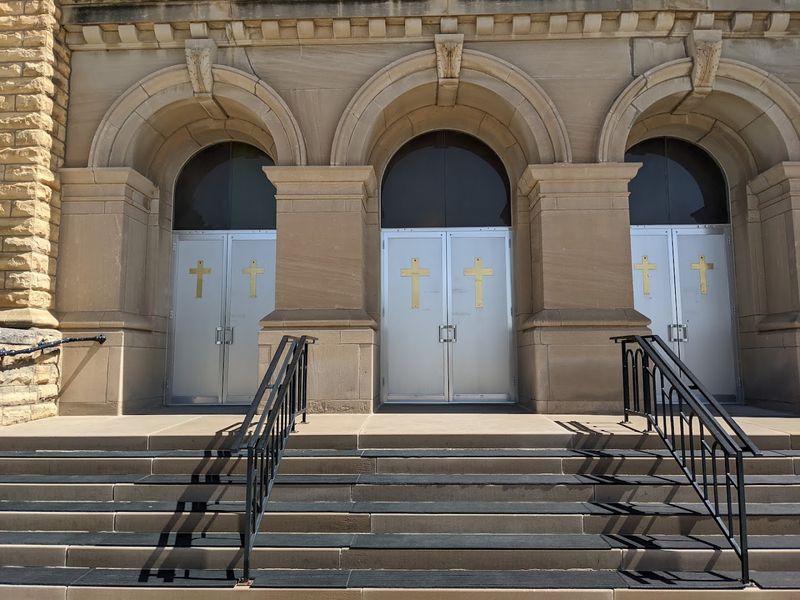
St. Fidelis Basilica sits at 900 Cathedral Ave, Victoria, KS 67671, in a small town that most cross-country drivers would otherwise pass without a second thought.
The fact that it sits just a short distance from Interstate 70 makes it one of the most accessible major landmarks anywhere along that long transcontinental corridor.
Victoria itself is a quiet, unhurried community with deep roots in its German Catholic heritage.
The basilica is very much the heart of the town, both geographically and culturally, and the surrounding streets carry a calm, unhurried quality that feels like a genuine contrast to highway travel.
Road trips across the American heartland have a way of blurring together after a while, and Ohio, Missouri, and Kansas can start to feel like one long stretch of flat road.
A stop at St. Fidelis Basilica breaks that rhythm in the best possible way, offering something genuinely unexpected and worth every minute of the detour.
The Atmosphere: Peace, Beauty, And Open Hours Every Day
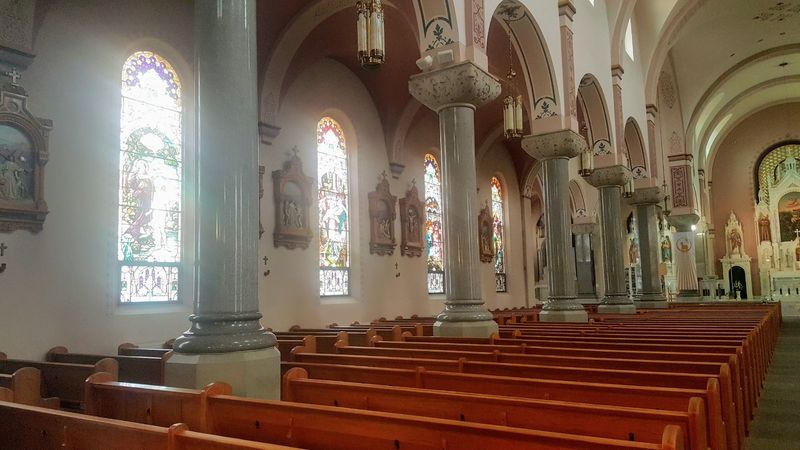
Perhaps the most unexpected quality of St. Fidelis Basilica is how genuinely peaceful it feels inside.
The church is open to the public every day from 6 AM to 8 PM, and visitors consistently describe the interior as one of the most serene spaces they have ever entered.
On most visits, the basilica is either empty or occupied by just a handful of quiet, respectful visitors. There are no crowds pushing through, no timed entry slots, and no pressure to move along quickly.
You can sit in a pew, study the stained glass, or simply breathe in the stillness for as long as you like.
Having traveled through busy tourist sites across Ohio and beyond, I find that kind of unhurried access genuinely rare and refreshing.
The church invites contemplation without demanding it, making it equally welcoming to devoted pilgrims and curious travelers who simply want a few minutes of beauty and quiet in the middle of a long drive across the Kansas plains.