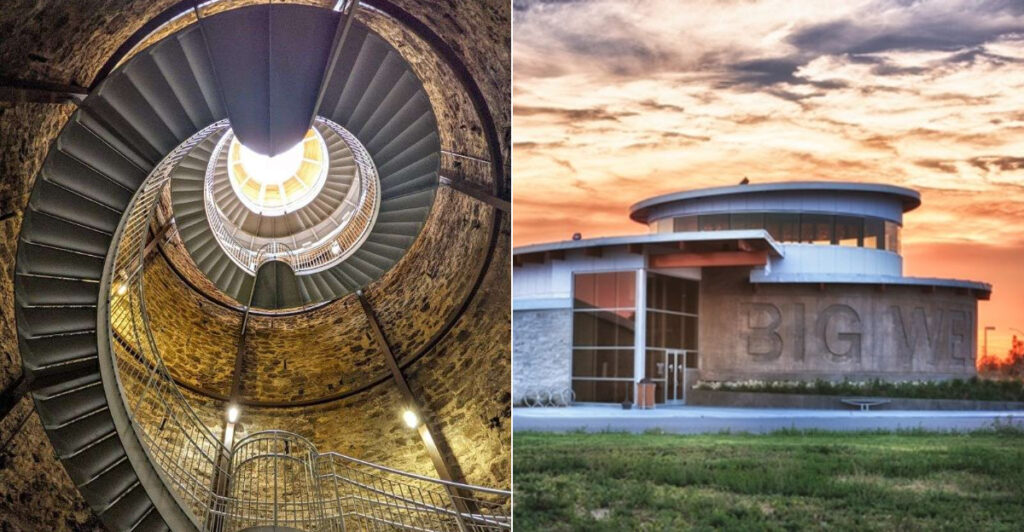
Some attractions earn attention by being beautiful. Others do it by making you ask, “How did anyone build that by hand?”
A Kansas museum centered around the world’s largest hand-dug well has exactly that kind of jaw-dropping appeal.
It turns an ordinary stop into a look at grit, patience, engineering, and the kind of human determination that feels almost impossible once you understand the scale.
There is something fascinating about standing near a landmark created without modern shortcuts.
Every stone, every foot of depth, and every piece of the story points back to people who worked hard enough to leave behind something unforgettable.
It is history you can look down into, which makes the experience feel surprisingly powerful.
I have always loved places that make me appreciate effort in a whole new way, and a Kansas well this massive would definitely make me pause, stare, and respect the hands that made it.
The Well Was Dug Entirely By Hand In The 1880s
Before modern drilling equipment existed, workers in Greensburg, Kansas did something that sounds almost unbelievable today.
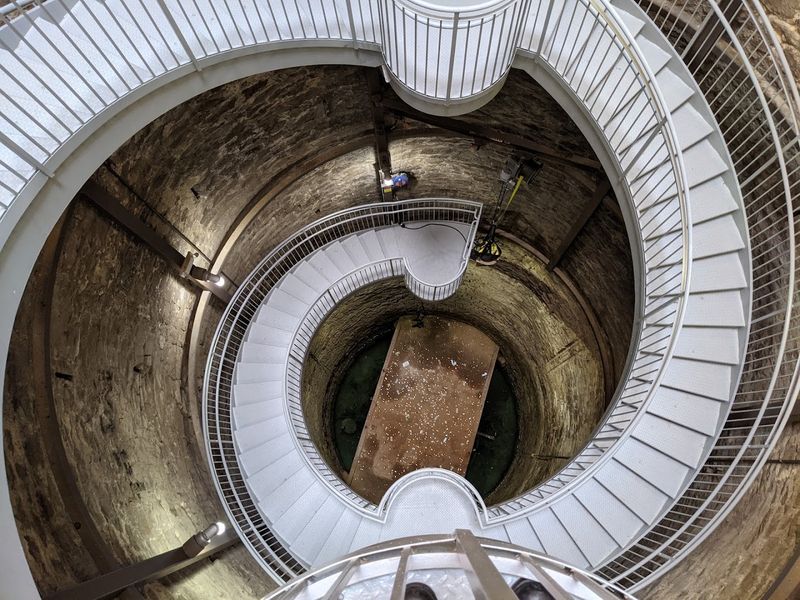
They dug a well 109 feet straight into the earth using nothing but hand tools, muscle, and determination.
The project took place in 1887 and 1888, and the finished well measured 32 feet across.
That width is roughly the size of a small house. The sheer scale of this undertaking made it the largest hand-dug well in the world, a record it still holds today.
The Big Well Museum celebrates this extraordinary feat with detailed exhibits explaining how the work was done and who did it.
Standing at the edge and looking down into that enormous shaft gives you an immediate sense of how much effort went into every single foot of depth.
It truly earns its reputation as one of the most remarkable engineering achievements of the pioneer era.
It Was Built To Supply Water To Steam-Powered Trains
Most people assume the well was built purely for the town’s residents, but the real reason behind its construction is even more interesting.
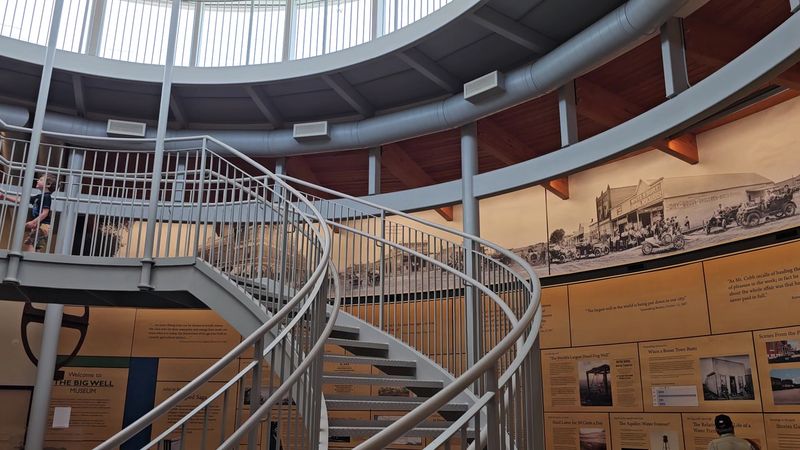
The well was primarily designed to supply water to railroad steam engines passing through Greensburg.
Steam locomotives needed enormous amounts of water to keep running, and towns along rail lines that could reliably provide it had a serious economic advantage.
Building a well this large was essentially an investment in the town’s future growth and commerce. That railroad connection shaped early Greensburg in ways that are still felt today.
The Big Well Museum does a thorough job of explaining this relationship between the well, the water, and the wider economy of the region.
Visitors often leave with a completely new appreciation for how something as simple as a water source could determine whether a frontier town survived or quietly faded away into the Kansas prairie.
A Cantilevered Spiral Staircase Lets You Descend Into The Well
Getting close to the bottom of a 109-foot well is not something most people ever get to do, but at The Big Well Museum, a specially engineered staircase makes it possible.
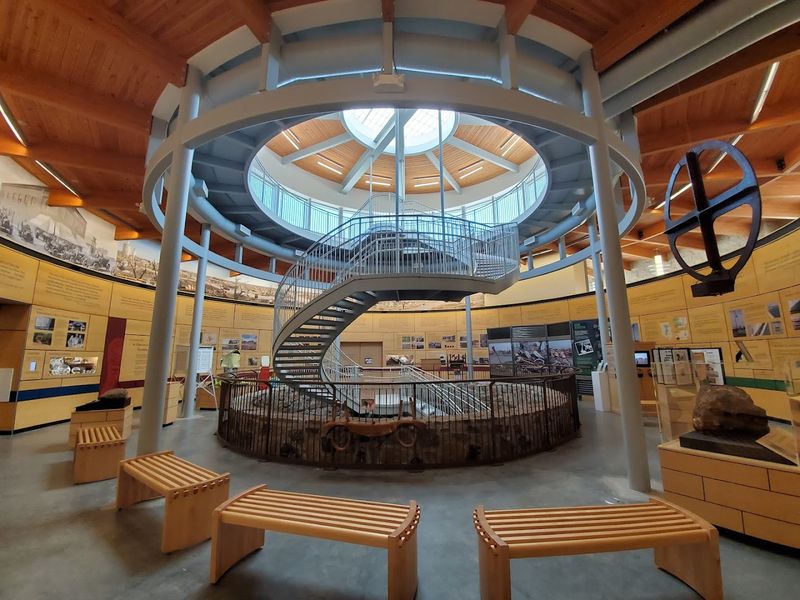
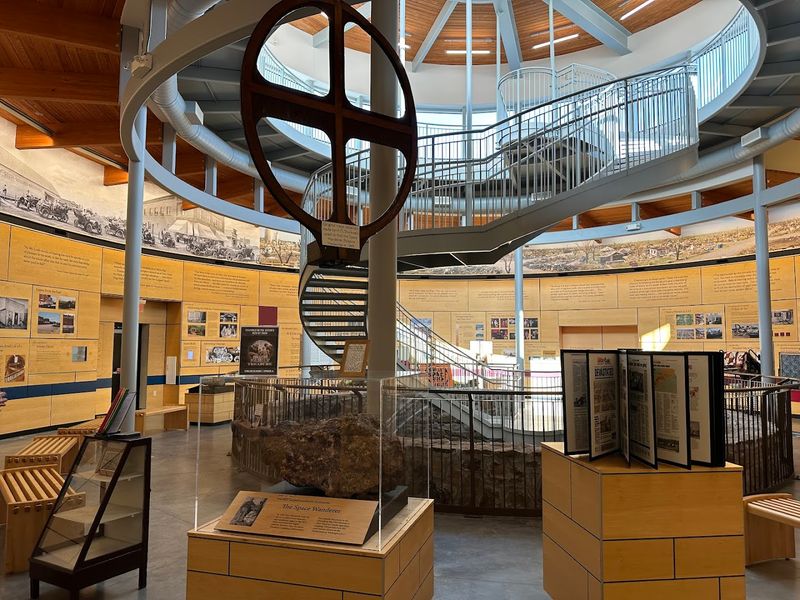
The spiral staircase wraps around the inside of the museum building and takes visitors deep into the well shaft.
What makes this staircase particularly impressive is its engineering. It is fully cantilevered, meaning it is not attached to the well walls at all.
This design choice was intentional, ensuring that no stress or weight is placed on the historic 19th-century structure below.
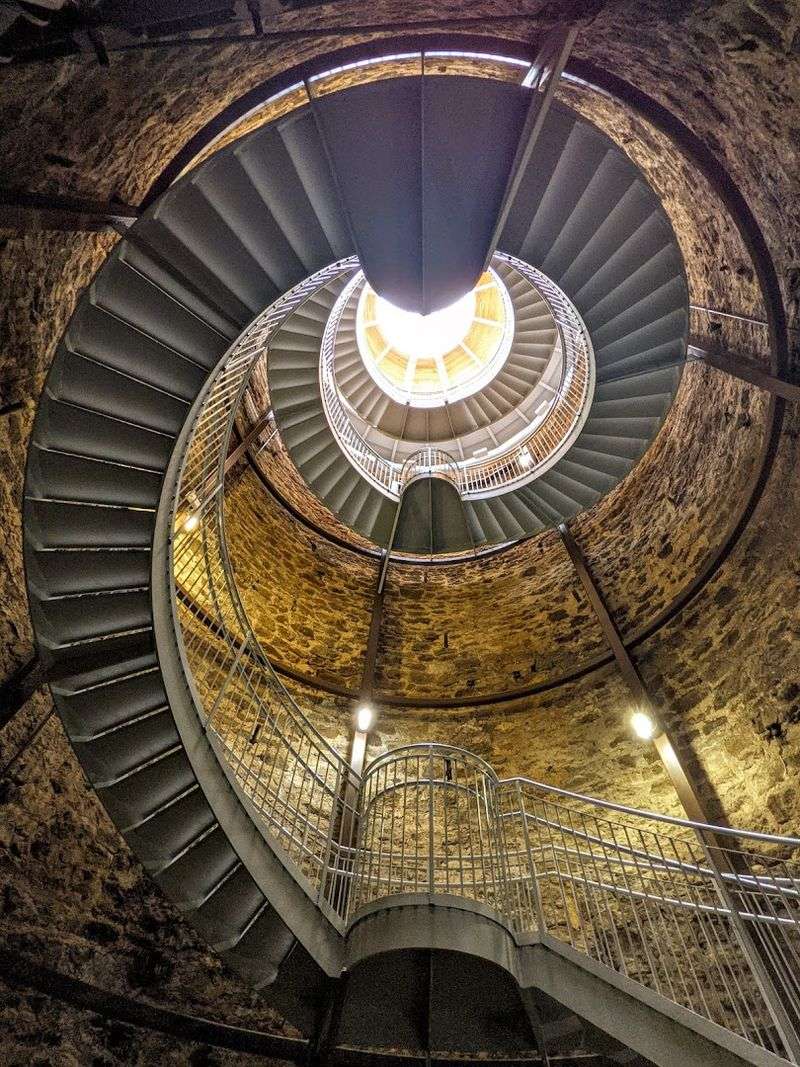
Looking up from near the bottom of the well is one of those experiences that sticks with you.
The circular opening far above frames a perfect circle of light, and the scale of the whole space becomes suddenly very real.
It is the kind of view that photographs struggle to fully capture, which makes actually being there all the more worthwhile.
The Museum Holds Exhibits About A Catastrophic 2007 Tornado
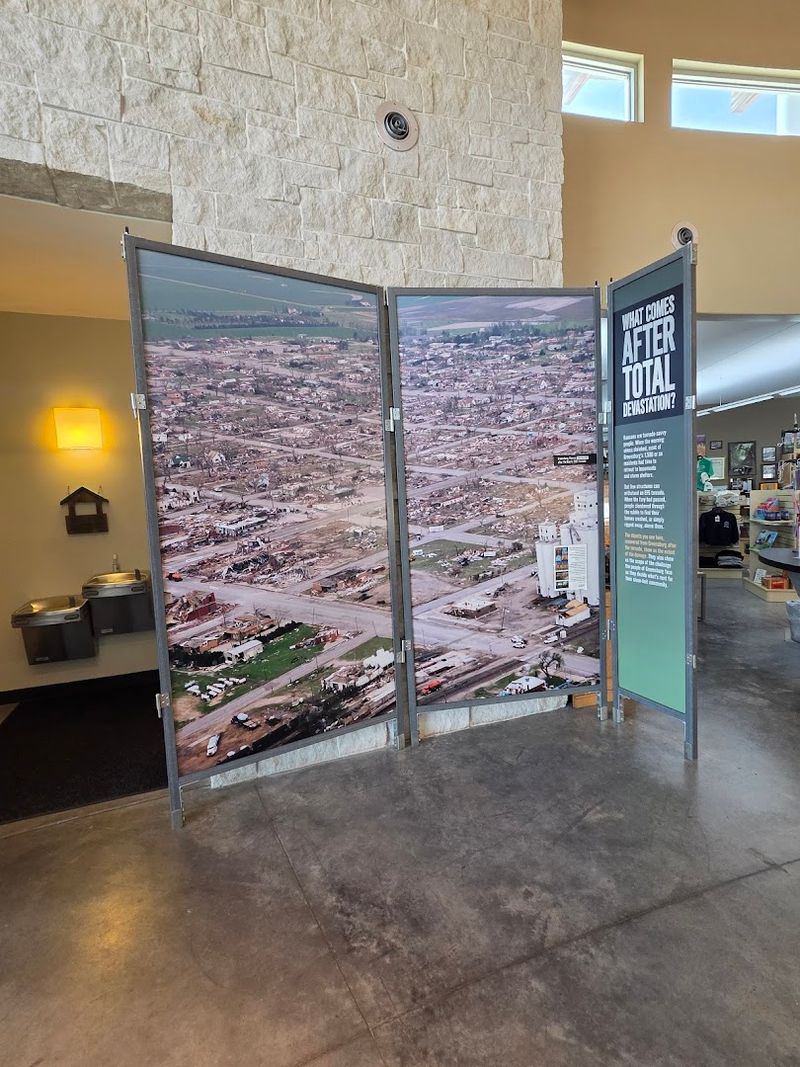
In May 2007, an EF5 tornado tore through Greensburg, Kansas, destroying approximately 95 percent of the entire town.
It remains one of the most powerful tornadoes ever recorded in the United States, with winds exceeding 200 miles per hour.
The Big Well Museum dedicates a significant portion of its space to documenting this event honestly and respectfully.
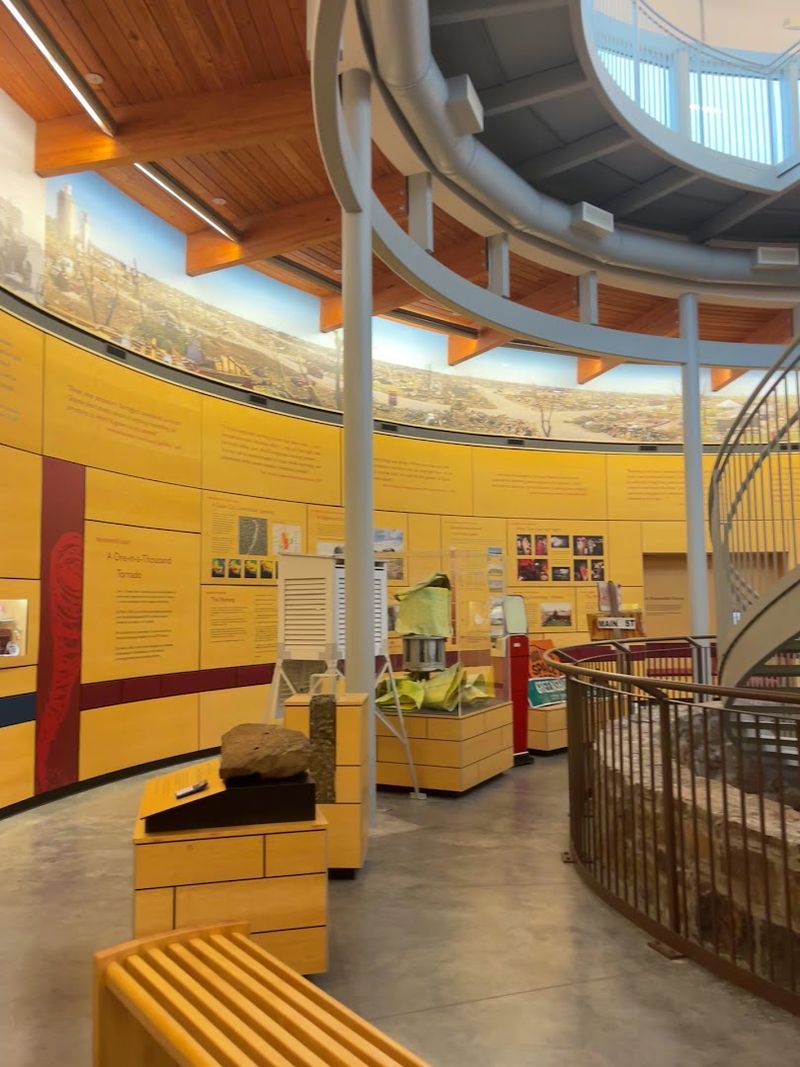
Photographs, artifacts, and personal accounts bring the scale of the destruction into sharp focus.
One particularly haunting detail mentioned in visitor accounts is the sight of trees that had their bark completely stripped away by the force of the storm.
Rather than feeling heavy or hopeless, these exhibits ultimately tell a story of resilience.
The community came together in the aftermath and chose to rebuild using environmentally sustainable methods, turning a moment of total loss into a national example of forward-thinking recovery.
That combination of heartbreak and hope makes this section of the museum genuinely unforgettable.
Greensburg Rebuilt Itself As A Model Green Community
After the 2007 tornado leveled most of Greensburg, city leaders made a bold and unusual decision.
Instead of simply rebuilding what was lost, they committed to reconstructing the entire town using green building technologies and sustainable design principles.
Today, Greensburg is recognized nationally as one of the most environmentally advanced small towns in the United States.
Public buildings including city hall, the school, and other community structures were built to meet LEED Platinum certification standards, the highest level awarded for sustainable construction.
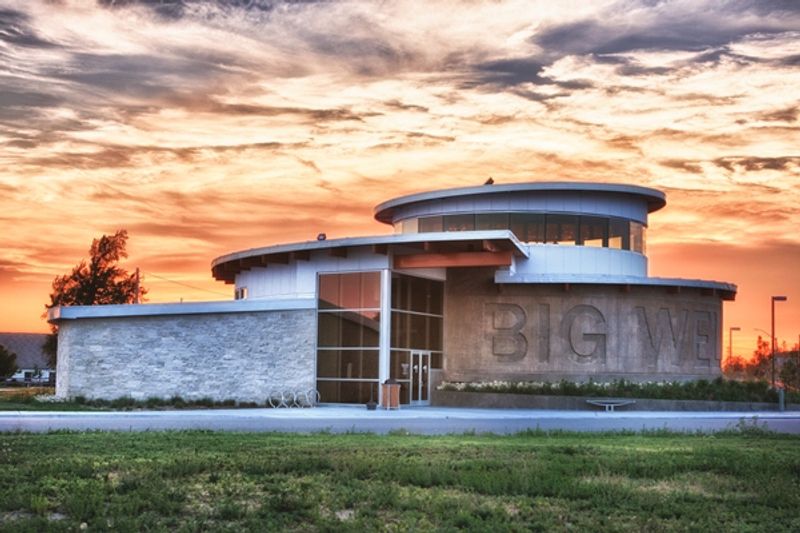
The Big Well Museum explains all of this in detail, and the building itself is part of the story.
Visitors can climb to a 360-degree clerestory observation level at the top of the museum and look out over the rebuilt town, spotting the green buildings that represent this community’s commitment to a smarter future.
It is genuinely one of the most inspiring urban recovery stories in American history.
The Museum Is A Registered National Landmark
Not every small-town museum can claim this kind of official recognition, but The Big Well Museum has earned it.
The well is listed on the National Register of Historic Places, acknowledging the historical and cultural significance of the structure itself and the broader story of the community surrounding it.
That designation is not handed out lightly. It places the Big Well among protected and celebrated American heritage sites recognized for their historical importance and place in regional history.
For a town of Greensburg’s size, that recognition carries enormous meaning.
Visitors who stop in are often surprised by how much depth the museum offers for a site in a small Kansas town.
The combination of pioneering engineering history, natural disaster documentation, and community renewal gives the museum a scope that goes far beyond what its modest exterior might suggest.
That National Register status is well deserved and adds an extra layer of significance to every visit.
Admission Is Affordable For The Whole Family
One of the most refreshing things about The Big Well Museum is that a visit does not require a big budget for most visitors.
Adult admission runs eight dollars, while children ages five to twelve and seniors pay six dollars. For the amount of content packed into the museum, that price point is genuinely hard to beat.
You get access to the well descent, the tornado exhibits, the green building displays, and the panoramic observation deck, all for less than the cost of most movie tickets.
The museum also has clean restrooms and a gift shop stocked with locally made products, including a fan-favorite called Duck Salt.
Visitors regularly mention that the staff is friendly, knowledgeable, and genuinely enthusiastic about sharing the history of the site.
For families on a road trip through Kansas who want a stop that is both educational and entertaining, this museum consistently delivers far more than its price tag promises.
The Museum Operates Out Of A Purpose-Built Modern Building
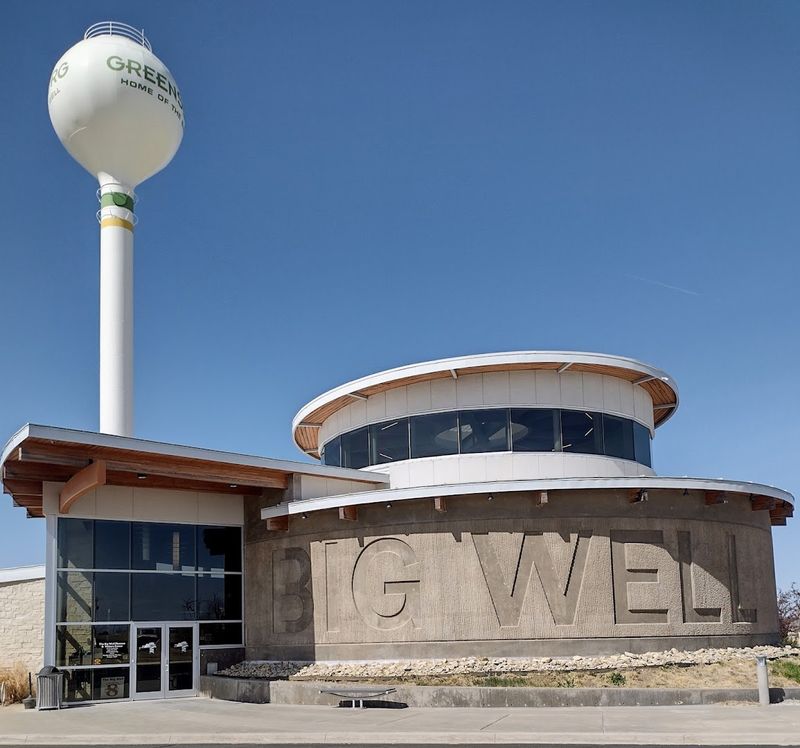
The original well site was home to a much smaller museum before the 2007 tornado.
When the community rebuilt, they took the opportunity to design a completely new building that would do justice to both the well’s history and the town’s remarkable story of recovery.
The result is a thoughtfully designed circular structure built around the well itself.
The architecture reflects the same green building values that define the rest of rebuilt Greensburg, and the layout is specifically designed to guide visitors through the museum’s three main stories in a logical, immersive sequence.
Multiple visitors have noted that the circular design creates an interesting sense of moving through time as you walk through The Big Well Museum.
The building feels intentional at every turn, from the way light enters through the upper windows to the way the well shaft becomes visible at different points along the route.
Good architecture and good storytelling rarely go together this naturally.
A 360-Degree Observation Deck Offers Views Of The Rebuilt Town
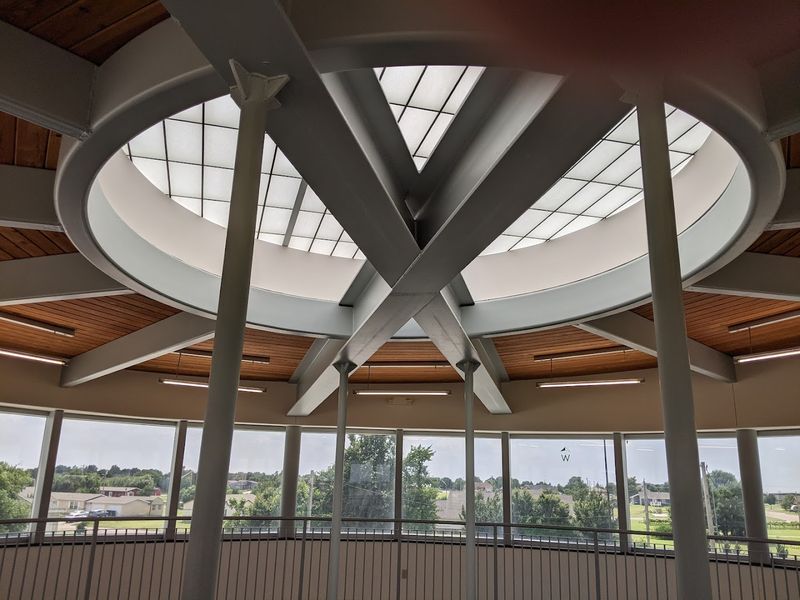
At the top of The Big Well Museum sits one of the more unexpectedly rewarding viewpoints in all of Kansas.
A clerestory observation level wraps around the upper portion of the building and gives visitors an unobstructed 360-degree view of the surrounding town.
From up there, the story of Greensburg’s rebuilding becomes visually concrete.
You can spot the modern sustainable public buildings that replaced what the tornado destroyed, and the wide, clean streets below tell their own quiet story of community determination.
Several visitors have described this view as the moment the whole museum experience clicked into place for them.
The contrast between knowing what the town looked like in the immediate aftermath of the storm and seeing the orderly, forward-looking community that stands there now is striking.
It is one of those rare moments where a simple view from a window carries genuine emotional weight, and it rounds out the museum visit in a way that feels both satisfying and moving.
The Gift Shop Sells Unique Locally Made Souvenirs
Museum gift shops can be hit or miss, but the one at The Big Well Museum has developed a small but enthusiastic following among visitors.
The shop carries a range of souvenirs tied to the museum’s history, including items made with local craftsmanship and regional character.
The standout product that keeps coming up in visitor stories is something called Duck Salt, a locally made seasoning that has apparently won over quite a few road-trippers.
The name connects to a fun tradition at the museum where visitors sometimes toss coins into the well, and the occasional rubber duck has been known to follow.
The shop also reportedly sold pieces of the original well staircase as collectibles, giving history enthusiasts a tangible connection to the site’s past.
For anyone passing through on a long Kansas road trip, picking up something from this gift shop feels like a genuinely local experience rather than a generic tourist transaction.