A herd of roughly 100 bison roams a pasture here, and the hiking trails never close, not even on Thanksgiving.
That means your post-turkey walk could include the largest land animals in North America. Not a bad upgrade from circling the block.
This patch of Kansas holds part of the last tallgrass prairie left on the continent.
Less than 4 percent of that original grassland survives today. Late November paints the hills in rusty reds and browns.
I like how quiet the whole idea feels. No shopping lines, no parade traffic, just wind, grass, and a sky that seems to keep going.
Entry costs nothing, which leaves more money for pie.
Add an 1881 limestone mansion and a three-story stone barn to the mix. Who knew a holiday weekend could feel this wide open?
Less Than 4 Percent Of This Grassland Is Left, And You Can Walk Right Through It
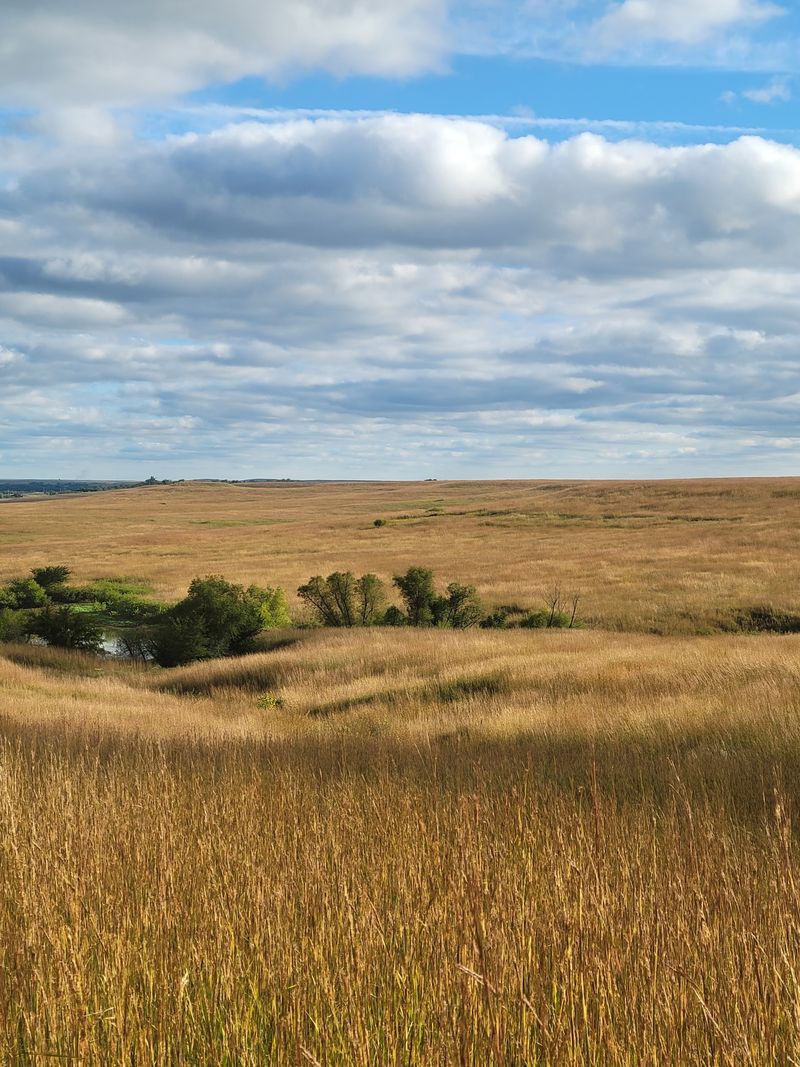
Most of North America’s tallgrass prairie disappeared under plows long ago. Tallgrass Prairie National Preserve protects one of the finest surviving pieces of it.
The preserve is the only National Park Service unit dedicated solely to the tallgrass prairie. It sits in the heart of the Kansas Flint Hills, the largest remaining stretch of this ecosystem on Earth.
So why did this land escape the plow? Limestone and chert bedrock sits close to the surface, making farming here a losing battle.
Ranchers grazed cattle instead, and the grass kept growing. That stubborn rock is basically the reason you get to see this view today.
The numbers are wild. More than 500 plant species grow here, including big bluestem and Indian grass.
Nearly 150 bird species and around 30 mammal species share the space. Insects can reach up to 10 million per acre, though November cold keeps most of them quiet.
The preserve covers nearly 11,000 acres of rolling hills. That’s a lot of room to stretch your legs after a big holiday meal.
I believe it ranks among the most underrated public lands in the country. It deserves a spot on your weekend plans.
Plan Around The Holiday Hours And The Weekend Gets Easy
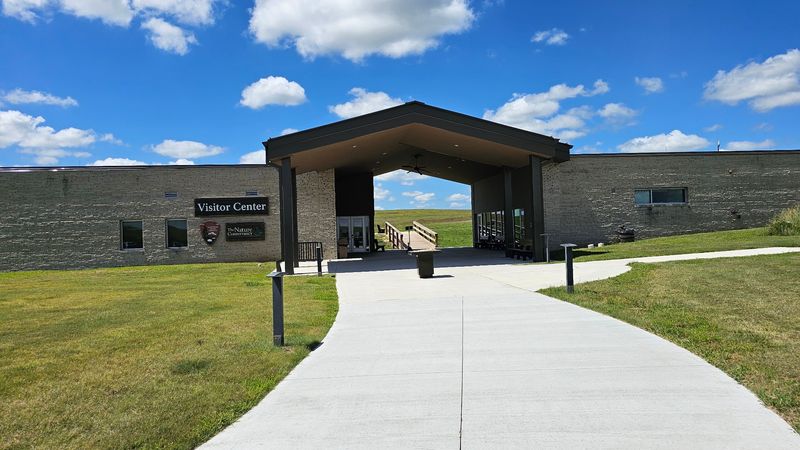
Thanksgiving Day itself brings one catch. The Visitor Center and historic ranch buildings close for the holiday, so Thursday is mainly for exploring the open trails and outdoor scenery.
Good news arrives on Friday. From November 1 to April 30, the Visitor Center and historic ranch buildings follow winter hours of 9 a.m. to 4:30 p.m.
There’s another wrinkle worth knowing. From November through March, the Visitor Center and bookstore close on Mondays and Tuesdays, although the historic buildings remain open on those days except holidays.
That makes Friday, Saturday, and Sunday the sweet spot. You get the exhibits, the gift shop, and rangers ready with trail advice.
Closed days aren’t wasted days, though. Self-guiding trail maps, brochures, and passport cancellation stamps are available in the Visitor Center breezeway.
Restrooms stay available after hours in that same breezeway too. Small detail, big relief after a long drive.
The trails are normally open 24 hours a day, every day of the year, including Thanksgiving.
However, prescribed burns, bison and cattle operations, hazardous weather, or other safety concerns can temporarily close individual routes.
So a sunrise hike on Thanksgiving morning is generally fair game, provided the trail you choose is open.
Check posted alerts before setting out, then get back in time to baste something.
Camping isn’t allowed anywhere on the preserve. Book a room in a nearby town and treat the prairie as your daytime playground.
Shaggy Neighbors Roam Here, And They Get The Right Of Way
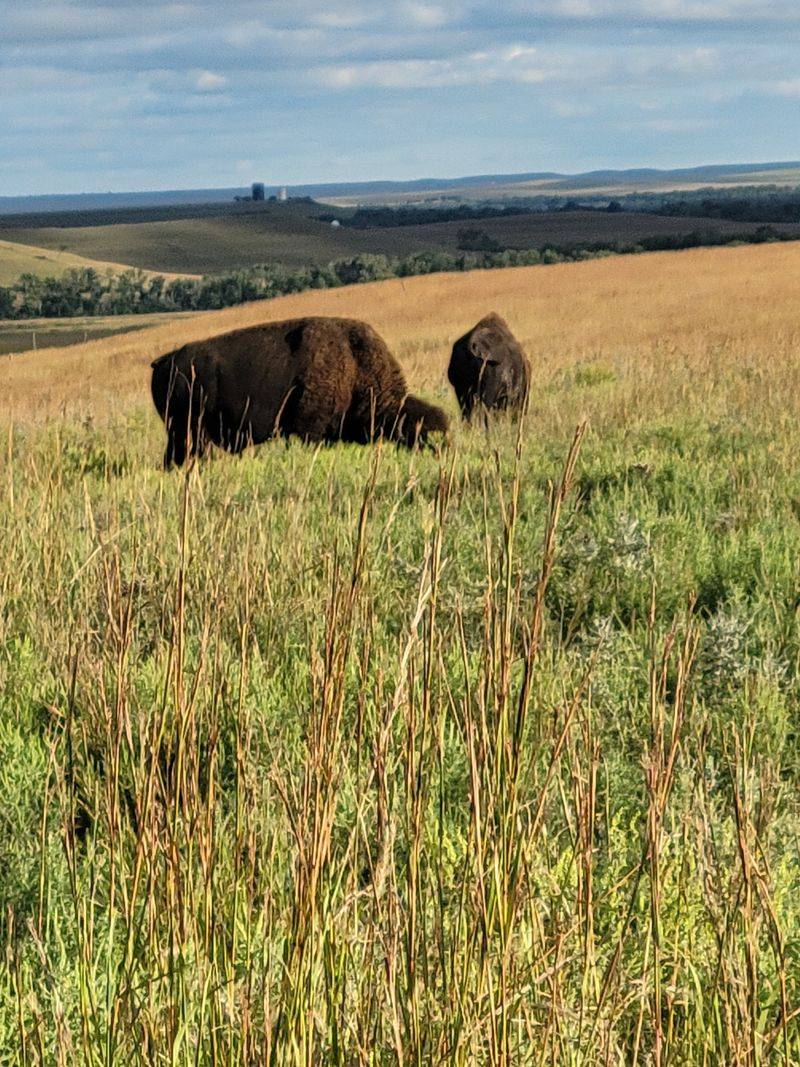
In 2009, bison returned to these hills through a partnership between The Nature Conservancy and the National Park Service. The herd has grown to roughly 100 animals over the years.
Your best shot at spotting them is the Windmill Pasture. The Scenic Overlook Trail leads hikers right into that territory.
Bring binoculars. They make the whole experience better and keep you comfortably far away.
Rangers ask visitors to stay at least 125 yards from the bison. That’s considerably longer than a football field, and for good reason.
These are wild animals, not petting-zoo residents. They can move faster than you’d expect from something so shaggy.
If bison block your trail, give them plenty of room or turn around. Never attempt to approach, touch, or pass closely through the herd.
Sightings aren’t guaranteed, since the herd roams a big pasture. Part of the fun is scanning the hills for those dark shapes.
In late fall, those brown coats blend surprisingly well with the rusty grass. Spotting one feels a bit like winning a very slow game of hide-and-seek.
The herd lives on a restored prairie, not a fenced display lot. Grazing bison help shape the grassland, much as they did for thousands of years.
For kids, this could easily be the highlight of the whole weekend. Pair it with Junior Ranger activities from the Visitor Center for a full afternoon of learning.
A Fancy Mansion Sits In The Middle Of Cattle Country
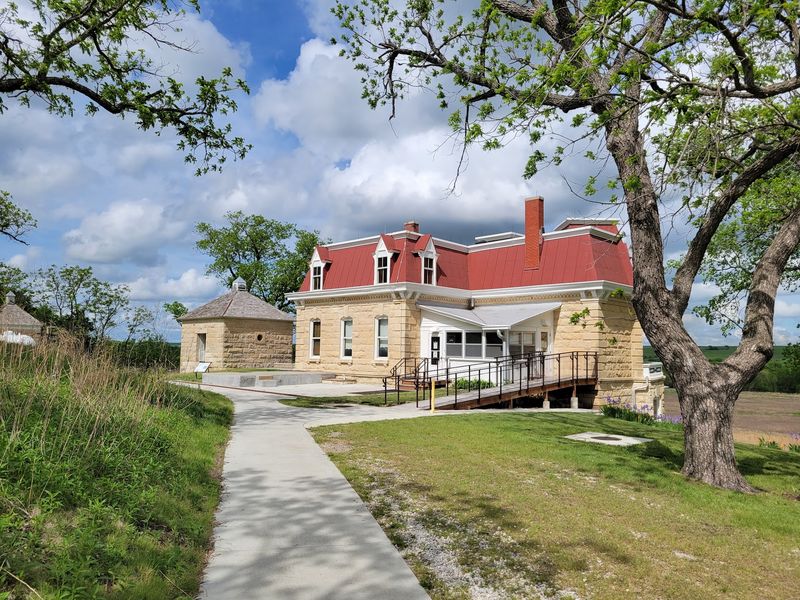
Nobody expects a French-inspired mansion on a Kansas cattle ranch. Yet here it is, a limestone Second Empire-style house finished in 1881.
Stephen F. Jones started building the Spring Hill Ranch in 1878.
He gathered about 7,000 acres and put up an impressive headquarters to match.
The house shows off his ambitions. Built from local limestone, it looks sturdy enough to outlast a few more centuries.
Jones also oversaw more than 30 miles of five-foot-high stone fences. That’s a staggering amount of stacked stone.
The ranch changed hands in 1888, when Barney Lantry bought it. Later, George Davis reassembled much of the divided property in 1935.
Decades afterward, the ranch became known as the Z Bar Cattle Company in 1975.
Today the ranch house welcomes self-guided visits during winter hours, except on major holidays. Cell phone tours add stories as you move through the grounds.
Smaller outbuildings sit nearby, including a smokehouse, icehouse, and carriage house. Each one hints at how much work kept a ranch like this running.
The whole complex became a National Historic Landmark District in 1997. I can’t imagine a better way to walk off holiday leftovers than touring a home with this much history.
Three Stories Of Stone Make This Barn Hard To Miss
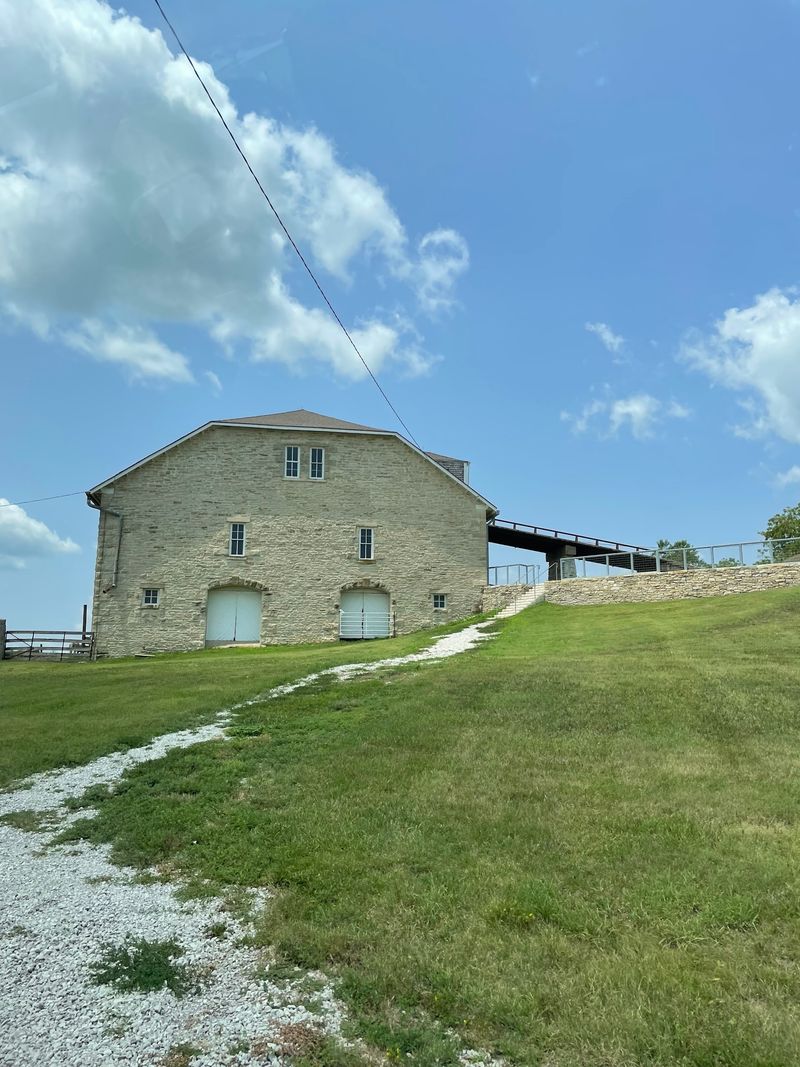
Built between 1881 and 1882, the ranch barn is massive. It rises three stories and follows a German bank barn design.
A bank barn is built into a slope. That lets people reach different levels from ground height on more than one side.
Like the ranch house, it was built from limestone. Together, the two buildings show how seriously Stephen F.
Jones took his ranching operation.
The barn plays a handy role in late fall. On regular winter Mondays and Tuesdays, when the Visitor Center is closed, you can still watch the 10-minute orientation film inside the barn.
Thanksgiving Day is an exception. The historic buildings, including the barn, close for the holiday, so plan your film viewing for Friday or another regular operating day.
That film is a smart first stop. It gives quick context on the prairie, the ranch, and the people who shaped both.
Stone walls like these have stood for more than 140 years. That alone says something about the skill of the builders.
The barn is part of the ranch complex listed on the National Register of Historic Places in 1971. It’s a fine reminder that Kansas ranching history runs deep.
Bring a camera. The pale limestone against tawny November grass makes for a great holiday photo backdrop.
Snap a family picture here instead of in front of the same old fireplace. Your relatives might even thank you.
Over 40 Miles Of Trails Means Everyone Picks Their Own Adventure
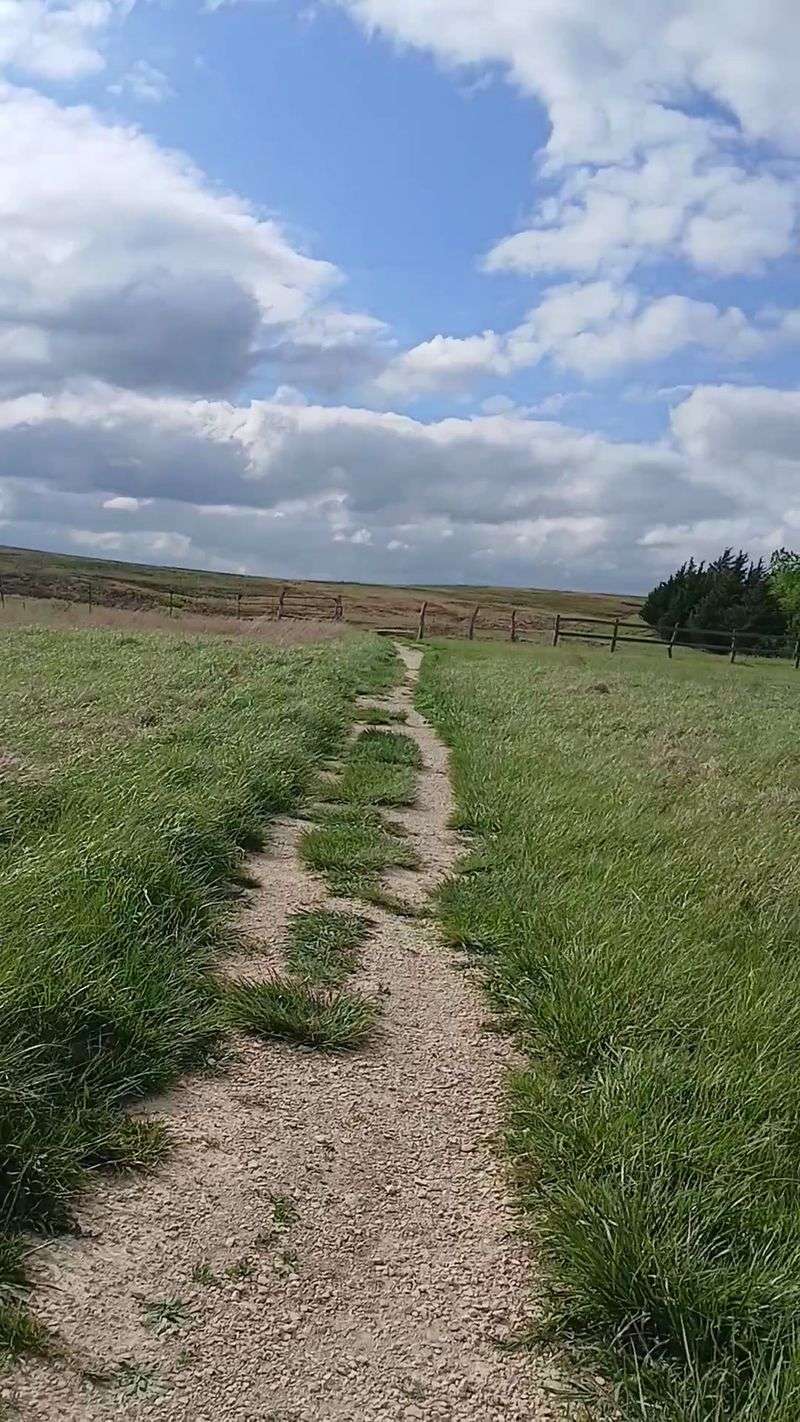
Some relatives want a stroll, while others want a real workout. With more than 40 miles of maintained trails, the preserve handles both camps nicely.
The Bottomland Trail is the gentlest choice. It loops for half a mile or three-quarters of a mile along Fox Creek, through tall grasses.
It’s also wheelchair-friendly, except when the ground is wet. That makes it a strong pick for grandparents or anyone wanting an easy outing.
Want history with your hike? The 1.75-mile Southwind Nature Trail passes right by the Lower Fox Creek School.
The Scenic Overlook Trail is a gravel path with panoramic views. It also leads to the Windmill Pasture, where the bison hang out.
For a longer day, try the Fox Creek Trail. It covers 6.1 miles round trip while following the creek.
Dogs can come along on the nature trails. They just need to stay on a leash no longer than six feet.
Trail maps are available at the Visitor Center and at trailheads. Grab one before heading out, since the prairie looks wonderfully similar in every direction.
Pack water and layers. November weather in the Flint Hills can shift quickly, so dress for a few possibilities.
A One-Room Schoolhouse Still Welcomes Visitors Through December
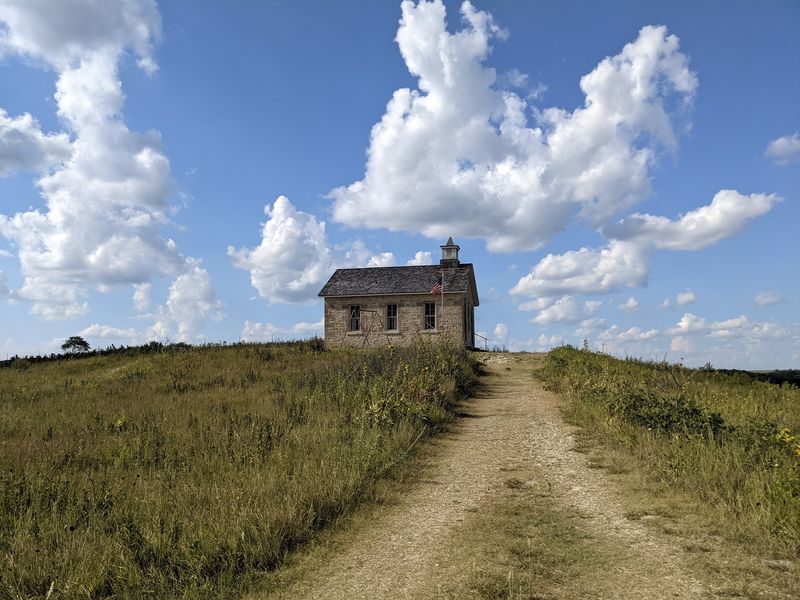
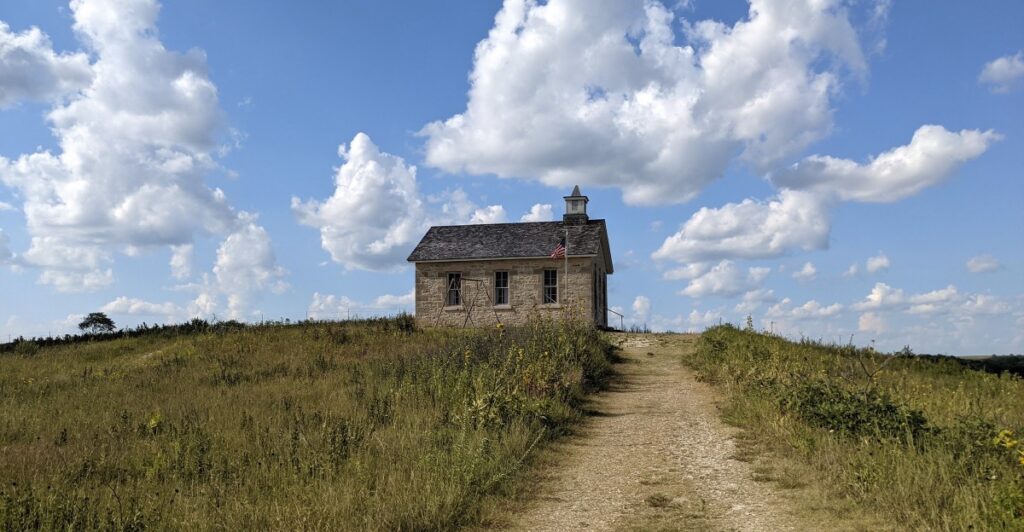
Recess in 1882 probably meant running straight into tall grass. The Lower Fox Creek School, built that year, is a one-room limestone schoolhouse you can still visit.
Lucky for Thanksgiving weekend travelers, its regular season runs from May 1 through December 31. Hours are 9 a.m. to 4 p.m., although the building closes on Thanksgiving Day and during hazardous weather such as heavy rain or snow.
That makes Friday, Saturday, or Sunday a better choice if you want to see inside the schoolhouse. Even outside operating hours, visitors can admire the historic structure from the exterior.
Getting there is half the fun. The 1.75-mile Southwind Nature Trail passes the school, turning a history lesson into a hike.
Kids might find the setup amusing. One room for every grade sounds wild to students used to big hallways and lockers.
It’s a great conversation starter on a holiday weekend. Grandparents may have their own school stories to share along the way.
The building belongs to the larger historic story of the old ranch. That ranch district earned National Historic Landmark status in 1997.
For families chasing a Junior Ranger badge, this stop adds some real-world context. Seeing an actual schoolhouse beats reading about one in a book.
The trail keeps going past the school across open prairie. Take your time and enjoy the long views across the hills.
Starry Skies And Quiet Fishing Holes Fill Out The Weekend
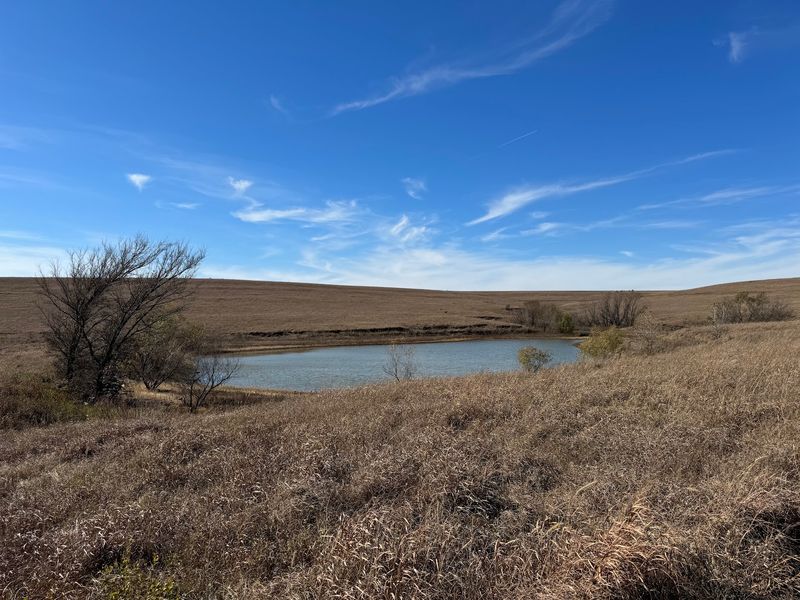
Long November nights work in your favor here. Darkness arrives early, and the trails normally stay open around the clock.
The preserve sits far from big-city lights. On clear nights, that means sharp views of stars, constellations, and even the Milky Way.
Bundle up first. Late fall evenings on open prairie can turn chilly, and wind travels easily across the hills.
A blanket and a thermos of hot cocoa could start a new family tradition. It sure beats arguing over the TV remote.
Heading out after dark? A headlamp with a red light setting helps you see the trail without ruining your night vision.
Stay on marked trails at night, check for temporary closures, and let someone know your plan. Nobody wants a search party interrupting dessert.
Daytime offers its own quiet pleasures. Anglers can enjoy catch-and-release fishing year-round during daylight hours in three preserve ponds and along Fox Creek.
Kansas residents ages 16 through 74 need a valid state fishing license. Nonresidents age 16 and older also need a Kansas nonresident fishing license.
The program runs through the state’s Fishing Impoundments and Stream Habitats effort.
Fall also brings rusty red and brown hues as the grasses reach their peak. Casting a line with that backdrop feels like a fair trade for skipping the mall.
The Drive In Is Basically Part Of The Escape
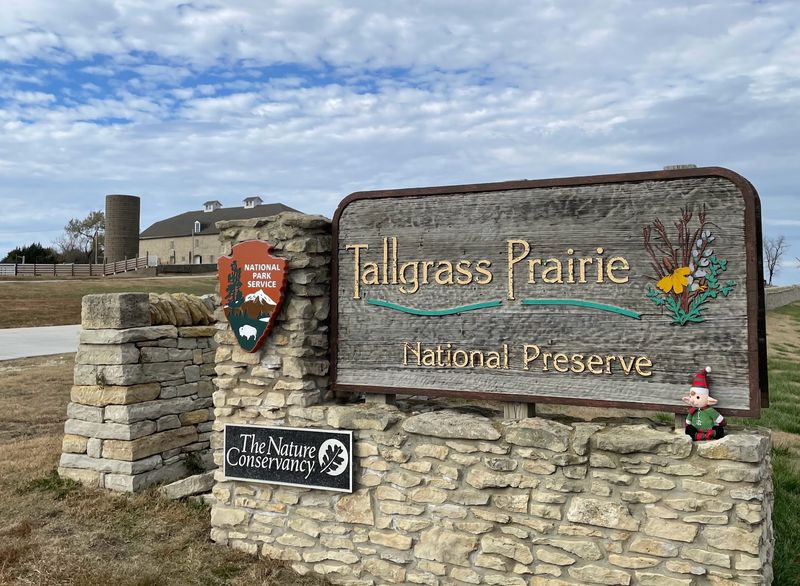
Finding the preserve is refreshingly simple. Tallgrass Prairie National Preserve sits at 2480B KS-177, Strong City, KS 66869, about 2 miles north of Strong City.
Highway 177 here is part of the Flint Hills Scenic Byway. That means the views start well before you park.
Personal vehicles aren’t allowed on preserve trails. Still, the byway offers plenty of prairie scenery from your car window.
Admission is free, and most activities cost nothing. That’s a pleasant change during a weekend usually packed with spending.
The preserve’s story is younger than you might guess. It was officially created on November 12, 1996, as the 370th unit of the national park system.
Ownership works a little differently than most parks. The Nature Conservancy owns most of the land and co-manages it with the National Park Service.
That unique public-private partnership sets this preserve apart. The park service owns no more than 180 acres of the whole preserve.
Check road conditions before leaving home, since rural routes can surprise you. Then fill the tank, pack snacks, and point the car toward the hills.
November also marks the preserve’s birthday. Celebrating a park’s anniversary with leftover pie seems only fair.