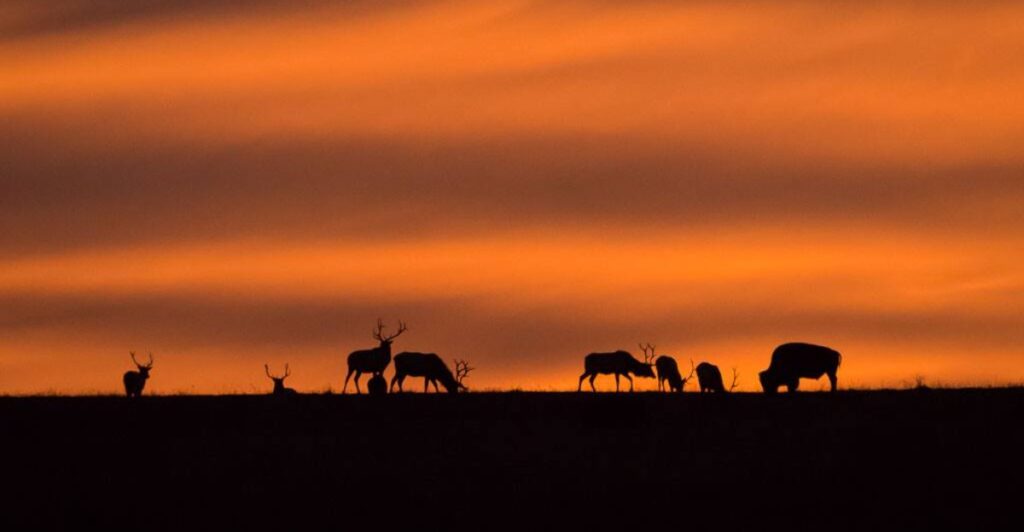
Autumn gets louder than expected when elk are part of the soundtrack.
In Kansas, one wildlife refuge gives visitors a rare chance to hear those deep seasonal calls rolling across open country.
Bugling is one of those sounds that can stop a conversation instantly because it seems to come from much farther away than you expect.
The setting adds to the moment, especially when cooler air and changing grasslands make the whole outing seem perfectly timed for fall.
What makes the experience memorable is that you cannot schedule the exact second nature decides to perform. You wait, listen, and hope the silence breaks.
I had a moment like that once while watching wildlife near dusk. Everyone around me had gone quiet, and then one distant call cut across the landscape.
I actually laughed because it was louder and stranger than I had imagined.
Since then, I have had a weakness for places where the best part of the visit is something you hear before you ever see it.
A Prairie Refuge Built On A Family’s Promise
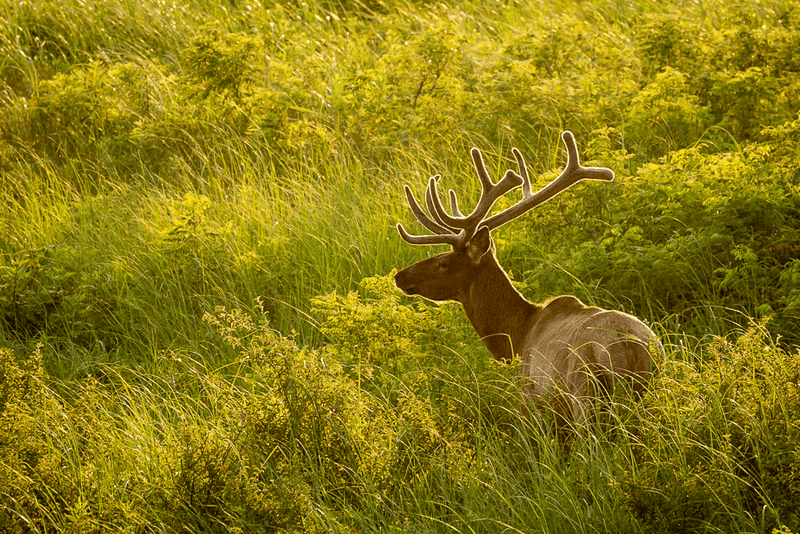
Back in the 1940s, Henry Irving Maxwell’s estate began purchasing Kansas prairie so that wildlife and native grassland could be preserved for future generations.
In 1944, 2,560 acres were deeded to the state, creating Maxwell Wildlife Refuge.
Bison and elk were introduced in 1951, and the refuge has been managed as a public wildlife area ever since, with the Kansas Department of Wildlife and Parks overseeing the herds.
I find that origin story genuinely moving, because both species had disappeared from much of Kansas long before modern wildlife conservation took hold.
Somebody wanted a piece of prairie protected.
Today, more than 2,200 acres of native prairie make up the refuge enclosure, where carefully managed bison and elk herds move across rolling grassland and wooded draws.
What you get today is a living piece of old Kansas, not a conventional zoo exhibit.
The animals choose where they stand within the refuge, and you fit your schedule around theirs, which is exactly how it should be.
Why Autumn Turns The Grassland Into A Concert Hall
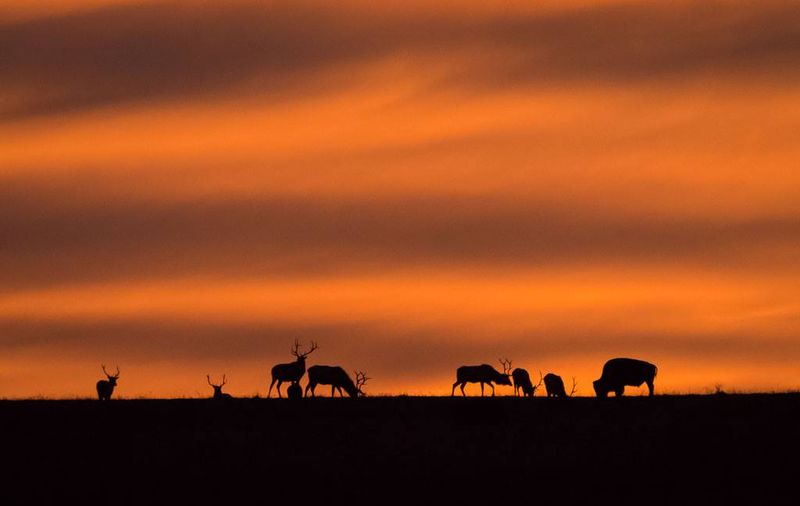
Elk rutting season at Maxwell runs roughly from mid September into mid October, according to Kansas wildlife information.
Bulls bugle to gather cows and challenge rival males during this concentrated breeding period on the prairie.
The sound itself surprises first-timers. It starts as a deep grunt, climbs into a thin whistle that seems too high for such a heavy animal, then drops into a series of coughing chuckles.
On still mornings that call travels remarkably far across open ground, which means you can often hear a bull long before you spot him.
Late September can be an especially strong time to stop quietly and listen closely, when temperatures are pleasant and the rut is underway.
Bring a light jacket, because prairie wind does not care about the calendar.
I always tell people to stop talking for a full minute and just listen. The prairie fills that silence with elk, meadowlarks, and wind through bluestem, and suddenly central Kansas sounds like nowhere else.
Tram Tours That Roll You Right Into The Herd
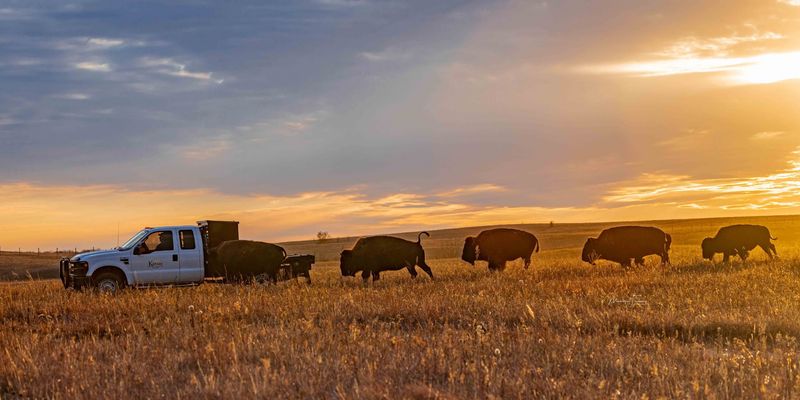
Riding an open tram through a herd of bison ranks among the most memorable hours I have spent anywhere in Kansas.
The tram rumbles out from the visitor area onto pasture roads, and the animals barely lift their heads.
Guided tram tours are the signature experience here, and they run on a schedule that shifts with the seasons, so reservations matter more than spontaneity.
Because the vehicle is permitted inside the fenced range, you get close in a way no roadside pullout allows. Feet, not football fields, separate you from a two-thousand-pound bull bison.
Elk sightings on tram tours are less guaranteed than bison, since elk favor the brushy draws and timbered edges. Autumn improves your odds considerably, especially on early tours.
Dress for whatever the sky is doing, since the tram is open on the sides and prairie weather changes its mind quickly.
Nothing about the ride feels rushed, and that unhurried pace is half the charm.
Volunteer Docents Who Know Every Blade Of Grass
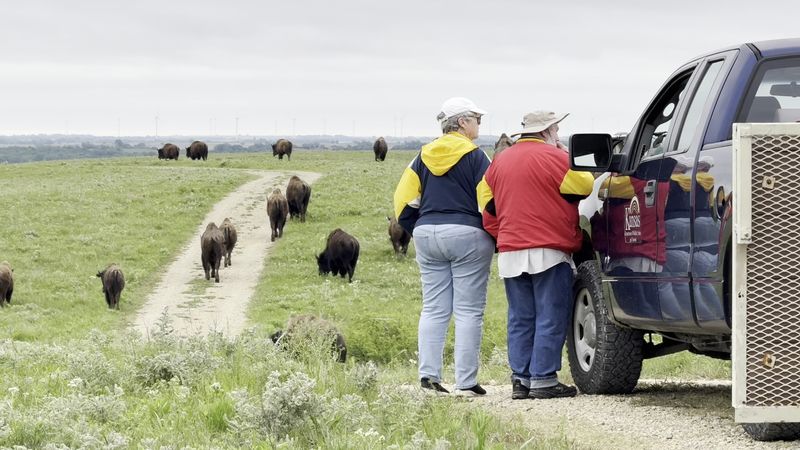
Here is something worth knowing: volunteers are central to Maxwell’s visitor programs, helping with tram tours, events, education, check-in, and guest services throughout the year.
Guided tours also focus on prairie ecology, bison, elk, conservation, and refuge history.
Ask about grass species and you can learn how controlled burns, managed grazing, and native plants work together across this protected prairie landscape.
The refuge program includes trained volunteers and staff supporting tours and educational activities, rather than guaranteeing that every tram guide is a volunteer docent.
Visitors can also learn why grazing by bison and elk is part of the refuge’s management approach and how that activity helps shape prairie habitat.
Questions are welcome on guided experiences, and school programs are specifically designed to connect wildlife, prairie ecology, and conservation for younger visitors.
The pride behind these programs is easy to notice, especially when the conversation moves beyond simply spotting animals and into how the refuge is actually managed.
Climbing The Observation Tower For A Wider View
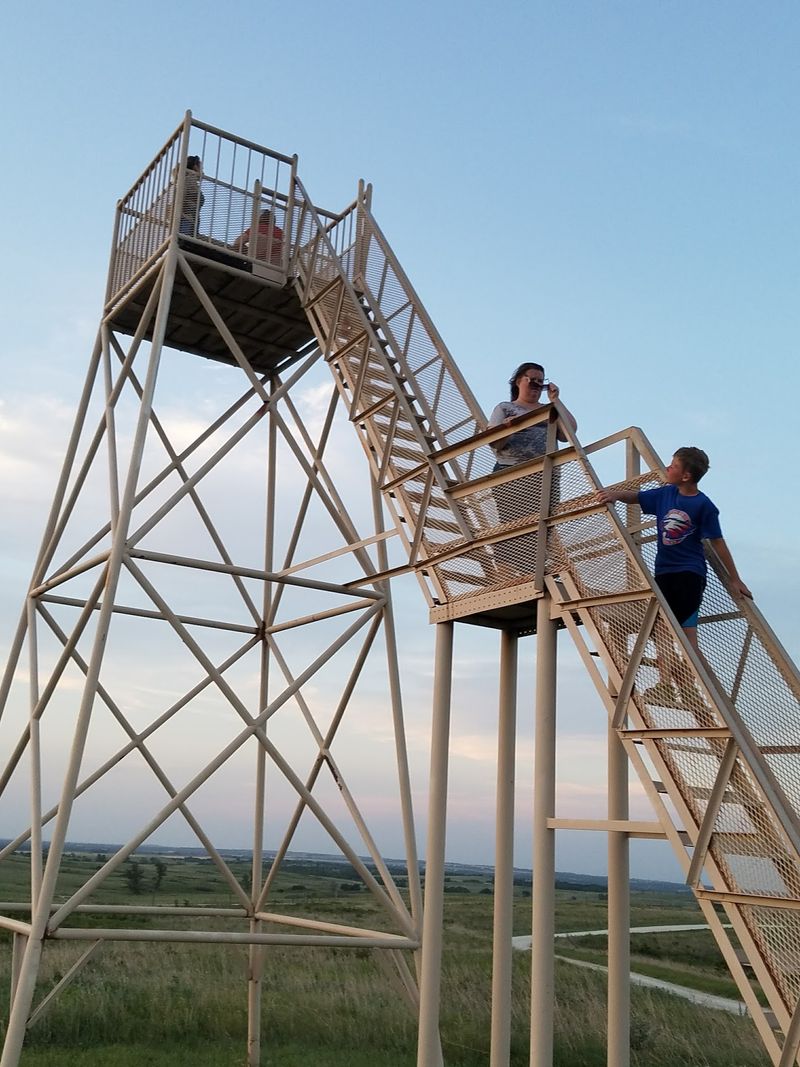
An observation tower stands within the refuge, and climbing it changes your whole sense of scale. From the top, the grassland stretches to the horizon in soft waves of amber and rust.
Binoculars turn the tower into the single best free tool on the property. Scan the treelines and creek draws, and elk often reveal themselves as tan shapes against darker brush.
Autumn mornings reward patience up there, because bugling carries well and you can often track a bull by sound before your eyes find him.
I climbed it once at sunset and watched shadows stretch across the pasture while a distant bison herd drifted toward water. Not a single other person was up there.
Wear shoes with decent grip, since the steps can be damp with dew early in the day.
Give yourself twenty unhurried minutes at the top. Rushing a view like that seems almost rude to the prairie.
Pueblo Road And The Self-Guided Option
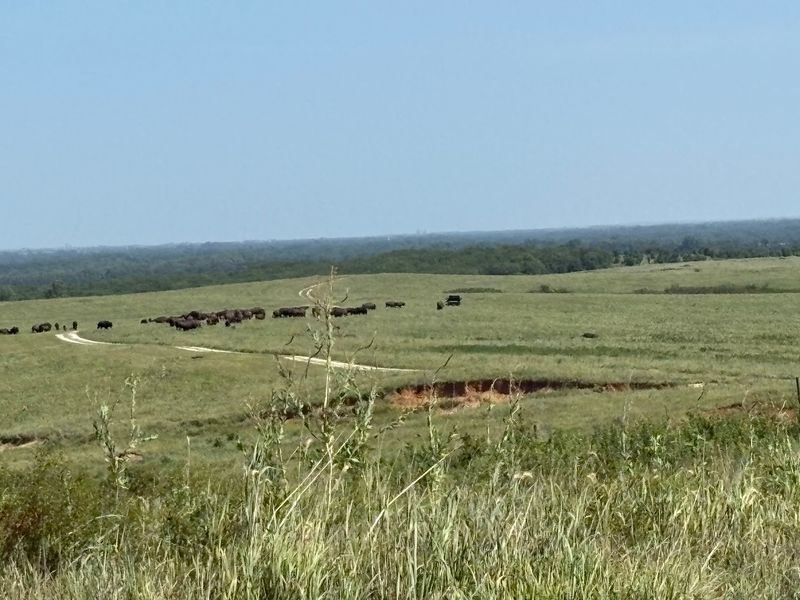
Not every visit requires a booking. A public road passes through refuge land, and driving it slowly gives visitors a chance to spot bison and elk without joining a scheduled tram tour.
The refuge is open to drive-through access year-round, although wildlife sightings are never guaranteed because the animals move across a large enclosure.
Stay in your vehicle while driving through the bison and elk enclosure. Kansas wildlife rules specifically require it on that portion of the refuge road.
Roll the windows down in September and you may catch bugling right from the driver’s seat, which feels almost absurdly easy.
Early morning and evening can be rewarding times for wildlife watching, though animals may appear at other times as well.
Current Maxwell information lists the visitor center from 9 a.m. to 4 p.m., while office hours are Monday through Friday from 9 a.m. to 5 p.m.
A slow drive here beats a fast drive almost anywhere else in Kansas.
Bison And Elk Sharing One Enormous Pasture
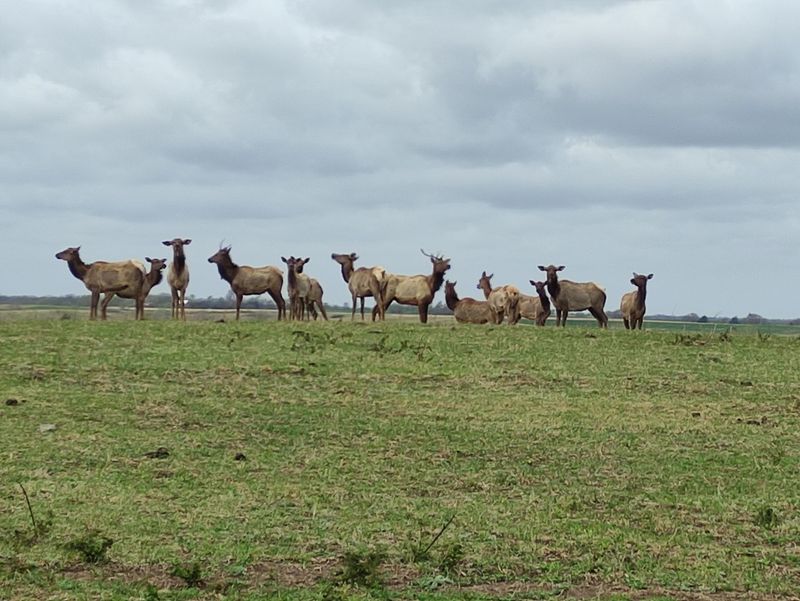
Two of North America’s great grazing animals live side by side inside this fence, and watching them share ground is a genuine treat.
The bison herd draws the most attention, with shaggy shoulders and calves the color of cinnamon in spring.
Elk keep a lower profile. They graze at the margins, slip into brush when disturbed, and generally make you earn the sighting.
During the rut, though, bulls get bold. Antlers up, chest out, bugling at anything that looks like competition, they become impossible to miss.
I have watched a herd of cow elk cross an open slope in single file while bison ignored them completely, each species minding its own business.
Seeing both in one morning is very achievable in autumn, especially on a guided tour.
Fun detail worth knowing: elk are members of the deer family, and a mature bull can carry antlers weighing around forty pounds. He grows and sheds that crown every single year.
Dark Skies Worth Staying Out For
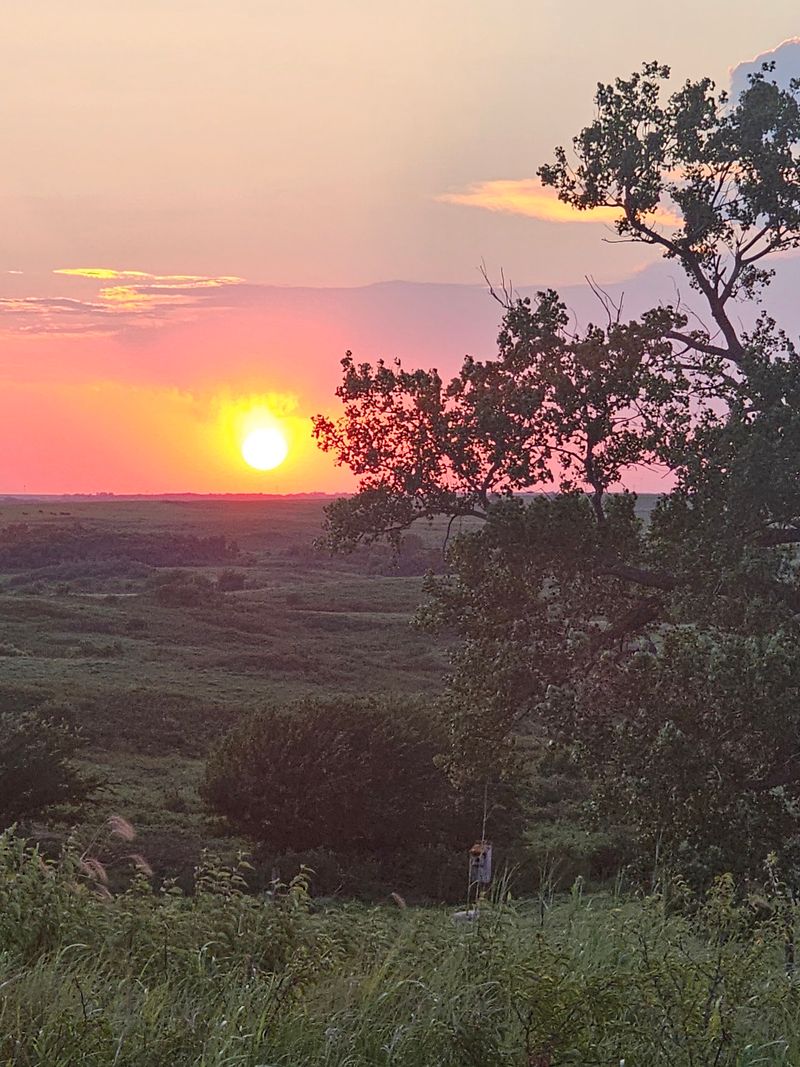
Something wonderful happens after sunset here, and the surrounding prairie can offer dark conditions for stargazing.
Astrophotographers have documented the Milky Way from Maxwell, including views near the refuge observation tower.
The Milky Way can appear as a genuine band of light under clear, moonless conditions, especially when clouds and bright moonlight stay out of the way.
Current refuge information does not advertise a regular night-sky event schedule, so check the official event calendar before building a trip around one.
Autumn helps here too, because darkness arrives earlier and cooler nights can make an evening outside more comfortable than midsummer.
Bring a red-light flashlight to protect your night vision, plus more layers than you think you need. Prairie nights can cool quickly after sunset.
Elk may continue calling after dark during the rut, although hearing them is never guaranteed on any particular visit.
Stargazing plus wildlife in one visit can make the refuge feel like two very different Kansas experiences after dark.
Camping, Fishing, And The Lake Next Door
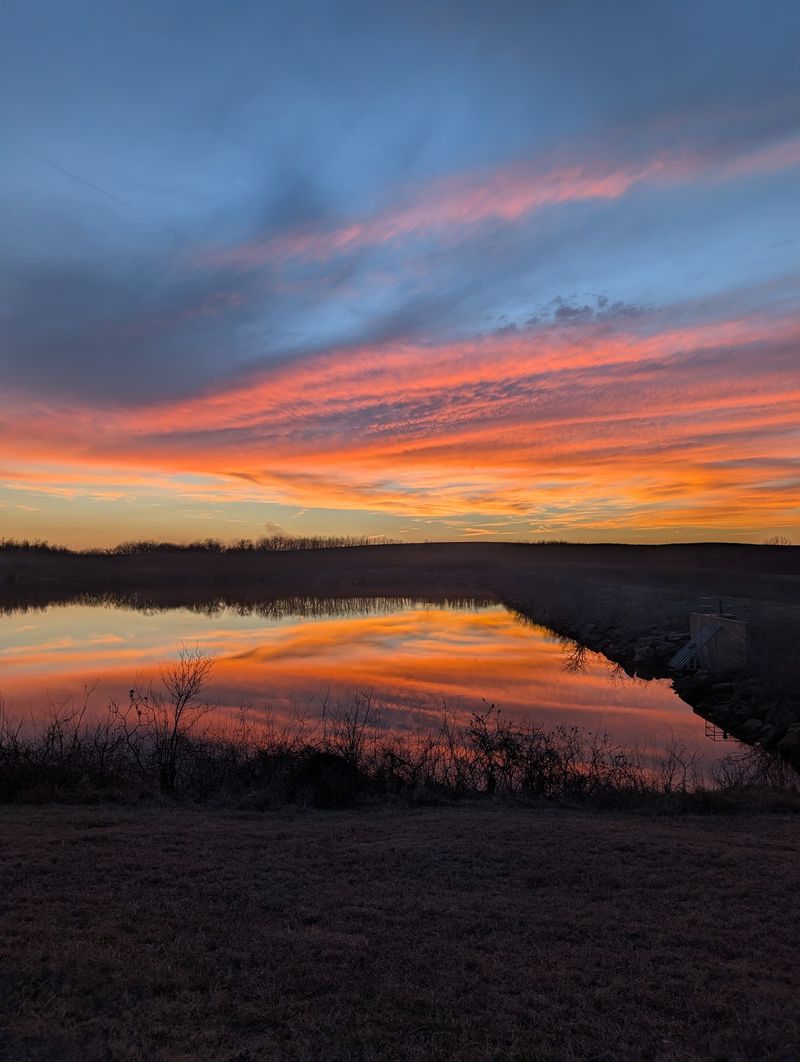
McPherson State Fishing Lake sits right beside the refuge, and it makes the whole area easy to turn into an overnight trip.
Anglers fish it with a valid Kansas license, and the shoreline is quiet most days.
Primitive camping is available near the lake, with basic sites, picnic tables, and fire rings. Facilities are simple, so arrive prepared rather than expecting showers.
Staying the night solves the biggest problem with elk listening, which is that the best bugling happens at dawn when most visitors are still an hour away on the highway.
Sunrise over that lake, with mist on the water and bugling drifting in from the pasture, ranks high on my list of Kansas mornings.
Pack water, a trash bag, and firewood, and leave your site cleaner than you found it.
The campground never feels crowded in autumn, which suits the mood of the place perfectly.
Camp here once and you will understand why people come back.
Practical Tips Before You Point The Car North
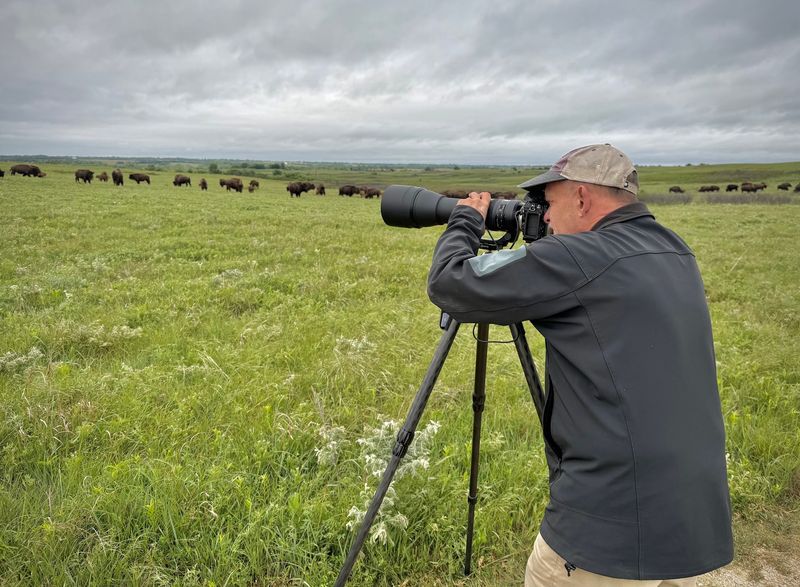
A little planning transforms this trip, so here is what I wish I had known first.
Guided tram tours can be booked through Maxwell Wildlife Refuge, and groups should reserve ahead because seating is limited.
Current refuge information lists the visitor center from 9 a.m. to 4 p.m., while the office is open Monday through Friday from 9 a.m. to 5 p.m.
Regular tram pricing is currently fifteen dollars for adults, with lower rates for children, making the guided ride affordable way to see the prairie.
Canton is a short hop from Interstate 135, roughly an hour north of Wichita, so it fits easily into a day trip.
Bring binoculars, a long camera lens, sunscreen, and closed shoes. Prairie sun is stronger than it looks, even in October.
Go early, stay patient, and keep your voice low.
Maxwell Wildlife Refuge rewards the quiet visitor more than the fast one, and that bugling call is worth every minute of the wait.