You can feel the moment before the climb begins. The ladder waits against the canyon wall, and the cave above makes you wonder who first looked at that height and thought, “Yes, this can be home.” In New Mexico, the answer reaches back nearly one thousand years, to Pueblo people who carved rooms into volcanic rock and built a life high above the canyon floor.
Today, visitors follow that story with their hands on the rungs and their eyes fixed upward. The climb is not long, but it changes the mood fast.
The canyon seems to widen as the past presses closer. You notice the stonework and the nerve it took to live right there.
By the time you reach the top, it feels less like sightseeing and more like stepping into memory. Keep reading for eight fascinating facts about this ladder hike and the cliff villages waiting high above.
Ladders Into The Cliffs
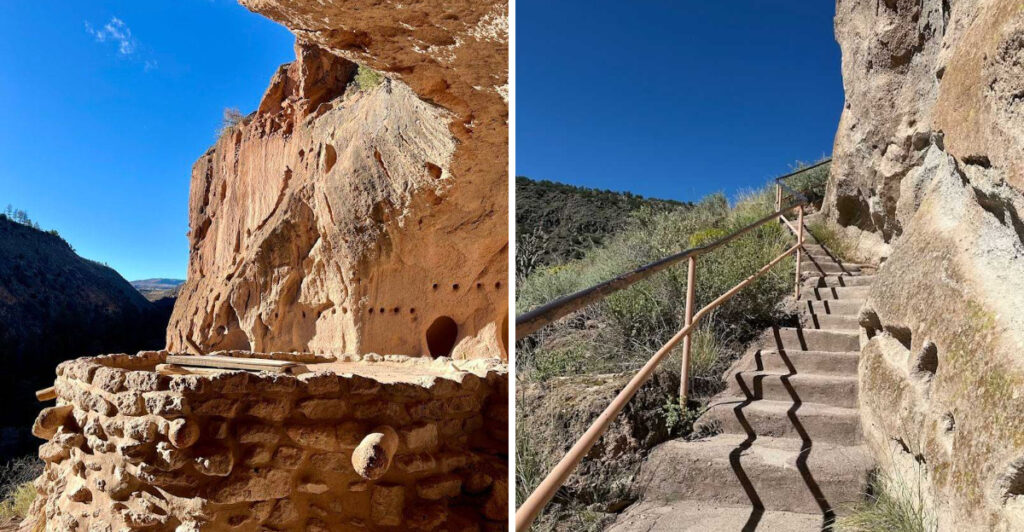
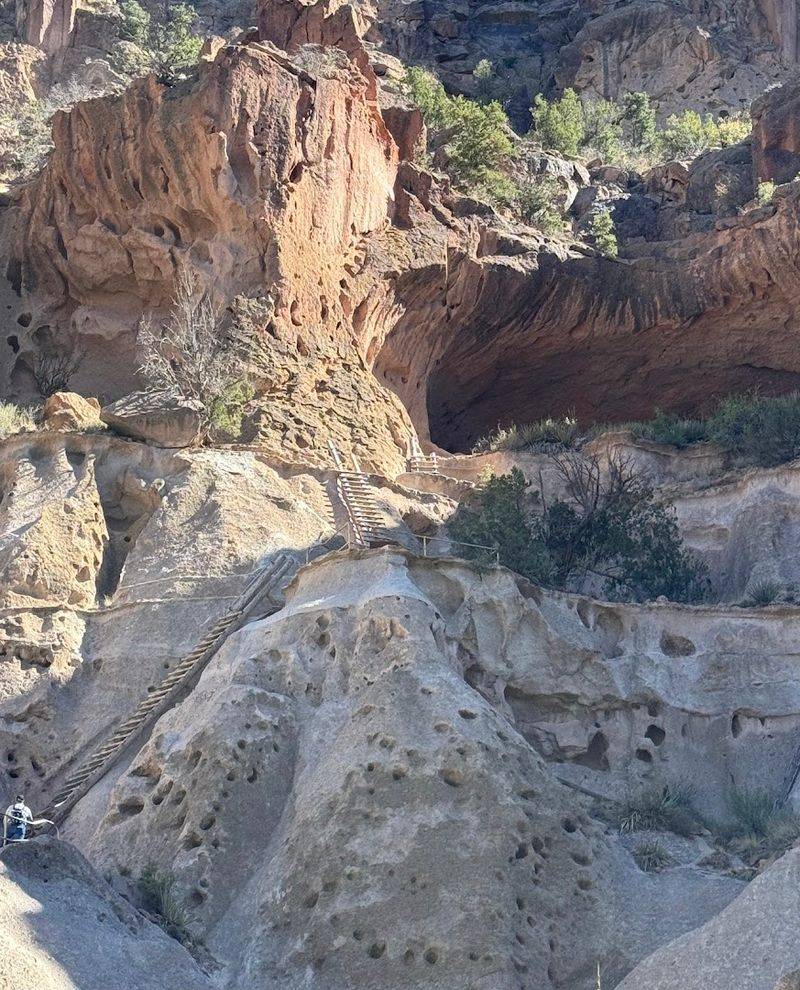
A wooden rung beneath your hands can make this climb feel unforgettable. The cave opening waits 140 feet above the canyon floor, high enough to stay with you long after you have driven home.
The star of this particular adventure is Alcove House, formerly known as Ceremonial Cave, a site perched dramatically above Frijoles Canyon inside Bandelier National Monument.
To reach it, visitors climb a series of four wooden ladders and several stone stairs, each section bringing you higher above the canyon floor and closer to a place that has not been actively inhabited in centuries.
The ladders are sturdy and well-maintained, but they do require focus, especially on the steeper sections where your feet need to find each rung with care.
Visitors who are reasonably fit and comfortable with heights often find the climb challenging in the best possible way.
The payoff at the top is nothing short of spectacular, offering a front-row view of an ancient alcove that once sheltered real families.
Your journey to all of this begins at the Bandelier National Monument Visitor Center at 15 Entrance Rd, Los Alamos, NM 87544, where rangers and exhibits prepare you for every step ahead.
Before heading out, check current conditions, since snow or ice can temporarily close the ladder route.
Soft Stone Canyon Walls
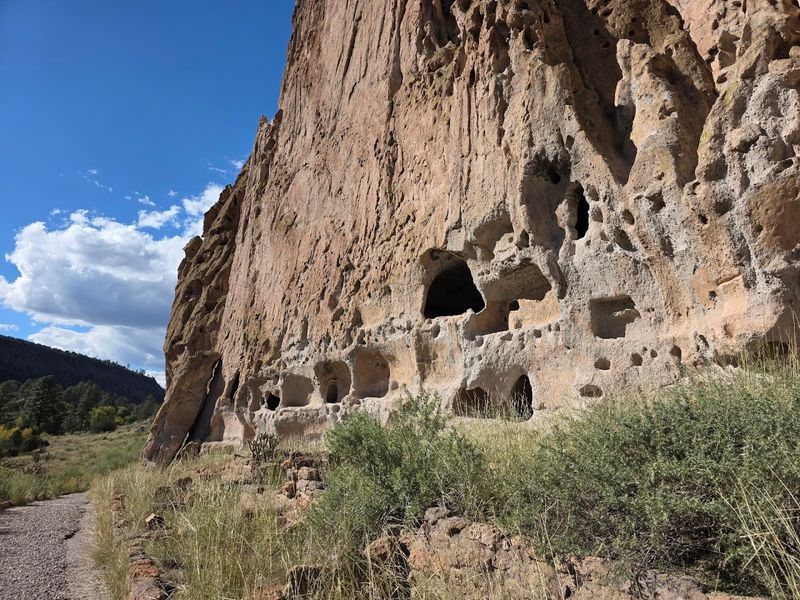
Look closely at the canyon wall at Bandelier and you may notice something unexpected. The rock has an almost chalky look, far softer than the granite you might find in other parks.
That softness is the whole reason ancient villages exist here at all.
The canyon walls are made of tuff, a type of volcanic rock formed from compressed volcanic ash that erupted from the Valles Caldera roughly 1.2 million years ago.
Tuff is porous and relatively easy to carve, which meant that Ancestral Pueblo people could hollow out rooms directly into the cliff face using simple stone tools.
These hand-carved spaces, called cavates, served as storage rooms, sleeping quarters, and sheltered living areas that stayed cool in summer and retained warmth in winter.
You can still see the soot-blackened ceilings inside some cavates today, a quiet record of cooking fires that burned centuries ago.
Geologists point out that the same volcanic geology that created this soft rock also shaped the entire Pajarito Plateau, making Bandelier a place where earth science and human history overlap in a genuinely rare way.
Along the canyon trail, the walls seem to hold the whole story right at eye level.
Ancient Rooms Above The Trail
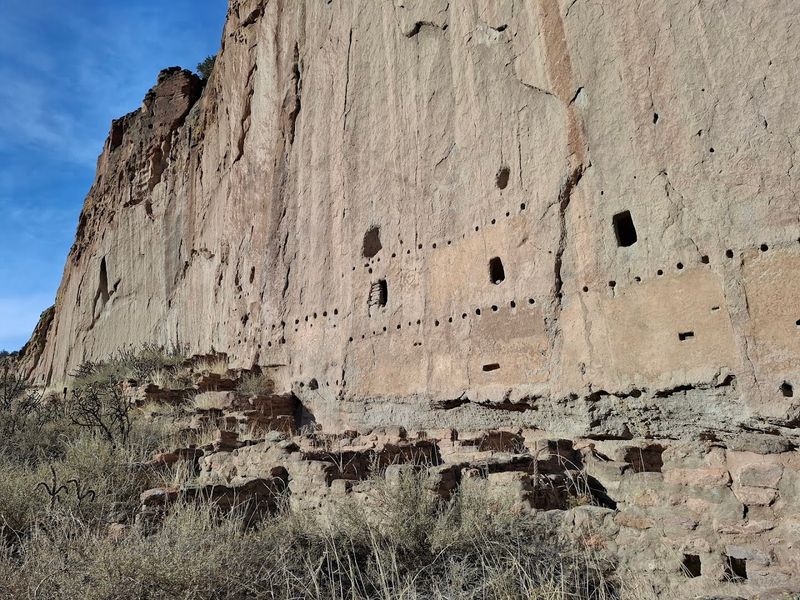
Some of the most striking moments on the Bandelier trails happen when you glance upward and realize actual rooms are carved into the cliff directly above your head.
The Ancestral Pueblo people who lived here between approximately 1150 CE and 1550 CE built homes both on the canyon floor and high up in the volcanic tuff walls, creating a layered community that used every available space.
Alcove House alone once sheltered around 25 people, a tight-knit group who made daily life work in a space perched dramatically above the canyon.
Many of the cavates along the main trail are accessible at ground level, letting visitors peer inside and see the carved handholds and footholds that ancient residents used to move between levels.
The rooms are small by modern standards, but they were engineered thoughtfully, with smooth walls and ceiling heights that matched the practical needs of their builders.
Archaeologists have found evidence of cooking, storage, and sleeping in these spaces, painting a vivid picture of everyday routines that unfolded here centuries before European contact.
Once you stand in one of these carved rooms and look out over the same canyon view, history feels startlingly immediate.
Petroglyphs In The Rock
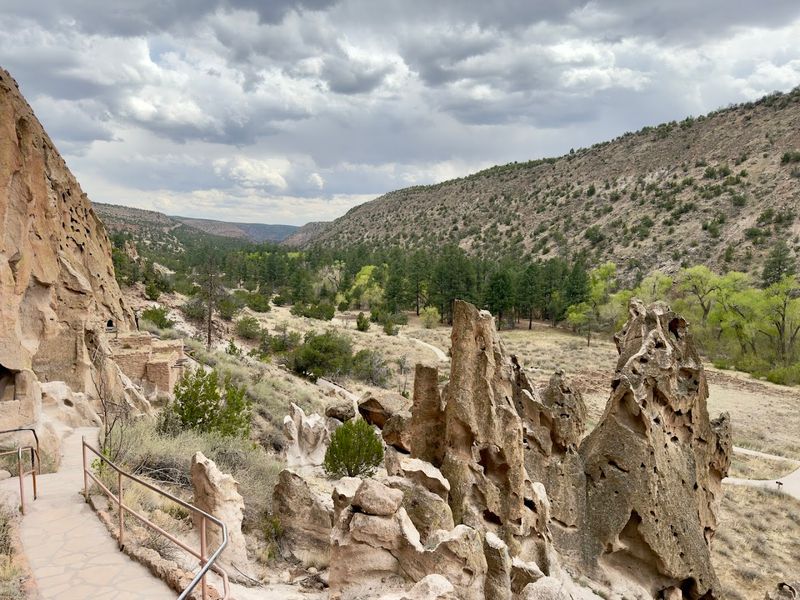
Across the canyon walls and boulders of Bandelier, images have endured for centuries. They were etched into rock by ancestors of Pueblo communities that continue today.
Petroglyphs at Bandelier were carved by Ancestral Pueblo people who used harder stones to peck through the dark outer layer of rock, revealing the lighter surface beneath and creating images that range from spirals and geometric patterns to animals and human figures.
Researchers believe these images served multiple purposes, including marking important locations, recording ceremonial events, or communicating information across generations.
A petroglyph found mid-hike can feel like a private message that was never meant to be secret, just meant to last.
The park encourages visitors to look without touching, since even the oils on human skin can accelerate erosion on these irreplaceable surfaces.
Rangers at the visitor center can point you toward the best locations for viewing petroglyphs, and the self-guided trail brochure helps identify what you are looking at.
Every image feels like a punctuation mark in a very long sentence about human creativity, persistence, and the deep human need to leave a mark on the world.
Sunlit Pueblo Ruins
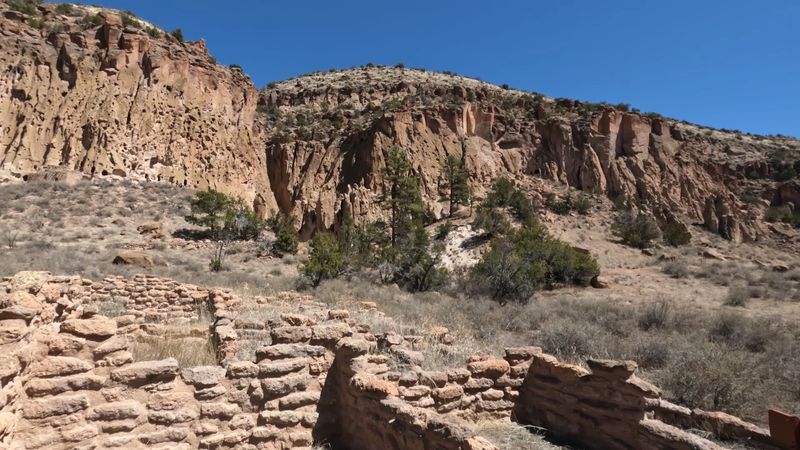
Near the start of the Pueblo Loop Trail, the canyon floor opens around the footprint of Tyuonyi. This large circular pueblo once rose several stories high and housed hundreds of people.
Today the walls stand only a few feet tall, but the circular layout is clearly visible, giving visitors a strong sense of the community scale that existed here at its peak between roughly 1350 and 1550 CE.
The stone masonry is precise and deliberate, assembled from blocks of tuff held together with mud mortar, much of which has disappeared over time.
Sunlight hits the ruins differently throughout the day, and early morning visits reward photographers with warm, raking light that brings out the texture of every stone surface.
The pueblo ruins give the canyon a quieter, more intimate feeling, especially because the site is easy to absorb at a slow pace.
A relaxed loop around Tyuonyi takes less than an hour, making it an ideal starting point before the ladder climb to Alcove House.
The ruins sit in a canyon that feels almost theatrical in its beauty, framed by pine-covered mesas on both sides.
Desert Paths And Hidden Alcoves
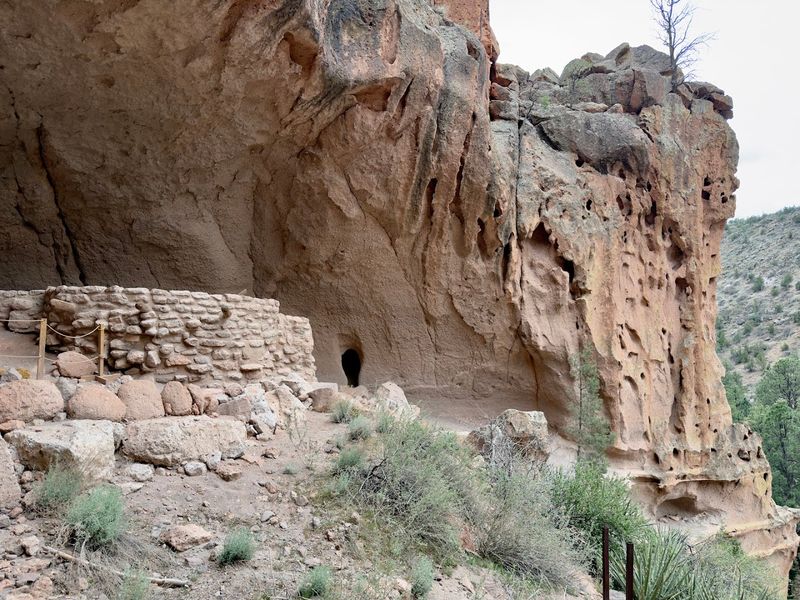
Not every discovery at Bandelier announces itself loudly; some of the best moments come when the trail bends and a shadowed alcove appears in the cliff that you had not noticed from fifty feet back.
The network of trails here ranges from the mostly flat and paved Pueblo Loop Trail to longer backcountry routes that climb onto the Pajarito Plateau and stretch for miles through juniper and ponderosa pine.
The Alcove House trail adds about one mile round trip to the main loop, branching off and following the canyon upstream to the base of the ladder sequence.
Along the way, the path passes through sections of riparian vegetation where cottonwood trees grow along the creek, creating a cool, shaded contrast to the sun-baked canyon walls above.
Hikers occasionally spot mule deer, wild turkeys, and a surprising variety of bird species moving through the canyon, which sits within a biologically diverse zone where high desert meets mountain forest.
The trails are well-signed and well-maintained, with benches placed at strategic points for visitors who need a breather at the park’s elevation of roughly 6,600 feet above sea level.
Every hidden alcove you find along these paths feels like the canyon rewarding you for paying attention.
Mesa Views Beyond The Canyon
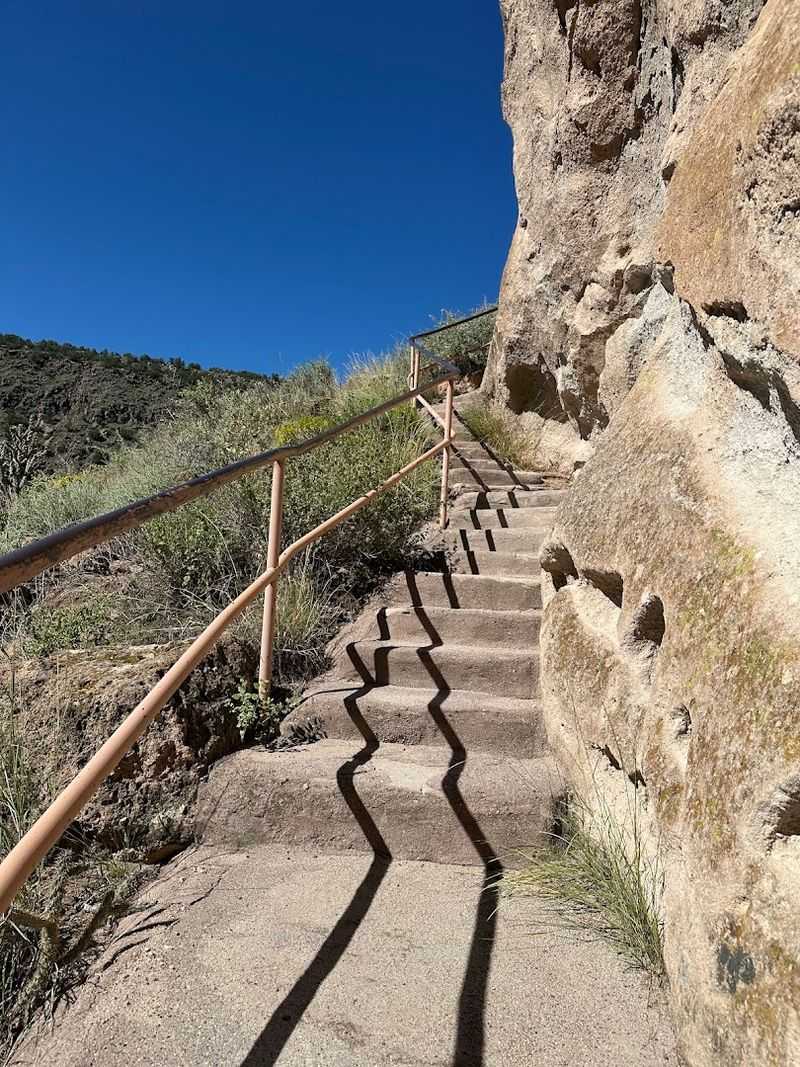
Climb high enough at Bandelier and the canyon walls drop away behind you, replaced by a wide, open mesa landscape that stretches toward the Jemez Mountains with almost theatrical drama.
The Pajarito Plateau, on which most of Bandelier sits, rises to elevations that give hikers on the upper trails genuinely sweeping views across northern New Mexico’s layered geology.
From certain vantage points, you can look down into Frijoles Canyon and see the trail you walked earlier reduced to a thin line threading between the cliff walls, which reframes the entire experience beautifully.
The mesa-top environment feels completely different from the canyon floor, with open stands of ponderosa pine, patches of scrubby juniper, and a sky that seems larger than it has any right to be.
Bandelier holds its own as an Ancestral Pueblo site, with scenery that complements the history rather than competing with it.
Spring and fall are especially good seasons for mesa hikes, since summer temperatures can climb quickly on exposed terrain and afternoon thunderstorms are common from July through September.
The view from the mesa edge is the kind that earns a long, quiet pause before you head back down.
Weathered Walls With A Story
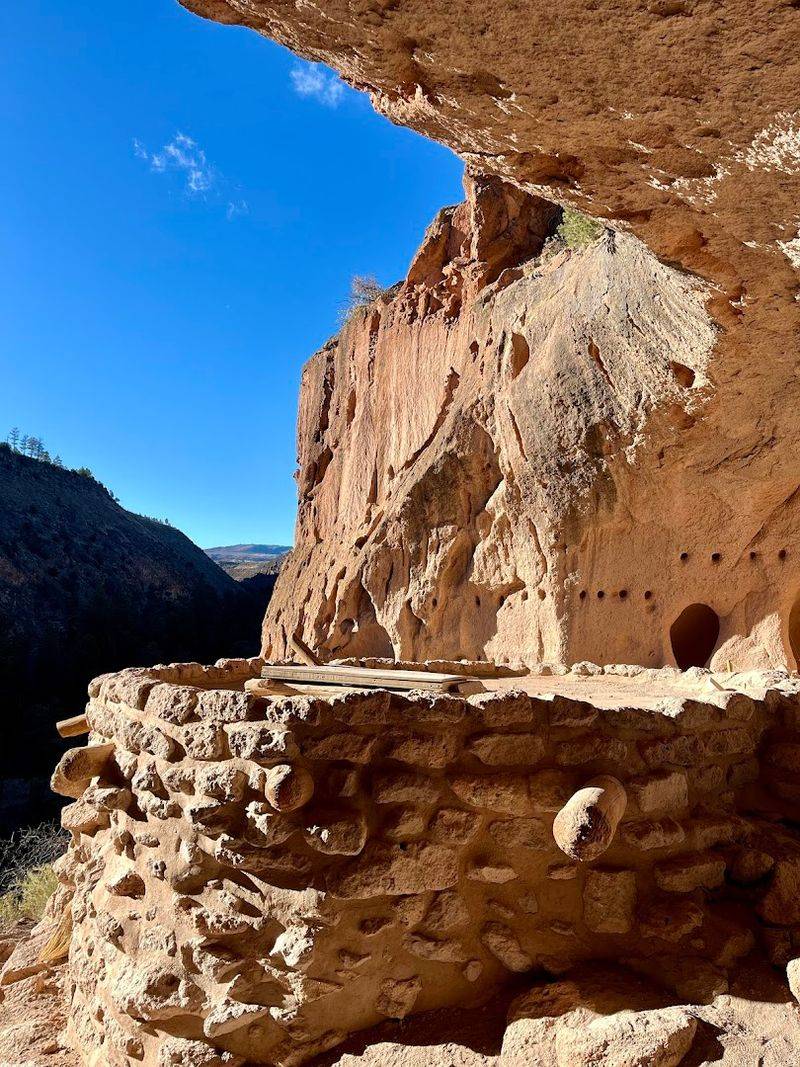
Every crack and worn surface in Bandelier’s cliff walls is a page in a timeline that spans roughly four centuries of continuous human habitation, from around 1150 CE to 1550 CE.
The Ancestral Pueblo people who built here were skilled architects, farmers, and community organizers who adapted their building techniques to the unique properties of volcanic tuff over many generations.
Inside Alcove House, a reconstructed kiva sits at the center of the alcove, offering a tangible connection to the ceremonial life of the people who once gathered there for rituals and community decisions.
Kivas were subterranean or semi-subterranean chambers used for spiritual ceremonies, and the one at Alcove House gives visitors a rare chance to see this architectural form in its original dramatic setting.
The weathering on the outer walls tells its own story too, shaped by centuries of rain, freeze-thaw cycles, and the slow chemistry of the volcanic rock itself.
Park rangers and the visitor center’s exhibits do an outstanding job of translating what the archaeology reveals, connecting physical evidence to the daily lives of real people rather than leaving it as abstract history.
After leaving these weathered walls behind, the canyon can feel like it has shared just enough to make you want to return.