Parlez-vous French toast? This San Francisco favorite answers with thick slices, fresh fruit, and a breakfast worth building the morning around.
A little patience leads to house-baked bread, fruit-covered French toast, and a compact North Beach dining room where the line outside is often your first clue.
The restaurant’s story reaches back to 1964, when the Sanchez family transformed a Stockton Street ice cream shop into a breakfast and lunch café.
More than six decades later, the yellow awning still draws a crowd and the French toast still steals most of the conversation.
You may arrive thinking one meal cannot possibly rearrange a California road trip. Then breakfast lands and the toast takes over.
North Beach Has Lined Up For This Place Since 1964
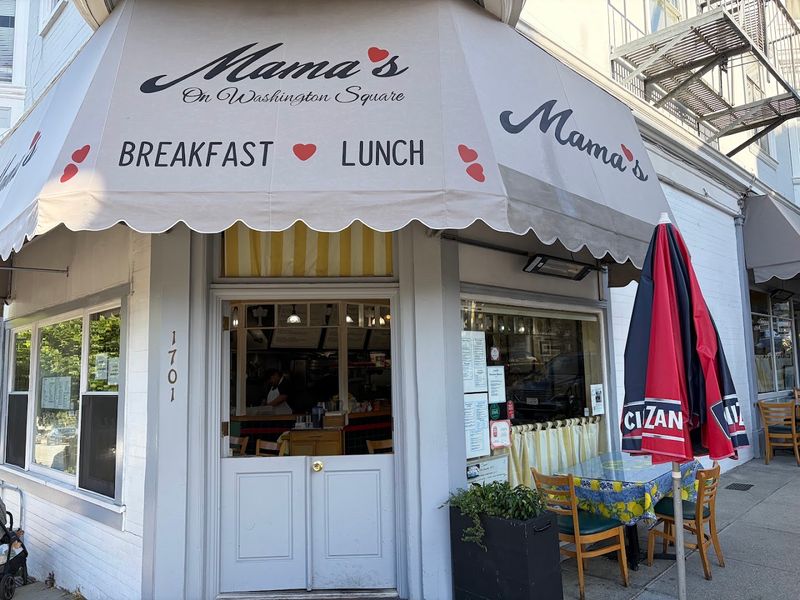
A line outside a breakfast café can mean hype, hunger, or a serious shortage of tables. At Mama’s, it has been part of the scenery for generations.
Frances and Michael Sanchez first operated an ice cream business at the corner of Stockton and Filbert streets. The family later converted the space into Mama’s, naming the restaurant for Frances, the mother of their eight children.
Mama’s identifies 1964 as its opening year, marking more than six decades of breakfasts at this North Beach corner. The family’s long presence gives the café a history that reaches far beyond its busiest morning line.
Early success came from fresh ingredients and combinations that stood apart from standard diner breakfasts. The original room held only about 15 tables, so long waits developed well before restaurant lines became social media trophies.
Mama’s remains connected to the Sanchez family, preserving the personal character behind the name. Menus from the early years still hang inside, giving you a glimpse of a time when coffee cost pocket change and French toast had not yet become a road-trip objective.
The wait can still stretch on busy weekends, especially late in the morning. You can complain about the line, but the line has heard it all before and is not moving faster out of sympathy.
French Toast Begins With Bread Worth Celebrating
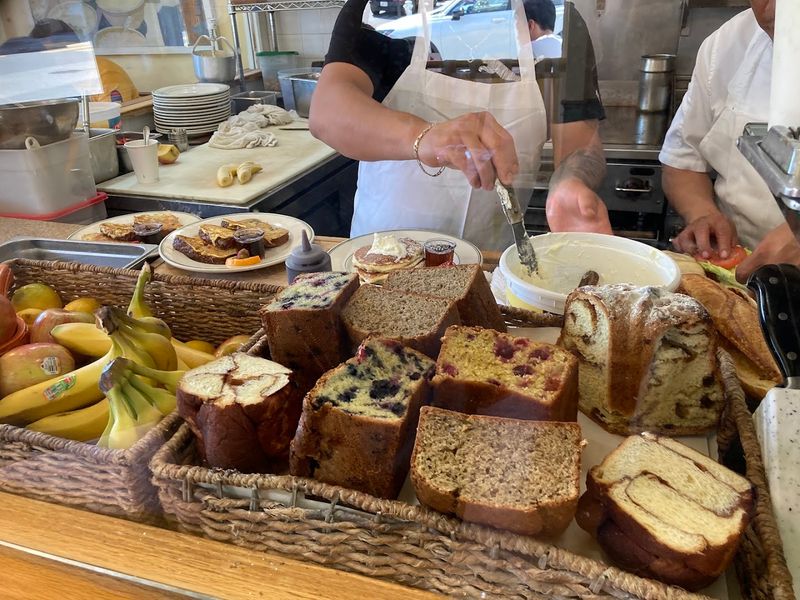
Bread gets promoted from supporting actor to breakfast lead before you even order. Loaves, pastries, and coffee cakes appear near the counter, putting the café’s baking program directly in your path.
Many of those house-baked breads become the base for the French toast menu. Cranberry-orange-walnut bread, cinnamon brioche, banana bread, and other varieties bring their own flavor and texture before custard, fruit, or syrup enters the picture.
That approach changes the dish completely. Standard sandwich bread can carry French toast, but a dense slice of banana bread or a soft brioche arrives with a personality already built in.
The crumb must absorb enough egg mixture to become rich without collapsing. The crust needs to brown while the center stays tender, a balance that becomes more demanding when every loaf has a different structure.
You can see why serious breakfast fans pay attention. The bread does not disappear beneath the toppings, and each version delivers a noticeably different first bite.
Near the end of the counter line, you will find Mama’s On Washington Square at 1701 Stockton Street, San Francisco, CA 94133, where Stockton meets Filbert beside Washington Square.
The address looks ordinary on a map, but breakfast has been making it unusually persuasive for decades.
One Sampler Turns Breakfast Into Three Decisions
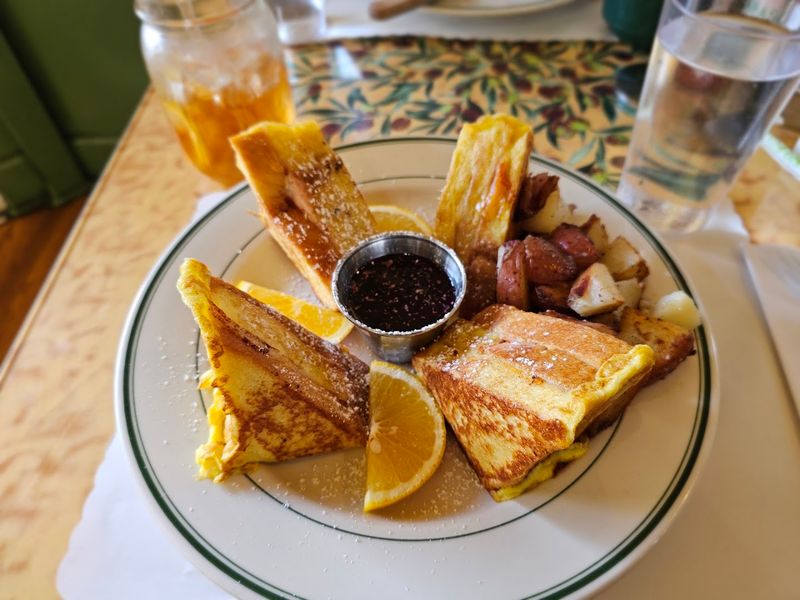
Choosing one French toast sounds reasonable until three house-baked options start making their cases at once. The sampler settles the argument by putting several varieties on one plate.
The sampler has featured banana nut, cinnamon brioche, and cranberry-orange-walnut French toast. Fresh berries, sliced bananas, and maple syrup give the trio a shared finish without erasing the differences between the breads.
The banana version is dense and naturally sweet. Cinnamon brioche brings a lighter, softer texture, while cranberry-orange-walnut adds tart fruit and crunch that can keep the plate from becoming one long sugar parade.
Other menu choices have included chocolate cinnamon, kugelhopf-style brioche with raisins, dates, cinnamon, and almonds, plus apple pan doré made with sourdough baguette and apples in lemon-butter sauce.
The exact lineup may change, so you should treat the sampler as a snapshot rather than a permanent contract. That uncertainty gives repeat visits a useful excuse beyond simply admitting you wanted more French toast.
Move from one slice to the next and conduct your comparison properly. This is important culinary research, and anyone asking for a bite should respect the scientific process.
Banana Bread Makes An Unexpected French Toast Base
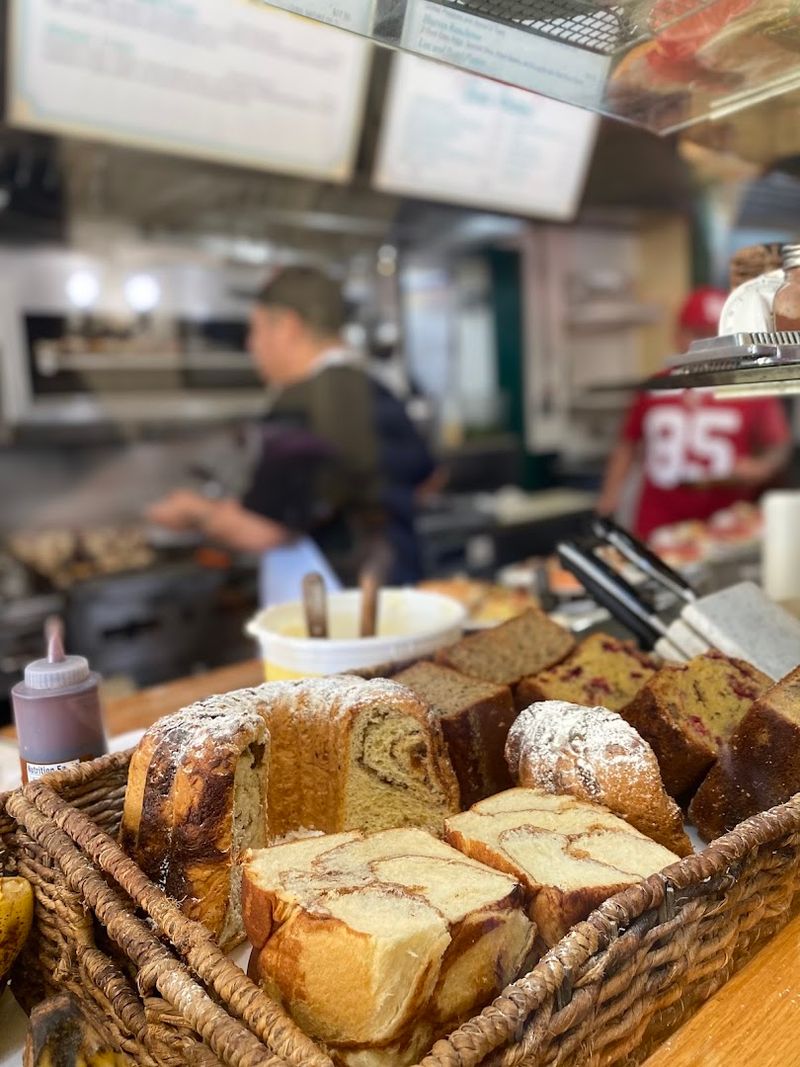
The first forkful can create a brief identity crisis. Is this French toast, banana bread, or dessert wearing breakfast hours as a disguise?
Mama’s banana walnut version begins with a thick slice of house-made banana bread. Once dipped and cooked, the bread keeps its dense crumb while developing a browned exterior that separates it from an ordinary slice served straight from the loaf.
Fresh banana slices reinforce the flavor, while berries add acidity and color. Walnuts bring crunch to a plate that would otherwise lean heavily toward soft textures.
Mama’s connects the plate directly to its own baking, so the bread and finished breakfast belong to the same kitchen. Its moisture, sweetness, and thickness all influence how the final dish cooks.
For a first visit, this option captures the restaurant’s most recognizable idea in one order: bake the bread, turn it into breakfast, then cover it with enough fruit to make the whole decision seem almost responsible.
The Tiny Dining Room Keeps Every Morning Lively
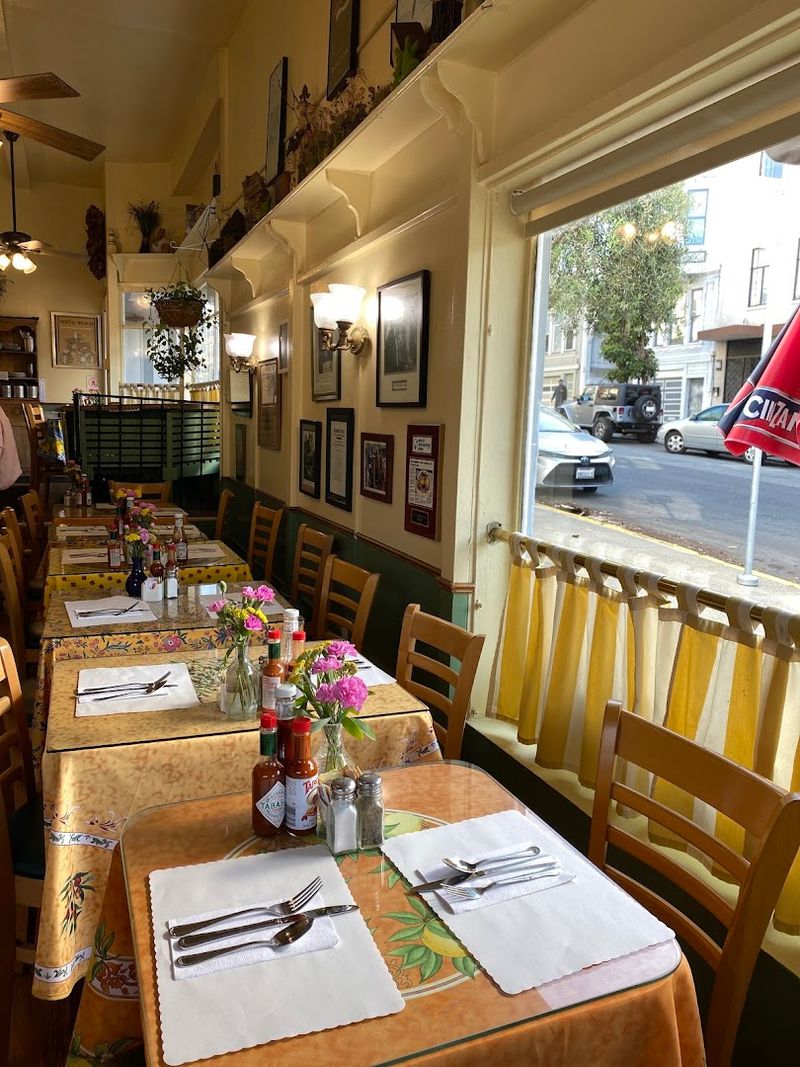
Small rooms do not allow breakfast to whisper. Plates move quickly, conversations overlap, and the open cooking area stays close enough to make the work behind your meal part of the experience.
The original dining room held about 15 tables, and the café remains compact even with outdoor seating available. Busy mornings therefore feel immediate from the moment you enter.
The ordering routine has also changed over time. Today, customers generally order and pay near the front, take a number, and find an available table rather than waiting to be formally seated.
That system keeps the line and dining room moving, although it does not turn a packed Saturday into a quiet breakfast. You may still need patience, sharp table-spotting skills, and a firm belief that the people lingering over coffee will eventually stand up.
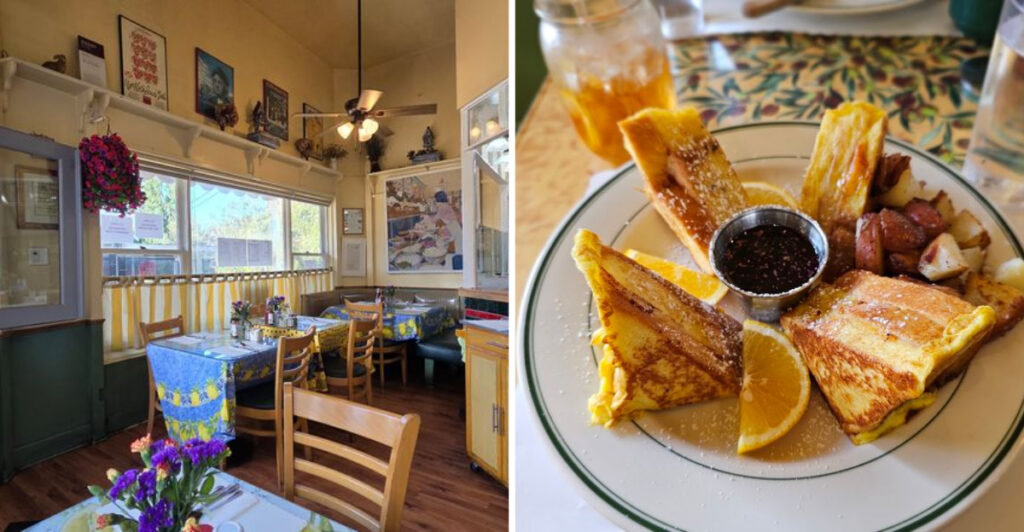
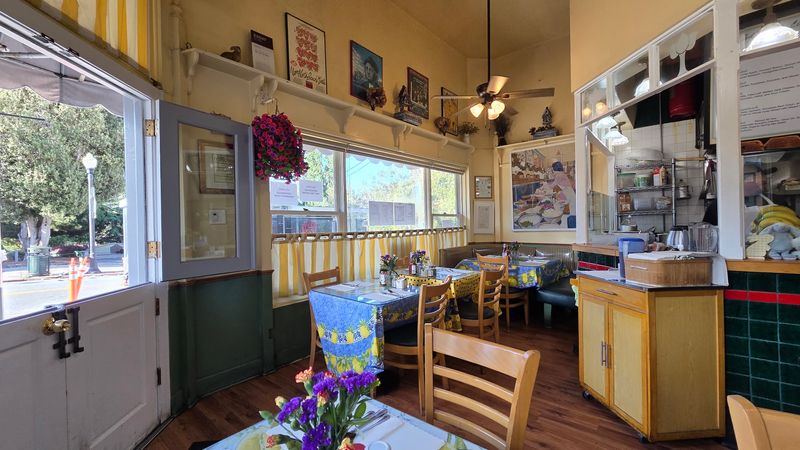
Inside, yellow walls, patterned table coverings, old menus, and collected decorations maintain the family-café character. The room does not need a large footprint to leave an impression.
You came for French toast, but the compact setting makes the meal feel connected to the cooks, servers, and other diners around you. Personal space takes the morning off. The appetite stays on duty.
Omelets And Benedicts Give Sweet Breakfast Serious Competition
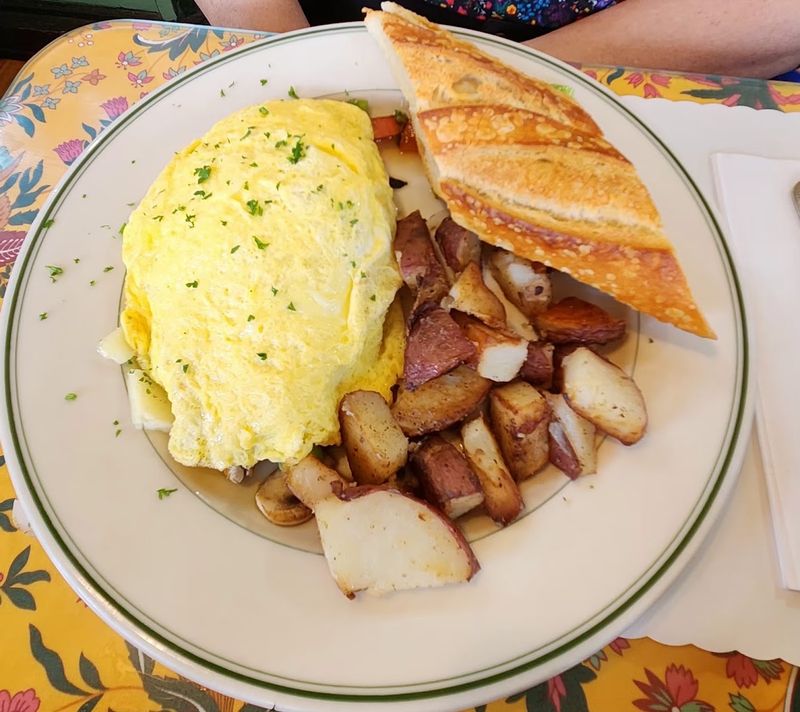
Sugar does not win automatically here. The savory side of the menu brings enough eggs, crab, cheese, and grilled bread to start a genuine breakfast dispute.
Longtime choices include the Washington Square omelet, prosciutto Benedict, buttermilk pancakes, and the Monte Cristo. The latter combines roasted turkey, ham, cheddar, and Gruyere, then gets battered, grilled, and served with house-made jam.
Dungeness crab appears in seasonal or weekend dishes, including crab Benedict and crab omelet variations. Availability can depend on the menu and season, so crab fans should not treat every old photograph as a guarantee.
Crab may appear in more than one preparation, so the available Benedict or omelet can change. The safest plan is to read the day’s choices before committing your appetite.
Potatoes accompany several egg dishes, while house-made jam gives toast and the Monte Cristo a sweet counterpoint. Even the savory orders refuse to stay entirely on one side of the breakfast divide.
Bringing another person helps because you can order one sweet plate and one savory plate, then negotiate. Set the sharing rules early, preferably before somebody decides the larger half of the Monte Cristo is legally theirs.
Washington Square Adds A Classic San Francisco Backdrop
Breakfast steps directly into one of North Beach’s oldest public spaces. Washington Square was established in 1847 and remains a gathering place for locals, visitors, dog walkers, and anyone claiming a patch of lawn on a sunny morning.
The park sits beside the café at Stockton and Filbert streets. Its open grass, trees, paths, and benches offer an easy place to walk after a rich breakfast or wait while your table companion finishes the last French toast slice very slowly.
Saints Peter and Paul Church faces the square with twin spires that rise above the neighborhood. The current church building was completed in 1924, giving the view outside Mama’s another layer of local history.
North Beach continues beyond the park with cafés, bakeries, shops, and streets linked to San Francisco’s Italian-American and literary past. You can leave breakfast and build the rest of the morning without getting back into the car.
That is where the road-trip tradition makes sense. The destination offers more than one plate, yet the plate provides a very convincing starting point.
Once you have crossed the square, inspected the church view, and considered ordering bread for later, the original travel schedule may be beyond repair. Fortunately, French toast is a much better reason to lose time than traffic.