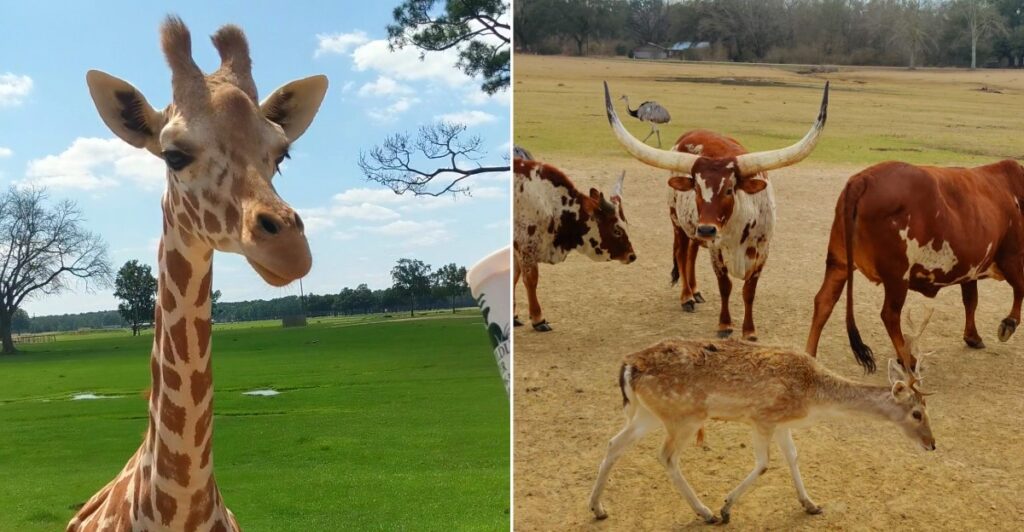
A giraffe can lean its long neck right over your wagon and take a snack from your hand. That happens on a 900-acre preserve in Louisiana, and nobody has to drive their own car.
Between 3,000 and 4,000 animals live here. They come from Africa, Asia, and the Americas, and they roam open pastures instead of sitting behind glass.
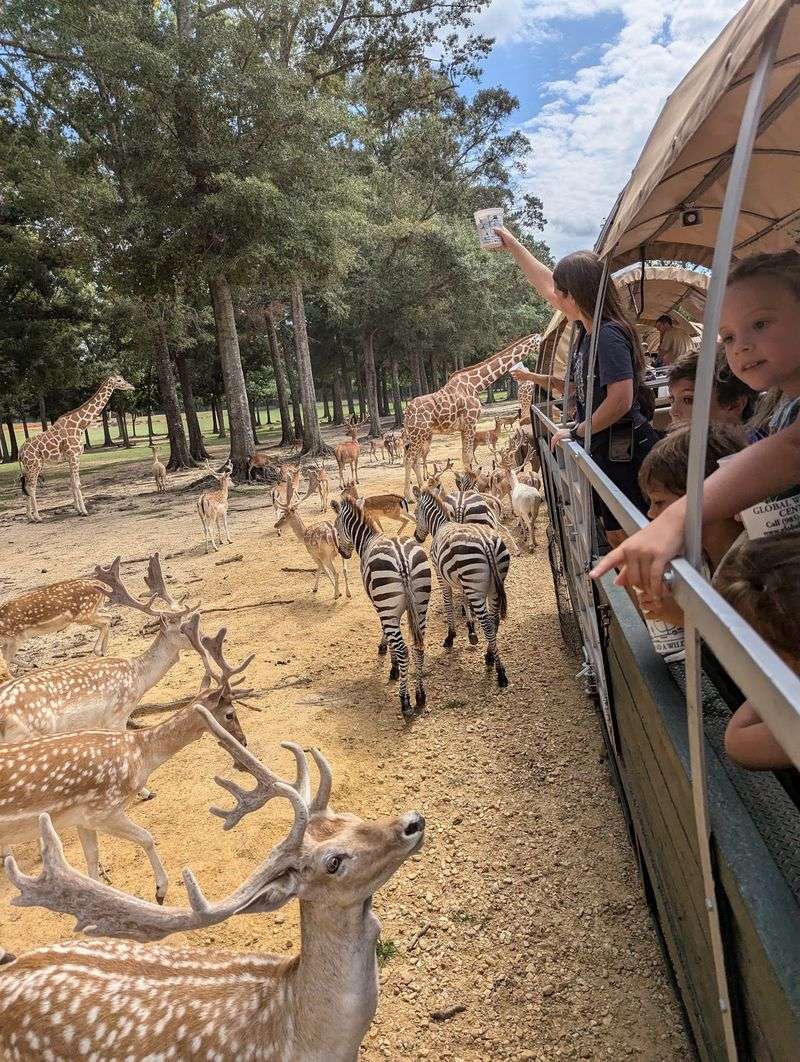
A tractor pulls you through it all in a big covered wagon. Bison, camels, and antelope wander close, clearly hoping you brought feed. I like how the animals set the pace, and the humans just ride along.
The zebras show up too, though they get a strict no-snacks rule. There is a funny reason for that. I can’t imagine a better way to spend a morning, can you?
Highway 40 Leads Into The Wildlife Country
Global Wildlife Center is at 26389 Louisiana Highway 40 outside Folsom, Louisiana. Travel toward Folsom in the Northshore countryside and follow Highway 40 to the wildlife center’s posted address.
The wide rural preserve and its dedicated visitor entrance mark the right destination, rather than a city zoo. Guided wagon tours depart from the visitor facilities to travel through the park’s open animal habitats.
Turn into the wildlife center’s signed entrance and follow visitor parking and check-in instructions for your booked tour. Stay with your guide and follow animal-feeding rules; close sightings depend on where the roaming herds are during the ride.
Bring Your Steadiest Hand For The Giraffe Moment
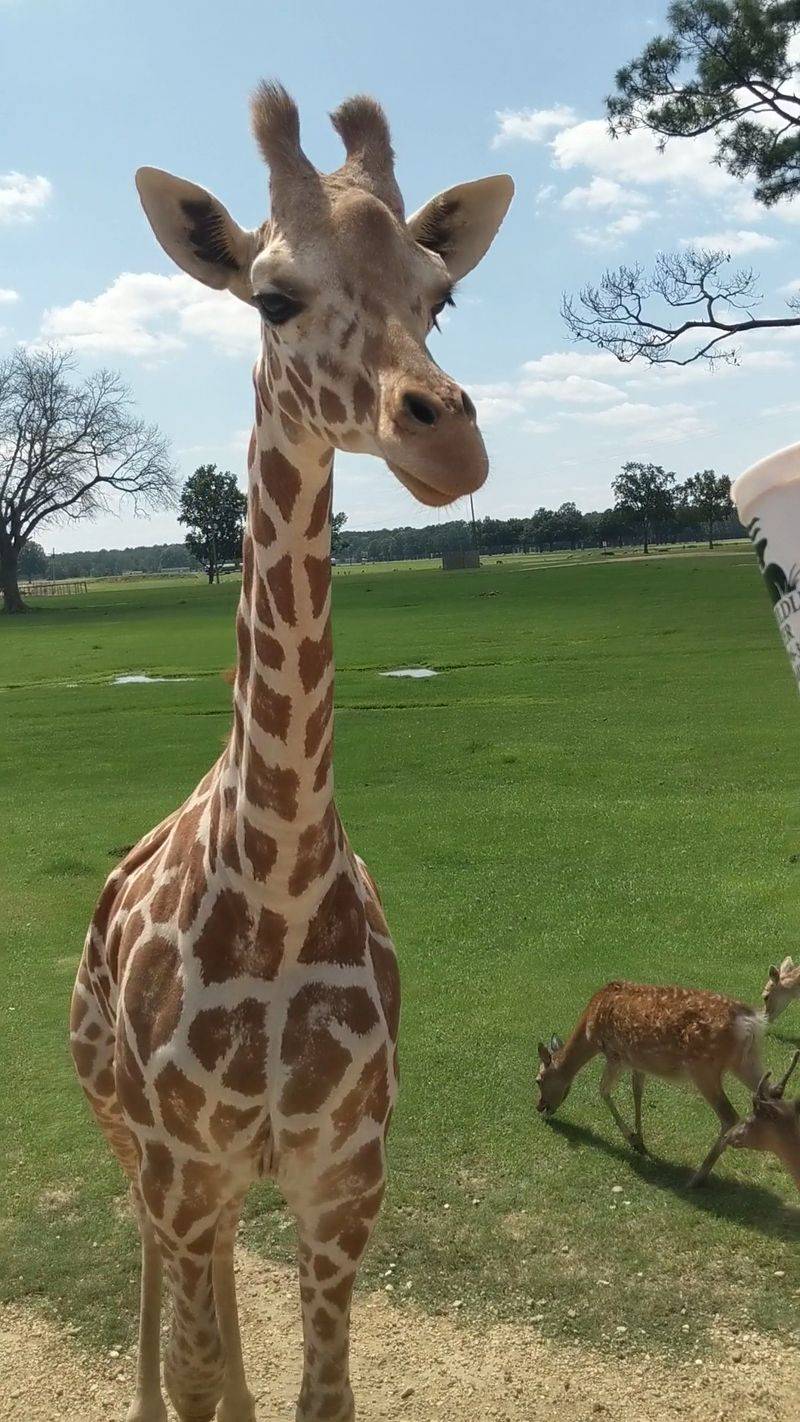
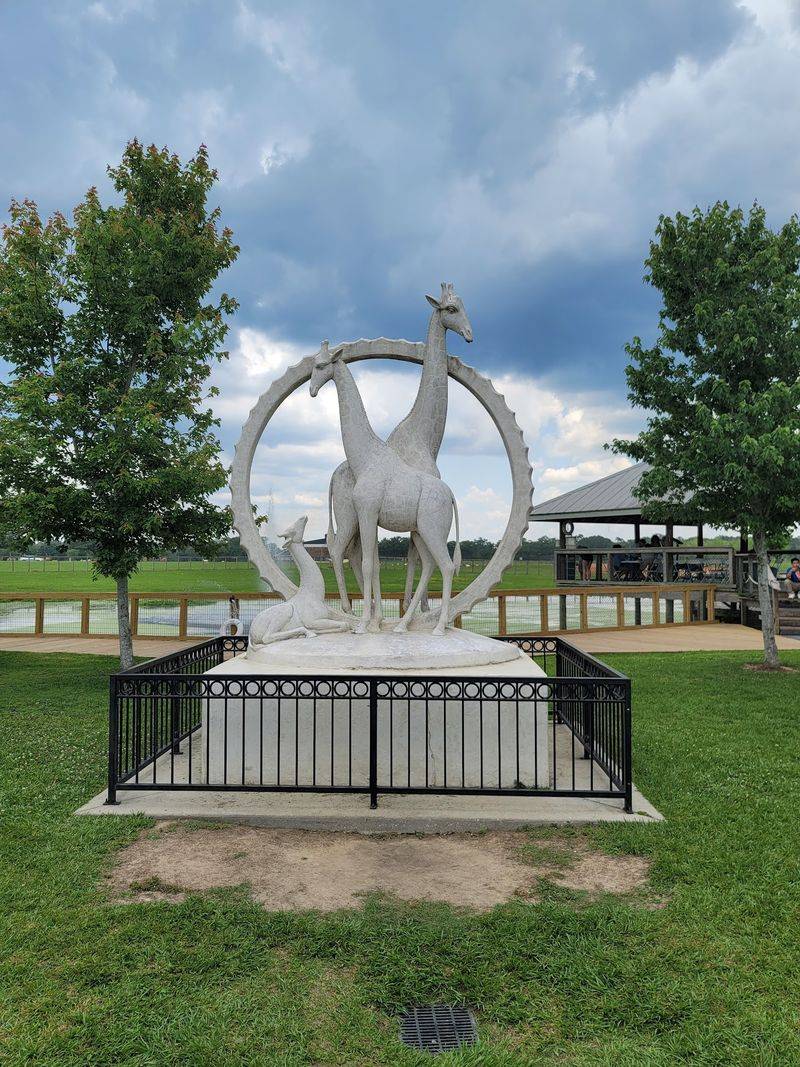
Few things beat a giraffe looking you straight in the eye. Reticulated giraffes live here, and they’re tall enough to peer right into the wagon.
These animals are endangered in the wild. Global Wildlife Center runs a breeding program to help their numbers grow.
That gives every snack you hand over a little extra meaning. You’re feeding a member of a species that needs real support.
Feed pellets come in souvenir cups or larger amounts. Hold your cup or palm steady and let the giraffe do the reaching.
Their tongues are long, flexible, and surprisingly busy. Expect a quick swipe and maybe a giggle from everyone nearby.
Kids usually remember this part for years. Adults tend to act about seven years old too, and honestly, that’s the point.
Have your phone ready before the giraffes arrive. They move in fast once they spot feed, and close-up photos happen in seconds.
The gift shop has an extra treat for giraffe fans. You may find artwork created by the giraffes themselves, which makes a pretty wild souvenir for your fridge or wall.
The Zebras Get Admired, Not Snacks
Every safari needs a rule breaker, and here it’s the zebras. Grant’s zebras roam the pastures, but visitors are not allowed to feed them.
The reason sounds almost sweet. Zebras tend to bite, sometimes out of affection and sometimes out of aggression.
Either way, your fingers don’t need that kind of love. So the zebras get admired from the wagon while other animals enjoy the pellets.
That doesn’t make them boring. Their bold stripes pop against the green grass, and they make fantastic photo subjects.
Watch how they move together across the open fields. Seeing them roam freely feels very different from spotting one in a small pen.
Your guide can explain more about zebra habits as you roll past. Ask questions, since the guides clearly know their animals.
Little ones may feel left out with a full feed cup in hand. A quick heads-up before the tour helps everyone follow the rule without tears.
Save the pellets for the giraffes, bison, and camels instead. The zebras will survive on grass and attention just fine.
A Bison Up Close Feels Like A Walking Mountain
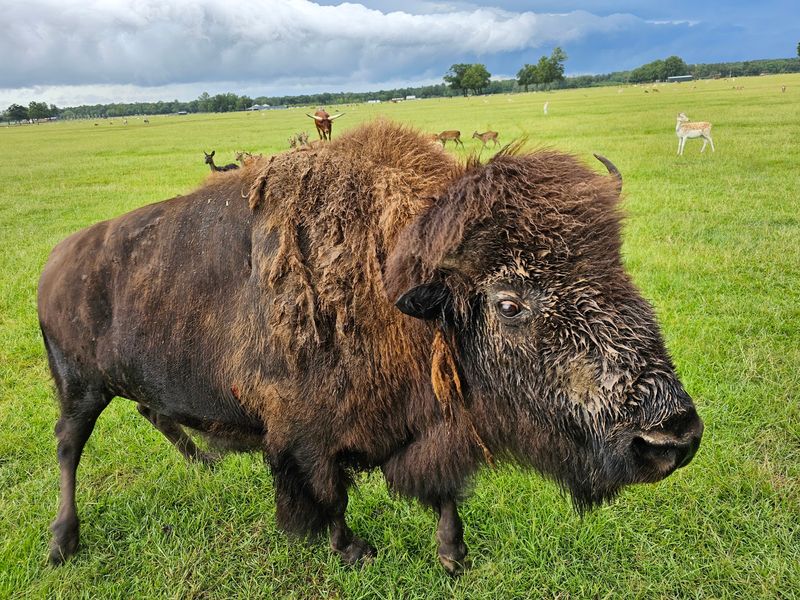
The American bison is the largest mammal native to North America. Now picture that shaggy giant strolling up beside your wagon.
At Global Wildlife Center, bison share the pastures with animals from other continents. It’s a funny mix, a true American icon hanging out near camels and antelope.
Their size really sinks in at close range. Huge heads, thick coats, and curved horns make everyone sit a little straighter.
Guides often know the animals by name. One bison has gone by Mike Bison, which is about the best name an animal could ask for.
Feeding a bison takes calm hands. Follow your guide’s directions on whether to offer feed by hand or from a cup.
It also helps to keep a firm grip on that cup. Big animals with big appetites rarely take things slowly.
Kids learn quickly why bison matter to American history and wildlife. Hearing those facts while one stands right there sticks better than any textbook page.
Look for the bison in the open grasslands as the tour moves along. You won’t need binoculars, that’s for sure.
Camels, Kangaroos, And A Crowd Of Hungry Extras
Two humps, one mission: food. Bactrian camels live here, and this species is critically endangered in the wild.
They’re only part of the cast. The preserve holds between 3,000 and 4,000 exotic, endangered, and threatened animals.
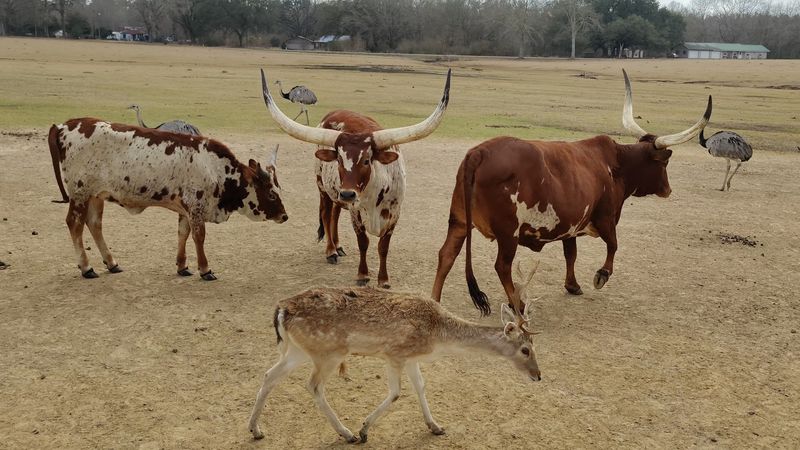
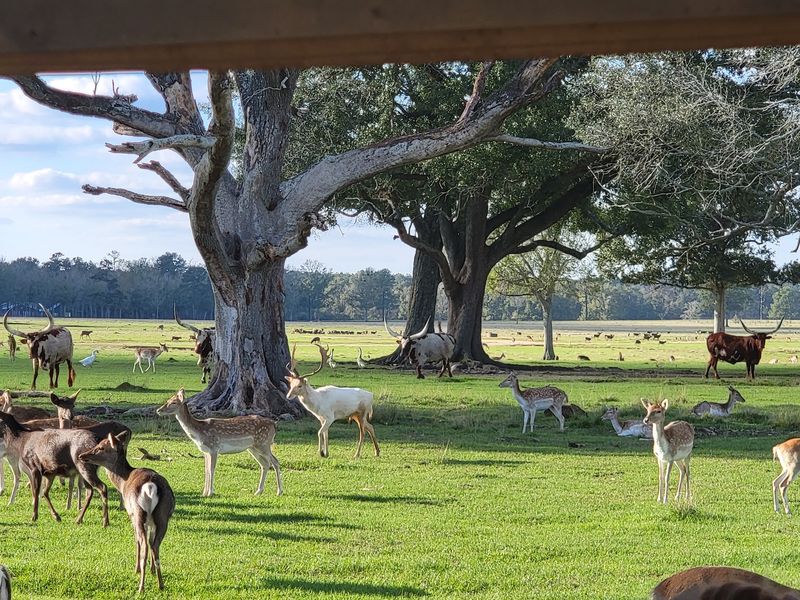
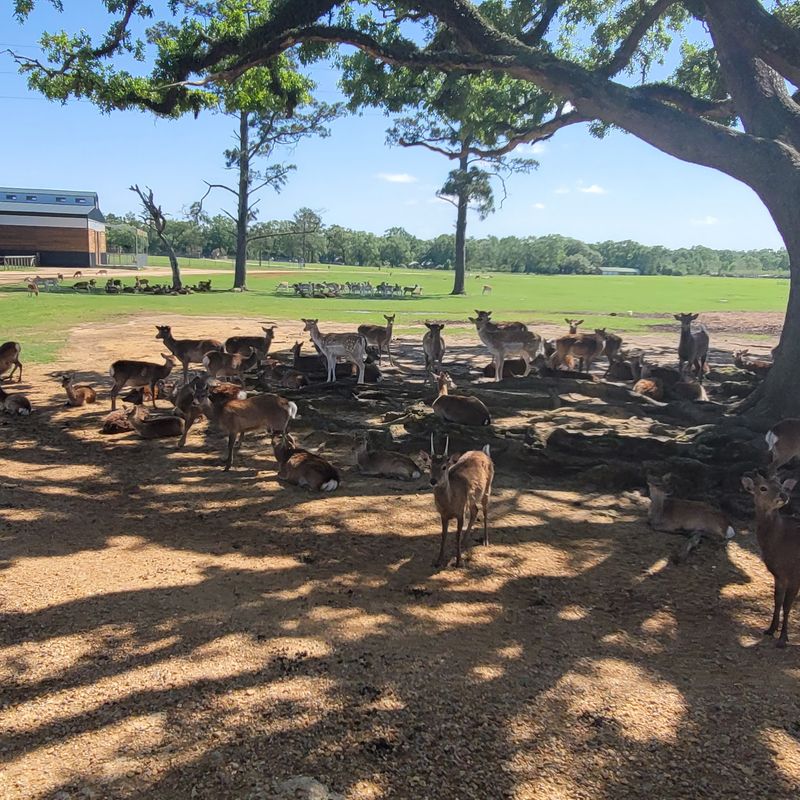
You may meet llamas, alpacas, kangaroos, and plenty of deer. Cape eland antelope, Watusi cattle, and oryx round out the lineup.
Watusi stand out with their enormous horns. Oryx bring sharp, straight horns and a sleek, desert-ready look.
Many of these animals happily take feed from the wagon. Some might even give you a sloppy lick, so pack wipes for sticky hands.
The variety keeps the tour lively from start to finish. Just when you think you’ve seen everything, a new face wanders over.
Ask your guide which continent each animal comes from. Africa, Asia, and the Americas are all represented across the Folsom pastures.
It turns into a fun geography lesson for kids. They can track which animal came from where, then quiz the grown-ups on the drive home.
Want Fewer Seatmates? Upgrade To A Rugged Pinz Tour
Some people prefer a smaller crowd and a more flexible pace. That’s where the Pinz tours come in.
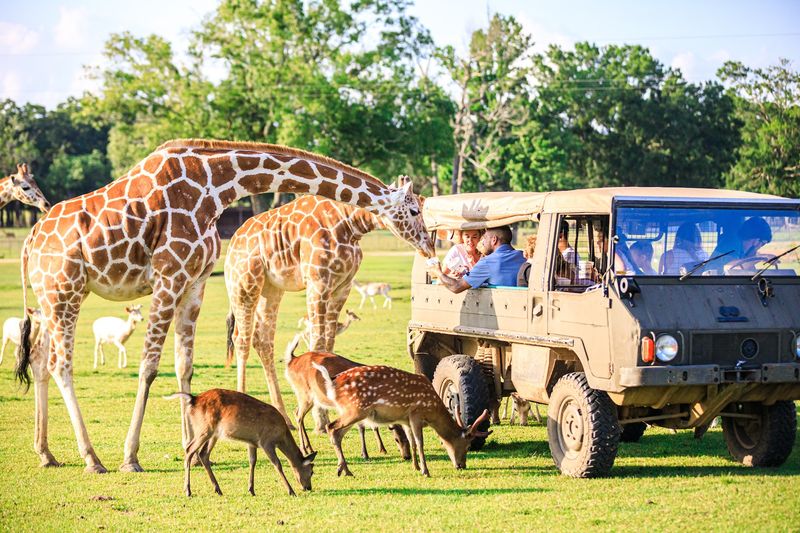
These tours use rugged 4×4 Pinzgauer vehicles. They can reach spots the big safari wagons can’t get to.
Private Pinz tours fit up to eight guests. That’s a great size for a family outing or a small birthday group.
Semi-Private Pinz tours mix smaller parties together. Each vehicle holds a maximum of six people.
The pace tends to feel more relaxed on these rides. Photographers love that, since good shots need a little patience.
You also may get closer interactions with certain animals. With fewer people, everyone gets more turns with the feed cup.
This option works well for special occasions. Birthdays, anniversaries, and family visits all feel a bit more personal this way.
Spots are limited, so book early. Then charge your camera battery and get ready for some seriously close-up wildlife portraits.
Off The Wagon And Face To Face With Capybaras
Capybaras look like they’ve never had a stressful day in their lives. Near the Visitor Center, you can meet them up close on foot.
The Capybara Creativity encounter is one of several special experiences. Others include the Kangaroo Walkabout and Tortoise Encounters.
These encounters give you a break from the wagon. You get to stand on solid ground and watch animals at their own speed.
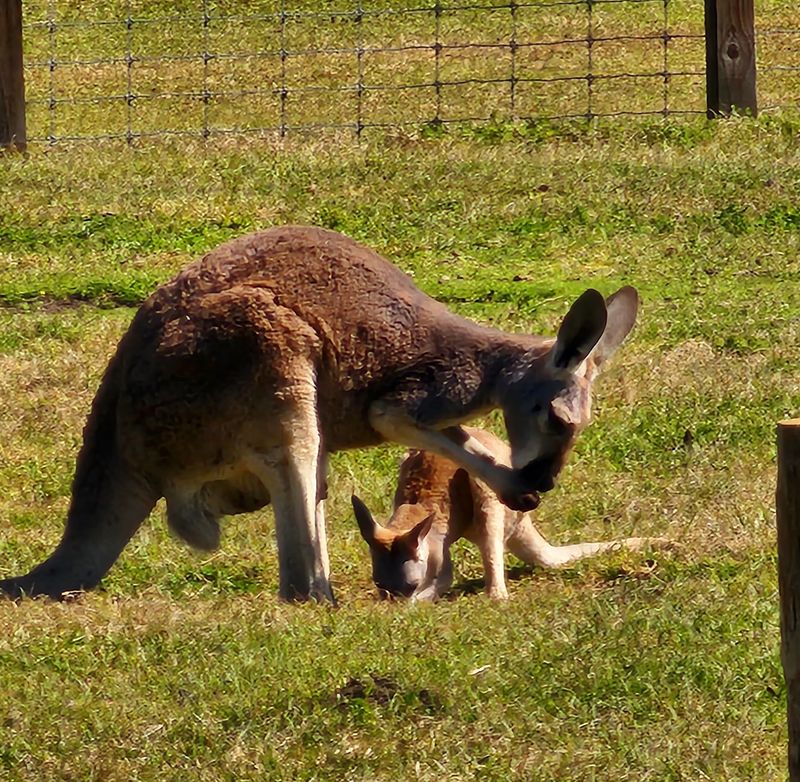
The Kangaroo Walkabout lets you stroll among the hoppers. Keep expectations simple, since it works mostly as a short look at their space.
Capybara and Tortoise Encounters have an age rule. Participants must be at least 8 years old.
Space fills up fast for these add-ons. Reserving ahead is strongly recommended if your crew has its heart set on one.
Plan these around your tour departure time. That way nobody sprints across the grounds with melting Italian ice in hand.
A slow tortoise or lounging capybara makes a nice contrast to the busy feeding stops. Sometimes the calmest animals leave the biggest smiles behind.
Pack A Lunch, Grab A Picnic Table, Find The Italian Ice
Hungry animals are contagious. After an hour of tossing pellets, your own stomach will start growling too.
A concession stand serves chips, snacks, and drinks every day. On weekends, the menu grows to include hot dogs, popcorn, and nachos.
You can also bring your own packed lunch. Picnic tables are open on a first-come, first-served basis.
Weekends often bring local food trucks and Italian ice vendors, weather permitting. A cold cup of ice tastes extra good on a warm Louisiana afternoon.
Restrooms are available, including a baby changing station. Parents with little ones will appreciate that small but mighty detail.
The gift shop is worth a stroll before heading home. Stuffed animals, shirts, and fun souvenirs fill the shelves.
Giraffe paintings make the most unusual pick. Few souvenirs come with a story that starts with a tongue and a paintbrush.
Pack sunscreen, wipes, and water for the day. A little planning keeps everyone happy from the first wagon ride to the final snack.
Golden Hour Safaris And A Family Story Worth Supporting
Ken Matherne started with a private collection of exotic animals. In 1991, he opened Global Wildlife Center to the public.
After he passed in the fall of 2021, his daughter Maci Matherne took over management. The family story still shapes the place today.
The center runs as a 501(c)(3) non-profit. It supports global conservation groups and has an on-site animal care facility with two veterinarians.
Seasonal Sunset Safaris give the day a softer glow. These evening tours often include light bites or dinner and refreshments.
Giraffes against an orange sky make quite a picture. It’s a great pick for date nights or grown-up outings.
The center also hosts birthday parties, school field trips, and corporate outings. Animals make even office team-building feel fun.
You’ll find it at 26389 Louisiana Highway 40, Folsom, Louisiana 70437. The office opens daily, and hours can shift with seasons and events.
Check the schedule before you go and book early. Then head to the north shore and let a giraffe end your day on a high note.