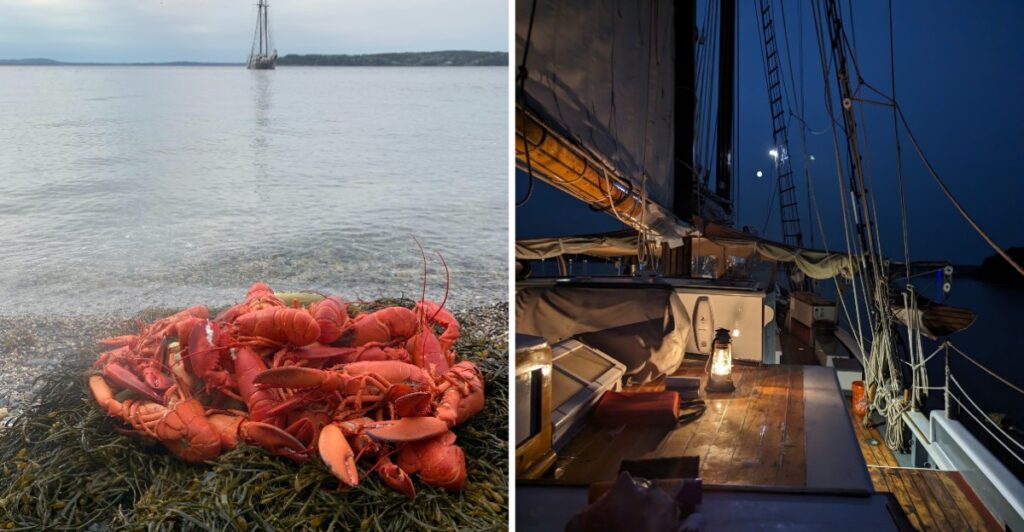
If you like knowing exactly where tomorrow ends, this schooner may test you a little.
It has been sailing the Maine coast since 1871, and the wind still gets a say in how the day unfolds.
There is no fixed daily route.
Tide can change the plan. Weather can change it again. Even the next anchorage may stay undecided until the crew gets closer.
For once, uncertainty is part of the ticket.
You spend several nights aboard, sleep in compact cabins, and eat meals cooked on a wood-fired galley stove. The crew handles the sails by hand, with no inboard engine quietly pushing the boat along.
So, pack light and get comfortable not knowing every answer before breakfast.
Would you rather follow a schedule, or wake up and see where the wind takes you?
The Lewis R. French Has Been Sailing Since 1871
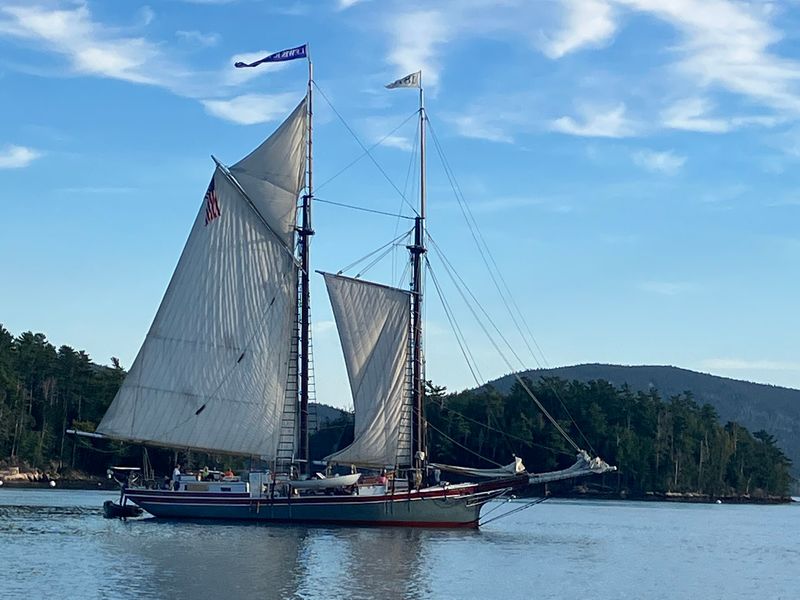
The Lewis R. French was built and launched at Christmas Cove in South Bristol, Maine, in 1871.
Her first working life was commercial rather than recreational. She carried cargo along the coast, later worked in the menhaden fishery, returned to freight service, and eventually served as a motorized working vessel.
The schooner continued in commercial service until 1973, when she was sold and rebuilt for passenger sailing. Much of the hull was renewed during that transition before she entered Maine’s windjammer trade.
Her history stretches across several very different eras of coastal transportation. Cargo schooners once moved supplies between communities at a time when dependable road networks did not connect every harbor and island.
The Lewis R. French eventually outlived that original role.
In 1992, the vessel was designated a National Historic Landmark. She remains a working passenger schooner rather than a stationary exhibit.
You will still find modern safety and navigation equipment aboard, but the vessel retains the basic form and sailing system of a nineteenth-century two-masted schooner.
You are sleeping and sailing aboard an operating historic vessel, with the compact spaces and hands-on routines that come with it.
Camden Harbor Is The Schooner’s Home Port
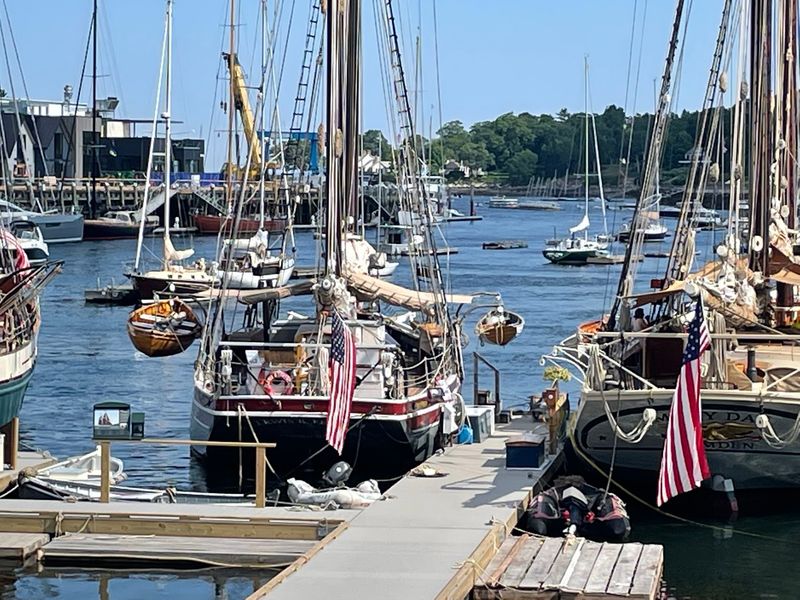
Camden sits on Maine’s midcoast, where the harbor opens toward Penobscot Bay and the islands beyond.
The Lewis R. French begins and ends her scheduled passenger trips here. Current cruises spend the first night at the dock, allowing guests to board in the evening before sailing the next morning.
Guests can use the boarding evening to settle into their cabins and organize their gear before sailing the next morning.
Downtown Camden is within easy walking distance of the waterfront, so the boarding evening can also include time ashore before the sailing portion begins.
The schooner’s physical location is 11 Atlantic Avenue, Camden, ME 04843.
Use that address for the vessel rather than the company’s separate mailing address.
Once sailing begins, do not expect Camden to remain the center of the itinerary. The schooner may head toward islands, small coastal communities, coves, or waters farther east or west depending on conditions.
Return timing is scheduled, but what happens between departure and return has considerably more flexibility.
That makes Camden the fixed point in a trip whose middle can change from one voyage to the next.
Trips Run From Three To Six Nights
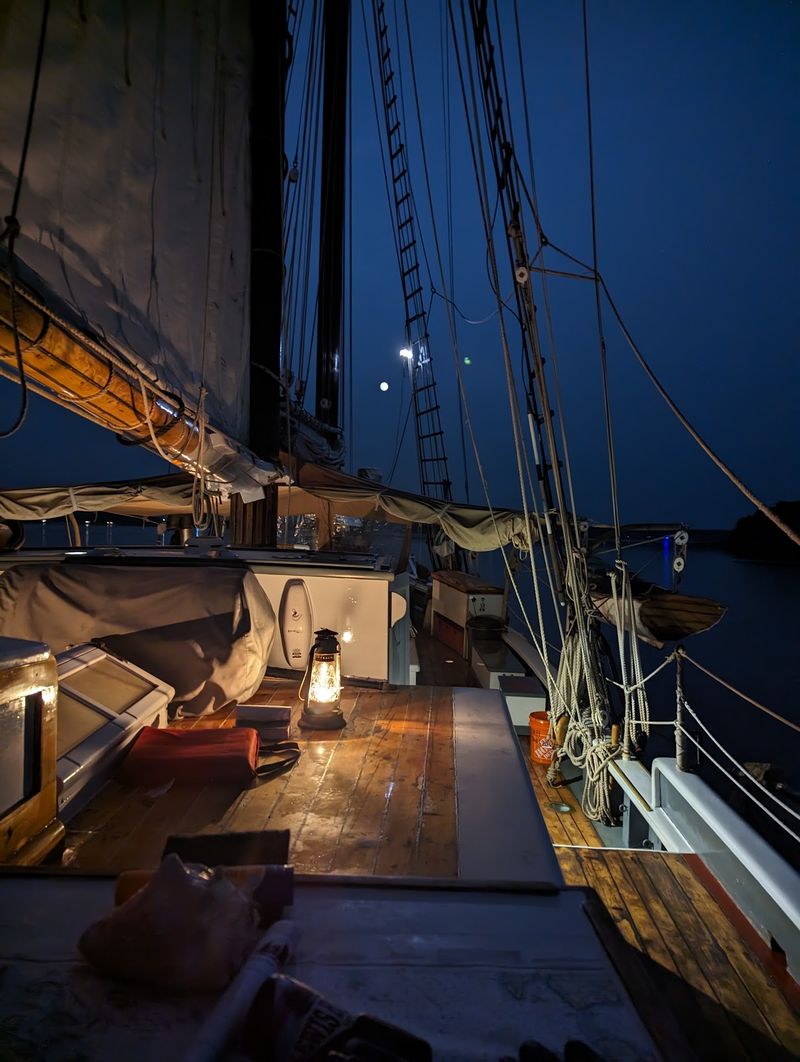
Current Lewis R. French schedules include three-, four-, five-, and six-night voyages.
The shorter trips give you several days of sailing without committing most of a week, while the longer departures allow more time for the route to extend along the coast.
Every scheduled trip begins with a night aboard at the dock in Camden. Sailing starts the following morning.
Once underway, there is no rigid port-by-port itinerary. Wind, tide, weather, and sailing conditions influence where the schooner goes and where she anchors.
General cruising waters can stretch among the islands and coastal communities between the Boothbay Harbor area and Bar Harbor, but a particular trip may cover only part of that range.
Some days may cover more water. Other conditions may favor a closer anchorage, time in a harbor, or a stop ashore.
Pack with that flexibility in mind. A rain layer, warm clothing, grippy footwear, and a soft-sided bag work better than clothing or luggage built around a predictable hotel itinerary.
If a particular event matters to you, check the schedule carefully. Some departures are built around themes such as lighthouse trips, sailing and hiking, schooner gatherings, or seasonal events.
Cabins And Meals Keep Life Aboard Simple
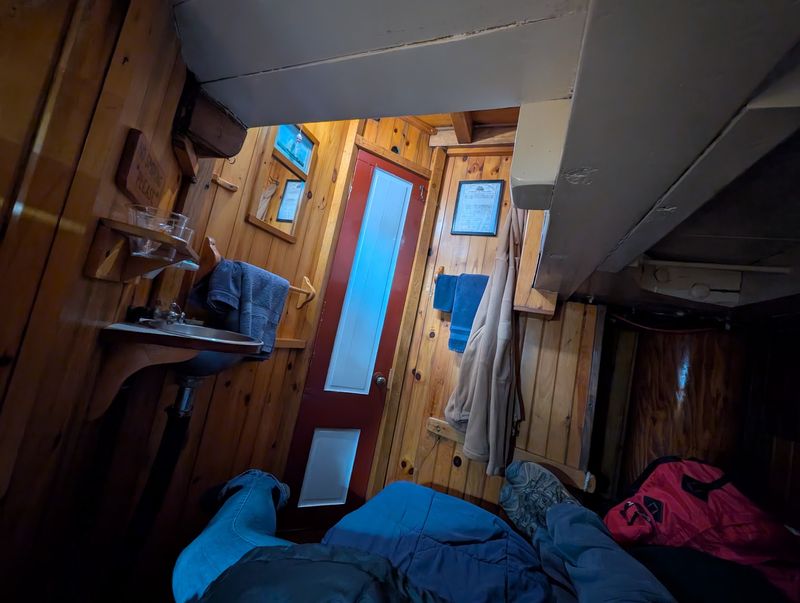
The Lewis R. French carries a maximum of 20 guests and has several cabin configurations below deck.
There are six double-bed cabins, two bunk-bed cabins, and four single cabins. Each has standing headroom, an opening window, fresh running water, a reading light, and a USB charging port.
Linens, blankets, and towels are provided.
The cabins are designed for sleeping and storing personal gear rather than spreading out with large luggage. A soft duffel is easier to fit into limited spaces than a rigid suitcase.
Two bathrooms are located on deck, and one includes a hot freshwater shower.
Meals are prepared in the forward galley on a wood cookstove. Depending on weather and conditions, food may be served on deck or below.
The trip price includes accommodations and meals except for dinner on the first boarding night, when the schooner remains docked in Camden.
If you have dietary needs, discuss them before the trip rather than waiting until everyone is already at sea.
Electricity is limited. Cabins have USB charging, but onboard power is not comparable to a hotel room with unlimited outlets.
Bring only the devices you actually need, and consider extra battery capacity for cameras or other equipment.
Every Cruise Includes An Island Lobster Bake
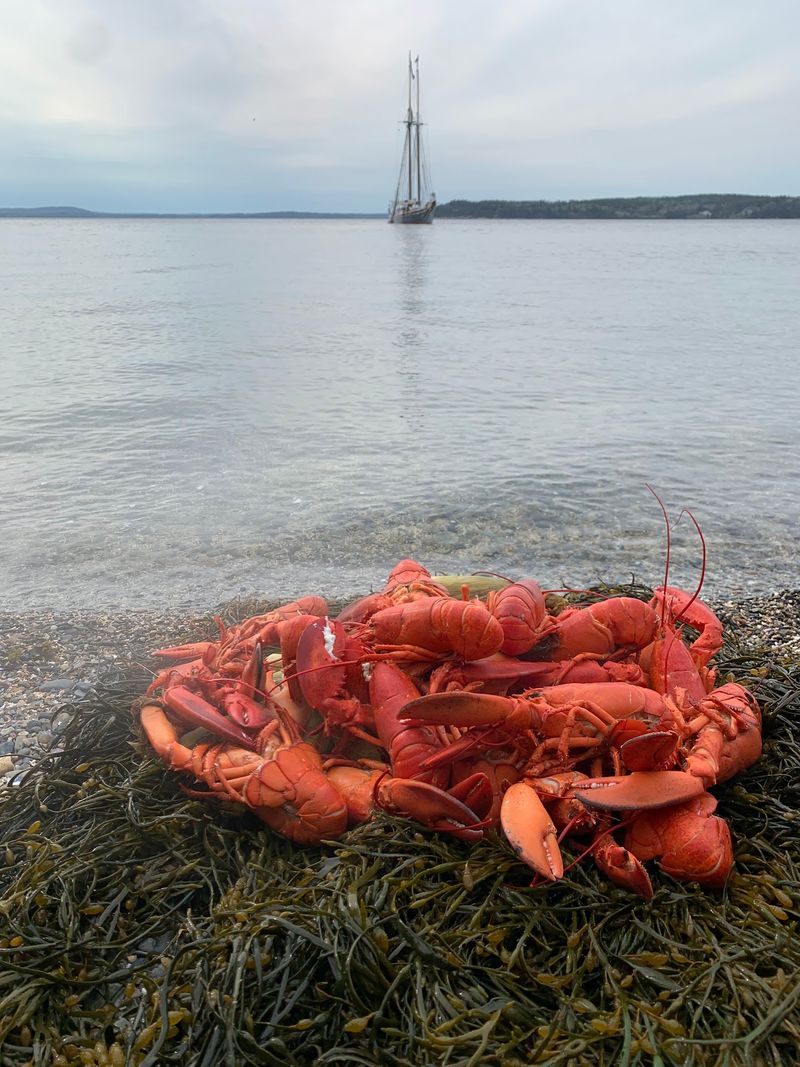
The island lobster bake is a regular part of Lewis R. French cruises.
During the trip, the schooner anchors near an island and passengers go ashore for a beachside meal prepared over a fire.
Lobster is steamed at the beach, with additional foods available as part of the meal. The stop also creates time away from the deck before everyone returns to the schooner.
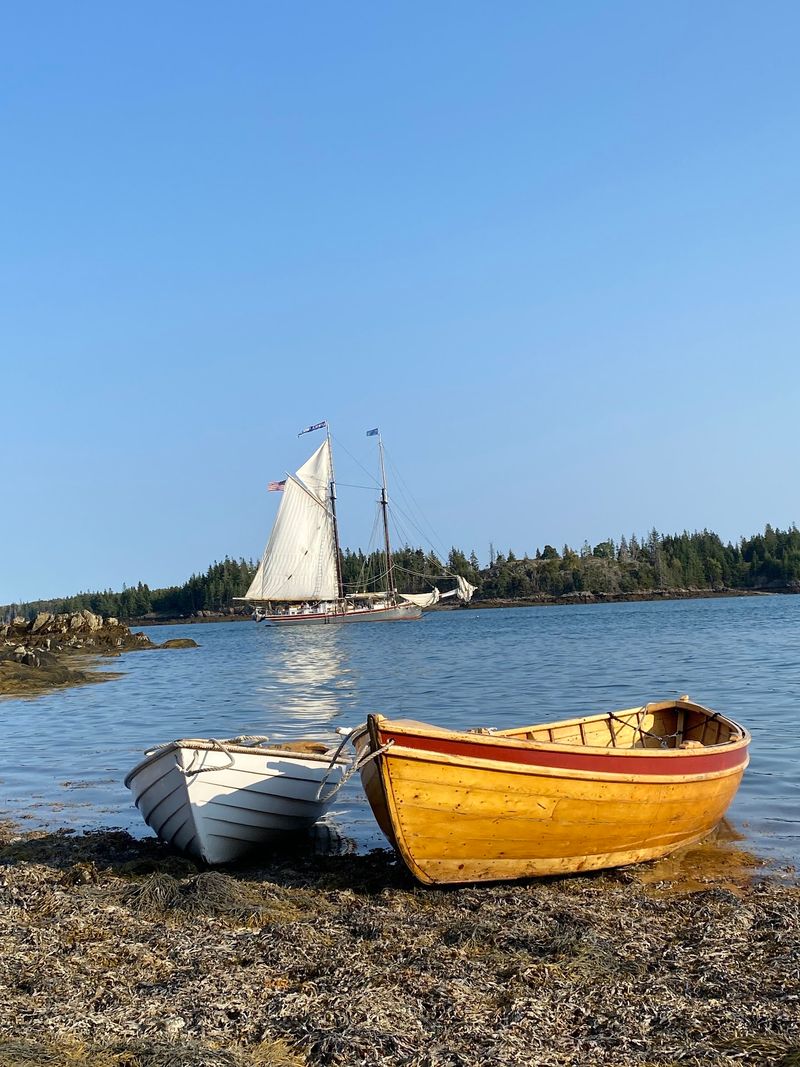
Other shore opportunities depend on the route. Anchorages can be near deserted islands, small coastal communities, or sheltered coves, and the vessel carries small wooden boats that can be used to reach shore when conditions allow.
Do not build your expectations around one particular island. The route is flexible, and the exact lobster-bake location can vary.
Back aboard, the galley continues producing meals, baked goods, snacks, and desserts from the wood stove.
If you have dietary needs, discuss them before the trip rather than waiting until everyone is already at sea.
If you are packing snacks, remember that storage space is limited. Check what you actually need before filling a bag with extras.
The lobster bake already gives the trip one distinctly Maine meal away from the schooner’s regular galley routine.
The Schooner Sails Without An Inboard Engine
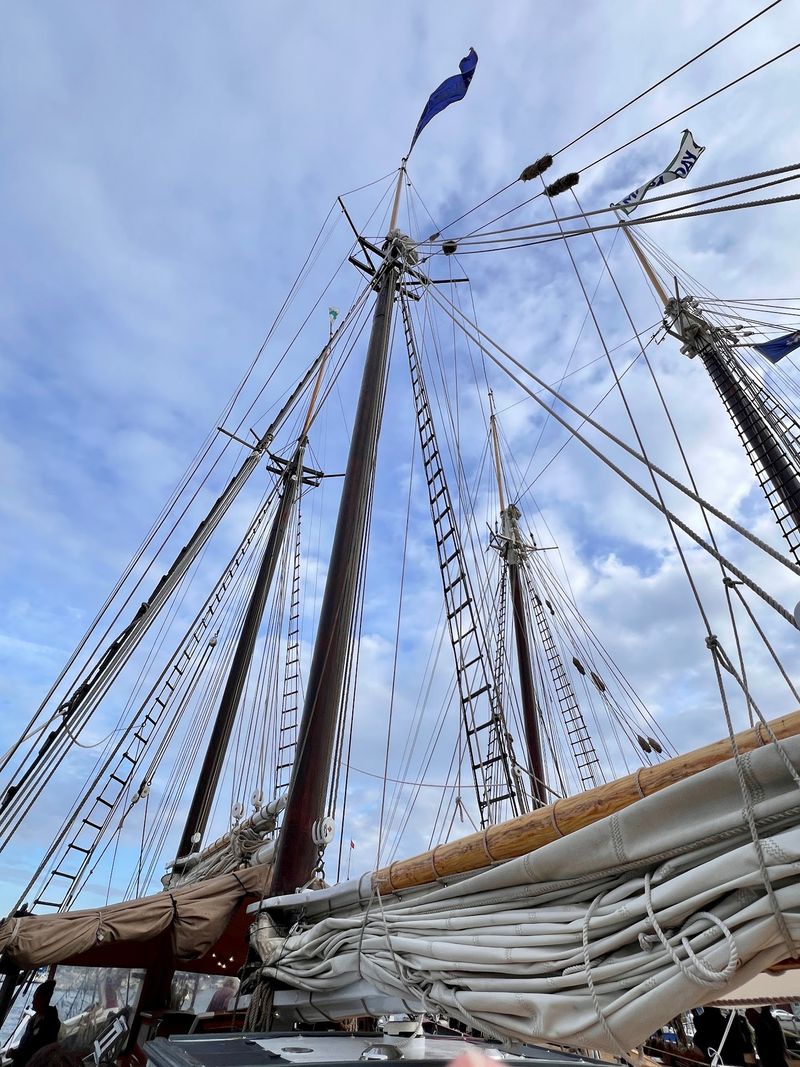
The Lewis R. French does not use an inboard engine for propulsion.
Her six sails provide about 3,000 square feet of sail area, and the crew raises and trims them by hand.
When wind is insufficient, a yawlboat can push the schooner rather than an engine inside the vessel.
The anchor is also raised manually with a windlass.
Guests can participate in sail handling and other deck activities, but participation is encouraged rather than required. You can help with lines, try steering when appropriate, or simply stay clear while the crew works.
The sailing system changes what you hear aboard. There is no continuously running propulsion engine beneath the deck while the vessel is moving under sail.
Modern navigation and safety equipment remains part of the vessel’s operation.
The schooner carries navigation and communications equipment and is inspected by the U.S. Coast Guard.
If you want to help, listen for instructions before handling lines or equipment. Working sails carry substantial loads, and deck routines are organized around the crew rather than improvised passenger participation.
A traditional schooner may look simple from shore, but moving more than a century of wooden vessel through coastal waters still depends on careful seamanship.
What To Know Before Booking A Camden Windjammer Trip
Start with the length of the trip. Current departures range from three to six nights, and even the shorter option involves several days living aboard a historic working schooner.
The minimum guest age is currently 16.
Pack lightly. Warm layers, a rain jacket, secure deck-friendly shoes, sun protection, and a soft bag cover the basics without overwhelming cabin storage.
Expect stairs, compact spaces, and simple bathroom arrangements. Anyone with mobility concerns should review the vessel layout before making a reservation.
The sailing season runs from late spring into fall, with scheduled departures from around Memorial Day into October. Exact dates change each year.
Weather can alter the experience substantially. Fog, cool temperatures, rain, calm air, and stronger wind are all part of coastal sailing, so one set of conditions should not be treated as typical for every trip.
The schooner carries only 20 passengers, which makes availability limited on individual departures. Reserve ahead when a particular date or trip length matters.
Check the boarding and return dates carefully. The first night is spent aboard in Camden, and dinner that evening is not included with the other meals.
Most importantly, do not book the trip expecting a fixed sequence of named ports. Choose it for several nights aboard a working sailing vessel, then let the actual route develop with the conditions along the Maine coast.