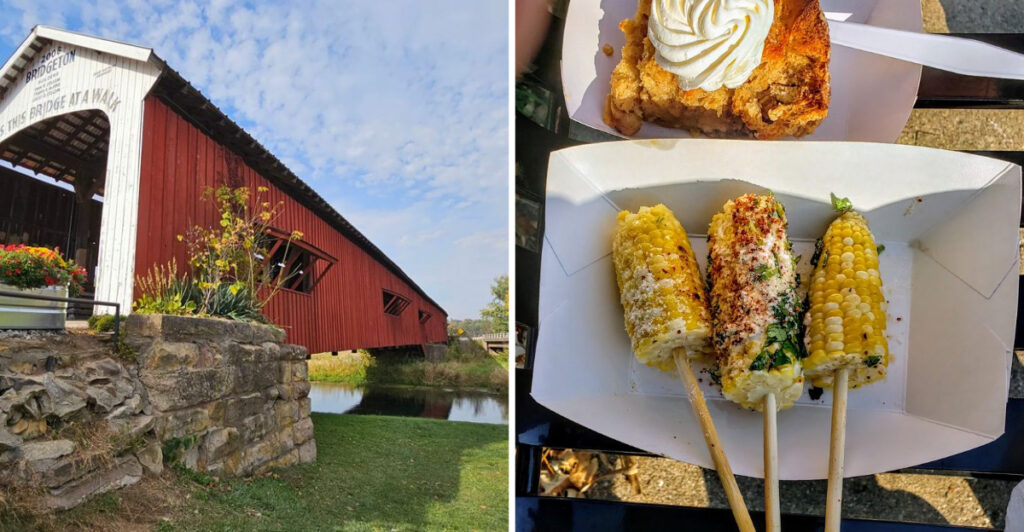
This Indiana festival seems to have misplaced its fairgrounds.
Instead of staying in one spot, it takes over roads, bridges, little towns, and courthouse squares for ten full days.
You start with one stop in mind, then another cluster of booths quietly changes the plan.
That wandering setup is the real charm. The festival has been around since 1957, but it still feels less like a single event and more like autumn scattering breadcrumbs across Parke County.
You follow what catches your eye and see where the road goes next.
That is my kind of fall outing. Give me a map, a loose plan, and enough reasons to ignore both.
Ten Festival Days Give You Room To Explore
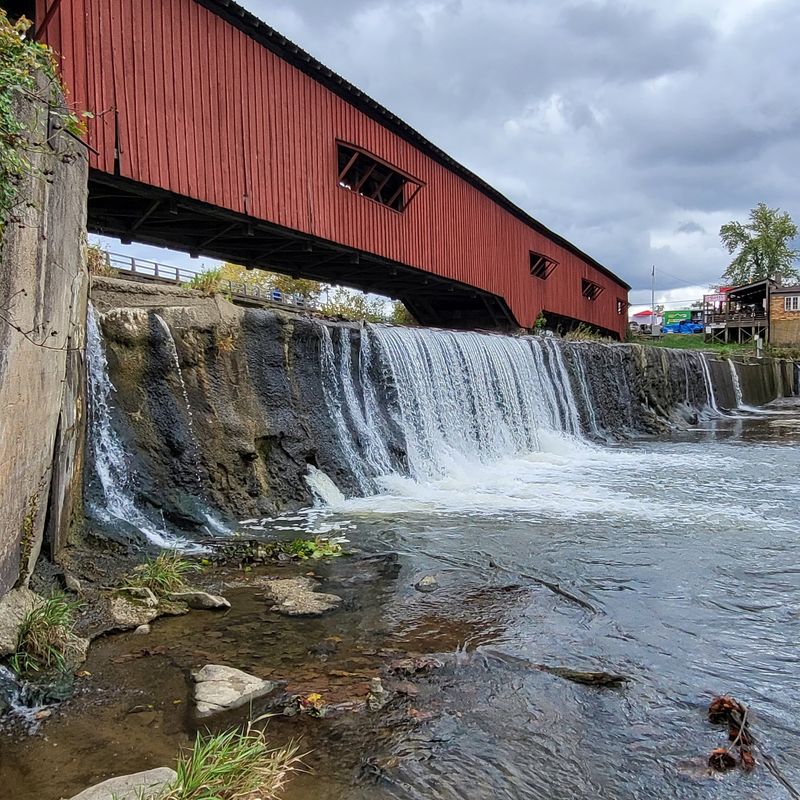
The 2026 Parke County Covered Bridge Festival runs from Friday, October 9, through Sunday, October 18. The ten-day schedule begins on the second Friday of October, continuing a format that gives you more flexibility than a one-weekend event.
That extra time matters because the festival is spread across Parke County. You can devote one day to Rockville and nearby bridges, then use another route for Bridgeton, Mansfield, or smaller communities without trying to cover the whole county at once.
Most festival locations operate during daytime hours. Rockville runs from 9 a.m. to 6 p.m. daily, with extended hours until 8 on the first Saturday and an earlier 5 p.m. close on the final Sunday.
Several other locations operate from 9 a.m. to 5 p.m., while Tangier runs from 10 a.m. to 6 p.m.
There is no general admission ticket for the festival itself. That lets you choose the towns and bridge routes that interest you instead of committing to a single gated event.
If you only have one day, pick a few priorities before leaving home. If you have a full weekend, the ten-day format gives you much more room to divide the county into manageable pieces.
Rockville Serves As The Official Festival Headquarters
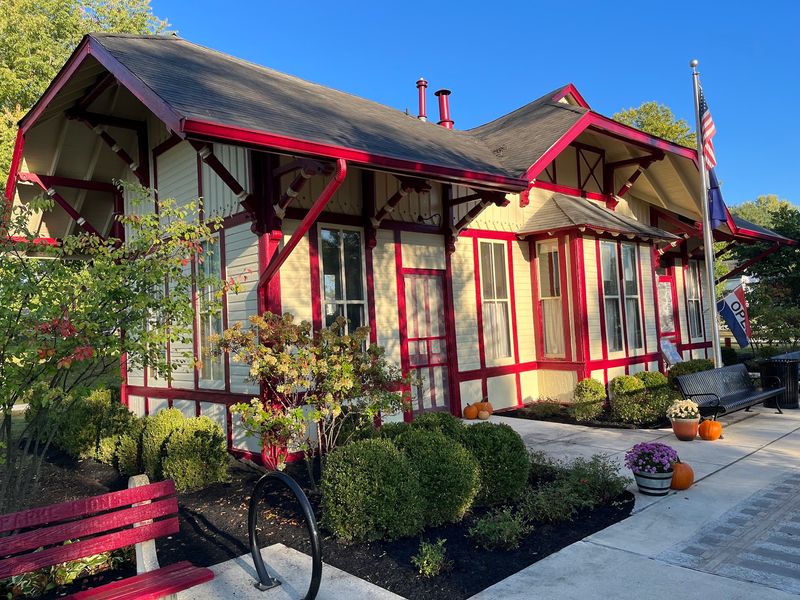
Rockville is the official headquarters of the Parke County Covered Bridge Festival, and its courthouse-square area fills with community organizations, vendors, food, crafts, and demonstrations throughout the event.
The official headquarters is at 116 W High St, Rockville, IN 47872, giving you a practical starting point when you want to begin in the center of the festival rather than choosing one of the outlying communities first.
Rockville also brings several year-round downtown attractions into the festival atmosphere. Antique stores, art galleries, restaurants, and the Historic Ritz Theater sit alongside the temporary vendors and community activity.
Live wood-carving demonstrations add another reason to pause instead of treating the town only as a place to collect information and leave. The mix of festival booths and established downtown businesses gives you several ways to spend time around the square.
Rockville’s daily 9 a.m. opening also makes it useful for an early start. Arrive in the morning, look over your route, explore the headquarters area, then decide whether the rest of the day belongs to covered bridges, another festival town, or both.
You do not need to make Rockville the entire trip. It works just as well as the place where the countywide route begins.
Thirty-One Historic Covered Bridges Shape The Festival
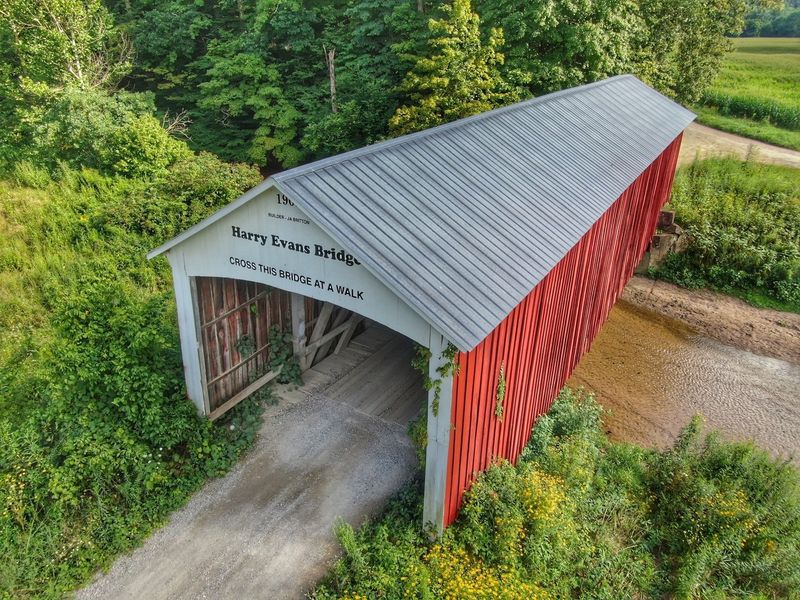
Parke County’s 31 historic covered bridges give the festival its name and provide a reason to spend time away from the vendor areas.
The bridges are scattered around the county rather than clustered beside one town, so seeing them naturally turns part of the visit into a driving tour.
A county map helps organize the choices. Instead of trying to chase all 31 in one stretch, you can group bridges with nearby festival communities and build a route around the part of Parke County you most want to see.
Some festival locations put bridge history directly beside shopping and food. Bridgeton includes its covered bridge and working mill within the historic district. Mansfield pairs its covered bridge with the Historic Mansfield Roller Mill.
Billie Creek Village has three covered bridges along with historic buildings, a general store, and a schoolhouse.
Mecca adds the 1872 Mecca Covered Bridge beside a historic one-room schoolhouse, while Rosedale gives you access to nearby Roseville and Thorpe Ford covered bridges. Tangier has five covered bridges in its surrounding area.
That variety lets the bridges become more than quick photo stops. One can lead you toward a mill, another toward a schoolhouse, and another toward a festival community.
If bridges are your main reason for coming, let them determine the route and treat the vendor areas as stops along the way.
Ten Festival Locations Give Each Stop A Different Role
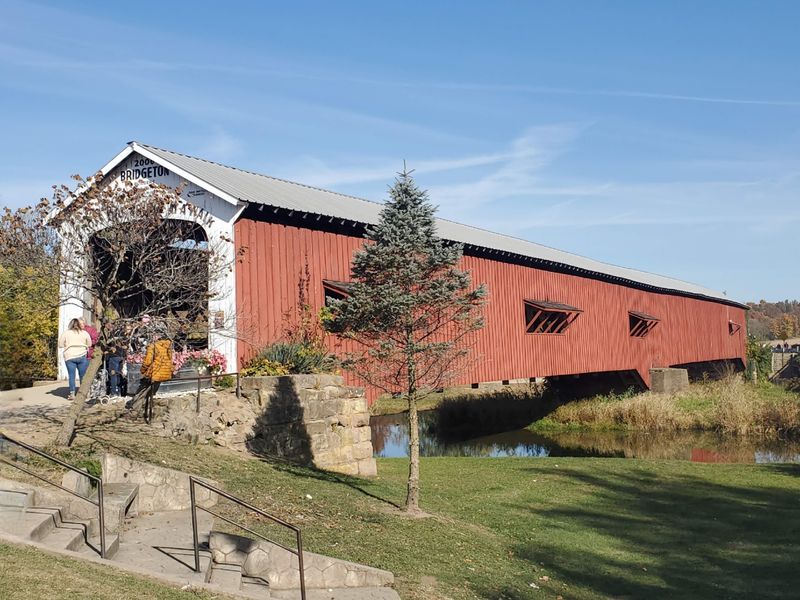
The countywide festival spreads across ten locations, and they are not copies of one another. Each has its own combination of food, crafts, historic sites, demonstrations, or shopping.
Bridgeton centers its festival area around handmade crafts, fine art, a food court, live entertainment, the working Bridgeton Mill, its covered bridge, a general store, a historic house, a log cabin, and the Bridgeton School.
Mansfield brings hundreds of vendors to the area around its roller mill and covered bridge. Billie Creek Village mixes handmade crafts and festival shopping with historic buildings and three bridges.
Bloomingdale focuses on local crafters at the historic Friends Meeting House, with handmade creations, desserts, and maple syrup among the offerings. The Clay Plant Market adds handmade pottery, functional ceramics, local makers, food trucks, and other vendors.
Mecca centers on its schoolhouse and covered bridge, while Rosedale uses its civic center as a hub for local crafts and festival food.
You can choose one stop because of a bridge, another because of shopping, and another because of food. Changing towns can change the experience without taking you outside the festival.
Festival Food Changes From One Community To The Next
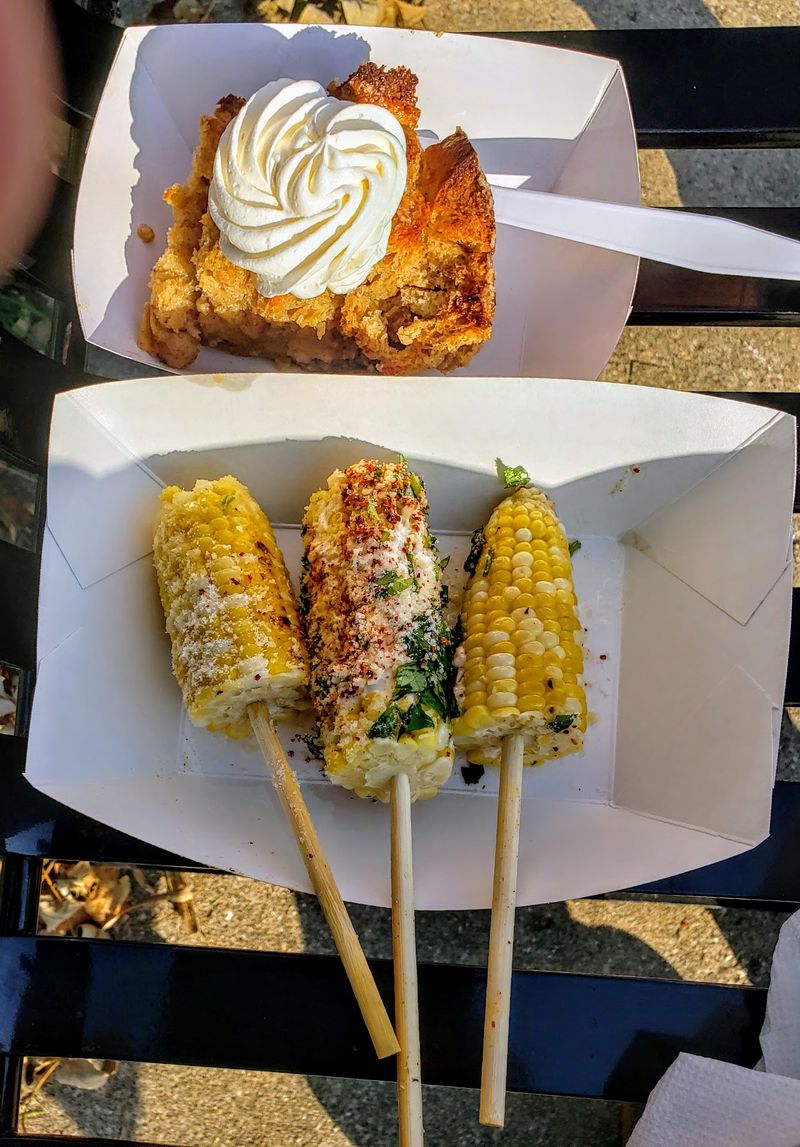
Food is built into the identity of several festival locations, and some communities are known for specific dishes rather than a generic row of concession stands.
Tangier’s Community Building is home to its buried beef, along with homemade pies and cakes. That gives the stop a food tradition of its own before you even factor in the five nearby covered bridges.
Montezuma takes a different direction with roast hog, crullers, and iron-pot ham and beans. Its downtown festival area also includes antiques, homemade crafts, demonstrations, and tours connected with the Wabash and Erie Canal.
Bridgeton has a dedicated food court within its historic district, while Rockville fills the headquarters area with food vendors alongside crafts and demonstrations.
Festival foods also include hand-breaded tenderloins, homemade pies, soup beans, and cornbread among the dishes associated with the event.
That gives you a good reason not to eat the exact same thing at every stop. Let one town handle lunch, save another specialty for later, and keep enough flexibility for something you did not plan to find.
If food matters as much as the bridges, choosing communities by their specialties can build the day just as effectively as following a driving route.
Crafts And Historic Sites Give You Reasons To Slow Down
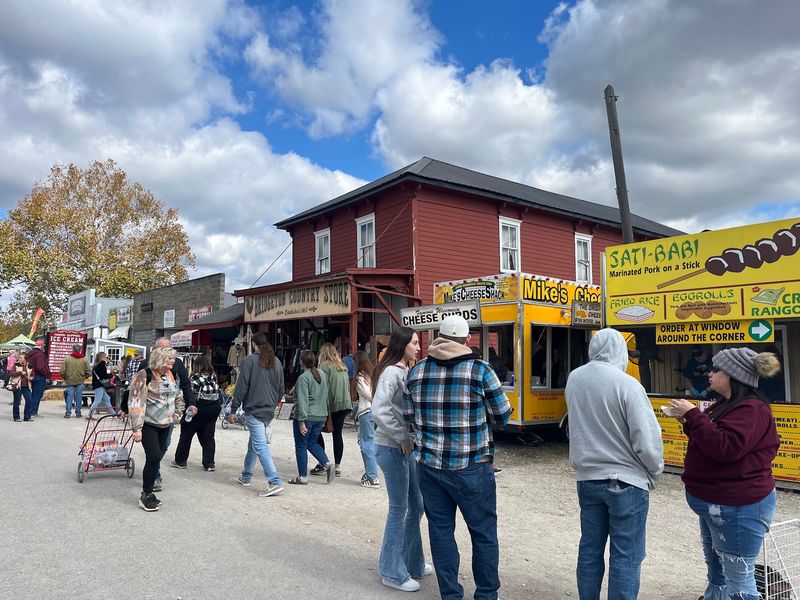
Shopping at the Covered Bridge Festival ranges across handmade crafts, local goods, pottery, antiques, and vendor markets, but the setting around those booths often matters just as much as the merchandise.
Bridgeton places crafts and fine art among historic buildings and the working mill. Bloomingdale uses the Friends Meeting House as the setting for local crafters. The Clay Plant Market focuses on handmade pottery and work from local makers and artisans.
Mansfield offers a much larger vendor scene, while Rockville combines festival booths with downtown antique stores, art galleries, and other established businesses.
Historic structures add natural breaks between shopping stretches. At Billie Creek Village, you can move from handmade crafts to bridges, a general store, a schoolhouse, and other preserved buildings.
Mecca combines its festival offerings with the covered bridge and one-room schoolhouse.
The easiest way to keep the day from becoming one long vendor aisle is to alternate. Browse for a while, visit a bridge or historic site, stop for food, then return to shopping somewhere else.
That rhythm also gives each community more identity. Instead of measuring every town by how many booths it has, you can notice the mill, bridge, schoolhouse, pottery, or local specialty that makes the stop different.
A Little Route Planning Makes The Countywide Festival Easier
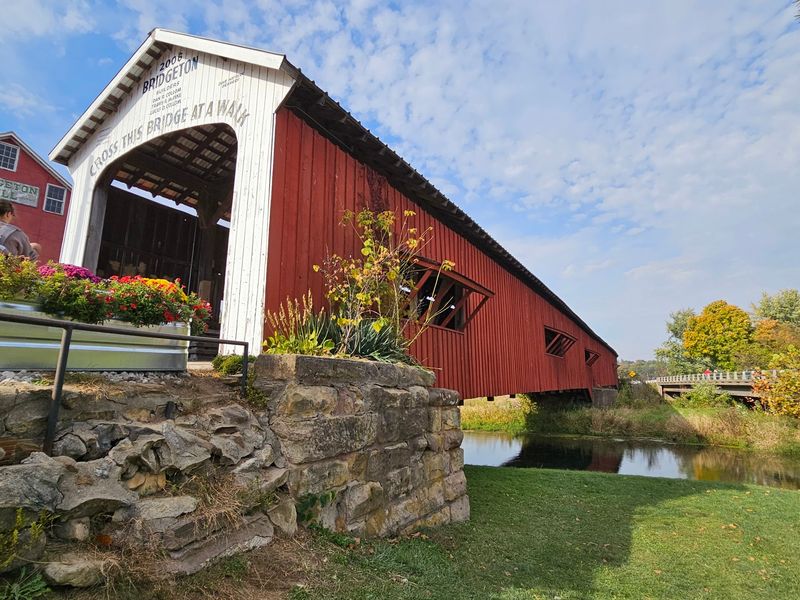
Because the festival spreads across Parke County, the most useful preparation is deciding how much driving and how many communities you actually want in one day.
The official county map can help organize the 31 bridges and festival locations into a route.
Guided bus tours are another option during most of the festival.
They are running from October 9 through October 17 and focusing on covered bridges, scenic back roads, local history, and communities.
General festival admission does not require a ticket, although the guided bus tours are separately ticketed. Cell service can also become limited when visitor numbers rise, so carrying cash can help when a vendor cannot process a card.
Once those practical details are handled, the day can stay flexible. Start at a community that matters most, follow nearby bridges, and leave room for another town rather than trying to check off every location.
The ten-day schedule helps here. Missing one community does not mean you misunderstood the festival, and seeing only a handful of bridges can still give you a strong sense of why Parke County builds an entire October celebration around them.
With 31 historic covered bridges and ten festival locations to choose from, which Parke County route would you want to explore first?