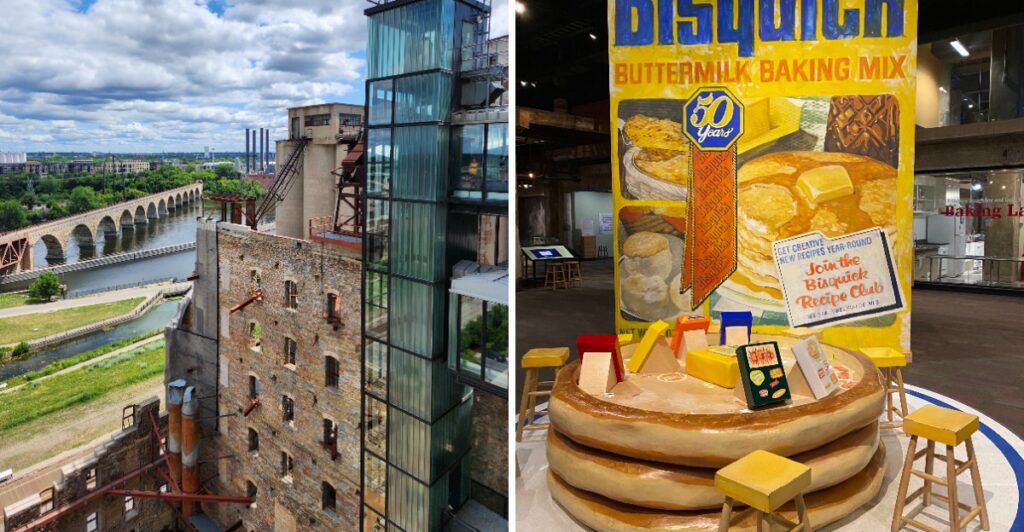
A museum where you ride a freight elevator and get fresh bread afterward? Minnesota might have figured out how to make history class a lot more appealing.
The elevator takes you through eight floors of a former flour mill, with stories unfolding around you as you ride.
And this wasn’t just any mill. It was once the largest flour mill in the world.
After a fire in 1991, the ruins were preserved and turned into a museum. Not a bad second career for a building that spent decades making flour.
Up on the ninth-floor rooftop deck, you get views of the Mississippi River and a historic stone bridge. Back downstairs, there’s a baking lab where visitors can sample fresh bread.
Oh, and there’s a 15-foot Bisquick box on display. Fifteen feet! I’d like to see the size of the pancakes they had in mind.
Between the elevator ride and the bread samples, I’m sold. Though I do think every history museum should consider the fresh-bread approach.
The Ruins Are Not A Backdrop, They Are The Whole Point
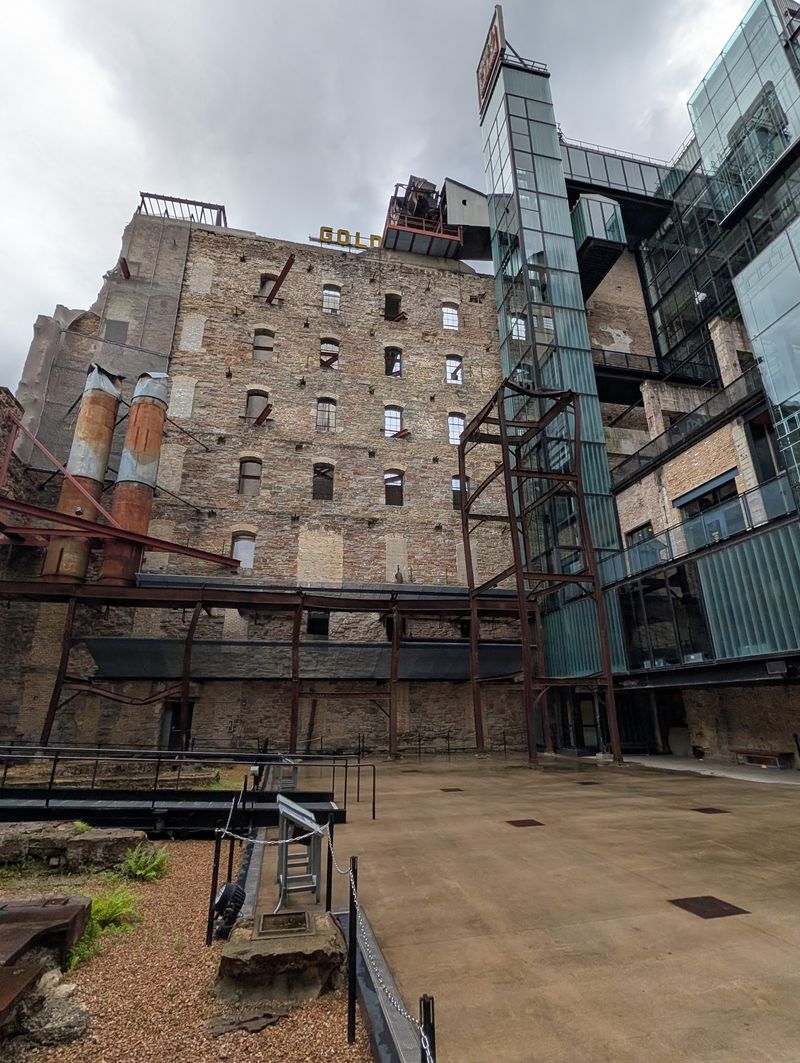
Mill City Museum lives inside the bones of the Washburn A Mill. The museum’s modern walls rise right within old limestone shells left standing after a fire.
The first Washburn A Mill opened in 1874 beside the Mississippi River. It was the biggest industrial building in Minneapolis and the largest flour mill on Earth.
In 1878, a flour dust explosion destroyed that first mill. Cadwallader C. Washburn rebuilt it, finishing the new version in 1880.
The rebuilt mill used better ventilation to keep flour dust from piling up. It also added automatic steel rollers, making it the most advanced mill anywhere at the time.
Milling kept humming there until 1965. Then the building sat empty for years and served as a warehouse for a while.
A fire in February 1991 left only concrete and crumbling stone walls. Minneapolis stabilized what remained, and the Minnesota Historical Society opened the museum in 2003.
The site earned National Historic Landmark status back in 1983. You’re basically touring a comeback story with a roof on parts of it.
Take The Freight Elevator Nobody Else Gets To Ride
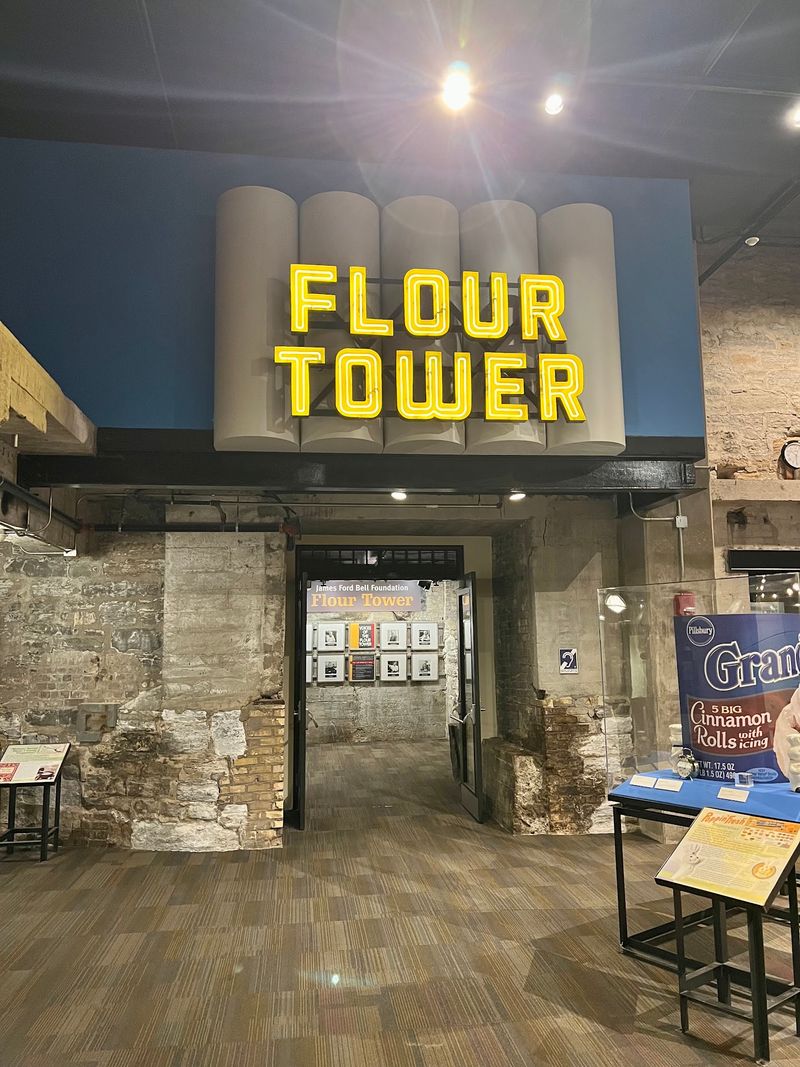
Most elevators just want you out quickly. The Flour Tower wants you to stay seated and pay attention.
Here’s how it works. You sit inside the cab of a freight elevator as it climbs through eight levels.
Each level is built to look like a floor from a working flour mill. Historic films, photographs, dramatic lighting, and sound effects bring each stop to life.
The best part might be the voices. You hear recordings of real former Washburn A Mill workers sharing what the job was like.
Along the way, the show explains how wheat turned into flour. It also covers the story behind the mill’s history and the famous flour brand made there.
Riders step off on the eighth floor. From there, it’s a short trip up to the ninth-floor observation deck.
One tip matters for bigger crews. Groups of ten or more should call the box office ahead to buy tickets and make sure they get Flour Tower access.
Everyone else buys tickets on-site when they arrive. Simple, old-fashioned, and fitting for a building this proud of its past.
The Rooftop Deck Hands You The Best River View In Town
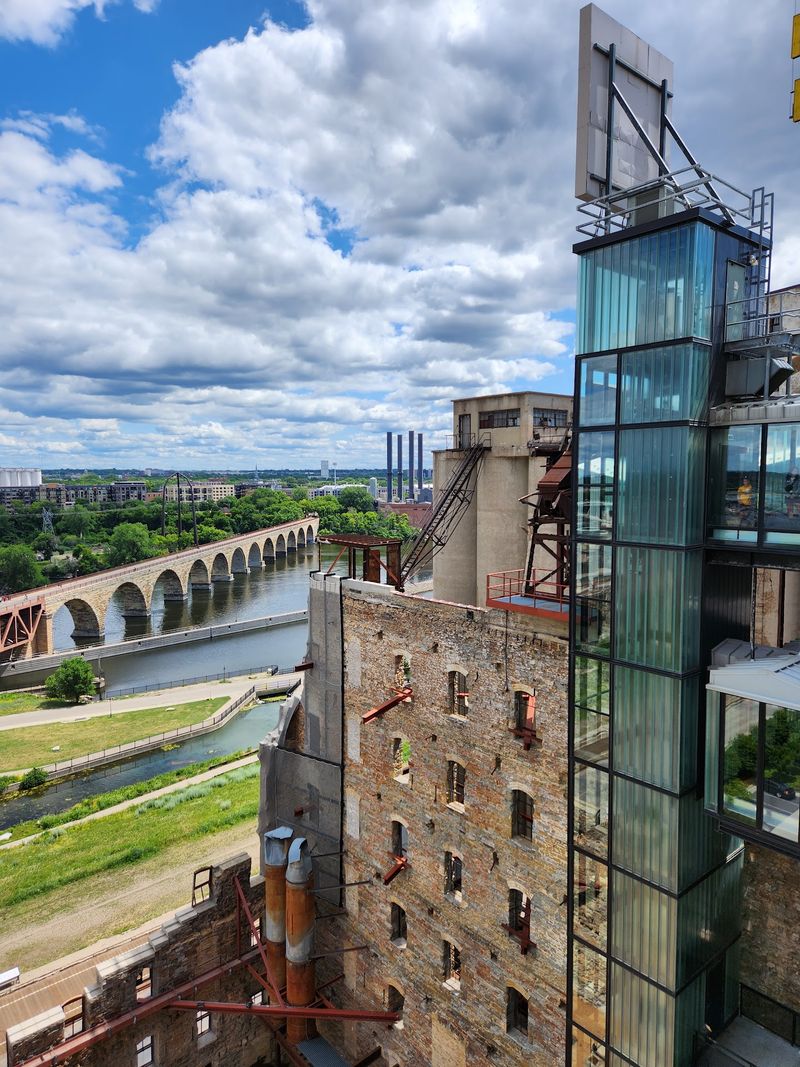
Nine floors up, the whole riverfront spreads out like a postcard. The Koch Rooftop Observation Deck is where the elevator journey pays off.
Look one way and there’s the Mississippi River rolling past. St. Anthony Falls sits right there too, the same falls that once powered the mills below.
Then comes the Stone Arch Bridge, one of the most photographed sights in Minnesota. Its curved arches make an easy, gorgeous picture.
Now look down. The deck gives you a bird’s-eye view of the Ruin Courtyard and the old mill walls that survived the fire.
That angle tells the story better than any sign could. You see the modern museum standing inside a shell from another century.
Photographers should plan to linger. Charge your phone before you come, because you’ll want more than a couple of shots.
Weather in Minneapolis can swing wildly, so dress for the season. A breezy rooftop doesn’t care about your hairstyle.
Pick a clear day if you can. The falls and bridge look best when the sky cooperates.
Grind Wheat, Then Eat The Results
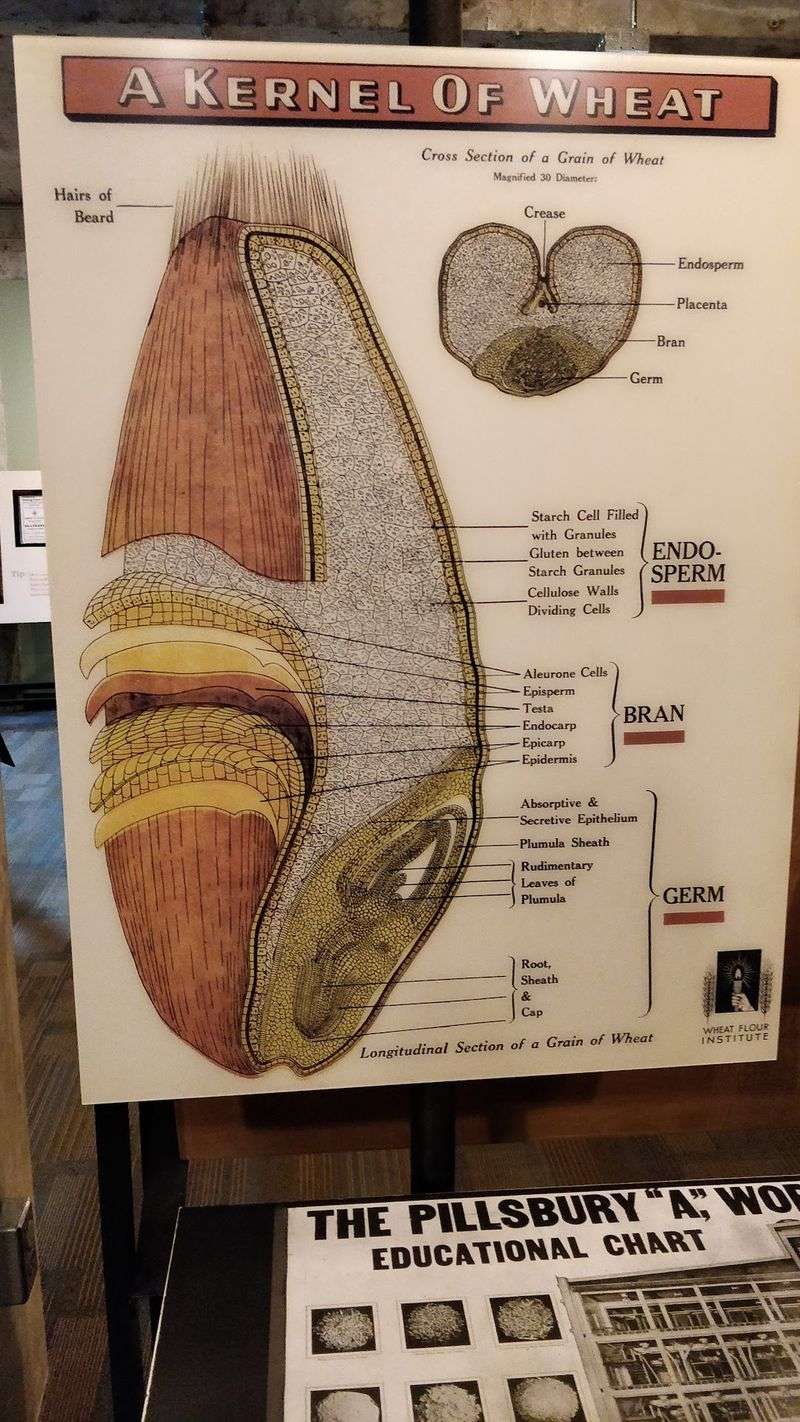
Few museums let you snack on the exhibits. The Baking Lab is gloriously different.
Visitors can grind wheat and see how grain becomes flour. Volunteers lead demonstrations and bake bread right there in the lab.
Experiments are part of the fun too. You get to test how ingredients behave, then sample freshly made bread.
Next door, the Water Lab shifts the focus to the Mississippi River. Hands-on activities show how the river’s power once drove an entire industry.
Kids tend to latch onto these labs fast. Adults often sneak in a few turns themselves, and nobody’s judging.
The labs connect everything you saw on the elevator ride. Water spun the machines, machines ground the wheat, and wheat became bread.
It’s a full loop you can actually touch and taste. That beats reading about it on a sign any day.
Check what’s happening when you arrive, since demos can vary. A little flexibility goes a long way here.
Wash your hands afterward, obviously. Flour has a talent for showing up on sleeves hours later.
A City History Film That Actually Watches The Clock
Nineteen minutes. That’s all the time one film needs to cover a whole city.
The movie is called Minneapolis in 19 Minutes Flat. It gives a humorous overview of how the city grew, with flour milling right at the center.
It works as a great warm-up. The background makes the exhibits and the elevator show click into place.
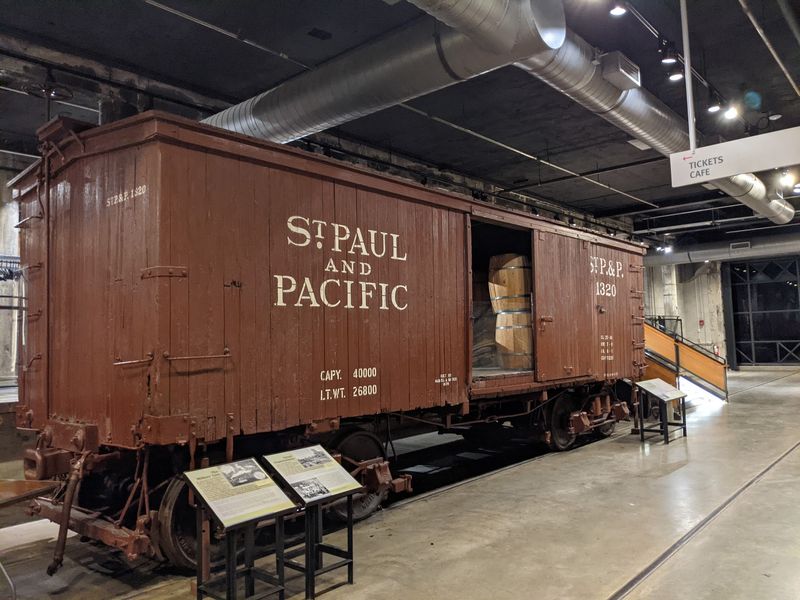
The main exhibit floor digs into plenty of topics. Expect milling machinery, water power, railroading, grain trading, and farming.
People get the spotlight too. Displays share stories of the workers and immigrant laborers who kept the mills running.
Food product development has its own corner. That makes sense in a building tied to the company that later became General Mills.
Here’s a fun one. Washburn-Crosby, the company behind this mill, created Betty Crocker in 1921, and she was never a real person.
The Gold Medal Flour name came from an 1880 award, too. Its flour won a gold medal at the First Millers International Exhibition.
Give yourself time to read. The details reward slow wandering.
Design A Cereal Box And Admire A Giant Bisquick
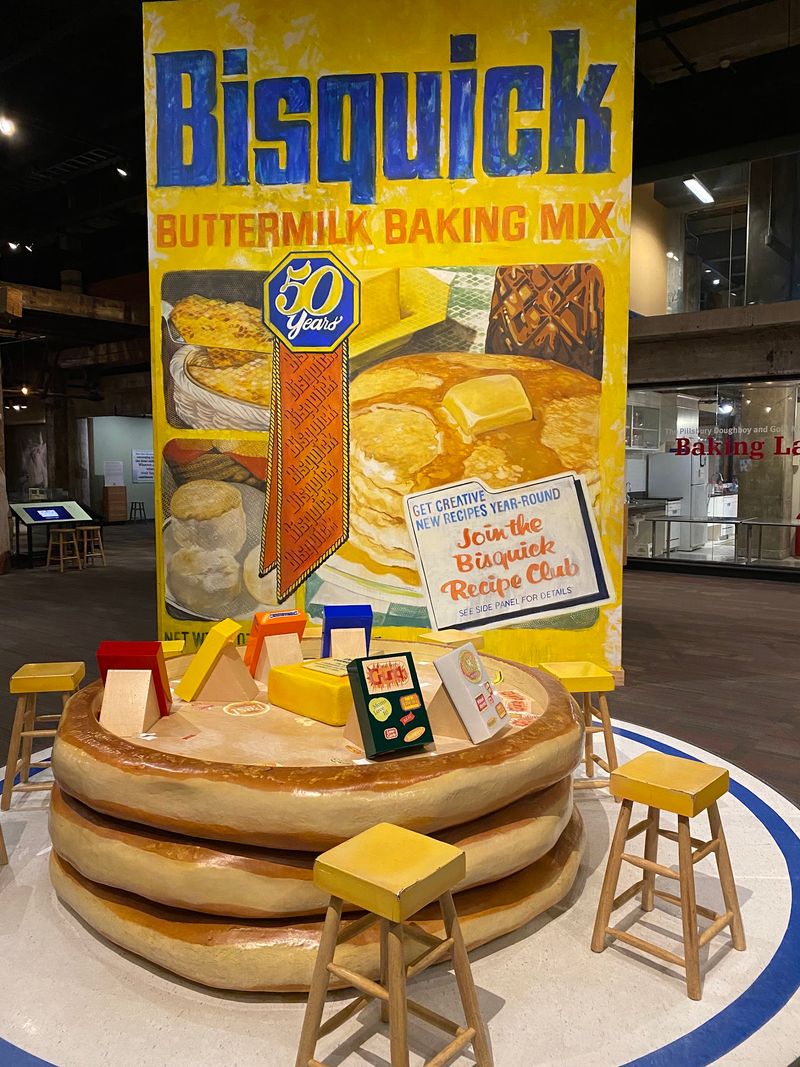
Somewhere inside, a 15-foot Bisquick box stands tall. It’s art, and it’s exactly as delightful as it sounds.
Local artists left their mark all over the museum. You’ll spot murals and an art glass collage alongside that oversized pancake mix.
Interactive stations keep things playful. One lets you design your own cereal box, which is harder than it looks.
Vintage advertising fills other walls. Old ads show how flour and food brands sold themselves to families decades ago.
Then there’s a dinner table set for a wheat harvest crew. It gives you a sense of how much food hungry farmhands needed.
These spots make history feel personal. Instead of dates and charts, you get kitchens, packaging, and meals.
Families with kids will find plenty to share. Grown-ups might recognize a few brands from their own childhood pantries.
Bring curiosity and maybe a creative streak. Your cereal box design deserves a catchy name.
Snap a photo with the Bisquick box before leaving. It’s the kind of thing friends won’t believe without proof.
Roofless Walls Make The Coolest Courtyard In Minnesota
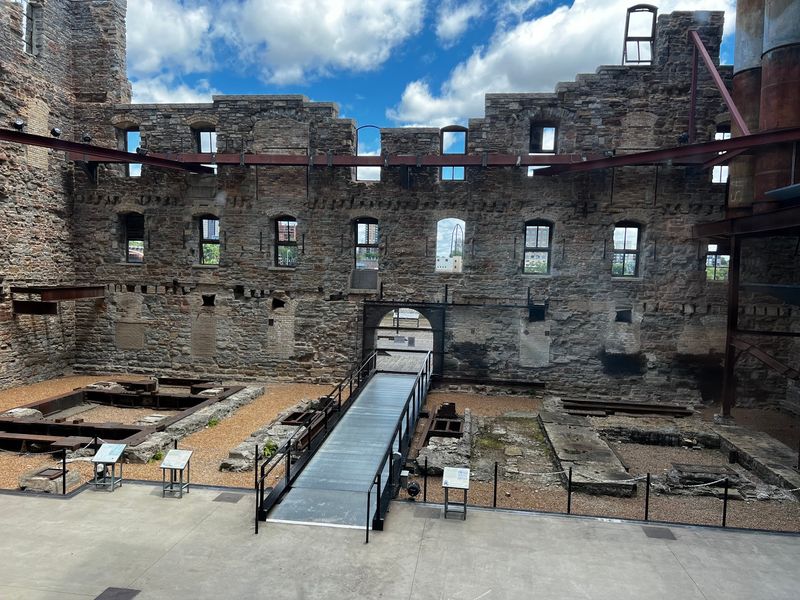
Old window openings frame open sky in the Ruin Courtyard. The walls are what’s left of the mill after the 1991 fire.
This outdoor space feels part ruin, part gathering spot. It hosts events, live music, and plain old relaxing.
The Mill City Live concert series uses the courtyard as its stage. Music bouncing off century-old stone is a pretty great combo.
History fans should study the walls and ground closely. You can find footprints of the mill’s old machinery left behind.
An audio installation called Cloudy Waters adds another layer. It shares Dakota perspectives on the river, a story much older than any mill.
Mill Ruins Park sits right next door. That makes it easy to keep exploring the riverfront after your museum visit.
Bring a camera for this one too. The textures and shadows make the courtyard a favorite for photos.
Summer in Minnesota is ideal for lingering outside. Check the museum’s event schedule if you’d like to catch a concert.
Know Before You Go So You Don’t Miss The Tower
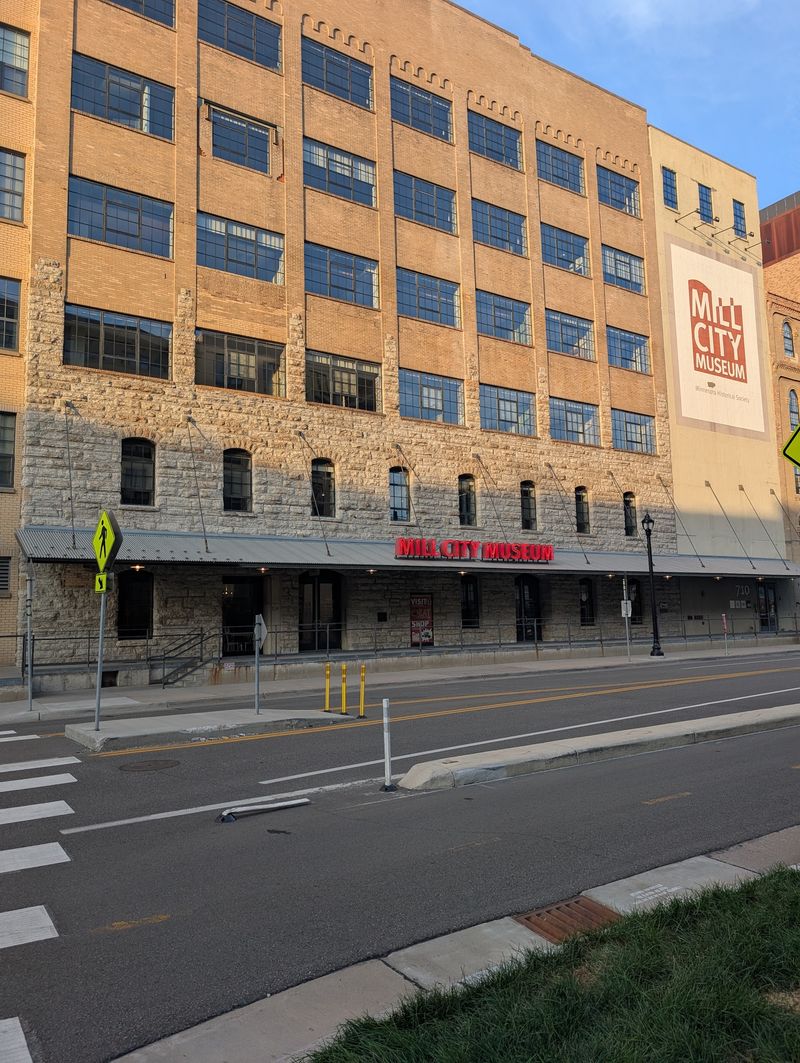
Timing matters here more than you’d think. Mill City Museum keeps a schedule that catches some visitors off guard.
You’ll find it at 704 S 2nd St, Minneapolis, MN 55401. It sits right on the Mississippi Riverfront in the city’s historic mill district.
Hours run Wednesday through Friday, 10 a.m. to 4 p.m. Weekends stretch a bit longer, 10 a.m. to 5 p.m.
The museum is closed on Mondays and Tuesdays throughout the year.
Holiday closures include New Year’s Day, Easter, Thanksgiving, Christmas Eve, and Christmas Day. Plan around those so your trip doesn’t stall at the door.
Tickets are sold only on-site, with no advance online sales. Disability parking spots are in the Mill Quarter Ramp across the street.
The museum also offers walking tours and tours of the Pillsbury A Mill across the river. That’s a nice bonus for serious history fans.
Few places in Minnesota pack this much story into one riverbank. Go hungry for history, and maybe bread.