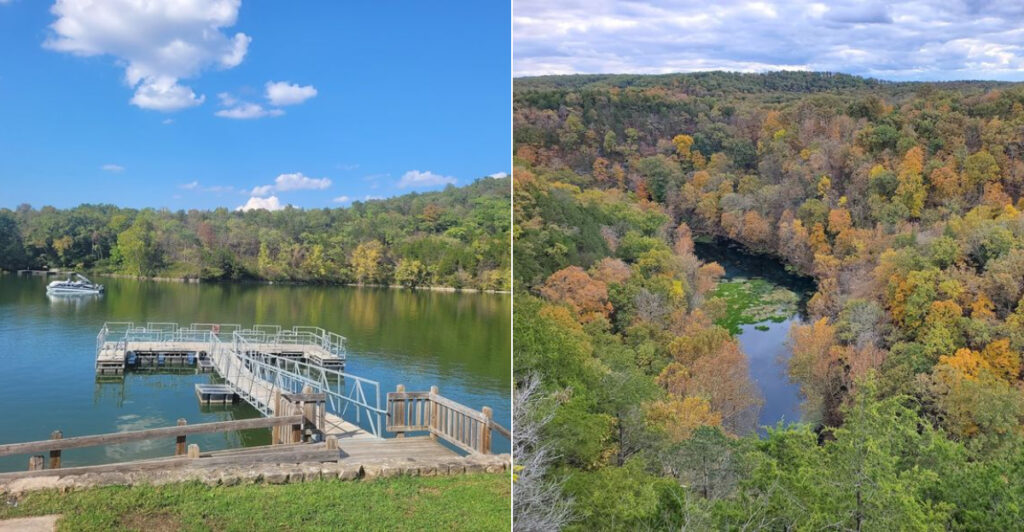
Missouri does not ease you into a place like this. You start down the trail, and before long the whole landscape begins to feel wilder, stranger, and far more dramatic than expected.
That is what makes this park stand out right away. One stretch gives you rocky bluffs and sweeping lake views.
Another leads you past sinkholes, caves, and terrain that looks like it has been shaped to keep you guessing. Nothing about it feels flat or ordinary.
The scenery keeps shifting, which makes the hike feel more rewarding with every turn. If you have been looking for a Missouri trail that offers more than just a nice walk, this is the kind of place that makes lacing up your boots feel like a very good decision.
The Trail That Has Everything
Most trails promise a lot and deliver a little. Ha Ha Tonka State Park flips that completely.
The trail system here covers around 15 miles of marked paths, and each one brings something new to the surface.
You might start on flat ground and then suddenly find yourself looking down into a sinkhole the size of a house. That shift in landscape is what keeps hikers moving forward.
The park sits on the Ozark Plateau, a region shaped by millions of years of water carving through limestone. That process left behind sinkholes, caves, springs, and bluffs that now make up the backbone of every trail here.
What makes this park especially rewarding is how manageable it feels. Families with older kids, solo hikers, and experienced trail runners all find something here that fits their pace.
The terrain changes often enough to stay interesting without ever feeling punishing. The park is open year-round, and each season shifts the mood entirely.
Spring brings wildflowers, fall turns the bluffs into a wall of color, and winter strips the trees bare so you can see farther into the landscape than any other time of year. Pack water, wear sturdy shoes, and plan to stay longer than you think you need to.
Sinkholes That Actually Impress
Sinkholes get a bad reputation in the news, but at Ha Ha Tonka, they are the main attraction. The park contains some of the most dramatic sinkhole formations in the entire Midwest.
Some are shallow depressions in the earth, while others drop sharply into darkness below. The largest ones are hard to fully take in from a single viewpoint.
These formations were created when underground caves collapsed over thousands of years. Water moved through the limestone bedrock, slowly dissolving it from below until the surface could no longer hold.
What remains is a landscape that looks like it belongs in a geography textbook but feels much more alive in person. Walking along the trail edges near these sinkholes gives you a real sense of how active this landscape still is.
The Ozarks are not a finished product. They are still changing, still shifting, still surprising.
Can you imagine standing at the rim of a natural pit that formed entirely without human involvement? That kind of scale is humbling in the best way.
The sinkholes also create their own microclimates. Cool air rises from the depths, and plants that prefer shade and moisture thrive along the inner walls. It is a small ecosystem inside a larger one.
Rangers at the park can point you toward the most impressive formations if you ask at the visitor area near the entrance on Missouri D in Camdenton.
Caves Worth Slowing Down For
The caves at Ha Ha Tonka are not tourist caves with lighting rigs and guided tours. They are raw, real, and completely natural.
Several cave openings appear along the trails, some small enough to require crouching, others wide enough to walk into for a short distance. The smell of cool, damp limestone hits you before you even reach the entrance.
It is the kind of scent that makes you feel like you are stepping into something ancient. Missouri sits on one of the most cave-rich regions in North America, and Ha Ha Tonka sits right in the middle of that zone.
The same limestone that creates the sinkholes also forms the caves, carved by groundwater over an enormous stretch of time.
These spaces are home to several bat species that help control insect populations across the region. Staying on the trail and respecting the cave openings protects both the bats and the fragile formations inside.
Photography enthusiasts will find the cave openings especially rewarding in morning light, when soft rays catch the limestone walls and turn the entrance into a natural frame. Bring a wide-angle lens and a little patience, and the shots will come to you.
The Castle Ruins That Belong To No Fairy Tale
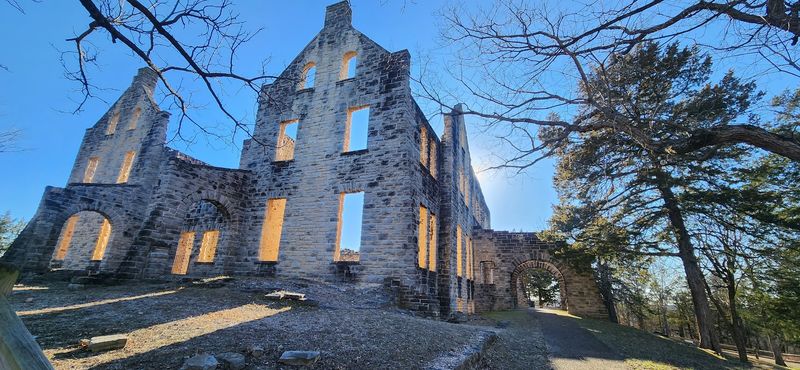
Right in the middle of a state park trail, you will find the stone ruins of a castle. Not a replica.
Not a theme park feature. An actual castle that burned down in 1942 and never recovered.
Robert Snyder, a Kansas City businessman, began construction on the mansion in the early 1900s. He modeled it after European castles, using local stone and importing skilled craftsmen to do the work.
The project was interrupted when Snyder passed away in a car accident, and his sons eventually completed the structure. A fire started by a chimney spark ended it all decades later.
What remained are the outer stone walls, towers, and archways that now stand open to the sky above the bluff. The ruins are fully accessible and sit along the main trail loop.
Standing inside the roofless walls and looking out over the Lake of the Ozarks is one of those views that earns its reputation. You can see the water, the bluffs, and the surrounding forest all from a single spot that once had a roof over it.
The castle is one of the most photographed spots in the park, and for good reason. It is the kind of place that rewards a slow walk-through rather than a quick glance.
Views Over The Lake Of The Ozarks
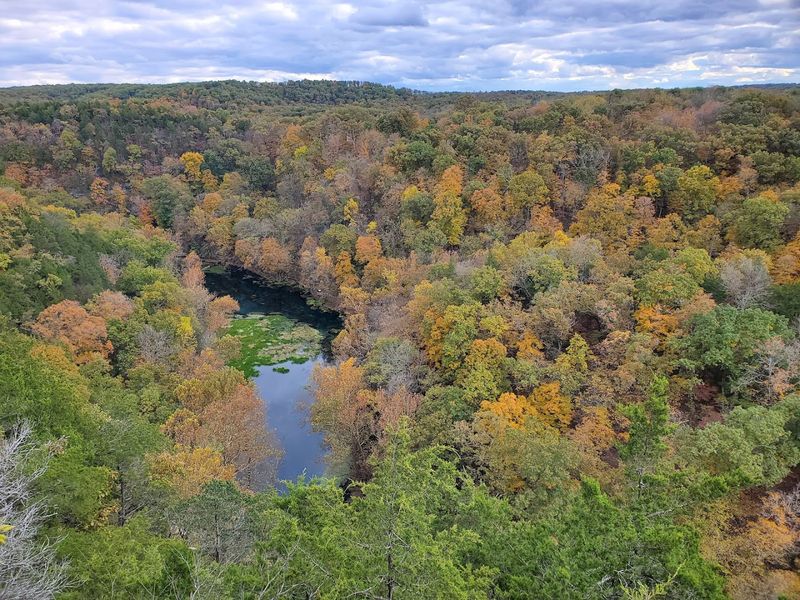
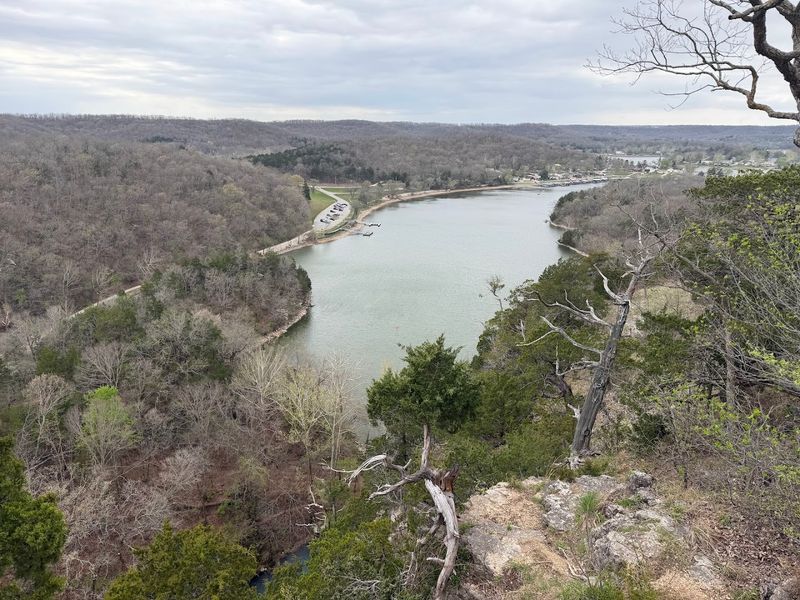
The Lake of the Ozarks is one of Missouri’s most recognized bodies of water, but most people see it from a boat or a dock. Ha Ha Tonka gives you a completely different angle.
From the bluffs inside the park, you look down at the lake from heights that make the water look like a map spread out below you. The bluffs rise over 250 feet above the lake surface in some spots, and the view from the top is wide, clear, and genuinely hard to walk away from.
The lake itself was created in 1931 when the Bagnell Dam was completed on the Osage River. That makes the lake a human-made feature set inside a landscape that is entirely natural.
The contrast between the engineered waterway and the ancient bluffs around it is something worth thinking about while you stand up there. Sunrise and late afternoon are the best times to visit the overlooks.
The light hits the water at a low angle and turns the surface into something close to a mirror. Photographers regularly time their visits around the golden hour for exactly this reason.
Bring a hat, sunscreen, and comfortable shoes with grip, because the bluff edges are exposed and the rock can be uneven.
Spring And Natural Bridge, Two Features, One Short Walk
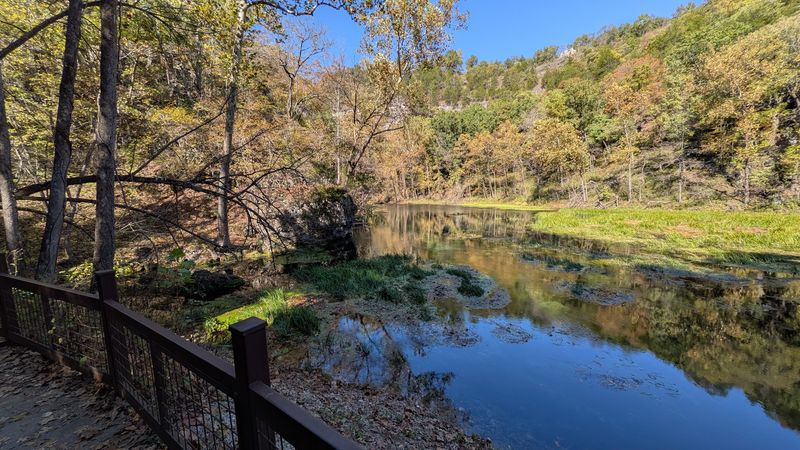
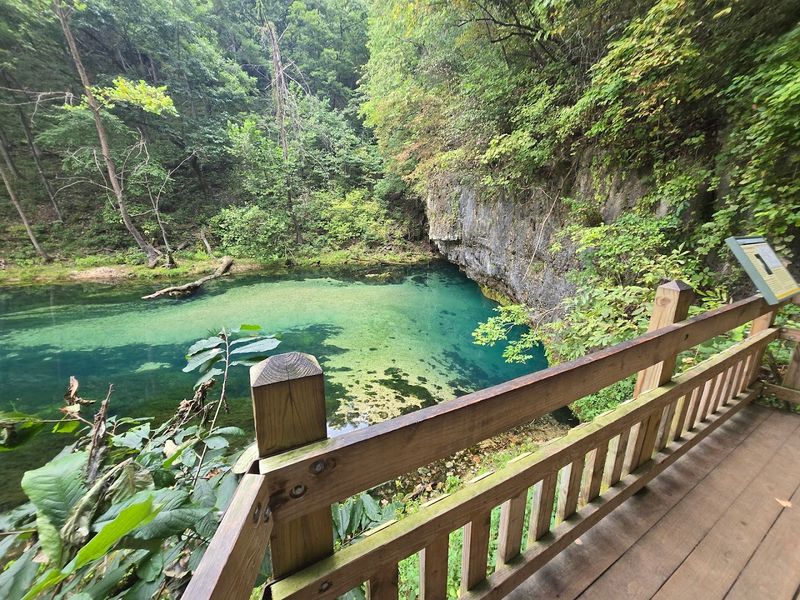
Ha Ha Tonka Spring is one of the largest springs in Missouri, releasing millions of gallons of water every day from deep within the limestone aquifer. The water is crystal clear and stays at a consistent cool temperature year-round.
The spring feeds directly into the Lake of the Ozarks, and you can follow its short run from the source to where it meets the lake. The path along the spring branch is shaded, quiet, and noticeably cooler than the rest of the park on warm days.
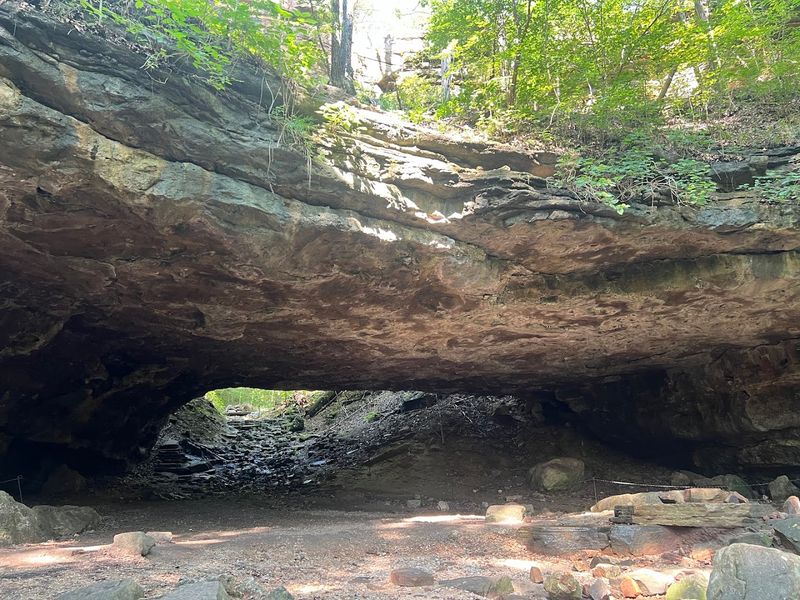
Just a short walk from the spring, the Natural Bridge stands as one of the park’s most photographed geological features. It is a limestone arch that formed when the roof of a cave partially collapsed, leaving a bridge of rock spanning a small ravine.
The arch is wide enough to walk across. It is a short, relatively flat walk that works well for visitors of most fitness levels. Early morning visits to the spring are especially peaceful, before the park fills up and the trail gets busy with other hikers.
Wildlife And The Quiet Things You Notice On The Trail
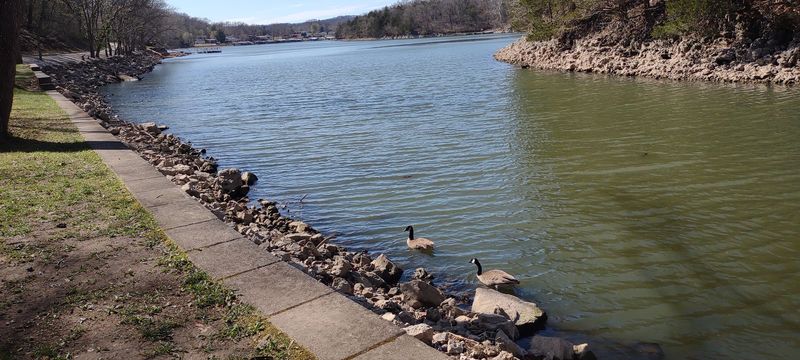
The trails at Ha Ha Tonka are not just about geology. The park is home to a wide range of wildlife that shows up when you slow down and pay attention.
White-tailed deer are common throughout the park, especially in the early morning and at dusk. Wild turkey, great blue herons near the spring, and various hawk species are also regular sightings.
The park’s mix of forest, open bluff, and water creates habitat for a surprising variety of animals in a relatively compact area. Wildflowers bloom across the trail edges from late March through June.
Trillium, wild columbine, and Missouri evening primrose are among the species that appear depending on the month. The cave and sinkhole areas support ferns and mosses that thrive in the cool, shaded conditions there.
The park also participates in Missouri’s natural heritage programs, which track rare plant and animal species across the state. Some of the species found at Ha Ha Tonka exist in only a handful of locations in Missouri.
Binoculars are worth bringing, especially if you plan to spend time near the lake overlooks or the spring branch. The combination of open sky and water near the bluffs makes for excellent bird watching at almost any time of year.
Planning Your Visit Without The Guesswork
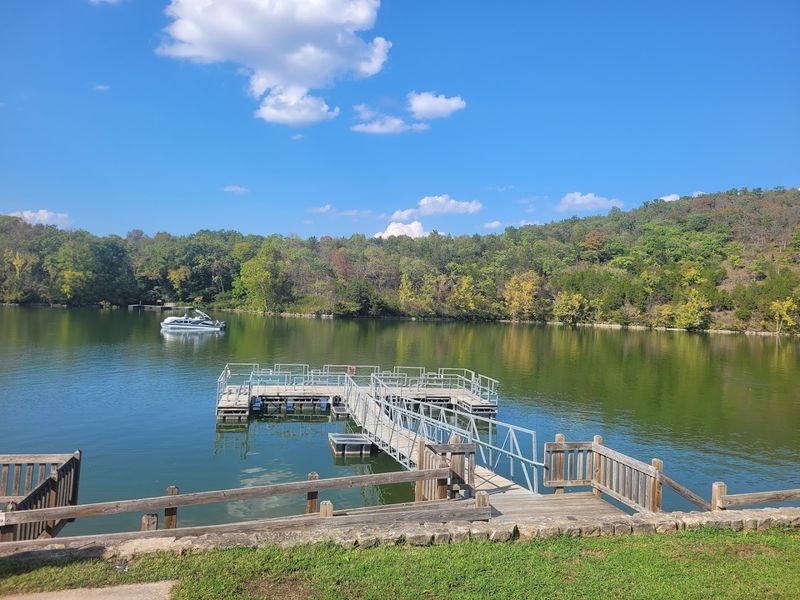
Getting to Ha Ha Tonka State Park is straightforward. The park entrance is located at 1491 Missouri D, Camdenton, MO 65020, and it sits just a short drive from the town of Camdenton in Camden County.
The park is open year-round from sunrise to sunset. There is no entrance fee, which makes it one of the most accessible state parks in Missouri for families and solo travelers alike.
Parking is available near the main trailhead and near the spring area. Spring and fall are the most popular seasons to visit.
Spring brings green growth and wildflowers, while fall delivers some of the best foliage colors in the Ozarks. Summer visits are warm but manageable if you start early and carry enough water.
Winter offers a quieter experience and longer sightlines through the bare trees. The trails range from easy to moderate, with some rocky and uneven sections near the bluffs and ruins.
Proper footwear makes a real difference, especially after rain when the limestone surfaces can get slippery.
Restroom facilities are available near the main parking area. The park does not have a food concession, so bring snacks and a full water bottle. A morning start gives you the best chance of a quieter, cooler experience on the trail.