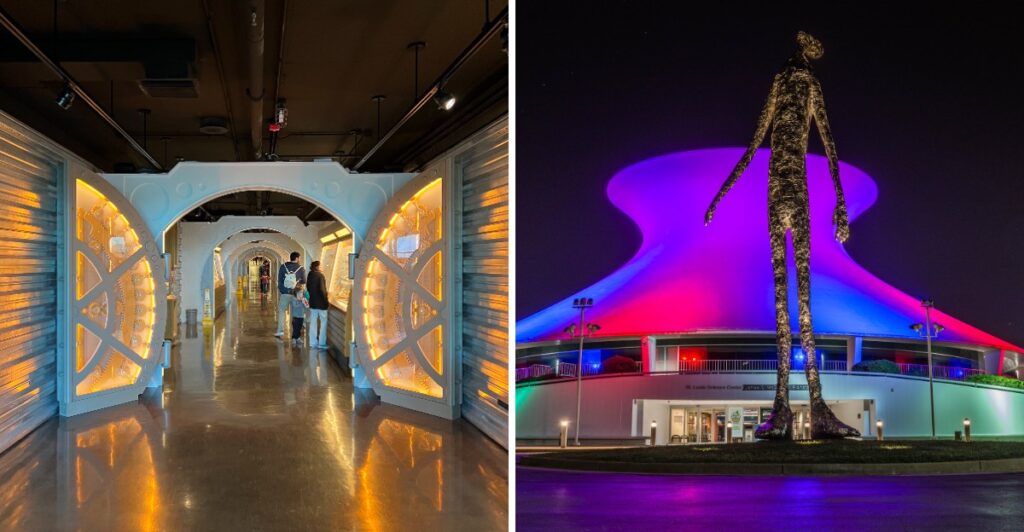
One hundred million stars overhead, and not a single cloud to ruin the view. Try getting that lucky on a real stargazing trip.
This Missouri planetarium has the largest artificial sky in the Western Hemisphere, with an upgraded projection system that can recreate a mind-boggling number of stars.
Daily live shows require tickets, though Science Center members get in free.
Getting there is part of the experience, too. A walkway crosses right over an interstate highway, connecting the planetarium to a huge science museum.
Yes, you can literally walk over highway traffic on your way to explore space.
The museum has fossils, a farm exhibit, and a five-story dome screen, too. All without an admission fee to the main museum.
Who needs perfect weather for stargazing when the entire universe is waiting indoors?
The Live Star Show Is A Great Experience Under The Dome
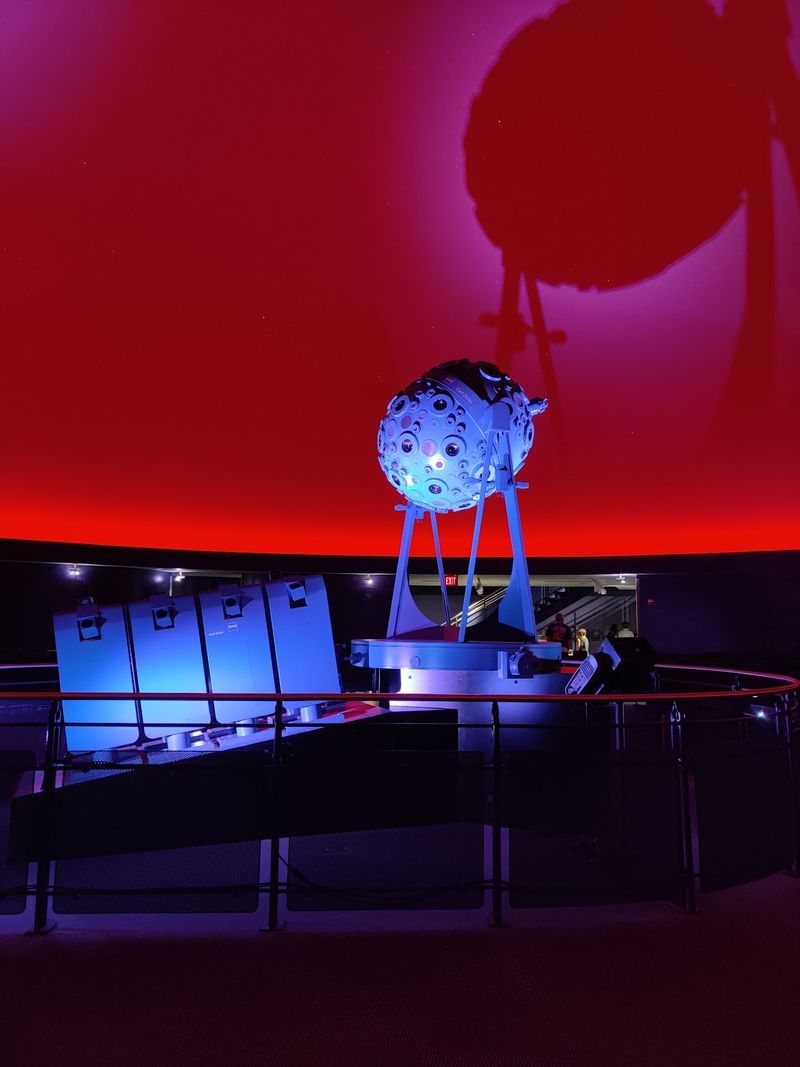
Live Star Shows offer visitors a guided journey through the night sky.
The Saint Louis Science Center runs daily Star Shows inside the James S. McDonnell Planetarium, but these shows require separate tickets unless visitors qualify for free admission.
The shows happen in the Orthwein StarBay.
The upgraded Orthwein StarBay features a projection system capable of recreating more than 100 million stars.
That is a lot of sky for a winter afternoon. Real December nights in Missouri can be cloudy, chilly, and over by dinnertime.
Inside the dome, the weather simply stops mattering. You get constellations, planets, and sky stories without hunting for mittens or a dark field.
The live format is the fun part. A presenter guides the show in real time, so it feels more like a conversation than a movie.
Kids who usually fidget often settle down once the lights dim. Adults tend to look up and quietly realize they forgot most constellations from school.
USA TODAY 10Best readers named this planetarium the best in the nation in 2025. That’s a big title for a planetarium that continues to attract national recognition.
Plan your day around a showtime. Then let the rest of the museum fill the hours before and after.
That Curvy Building Was Designed To Turn Heads
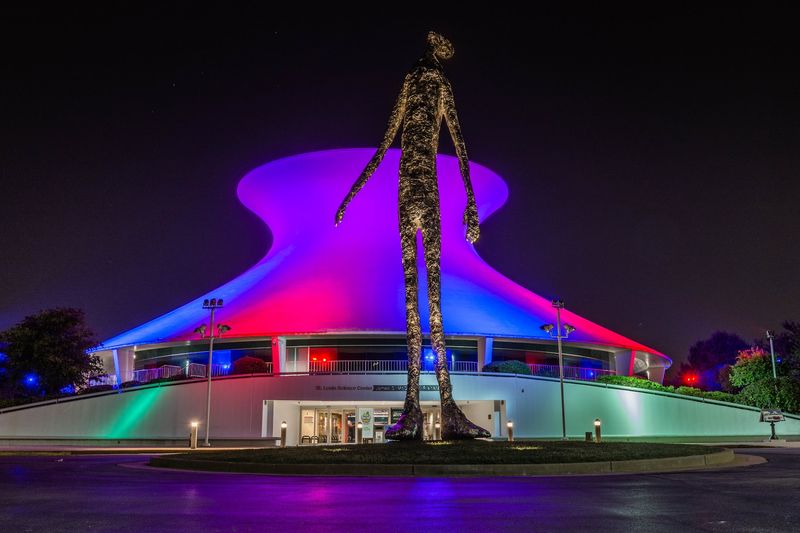
Some buildings blend in politely. The planetarium does the opposite, with a sweeping curved shape that looks ready for liftoff.
Architect Gyo Obata designed it, and the original planetarium opened in 1963. It sits in Forest Park, one of the most loved green spaces in St. Louis.
The museum’s roots go back even further. The Academy of Science of St. Louis was founded in 1856, long before anyone projected stars indoors.
Then came the Museum of Science and Natural History in 1959. The museum took over the planetarium in 1984, and the Saint Louis Science Center opened in 1985.
That history adds a nice layer to your visit. You’re not just seeing a cool shape, you’re seeing decades of St. Louis curiosity in concrete form.
Bring a phone with some battery left. The curves look striking against a crisp winter sky, and the building practically poses for you.
Snap your photo before heading inside for a show. Your holiday card may suddenly have a new background.
The planetarium side is reached via Clayton Avenue at Faulkner Drive. That detail matters more than you’d think, as the next section explains.
Yes, You Really Walk Over A Highway To Get There
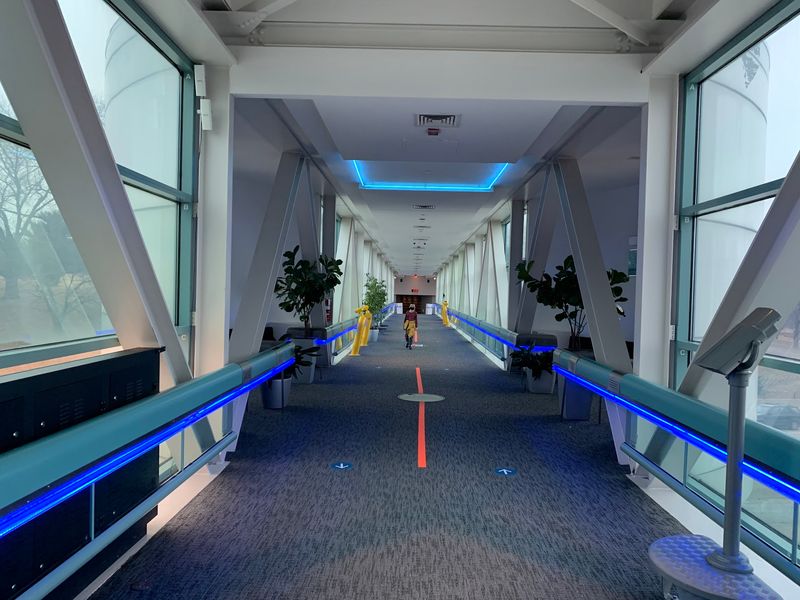
Few museum visits include a stroll above interstate traffic. Here, it’s part of the plan.
A 1991 expansion added the main Oakland Building, the OMNIMAX Theater, and the Skybridge. That enclosed bridge links the main building to the planetarium across Interstate 64.
Kids usually treat it like an attraction of its own. Cars zoom below while you cruise along above them, warm and dry.
The bridge also helps with logistics. You can explore the main galleries, then wander over to catch a Star Show without stepping outside.
The main entrance sits at 5050 Oakland Ave, St. Louis, MO 63110. The planetarium side is reached from Clayton Avenue at Faulkner Drive in Forest Park.
Parking at the Oakland Avenue lot comes with a fee. Since the buildings connect, check your parking options before you go and pick what suits your crew.
Give yourself extra minutes for the crossing. Little ones may want to stop and count trucks, and honestly, that counts as science.
Traffic watching is basically a study of motion. Newton would approve, even if the minivan in the back seat disagrees.
Bring Comfortable Shoes For 750 Hands-On Surprises
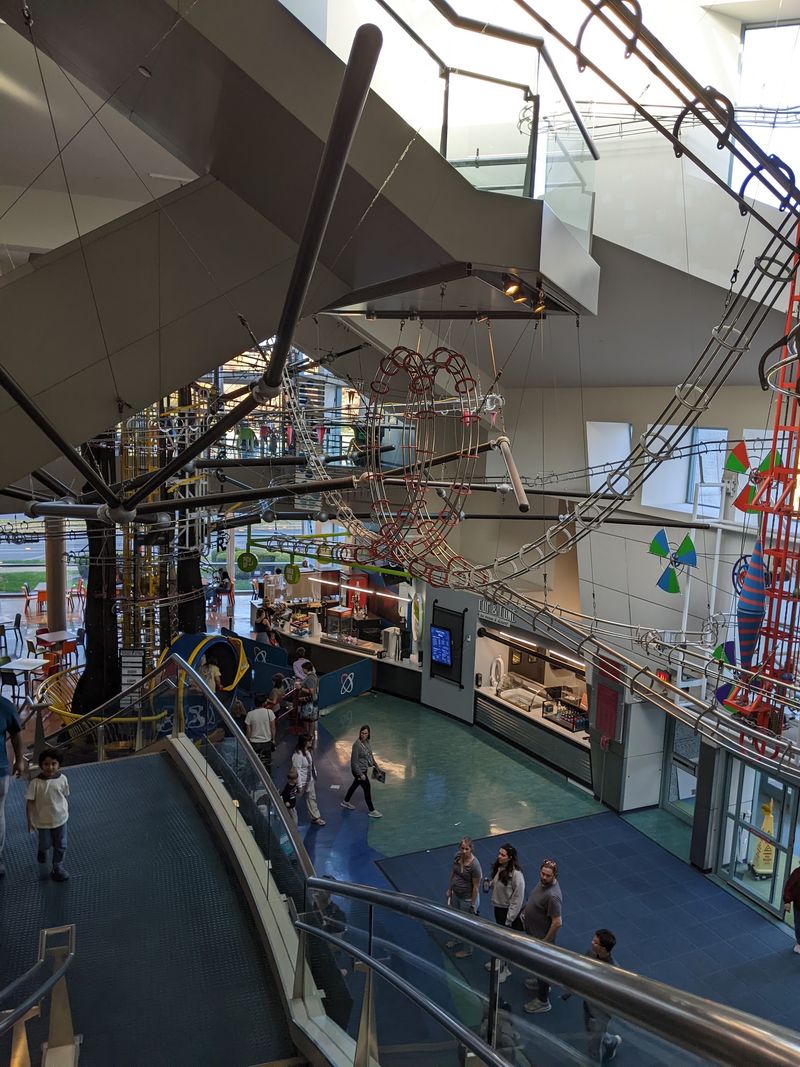
Here’s a number to stretch your legs over: more than 750 interactive experiences. They spread across 10 galleries inside over 300,000 square feet.
That makes the Saint Louis Science Center one of the largest of its kind in the United States. It also means one afternoon may not cover everything.
The Makerspace lets visitors build creative projects with real tools and materials. It’s a great spot for kids who would rather make something than read a sign.
GameXPloration celebrates video games, which might be the easiest sell of the season. Mission: Mars lets you explore the Red Planet without packing a space suit.
The Energy Stage hosts live STEAM performances. Check the daily schedule so you don’t miss a show while lost in another gallery.
Pacing helps a lot here. Pick two or three must-see areas, then let curiosity steer the rest.
Since general admission is free, you don’t have to cram it all in. Coming back during winter break is a totally reasonable plan.
Wear shoes that can handle the mileage. Your step counter will look impressive by closing time.
Dinosaurs And Fossil Hunters Share The Spotlight
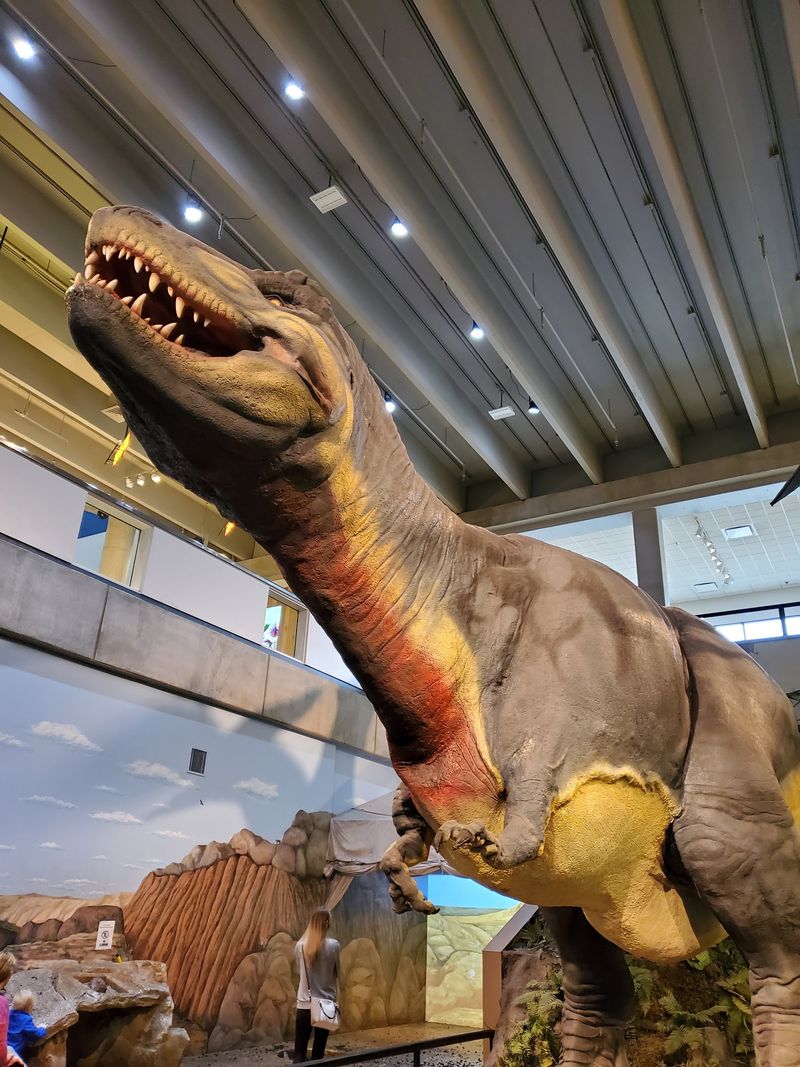
A T-Rex roars here, and the museum turns off its roar during sensory-friendly hours.
That tells you plenty about its personality.
The dinosaur habitat lives in the Ecology and Environment Gallery. It’s a favorite stop for families with young paleontologists in training.
Nearby, the Dana Brown Fossil Prep Lab and Dig Site adds a hands-on angle. Kids can see how fossils get uncovered and studied, not just admired behind glass.
The Dig Site gives restless hands a real job. Digging beats waiting in line, at least according to most seven-year-olds.
Parents of dino fans already know the drill. Your child may explain every species name, and you may nod like you understand.
Make this an early stop if your kids love big creatures. Energy runs high in the morning, which matches the roar nicely.
If anyone in your group dislikes loud surprises, give them a heads-up first. A quick warning can turn fear into giggles.
Pair the dinosaurs with a Star Show later. Going from ancient Earth to deep space in one day is a pretty great timeline.
Farm To Table Gets A Surprisingly Fun Upgrade
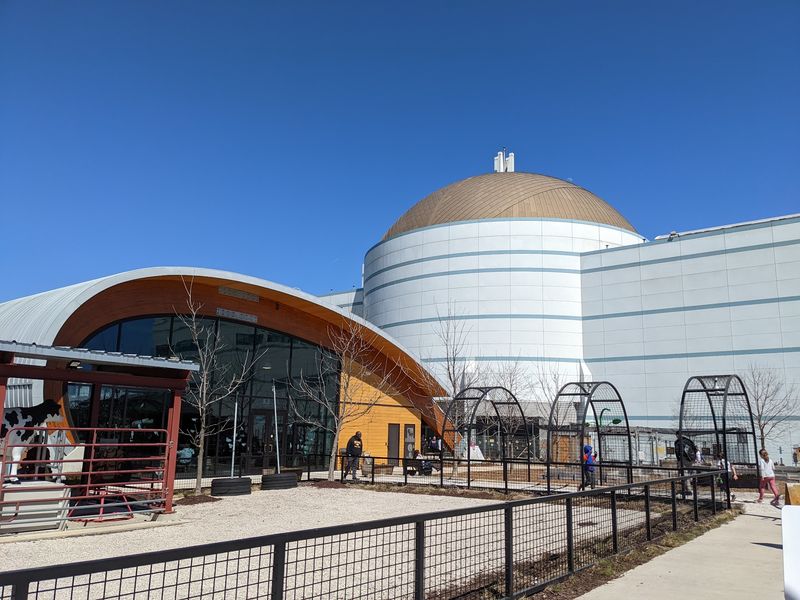
Ever wonder how your breakfast cereal started its journey? GROW answers that question in a big way.
This exhibit covers 50,000 square feet, both indoors and outdoors. It follows food from farm to table, step by step.
That size is impressive for a museum exhibit about farming. You get space to explore how crops grow and how food reaches your plate.
Winter does change the outdoor part a bit. Bundle up if you plan to step outside, and keep the indoor sections as your warm home base.
GROW works well for curious kids who ask endless questions at the grocery store. Now you can send them somewhere with real answers.
It also connects nicely to life in Missouri, where farming plays a big role. Kids can link what they see to fields they pass on road trips.
Adults may learn something too. Most of us eat three times a day without thinking about where it all came from.
Spend some time here before lunch. Nothing builds an appetite quite like learning about food for an hour.
Watch A Human Hamster Wheel Power A Ball Machine
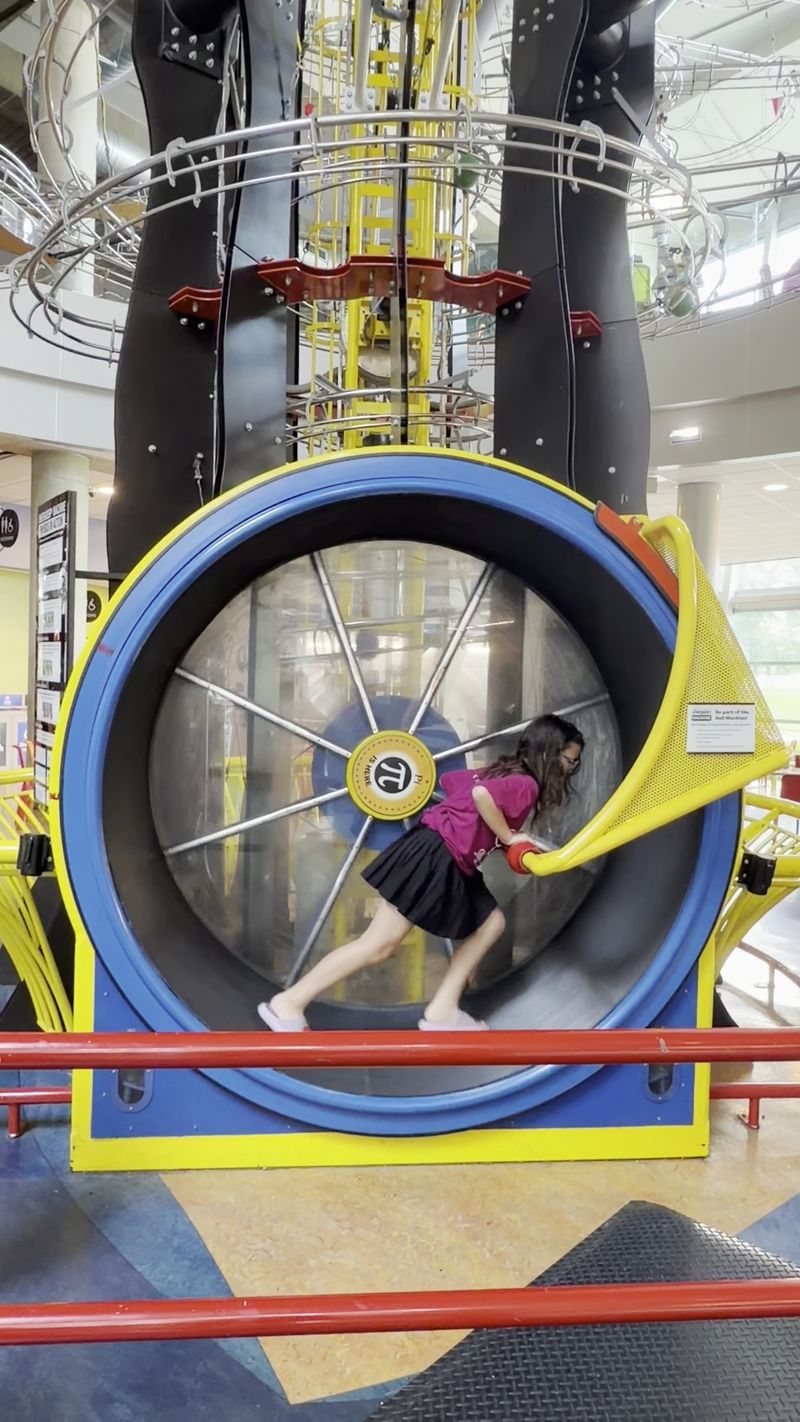
Picture yourself as the engine, minus the grease. The Energizer Ball Machine runs on a human hamster wheel.
Someone walks inside the wheel, and their effort powers the machine. Balls travel along tracks, showing kinetic energy in action.
It’s science you can actually feel in your legs. Every step turns into motion you can see and hear.
Kids love being the power source, which might be the most useful job they get all week. Parents might enjoy watching someone else burn energy for once.
The machine can get noisy, too. During Sensory Friendly Science Time, the museum turns off the ball machine and the T-Rex roar until 1 p.m.
Those sensory-friendly hours run Sundays from 11 AM to 1 PM. Sensory-friendly OMNIMAX shows are part of that time as well.
That’s a thoughtful touch for families who need a calmer visit. It shows the museum wants everyone to enjoy the fun.
Take a turn in the wheel if you’re brave. Your kids will cheer, and your holiday cookie guilt might shrink a little.
Splurge Moments Worth Adding To Your Free Day
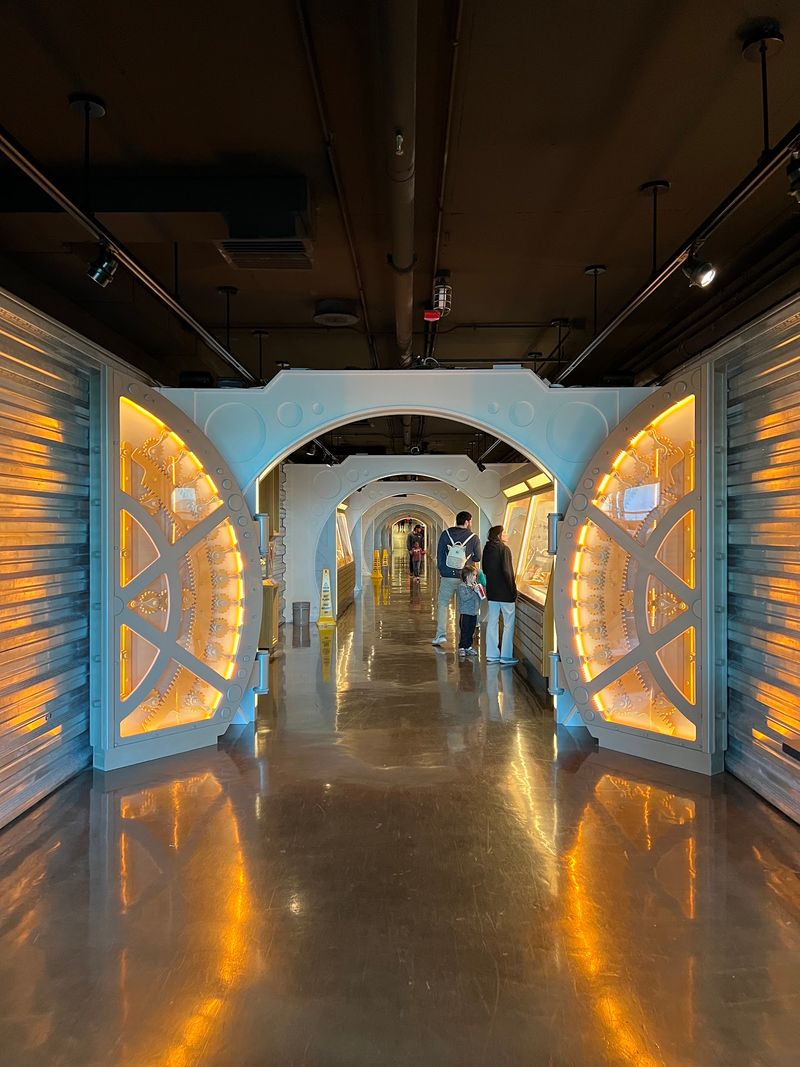
Free admission leaves room in the budget for a treat or two. A few ticketed extras make that choice easy.
The OMNIMAX Theater features a five-story domed screen with IMAX laser technology. It shows educational films, documentaries, and sometimes feature films.
The screen wraps above you, so you feel surrounded by the picture. It’s a nice follow-up to the planetarium’s star-filled dome.
Flight fans can try the Pulseworks Simulator or the I-360 Interactive Flight Simulator. Both deliver aerial thrills without the airport security line.
Families with little ones should look at the Discovery Room. It’s a ticketed hands-on science space made for younger children.
Boeing Hall hosts traveling special exhibitions, which are often ticketed too. Check what’s showing during your visit, since the lineup changes.
Pick one splurge instead of all of them. That keeps the day fun without turning December into a budget headache.
Snacks from the museum can be enjoyed inside the OMNIMAX Theater. Movie plus popcorn is a winter tradition for a reason.