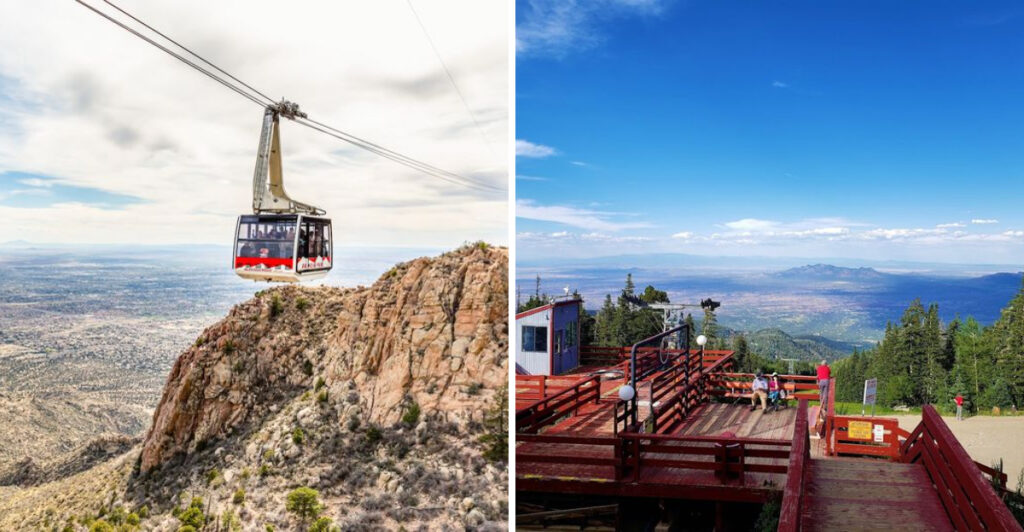
A few minutes after leaving the station, the desert is far below and Albuquerque has begun to look like a grid drawn across the valley. The tram keeps climbing, sliding past steep rock faces and over canyon terrain that feels removed from the city.
Passengers barely know which window to watch. One side reveals granite cliffs, while another opens toward distant ridges and the winding Rio Grande.
This New Mexico ride lasts about fifteen minutes, but it delivers a mountain experience without a hike. The change is striking.
Warm foothills give way to cooler air near the crest, and the view expands until the horizon seems impossible to measure. Even the return trip brings fresh angles on the cliffs and city below.
By the time the car reaches the station again, the ride feels less like transportation and more like a mountain adventure squeezed into a short stretch of time.
A Glass-Walled Climb Above The Desert
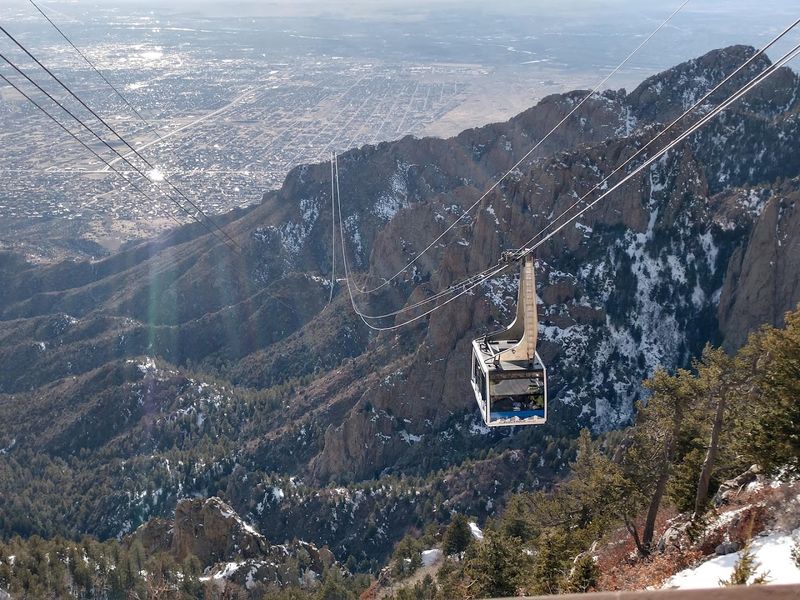
Most rides start with a ticket and a queue, but this one starts with a transformation. The moment the tram car pulls away from the base station, the high desert of Albuquerque begins to shrink beneath your feet, and the landscape shifts in ways that feel almost cinematic.
Large panoramic windows wrap around the cabin, giving every passenger an unobstructed look at the terrain below and the sky above.
The tram cars are engineered for comfort and visibility, holding up to 50 passengers at a time while still feeling open and airy. Engineers designed them to offer sweeping 360-degree sightlines, so there really is no bad spot to stand.
Within the first few minutes, the scrubby desert foothills give way to rocky slopes and then a cool sub-alpine world of fir and spruce trees.
The full ride covers 2.7 miles and takes roughly 15 minutes, which sounds short until you realize how much the scenery changes. Temperatures at the summit can run about 30 degrees cooler than at the base, so a light jacket is smart packing.
You can find this unforgettable experience at Sandia Peak Tramway at 30 Tramway Rd NE, Albuquerque, NM 87122.
Rugged Canyons Drop Away Below
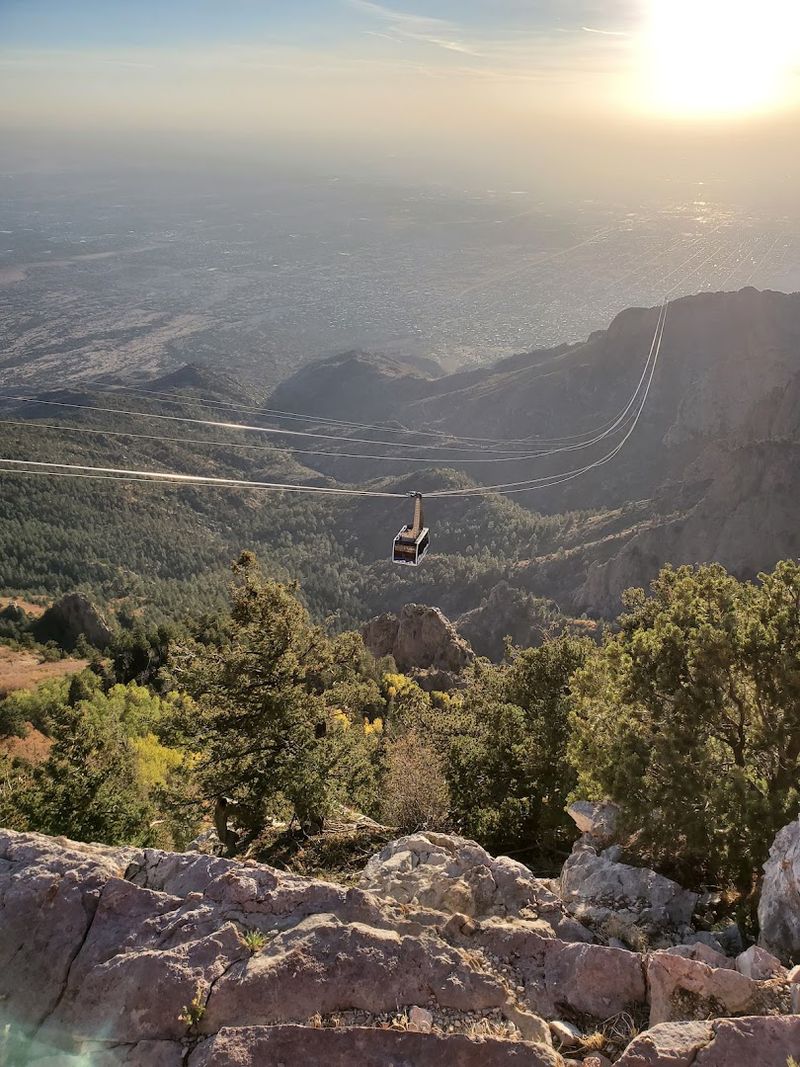
Few things put the sheer scale of mountain geography into perspective quite like hovering hundreds of feet above a canyon you could never reach on foot. As the tram glides upward, the terrain below opens into dramatic gorges that plunge sharply into shadow and stone.
Domingo Baca Canyon is one of the most striking features passengers spot during the ride, and it earns every gasp it gets.
The cables carry the car over jagged ridgelines and rocky outcroppings that look almost impossibly rugged from above. Looking straight down through the glass, you can trace the folds and fractures of the landscape in a way that no hiking trail could ever replicate.
The sense of depth is real, and it makes the tram feel less like transportation and more like a front-row seat to a geology lesson.
Visitors who thought they knew what the Sandia Mountains looked like from city streets are often genuinely stunned by how wild and untamed the terrain becomes just minutes from the base. The canyons below are not just scenic backdrops but living records of millions of years of erosion and uplift.
Every glance downward reveals something new and astonishing.
Mountain Ridges Fill Every Window
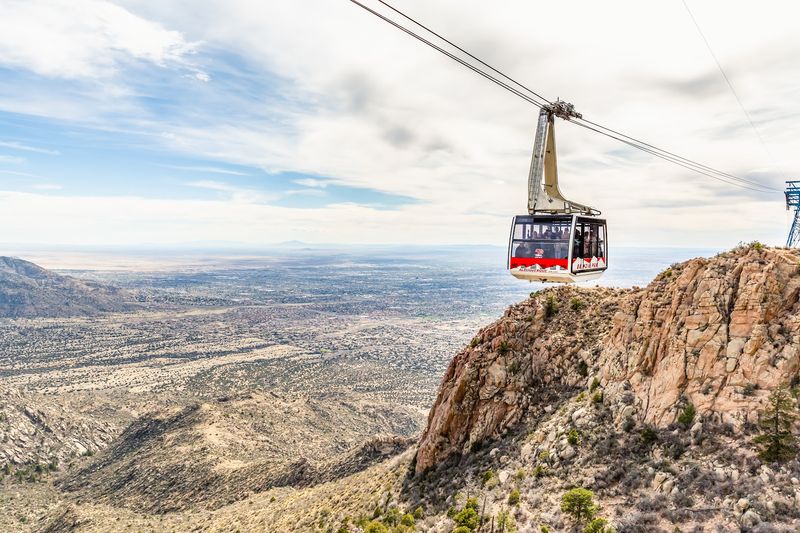
At a certain point during the ascent, the desert floor disappears entirely and the windows fill edge to edge with mountain ridges layered in every direction. The Sandia Mountains form the dramatic centerpiece, their jagged crest running north to south like a stone spine above the city.
Surrounding ranges appear in the distance, stacking up in shades of blue and purple that shift with the light throughout the day.
Nature puts on a full production here, and the tram car is essentially a moving theater. The rocky slopes near the cable route show off exposed boulders, twisted juniper trees, and patches of bright wildflowers depending on the season.
Every window frames a slightly different composition, which is part of why passengers tend to keep moving around the cabin trying to catch every angle.
Photographers often find themselves overwhelmed in the best possible way, since the views keep changing as the car climbs higher and the perspective shifts. Morning light turns the granite faces golden, while afternoon clouds throw dramatic shadows across the ridgelines.
The mountain scenery here is the kind that makes people stop mid-sentence and just stare quietly for a moment.
The City Shrinks Beneath The Tram
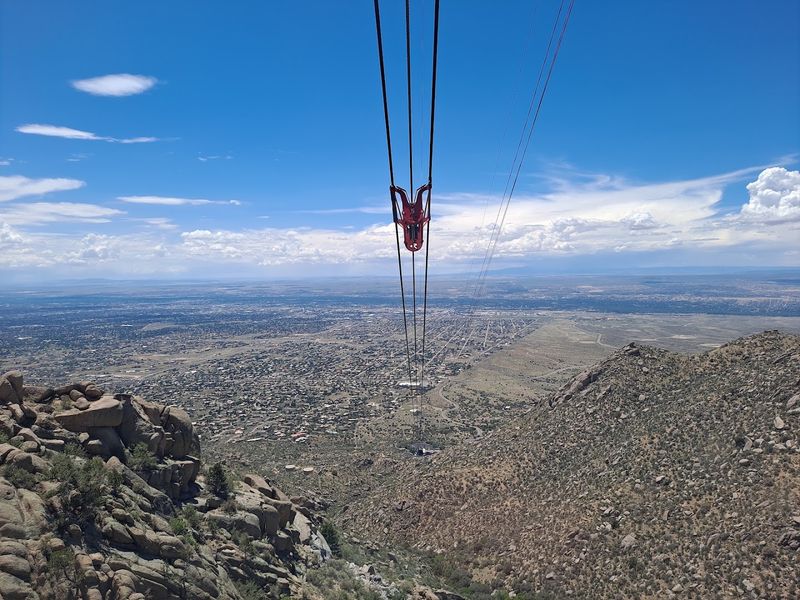
Watching a whole city shrink into a tiny grid of streets and rooftops is one of those surreal experiences that sticks with you long after the ride ends. As the tram climbs higher, Albuquerque spreads out across the Rio Grande Valley like a detailed map, with the river itself cutting a silver line through the middle.
The scale of the city becomes surprisingly clear only once you are looking down at it from hundreds of feet above.
From the 10,378-foot crest, the panoramic view covers an astonishing 11,000 square miles, encompassing not just the city but also the valley, distant mountain ranges, and wide stretches of open terrain. At night, the effect is even more striking, with city lights turning the valley into a sparkling constellation spread across the dark desert floor.
Day or night, the view of Albuquerque from above is genuinely hard to forget.
Many visitors say this overhead perspective gave them a completely new appreciation for just how large and sprawling the city actually is. The tram ride offers one of the most accessible high-altitude city views in the entire American Southwest.
No hiking boots required to earn this particular reward.
Granite Cliffs Rise Beside The Cables
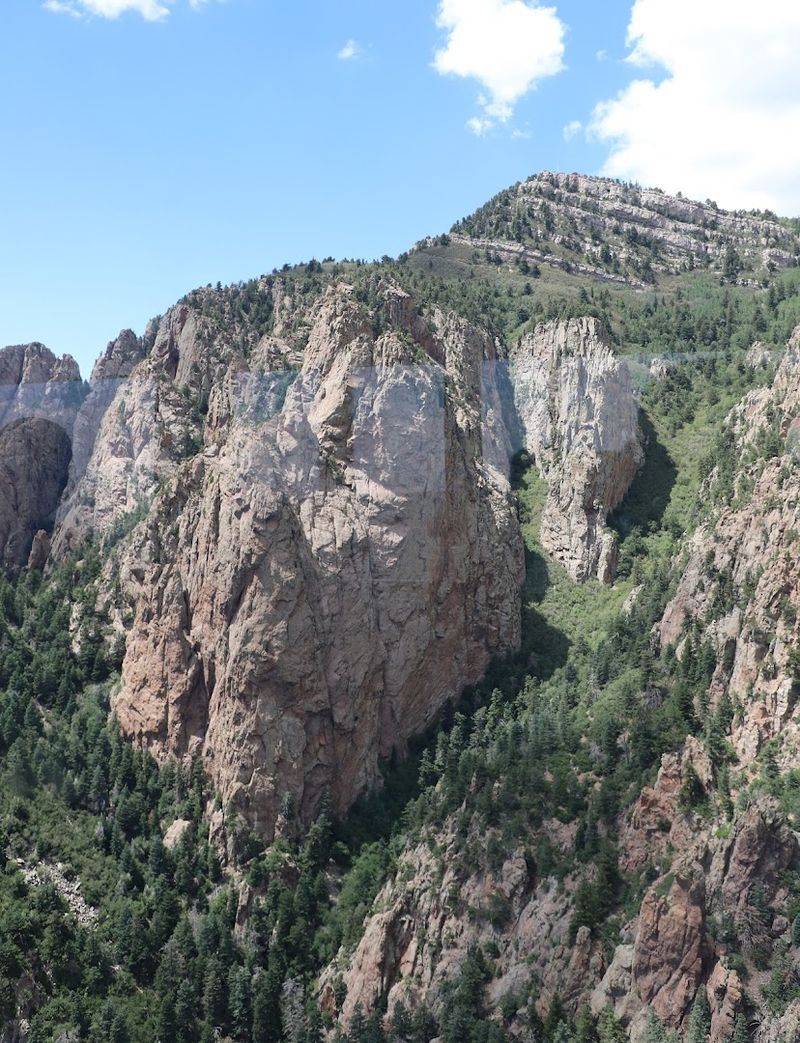
At certain points along the route, the granite cliffs feel close enough to reach out and touch through the glass, which is both thrilling and humbling. The Sandia Mountains are built from some of the oldest exposed rock in the region, with the Sandia granite dating back approximately 1.5 billion years.
The stone carries a distinctive pink hue thanks to large potassium-feldspar crystals embedded throughout its structure.
The tram’s second support tower is anchored directly into this ancient bedrock, with steel rods driven as deep as 40 feet into the granite to hold the structure secure. Knowing that detail while you glide past the cliffs adds a layer of respect for the engineering involved.
The rock faces up close reveal swirling patterns, deep cracks, and surfaces that catch light differently depending on the angle and time of day.
Geologists would have a field day on this ride, but you do not need any scientific background to appreciate how dramatic these formations look up close. The cliffs alongside the cables are a reminder that this mountain range has been standing long before anyone thought to string a tram across it.
Ancient stone and modern engineering make for quite a partnership.
A Summit View That Feels Endless
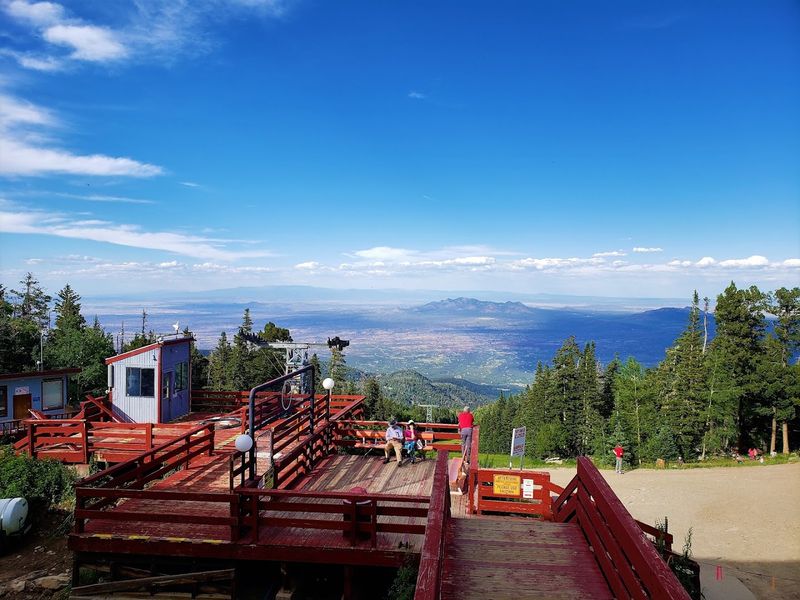
Standing at 10,378 feet above sea level, the summit of Sandia Peak offers one of the most expansive views available to anyone without a pilot’s license. The panorama stretches in every direction, covering the Rio Grande Valley, distant desert plains, and mountain ranges that fade into the haze at the edge of visibility.
On exceptionally clear days, Wheeler Peak, the tallest mountain in New Mexico, is visible more than 100 miles away.
The observation deck gives visitors a safe and comfortable spot to take in the full 360-degree sweep of the landscape. Some people stand there in near silence, slowly turning to catch each direction in turn.
Others pull out cameras and spend twenty minutes trying to capture something that honestly works better as a memory than a photograph.
Trails along the Sandia Crest extend the experience for those who want to stretch their legs after the ride up. The Kiwanis Cabin trail and the crest trail along the ridge are popular options that reward hikers with even more varied perspectives.
Fresh mountain air at the top feels noticeably crisp and cool compared to the desert heat below, making the summit a genuinely refreshing escape.
Sunset Sets The Desert Horizon Ablaze
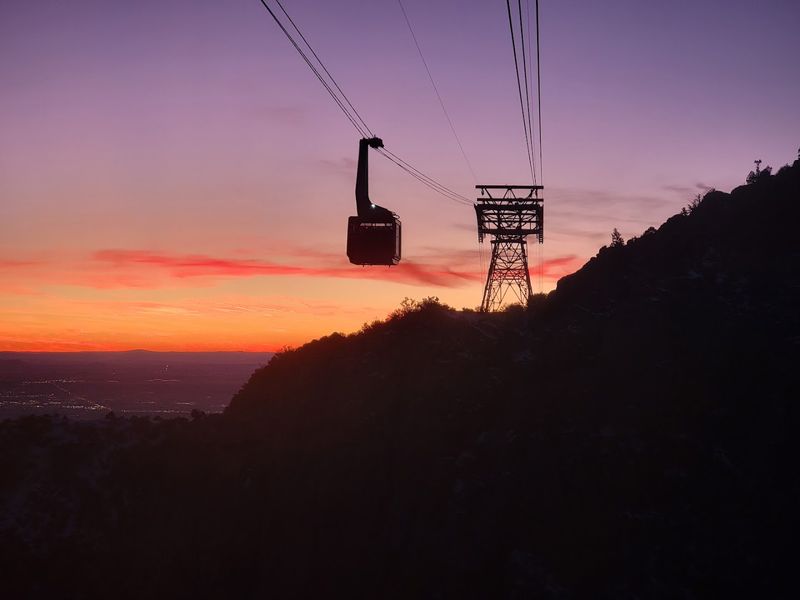
Sunsets from the Sandia Crest belong in a category of their own. As the sun drops toward the western horizon, the desert sky transitions through a sequence of colors that starts with gold, deepens into orange, and then blazes into rich shades of pink and amber before fading to purple.
The Sandia Crest itself glows during this window of light in a way that inspired the mountain’s name, which means watermelon in Spanish.
The observation deck fills up with visitors in the late afternoon for good reason, since the view across the Rio Grande Valley at sunset is nothing short of spectacular. Albuquerque lights up gradually below as the sky darkens, creating a layered effect of glowing horizon above and sparkling city below.
The transition from sunset to nightfall happens quickly at this elevation, so staying alert pays off.
Bringing an extra layer is strongly recommended for sunset visits, as temperatures drop fast once the sun disappears and the mountain wind picks up. The Ten 3 restaurant at the summit is a popular spot for visitors who want to pair dinner with the show.
Watching the desert horizon turn every shade of fire from nearly two miles up is the kind of moment that makes the ticket price feel like a bargain.
The Descent Is Just As Breathtaking
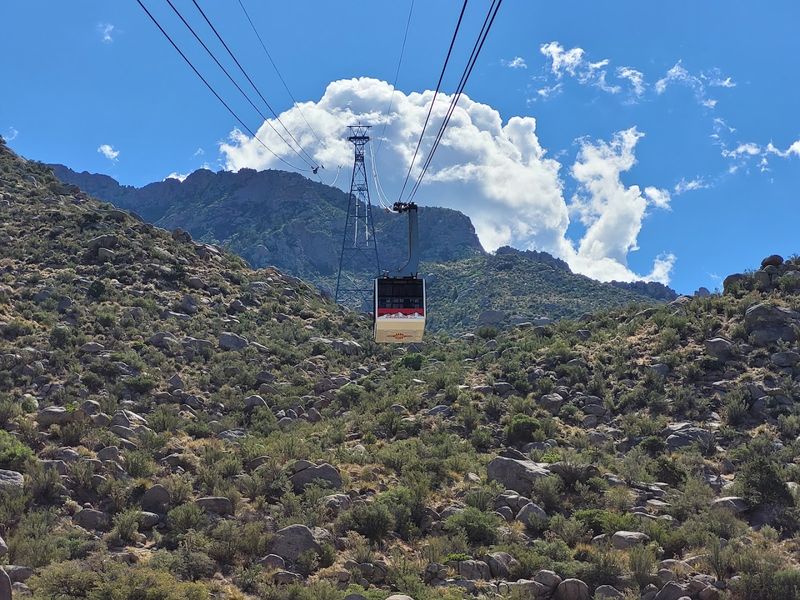
Plenty of tram rides feel like the return trip is just the same journey played backward, but the descent from Sandia Peak genuinely earns its own attention. The perspective shifts completely as the car begins moving downward, revealing angles of the canyons, cliffs, and city that were hidden during the climb.
What felt like a dramatic upward surge now becomes a slow, cinematic glide back toward the desert floor.
Passengers who were pressed to one side of the car during the ascent often switch positions on the way down to catch the views they missed. The Albuquerque skyline grows steadily larger as the tram approaches the base station, and the warm desert air creeps back in through the ventilation, a gentle reminder of how far the ride actually traveled.
Domingo Baca Canyon looks different from this direction too, with shadows falling in new places as the light changes.
First-time riders frequently admit they enjoyed the descent just as much as the climb, which is saying something. The 15-minute return ride feels unhurried and satisfying, like the final chapter of a story that absolutely needed a proper ending.
New Mexico knows how to make an exit feel just as impressive as an entrance.