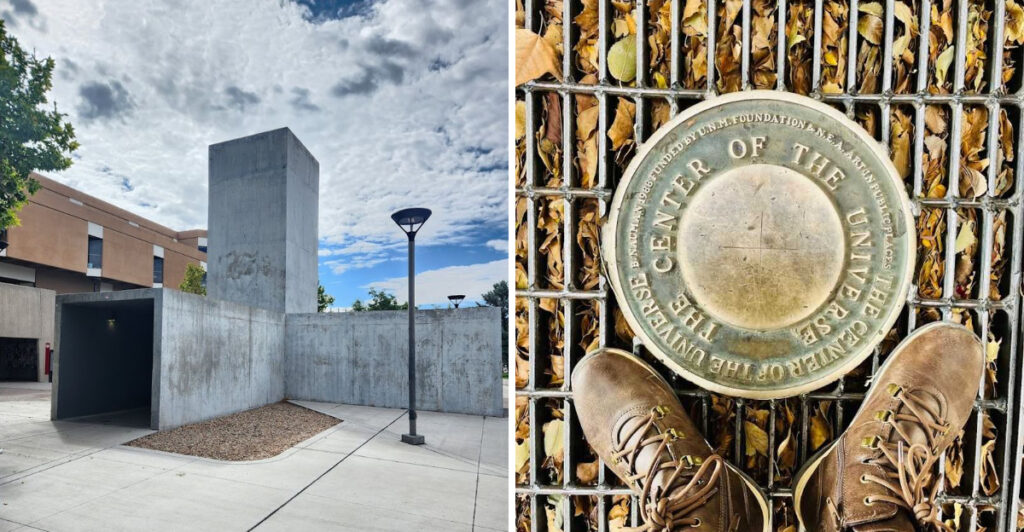
You know those places that make you stop mid-step and say, “Wait, what is this?”
That is the feeling this concrete installation gives almost instantly, before you even understand why. It sits on a busy university campus in New Mexico, looking simple enough that plenty of people could walk past without realizing what is happening inside.
Then you enter. You speak.
Everything changes.
Your voice moves through the space in a way that feels wrong at first. It bounces back with a strange clarity, almost like the structure is listening and sending the sound right back to you.
I expected something interesting. I did not expect to stand there grinning, testing words, and wondering how concrete could feel so alive.
It is art you can hear and science that turns into a little campus legend. Keep reading, because this place is much weirder than it looks on the outside.
Concrete Corridors With A Surreal Echo
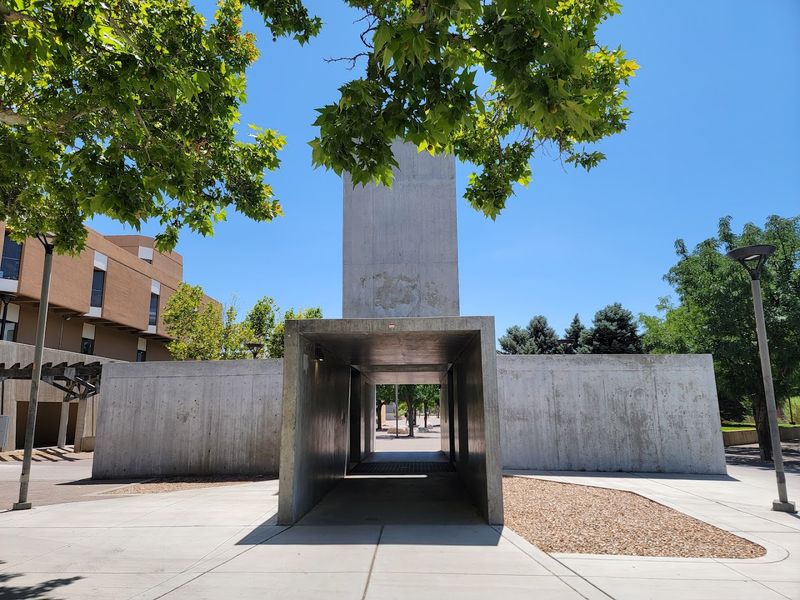
My first step inside this structure immediately told me something unusual was happening with sound.
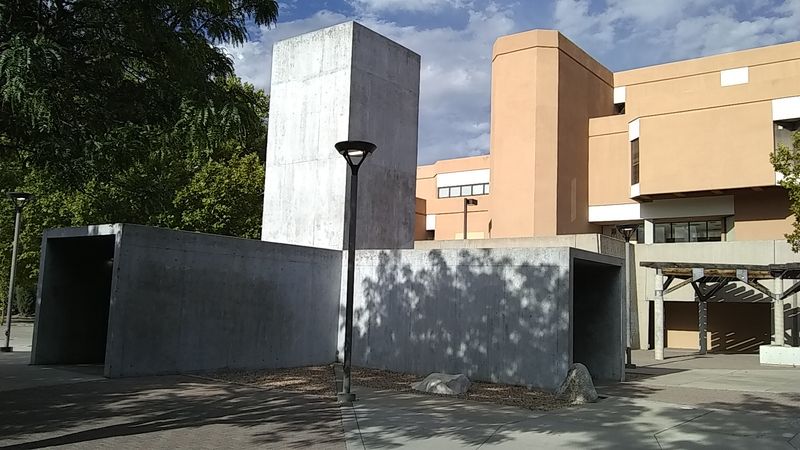
The concrete corridors extend outward in each cardinal direction, creating a cross-shaped layout that is stark and angular in every sense.
Sound behaves differently here than anywhere else I have visited.
A simple sneeze or a burst of laughter bounces off these raw concrete walls with a sharpness that catches you completely off guard.
The echo is not soft or musical the way you might expect in a cathedral or a cave.
It is crisp, almost clinical, and it multiplies your voice in a way that feels genuinely disorienting.
Artist Bruce Nauman completed this installation in 1988, and the acoustic effect appears to be very much intentional.
The tunnels channel and reflect sound with surprising precision, turning ordinary conversation into something that feels staged and amplified.
Standing at the intersection point, I clapped once and heard the sound return to me from multiple directions at nearly the same instant.
New Mexico is full of unexpected sensory experiences, but this one ranks among the most memorable I have encountered anywhere on my travels across the country. You can find The Center of the Universe at Yale Blvd NE, Albuquerque, NM 87106.
A Campus Landmark With Cosmic Energy
Located between Mitchell and Ortega Halls on a busy university campus, this installation is easy to walk past without realizing what you are looking at.
The structure carries a title that is both playful and scientifically serious at the same time.
Based on the cosmological principle, the universe expands in all directions from every point, which means any given location is technically a center of the universe.
That idea alone gives this concrete block a cosmic weight that its rough exterior does not immediately suggest.
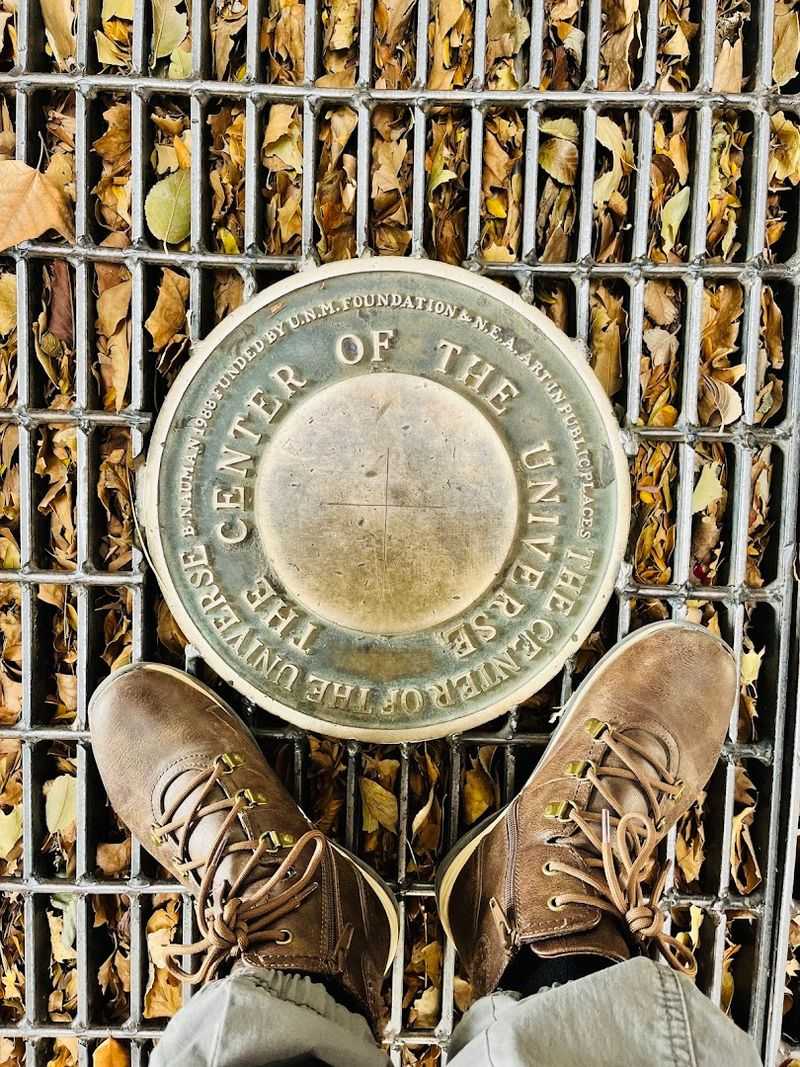
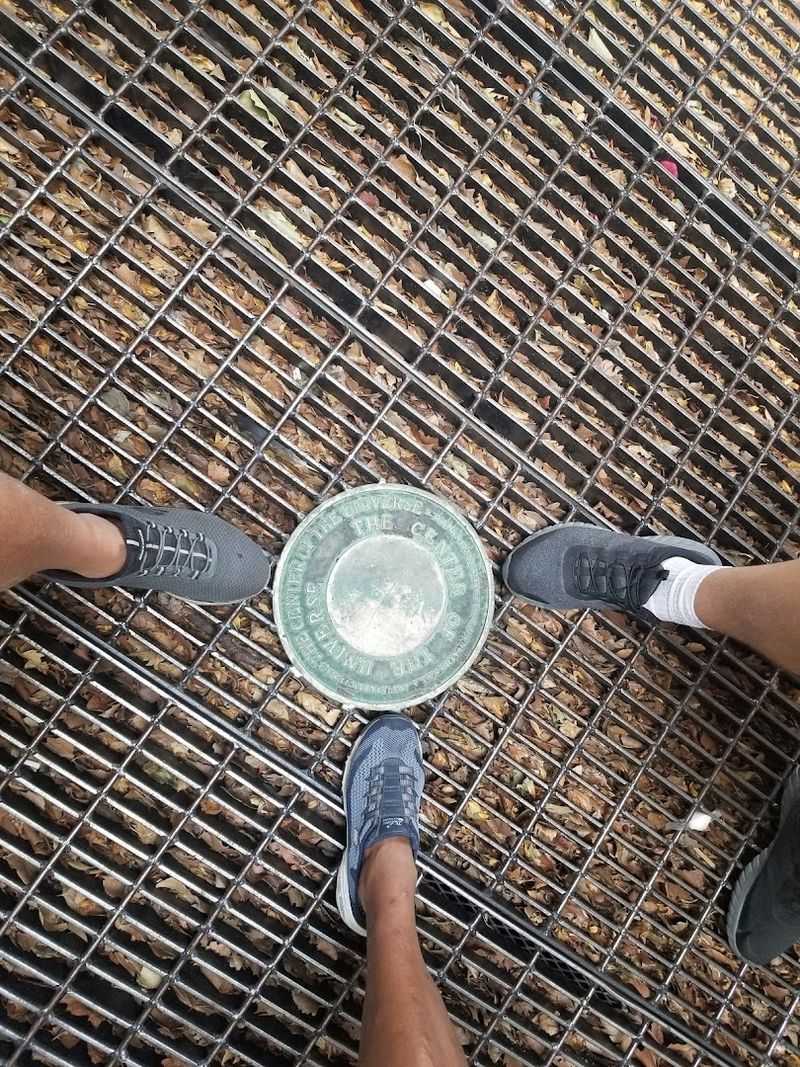
When I first read the aged plaque inside that simply reads “The Center of the Universe,” I felt a small but genuine shift in perspective.
The plaque sits beneath a square skylight, and looking up at that framed patch of sky makes the label feel less like a joke and more like a statement of fact.
Students pass through this space daily, often without pausing, which somehow adds to the quiet power of the whole thing.
The contrast between ordinary campus life and the enormous philosophical claim overhead creates a tension that I found oddly energizing.
Few campus landmarks anywhere manage to spark both a laugh and a genuine moment of cosmic reflection quite like this one does.
Sharp Angles Framing The Open Sky
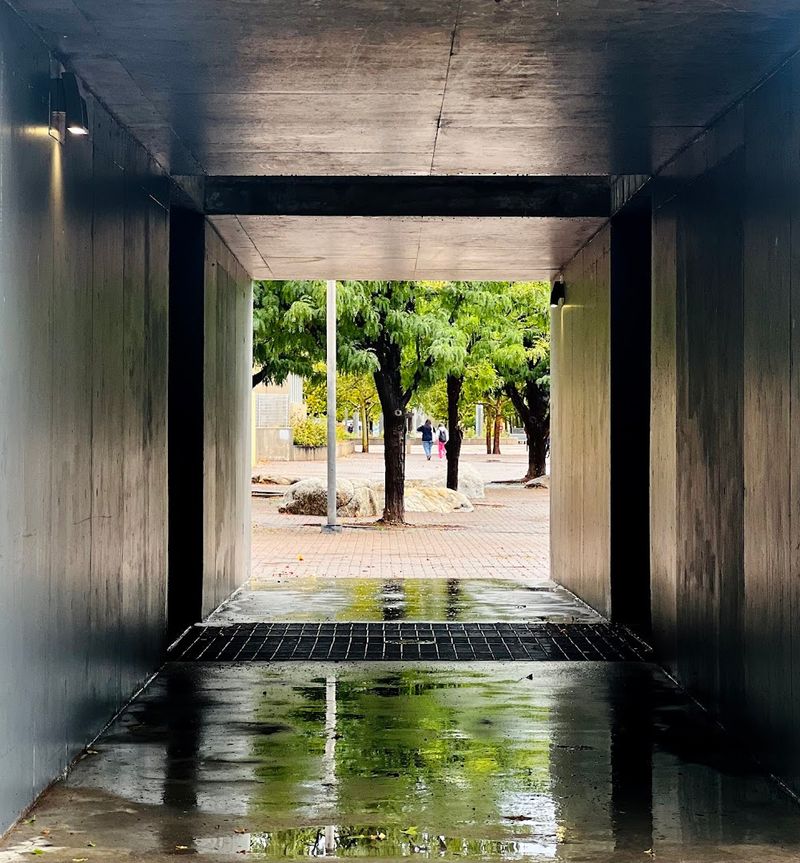
One of the most striking moments at this installation happens when you tilt your head back and look straight up.
A perfectly square opening in the concrete ceiling frames a patch of sky with geometric precision, and the effect is quietly stunning.
The hard angles of the structure do not soften the view above them.
Instead, they make the sky look more deliberate, as if the open air above you was placed there on purpose rather than simply existing.
On the day I visited, the sky was that particular shade of deep blue that New Mexico seems to specialize in, and the contrast against the rough gray concrete was genuinely striking.
The sharp lines running from the tunnels toward that central skylight create a visual rhythm that rewards slow, careful looking.
Bruce Nauman designed the piece so that it interacts with natural light throughout the day, meaning the shadows inside shift and change depending on when you arrive.
A morning visit produces different geometry than a late afternoon one, and the experience genuinely changes with the light.
That square of open sky framed by raw concrete edges remains one of the most unexpectedly beautiful images I carried home from this visit.
Quiet Walkways With A Strange Presence
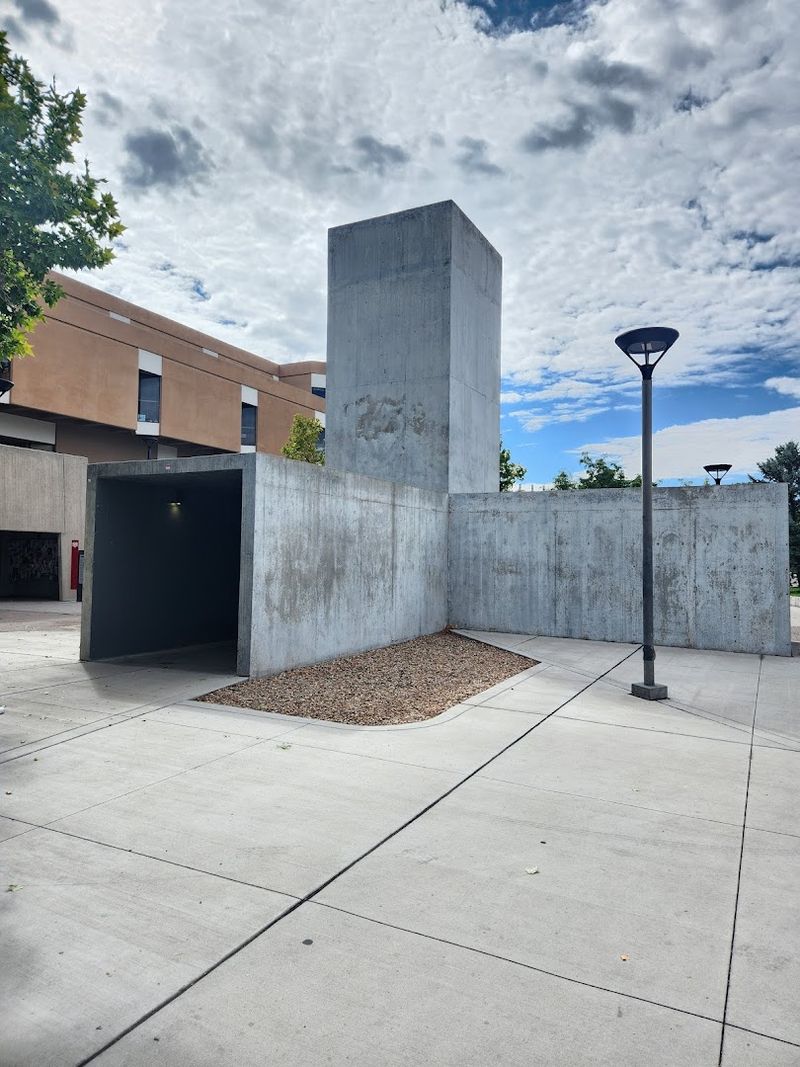
Walking through the tunnels of this structure, I kept expecting to meet someone coming from the other direction, but the space has a way of feeling both open and private at the same time.
The corridors are wide enough to walk through comfortably, yet the concrete walls press close enough to create a sense of enclosure that is hard to shake.
That combination of openness and containment gives the walkways a strange presence that I noticed immediately.
Sound from the surrounding campus filters in, but it arrives muffled and slightly delayed, as if the structure is editing the world outside before letting it through.
I paused at the central intersection and simply listened for a minute, and the ambient noise of the campus rearranged itself into something almost meditative.
The installation is open twenty-four hours a day, which means the walkways take on an entirely different character after dark, when the skylight above shifts from blue to black.
A nighttime visit was suggested to me by someone who had been there before, and I plan to return for exactly that reason on my next trip to Albuquerque.
The walkways feel purposeful and deliberate in a way that plain campus paths never do, as if the concrete itself is paying close attention to you.
Sculptural Walls That Bend The Sound
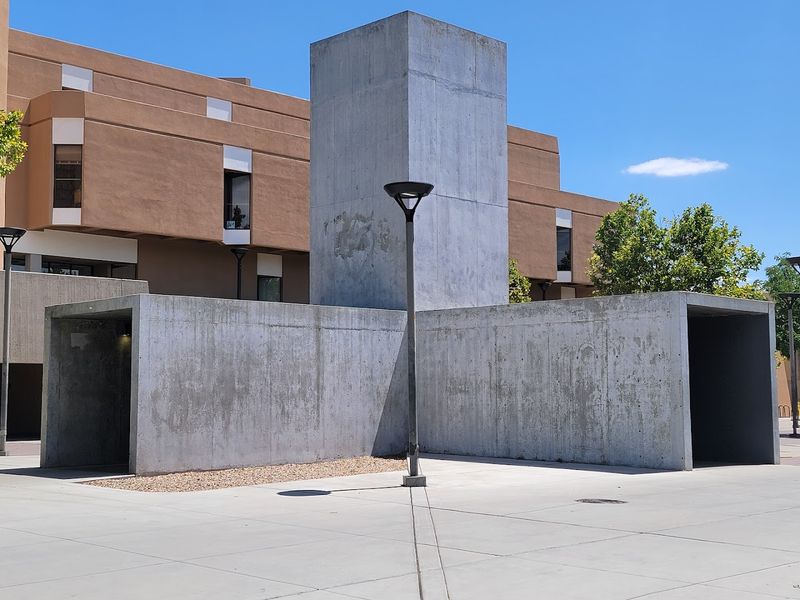
The walls of this installation are not decorative in any traditional sense, but they do something far more interesting than look pretty.
Their flat, dense concrete surfaces act as acoustic mirrors, bouncing sound with a clarity that most purpose-built concert halls would envy.
Bruce Nauman reportedly wanted the piece to provoke strong reactions, and the acoustic effect is one of the most direct ways it achieves that goal.
Standing near one of the tunnel openings and speaking at a normal volume, I could hear my own voice return to me from across the structure with an eerie sharpness.
The walls do not absorb sound the way softer materials would.
They reflect it almost entirely, sending it ricocheting through the cross-shaped space until it reaches your ears from a direction you did not expect.
This quality was initially part of why the installation attracted criticism when it was unveiled, since the sound behavior felt unsettling to some visitors.
Over time, that same quality became one of the main reasons people seek it out.
The sculptural walls here do not just define the space visually, they actively shape the sensory experience in a way that makes the structure feel genuinely alive.
Hidden Corners Beneath Desert Light
Finding this installation for the first time takes a little effort, and that small challenge is actually part of what makes the discovery feel rewarding.
The structure sits in a spot on campus that is not immediately visible from the main walkways, and several visitors have noted that it can take a few extra minutes to locate.
Once you find it, the desert light of Albuquerque plays across its surfaces in ways that change dramatically depending on the time of day.
Late afternoon is widely considered the best time to visit, with warm golden light casting long angular shadows across the concrete and giving the rough surfaces a texture that photographs beautifully.
The installation was commissioned in 1983 for one hundred thousand dollars, a figure that generated considerable controversy at the time and led to the piece being called an eyesore by more than a few observers.
Time has softened that initial reaction considerably, and the structure now reads as a bold and intentional gesture rather than an awkward mistake.
The hidden quality of its location actually reinforces the experience, because stumbling upon something that calls itself the center of everything, tucked into a quiet corner beneath the wide New Mexico sky, carries its own particular kind of humor.
A Minimalist Space With Otherworldly Mood
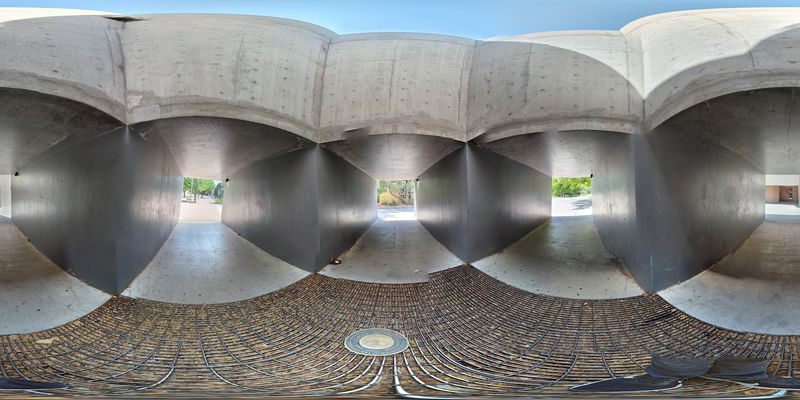
Few places I have visited manage to feel both completely empty and somehow charged with energy at the same time, but this installation pulls off that contradiction with ease.
The interior offers almost nothing in the way of decoration or ornamentation.
Raw concrete, angular geometry, and that single square of sky above are the only elements at play, and yet the space feels far from bare.
The minimalism here is purposeful and disciplined, and it creates a mood that I can only describe as quietly alien.
Standing at the central point beneath the skylight, the structure channels a kind of focused stillness that cuts through the everyday noise of campus life surrounding it.
The aged plaque reading “The Center of the Universe” adds just enough text to anchor the experience without over-explaining it, which is exactly the right move for a space this conceptually loaded.
Bruce Nauman built his reputation on work that challenges viewers to feel something uncomfortable, and this installation delivers on that ambition without being aggressive or hostile about it.
The otherworldly mood builds gradually the longer you stay inside, and most visitors I observed spent far more time there than they originally planned.
Leaving felt oddly abrupt, as if the space had been gently holding your attention without you fully noticing it was doing so.
Geometric Paths Made For Curious Travelers
This installation rewards the kind of traveler who slows down and pays attention to details that others rush past.
The cross-shaped layout of tunnels extending in each cardinal direction creates a geometric pattern that is most apparent when you step back and observe the structure from a slight distance before entering.
Each tunnel points outward with deliberate precision, and the symmetry of the design gives the whole piece a logic that becomes clearer the more time you spend with it.
Walking each corridor in sequence, north to south and east to west, gives you a different acoustic experience in each direction, a detail I only noticed after making the full circuit twice.
One tunnel also extends below the surface into the ground, adding a vertical dimension to the horizontal paths that catches most first-time visitors by surprise.
The installation is open around the clock and free to visit, making it one of the most accessible pieces of public art in the region.
Curious travelers who enjoy art that asks questions rather than providing easy answers will find this stop genuinely satisfying.
You can find all of this waiting for you at The Center of the Universe at Yale Blvd NE, Albuquerque, NM 87106, right in the heart of the University of New Mexico campus.