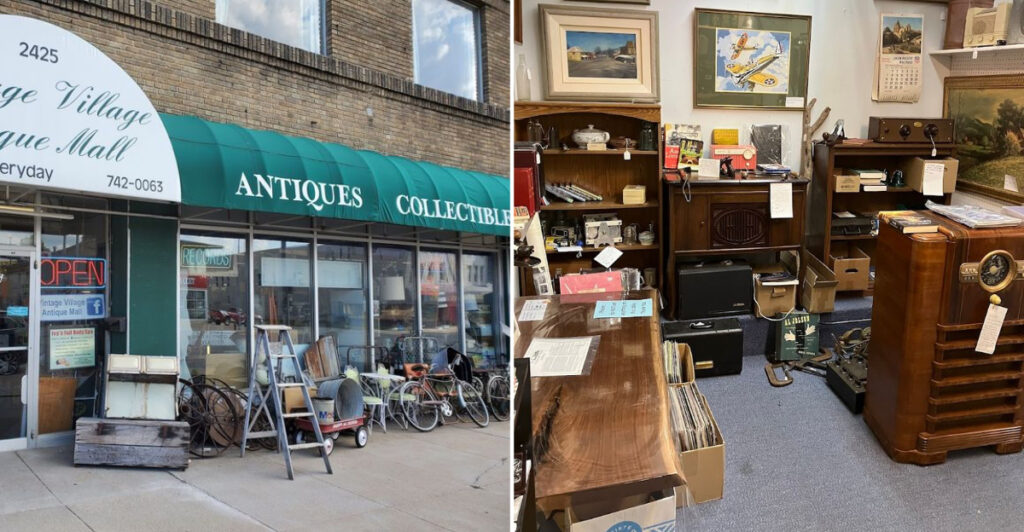
Think your sense of direction is good? This Nebraska flea market might enjoy proving otherwise.
Packed with antiques, collectibles, furniture, memorabilia, and unexpected finds around nearly every corner, the place turns casual browsing into a full-scale treasure hunt.
What looks straightforward from the outside quickly reveals aisle after aisle of possibilities, each one competing for your attention.
A big part of the fun comes from the variety. Vintage treasures share space with quirky collectibles, local memorabilia, and pieces that spark instant nostalgia.
Every booth brings a different personality, which keeps the experience feeling fresh long after the first lap.
The result is a flea market that rewards curiosity at every turn. The more you explore, the more there is to see, making each visit feel bigger, busier, and far more entertaining than you expected.
Channel your inner Indiana Jones and start hunting for treasure.
The First Turn Comes Before You Expect It
From the sidewalk, this Nebraska flea market looks manageable enough. The kind of place where you expect a quick stroll, a few interesting finds, and maybe one item following you home.
Sure. Then you step inside.
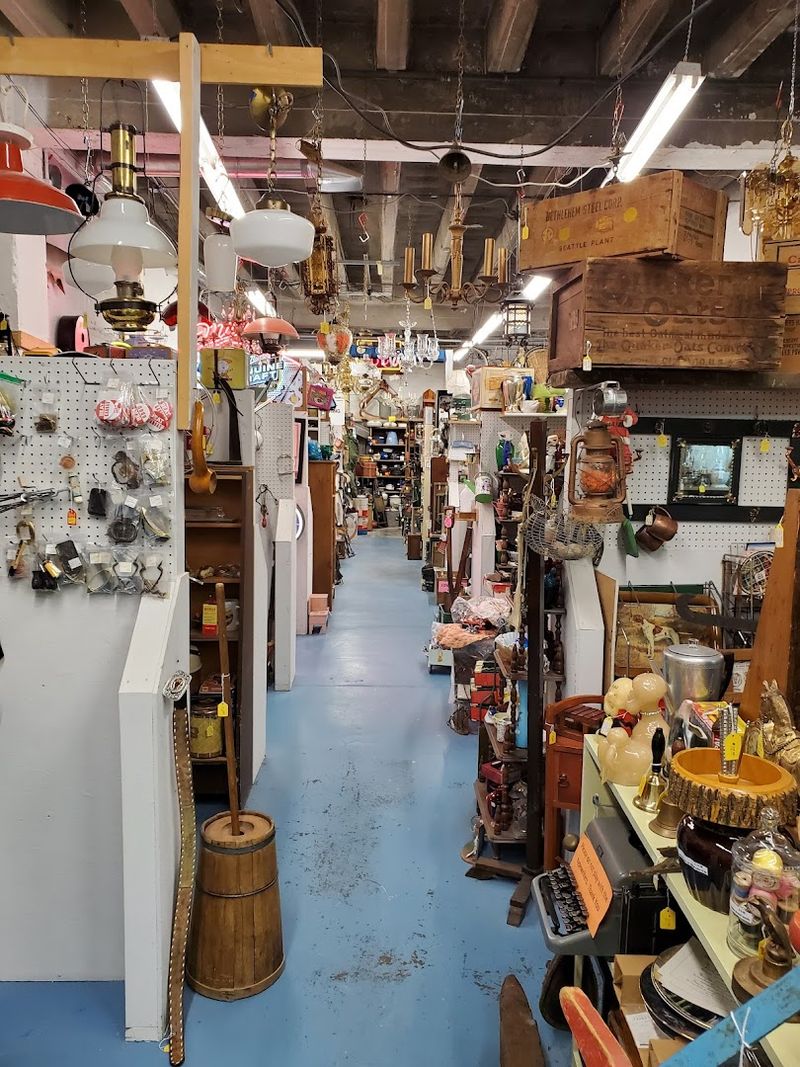
The first surprise is the scale. Spread across roughly 5,000 square feet and stocked by more than 50 antique and collectibles dealers, the Lincoln shop has a way of stretching time as effectively as it stretches floor space.
What begins as a simple browse quickly turns into a wandering expedition through decades of objects, memories, and unexpected discoveries.
The layout doesn’t encourage straight lines. It encourages curiosity.
A booth filled with vintage glassware gives way to shelves of collectibles. Furniture creates natural bends in the route.
That’s why so many visitors say the place feels larger than it appears from the outside. Every section seems to reveal another section tucked behind it, creating the sense that the building keeps unfolding long after you thought you’d seen it all.
Tables hold layers of inventory, and displays reward shoppers willing to slow down and look twice.
Then comes the moment every antique hunter recognizes. Something catches your eye.
You stop. You inspect it.
You move on. Five minutes later, you’re trying to remember which aisle it was in.
Don’t worry, it happens to the best of us.
At Vintage Village Antique Mall, getting slightly lost isn’t a problem. It’s part of the experience.
And more often than not, the best discoveries happen somewhere between where you meant to go and where the next detour takes you.
More Than 50 Dealers Means No Single Era Wins
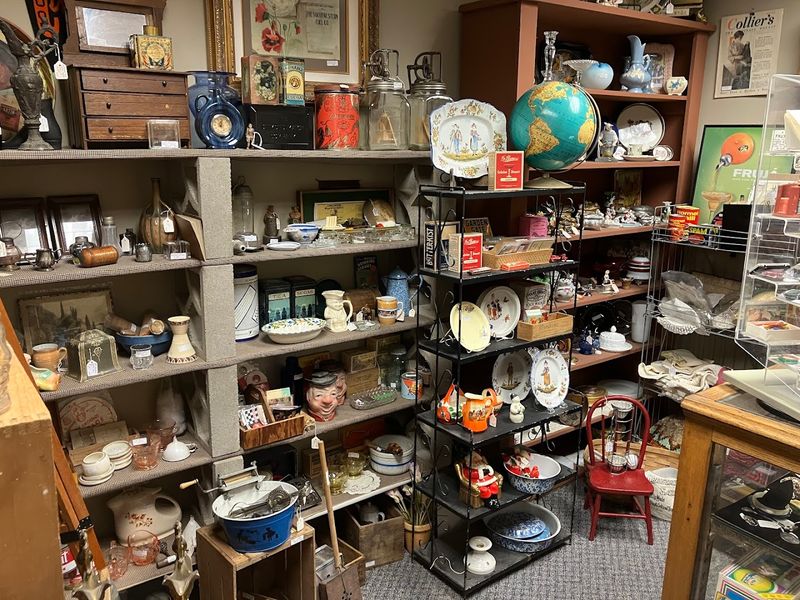
One dealer can build a theme. More than 50 dealers create collisions between decades, hobbies, and household history.
That number shapes every turn inside this mall.
In the middle of Lincoln, at Vintage Village Antique Mall, 2425 O St, Lincoln, Nebraska, the inventory shifts booth by booth because each dealer chooses different stock.
You can move from comic books to end tables, from costume jewelry to Nebraska sports memorabilia, without crossing a formal dividing line.
The practical result is range, not randomness. One booth may focus on kitchenware, another on mid-century furniture, another on paper goods, records, or seasonal decorations.
That structure matters because prices, labels, and object types change with each dealer’s approach.
So the browse becomes comparison. You start noticing how one seller groups glass by color, how another stacks crocks near wooden boxes, how another fills a case with rings, watches, and smaller collectibles.
This is also why repeat laps pay off. A place this big never presents its inventory in one clean sweep.
Pick a category, then see how many versions of it you can track down before you reach the front again.
The Aisles Multiply, And That Is The Point
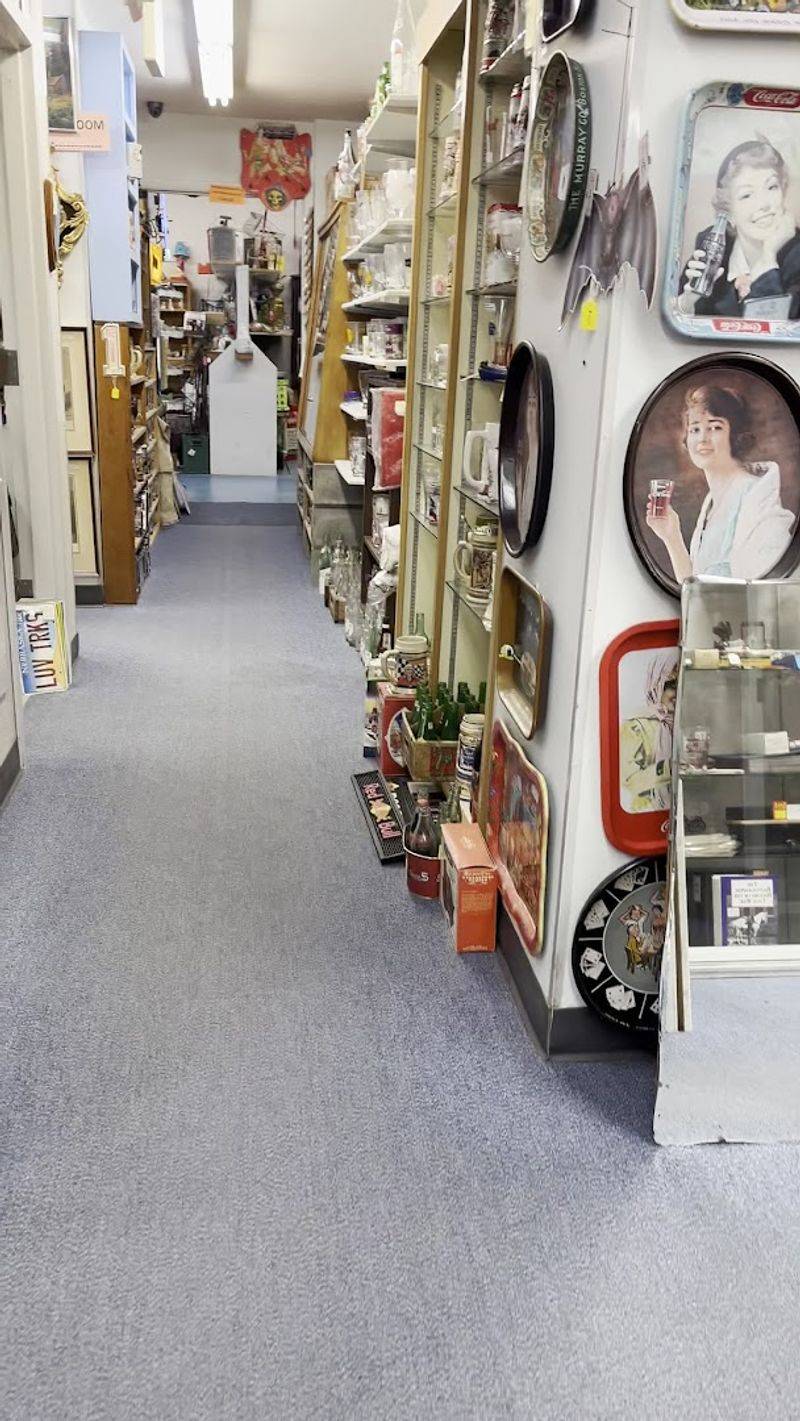
More often than not, stores guide you in a loop. This one keeps adding side paths.
Shoppers often note that the hallways seem to keep going, and the booth layout seems to support that feeling. Booths break the interior into lanes that open into more lanes, with merchandise placed behind shelves, under tables, and along booth walls.
The slow sport of spotting the good stuff turns literal when your route depends on what you notice in your peripheral vision. Because of that structure, speed works against you.
A straight pass down one aisle can miss framed prints tucked behind larger artwork or a small tin sign placed low beside a chair leg.
The multiplying aisles change how categories appear. Vintage clothing may sit near lamps in one section, while comic books surface beside furniture in another.
It’s always a wonderful mix.
That mix does not come from chaos alone; it comes from dealer spaces meeting at odd angles and forcing you to reset your attention every few steps.
Then there is the practical challenge. How are you going to carry all that home?
Honestly, a great challenge to take on.
Take one extra turn and see if you can find the exact booth you just promised yourself you would remember.
Comic Books, Clothing, And Husker Memorabilia Share The Same Route
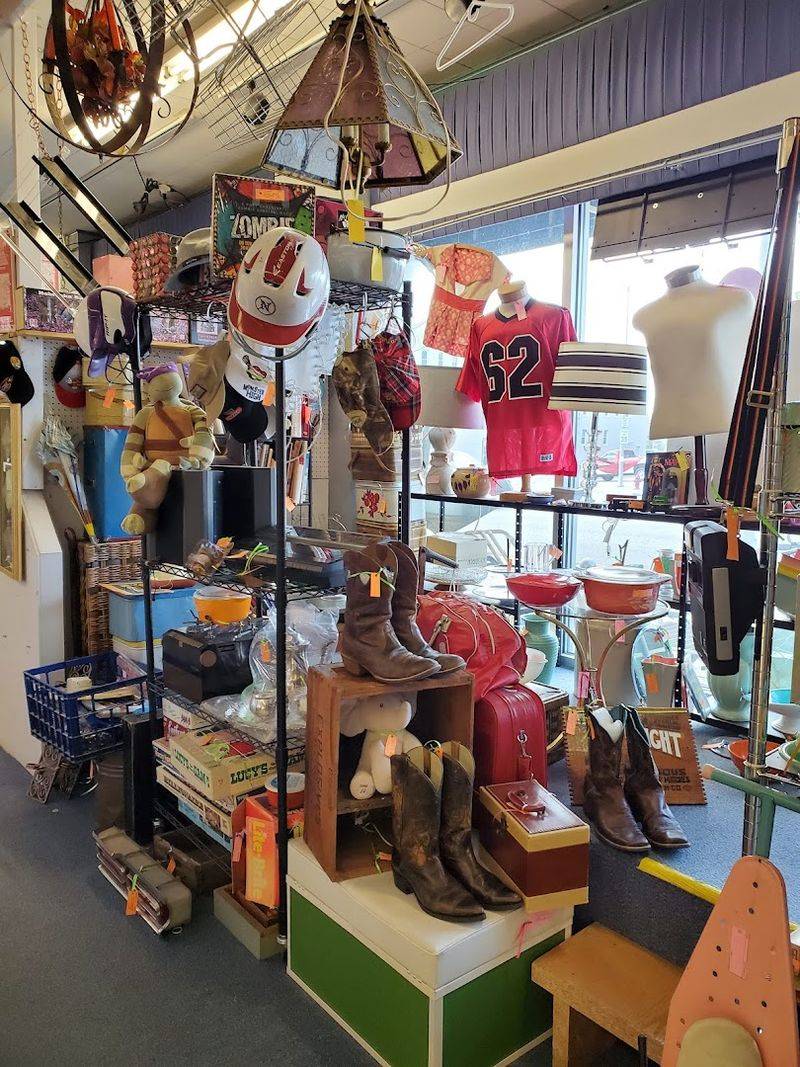
The most useful fact about the inventory is not age. It is category spread.
This mall mixes pop culture, apparel, furniture, and regional memorabilia in the same overall route.
That mix shows up clearly in the items people find.
Vintage clothing appears alongside comic books, while furniture anchors larger booths and Husker memorabilia points directly to local collecting habits. In Lincoln, that last category matters because university sports history shapes what residents save, display, and resell.
You can read the city through those objects. Red-and-white collectibles, pennants, and related keepsakes put Nebraska identity on the shelf next to household goods and decorative pieces.
A place where nostalgia comes with a price sticker becomes more interesting when the nostalgia belongs to a specific region, not just a decade.
The same aisle might also shift from practical to personal. A dresser, a rack of jackets, a box of comics, and a tray of pins all ask different questions about value.
The crowd moving so slowly makes sense when each booth switches the rules on what counts as useful, collectible, or giftable.
That variety rewards curiosity over checklists. If you came looking only for one category, the detour may win anyway.
Follow the Husker trail for a minute, then see what turns up in the next booth that has nothing to do with football.
Furniture Sets The Landmarks, Small Items Steal The Time
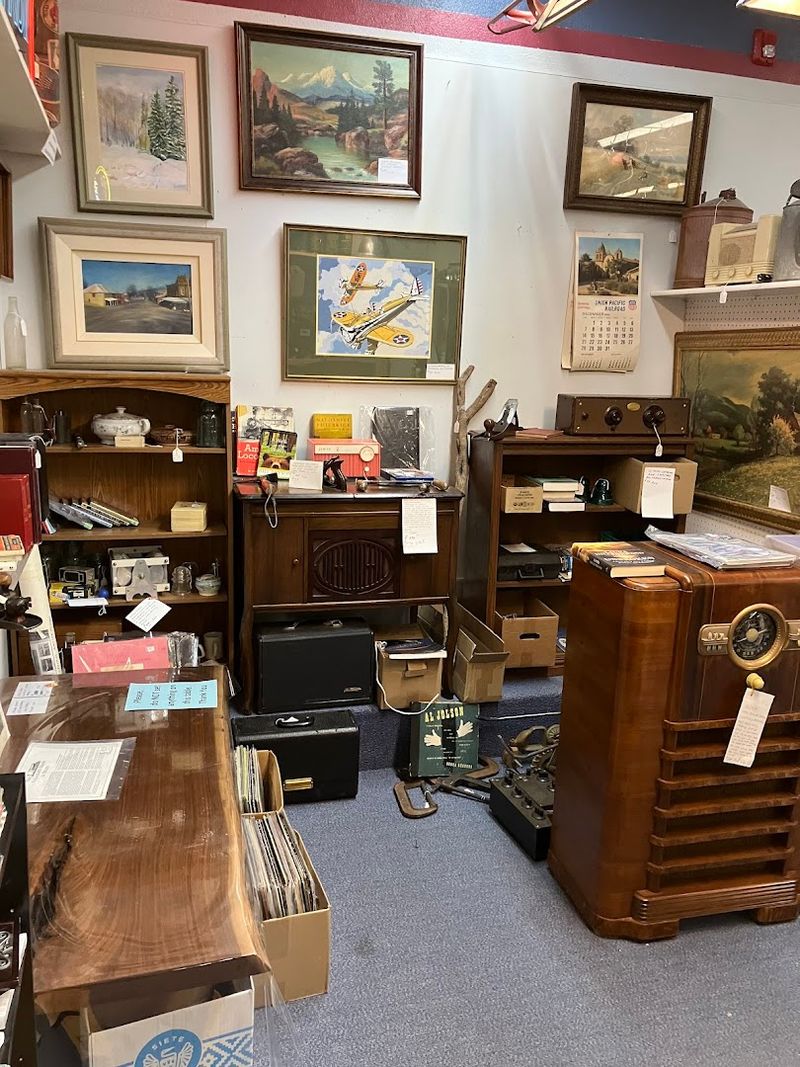
Large furniture pieces help you orient yourself. Small collectibles undo that progress.
That contrast explains how time slips away inside this mall.
Dressers, cabinets, chairs, and tables create fixed points that you can recall after a turn or two. They mark booth boundaries and give the eye a break from denser displays.
Then the table beside them pulls you into rings, postcards, kitchen tools, ornaments, and pocket-size objects that require closer inspection.
Loose items gather under tables, inside crates, or in boxes near the floor, and the best approach is patient scanning, not quick sorting.
The layout supports that pattern.
Larger furniture keeps the aisles structured, while smaller goods fill the visual gaps and slow the pace to a crawl. The slow sport of spotting the good stuff becomes a practical method when details hide in plain sight beside bigger pieces.
That balance also broadens the budget range without making promises about any single item. You can examine a substantial cabinet, then spend the next ten minutes comparing salt shakers or old brooches in a glass case.
Start with the biggest object you see, then let the smallest one derail your entire route.
Free Parking Matters When The Browse Runs Long
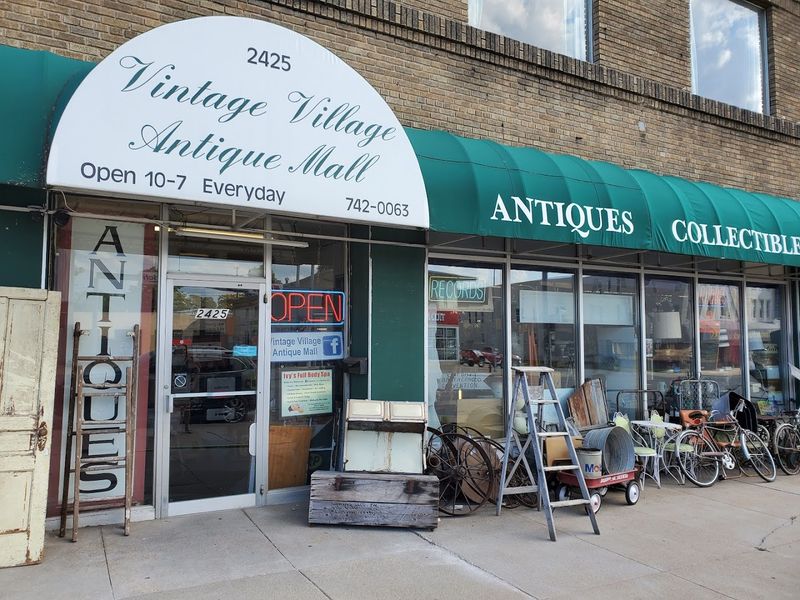
Practical details shape a stop like this more than people admit. Here, free parking on O Street and on the east side of the building changes the math.
You can browse first without starting the visit with a parking meter calculation.
That matters because the inventory is extensive enough to turn a quick stop into a longer circuit. Once the aisles begin branching, you are less likely to leave after one pass.
Parking also connects to buying behavior.
Larger pieces, such as small tables, chairs, or framed art, take more planning than a ring or comic book, and easy access helps when you decide an item should not stay on the shelf.
A market that makes your car feel too small only works as a joke if your car is close enough to test the theory.
The downtown location helps with convenience. O Street carries steady traffic through central Lincoln, so a stop here can fit into a wider city day without sending you across town for a long detour.
That makes the antique hunt easier to pair with errands, lunch, or a stroll through nearby blocks. Useful beats dramatic.
In a place this packed, small logistics can decide whether you keep browsing or cut the trip short. Take the easy parking as permission to do one more lap and argue with yourself about shelf space later.
A Return Loop Makes More Sense Than A Straight Exit
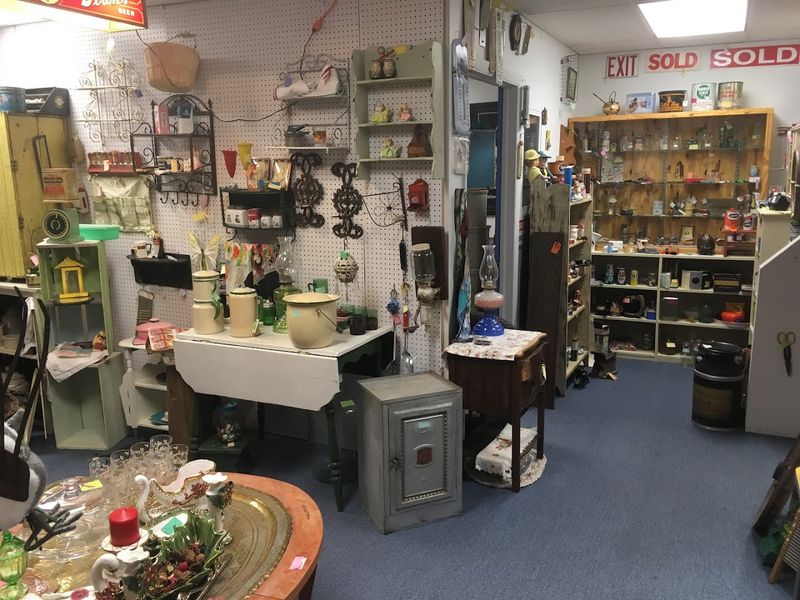
The smartest move here is simple. Do not trust your first pass.
This mall rewards a return loop because the displays layer objects at different heights and depths.
In round one, large items grab attention and establish the route. On round two, the overlooked details start surfacing behind picture frames, under side tables, and beside booth dividers.
The bins prove their value later, after your eye adjusts to the density. That second pass also helps with comparison.
More than 50 dealers means similar categories appear in multiple booths, so a ring, comic, serving dish, or sign that looks singular at first may have company three aisles away.
A place like this often asks you to measure the time you have against selection, not just price alone. By then, you understand the pace.
A Saturday crowd moving at “maybe I need this” speed fits the store’s structure because the layout keeps presenting one more possibility after you think you are done.
The slow sport of spotting the good stuff becomes easier once you stop trying to cover ground efficiently. That is the real detour built into the visit.
The exit exists, but the route back to it rarely stays direct.
Give yourself one last loop and test whether the object you skipped has somehow improved since ten minutes ago.