
Victorian architecture went to the beach and forgot to tone it down.
Subtlety was clearly not invited.
Cottages show off elaborate trim. Porches seem determined to outdo each other. Then summer adds rows of canvas tents beside all that nineteenth-century detail.
The combination is unusual, even for New Jersey.
What makes it better is how easy the town is to explore on foot. The beach is never far, but neither is another house that makes you slow down for a second look.
The history reaches back to the 1800s, yet the streets still feel lived in rather than preserved for display.
I’d probably be halfway to the ocean, spot one ridiculous porch, and forget about the beach for another ten minutes.
The waves can wait.
One Of America’s Largest Victorian Architecture Collections
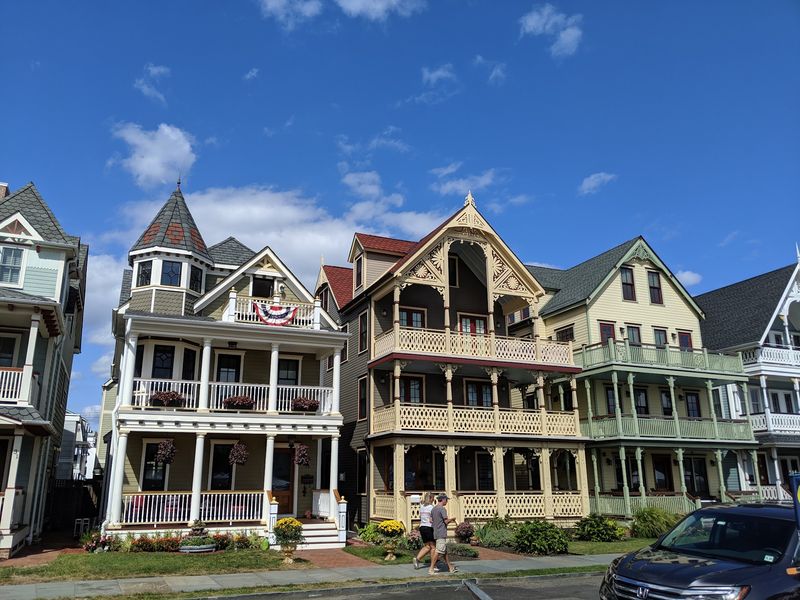
Start with a slow walk through the residential streets. Ocean Grove’s historic district contains an unusually dense collection of Victorian-era buildings, with wooden porches, steep gables, decorative brackets, and patterned shingles appearing from block to block.
The district is listed on the National Register of Historic Places, and the buildings give the community a distinctive street-level character.
Look closely at the trim beneath a roofline or the railing along a porch. Some houses mix colors to emphasize carved details, while others rely on a simpler palette and elaborate shapes.
Tall windows, bay fronts, and narrow lots reveal how the neighborhood developed when summer cottages became more permanent homes.
You won’t need a car between every stop. Choose a few streets near the ocean, turn inland, and let the architecture set your pace.
Remember that most houses are private residences, not museum exhibits. Stay on public sidewalks, avoid stepping onto porches, and give residents room at their gates and front steps.
It’s possible to admire a striking facade without turning someone’s home into a photo studio.
Seaside Roots Stretching Back To 1869

Ocean Grove began in 1869, when Methodist organizers established a coastal gathering place for worship, fellowship, and summer camp meetings.
Early visitors stayed in tents among trees near the shore, and religious services became part of the community’s seasonal routine.
The original plan eventually developed into a grid of streets, cottages, gathering spaces, and beachfront paths.
That background helps explain the town’s layout. Instead of a collection of scattered attractions, you’ll find important landmarks within a relatively small area.
Walk toward the center and the Great Auditorium comes into view, with the remaining tent village clustered nearby.
Move outward and Victorian homes fill the residential blocks.
The camp meeting tradition hasn’t disappeared. Worship and music remain part of the summer calendar, alongside the ordinary routines of a year-round seaside neighborhood.
Visitors can appreciate the architecture and beach without participating in religious events, while those interested in the town’s origins can explore public historical markers and organized programs.
To follow the story on foot, begin near the auditorium and then head toward the ocean. The short distance between the gathering place and waterfront says more about the original summer community than a long drive past separate historic sites could.
Painted Cottages Brighten Every Shady Street
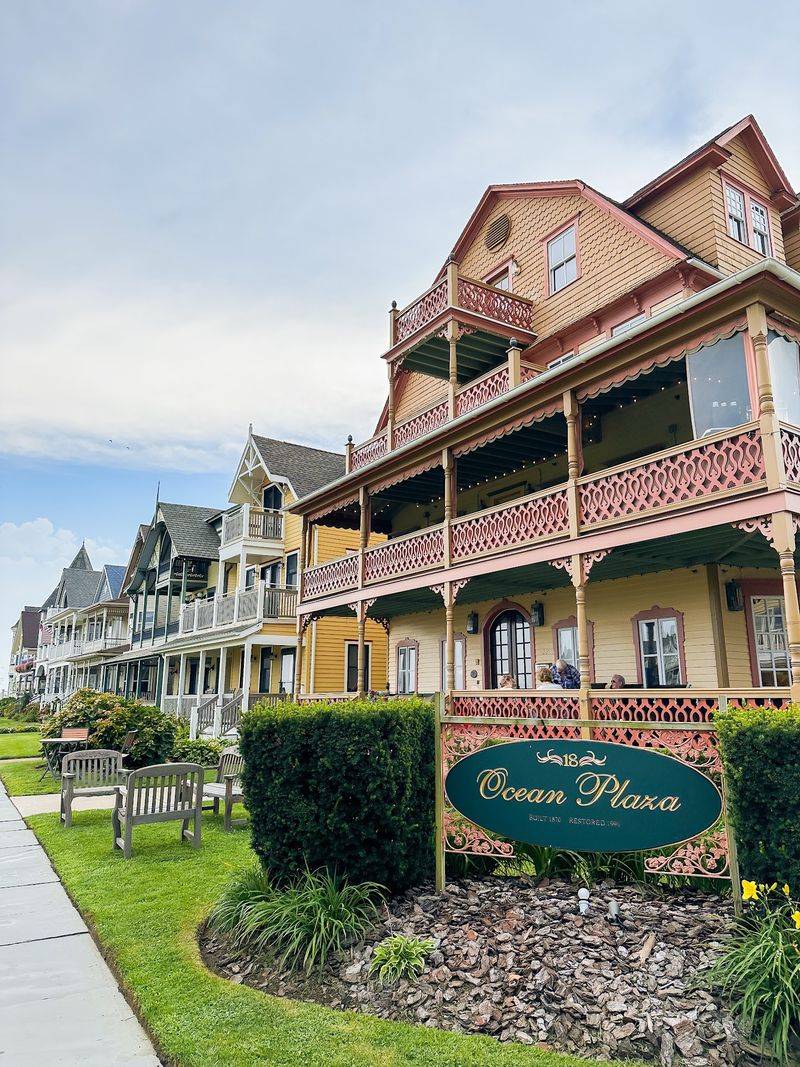
Mint green siding, cream-colored trim, and a deep red front door can share a single block with soft blue shutters and sunny yellow porches.
Ocean Grove’s painted cottages make a walk through the neighborhood a close-up look at how color can bring Victorian woodwork into focus.
A porch here is often a substantial part of the house, not merely a narrow step outside the door.
Some have turned posts and decorative railings; others feature hanging plants, wicker furniture, or a shaded place to sit. Roof peaks and window frames add more shapes to notice as you move along the sidewalk.
Try a loop from the beachfront toward the inner residential streets. The buildings vary in size and design, so a few turns can reveal details you missed on the first block.
Spring flowers or summer window boxes may add color, although planting and paint choices naturally differ from home to home.
If you’re photographing houses, frame architectural details from public areas and avoid including residents in close-up pictures without permission.
Want a simple walking goal? Pick out three different styles of porch railing before you reach Main Avenue. There’s enough variety to make that a more interesting challenge than it sounds.
A Canvas Tent Village That Still Welcomes Summer

Around the Great Auditorium, approximately 114 seasonal tents preserve an unusual piece of Ocean Grove’s early camp meeting history.
These aren’t temporary festival booths or a public campground. They’re private summer residences, and some have been occupied by successive generations of the same families.
The canvas fronts connect to small permanent cottages containing practical facilities such as kitchens and bathrooms.
That combination gives the colony a very different appearance from a modern campsite.
During the warmer months, canvas walls, modest porches, and closely spaced lanes create a recognizable neighborhood around the auditorium.
The tents are traditionally erected for the summer season and packed away afterward. If seeing the canvas village is a priority, plan for the months when residents have returned, and the tents are in place.
Walk through only the public routes and treat the tents as you would any other occupied home. Leave entrances, curtains, and personal belongings alone, and keep voices considerate when passing between residences.
There’s plenty to observe from the walkway: the repeating tent shapes, the compact arrangement, and the towering auditorium just beyond them.
The real curiosity is the continuity. What began as summer shelter more than a century and a half ago remains a living residential tradition rather than an enclosed historical display.
The Great Auditorium Stands Tall Since 1894
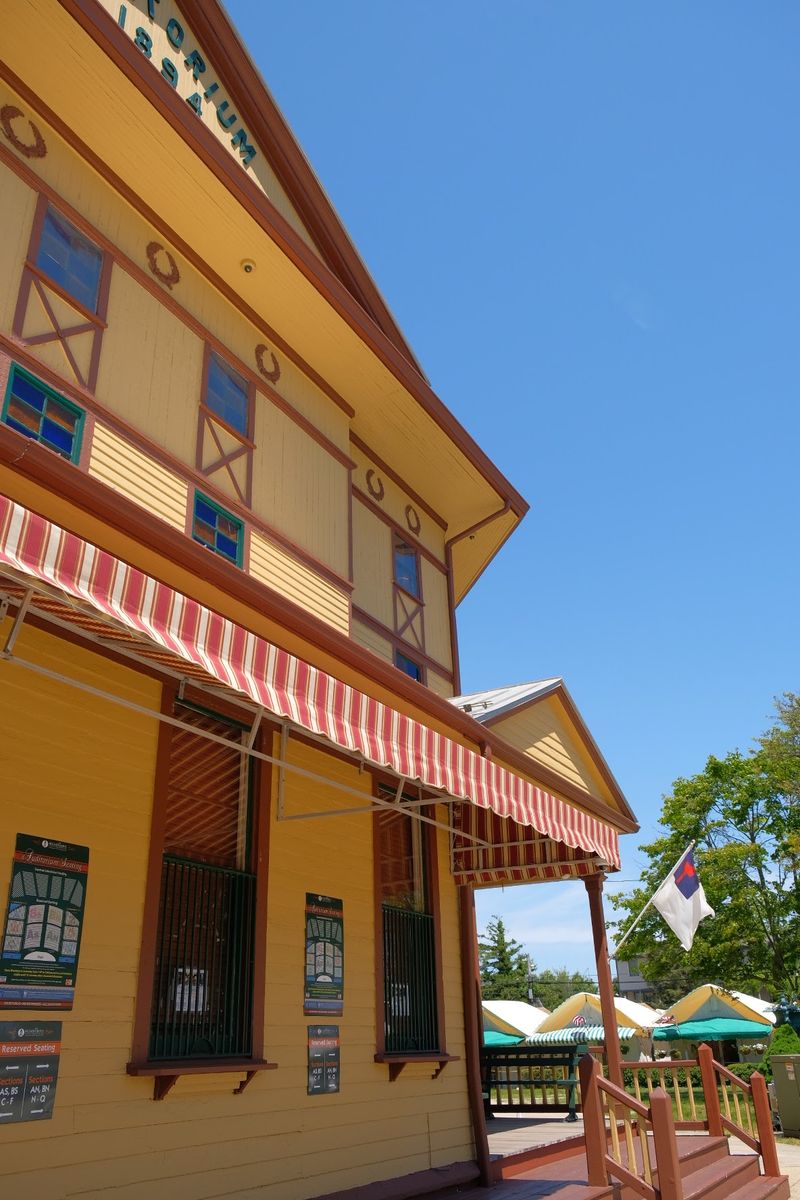
The Great Auditorium has anchored Ocean Grove since 1894. Its broad roof, tall entrances, and substantial wooden construction distinguish it from the smaller homes and canvas tents nearby.
Inside, a barrel-vaulted wooden ceiling stretches above a large gathering space that continues to host worship services, music, and community programs.
The building’s structure rests on large iron trusses, and its historic interior includes distinctive lighting and a major pipe organ. Concerts and organ performances are part of the seasonal calendar, though dates and access arrangements vary.
If you’d like to go inside, look for a scheduled program or an available guided visit rather than assuming the doors are open all day.
You’ll find the Great Auditorium at 21 Pilgrim Pathway, Ocean Grove, NJ 07756. It’s a useful landmark for orienting yourself on foot, with the tent colony and other historic gathering places close by.
From outside, notice the relationship between the auditorium and the surrounding residential lanes. The building was designed for large assemblies, yet it stands within a compact neighborhood shaped by the same camp meeting history.
The building’s unusual scale and the adjoining tents make this one of the clearest places to understand how the community took shape.
Sandy Beaches And A Breezy Boardwalk Stroll

After exploring the streets, head east toward the Atlantic. Ocean Grove’s sandy beach sits below a boardwalk where you can walk beside the dunes, watch the surf, or take a break on a bench. It’s an easy change of scenery from carved porch railings to an open ocean horizon.
During regulated summer beach operations, visitors over age eleven need a valid daily wristband or seasonal badge.
Children eleven and younger are admitted without one, and minors must be accompanied by a responsible adult.
Swim only in designated guarded areas, follow lifeguard instructions, and check current beach operations before your visit.
If accessibility is a concern, assisted beach wheelchairs are available at designated entrances, including Ocean Pathway and several nearby avenues.
These are intended to help visitors reach the sand with staff assistance, so ask attendants about the current arrangements when you arrive.
Bring water, sunscreen, and something to wear if the sea breeze turns cool. Summer afternoons can be bright and humid, while conditions along the water may shift quickly.
The boardwalk works for a shorter visit, too. You can enjoy the ocean view without committing to a full beach day or carrying chairs and umbrellas across the sand.
Cozy Inns And Local Shops Full Of Character

Main Avenue offers a natural final stop after the beach and historic streets. Small shops, places to eat, and storefronts selling gifts or seaside keepsakes give you a chance to browse without leaving the neighborhood.
Ocean Grove also has historic inns and guesthouses, some occupying Victorian buildings with covered porches and traditional woodwork. If you’d like an overnight stay, compare locations as well as room details.
Being near the beach can be convenient for early walks, while a room closer to Main Avenue may make dining and shopping easier.
Summer weekends can bring greater demand for accommodations and parking. Booking lodging ahead and arriving with some flexibility in your plans can save unnecessary circling through residential streets.
Be mindful of posted parking restrictions, particularly close to popular landmarks and the beachfront.
If you’re visiting for only a few hours, keep the route simple: a look at the auditorium and tents, a walk past the painted houses, then the boardwalk and a bite to eat. With more time, add an architectural walking tour or a scheduled musical program.
Keep the day unhurried, with enough time to notice the porch details, explore the short blocks, and walk beside the ocean.