What if the most authentic Wild West street in America was just a short detour off the highway? No theme park, no manufactured nostalgia, just original 1880s buildings standing exactly where they were built on unpaved roads that nobody ever got around to paving.
New Mexico has a village that boomtown fever built and a mining bust accidentally preserved. At its peak, nearly 3,000 people crowded these streets, and today roughly 250 remain, which is precisely why everything still looks the way it does.
Ancient turquoise mines, a state park with sweeping views of four mountain ranges, frontier architecture, and a turquoise-domed church that stops you cold are all waiting here. New Mexico keeps delivering surprises, and this one is absolutely worth the detour.
A Town Frozen In Its Own Story
Forget theme parks built to look old. Cerrillos actually is old, and it wears that age without apology.
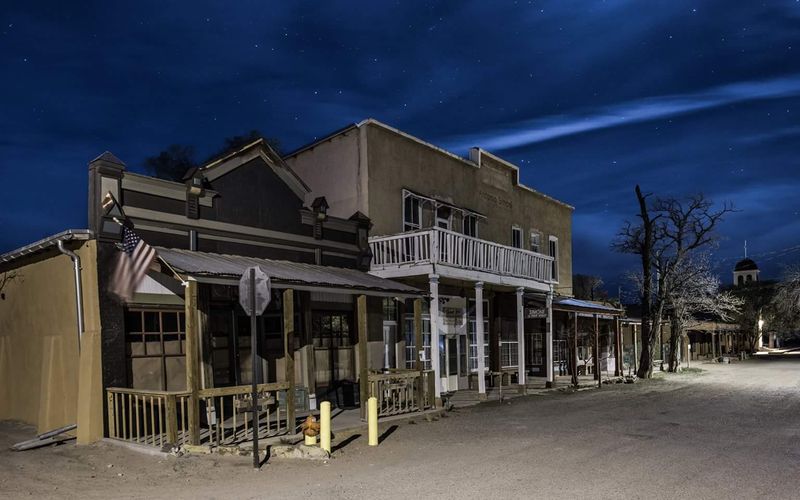
The village sits along NM-14 in New Mexico, and its dirt streets have never been paved over. Original adobe and wood-frame buildings from the 1880s still line those streets, sun-bleached and quietly magnificent.
During its peak, the town held close to 3,000 residents. Today, roughly 250 people call it home, and that dramatic drop in population is exactly why so much of the original character survived.
Nobody developed it away.
Cars frequently pass through without stopping, which means those who do stop get the place almost entirely to themselves. The silence here is not empty.
It feels weighted with history, with old ambitions, and with the kind of stubborn charm that only comes from a place that never needed anyone’s approval to keep existing.
The Boomtown That Almost Became A Capital
Picture nearly 3,000 people crammed into a desert village, 21 saloons running full tilt, four hotels at capacity, and serious political conversations about making this place the capital of New Mexico. That was Cerrillos in the 1880s.
The mining boom brought fortune-seekers, speculators, and opportunists flooding into the Cerrillos Hills. Money moved fast, and the town built itself up to match that energy.
For a brief, electric window of time, it felt like anything was possible here.
Then the mines slowed. The population drained away.
The mines slowed after 1900, and the town voted to disincorporate in 1904. By 1929, all large-scale mining had ceased entirely.
What remained was something unexpectedly valuable. Because the money left so quickly, there was no funding for demolition or redevelopment.
The old buildings simply stayed standing. That economic stillness accidentally preserved one of the most authentic frontier streetscapes left anywhere in the American Southwest.
The Ancient Turquoise Connection
Long before Spanish explorers arrived, Ancestral Puebloans were already pulling vivid blue-green turquoise from the Cerrillos Hills. That mining history stretches back over 1,000 years, making this one of the oldest continuously mined areas in North America.
The stone extracted here was not just decorative. Turquoise from these hills traveled across vast trade networks, showing up in communities hundreds of miles away.
Its cultural significance ran deep, and the hills still carry that weight.
Later waves of miners came for silver, gold, lead, and zinc. The town boomed hard in the 1880s before the resources thinned out and the population collapsed.
But the turquoise connection never fully disappeared.
Visitors today can still find locally mined turquoise for sale, see raw specimens up close, and learn how this single mineral shaped the entire identity of a desert village that most travelers have never even heard of. That story deserves more attention than it gets.
Cerrillos Hills State Park Delivers Big Views
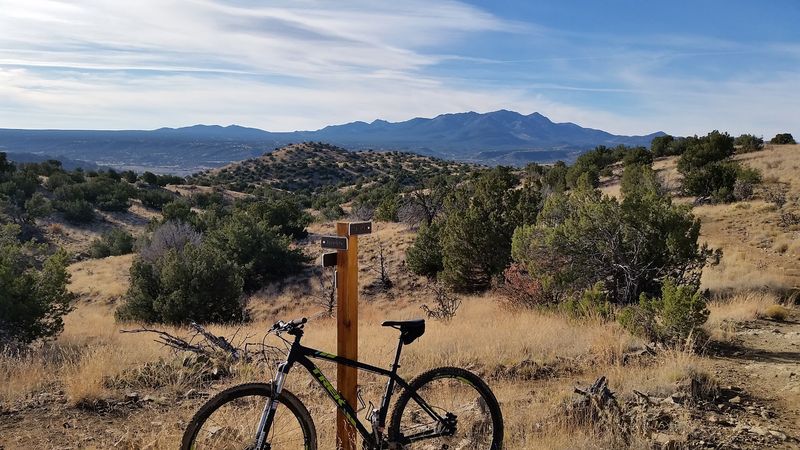
Right at the edge of the village sits one of the most underrated outdoor spaces in the state. Cerrillos Hills State Park covers around 1,100 acres and offers five miles of trails for hiking, mountain biking, and horseback riding.
The park is located at 44 Camino Turquesa, Los Cerrillos, NM 87010. From the higher trails, hikers can see the Sandia, Ortiz, Jemez, and Sangre de Cristo mountain ranges all at once.
That kind of panoramic payoff is rare anywhere, let alone just 30 minutes from Santa Fe.
Old mine shafts dot the landscape, and interpretive signs along the trails explain what was extracted, when, and by whom. Rangers regularly host events like geology hikes and stargazing nights, all included with park entry.
The terrain is open and sunny, so a hat and sunscreen are smart choices. Trails are well marked, but downloading a map before arrival is strongly recommended since cell service is unreliable inside the park.
Casa Grande Trading Post And Its Surprising Extras
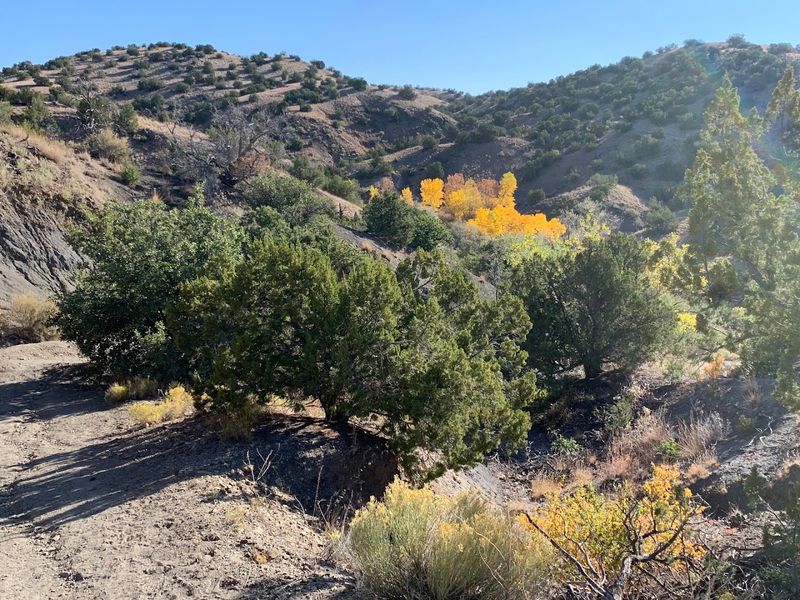
Few roadside stops anywhere in New Mexico pack as much variety into one location. Casa Grande Trading Post is a family-owned establishment that functions as a turquoise shop, a mining museum, and a petting zoo all under one roof and in one yard.
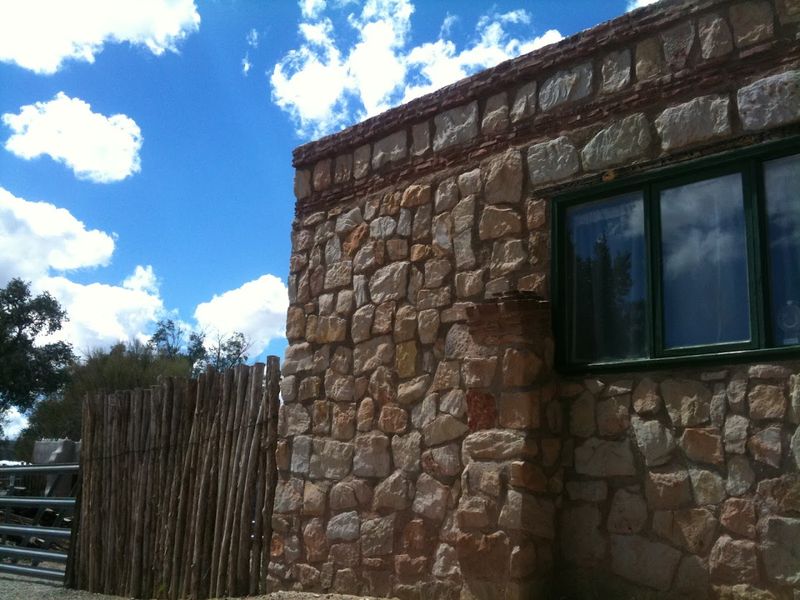
The museum side holds genuine mining artifacts and tells the story of the Cerrillos Hills with real objects rather than just photographs. Turquoise specimens and finished pieces are available for purchase, and many of them come directly from local sources.
The petting zoo adds a completely unexpected layer of charm, especially for families traveling with children. It turns a history stop into something genuinely fun for all ages.
Guided hiking tours to Mount Chalchihuitl are also available through Casa Grande. That mountain holds the distinction of being the oldest and largest turquoise mine in New Mexico, and seeing it up close with a knowledgeable guide gives the entire Cerrillos story a vivid, tangible dimension that no museum exhibit can fully replicate.
The Black Bird Saloon And Its Well-Worn Walls
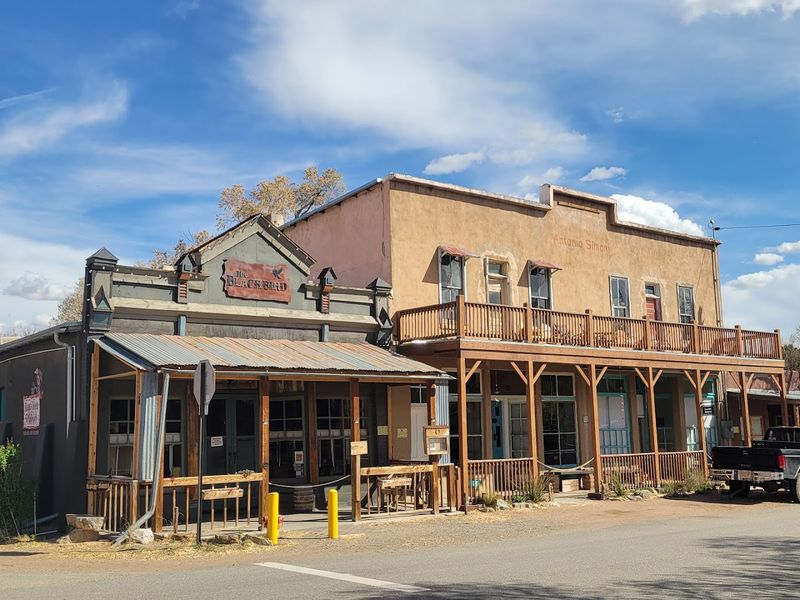
The building housing the Black Bird Saloon has lived several lives. It started as a tailor shop, then became a dry-goods store, and eventually settled into its current role as a popular food and drink spot in the heart of the village.
The 19th-century structure still carries the weight of all those previous uses. Wooden walls, worn surfaces, and a general sense of having absorbed decades of desert dust give the place a texture that modern restaurants spend fortunes trying to fake.
For travelers passing through on the Turquoise Trail, it serves as a natural gathering point. After a morning hike in the state park, the idea of sitting down in a building that old with a meal in front of you feels like a genuine reward.
The atmosphere does more of the work here than any decor ever could. Places like this survive because they are real, not because someone decided they should feel real.
That difference is immediately obvious the moment you walk through the door.
St. Joseph’s Church And Its Turquoise Dome
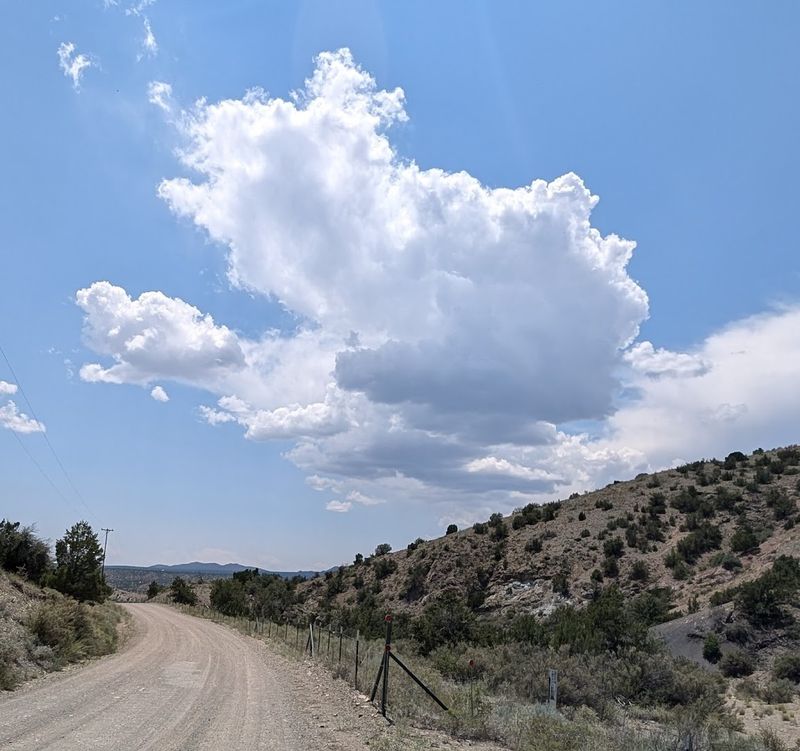
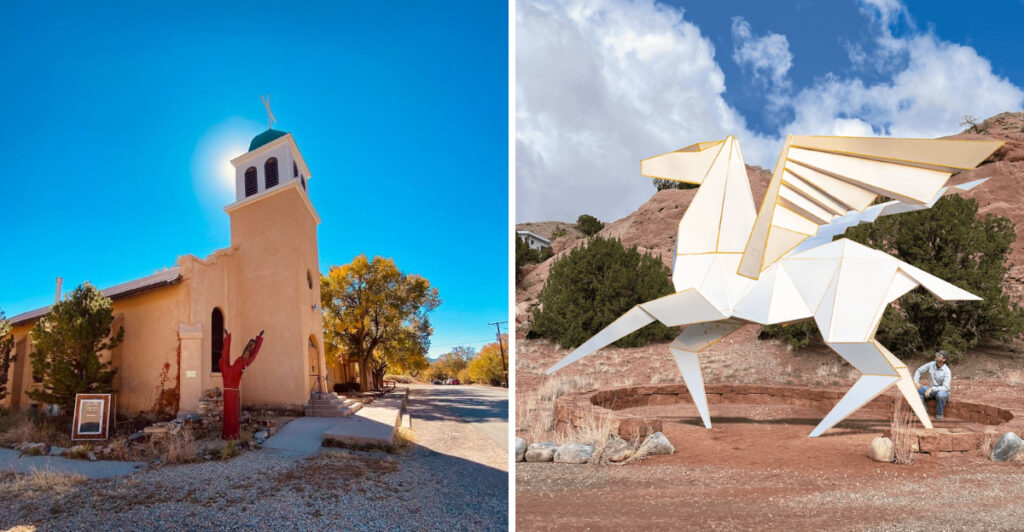
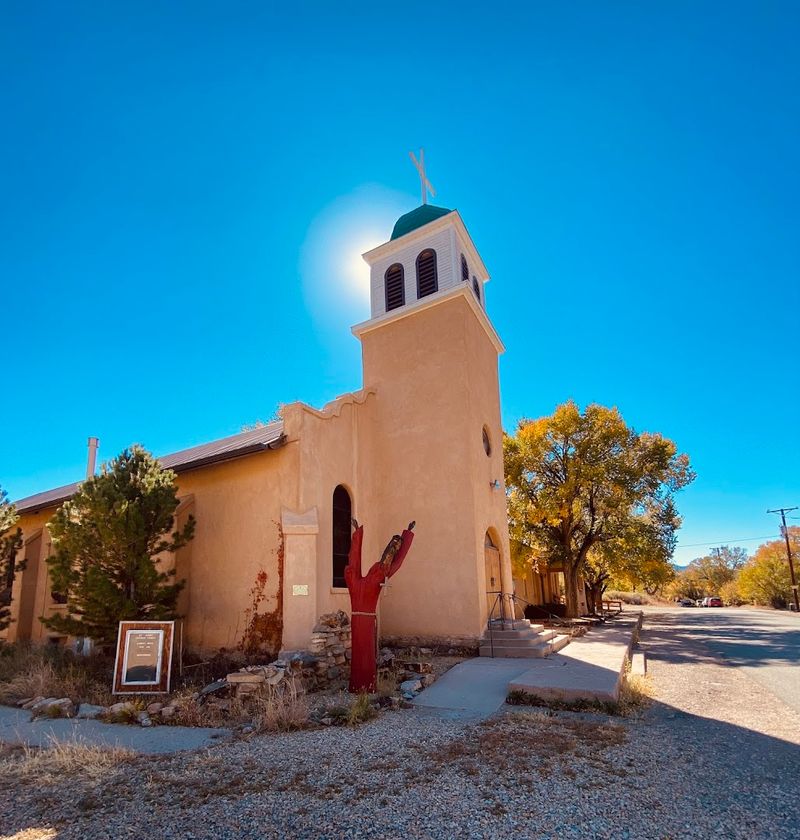
Built in 1922, St. Joseph’s Catholic Church stands as one of the most visually distinctive buildings in the entire village. Its turquoise dome is an unmistakable landmark, and it connects the church directly to the mineral identity that defines this corner of New Mexico.
The building is not a relic. Sunday mass continues to be held there, meaning this is an active, living part of the community rather than a preserved artifact for tourists to photograph from a distance.
That distinction matters. Cerrillos is not a ghost town.
People live here, worship here, and go about their daily lives here. The church is a quiet reminder that behind the Old West aesthetics, a real community has persisted through economic downturns, population drops, and a century of being largely ignored by the wider world.
The turquoise dome catches the light differently depending on the time of day. Early morning and late afternoon visits offer the most striking views, especially against the wide desert sky that surrounds the village on every side.
Hollywood Found This Place First
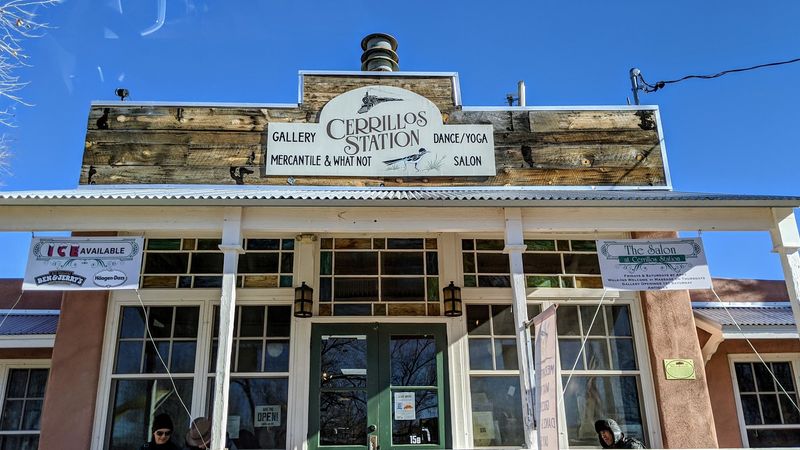
Film crews have a knack for finding places that look exactly right, and Cerrillos has attracted that attention more than once. The village served as a filming location for Young Guns, the 1988 Western that brought major Hollywood talent to these very streets.
Walt Disney’s Nine Lives of Elfego Baca, a television series that aired in 1958, was also shot here. When a location looks this genuinely old, production designers do not need to add much.
Walking the same dirt streets that appeared on screen adds an interesting layer to any visit. The buildings were not built as sets.
They were here first, and the cameras came to them.
That film history is not heavily advertised in Cerrillos, which somehow makes it more satisfying to discover. The town does not lean on its Hollywood credentials to attract visitors.
It simply exists, and curious travelers who dig a little find that the story keeps getting better the deeper they look.
The Turquoise Trail Connects More Than Towns
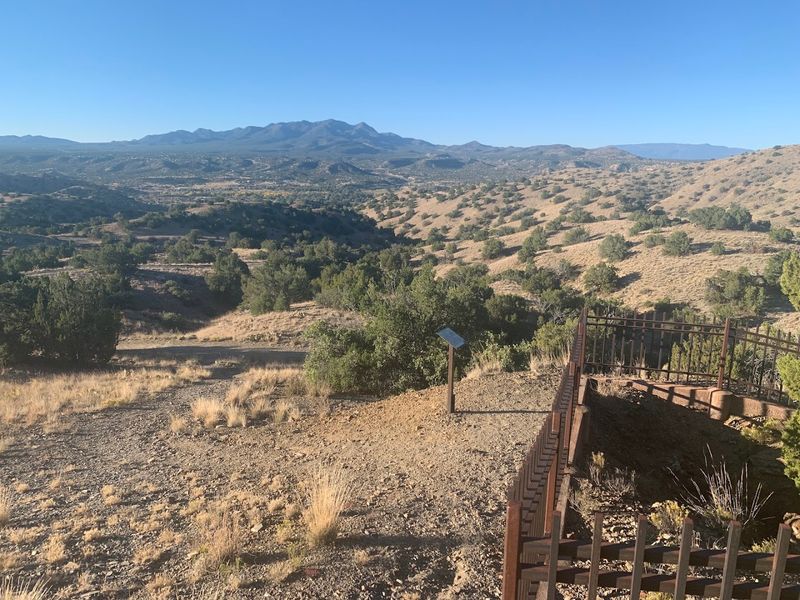
NM-14 carries an official designation as a National Scenic Byway, and the stretch connecting Albuquerque to Santa Fe through the high desert earns that title honestly. Cerrillos sits along this corridor as one of its most historically layered stops.
The route passes through several distinctive communities, each with its own personality. Cerrillos stands out because it has changed the least.
Madrid, just a few miles south, has transformed into an arts community. Cerrillos stayed closer to what it always was.
Driving NM-14 rather than the interstate between Santa Fe and Albuquerque adds time but subtracts stress. The landscape opens up into wide desert views, rolling hills, and the kind of sky that makes New Mexico famous among photographers and painters alike.
Cerrillos works perfectly as a midpoint stop on a full day Turquoise Trail drive. Pair it with a hike in the state park, a browse through Casa Grande, and a meal at the Black Bird Saloon, and a simple drive becomes a genuinely memorable day.
Origami Sculptures In The Open Desert
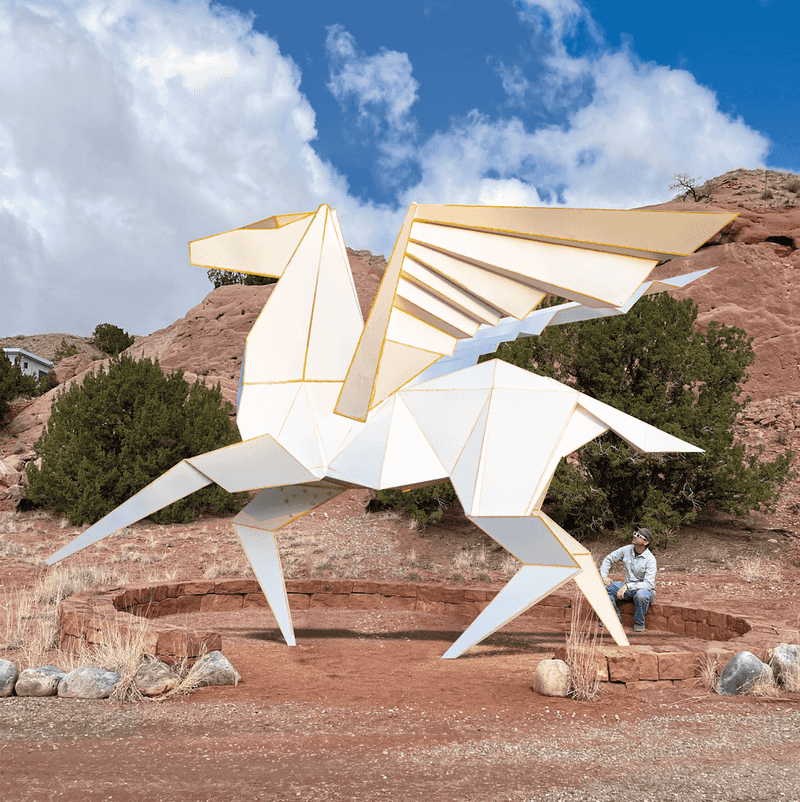
Art shows up in unexpected places along the Turquoise Trail. Just north of Cerrillos on Highway 14, a collection of large-scale origami sculptures appears in the open landscape, visible from the road and completely surprising the first time you spot them.
The installation, known as Origami in the Garden, places oversized folded-form sculptures against the raw desert backdrop. The contrast between the precise geometry of origami and the organic, weathered terrain around it creates something genuinely striking.
New Mexico has a long tradition of art appearing in unconventional outdoor settings, from the famous Meow Wolf installation in Santa Fe to land art scattered across the high desert. This roadside exhibit fits naturally into that creative culture.
For travelers already making the Cerrillos detour, adding a quick stop at the origami sculptures costs nothing extra in time or effort. It is the kind of unexpected find that makes a road trip feel curated by someone with excellent taste rather than just assembled from a highway map.
What The Desert Sky Does Here At Night
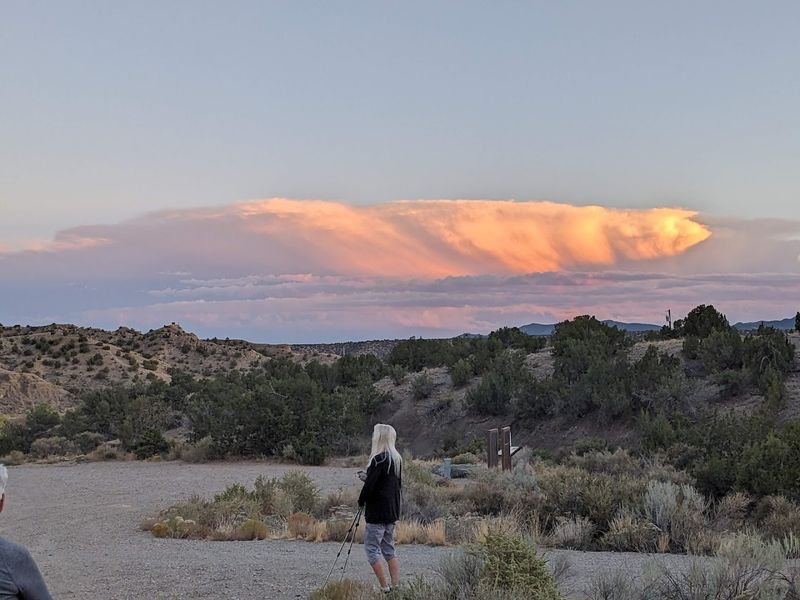
Light pollution is not a significant problem in Cerrillos. The village is small, the surroundings are open, and the elevation of the high desert pushes the sky closer than it seems in most places.
After dark, the results are dramatic.
Cerrillos Hills State Park rangers occasionally host stargazing events with telescopes, included in the standard park entry. These evenings offer guided views of the night sky above terrain that has barely changed in centuries, which adds a particular depth to the experience.
The high desert climate of New Mexico means clear nights are common, especially in spring and fall. Summer monsoon season brings more cloud cover, but even then, the storms themselves are spectacular to watch roll across the wide landscape.
Visitors staying in the Santa Fe area who want a genuinely dark-sky experience without driving far have a strong option right here. Arriving at the park near sunset and staying into the evening rewards patience with one of the most underrated natural shows in the region.
Practical Tips For Making The Most Of A Visit
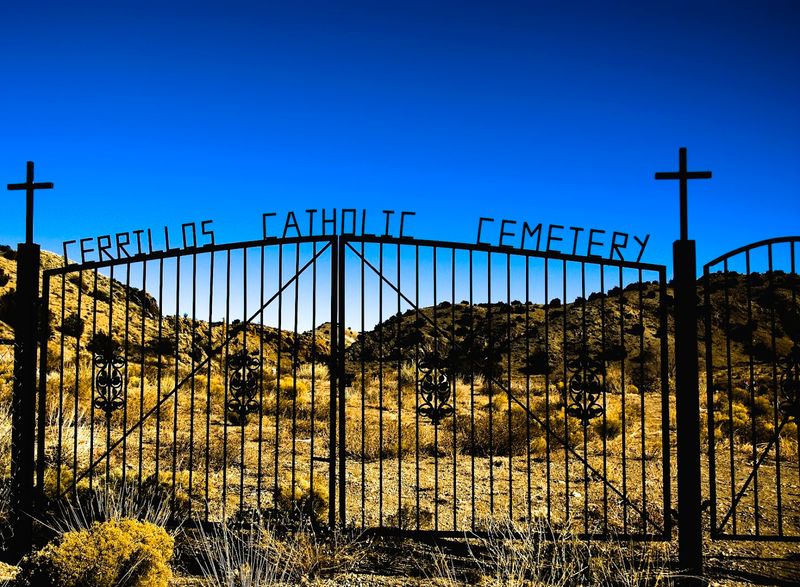
Cerrillos rewards visitors who plan ahead, even just a little. The village is small, and most of what there is to see can be covered in a half day, though combining it with a full Turquoise Trail drive turns the trip into a complete experience.
The state park trails are exposed and sunny, so sunscreen, a hat, and plenty of water are essential. Cell service inside the park is unreliable, making an offline trail map a smart download before arrival.
Sturdy footwear handles the rocky terrain much better than sandals.
The best seasons to visit are spring and fall, when temperatures are comfortable and the desert landscape looks its most vivid. Summer mornings work well before the heat builds.
Winter visits are possible and often crowd-free, with the park trails rated among the best in the region for cold-weather hiking.
Cerrillos has no chain stores, no tourist infrastructure, and no crowds pushing you through. That simplicity is the entire point, and it makes every part of the visit feel genuinely earned.