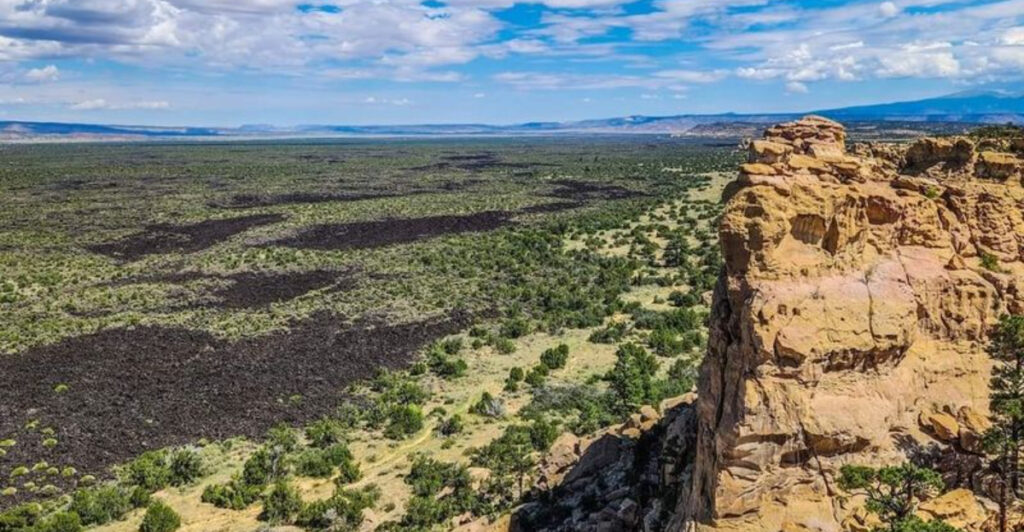
New Mexico has a road trip that feels less like sightseeing and more like stepping into the aftermath of something enormous. Ancient eruptions shaped the land here, and the evidence is still everywhere once you know what to watch for.
Lava spreads across the desert. Craters sit in the sun like perfect bowls.
Peaks rise with that quiet, don’t-mess-with-me energy.
I spent weeks driving this route, and it kept pulling me out of the car. Not because every stop was loud or flashy.
Because each place had a way of making the world feel bigger. That is rare on a road trip.
Bring shoes with grip and plenty of water. Let curiosity do the rest.
Ten volcanic stops are waiting across a route that feels more like a field trip to another planet than a regular drive through the Southwest. This one stays with you afterward, probably for days later.
1. Petroglyph National Monument
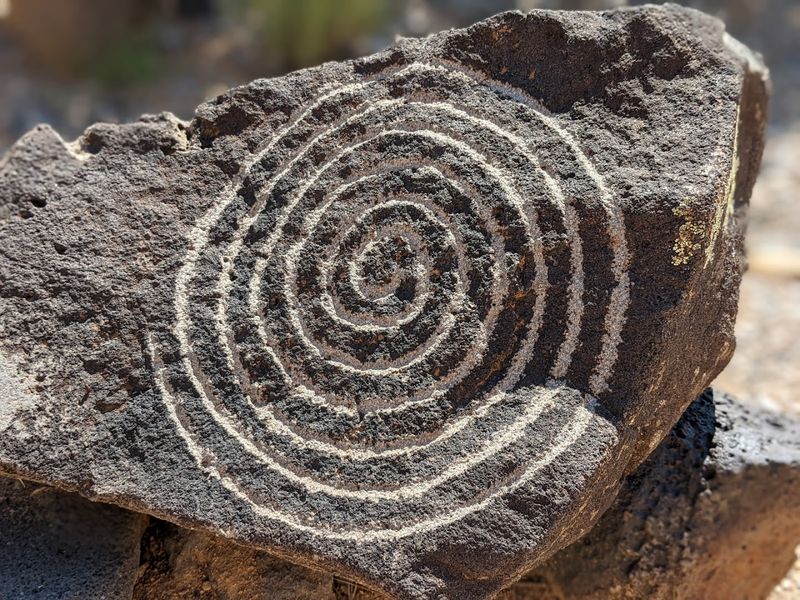
Thousands of ancient carvings etched into dark volcanic rock greet you right at the edge of Albuquerque. That makes Petroglyph National Monument one of the most accessible yet genuinely surprising stops on this entire trip.
The monument sits at 6001 Unser Blvd NW, Albuquerque, NM 87120, stretching across a long ridge of ancient basalt lava flows from small scoria and spatter cones.
Once you get onto the trails, the lava itself becomes just as fascinating as the artwork carved into it, with rough, bubbly textures and jet-black surfaces that feel almost alien underfoot.
The Boca Negra Canyon section offers some of the easiest and most rewarding trail access, where hundreds of symbols, animals, and human figures appear around nearly every bend.
These petroglyphs were created by the ancestors of today’s Pueblo people and by early Spanish settlers, layering thousands of years of human story onto a volcanic canvas.
Morning light hits the dark basalt at a perfect angle, making the carvings pop visually, so arriving early is genuinely worth setting that alarm.
I found myself crouching beside a spiral carving and wondering how many people had stood in that same exact spot over the centuries, staring at that same dark rock.
2. Zuni Salt Lake
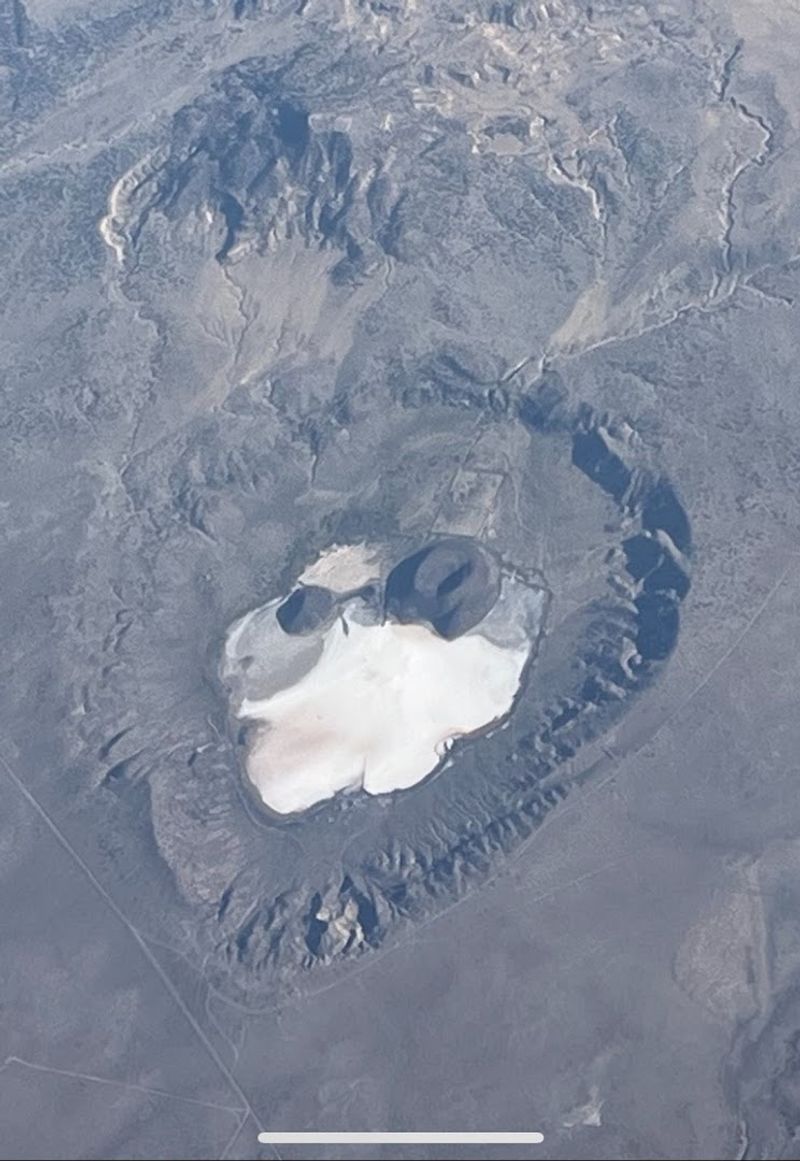
Zuni Salt Lake feels quietly otherworldly from the moment the crater comes into view. In Catron County near Quemado, NM, a shallow, shimmering body of salt water rests inside a volcanic maar in the middle of the high desert.
This maar, a crater formed by an explosive volcanic eruption, creates a landscape that feels both ancient and strangely peaceful, ringed by low volcanic hills and wide open sky.
The lake has been sacred to the Zuni people and many other Indigenous communities for centuries, who traveled great distances to harvest its salt for ceremonial and practical purposes.
A visit here asks something of you that most tourist stops do not, which is respect, quiet awareness, and careful attention to any access restrictions around this culturally sensitive place.
The flat, white salt deposits at the shoreline contrast sharply with the surrounding reddish and dark volcanic soils, creating a color palette that photographers absolutely love.
Early morning visits reward you with glassy reflections on the water and a stillness that feels almost meditative before the desert heat builds up.
I stood at the crater rim and felt genuinely small in the best possible way, the kind of feeling that only a place shaped by deep time and deep meaning can produce.
3. El Malpais National Monument
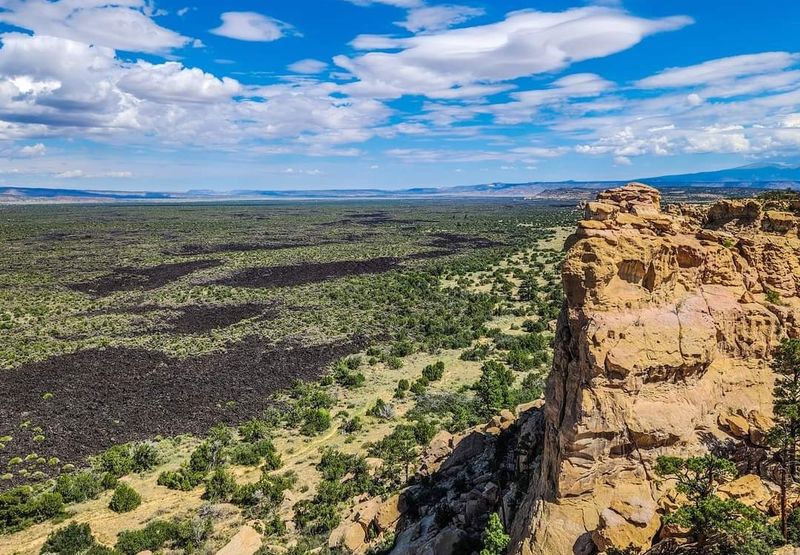
Few places in the American Southwest stop you in your tracks quite like El Malpais National Monument. Here, a sea of hardened black lava stretches as far as you can see in every direction.
Located at 1900 E Santa Fe Ave, Grants, NM 87020, this monument protects one of the largest young lava flows on the entire North American continent, and standing at its edge feels like peering into a frozen volcanic ocean.
The word malpais means badlands in Spanish, and the name fits perfectly because this terrain is rugged, jagged, and completely unforgiving to anyone who wanders off trail without proper footwear.
The Lava Falls Trail is a one-mile loop that crosses the McCartys Lava Flow, showcasing lava formations ranging from smooth pahoehoe to rough, chunky aa lava, each with its own texture and story.
Lava tubes run beneath the surface here, and some can be explored when open with a free NPS caving permit, proper gear, and current conditions checked before you go.
The landscape earned its otherworldly reputation honestly, with travelers frequently comparing it to photographs taken on the surface of the moon.
I walked the Lava Falls Trail at golden hour and watched the low light turn the black rock into something that looked almost bronze, and I understood immediately why people come back to this place again and again.
4. Valles Caldera National Preserve
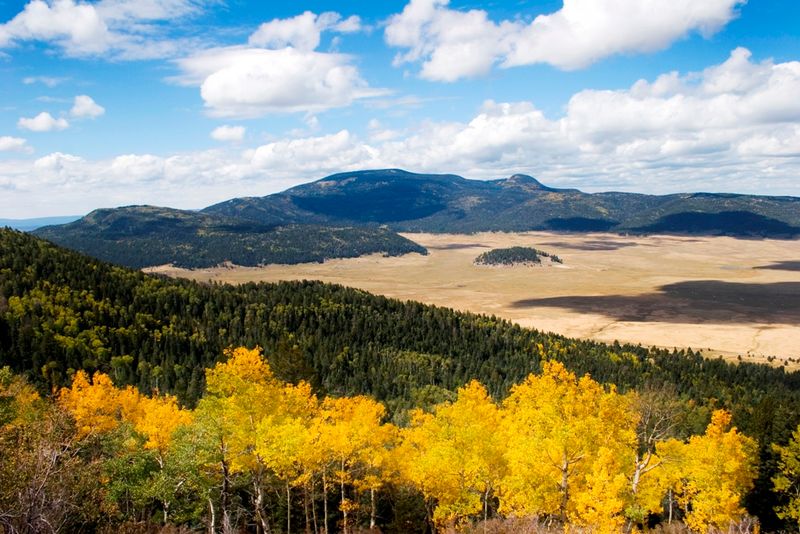
The landscape seems to exhale when you drive into Valles Caldera National Preserve. It opens into a massive grassy bowl so wide and green that it takes a moment to register what you are actually looking at.
Located at 090 Villa Louis Martin Dr, Jemez Springs, NM 87025, this preserve sits inside a caldera that spans roughly thirteen miles across, formed by a supervolcanic eruption that reshaped this part of New Mexico long before humans arrived.
The term supervolcano gets used loosely in popular culture, but standing inside this caldera, you feel the genuine scale of what that word actually means in geological terms.
Elk graze across the open meadows in large herds, and the contrast between the peaceful grazing animals and the violent volcanic history beneath your feet is one of the most quietly dramatic things about this place.
Visitors can drive across parts of the caldera floor, hike several trails, fish in preserve waters when conditions and regulations allow, and during winter months, explore the preserve on snowshoes or cross-country skis.
The Jemez Mountains surrounding the caldera are themselves volcanic, adding layer after layer of geological drama to every view you encounter along the road.
I pulled over on the main road through the preserve just to sit quietly and take in the scale of the place, and a half hour slipped by before I even noticed.
5. Capulin Volcano National Monument
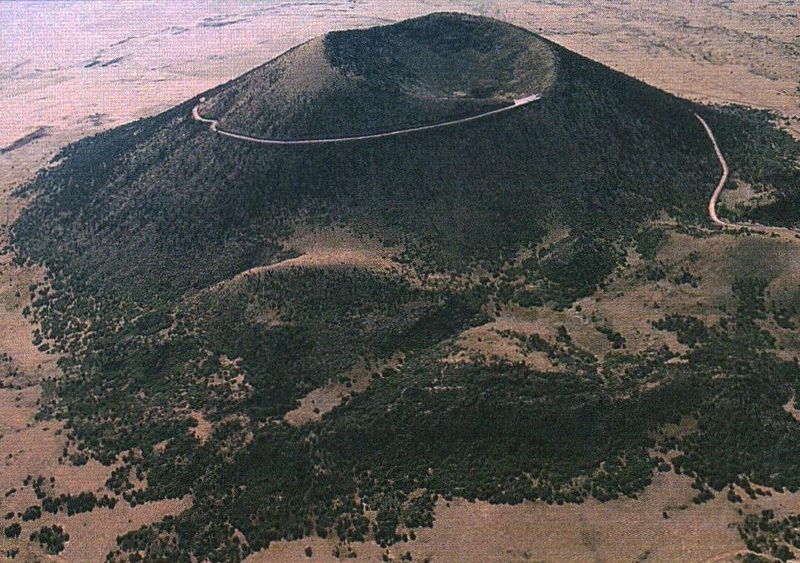
Symmetry in nature is rare enough that Capulin Volcano can make you do a double take. It rises from the northeastern New Mexico plains looking almost too perfectly cone-shaped to be real.
The monument is located at 46 Volcano Hwy, Capulin, NM 88414, sitting within the sprawling Raton-Clayton Volcanic Field, a volcanic region covering thousands of square miles across the surrounding region and beyond.
A paved road spirals up the exterior of the cone to a parking lot right at the rim, making this one of the most dramatic and accessible volcano viewpoints anywhere in the United States.
From the rim, on a clear day, you can see into four different states, with the wide-open landscape rolling out in every direction like a giant relief map spread beneath your feet.
Trails run both around the rim and down into the volcano’s throat, where you can stand inside the actual vent and look straight up at the sky framed by the crater walls.
After dark, Capulin earns a different kind of fame, offering some of the darkest night skies in the country, which makes it a favorite destination for stargazers and astrophotographers.
The Milky Way arcing over the volcano’s silhouette on a moonless night is the kind of moment that earns a permanent spot in your memory without any effort at all.
6. Mount Taylor
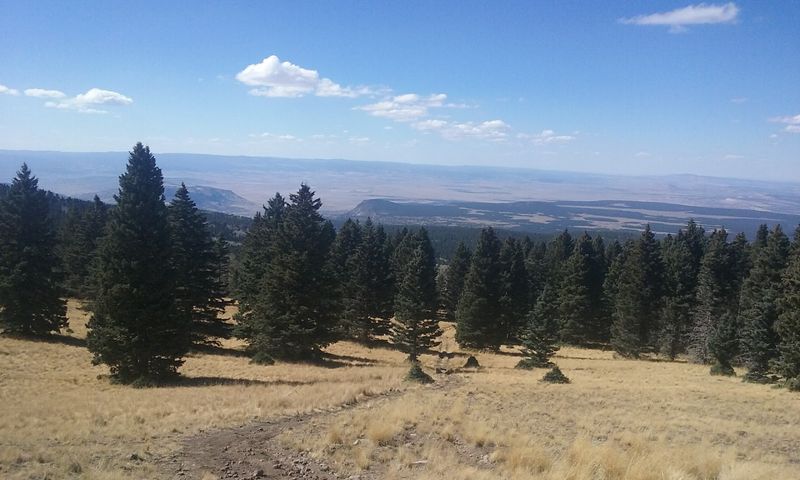
Mount Taylor commands attention from miles away, its broad volcanic shoulders rising above the surrounding high desert. It announces itself as one of the most spiritually significant peaks in the entire Southwest.
The Gooseberry Springs Trailhead is accessed from Forest Road 193 near Grants, NM 87020, giving hikers a solid starting point for tackling this sacred mountain that the Navajo Nation calls Tsoodził, one of the four sacred mountains defining the boundaries of Dinétah.
The mountain is a stratovolcano, built up through repeated eruptions over millions of years, and its layered geology tells a long and complex story that geologists and hikers alike find endlessly interesting.
Trails through ponderosa pine and aspen forests wind up toward the summit, passing through multiple distinct ecological zones as the elevation climbs and the air cools noticeably with every few hundred feet of gain.
Winter transforms the mountain into a snowy wonderland popular with cross-country skiers and snowshoers, while summer brings wildflowers and cooler temperatures that feel like a reward after the desert heat below.
The summit views on a clear day stretch across a volcanic landscape that puts everything you have seen on this road trip into a broader, more connected perspective.
At the top of Mount Taylor, finishing the hike feels more like earning a front-row seat to one of New Mexico’s grandest panoramas.
7. Shiprock
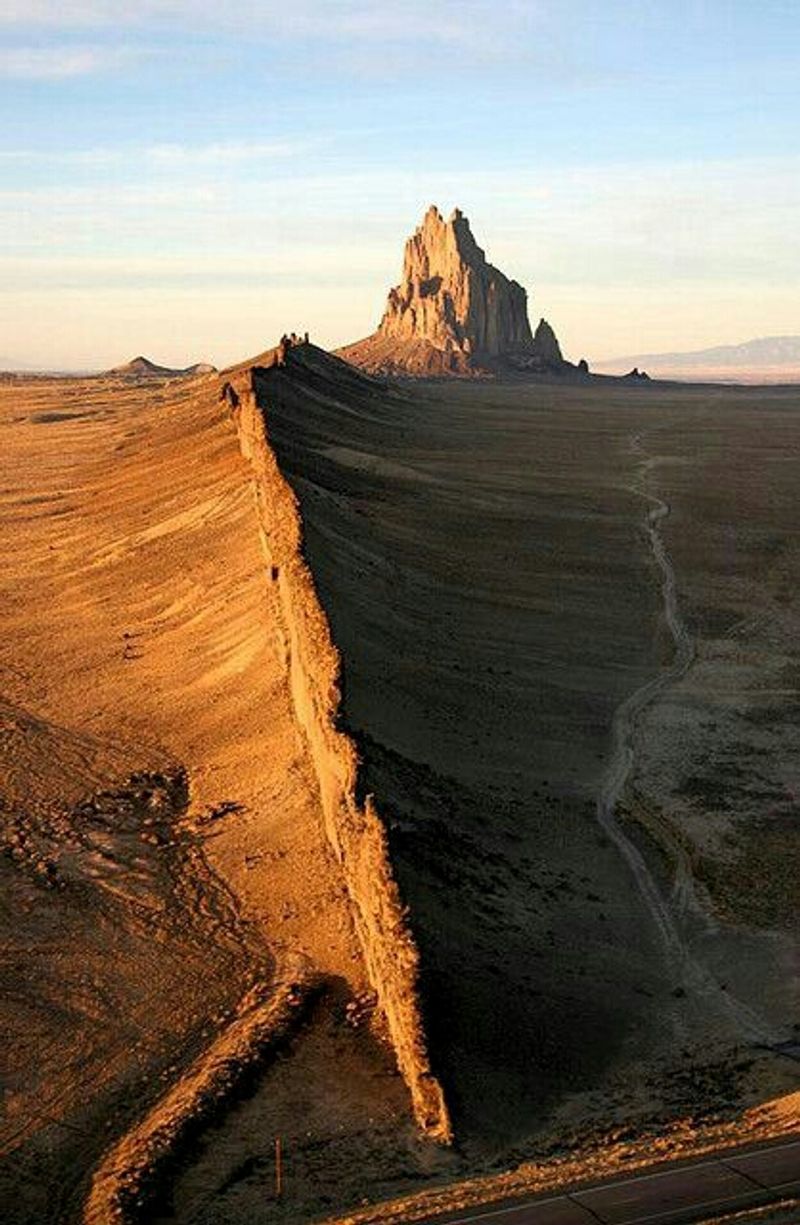
Nothing on this entire road trip prepares you for the first time Shiprock appears on the horizon. It rises from the flat desert floor of San Juan County like a jagged, dark cathedral out of nowhere.
The formation sits about 10.75 miles southwest of Shiprock, NM, in the heart of the Navajo Nation, and it is technically a volcanic plug, the hardened core of an ancient volcano whose outer layers eroded away over millions of years.
Long radiating dikes stretch outward from the main formation across the desert floor, looking from above like the spokes of a broken wheel, and these too are volcanic features formed by magma that once filled cracks in the earth.
The Navajo people call this formation Tse Bit’a’i, meaning rock with wings, and it holds deep spiritual and cultural significance that demands respectful, mindful behavior from every visitor who approaches.
Photography from paved public roads surrounding the formation is permitted and widely practiced, but climbing, hiking on the formation, and off-road approaches are prohibited out of respect for its sacred status.
The best light for photography falls during golden hour, when the long shadows of the dikes stretch dramatically across the desert and the main formation glows with warm, reddish tones.
Near Shiprock at sunset, you feel the weight of deep time pressing gently against the present moment in a way that is hard to shake.
8. Valley Of Fires Recreation Area
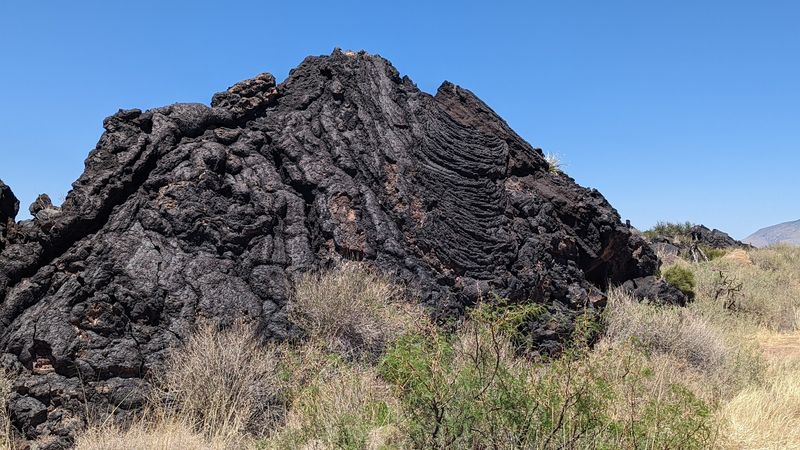
The first view of Valley of Fires Recreation Area near Carrizozo feels almost unreal. It is like someone hit pause on a volcanic eruption and you are seeing the exact moment the lava stopped moving.
The site is located at 6158 US-380, Carrizozo, NM 88301, sitting within the Carrizozo Malpais, a striking stretch of badlands that formed when lava poured from Little Black Peak and spread across the Tularosa Basin.
What makes this place especially fascinating is how life has found a way to thrive in the cracks and crevices of the lava field, with desert plants, lizards, and birds all carving out niches in what looks at first like an impossible environment.
The one-mile Malpais Nature Trail loops through the lava field with interpretive signs that explain the geology, ecology, and history of the area in plain, engaging language that keeps you reading at every stop.
Camping is available right at the edge of the lava flow, making this one of the few places on this road trip where you can actually sleep next to a volcanic landscape and wake up to it at sunrise.
The contrast between the jet-black lava and the pale desert grasses growing nearby creates a visual tension that photographers find irresistible at almost any time of day.
I camped here one night and woke before dawn to find the lava field glowing faintly under a sky still thick with stars, a moment I would not trade for a much fancier hotel.
9. Potrillo Mountains Volcanic Field
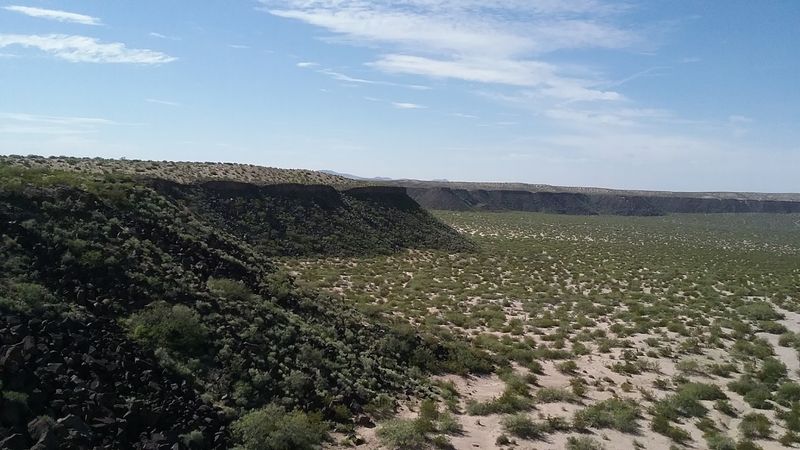
The fact that NASA astronauts once trained here for moon missions tells you almost everything you need to know. Up close, the Potrillo Mountains Volcanic Field looks rugged, remote, and startlingly lunar.
Kilbourne Hole is the standout feature, a broad maar crater located on Doña Ana County Road A-011 near Las Cruces, NM, formed when rising magma met groundwater and triggered a massive steam-driven explosion that blew a wide, shallow crater into the desert floor.
The volcanic field as a whole contains dozens of cinder cones, lava fields, and additional maar craters, making it one of the most geologically diverse volcanic landscapes in the entire state.
The route to Kilbourne Hole requires a high-clearance vehicle and a sense of adventure, since the road is unpaved and the terrain is genuinely remote, but that remoteness is part of what makes the experience feel so raw and real.
The crater walls expose layers of rock thrown up by the explosion, and sharp-eyed visitors may notice olivine crystals and mantle xenoliths, fragments of deep earth material brought to the surface by the eruption, without disturbing or collecting them.
Sunrise inside the crater is a particular treat, with the low light picking out every texture in the volcanic walls and the silence of the desert adding to the sense that you have genuinely left the everyday world behind.
Few places on this entire trip make you feel as thoroughly on another planet as standing inside Kilbourne Hole on a quiet morning with nothing but wind and volcanic rock for company.
10. Jornada Del Muerto Lava Field
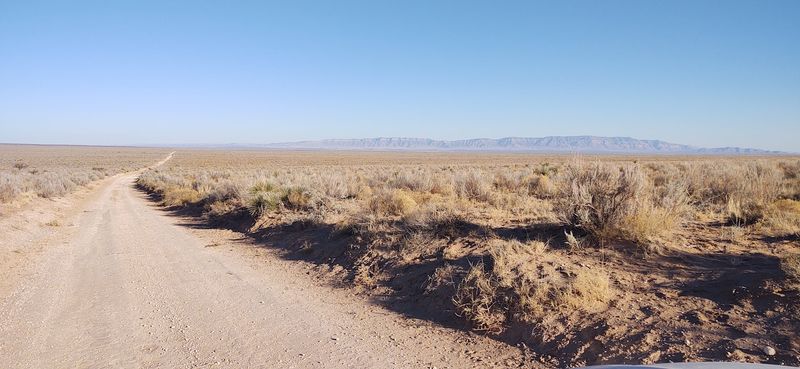
Remote, raw, and almost entirely free of crowds, the Jornada del Muerto Lava Field near Socorro rewards the travelers who make the effort to reach it with one of the most genuinely isolated volcanic landscapes in the American Southwest.
The Jornada del Muerto Wilderness Study Area sits about 45 air miles south-southeast of Socorro, NM, spread across a wide desert basin that carries a name translating roughly to the journey of the dead man, a nod to the brutal conditions early Spanish travelers encountered crossing this region.
The lava field itself covers a significant stretch of the basin floor, its dark surface broken by pressure ridges, collapsed lava tubes, and nearby vent features that give the landscape a restless, unfinished quality.
A trip here requires planning, a reliable vehicle, and ideally a local contact or detailed map, since paved roads and visitor services are essentially nonexistent in this part of the state.
That lack of infrastructure is also the point, because the Jornada del Muerto Lava Field offers a kind of volcanic solitude that the more popular monuments on this list simply cannot match.
Spring and fall are the best seasons to visit, when temperatures are manageable and the low-angle light makes the lava field look like something out of a science fiction film set.
As a final stop, this place feels exactly right, with ancient lava underfoot and the Jornada del Muerto stretching silently in every direction.