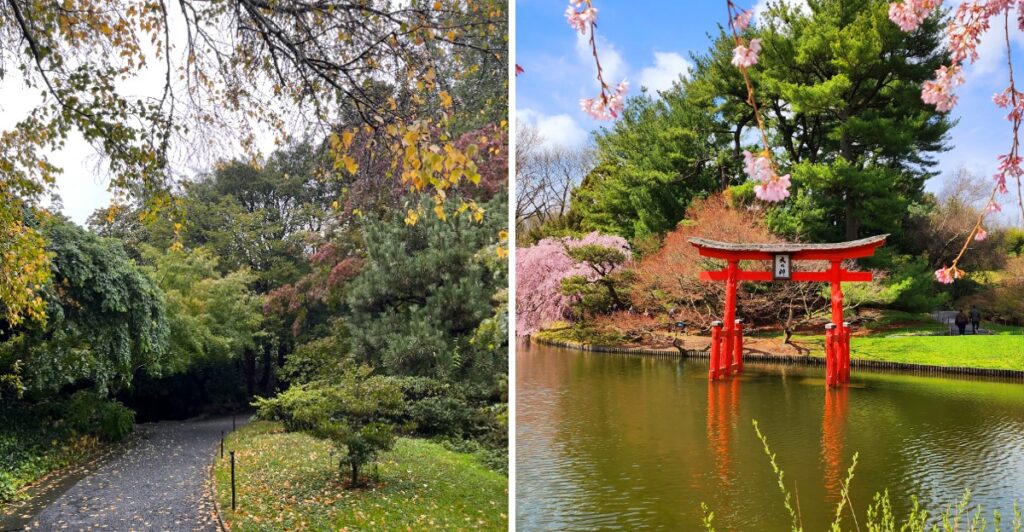
There’s a small corner of New York where the trees show up in their brightest outfits, the turtles hog the sunny spots, and a red gate has a perfect twin. The twin lives underwater.
Come fall, Japanese maples turn scarlet and gold around a pond so still it looks like someone pressed pause on the city. Try taking just one photo. I dare you.
Even the waterfall has an attitude. Instead of smooth stones, it crashes over jagged Manhattan schist, the same rock beneath the city’s streets. Leave it to New York to make bedrock interesting.
The winding pond keeps changing the view, with koi slipping through the water like little flashes of color.
And somehow, all this fits inside a busy neighborhood.
The biggest surprise isn’t what’s hiding here. It’s how quickly you forget what’s outside.
Autumn Turns The Maples Into Pure Fireworks
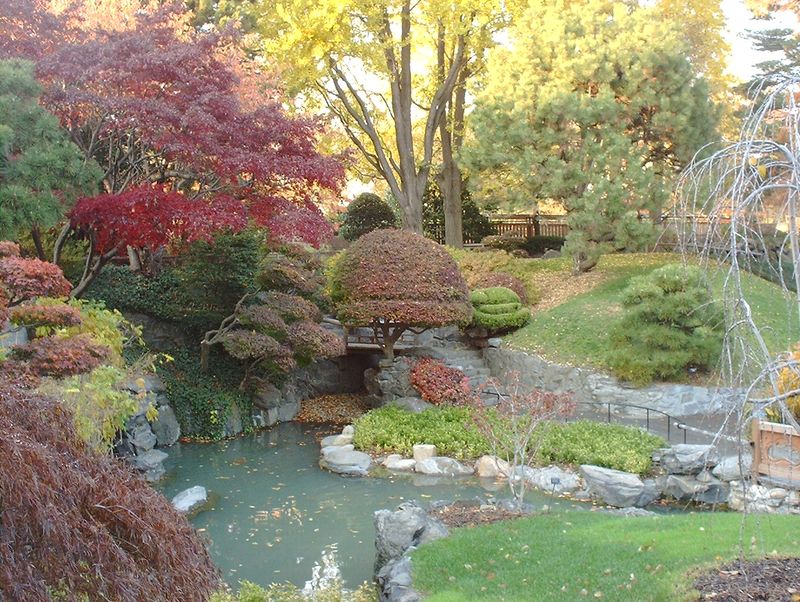
Red, purple, burgundy, yellow, and gold all show up at once. The Japanese Hill-and-Pond Garden at Brooklyn Botanic Garden ranks as one of the oldest Japanese-inspired gardens outside Japan.
Fall is when it really shows off. Japanese maples and ginkgos carry most of the color, and they don’t hold back.
What makes the scene pop is contrast. Dark, sculptural evergreens stand behind the bright trees, like a black frame around a painting.
Gardeners prune those evergreens in a traditional Japanese style. The goal is to make them look windswept and old, even in a sheltered Brooklyn spot.
So the maples get a dramatic backdrop every single year. That pairing feels planned because it absolutely is.
Fall-blooming camellias add another layer once the leaves start turning. You get flowers and foliage in the same season, which feels like a bonus round.
The Japanese tradition of autumn leaf viewing is called momijigari. Here in New York, you can practice it without a plane ticket.
My tip is simple. Walk slowly and look up, then look down at the water. The second view might be your favorite.
The Pond Works Like A Giant Mirror
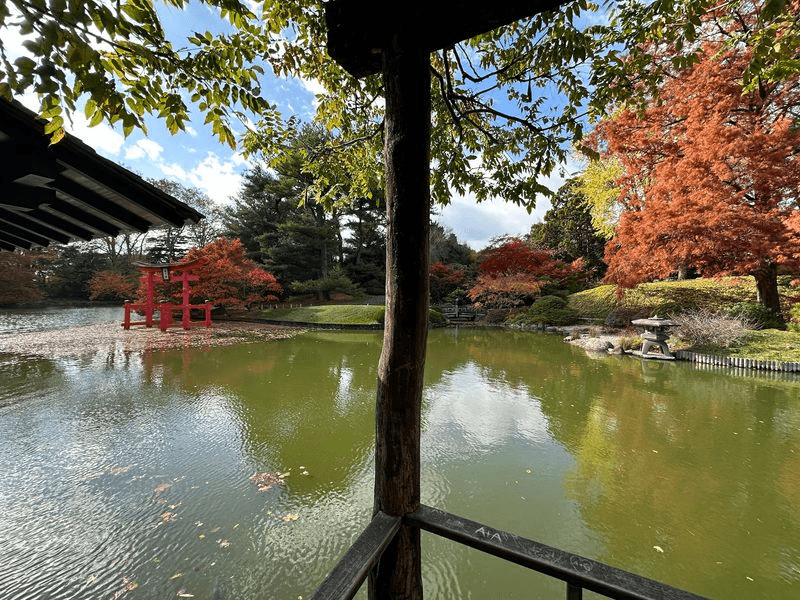
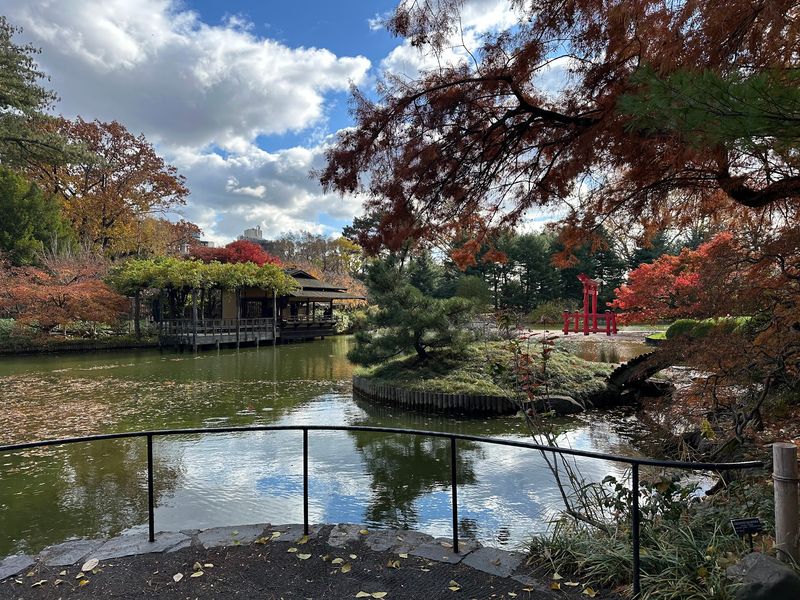
Calm water does half the decorating here. The 1½-acre pond often turns glassy, and every tree around it gets a twin.
Those reflections make fall colors feel even richer. A single red maple suddenly looks like two, one upright and one upside down.
Now add the vermilion torii gate standing in the water. Its reflection stretches below it, and photographers tend to plan whole visits around that view.
Here’s a clever design trick worth knowing. The pond has a winding, uneven shape, so you can never see all of it from one spot.
That means the mirror keeps changing as you move. One bend shows bridges, while another reveals the hills and the shrine.
Patience pays off at the water’s edge. Koi glide under the surface, and turtles often bask nearby, breaking the reflection with tiny ripples.
Bring a phone or camera, but don’t rush the shot. Stillness is the whole point, after all.
Try a few angles low to the water. You’ll catch more of the reflected color that way.
Honestly, this pond might be the best free art lesson in Brooklyn.
A Red Gate That Steals Every Photo
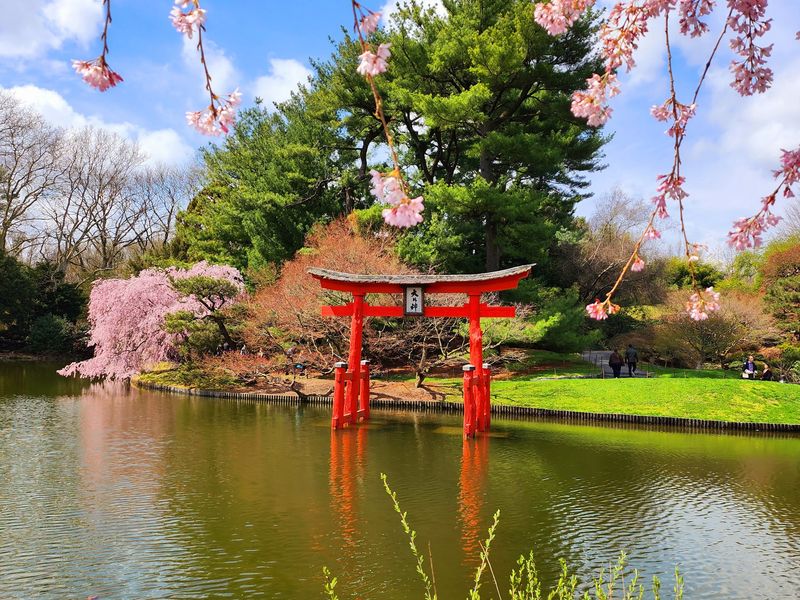
Bright orange-red wood rising out of a pond is hard to miss. The torii gate is easily the most recognizable feature in the garden.
In Japan, torii gates traditionally mark the entrance to a sacred Shinto space. This one stands in the water, linked visually to the shrine on the hill above.
Its color is called vermilion. Against dark evergreens and gold ginkgo leaves, it practically glows.
Fall makes it even more striking. Red gate, red maples, and a red reflection create a color combo that seems almost too perfect.
Look for the shrine on the hillside too. Together they give the landscape a sense of meaning, not just beauty.
Please admire it from the paths, of course. Wading in for a selfie isn’t part of the experience.
Morning light can bring out the warm tones nicely. Still water helps the reflection look sharp.
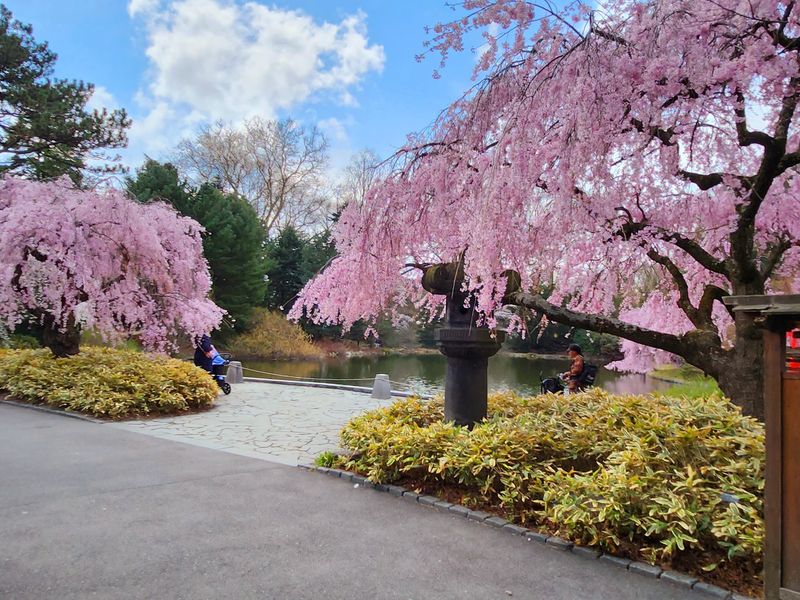
Spring visitors love this view with cherry blossoms. Autumn fans might argue their season wins.
I’m firmly on the autumn side of that debate. The gate just matches the leaves too well to ignore.
Wait Until You See This Waterfall Up Close
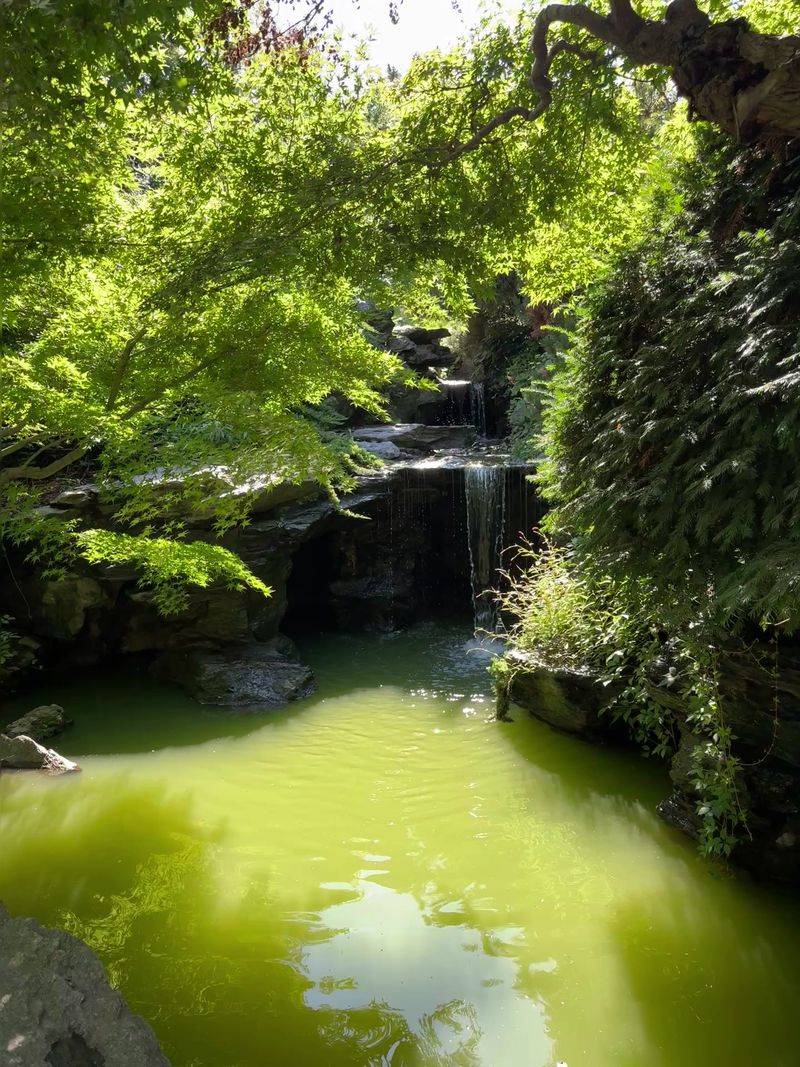
Most Japanese garden waterfalls use smooth, rounded stones. Designer Takeo Shiota went another direction entirely.
This waterfall spills over jagged shelves of Manhattan schist. That’s the rugged local rock that also sits under much of New York City.
The result feels wilder and more dramatic. Water breaks into small sheets as it drops from ledge to ledge.
I love that choice. It blends a classic Japanese idea with a stone that feels deeply local.
The sound matters as much as the look. Falling water helps soften the noise of the busy streets beyond the garden walls.
Find a spot along the path where you can watch it for a minute. The motion makes a nice contrast with the still pond nearby.
In fall, colorful leaves often frame the rocks. The dark schist makes reds and golds look brighter.
Kids usually enjoy spotting where the water lands. It’s a simple game that keeps young eyes busy.
Think of it as Brooklyn’s own small mountain stream. No hiking boots required, just a good look.
Every Bend In The Path Hides A Surprise
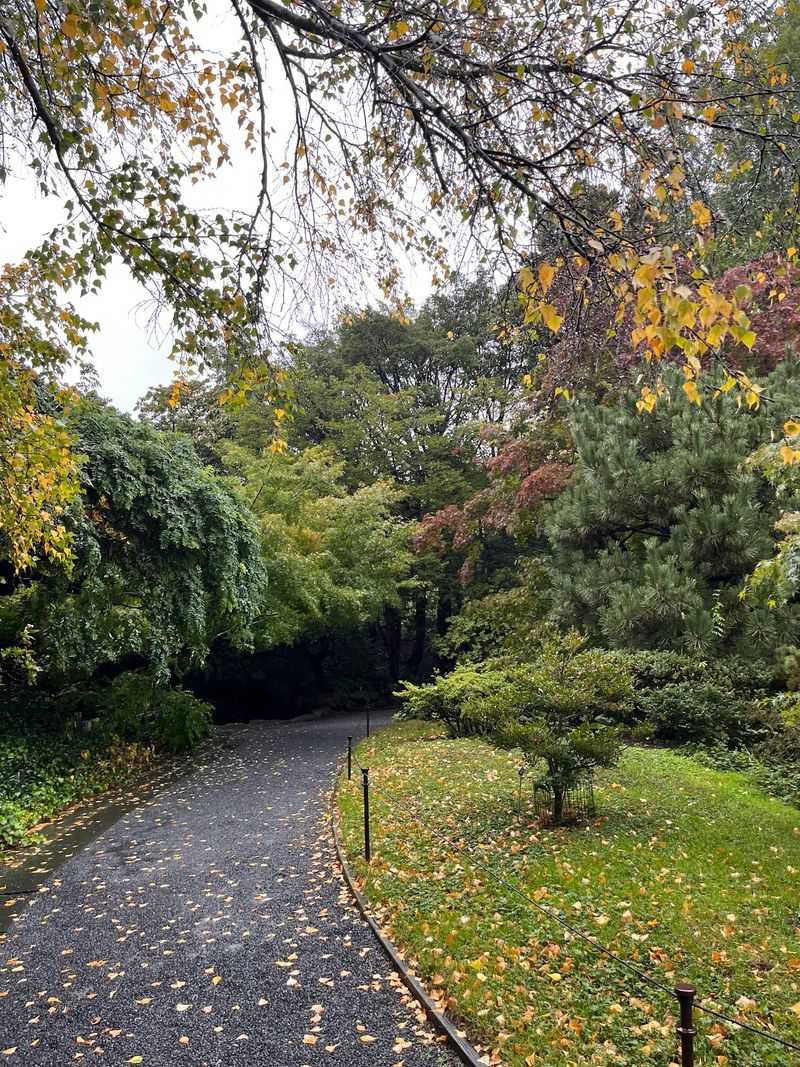
Shiota designed the garden to reveal itself slowly. It blends the ancient hill-and-pond style with a stroll-garden layout.
That means winding paths lead you around the water. Bridges, lanterns, and views appear one at a time, like chapters in a book.
Artificial hills curve around the pond. There’s also an island, which adds depth to every view across the water.
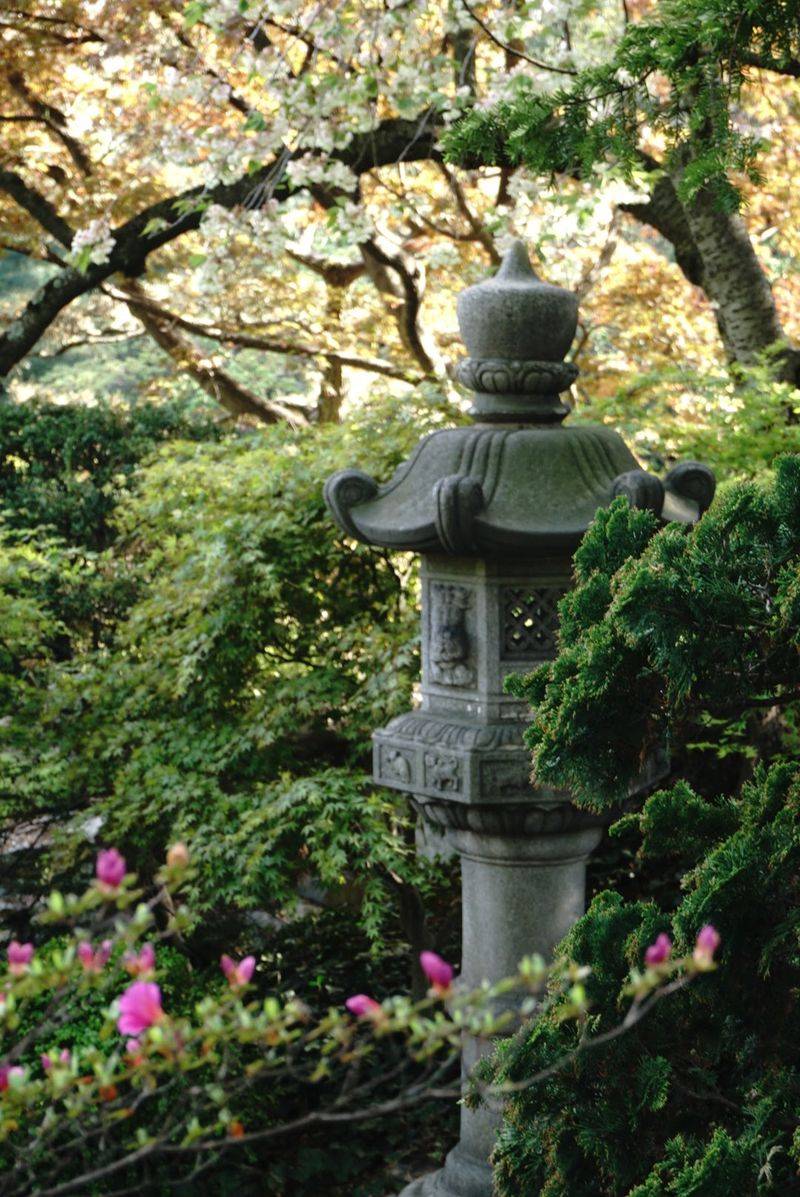
Stone lanterns sit along the way, and wooden bridges cross key spots. Each element gives your eyes a place to rest.
The paths are short enough for a relaxed loop. Still, rushing them would miss the whole idea.
Some sections use gravel, and the ground can be uneven. Comfortable shoes will make the stroll much nicer.
The garden occasionally offers 15-minute mini tours during special events. They highlight specific Japanese garden elements, so you learn what you’re seeing.
That’s a smart move for first-timers. A short tour can turn a pretty walk into a deeper experience.
My advice? Loop around twice. The second lap reveals details the first one hides.
Over A Century Old And Still Glowing
Back in 1914 and 1915, a Japanese-American landscape architect named Takeo Shiota built this garden. It became the first Japanese garden in an American public botanic garden.
A gift from early benefactor Alfred T. White paid for the project. Brooklyn has enjoyed the results ever since.
The garden’s story includes hard chapters too. In the late 1930s, anti-Japanese feeling led to vandalism, and the shrine was burned.
Recovery came through dedicated care. In 1947, Japanese-American gardener Frank Okamura was hired to restore and maintain it, and he rebuilt the shrine.
Okamura tended the garden until 1981. That’s decades of steady, patient work.
Major restorations followed around 1999 and 2000. Crews dredged the pond and renewed the shoreline to match Shiota’s original vision.
The garden then earned a New York Landmarks Conservancy preservation award in 2001. In 2015, it celebrated its centennial.
Knowing this history changes how the shrine looks. It feels less like decoration and more like a symbol of care.
Every red leaf here sits on a deep, layered story.
Plan Around The Shorter Fall And Winter Hours
Timing matters more than you’d think. Brooklyn Botanic Garden opens Tuesday through Sunday and closes on most Mondays.
Seasonal hours usually run from 10 a.m. to 6 p.m. From November through February, a shorter schedule ends at 3:30 p.m.
Last entry happens 30 minutes before closing. Late-autumn visitors should arrive early to enjoy the color in daylight.
Tickets can be booked up to 30 days ahead, and booking early is recommended. Same-day tickets may be available at admission booths.
Kids under 12 get in free, and seniors and students get reduced rates. Members enjoy free general admission all year.
Free community tickets are released daily too. Weekdays from November through February offer pay-what-you-wish admission.
That makes the garden easier to enjoy on a budget. It’s nice to see a big New York attraction keep doors open that way.
Check the schedule before you leave home. Hours can shift with seasons and holidays.
A little planning means more time with the maples and less time at the gate.
Getting There Is Easier Than Finding Parking In Manhattan
Good news for subway fans. The Brooklyn Botanic Garden sits at 990 Washington Avenue, Brooklyn, NY 11225.
Nearby stops include Prospect Park on the B, Q, and S lines. Eastern Parkway-Brooklyn Museum on the 2 and 3 lines works well too.
Driving is possible as well. Paid parking is available at 900 Washington Avenue, just down the street.
The larger garden covers 52 acres in central Brooklyn. It holds over 9,000 kinds of plants across about a dozen garden areas.
So the Japanese garden is just one stop. It’s a stunning one, though, and many visitors head there first.
Accessibility gets real attention here. Wheelchairs can be borrowed at each entrance, and the viewing pavilion has been updated for access.
The Visitor Center, café, and shop are accessible too. Just remember some garden paths are gravel and a bit uneven.
Leave extra time to explore beyond the pond. Other gardens nearby show off fall in their own ways.
Brooklyn makes it simple to swap traffic for tranquility.