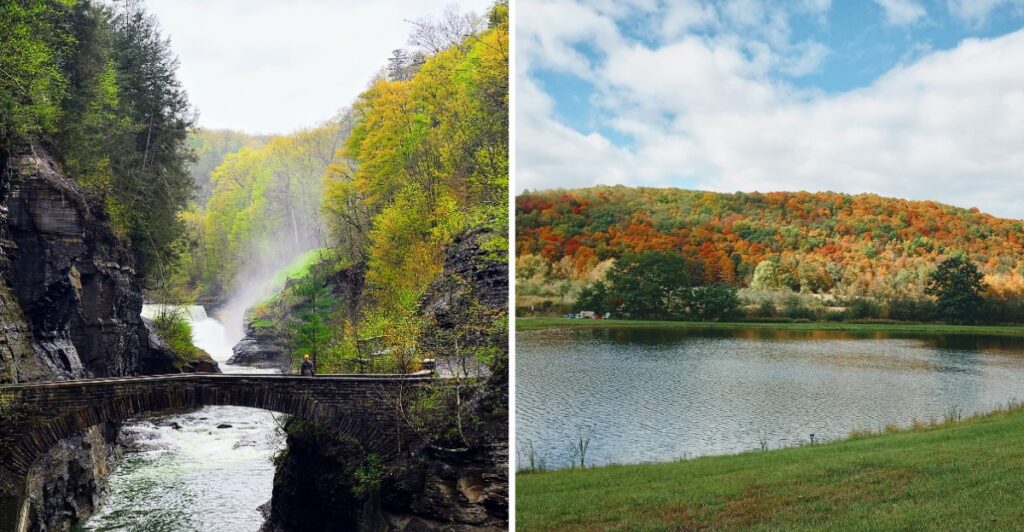
A gorge, three waterfalls, and peak fall color walk into Western New York.
The rest of the road trip immediately feels underdressed.
This is the kind of place that keeps interrupting you in the best way. You stop for one view, then another catches your eye. A short walk turns into a longer one because, well, look at that.
You do not need to see every corner to get the point.
Pick a few overlooks. Follow one trail. Let the waterfalls do the convincing.
There is a lot of ground here, so trying to squeeze in everything will only make the day feel rushed.
I’d bring good shoes and plenty of camera space.
Then I’d stop pretending one waterfall photo is going to be enough.
Three Entrances, Seventeen Miles Of River Scenery
Cornfields, wooded hills, and small towns appear along roads leading toward Letchworth State Park. Inside the park, the landscape changes as the Genesee River cuts through steep, forested terrain.
The park stretches roughly 17 miles along the river and covers approximately 14,427 acres. Several entrances provide access to different recreation areas, so choosing the right one can save considerable driving time.
The Portageville Entrance on the southern end leads toward Upper Falls, Middle Falls, the Glen Iris Inn, and the Genesee Arch Bridge.
The Castile Entrance provides access to Lower Falls and the Humphrey Nature Center. Farther north, the Mount Morris Entrance leads toward Highbanks Recreation Area.
That size matters when planning your day. Driving between sections takes time, particularly when you stop for photographs or short walks.
Coming from Buffalo or another Western New York destination? Decide which entrance matches your first stop before starting the drive.
For a waterfall-focused morning, begin at the southern end. For longer drives between canyon viewpoints, allow extra time to explore the northern areas.
Download a park map beforehand, since cell reception can vary across the wooded landscape. A paper map is also useful when choosing between the different sections.
Six-Hundred-Foot Cliffs Above The Genesee River
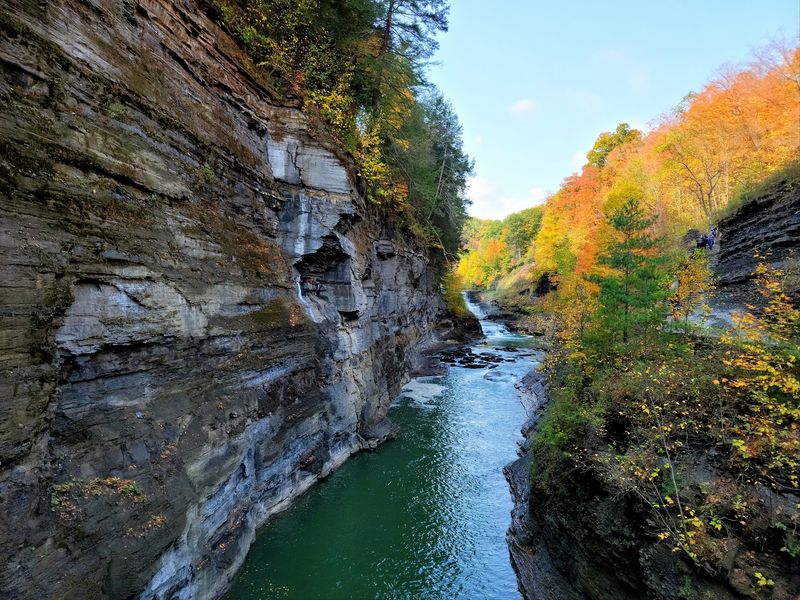
Six hundred feet. That’s approximately how high the gorge walls rise in some places, creating steep cliffs above the Genesee River.
The river carved its way through layers of rock over a long geological history. The exposed formations include sedimentary rock, leaving visible bands along the canyon walls.
Arizona’s Grand Canyon is considerably larger, but Letchworth has its own landscape of deep gorges, wooded cliffs, and powerful waterfalls.
The Genesee River travels through three major canyon sections within the park. Portage Canyon contains the three major waterfalls, while Great Bend Canyon features a pronounced curve in the river.
Farther north, Highbanks Canyon includes the Hogsback formation and additional views of the winding waterway.
Thick forests cover much of the surrounding terrain. Trees rise above exposed rock faces, and patches of vegetation grow along sections of the canyon walls.
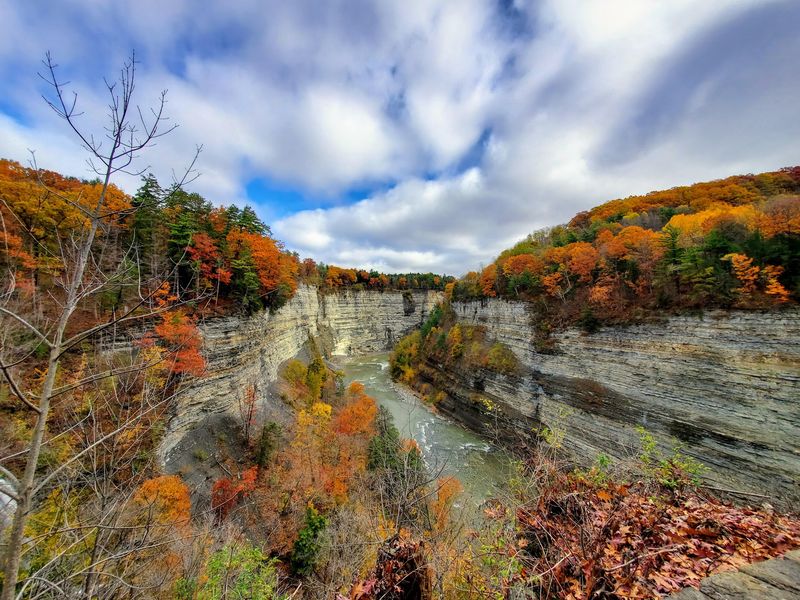
From an overlook, follow the river’s course through the bends below. Look for the narrow waterway between the steep slopes, then trace the layers of rock along the opposite wall.
The canyon has different formations along its length, so the view changes as you travel between the southern waterfall area and northern overlooks.
Stay behind barriers and follow designated paths when exploring the canyon rim. The steep terrain requires care, even at developed scenic stops.
A River Gorge Wrapped In Red, Gold, And Orange
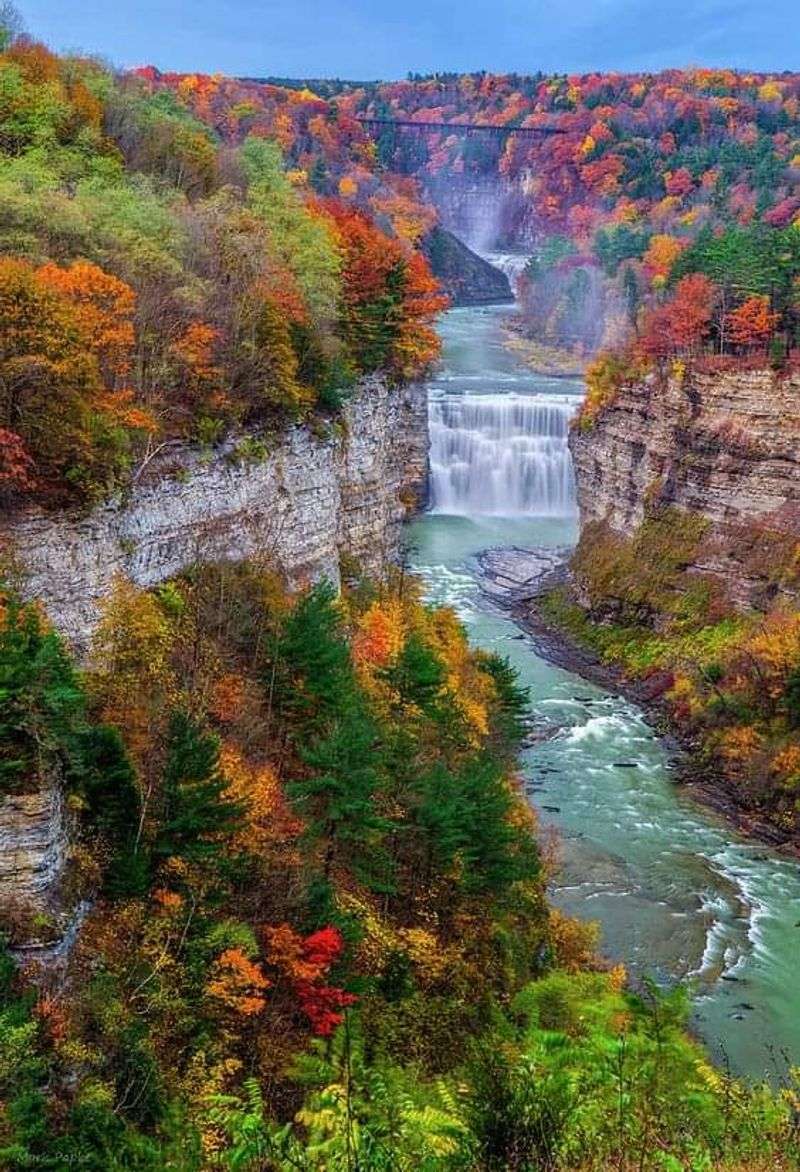
Crunchy leaves underfoot, crisp air, and a canyon filled with color make fall a distinctive season at Letchworth.
Maples, oaks, birches, and other hardwoods cover the slopes of the gorge. As temperatures change, their leaves develop shades of red, orange, yellow, and brown.
Against the gray rock walls, those colors create a striking contrast. Evergreen trees add darker patches, while the Genesee River continues through the landscape below.
The scenery changes depending on where you stop. From higher overlooks, entire hillsides spread across the canyon. Along established trails, individual trees, leaves, and rocky details come into clearer view.
You don’t need to be a photographer to appreciate it. Even a short walk near a designated overlook offers opportunities to see the changing forest.
Bring a warm layer, especially for mornings near the gorge. Autumn temperatures can shift throughout the day, and exposed viewpoints may feel cooler than sheltered trails.
Colors also change as the season progresses. One week may bring more golden leaves, while another reveals deeper reds across the wooded slopes.
For a break between stops, choose a designated picnic area and enjoy the surroundings. Pack a warm drink, settle in for a little while, and leave time to explore the next section of the park.
Inspiration Point, Hogsback, And The Canyon’s Biggest Views
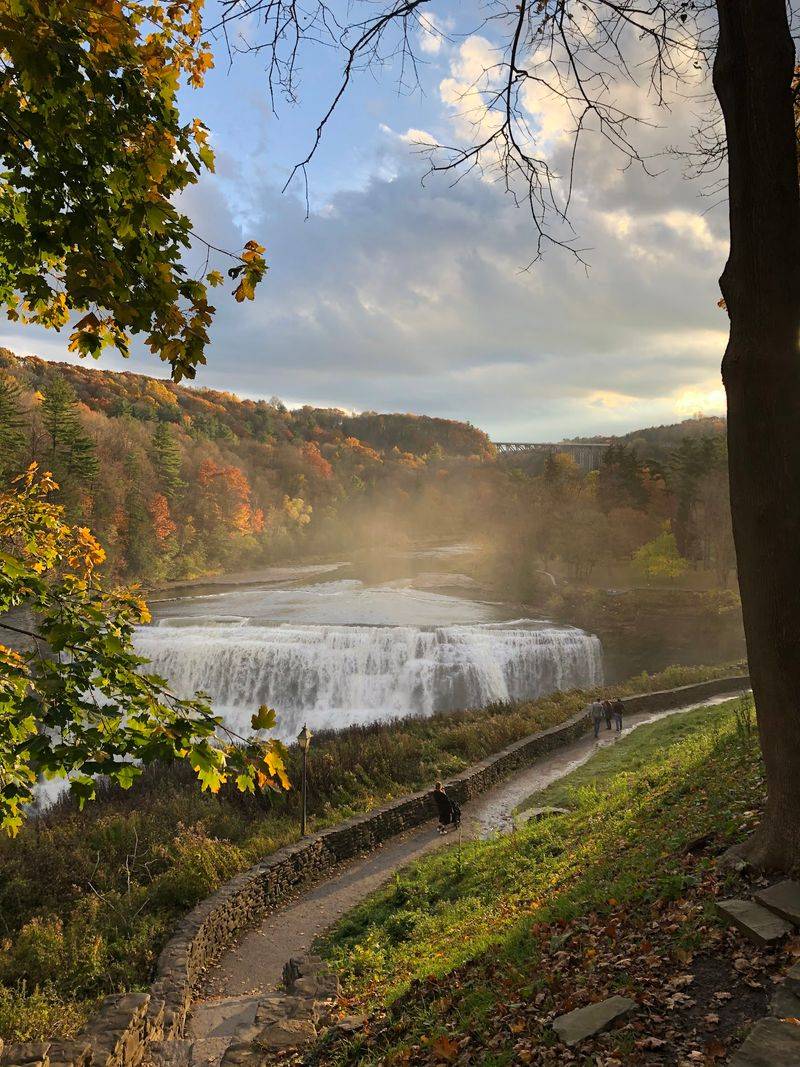
Some views reveal broad sections of the gorge, while others frame a waterfall or a distinctive bend in the river.
Inspiration Point offers a sweeping perspective across the canyon, with Middle Falls visible in the distance. Forested slopes surround the scene, providing opportunities to photograph both the waterfall and autumn foliage.
The nearby paths offer additional ways to explore the area without committing to a long hike. Take a few minutes to compare the waterfall with the surrounding ridges.
Hogsback Overlook provides another perspective farther north. Here, the Genesee River curves around a prominent landform, with wooded slopes rising on either side.
Archery Field Overlook offers views toward Great Bend Canyon, where the river follows a broad curve through the landscape.
Which overlook deserves the longest stop? Let the light and visibility decide. Passing clouds can change the appearance of distant cliffs, while clearer conditions reveal more of the surrounding ridges.
Several viewpoints are accessible from designated parking areas, making it possible to combine multiple stops during a driving visit.
Pack a picnic if you plan to spend several hours exploring. Designated picnic areas provide places to take a break before continuing along the park roads.
Keep to marked viewing areas and remain behind safety barriers. The canyon has steep drops, and some trails approach exposed terrain.
Upper, Middle, And Lower Falls Each Offer Something Different
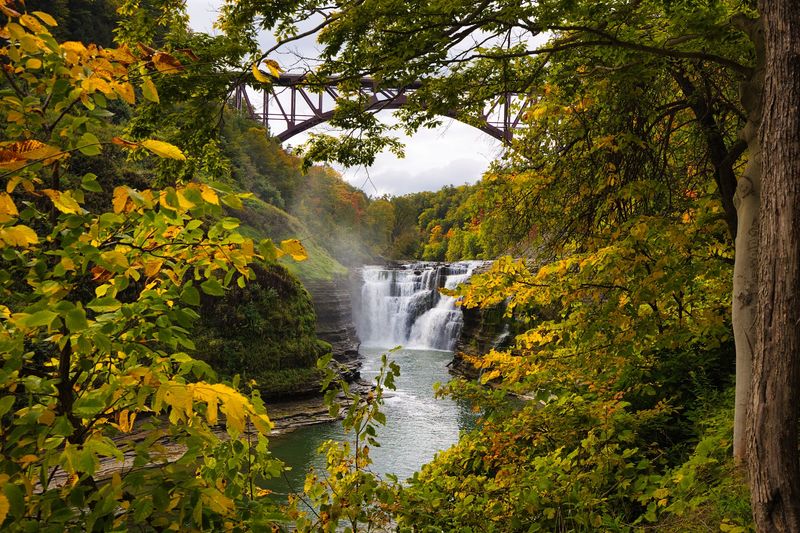
Rushing water, rocky cliffs, and wooded surroundings make the waterfalls a central part of exploring Letchworth.
The park has three major waterfalls along the Genesee River: Upper Falls, Middle Falls, and Lower Falls.
Upper Falls sits beneath the Genesee Arch Bridge, a railroad bridge spanning the gorge. The combination of moving water, exposed rock, and the bridge creates a distinctive scene.
Middle Falls is a broad waterfall near the historic Glen Iris Inn. Its wide drop provides another view of the river as water moves over the rocky ledge.
Lower Falls lies farther downstream and requires more walking to reach its viewing area. The approach includes approximately 127 steps, so remember that the return involves climbing them.
A pedestrian bridge near Lower Falls offers another perspective on the river and surrounding rock formations.
Upper and Middle Falls are close enough to explore during the same portion of a visit. The Gorge Trail, designated Trail 1, follows the western side of the canyon and connects several scenic areas.
The trail is linear rather than circular, so allow for the return distance when deciding how far to walk.
Wear shoes with good grip, especially in autumn. Wet leaves and damp stone can make paths slippery.
Access to the river itself is prohibited. Stay on established trails and viewing areas, and follow posted closures.
Catching October’s Changing Colors
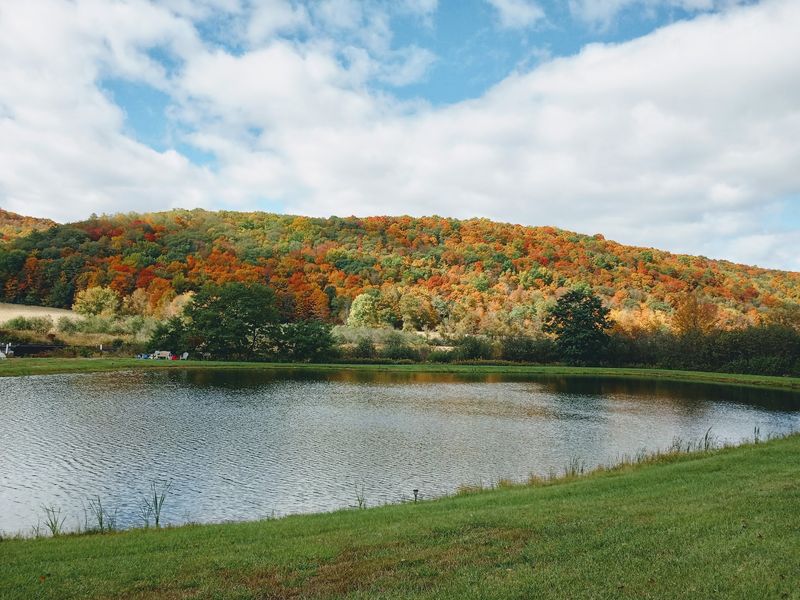
Timing matters when planning an autumn foliage trip. Arrive early in the season and many trees may still be green, but wait too long and some branches may already be bare.
Around Letchworth, colorful foliage typically develops through late September and October. Early to mid-October provides a useful general planning window, although conditions vary each year.
Temperatures, rainfall, and wind influence how quickly leaves change and how long they remain on the trees.
New York’s seasonal foliage reports provide regional updates that can help when choosing travel dates. Check conditions closer to departure rather than relying entirely on a fixed weekend.
Weekdays may offer more flexibility at parking areas than busy autumn weekends, although traffic changes with weather and seasonal conditions.
Morning light can reveal different details in the gorge than afternoon sunshine. Cloudy skies can also help when photographing foliage without harsh shadows.
The exposed rock formations, winding river, and waterfalls remain visible after the brightest foliage has passed. Later in autumn, fallen leaves reveal more of the wooded slopes and rocky ground.
Letchworth State Park is open year-round from 6 a.m. to 11 p.m. daily, although individual facilities and trails have separate schedules or access restrictions.
Plan your walks around available daylight rather than the park’s closing time. Autumn afternoons shorten quickly, particularly when exploring wooded trails.
Choose your travel dates with some flexibility, and let the weather help determine whether to spend more time at the overlooks or along the trails.
Before You Explore: Parking, Trails, And Park Access
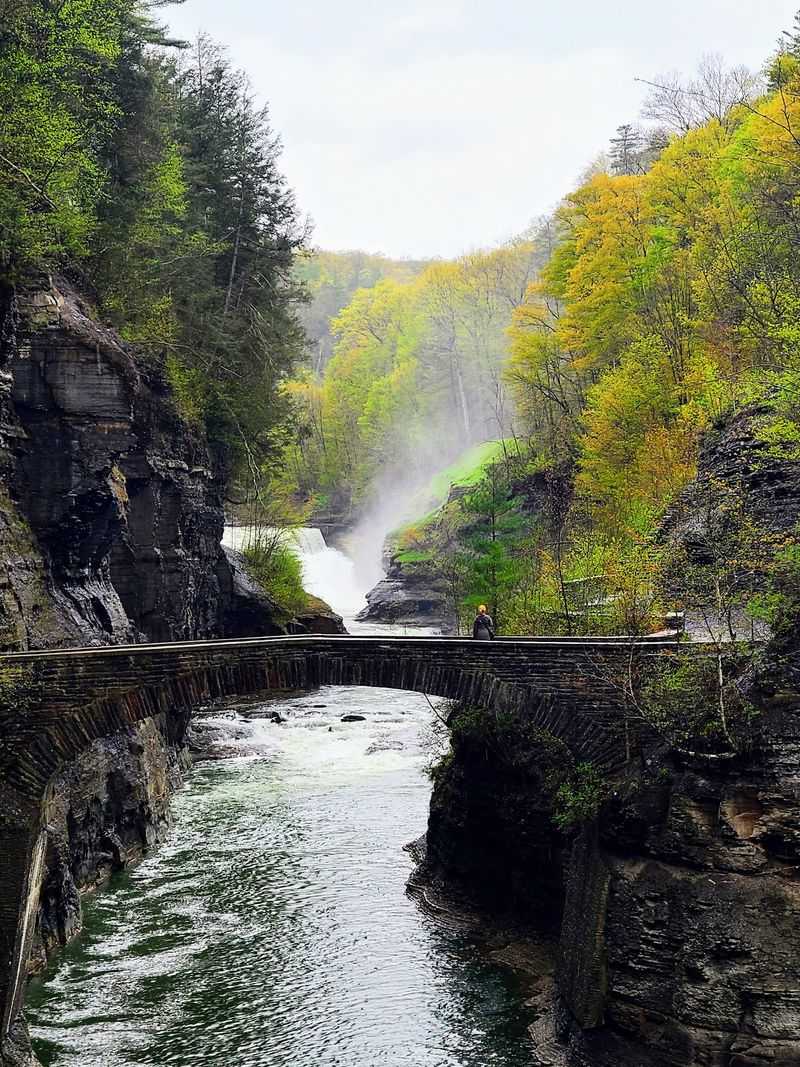
Good planning starts with deciding which sections of the park matter most. The southern end provides convenient access to the major waterfalls, while northern areas offer additional canyon overlooks and recreation spaces.
For navigation, the park’s official address is 1 Letchworth State Park, Castile, NY 14427. Select your preferred entrance separately, since the park covers a large area with multiple access roads.
Letchworth has approximately 66 miles of hiking trails, ranging from short walks to longer routes through wooded terrain. Choose trails that match your available time and walking ability.
For 2026, the vehicle entrance fee is $10, collected daily from 9 a.m. to 5 p.m. between May 8 and October 18. The fee includes access to the museum and swimming pool when those facilities are operating.
The Humphrey Nature Center is open daily from 10 a.m. to 5 p.m. Its exhibits explore the park’s wildlife, plants, geology, and river ecology.
Restrooms, picnic areas, and parking facilities are available at developed locations throughout the park. Bring drinking water, snacks, and comfortable shoes.
Pay attention to trail closures. Trail 7 between Middle Falls and the Genesee Arch Bridge is permanently closed. Other trails and roads can also have temporary restrictions, so check access conditions before setting out.
Camping and cabin accommodations are available by reservation during their designated seasons. Hot air balloon flights are another option, depending on the operator, weather, and availability.
For a first visit, allow several hours for the waterfalls and overlooks. A longer stay provides time for additional trails and the northern canyon areas.
Start with the waterfalls if their rocky ledges and rushing water catch your interest, or head toward the northern overlooks for wide views of the river’s sweeping bends.
From the higher viewpoints, the Genesee River winds between cliffs lined with autumn trees, while the waterfalls continue their course through the rocky gorge below.