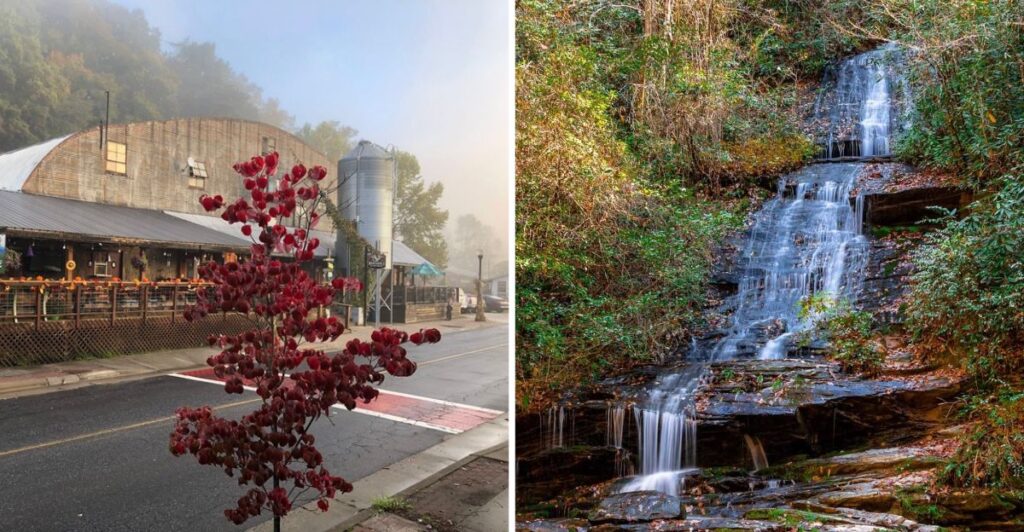
Fall does not arrive all at once in the mountains. It works its way down like it is taking the scenic route too.
That makes this North Carolina town especially fun in October. One week, the higher ridges may be glowing. A little later, the color creeps closer to town and changes the whole view again.
The center is compact, so the day does not need much choreography. You can wander, ride, or head toward the waterfalls without turning the trip into a spreadsheet.
The leaves are already improvising, so you might as well do the same.
The Town Grew From Charleston Into A Smoky Mountain Hub
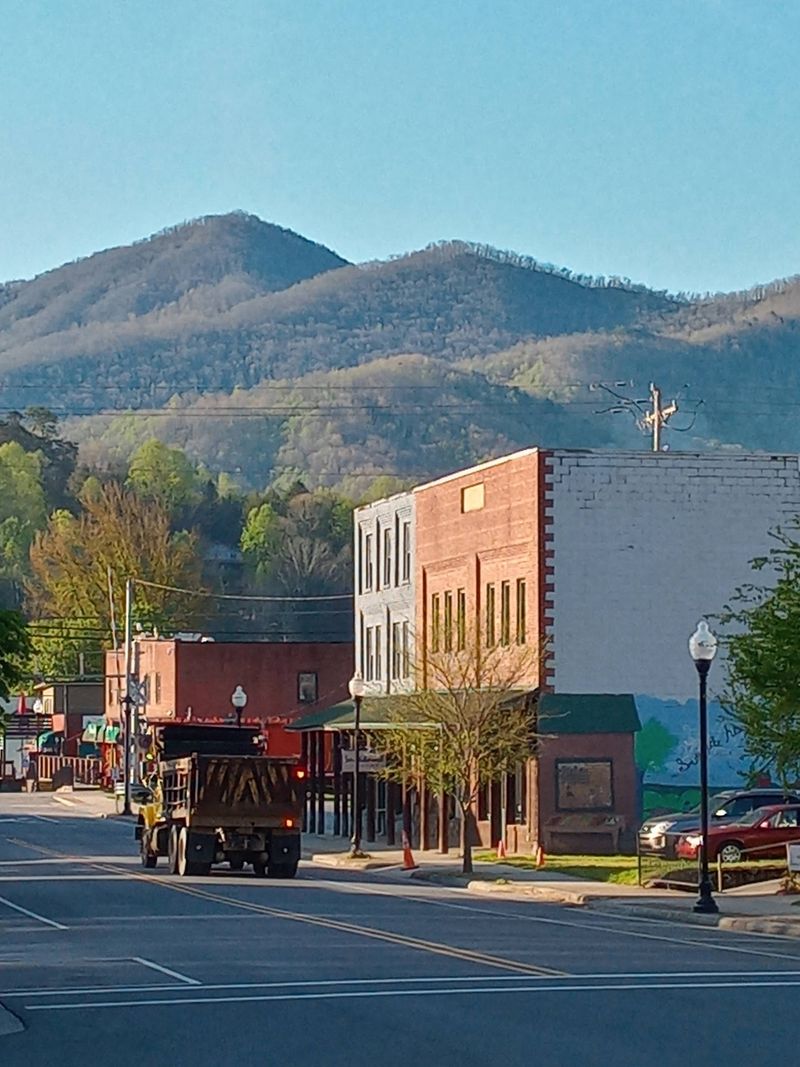
Bryson City was established in 1887, but the community was originally known as Charleston before taking the name of founder Thaddeus D. Bryson. It is the county seat of Swain County, a role it still holds today.
The scale remains small. The 2020 Census counted 1,558 residents, which helps explain why downtown can be crossed without the distances you would expect in a larger mountain destination.
Shops, restaurants, offices, and visitor services sit close together in the central district.
Great Smoky Mountains National Park is close enough that a morning downtown can turn into an afternoon among creeks, forest, and waterfalls without a long transfer between the two.
That combination gives you options when the weather changes. A clear morning can go to the trails, while a cooler or drizzly stretch can shift the plan toward downtown, the railroad, or the train museum.
Fall simply makes the transitions more colorful. The mountain backdrop changes first, then lower slopes and trees around town begin catching up as the season moves deeper into October.
Fall Color Arrives In Layers, Not All At Once
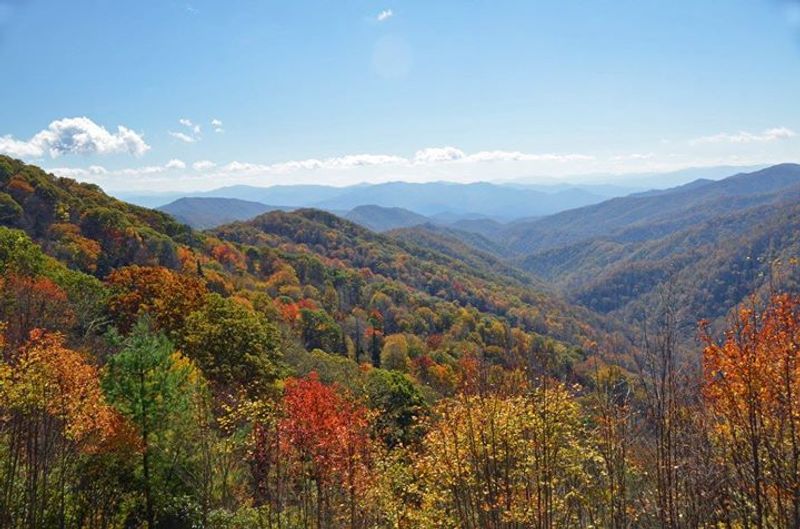
Trying to pick one universal “peak week” for Bryson City misses how the Smokies work. Elevation spreads the color change over several weeks, so the strongest view depends on where you plan to spend the day.
At the highest elevations, hints of fall can appear by late September, with stronger color often developing in early October.
Areas around 4,000 to 5,000 feet generally follow during the second week of October, while elevations around 3,000 to 4,000 feet often become more colorful during the third week.
Lower elevations take their turn later. By the fourth week of October, downtown Bryson City, Deep Creek, the Nantahala Gorge, and the Road to Nowhere can all be better bets than the highest ridges, where many leaves may already be past their strongest display.
Rain, wind, and the timing of cooler weather can move that schedule forward or backward. That makes flexibility more useful than trying to predict a single perfect date months ahead.
One day can even show several stages at once. Drive higher and you may find thinner late-season color, then return toward town and discover trees that are only reaching their brightest stretch.
Downtown Keeps Shops And Mountain Views Close Together
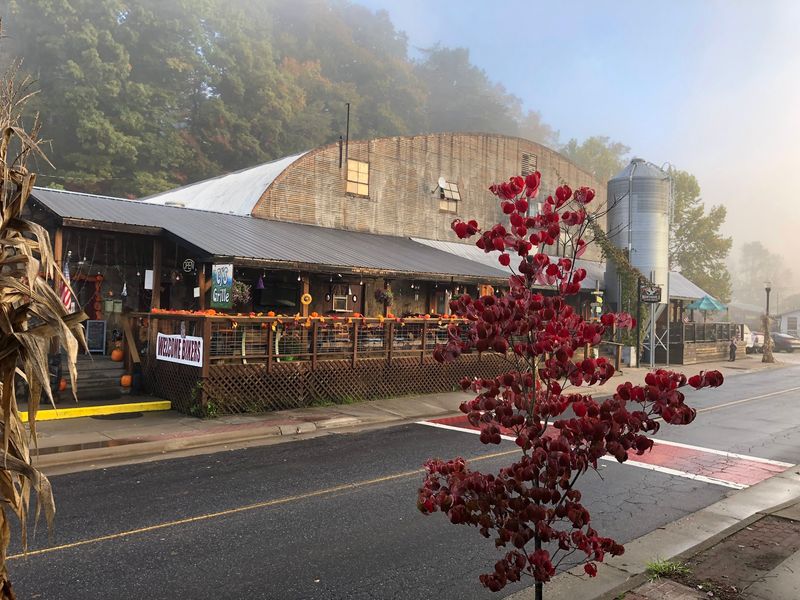
Downtown Bryson City is built at a pedestrian scale, with small shops, restaurants, offices, and other businesses grouped through a compact core. That makes fall wandering pleasantly simple: park, choose a direction, and let the streets do most of the planning.
Main Street and Everett Street put you close to the town square, visitor services, and the railroad area.
Mountain ridges rise beyond the buildings, so autumn color does not stay confined to one overlook outside town. It becomes part of the backdrop while you browse, eat, or wait for a train.
There is one practical detail for 2026 visits. A Main Street streetscape project began in late July and affects the eastern part of Main Street from the Town Square toward the St. Joseph’s Catholic Church and IGA area.
Sidewalks, parking spaces, and traffic lanes can be affected while work continues.
Give yourself time to adjust the route rather than expecting every parking space or sidewalk segment to work exactly as it did before construction.
Once settled, the distances remain short enough to mix browsing with a meal or a train departure without repeatedly moving the car.
The Railroad Turns Fall Color Into A Moving View
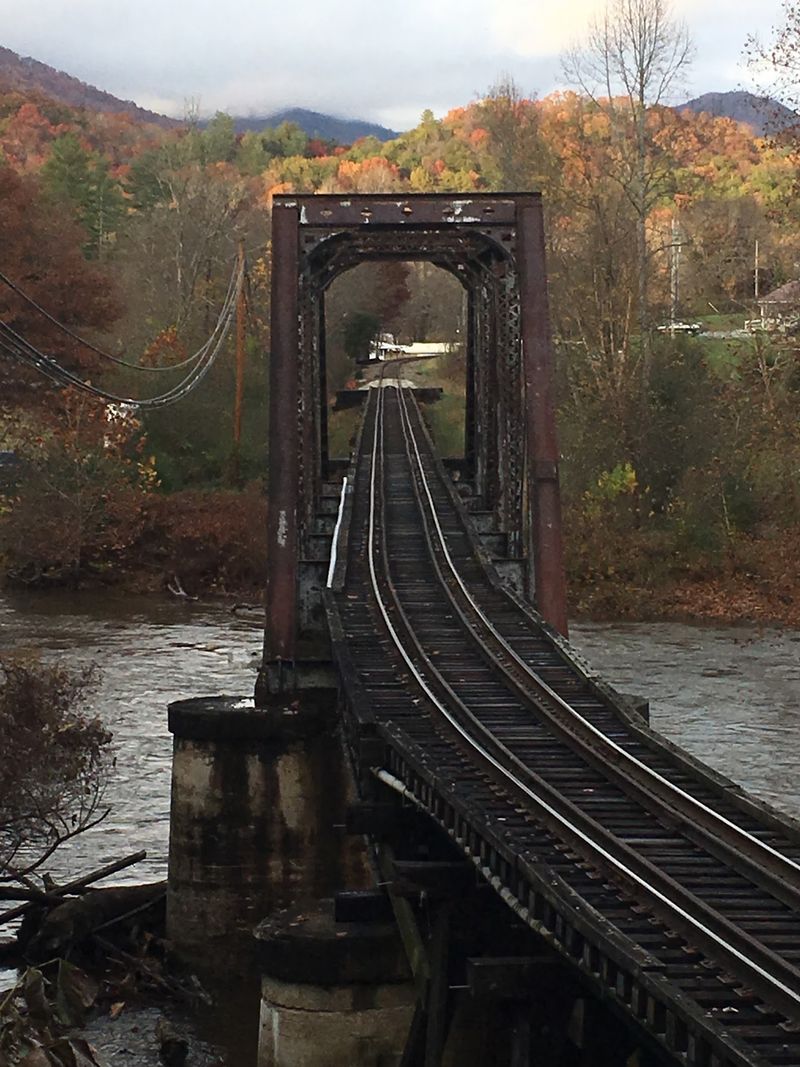
A train window changes the pace of leaf watching. Instead of choosing overlooks and pulling off the road, you can sit back while river valleys, forest, trestles, and mountain scenery move past the glass.
The Great Smoky Mountains Railroad departs from Bryson City, and its current Nantahala Gorge Excursion runs through summer and fall.
The round trip covers 44 miles, lasts about four and a half hours, and follows scenery that includes Fontana Lake and the Nantahala River before a layover in the gorge.
That length makes the excursion a substantial part of the day rather than a quick downtown attraction. Check the schedule before building the rest of your plans around it, especially during the busiest fall weeks.
Train fans can also add the Smoky Mountain Trains Museum. The collection includes thousands of Lionel engines, cars, and accessories, along with an operating layout and children’s activity area. Admission is included with a train ticket.
Even without riding, the railroad brings movement into the center of town. On a fall day, the depot area can be a useful place to pause before deciding whether the next stretch belongs to downtown or the mountains.
Deep Creek Puts Waterfalls And Trails Just North Of Town
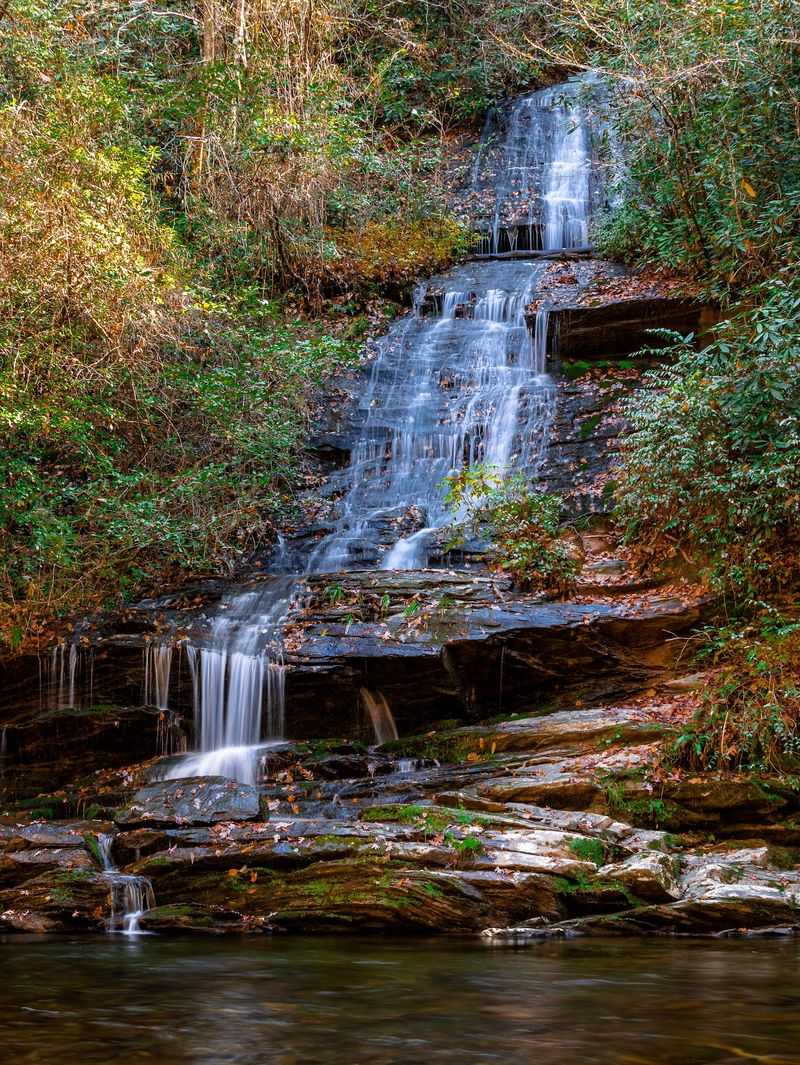
When you want leaves overhead instead of across a distant ridge, Deep Creek brings the forest close. This area of Great Smoky Mountains National Park sits just north of Bryson City and is known for streams, waterfalls, wooded trails, a picnic area, and a campground.
Several loop hikes lead through the forest to cascades, giving you choices that do not require committing to an all-day trek. The area also includes one of the relatively few park trails where mountain bikes are permitted.
Deep Creek’s lower elevation matters in autumn. Color here can arrive later than it does on the high ridges, which is why late October and even early November can still produce a strong seasonal display when higher places are already thinning out.
Water adds another layer to the scenery. Creeks and waterfalls break up the forest, so the walk is not only about looking upward at leaves. Keep in mind that swimming and tubing are not recommended in park waters, and water conditions can change.
For a slower stop, the Deep Creek picnic area is open year-round from sunrise to sunset. Its restrooms are seasonal, generally operating from mid-April through late October.
The Visitor Center Makes A Useful Starting Point
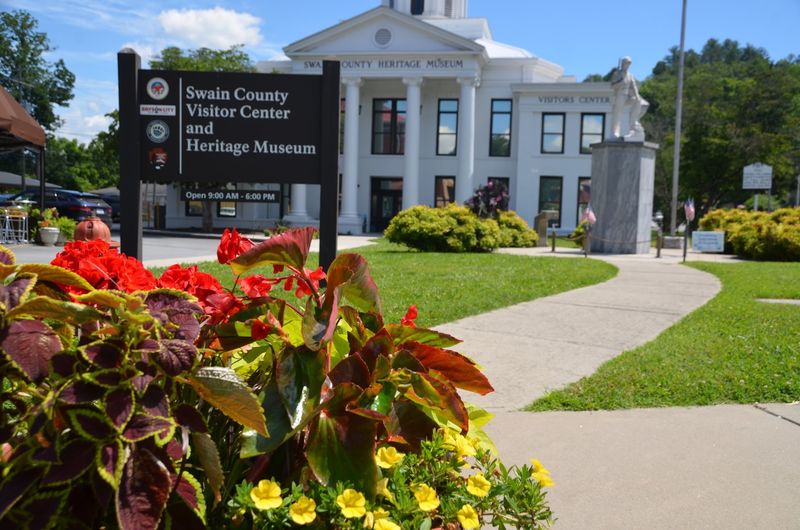
If the color map looks confusing when you arrive, the downtown visitor center gives you a practical first stop. Staff can help with current conditions, maps, brochures, scenic drives, and ideas for matching the day’s color to the elevation where it is showing best.
The Swain County Visitor Center occupies the old courthouse building at the intersection of Main and Everett streets. That puts it within the compact downtown area rather than requiring a separate drive outside town.
It can also help when weather changes the plan. A mountain route that looked ideal several days earlier may not be the best choice after strong wind or rain, and staff can point you toward alternatives.
This is also a useful place to sort out how much driving you actually want to do. Higher elevations may offer one kind of color, while downtown, Deep Creek, or the Nantahala Gorge offers another. You do not need to chase all of them in one afternoon.
The current visitor center address is 2 Everett Street, Bryson City, NC 28713.
After that, the day can stay simple: walk downtown, head toward Deep Creek, board the train, or choose a scenic drive based on where the leaves are cooperating.
Late October Often Brings Color Down Into Town
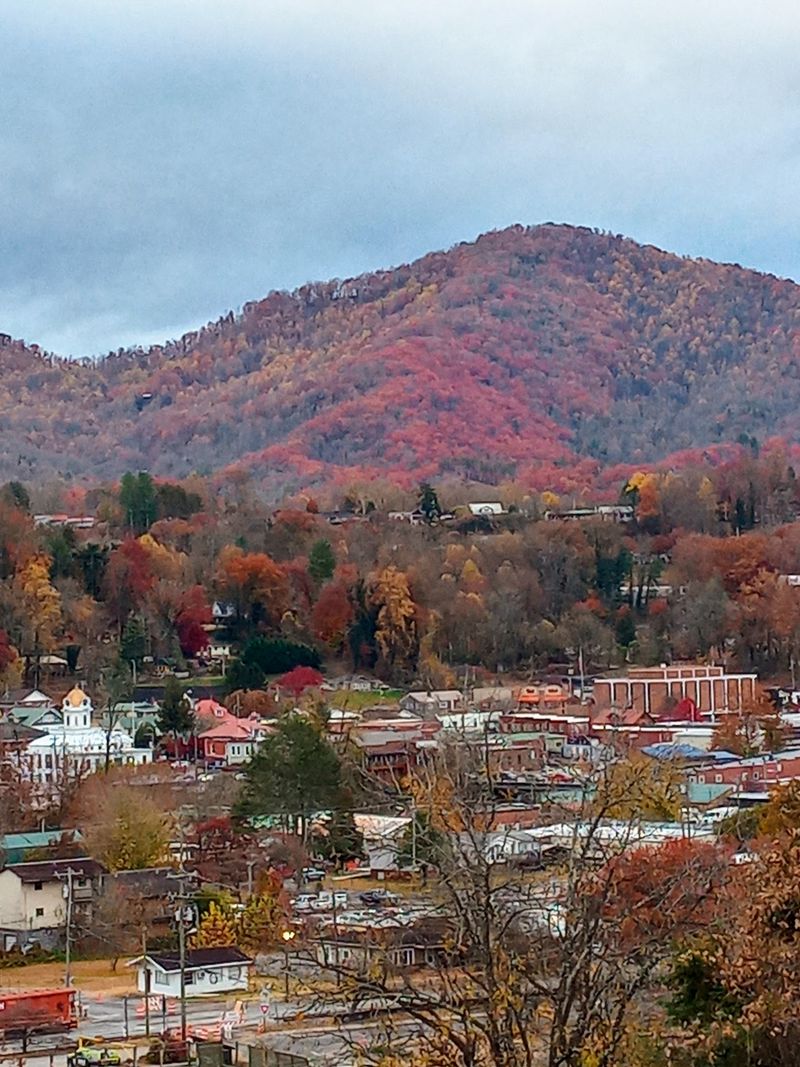
Late October is especially useful if you want fall color without spending the whole day chasing the highest overlooks. By the fourth week of the month, lower elevations around Bryson City often begin carrying more of the show.
Downtown, Deep Creek, the Road to Nowhere, Fontana Dam, and the Nantahala Gorge all sit within the lower-elevation window that can become more colorful toward the end of October.
Early November can still work too, although conditions become less predictable as wind and rain strip leaves from some areas.
That is why a Bryson City fall trip rewards a flexible itinerary. You can arrive with a train reservation or one must-do walk, then leave the rest of the day open enough to follow the strongest color.
A high ridge may be past peak while the valley still glows. Another year, weather can speed things up. The broad season matters more than pretending every autumn follows the same calendar.
For travelers who like choices, that is good news. You can use downtown as the center, then move higher or lower depending on the week, the weather, and how far you want to drive.
So, which week would you circle on your calendar?