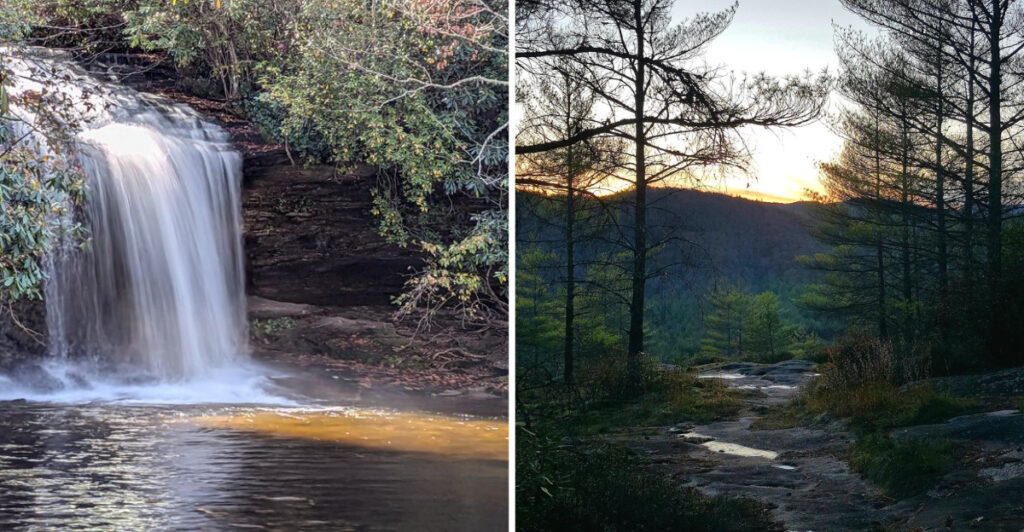
What if your swimming hole made you hike for it first?
This North Carolina escape trades easy parking for a forest trail, then pays you back with a waterfall dropping into a broad pool made for cooling off.
The hike is short enough for a half-day outing, but it still has a backcountry feel. Trails replace pavement, and careful footing matters near the water.
That extra effort is part of the appeal. You do not just stumble onto this place between errands.
You earn the swim, and honestly, that makes the first splash hit different.
A Mountain Trail Leads To The Waterfall Pool
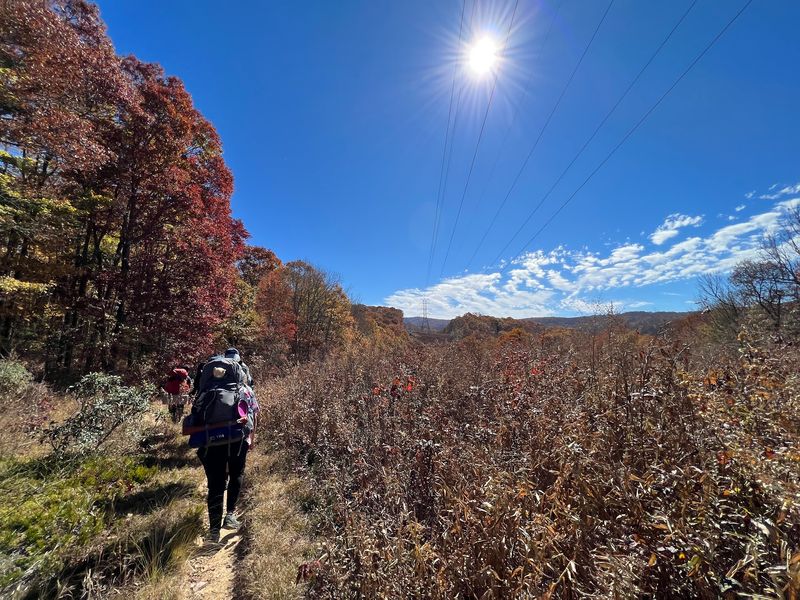
Schoolhouse Falls sits in Panthertown Valley, part of Nantahala National Forest in western North Carolina. One of the most direct approaches starts at the Cold Mountain Gap Trailhead, reached by gravel roads near Lake Toxaway.
From that entrance, you follow Panthertown Valley Trail before turning onto Little Green Trail for the final approach. Mileage varies slightly by route and measurement, but the direct outing is generally under three miles round trip.
The first half trends downhill into the valley, which makes the return worth remembering. The walk back is mostly uphill on uneven ground, so save some water and energy for the final stretch.
This is a primitive forest trail, not a paved recreation path. Wet areas, mud, roots, and uneven surfaces can appear along the way, especially after rain.
Parking at Cold Mountain Gap is limited, and the final access road is gravel. Cold Mountain Road continues for several miles before the final turn toward the trailhead. If you drive in slowly and arrive with enough daylight, the approach is easier.
The hike is manageable for many visitors, but you still get a true backcountry setting instead of a roadside waterfall stop.
The Pool Sits Beneath A Roughly Twenty-Foot Cascade
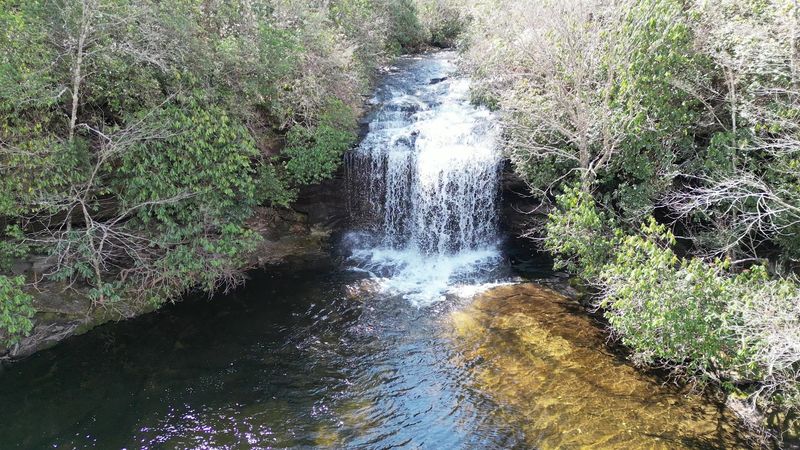
Schoolhouse Falls is modest in height compared with some western North Carolina waterfalls, but its broad shape gives it plenty of presence. Water spreads across a rock ledge before dropping into the pool below.
The cascade is about twenty feet high, with a broad drop rather than a towering plunge. Its modest height keeps the pool and waterfall visually connected from the bank.
The pool is the feature that turns the waterfall into a warm-weather destination. Swimming and wading are permitted, and you will find sandy-bottomed areas with shallow sections suitable for wading.
Mountain water can stay cool even during summer. After rain, you may find different depths and stronger current than on a dry-weather visit.
Wet rock around waterfalls becomes slick quickly. Staying below the cascade and avoiding steep ledges keeps the visit focused on the water rather than climbing.
Walking behind the falls should be avoided. Rare ferns, mosses, liverworts, and other sensitive plants grow in the wet waterfall microclimate and can be damaged by foot traffic.
You can enjoy the full cascade from the pool and bank without stepping behind it.
Summer Brings Cool Water To A Mountain Backcountry Setting
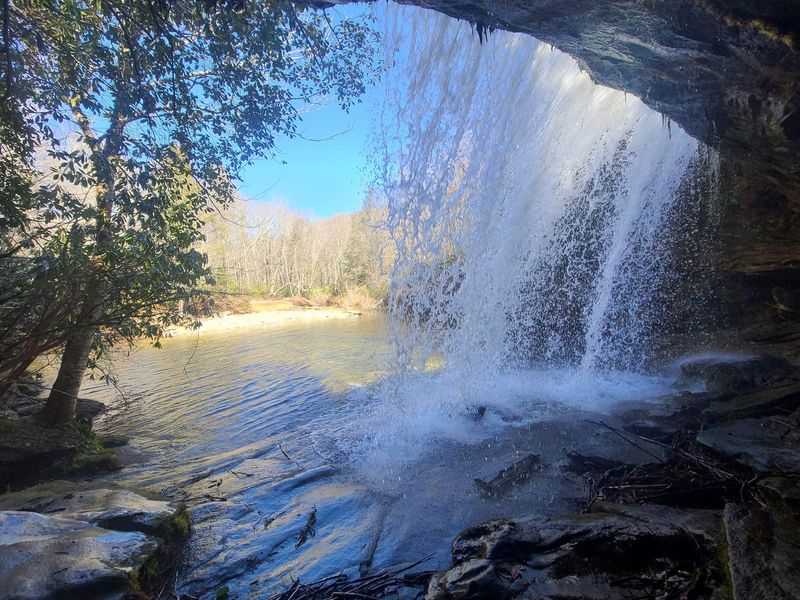
Schoolhouse Falls is best known as a swimming hole, and the pool becomes especially appealing when western North Carolina turns warm. The water stays cool, giving hikers a natural place to wade or swim after the walk into the valley.
This is an undeveloped backcountry swimming spot rather than a managed swimming facility. Panthertown is intentionally primitive, so you should arrive prepared for a simple forest setting without the conveniences of a developed beach area.
Bring a towel, drinking water, proper hiking shoes, and dry clothing if you plan to spend time at the pool. Flip-flops are better saved for somewhere with smoother ground.
The sandy shallows can be used for wading, but this is not a managed swimming area. If children are with you, keep them close around moving water and slick rocks, and avoid jumping or diving because underwater conditions are not always visible.
If you bring a pet, keep it under control at all times. The valley is also wildlife habitat and part of a bear management area.
The pool is only one part of the outing. Give yourself time to cool down before the uphill return, especially on a warm afternoon.
Panthertown Valley Adds Miles Of Backcountry Exploration
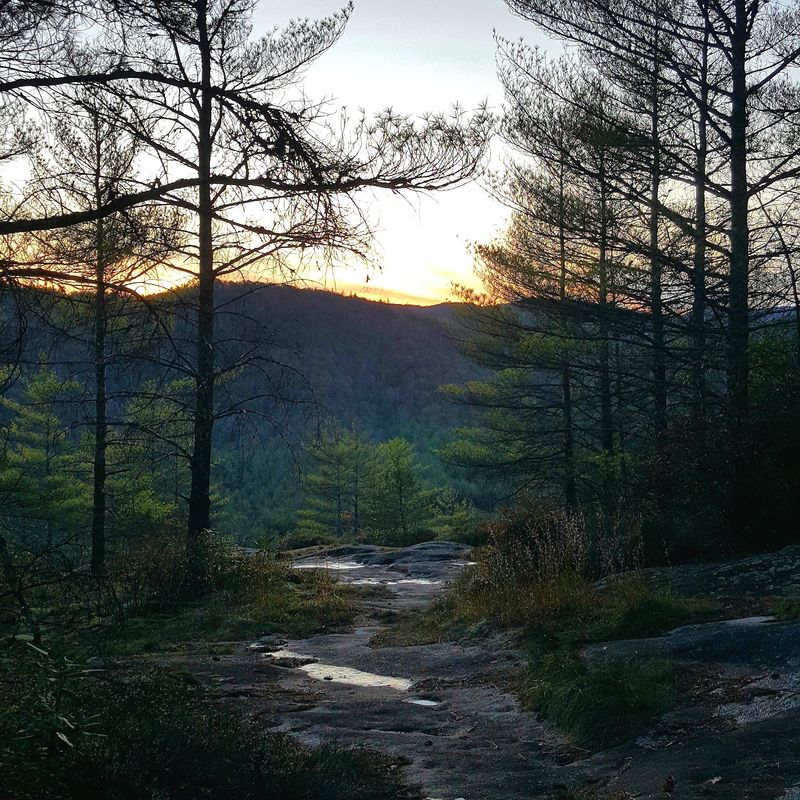
Schoolhouse Falls occupies one small corner of a much larger landscape. Panthertown Valley covers 6,311 acres of public backcountry within Nantahala National Forest and contains more than thirty miles of non-motorized trails.
Those trails cross broad valleys, creeks, bogs, rock domes, forest, and waterfall country. Dozens of cascades and falls are scattered through the area, so you can turn a short Schoolhouse Falls trip into a longer route when time and experience allow.
Little Green Mountain rises near the falls, and you can also connect with routes toward Greenland Creek Falls, Granny Burrell Falls, overlooks, and deeper sections of the valley.
Those additions bring more mileage and more complicated navigation than the direct waterfall outing.
Primitive backcountry camping is allowed in Panthertown. Overnight groups are limited to twelve people per site, and bear-resistant food containers are required. Bear-proof storage boxes are also positioned at several locations in the valley.
Black bears live throughout this protected habitat, so food, trash, and scented items need secure storage.
The larger trail network is a good reason to carry a map even if Schoolhouse Falls is your only destination. You can keep the trip to a half-day swim or use the falls as the first stop on a longer backcountry hike.
Navigation Is Part Of The Schoolhouse Falls Hike
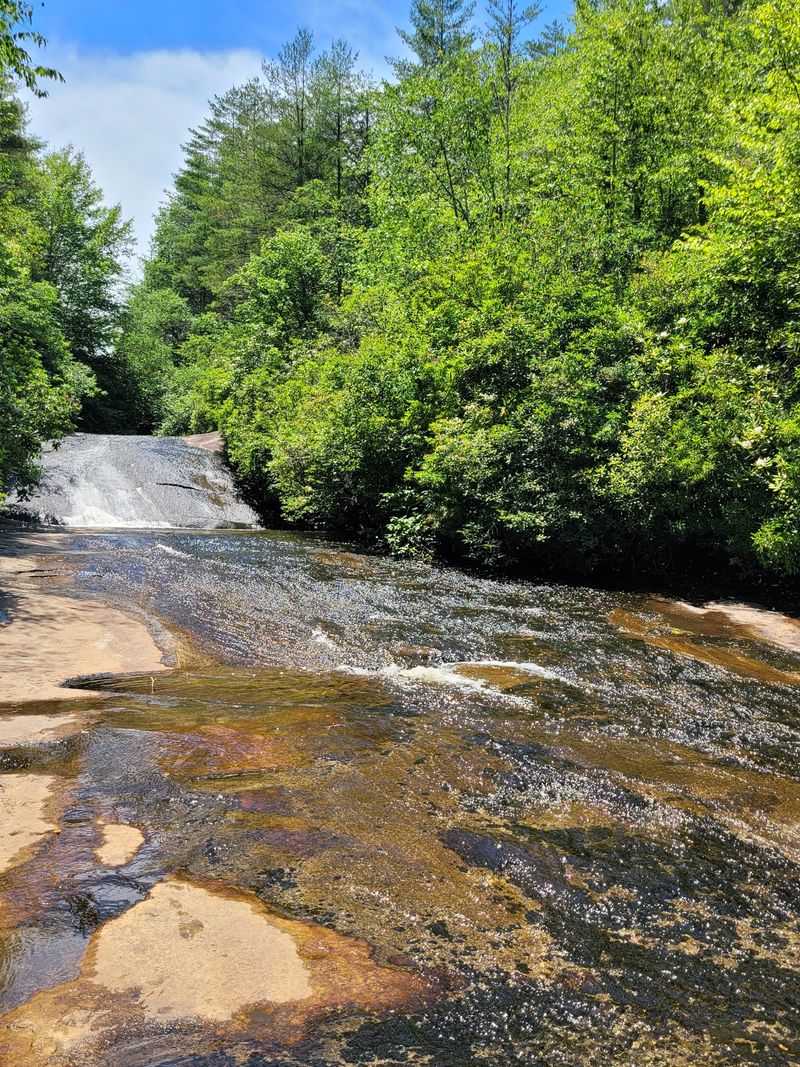
Panthertown is not a place where you should depend on large signs at every turn. The valley has more than thirty miles of public trails along with old roads and side paths, so a good map and basic navigation skills matter.
The Cold Mountain Gap approach begins on Panthertown Valley Trail, Forest Service Trail 474. The final turn toward Schoolhouse Falls uses Little Green Trail, Forest Service Trail 485.
Download a map before leaving reliable cell service, and carry a paper copy if you want a backup when a phone battery runs low. Staying on the maintained route also protects vegetation and reduces the chance of wandering onto an unofficial path.
Weather can change trail conditions quickly. If rain moves through, dirt sections may turn muddy, stream levels can rise, and rock surfaces become slick. A light rain layer can be useful even when your day begins comfortably.
There are no water fountains or restrooms at the Panthertown trailheads or inside the valley. Carry enough drinking water for both directions, especially because you will climb more on the hike out than on the hike in.
The route is short enough for a half-day trip, but if you treat navigation and preparation as part of the outing, the experience is much smoother.
Protecting The Waterfall Matters As Much As Enjoying It
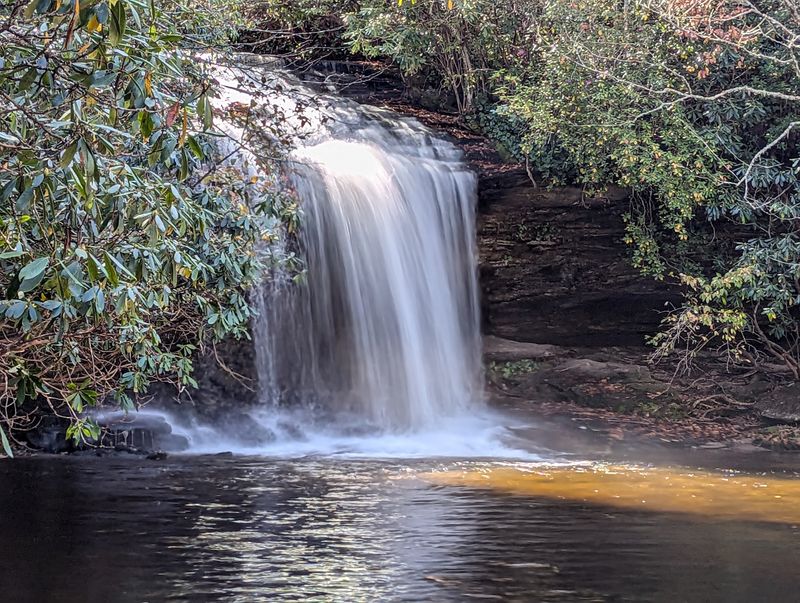
Schoolhouse Falls is easy to approach once you reach the pool, but the surrounding environment is more delicate than it looks. Wet areas around Panthertown’s waterfalls support rare plants that depend on cool, damp conditions.
You can help protect the area by staying on established trails and durable surfaces. Walking behind waterfalls, cutting new paths, moving rocks, or stepping through sensitive vegetation can damage places that recover slowly.
The shoreline near Schoolhouse Falls has experienced enough use to become part of restoration work in Panthertown.
Conservation projects have addressed erosion and damaged areas near heavily visited water sites, including native plant restoration and protective measures where needed.
Leave No Trace habits are simple here. Pack out every wrapper and scrap, leave rocks and plants where they are, and avoid creating new fire rings or rearranging the shoreline.
You do not need to climb onto the waterfall to enjoy the swimming hole. The pool and sandy sections below provide room to cool off while keeping away from fragile areas around the cascade.
If you stop for a break, choose a durable surface and respect any restoration fencing or temporary detours. Small choices matter when thousands of feet pass through the same backcountry landscape over time.
What To Know Before Hiking To Schoolhouse Falls
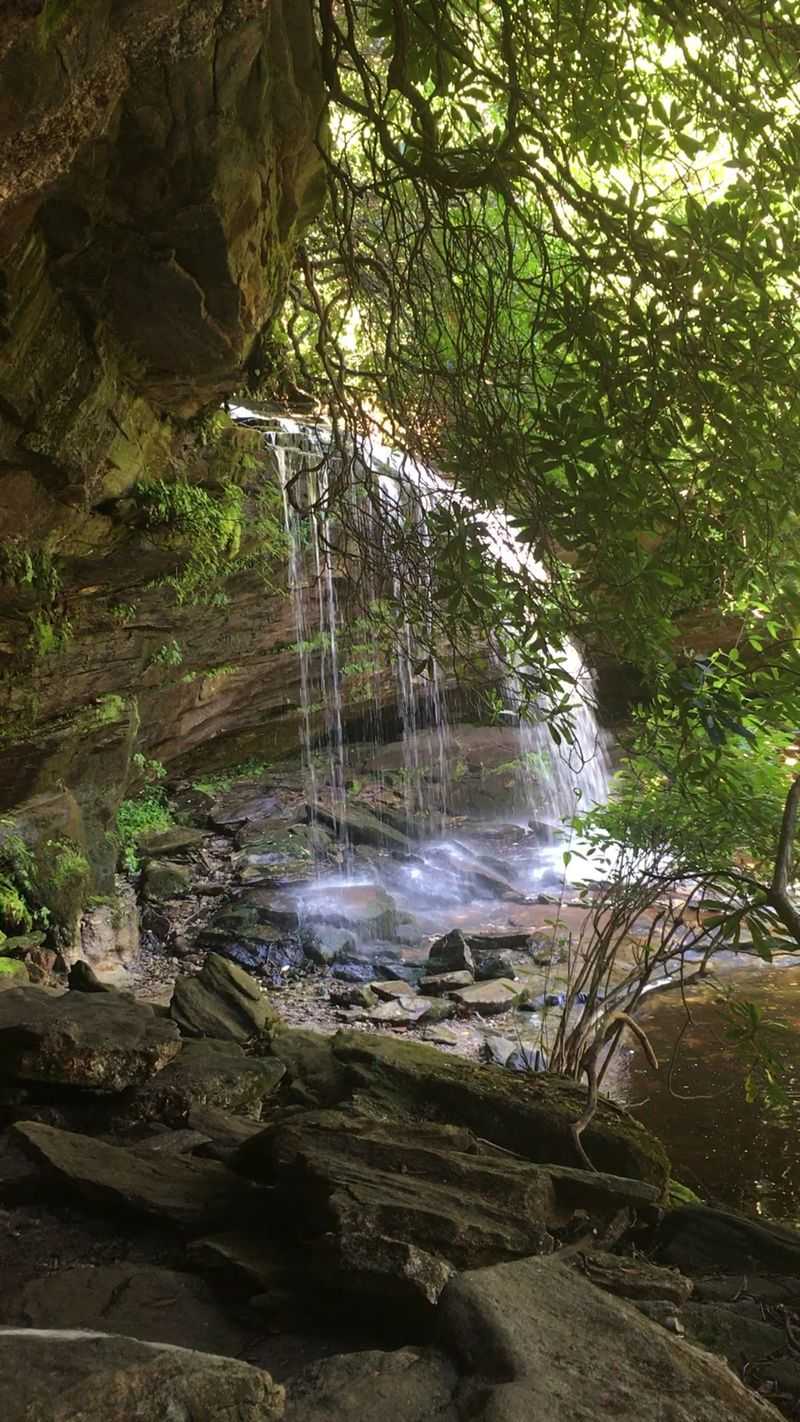
If you use the usual eastern approach, your hike to Schoolhouse Falls begins at the Cold Mountain Gap Trailhead, reached from Cold Mountain Road near Lake Toxaway, North Carolina. The final access roads are gravel, and parking is limited.
There are no restrooms or drinking-water facilities at the Panthertown trailheads. Bring what you need and carry everything back out. Water, trail shoes, a map, a towel, weather layers, and a small first-aid kit cover many of the basics for a half-day outing.
Do not let the mileage fool you. The direct waterfall hike is under three miles round trip, but the uphill return makes it more demanding than the distance alone suggests. Starting with enough daylight keeps your pace comfortable.
Swimming and wading are part of the appeal, but let water conditions guide your decision to get in. Heavy rain can change flow and depth, while wet rock becomes slick. Stay below the waterfall and avoid steep rock faces so the visit stays focused on the pool.
If this is your first visit, you do not need a complicated itinerary. Schoolhouse Falls alone combines a mountain trail, cool water, and a broad cascade in one memorable North Carolina outing.